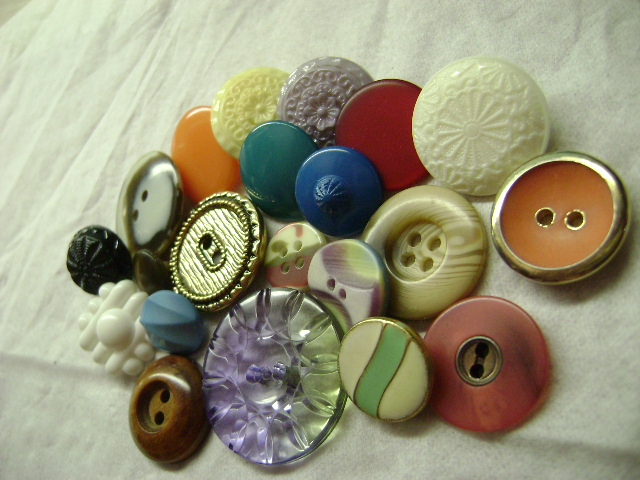
It was a jar, or a tin, or a coffee can, and it lived in a closet or a sewing box or the bottom of a cupboard. It was heavy out of all proportion to its size.
Inside were several hundred buttons of every possible description, none of which matched more than two others, and a child who was being kept quiet was allowed to pour them out on a table and sort them.
Every Button Had Been Cut Off Something
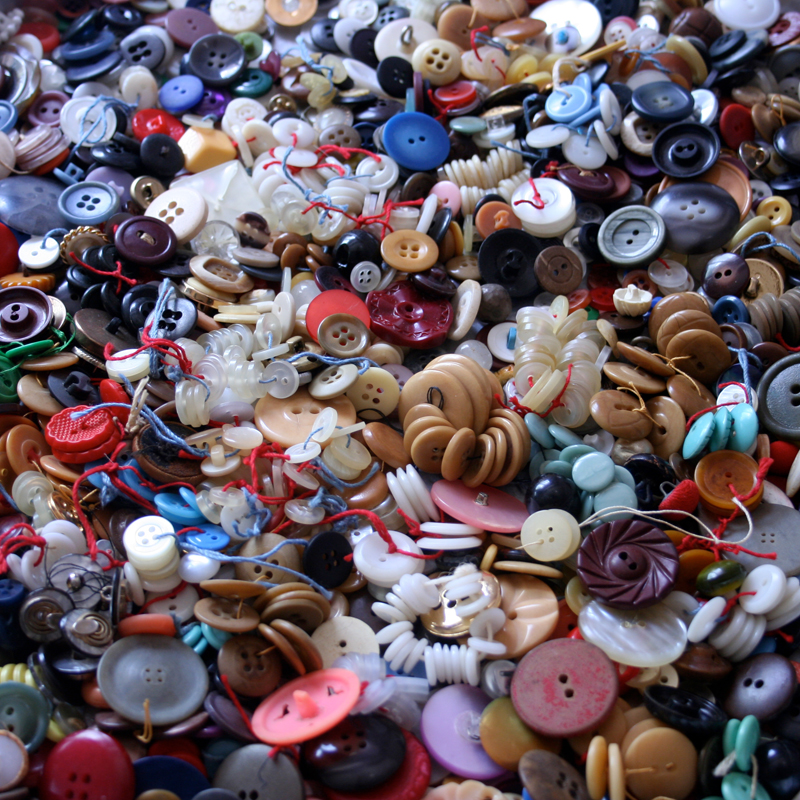
The jar was not a collection. It was a salvage inventory, and every item in it had been removed from a garment that had reached the end of its life.
When a shirt, a coat, a dress or a pair of trousers wore out past repair, it was not simply thrown away. It was taken apart. The buttons came off first, with scissors or a small knife, cut through the thread from behind. Then the zipper if there was one, the hooks and eyes, the snaps, the buckle, the elastic if it was still good, and any trim, braid or lace that could be reused.
What was left – the worn fabric – was cut into rags for cleaning, into pieces for quilting or rag rugs, or into patches. Almost nothing was discarded as a whole object.
So the jar was the accumulated button output of a household’s entire clothing history, and in a house where somebody’s mother and grandmother had both done this, it contained buttons from garments nobody alive could identify.
Like our content? Follow us for more.
The Arithmetic Was Entirely in Favour of Salvage
Here is why it made sense, stated plainly, because the modern instinct is that this was thrift bordering on hoarding and it was not.
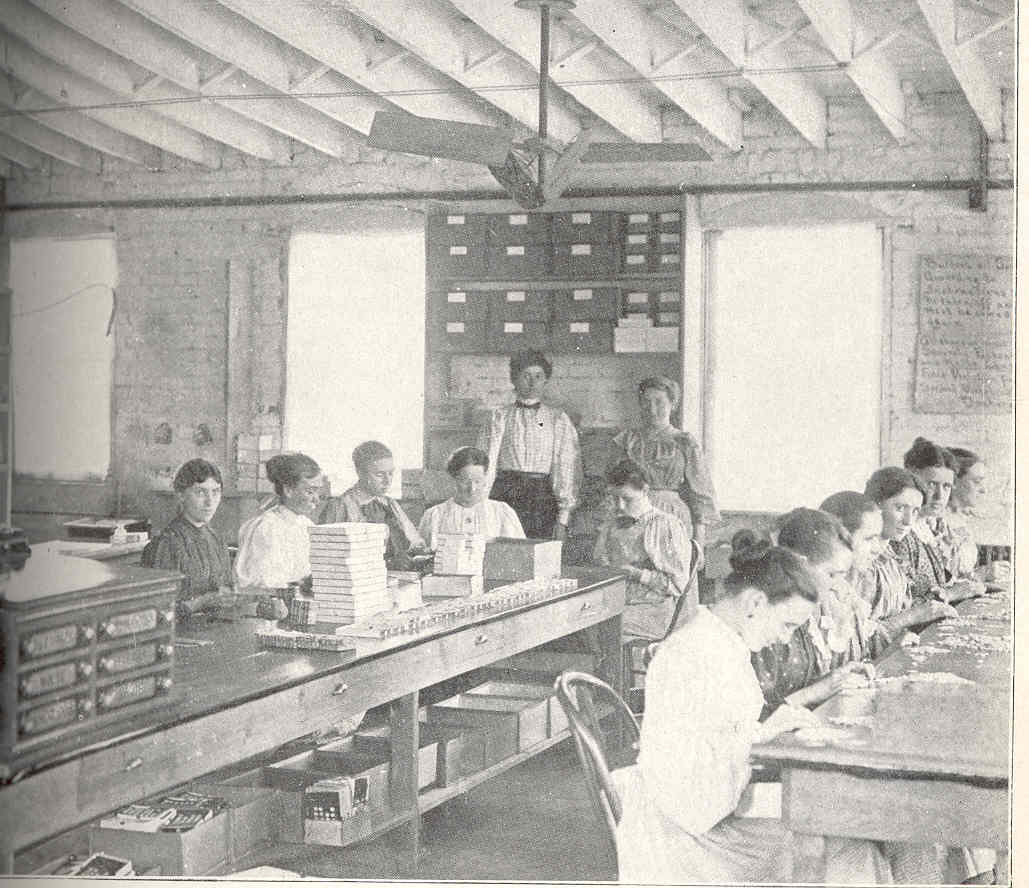
A button is a manufactured component. It was made in a factory, from shell, bone, horn, wood, glass, metal or early plastic, by a process involving machinery – and it was sold at a price that reflected that. A card of matching buttons was a real line item in a household budget, and a set of good buttons could cost a meaningful fraction of what the fabric for a garment cost.
The labour of removing them, by contrast, cost nothing. It was done in the evening, sitting down, by somebody who was already sitting down, in time that had no alternative use.
So the exchange was: five minutes of free evening labour against a component you would otherwise have to buy. That is not thrift as a virtue. That is thrift as the obviously correct answer, and anybody who threw a shirt away with its buttons on was doing something a household could see was wasteful.
The Jar Was Also an Insurance Policy
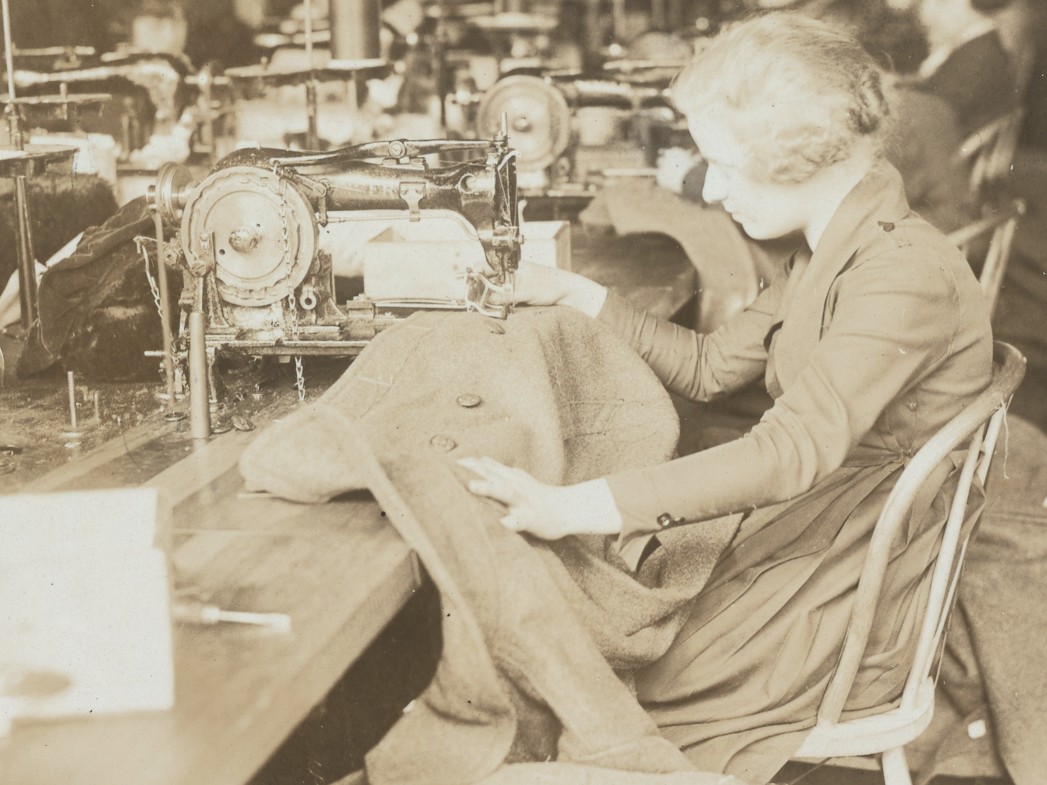
The second function was availability, and in a small town it mattered more than the money.
A button comes off a coat on a Tuesday. The coat is needed on Wednesday. The shop that sells buttons is in town, is shut, or does not have that colour in that size – and the garment is unwearable until it is matched.
A jar containing several hundred buttons solves that problem immediately, at home, at nine in the evening. Not with a matching button, usually, but with a close enough button, or with a set of five slightly different ones put on all at once so that they match each other.
Which is why so many garments of that era have a replacement button somewhere on them that is not quite right, and why the whole front of a coat was sometimes rebuttoned to accommodate one loss.
Children Were Given the Jar to Keep Them Quiet
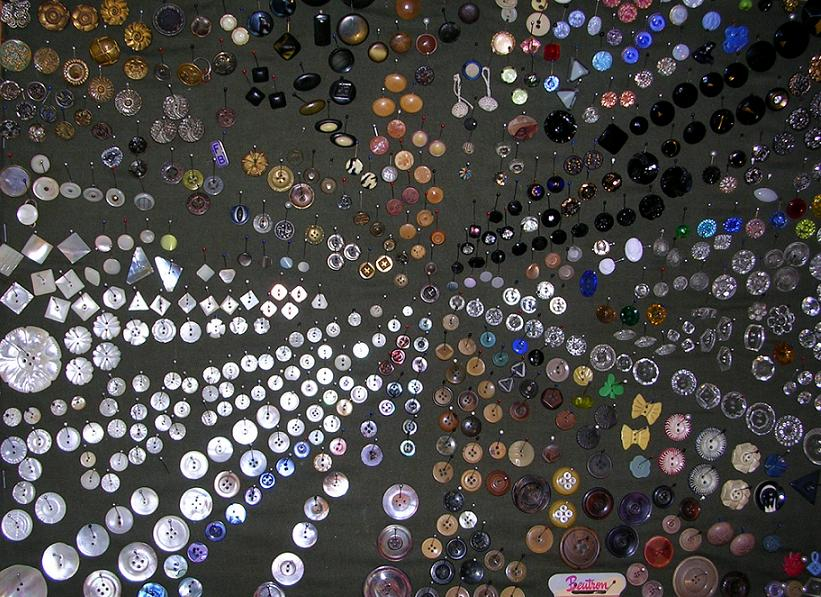
The social memory of the button jar is almost entirely a child’s memory, and it is remarkably consistent.
A child who needed occupying was given the jar and a table. And what they did with it was sort – by colour, by size, by number of holes, by material, into families and rows and patterns. They found the good ones: the glass ones, the metal military ones, the big coat buttons, the one shaped like a flower, the ones that matched. They made the big one the mother and the little ones the children.
It was free, it lasted an hour, it required no supervision and it produced no mess that could not be poured back in. And it is one of a very small number of things in a 1960s American house that a child was simply handed and left alone with.
The incidental learning is obvious in hindsight and nobody was aiming at it. Sorting by multiple attributes, classification, counting, pattern-making and fine motor work are exactly what a modern early-years curriculum buys purpose-made manipulatives to deliver.
The Good Ones Were Kept Separately
Households distinguished between the jar and the good buttons, and the distinction is informative.
Anything genuinely valuable – a set of matching mother-of-pearl, military brass, hand-painted glass, hand-worked metal, jet, or a complete card still on its original backing – came out of the general jar and went into a tin, a box or an envelope of its own, frequently with a note about what garment it came from.
That is the point at which salvage becomes curation, and it happened in a great many households without anybody calling it that. Those separated sets are the reason there is a collector market in vintage buttons at all, and why the examples that survive in good condition are disproportionately the ones somebody decided were too good for the jar.
What Ended It
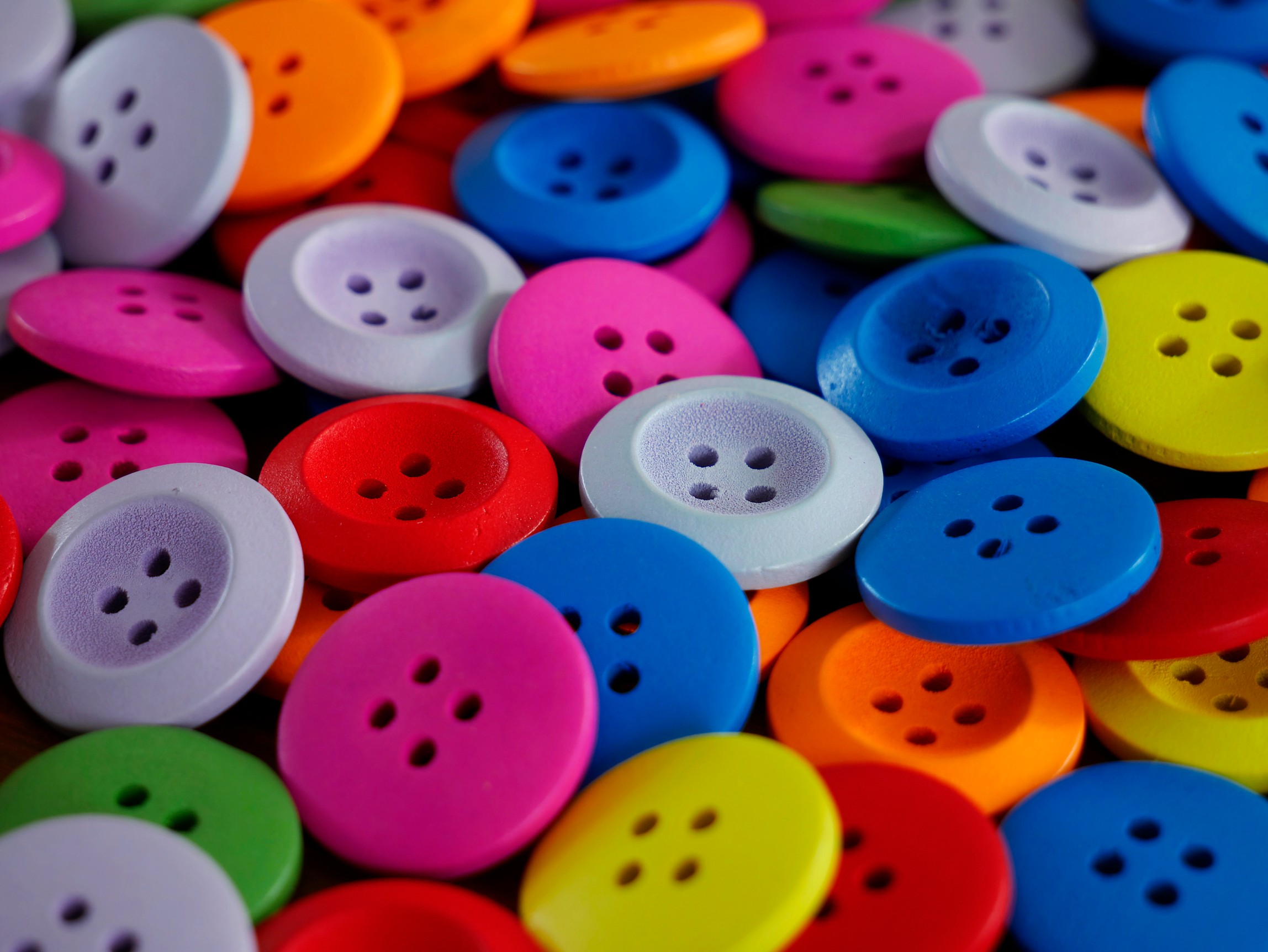
The arithmetic reversed, and it reversed completely.
Clothing became dramatically cheaper in real terms – mass-produced, imported, made from synthetic fabric, assembled at a labour cost that nobody in 1960 could have projected. A shirt stopped being a significant possession and became a thing you replaced.
And buttons became nearly free, because they are now injection-moulded polyester or nylon in enormous volume. A card of twenty costs less than a cup of coffee. More to the point, a new shirt arrives with its buttons already on it and a spare sewn inside the tail – which is the manufacturer solving the button-loss problem so completely that the household no longer needs an inventory.
Meanwhile the labour side inverted too. Nobody’s evening is free in the way an evening was free in 1960, and five minutes of cutting buttons off a dead shirt to save forty cents is now a bad trade for almost everybody.
The Buttons Were a Material History of the Twentieth Century
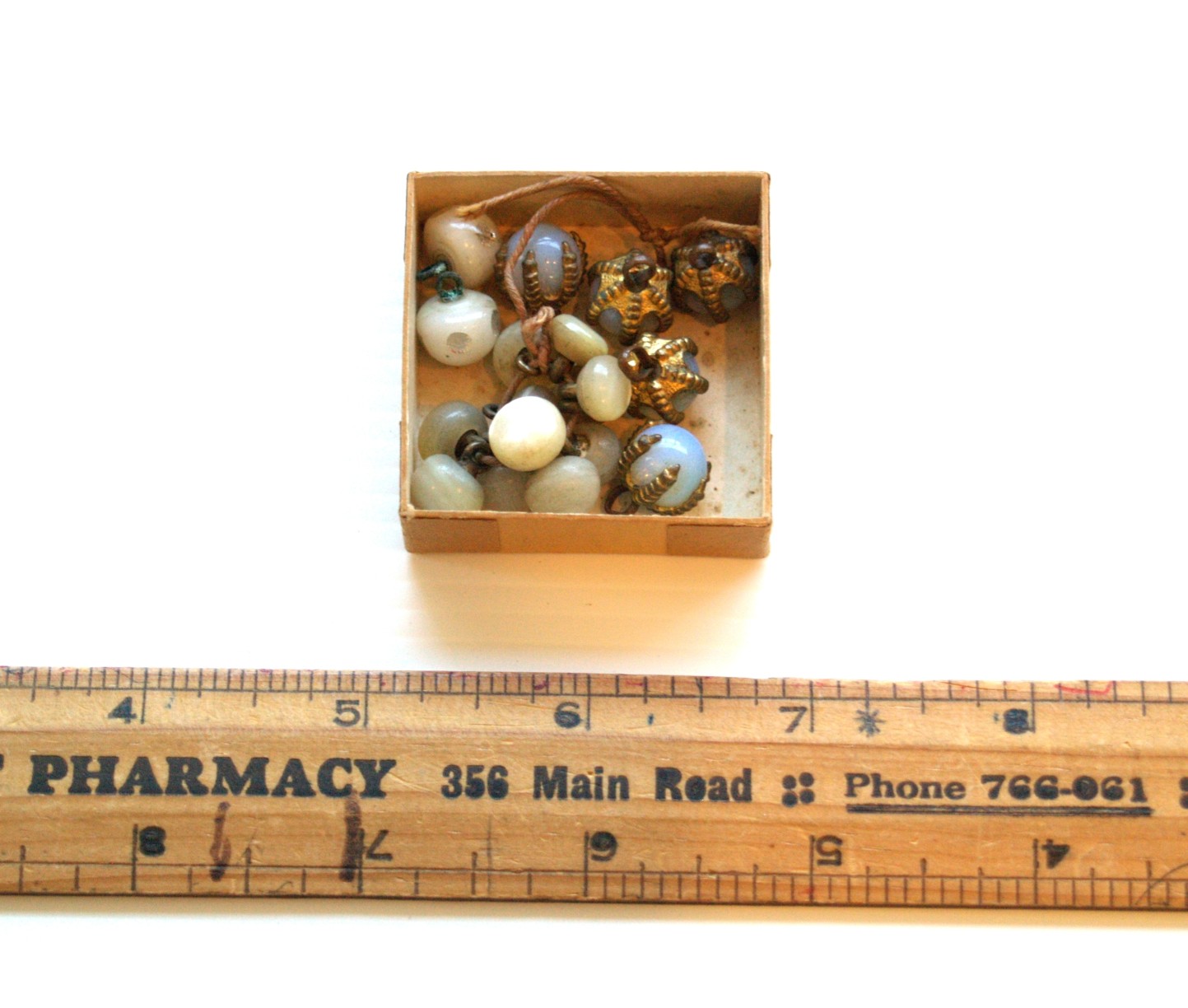
One thing a jar did that nobody intended is record what manufacturing could do at the moment each button was made.
The oldest ones were natural materials worked by machine: shell and mother-of-pearl cut and drilled from blanks, bone, horn, wood, and vegetable ivory turned from the nut of a palm. Those have weight, slight irregularity and a surface that does not look like plastic because it is not.
Then glass, moulded and sometimes hand-painted or lustred. Then metal – stamped brass, nickel, and the heavy worked military and uniform buttons that turn up in almost every American jar because almost every American household had somebody in uniform.
Then the early plastics, in sequence: casein made from milk protein, cellulose nitrate, cellulose acetate, and the moulded phenolic resins that produced the thick dark buttons of the 1930s and 1940s. Then urea and melamine. Then, from the 1950s, polyester and nylon, which is everything since.
A jar poured out on a table in 1965 therefore contained a rough chronology of industrial materials, in a pile, sorted by a child who had no idea – and it is the reason collectors can date buttons at all.
The Twist: The Jar Was the Visible Part of an Entire Economy
The button jar is easy to read as a charming piece of household frugality, and it was the tip of something much larger.
A household in 1960 operated a standing component salvage system. Buttons, zippers, hooks, snaps, buckles, elastic, trim, lace, braid, usable fabric, wool unravelled from a jumper to be knitted again, mattress ticking, flour and feed sacks, jars, tins, string, brown paper, rubber bands, nails straightened with a hammer, screws, timber pulled out of a crate.
All of it was kept, sorted, stored and used, and all of it existed for the same reason: the component was expensive relative to the labour of recovering it.
That relationship has reversed across every single category. Components are now so cheap, and labour and attention so comparatively dear, that recovering anything is irrational for almost any individual household – which is why the jars, the tins, the string drawer and the straightened nails all went at roughly the same time.
So the button jar did not disappear because people became wasteful. It disappeared because the sum changed sign, and it changed sign for good reasons that made everybody materially better off.
What went with it is harder to price. A house full of salvaged components is a house where objects are understood as assemblies of parts that can be taken apart, where a broken thing prompts a question about which part failed, and where a child sorting buttons on a table is absorbing the idea that things are made of things.
The jars are still in the backs of cupboards, in enormous numbers, in houses where nobody has sewn a button on in twenty years – because they are heavy, obviously not rubbish, and nobody can quite bring themselves to be the person who throws out their grandmother’s buttons.
Like our content? Follow us for more.