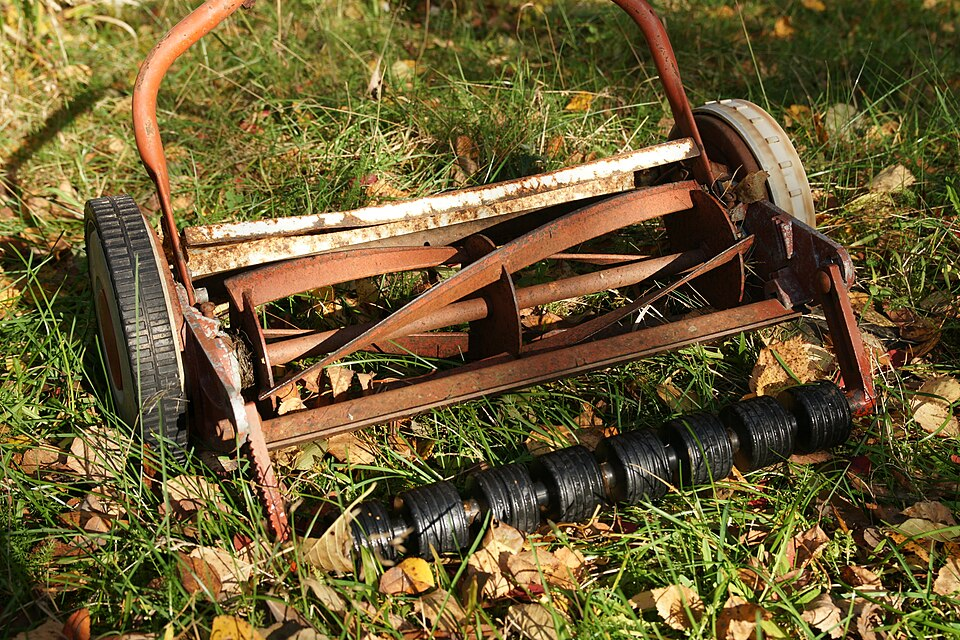
The object is instantly recognisable and almost nobody knows how it works. A pair of wheels, a wooden-gripped handle, and between the wheels a cylinder of curved steel blades that spins as the machine is pushed.
Everybody remembers the sound – a rising and falling whirr, faster when you pushed harder, slowing to a click when you stopped – and everybody remembers that it was hard work on anything but short dry grass.
What very few people know is that this machine cuts grass by a fundamentally different mechanism from the one that replaced it, and that by the standard a gardener would apply, the old machine does it better.
A reel mower is a pair of scissors. A rotary mower is a stick.
The Reel Is One Half of a Shear
Here is the mechanism, and it is elegant.
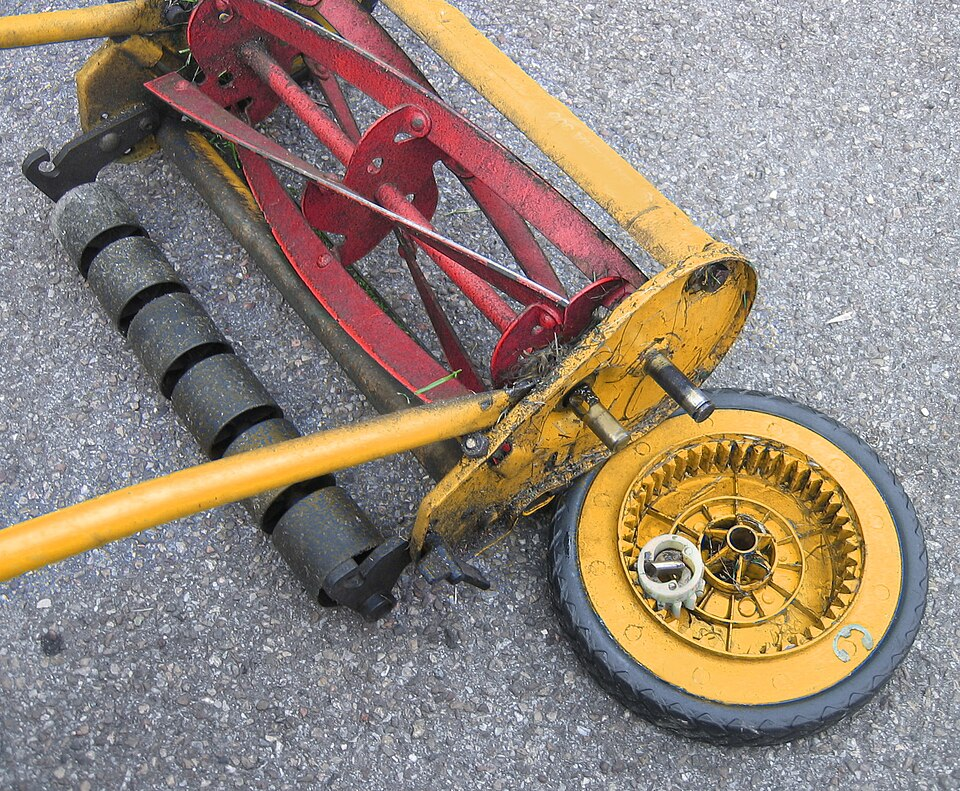
The spinning cylinder carries several curved blades, usually five or seven, mounted in a helix. Underneath, fixed and not moving at all, is a straight horizontal bar with a sharpened edge – the bed knife, sometimes called the cutter bar.
As the cylinder turns, each blade passes across the fixed bed knife with a very small clearance between them. A grass stem standing up between the two gets trapped and sheared, exactly as a piece of paper is sheared between the two blades of a pair of scissors.
That is the whole thing. Two edges, passing close, cutting by shear.
Which means a reel mower has the same requirements as any pair of scissors. Both edges must be sharp. The clearance between them must be correct and consistent across the whole width. And anything that bends the bed knife or nicks a blade puts a section out of action, which is why a mower that has run over a stone leaves a stripe of uncut grass behind it forever.
Like our content? Follow us for more.
A Rotary Mower Cuts by Impact
Now the comparison, which is the reason any of this matters.
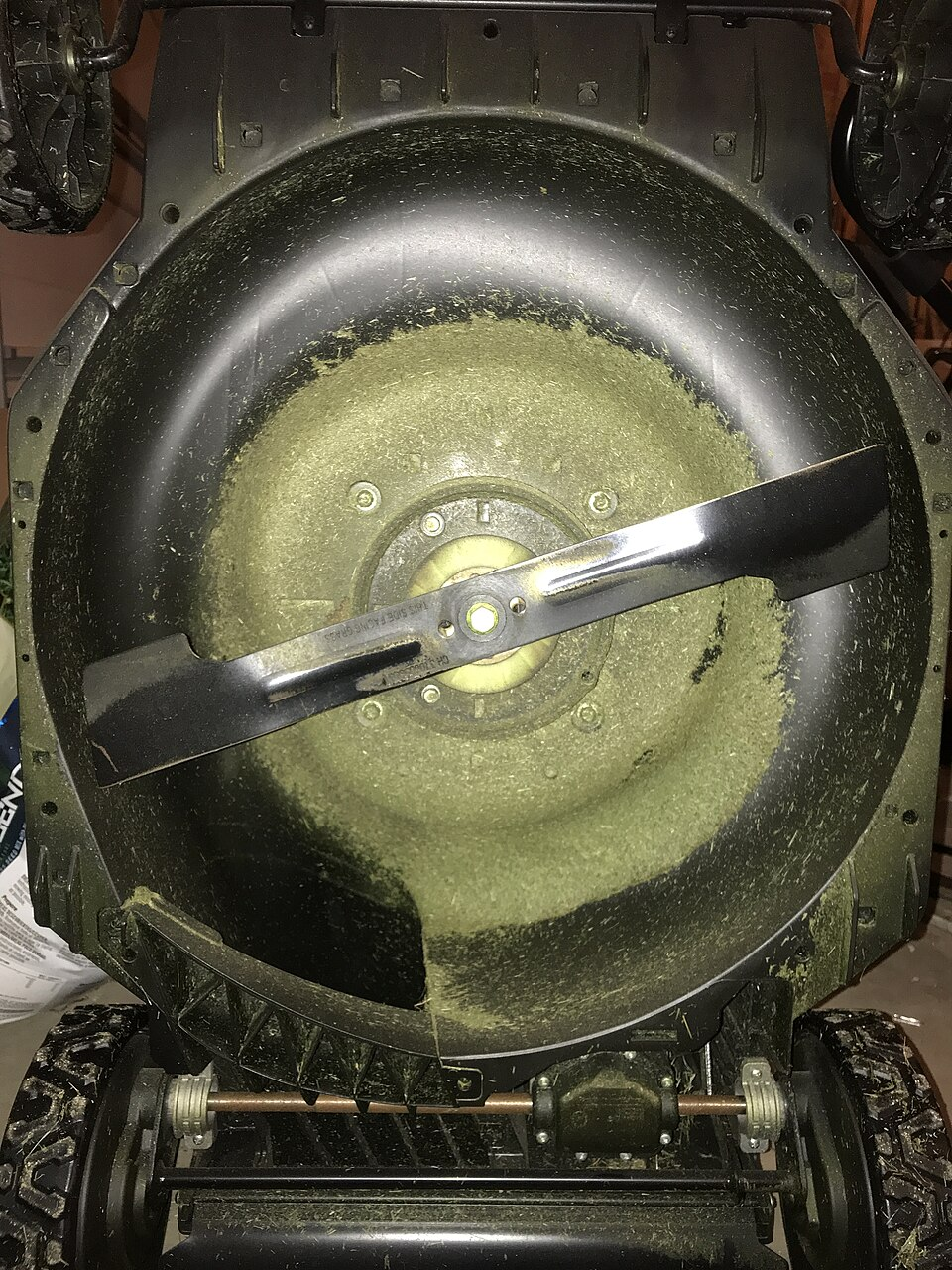
A rotary mower has a single straight blade spinning horizontally underneath a deck, at high speed, with nothing to shear against. There is no second edge. The blade meets the grass stem with no support behind it.
So it cuts by impact – hitting the stem hard enough and fast enough to sever it before the stem can bend out of the way. That works, and it works reliably, and it is the reason rotary mowers can cut long wet grass and weeds and rough ground that a reel mower simply pushes over.
But the cut itself is worse, and gardeners and groundskeepers have always known it. An impact cut leaves a slightly crushed and torn stem end rather than a clean one, which browns off at the tip and makes the lawn look duller a day or two after cutting. A sheared cut heals faster and keeps its colour.
That is not nostalgia; it is why the places that care most about turf – fine lawns, bowling greens, cricket squares and golf greens – still use reel mowers, in powered form, and will go on using them. At the highest standard of turf management, nobody has ever preferred impact cutting.
The Trade-Off Was Entirely About the Grass You Had
So if the reel cuts better, why did almost every household abandon it?
Because the reel mower’s requirements are inflexible and the rotary’s are not.
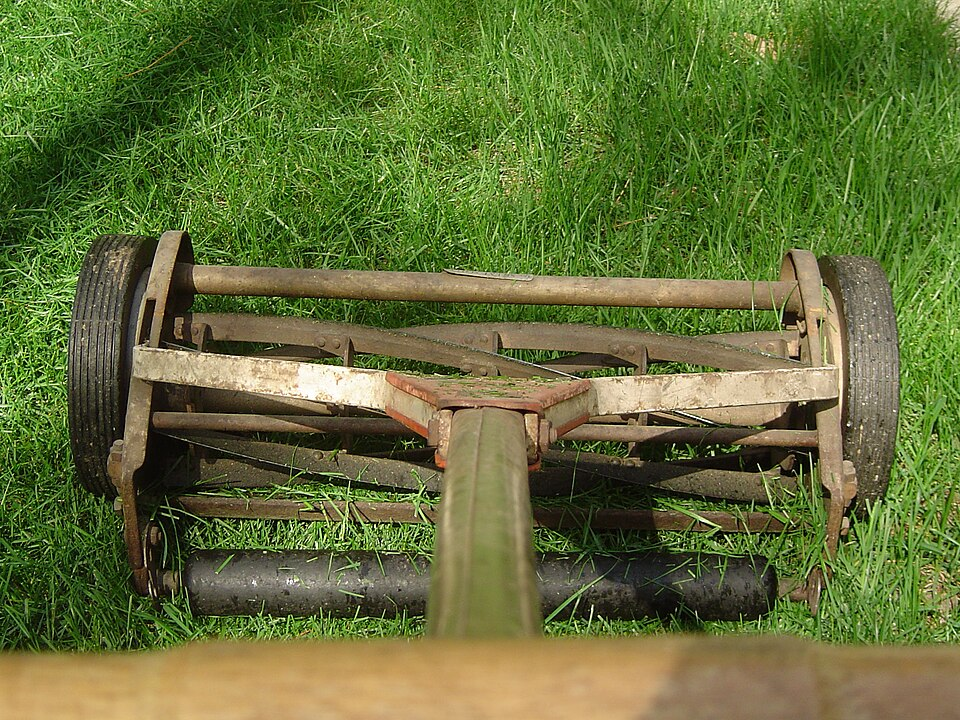
A reel mower needs grass that is standing up, reasonably short, reasonably dry and reasonably free of anything that is not grass. Long grass lies down ahead of the reel and is pushed over rather than cut. Wet grass clumps and jams. A thick weed stem will stop the cylinder dead. Uneven ground causes the whole assembly to scalp in the hollows and miss the rises, because the cutting height is set by the wheels and the roller rather than by a floating deck.
A rotary mower does not care about any of that. It will cut long grass, wet grass, weeds, saplings and most things that are not actually rocks, from ground of almost any contour.
And for a household, that difference is decisive. The lawn does not get cut every four days by somebody who enjoys it; it gets cut on a Saturday afternoon, three weeks after the last time, possibly in the damp, with a man who wants it finished. The rotary mower is built for exactly that person, and the reel mower is built for somebody else entirely.
Then the Engine Arrived and Made the Lawn Possible
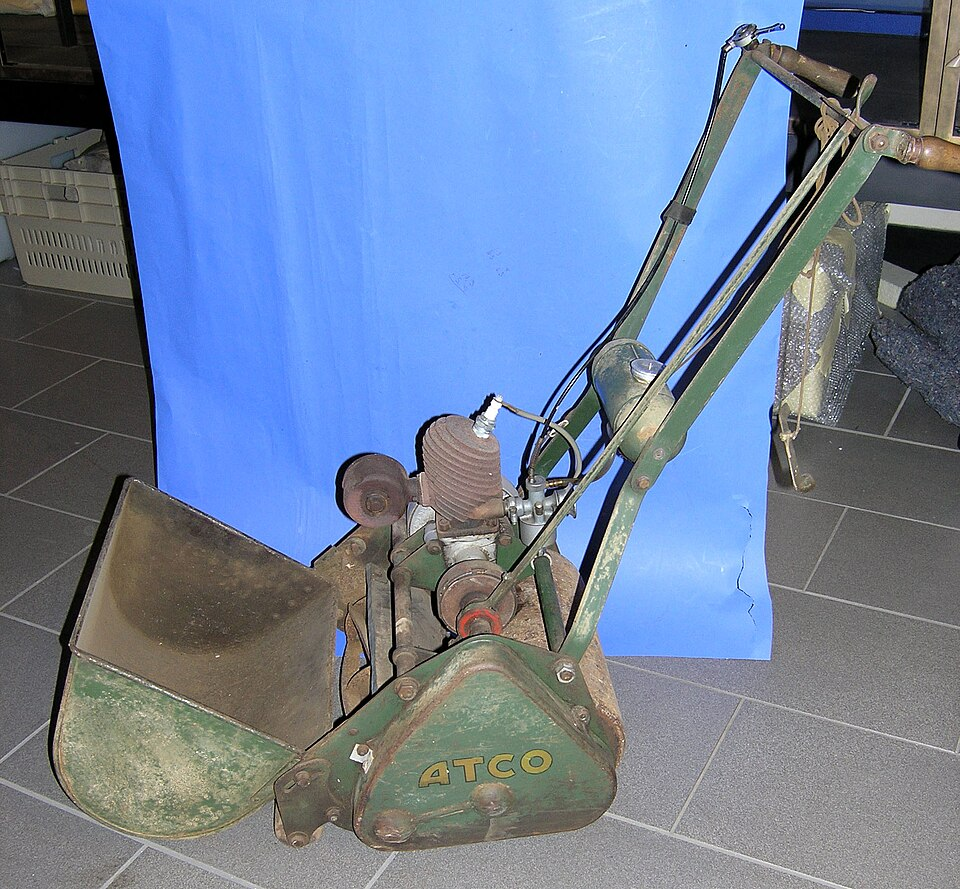
The deeper change was not the cutting mechanism. It was power, and what power did to the size of the thing being cut.
Pushing a reel mower is genuine physical work, and the work scales directly with the area. That puts a hard practical ceiling on how much grass a household will keep, because somebody has to walk the whole of it behind a machine they are driving with their own legs.
A cheap petrol engine removed that ceiling. Once the machine supplies the power, the limit on lawn size becomes the time it takes rather than the effort, and the time can be reduced further by a wider deck or a riding machine.
Which is how the American lawn became what it is. The expanse of mown grass around a suburban house – an area that would have been completely impractical to maintain with a push mower – is a direct product of the affordable engine, and the standard it is held to is a product of everybody on the street having one.
So the rotary mower did not simply replace the reel mower at the same job. It changed the job, by making a much larger lawn maintainable, and the larger lawn then made returning to a reel mower impossible.
The Lawn Itself Was a Social Obligation
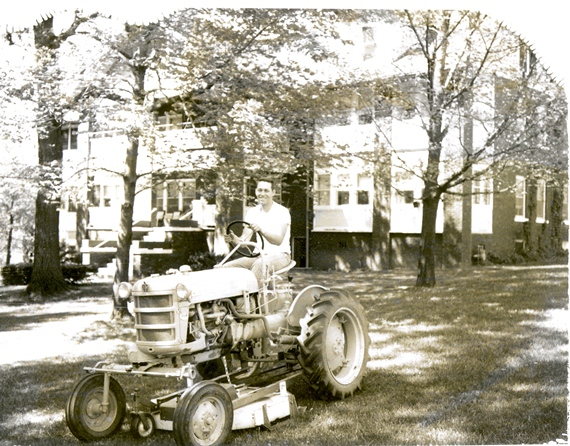
It is worth saying plainly that the mown lawn is not a natural or inevitable thing to have, and that the machine came first.
Before cheap mowers, a closely mown expanse of grass was essentially a feature of large estates, maintained by staff or by grazing animals, because keeping grass short across any area is laborious. It signalled wealth precisely because it was expensive to maintain and produced nothing.
The affordable push mower put a small version of that within reach of an ordinary household, and the affordable powered mower put a large version within reach. At which point the lawn stopped being a luxury and became a baseline – the condition a property was expected to be in, enforced not by any rule in most cases but by every neighbour’s visible example.
That is a social obligation created by a piece of equipment, which is an unusual sequence and worth noticing. People did not want lawns and then invent mowers. Mowers became cheap, lawns became possible, and wanting one became compulsory.
The Reel Mower Came Back for Different Reasons
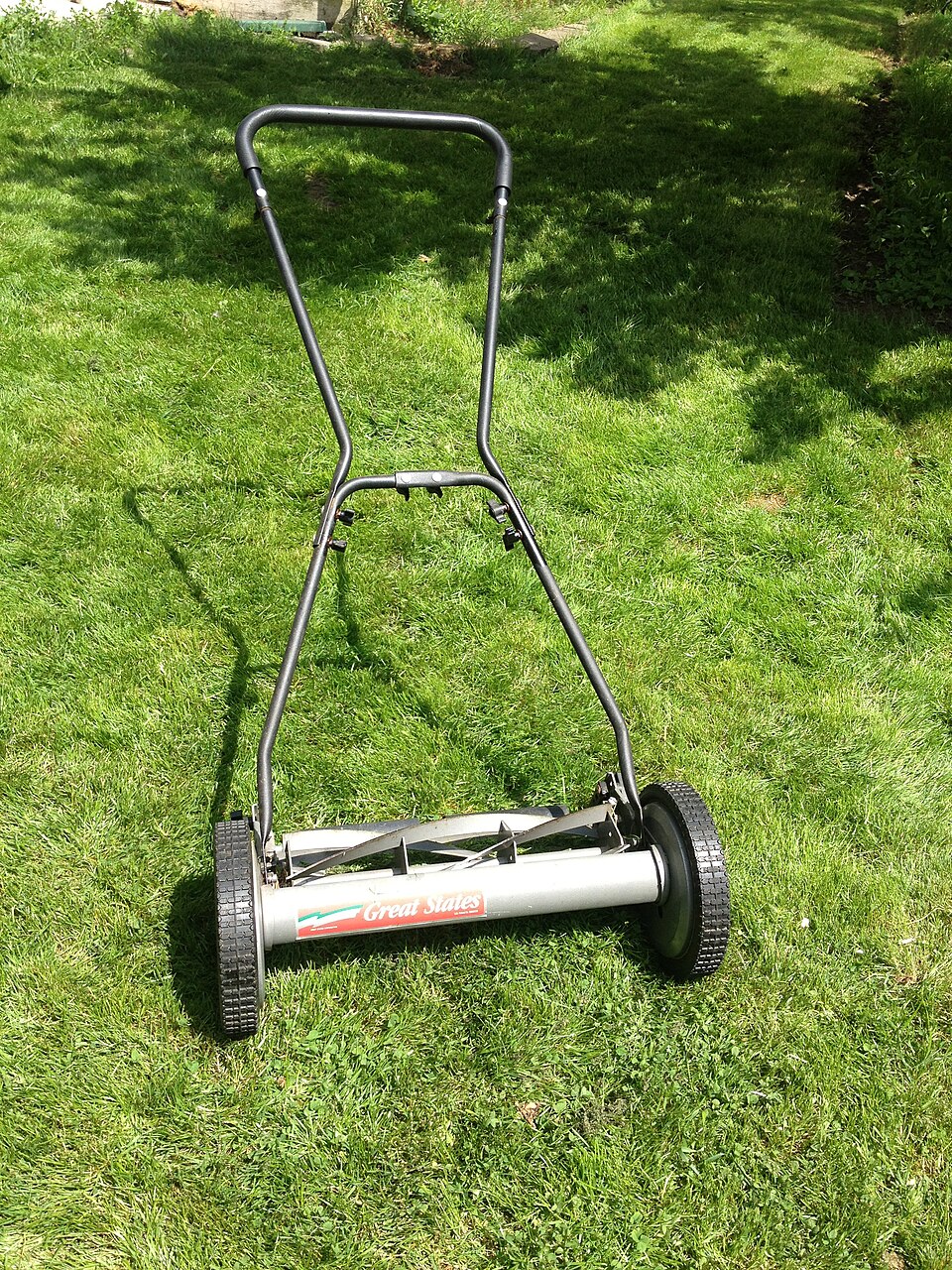
The push mower never actually disappeared and its modern customers are not nostalgists.
They are people with small lawns, which is the condition the machine suits perfectly – and small urban and suburban lots are more common than they were. They are people who want no engine noise, no fuel, no fumes, no servicing, no spark plug, no oil change and nothing to store fuel for. They are people who want a machine with essentially nothing to break, since a reel mower is two wheels, a cylinder, a bar and a gear train. And they are people who want the better cut, which is a real thing and not imaginary.
Modern reel mowers are also considerably lighter and easier to push than the cast iron machines people remember, which were heavy by any standard and had bearings that were frequently past their best.
So the honest summary has three parts, and they do not all point the same way. The reel mower cuts grass better, by a mechanism that is cleaner and that professional turf management still relies on. The rotary mower cuts grass that the reel mower cannot touch, which is most grass in most real gardens most of the time. And the engine that drove the whole change also created the oversized lawn that makes the superior machine impractical – which means the reason almost nobody uses a reel mower is a lawn that only exists because of the machine that displaced it.
The Sound Is the Mechanism
One last detail, because it explains the memory.
The rising and falling whirr of a push mower is the sound of the cutting itself – each blade striking its shear across the bed knife, several blades per revolution, at a rate set directly by how fast the wheels are turning and therefore by how fast somebody is walking.
Which means the sound is a direct readout of the work being done. It rises when you push harder, drops when you slow, stops when you stop, and changes character completely when the machine hits something it cannot cut.
A rotary mower runs at a constant engine speed regardless of what it is doing, so it produces one unvarying noise whether it is cutting, idling or being pushed across a path.
That is why people remember the old sound so specifically and do not remember the new one. The push mower was telling you, continuously and audibly, exactly how the job was going – and the machine that replaced it says the same thing all afternoon no matter what happens.
Like our content? Follow us for more.