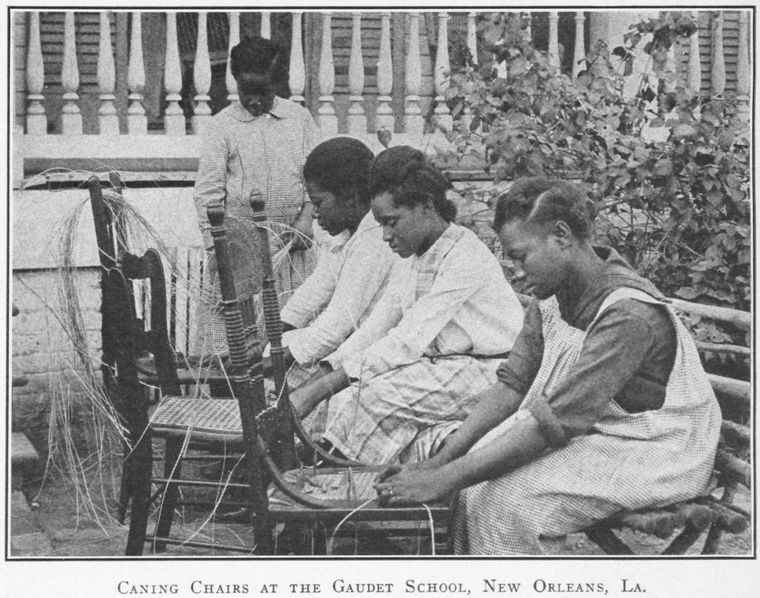
When a chair seat gave out, nobody threw the chair away. The frame was the expensive part and the seat was the part designed to wear, so a new seat was woven into the old frame.
That split is the whole idea, and it is a genuinely good piece of design thinking: a joined wooden frame lasts generations while a woven seat lasts years, so the object was built for the short-lived component to be renewed without disturbing the long-lived one. A chair with a broken seat was not failing. It was behaving as intended.
The material came off the farm – hickory bark, oak and ash splints split along the grain, rush, cattail, cornhusk – and the same hands and the same material made the baskets. Here are fifteen things every household knew.
1. Chairs Were Repaired Rather Than Replaced
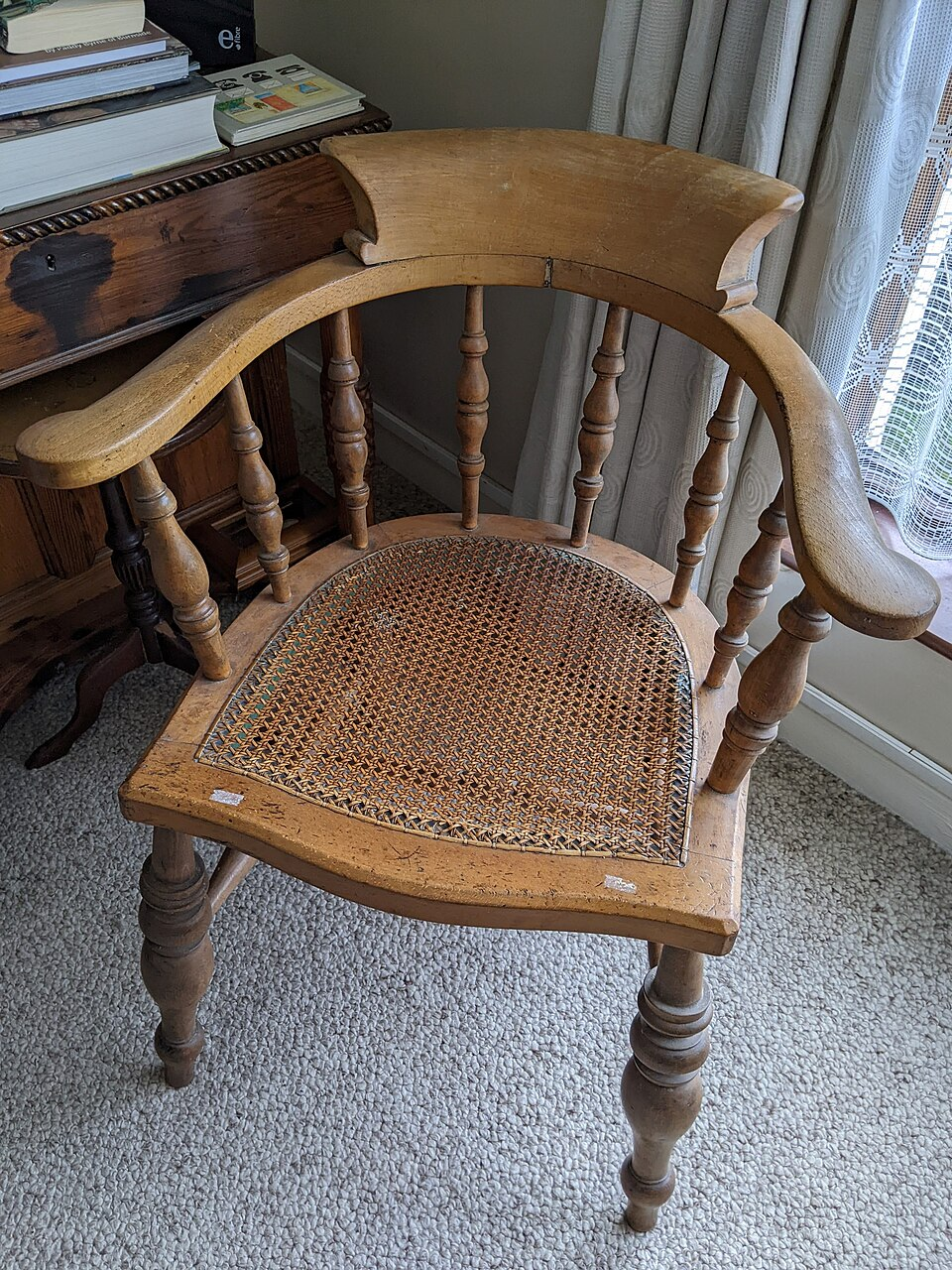
When a chair seat gave out, the frame was kept and a new seat was woven into it, because the frame was the expensive part and the seat was the part designed to wear.
Chairs are replaced as units, and a broken one is discarded.
The split between frame and seat is the whole idea and it is a genuinely good piece of design thinking. A joined wooden frame lasts generations while a woven seat lasts years, so the object was built so that the short-lived component could be renewed without touching the long-lived one.
Like our content? Follow us for more.
2. The Seat Was Meant to Be Consumable
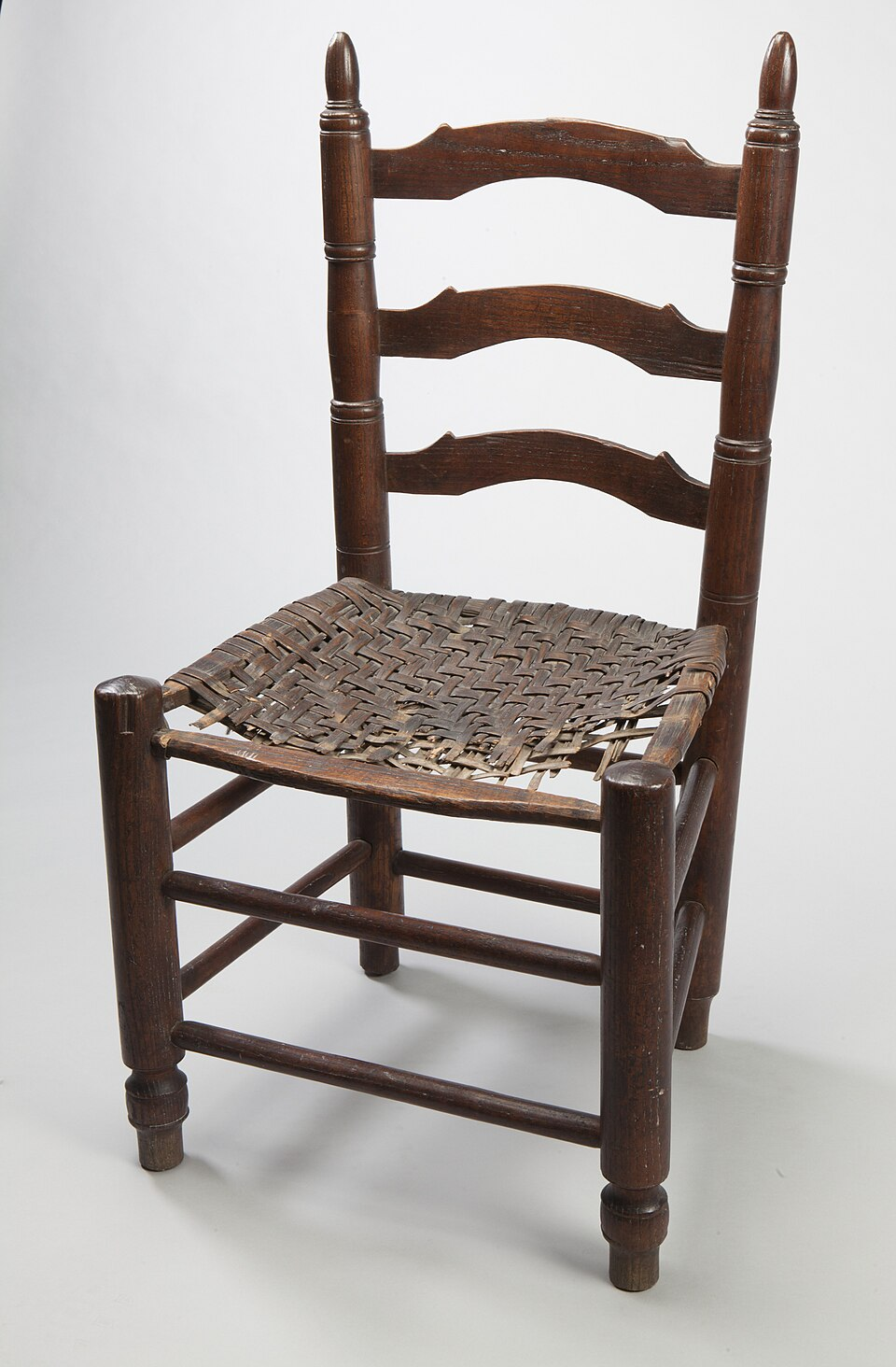
Woven seats were understood as a wearing part, like a shoe sole or a roof, with a known life and a known replacement procedure.
Upholstery is not generally thought of as renewable, and most furniture is not built to be re-seated.
Designing a consumable component into a durable object is an approach that has largely vanished from household goods, and this is one of the clearest surviving examples of it. The chair was not failing when the seat went. It was behaving exactly as intended.
3. The Materials Grew Nearby
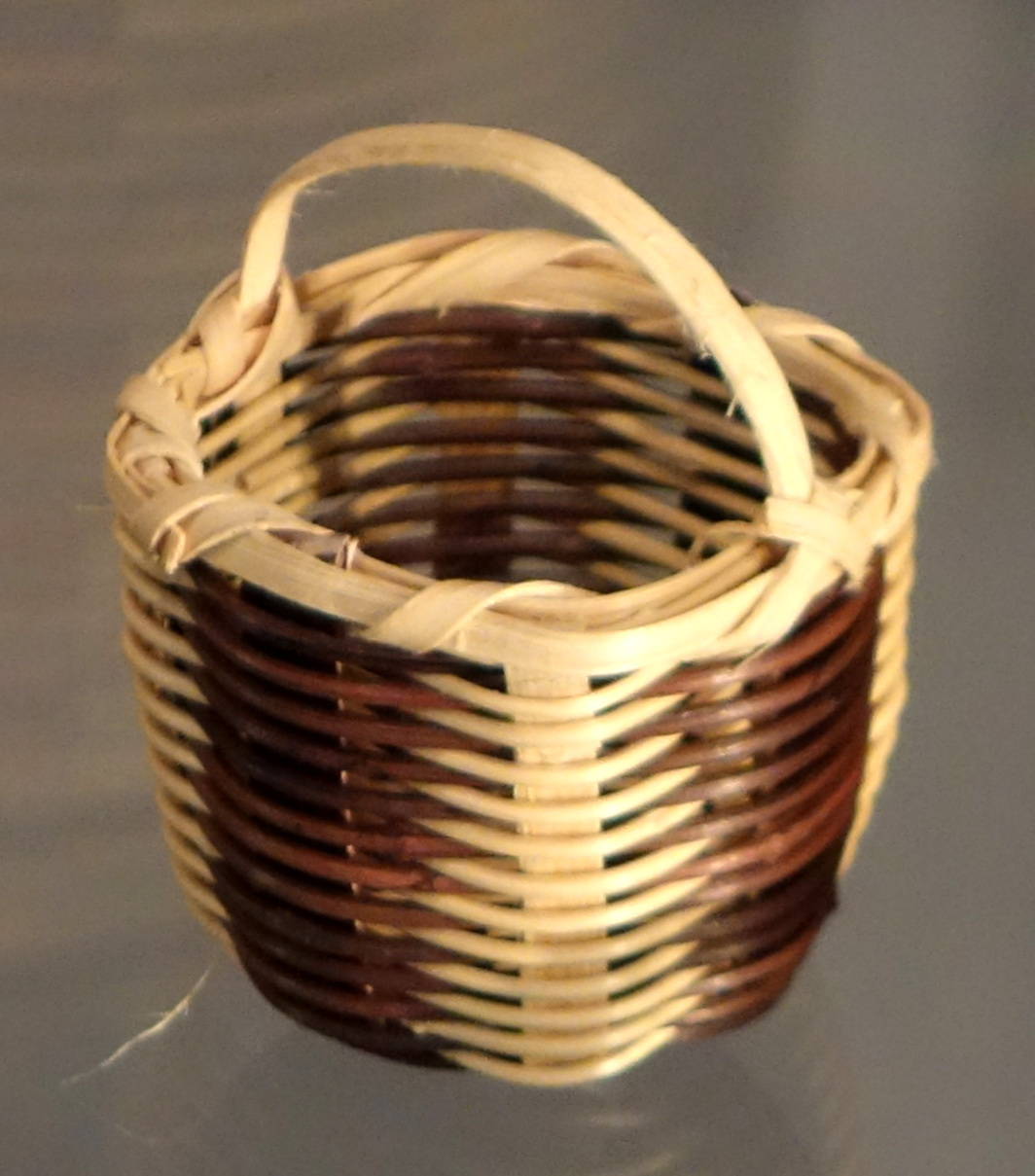
Seats were woven from hickory bark, oak splints, ash splints, rush, cattail leaves, cornhusks, and later from imported cane and rattan.
Pre-woven cane sheet, synthetic fibre rush and manufactured materials bought by the roll.
Local material is what made this a household practice rather than a trade. A farm with woodland had seat material growing on it, and the knowledge of which trees would split into usable splints was part of knowing your own ground.
4. Splints Were Split, Not Cut
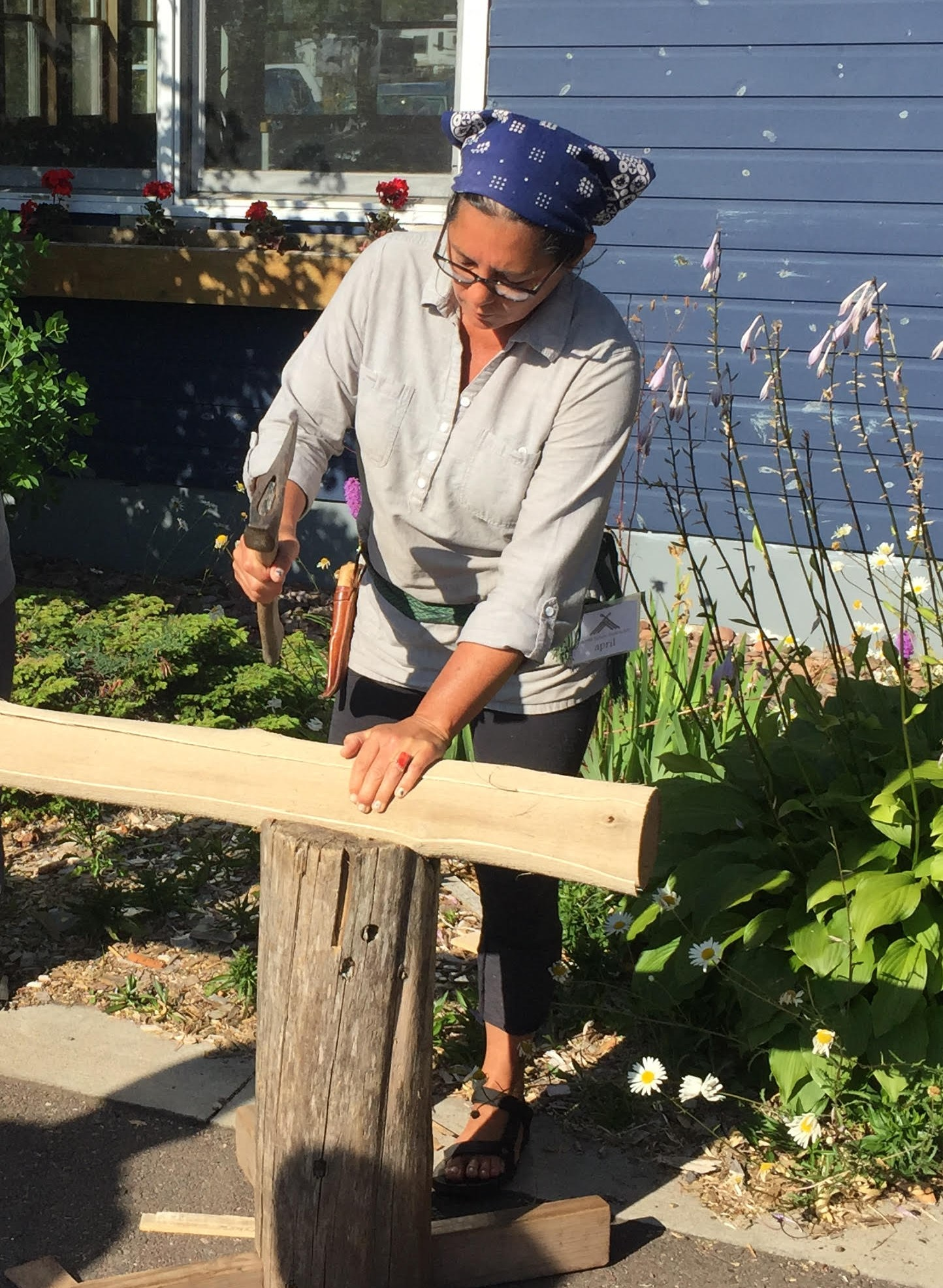
Oak, ash and hickory were split along the grain into long thin flexible strips, following the wood’s natural layers rather than being sawn to size.
Not applicable at household scale.
Splitting rather than cutting is the critical distinction and it explains why the result is strong. A split follows the grain, so every fibre runs the full length of the strip; a sawn strip crosses the grain repeatedly and will snap. The same principle governs every traditional use of split wood.
5. The Material Had to Be Soaked
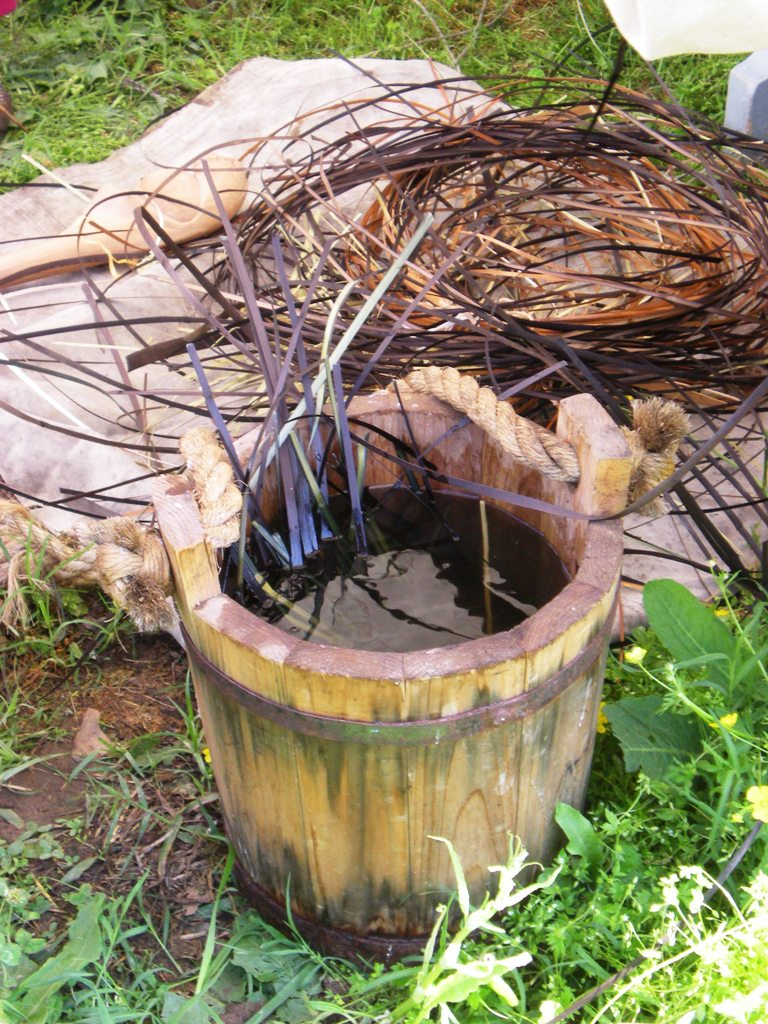
Splints, cane and rush were wetted before weaving so they would bend without cracking, and the weaving had to be finished before they dried.
The same requirement where traditional materials are used.
Working wet and against the clock is the awkward part of the craft. Wet material is pliable and dries tight, which means a seat woven properly tightens itself as it dries – and a seat woven slowly has strips at different moisture levels and never comes up even.
6. The Pattern Was Structural
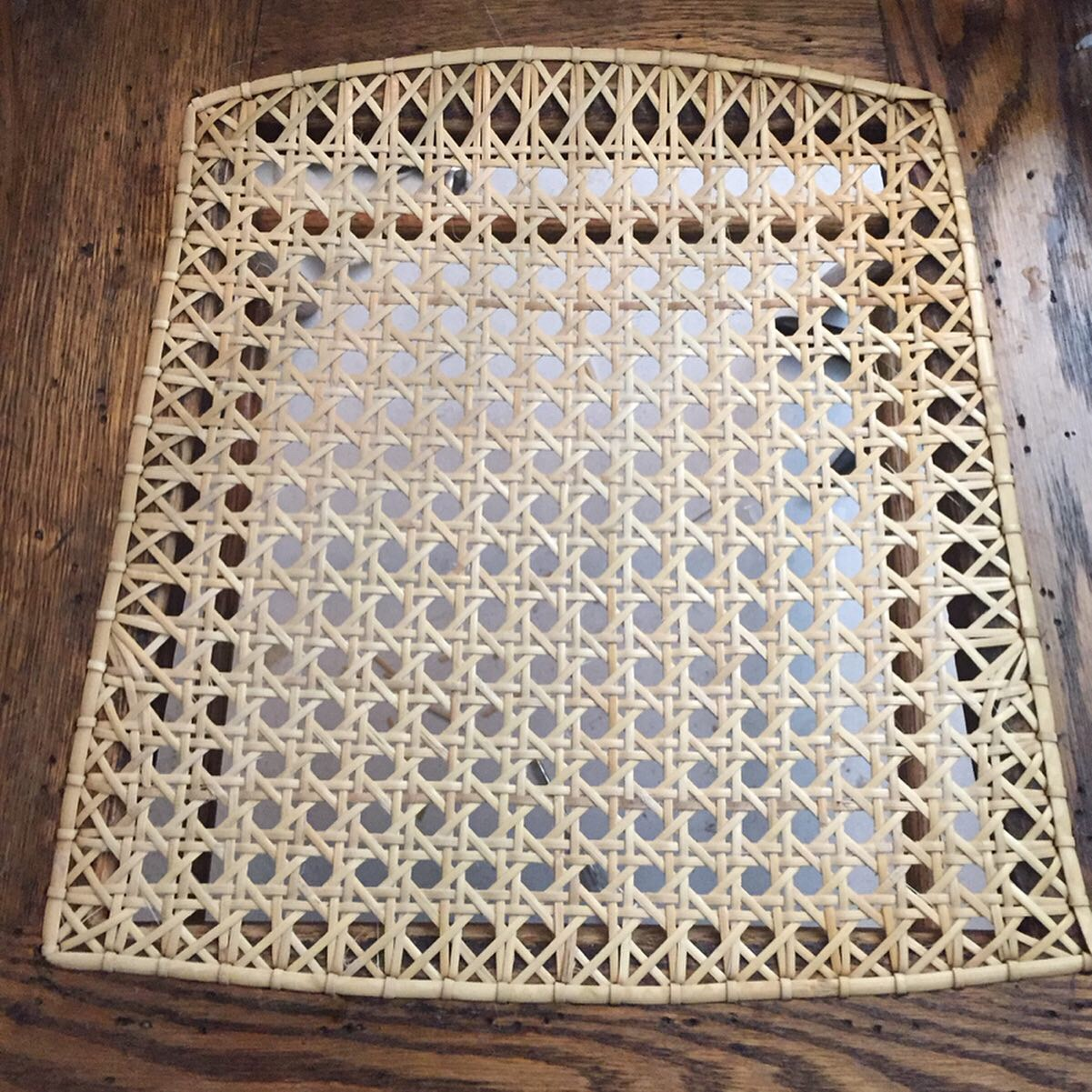
Seats were woven in patterns – plain over-and-under, herringbone, or the hexagonal six-way pattern of a caned seat – and the pattern determined how the load was carried.
Not applicable.
Pattern as engineering rather than decoration is the part people miss. A woven seat is a tension structure, and the way the strips interlace decides whether weight is spread across the whole surface or concentrated where somebody sits – which is why the patterns are consistent across regions and centuries.
7. Caning Was a Different Skill Entirely
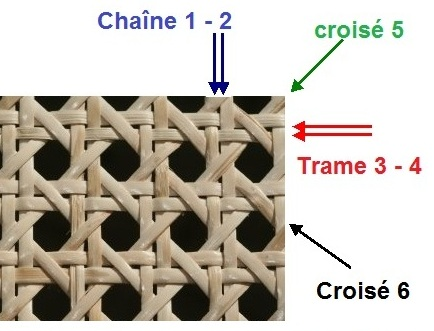
A caned seat is woven through a ring of drilled holes in the chair frame in six separate passes, and it requires precision that splint seating does not.
Pre-woven cane sheet dropped into a routed groove and held by a spline.
The six-way hand caning pattern is the most technical thing in this subject and it was a specialist’s work as often as a household’s. Each of the six passes has to be laid correctly for the next to be possible, which means a mistake early in the sequence is not repairable later.
8. Baskets Came Out of the Same Material and the Same Hands
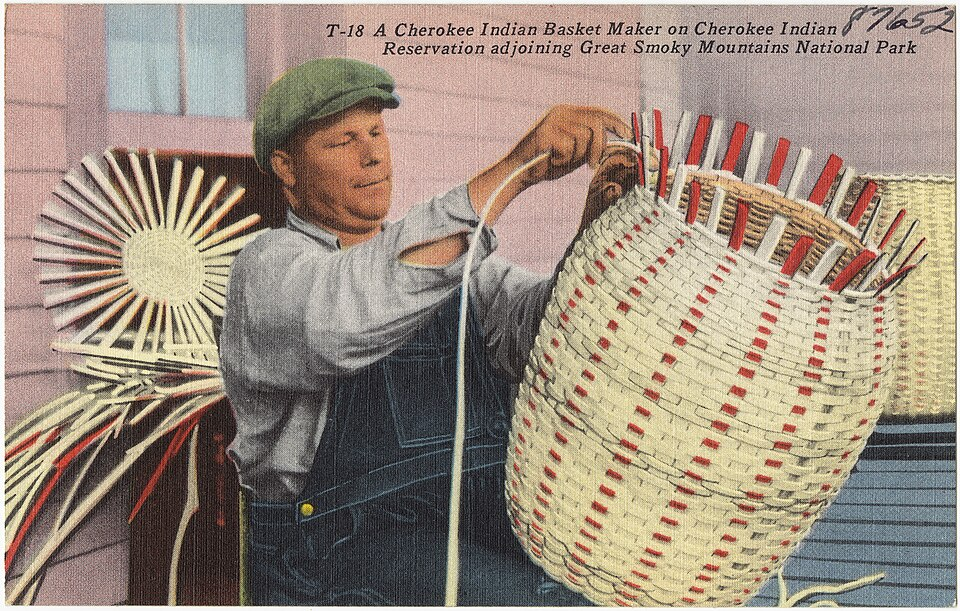
The person who could re-seat a chair could also make splint baskets, and the two skills used identical material, tools and techniques.
Baskets are manufactured and imported.
The shared skill base is why these belong in one subject. Splint weaving is one body of knowledge applied to different shapes, so a household or a region good at one was good at the other – and the baskets were working equipment rather than ornament.
9. Baskets Were Sized to Specific Jobs
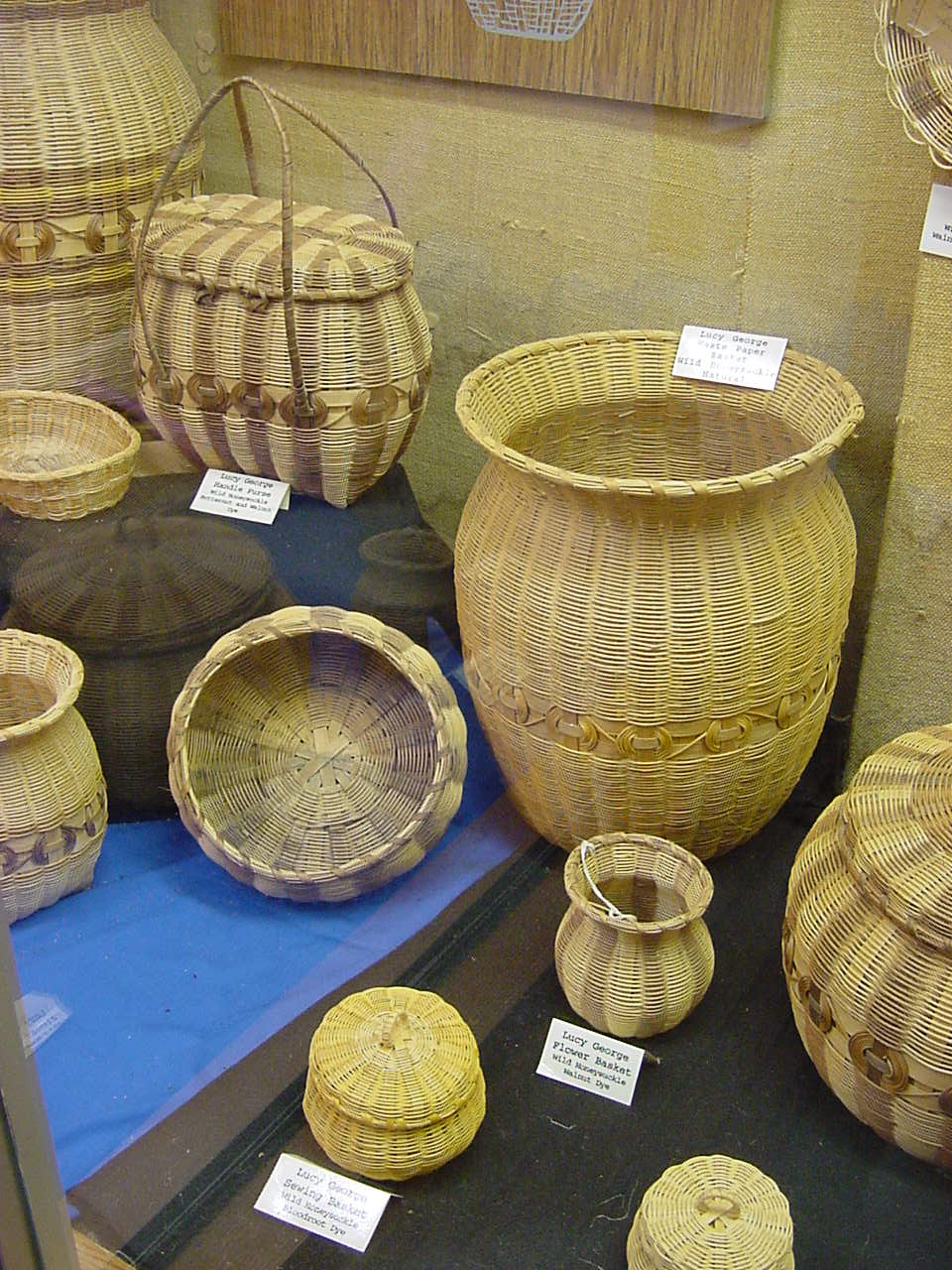
Field baskets, egg baskets, laundry baskets, gathering baskets, feed baskets, market baskets – each shape and size matched a particular task and quantity.
Buckets, crates, boxes and bags, in plastic and in cardboard.
The specificity is the thing that surprises people looking at a collection. These were not generic containers but tools with dimensions chosen for what they carried and how far, which is why a good old basket fits a job so precisely that the job becomes obvious from the shape.
10. It Was a Winter Job
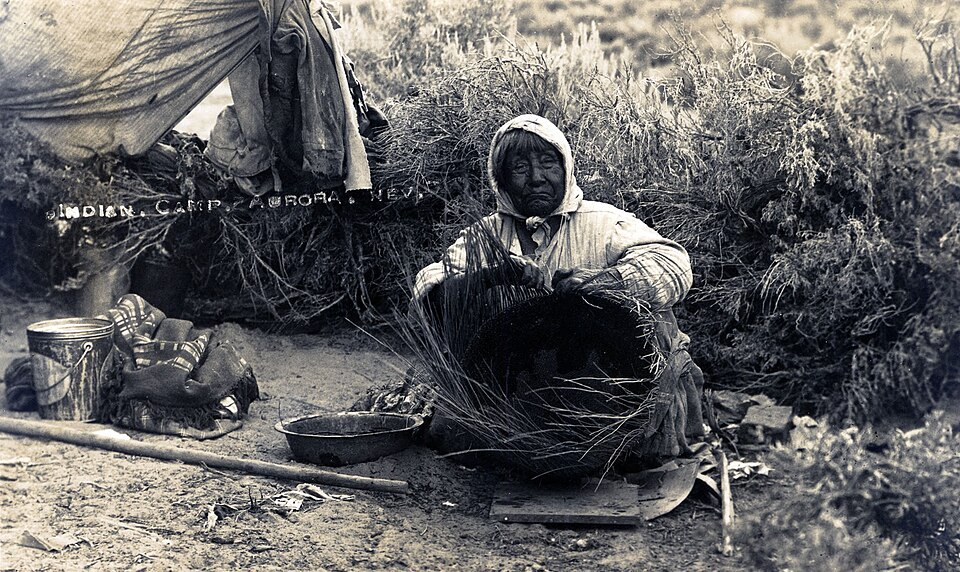
Seating and basket making happened in the months with no field work, which is also when the material was best to gather and work.
Not applicable.
The seasonal fit is neat and not accidental. Winter supplied the time, and the practice supplied something to do with it – which is the same arrangement that put mending, shelling and repair work into the same months.
11. Some People Did It for Money
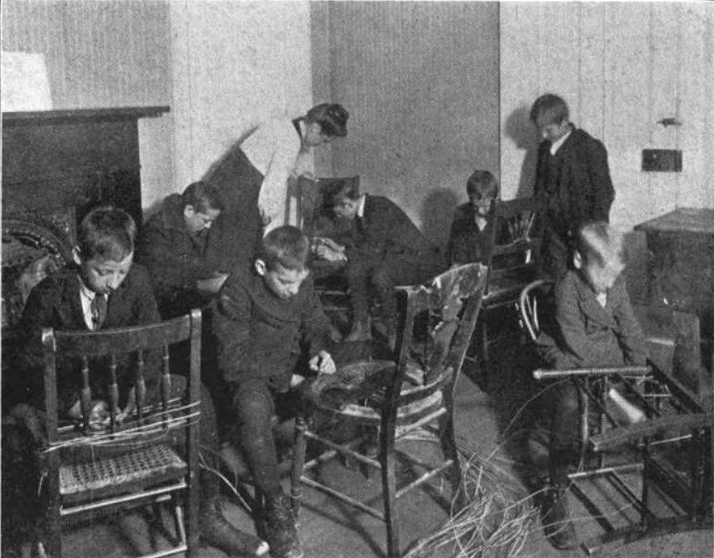
Travelling chair seaters and basket makers worked a district, and in some regions it was a recognised trade with its own reputation and customers.
A small specialist restoration trade.
The itinerant seater is a figure worth remembering. A man who could re-seat chairs arrived, took in the district’s broken chairs, worked through them and moved on – which is a service business built entirely on a consumable component in a durable object.
12. Then Furniture Got Cheap
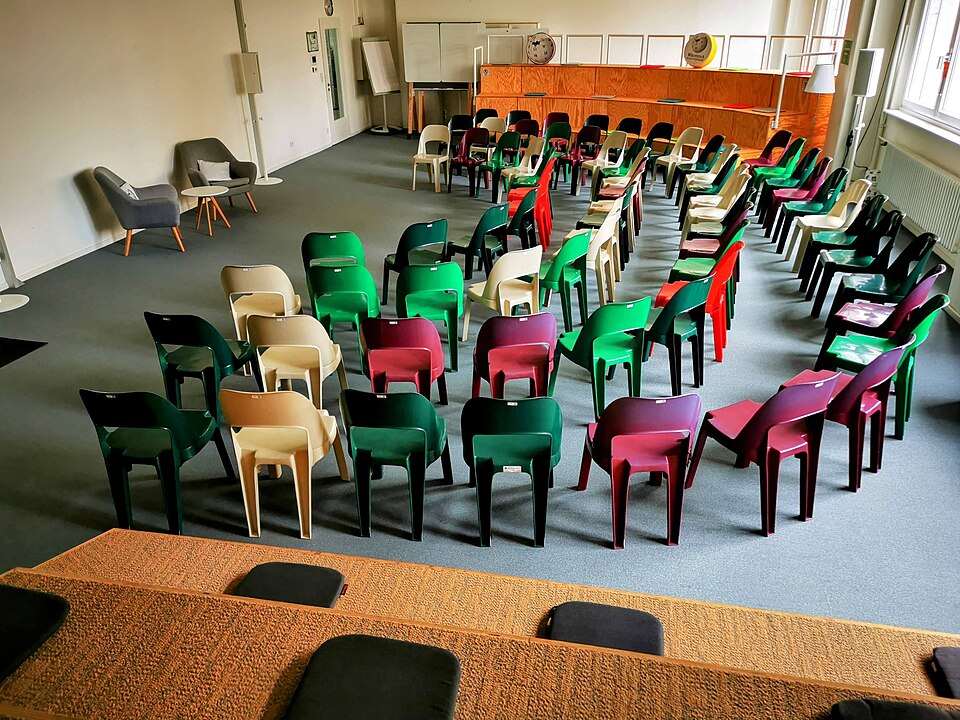
Mass-produced furniture became inexpensive enough that replacing a chair cost less than paying somebody to re-seat one.
Dominant.
The arithmetic is the whole story and it is not a mystery. Re-seating is several hours of skilled hand work on a material that must be prepared, and once a complete new chair costs less than those hours, nobody repairs anything – which is the same calculation that ended shoe repair and clothing alteration.
13. Then Pre-Woven Sheet Replaced Hand Caning
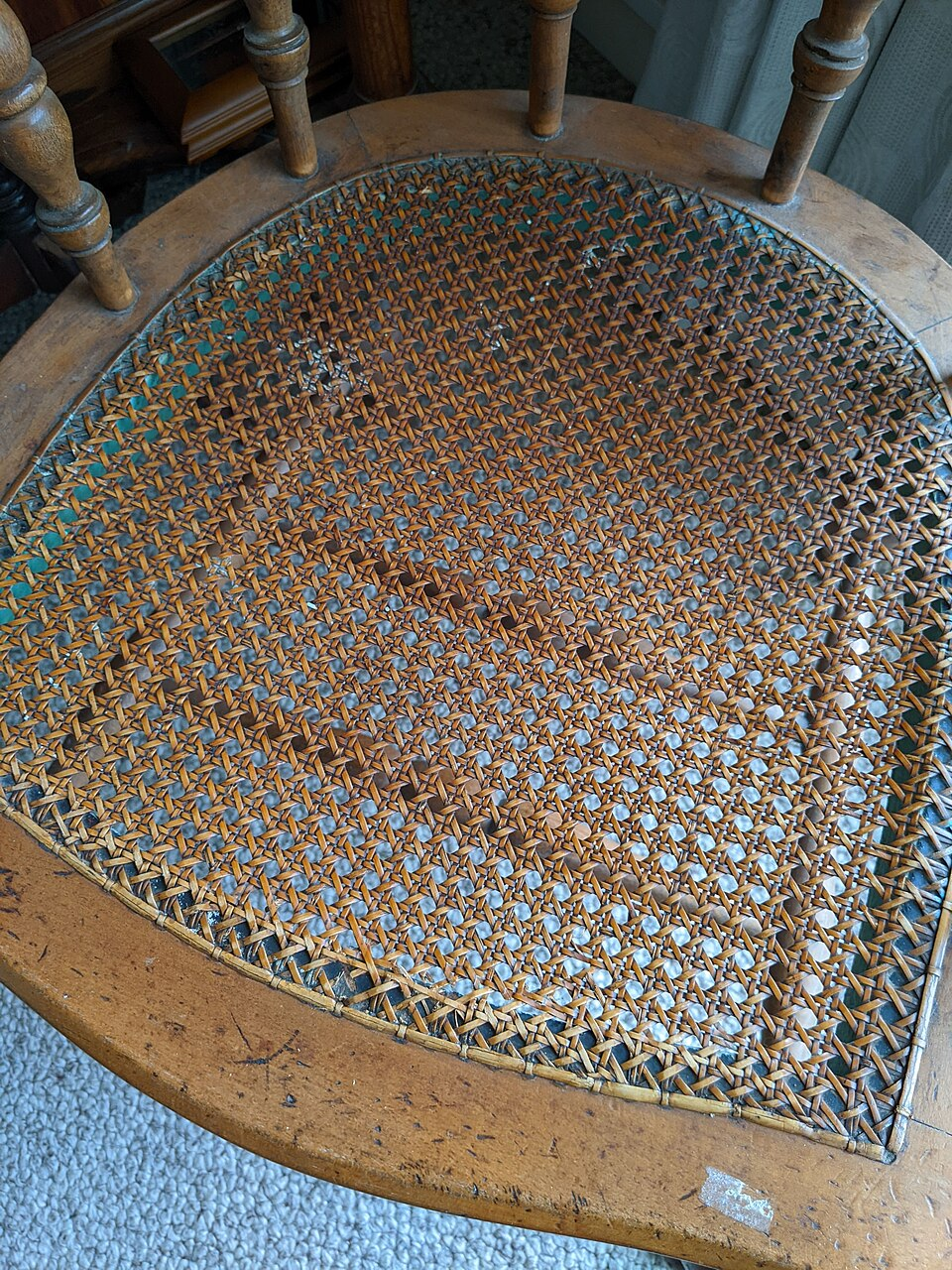
Machine-woven cane in sheet form, glued into a groove with a spline, produced the look of a caned seat in a fraction of the time.
Standard, and the reason most modern cane chairs cannot be hand re-caned without conversion.
Sheet cane is a sensible industrial answer and it also closed the door behind it. A chair built for sheet cane has a routed groove rather than a ring of drilled holes, which means it cannot receive a hand-woven seat at all – so the change was not just cheaper but structural.
14. Then Plastic Took the Baskets
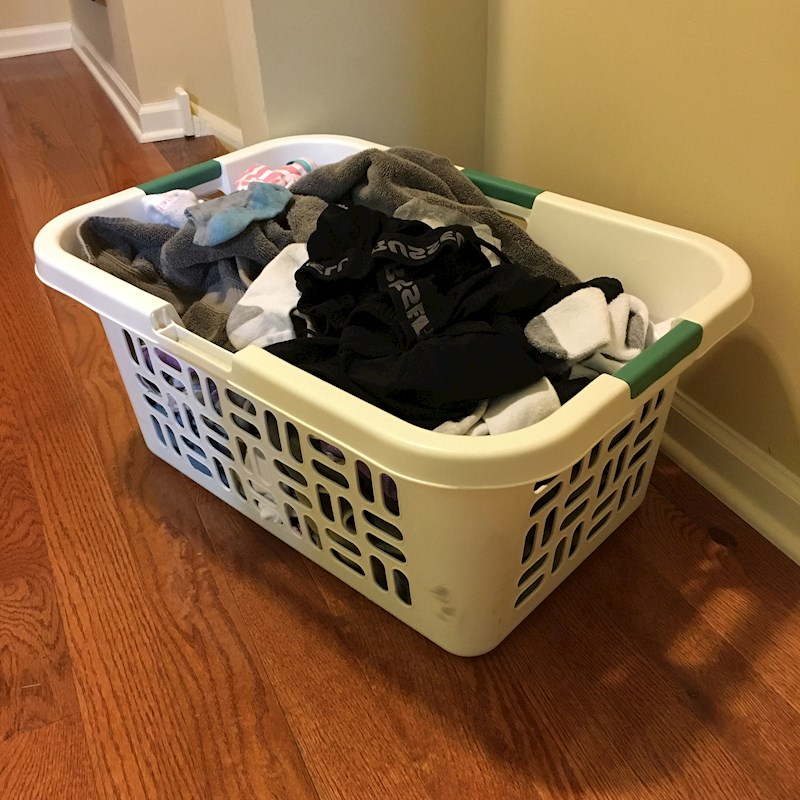
Moulded plastic containers were lighter, cheaper, waterproof, washable and effectively indestructible compared with woven wood.
Universal.
Plastic beats a splint basket on every practical measure, which is worth conceding plainly. It does not rot, it does not need soaking, it costs almost nothing, and it does not require anybody to know which tree splits well – and those are the four things that made baskets laborious.
15. Then It Became a Craft Instead of a Repair
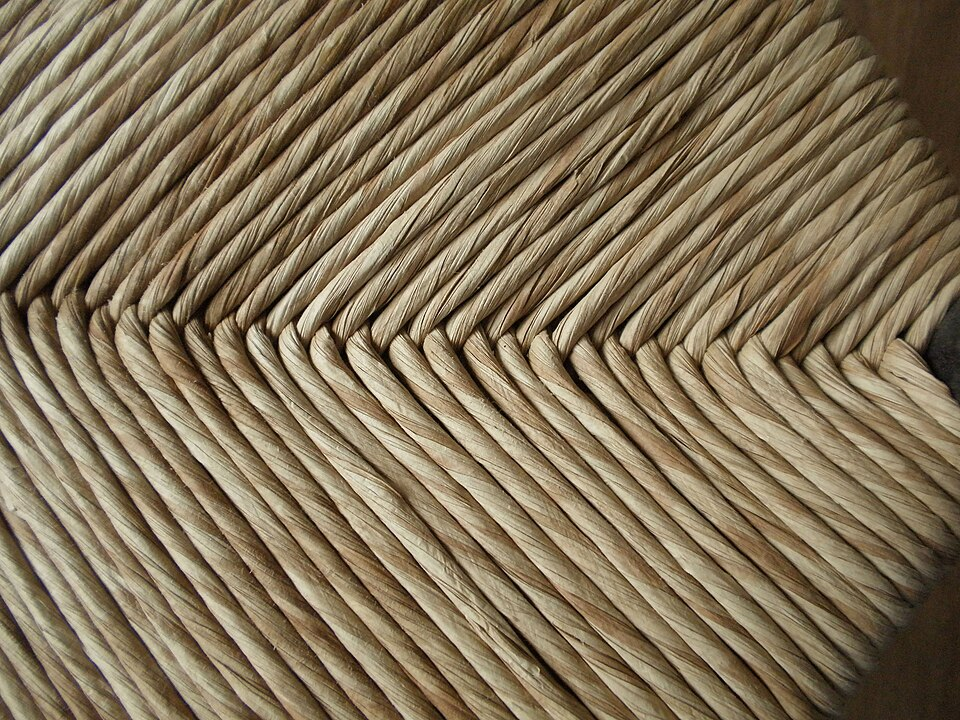
In 1964 chair seating and basket making survived as rural skills and were already becoming hobby crafts taught in classes rather than practised out of necessity.
A craft pursued for interest, with materials bought by mail, alongside a small professional restoration trade.
And the thing worth taking from it is the design philosophy, which has quietly disappeared from almost everything we own. Somebody decided that a chair should consist of a frame built to last generations and a seat built to last years, and that the second should be replaceable without disturbing the first. That is not a limitation of old technology – it is a deliberate choice, and it produced objects that stayed in service for a century because the part that wore out was supposed to wear out. The material came off the farm, the skill came out of winter evenings, and the same hands that re-seated the chair made the baskets that carried the eggs and the laundry. What ended it was not that anybody forgot how. It was that a new chair got cheaper than several hours of skilled hand work, which makes repair irrational no matter how good you are at it – and then the chairs themselves were redesigned with a routed groove instead of a ring of holes, so that even if you knew how, the new ones would not accept it.
The Design Philosophy Is What Actually Disappeared
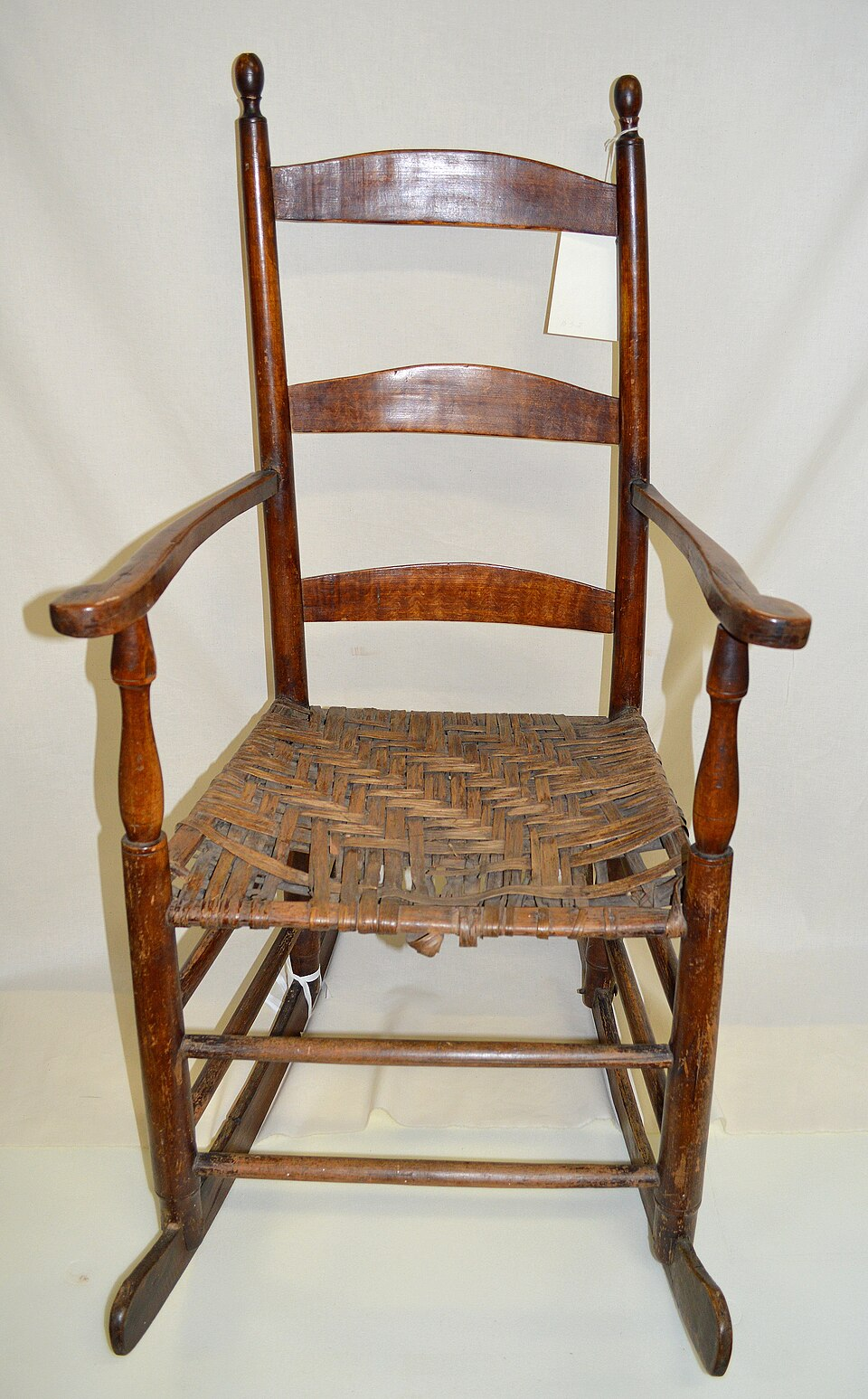
The interesting thing here is not the weaving. It is the thinking behind the object.
Somebody decided that a chair should be two things: a frame built to last generations, and a seat built to last years, with the second replaceable without disturbing the first.
That is a deliberate choice, not a limitation of old technology. And it produced objects that stayed in service for a century, because the part that wore out was supposed to wear out and everybody knew how to renew it.
The material supported that completely, because it grew nearby. Oak, ash and hickory split into long flexible strips; rush, cattail leaves and cornhusks twisted into cord. A farm with woodland had seat material on it, and knowing which trees would split into usable splints was part of knowing your own ground.
The splitting is the detail that matters technically. Splints were split along the grain rather than sawn, which means every fibre runs the full length of the strip. A sawn strip crosses the grain repeatedly and snaps. That principle governs every traditional use of split wood and it is why a well-made splint seat is far stronger than it looks.
Then the material was soaked, because wet strips bend without cracking and dry tight – so a seat woven properly tightens itself as it dries. Which also means the work had a clock on it: a seat woven slowly has strips at different moisture levels and never comes up even.
And the pattern was structural rather than decorative. A woven seat is a tension structure, and the interlace decides whether weight spreads across the whole surface or concentrates where somebody sits – which is why the same patterns recur across regions and centuries.
Hand caning, with its ring of drilled holes and six separate passes, is the most technical thing in the subject and was frequently specialist work. Each pass has to be laid correctly for the next to be possible, so a mistake early in the sequence cannot be fixed later.
Baskets came out of the same material, the same tools and the same hands, which is why they belong in one subject. And they were working equipment rather than ornament, sized to specific jobs – field, egg, laundry, gathering, feed, market – with dimensions chosen for what they carried and how far. That is why a good old basket fits its job so precisely that the job is obvious from the shape.
All of it was winter work, which is not accidental. Winter supplied the time and the practice supplied something to do with it, exactly as it did for mending, shelling and repair.
Some people did it for money. A travelling seater arrived in a district, took in the broken chairs, worked through them and moved on – a service business built entirely on the existence of a consumable component inside a durable object.
Then it ended, and the cause was arithmetic rather than forgetting.
Re-seating is several hours of skilled hand work on material that must first be prepared. Once a complete new chair cost less than those hours, repair became irrational no matter how good anybody was at it – which is the identical calculation that ended shoe repair and clothing alteration.
Plastic took the baskets, and it is worth conceding how comprehensively. Moulded containers are lighter, cheaper, waterproof, washable and nearly indestructible, they need no soaking, and they do not require anybody to know which tree splits well.
But the change that closed the door was quieter. Machine-woven cane in sheet form, glued into a routed groove and held with a spline, produces the look of a caned seat in a fraction of the time – and a chair built for sheet cane has a groove rather than a ring of drilled holes.
So even if you know how to hand cane, the new chairs will not accept it.
If somebody in your family could do this, there is a chair in the house they re-seated.
And it is probably still holding somebody up.
Like our content? Follow us for more.