

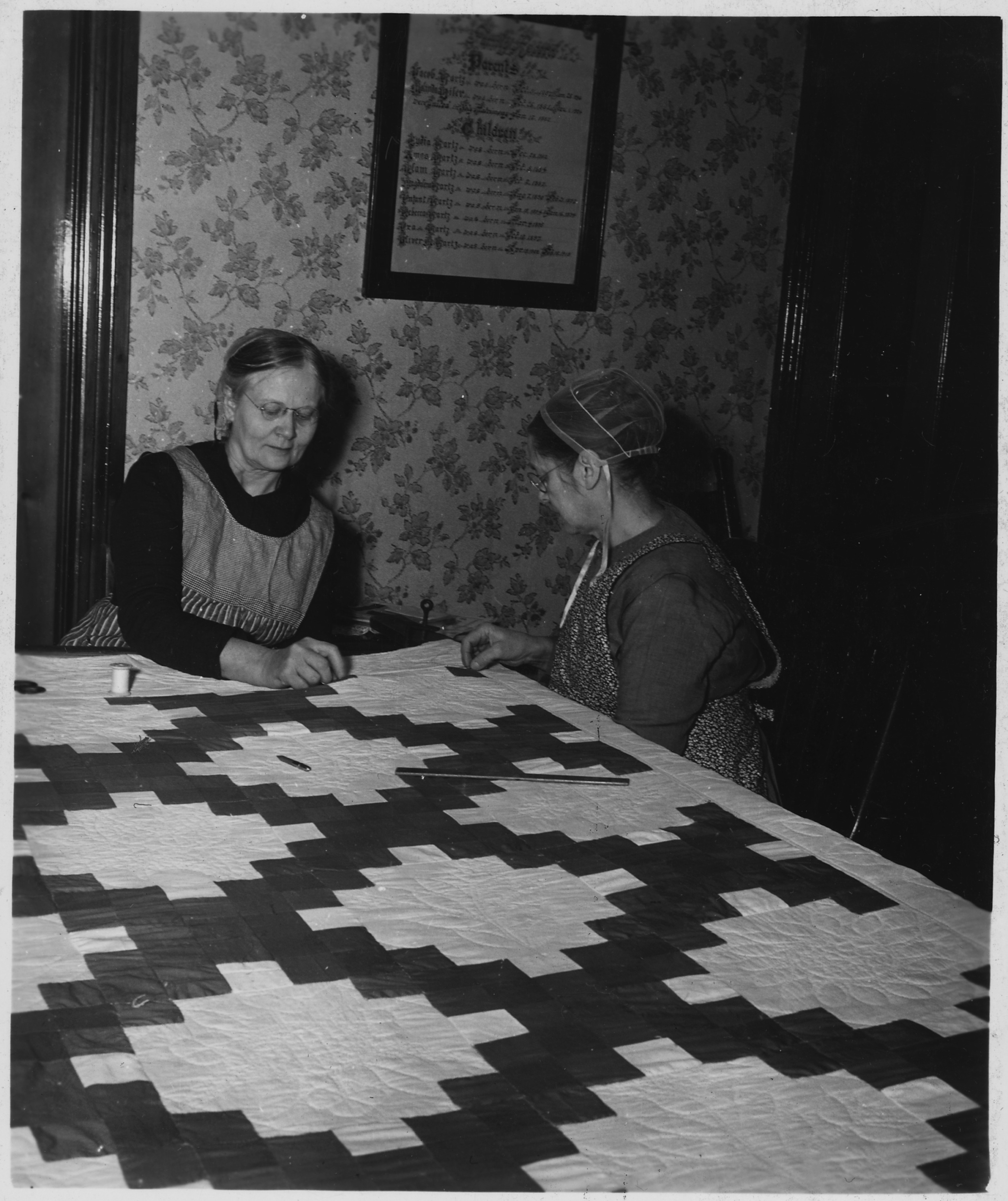
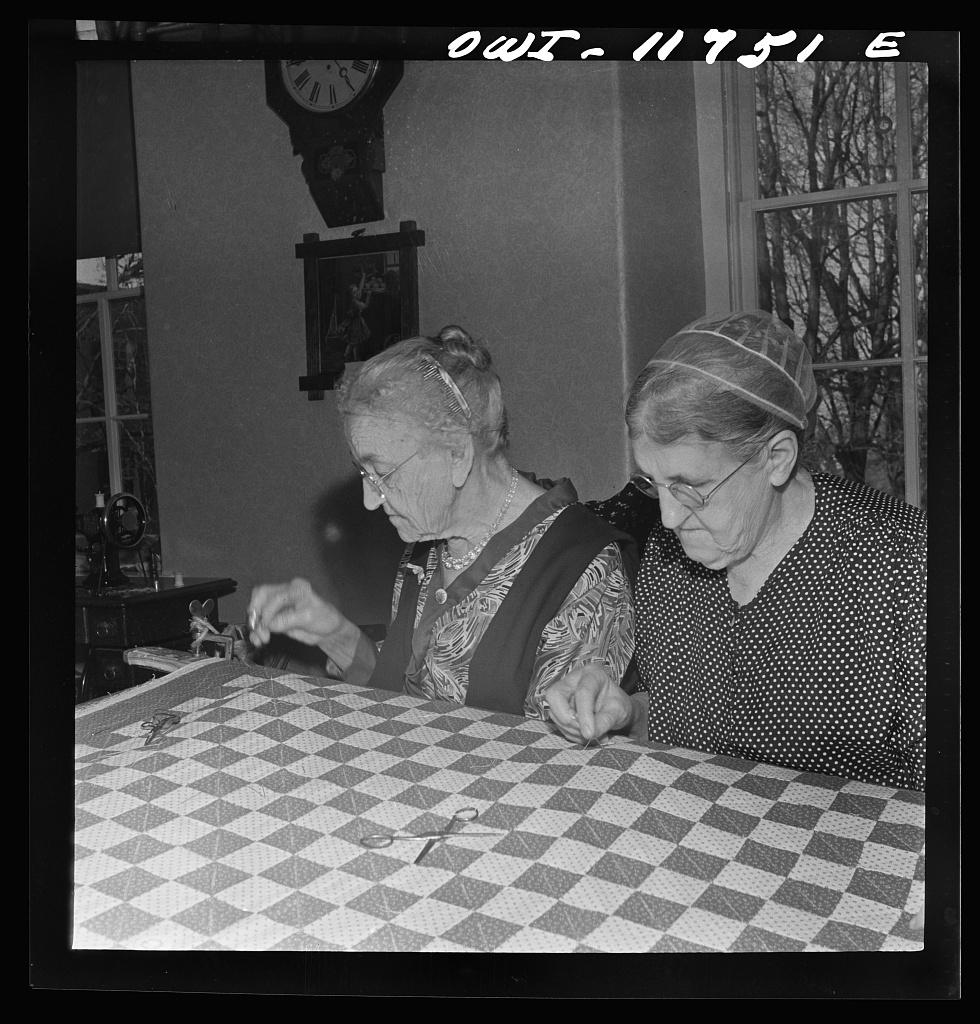
A quilt is three layers, and holding them together is what needed a crowd.
One woman could piece a decorative top over a winter in her own time. Stitching through the top, the batting and the backing is a different job – large, awkward, and requiring the whole thing held flat and taut – which is what the frame was for. And the frame was as big as the quilt, so it filled a room for as long as the work took, which is why a household wanted it done in a day rather than a month.
In many houses the frame hung from hooks in the ceiling joists and could be hoisted up out of the way. Quilters worked inward from the edges and rolled the finished part onto the bar to bring the next band within reach. Here are sixteen things every household knew.
1. A Quilt Is Three Layers and the Quilting Holds Them Together
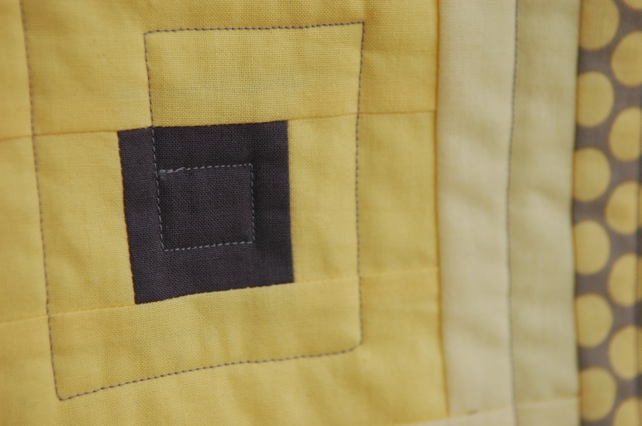
A pieced top, a layer of batting and a plain backing are stitched through all three so the filling cannot shift, and that stitching is the quilting.
Machine quilting, long-arm machines and commercial manufacture do the same job far faster.
Start with the structure, because the whole social institution follows from it. The decorative top could be made by one woman over a winter in her own time, but the stitching through three layers is a different kind of job – large, awkward, requiring the whole thing held flat and taut – and that is what needed a frame and more than one pair of hands.
Like our content? Follow us for more.
2. The Frame Took Over the Room
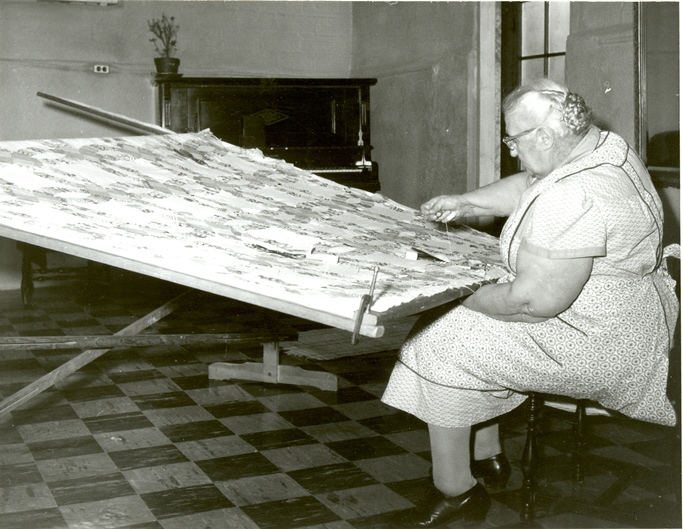
Four long bars held the layers stretched flat, supported on chair backs or on trestles, and the assembly was as large as the quilt – which meant it filled a room for as long as the work took.
Not applicable.
The frame is the reason this was an event rather than a task. You cannot put it away each evening, it occupies the main room of a house, and the household therefore has a strong interest in getting the work finished – which means inviting enough people to do it in a day or two rather than a month.
3. It Hung From the Ceiling in Many Houses
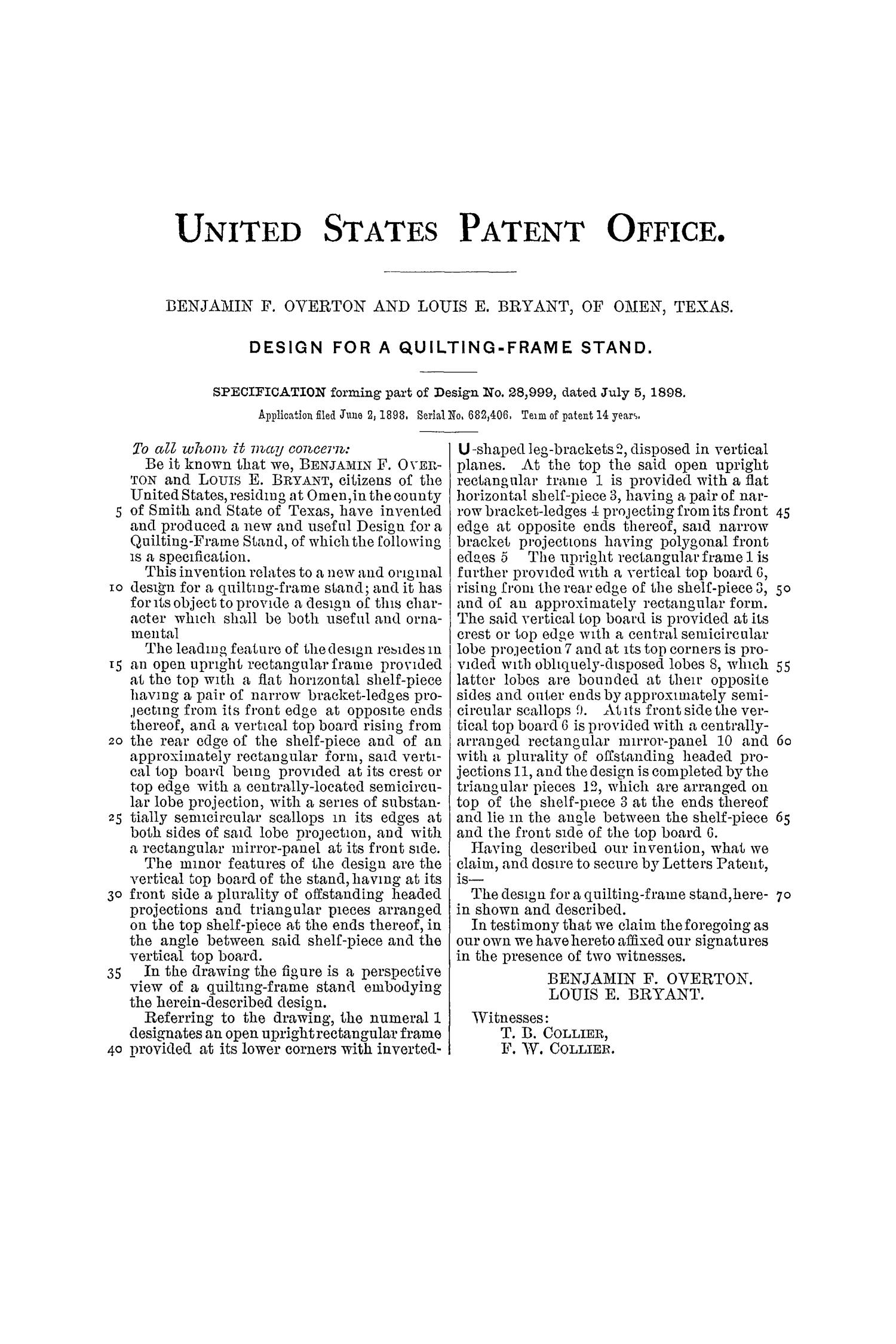
Frames were suspended from hooks in the ceiling joists on ropes or cords so that the whole assembly could be hoisted up out of the way when the room was needed.
Not applicable.
The ceiling arrangement is a genuinely clever solution and the hooks are still in the joists of a great many old houses. A frame that can be raised flat against the ceiling lets a household live around an unfinished quilt for weeks, which is why some quilts were worked on slowly by one person and others were done at speed by a crowd.
4. The Layers Had to Be Taut and Square
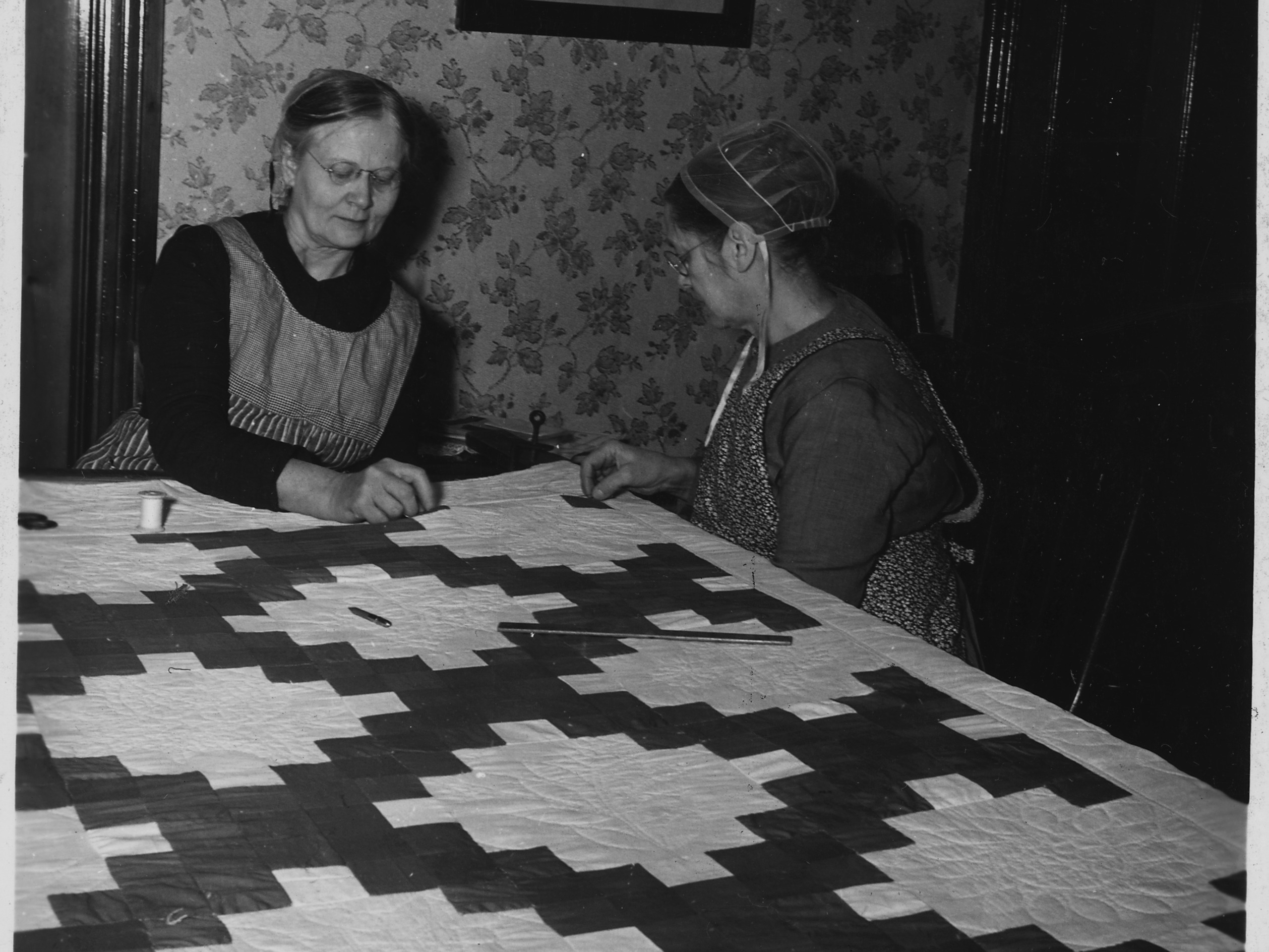
Getting the backing, the batting and the top onto the frame without wrinkles, bubbles or distortion was a slow careful job done before anybody started stitching.
Handled mechanically.
This is the step that decides whether the finished quilt is flat or puckered. Three layers of different materials at different tensions will shift against each other as they are worked, so the setting up was done by the most experienced woman present and was not rushed, because every error in it shows permanently in the result.
5. Everybody Worked Inward From the Edges
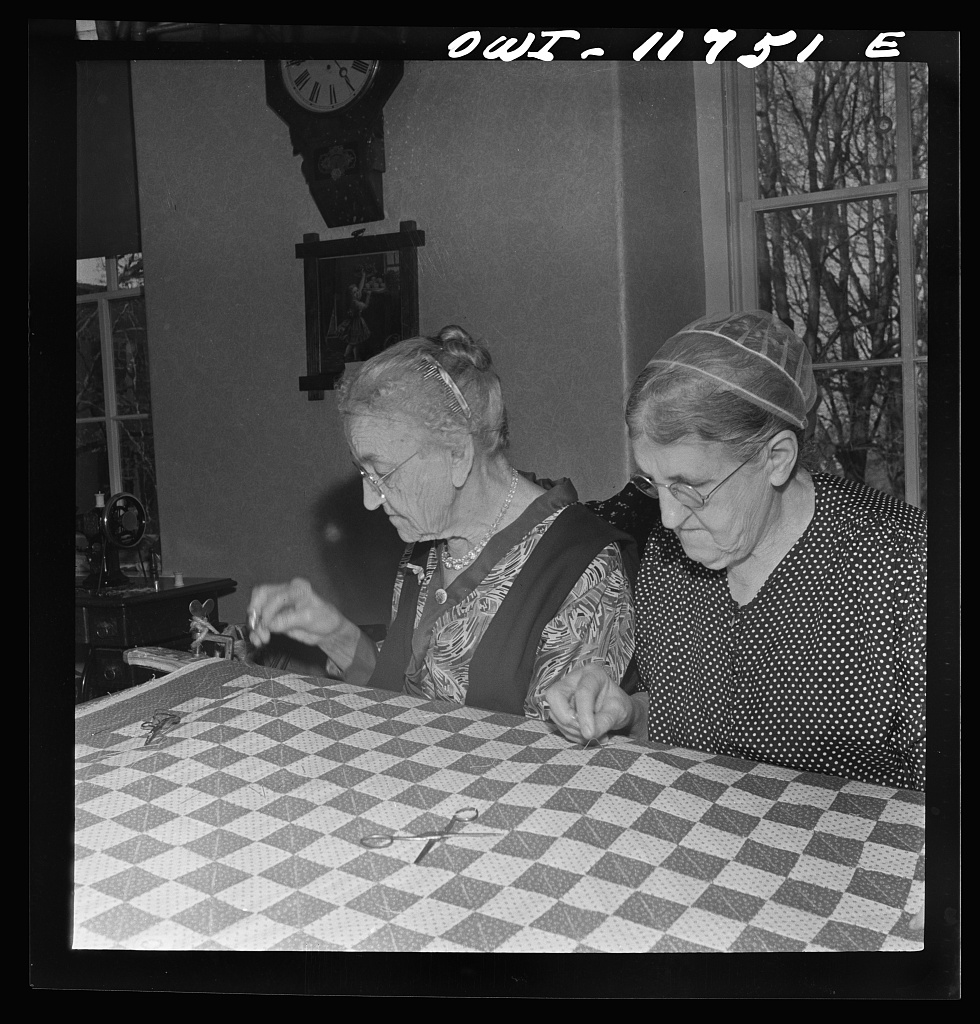
Quilters sat around the frame stitching the area they could reach, and when that was done the finished portion was rolled onto the bar so the next band came within reach.
Not applicable.
The rolling is the mechanism that makes a crowd possible. A frame only presents an arm’s width of work at a time, so the number of people who can usefully sit at it is fixed by its perimeter – and the quilt progresses by being wound up as it is finished, which is why a quilting is a sequence of sittings rather than one continuous session.
6. The Stitching Itself Was Judged
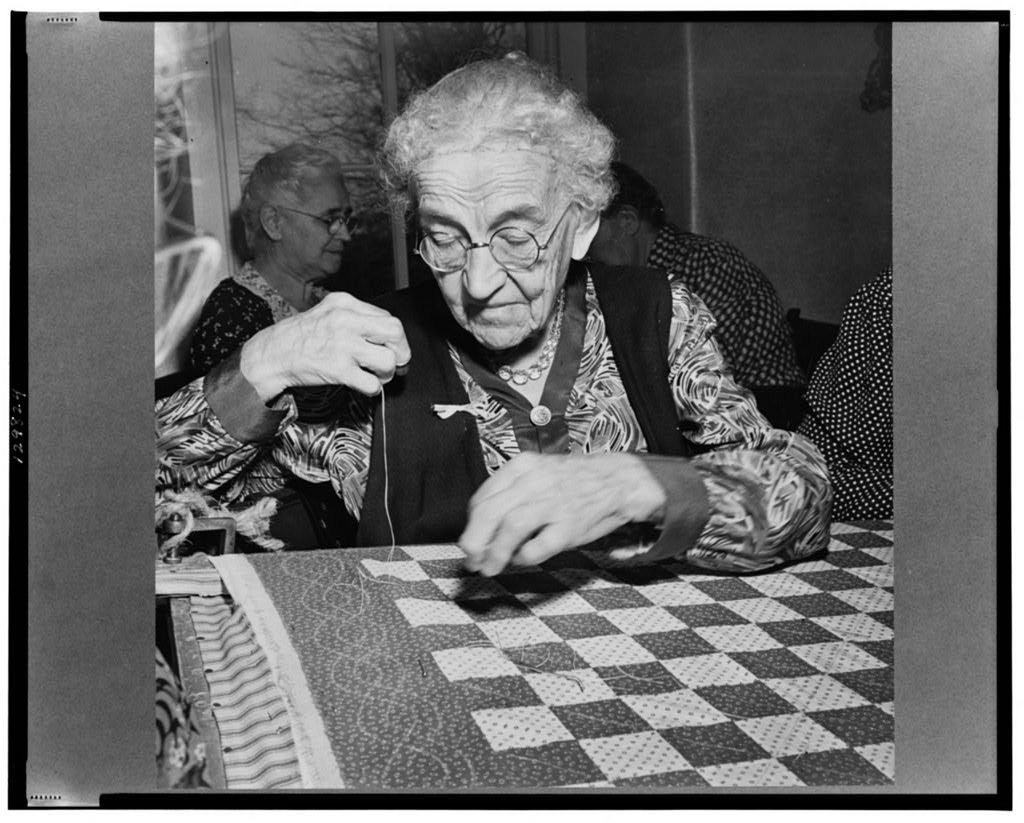
Quality was measured in stitches to the inch, evenness, and whether the line of stitching followed its marked pattern exactly, and everybody could see everybody else’s work.
Not applicable in the same way.
The visibility is what gave the occasion its edge. A quilt records who stitched which section permanently and legibly, side by side, which means a woman’s skill was on display next to her neighbours’ and would remain so for as long as the quilt existed.
7. Not Everybody Was Allowed at the Frame
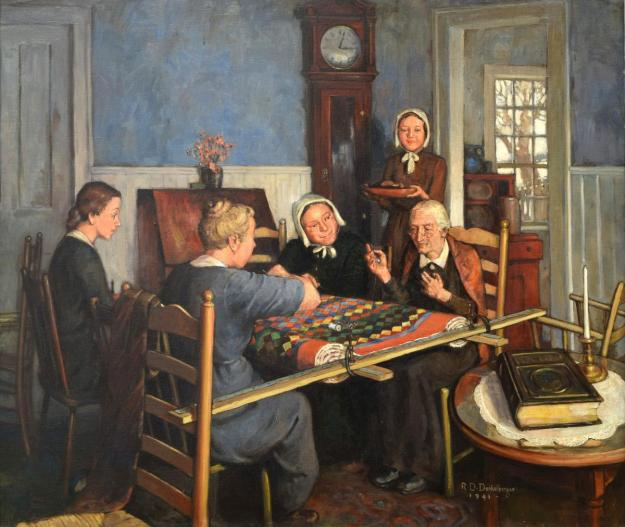
Women whose stitching was not good enough were given other jobs – threading needles, marking, cooking, minding children – and this was understood without being said.
Not applicable.
This is the part that gets left out of the warm accounts and it should not be. An occasion that displays skill publicly also sorts people by it, and a woman who was never asked to sit at the frame knew exactly what that meant. The institution was generous and it was also a hierarchy.
8. Children Were Taught Underneath It
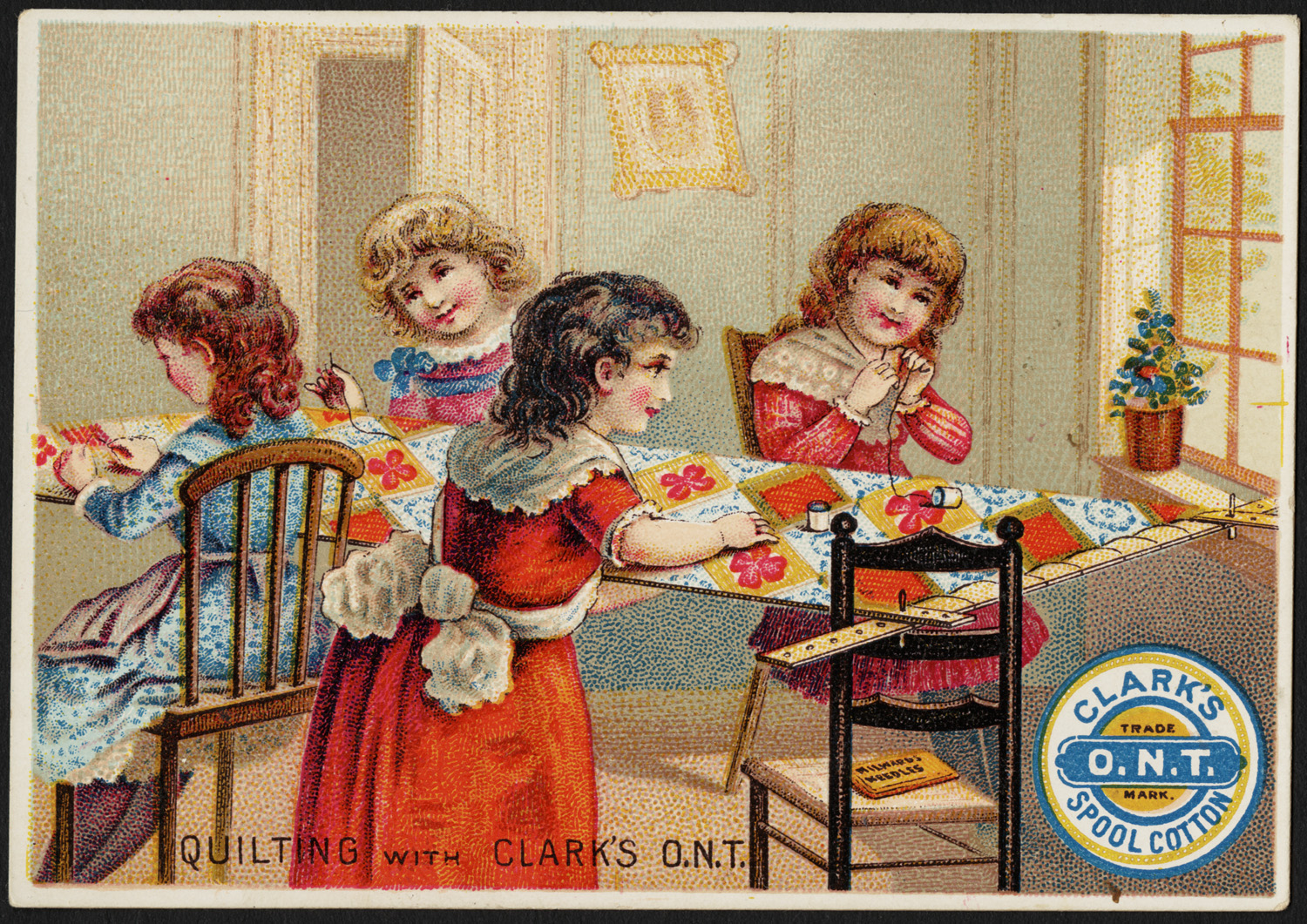
Small children played under the stretched frame, and slightly older girls were given a corner to practise on where the stitching would show least.
Not applicable.
Both halves of this are worth keeping. The space under a quilting frame is a tent that a child remembers for life, and the corner assignment is how the skill transferred – a girl’s first real stitches went into a working quilt, in the least conspicuous place, with a dozen women within earshot.
9. The Pattern Was Marked Before Anybody Stitched
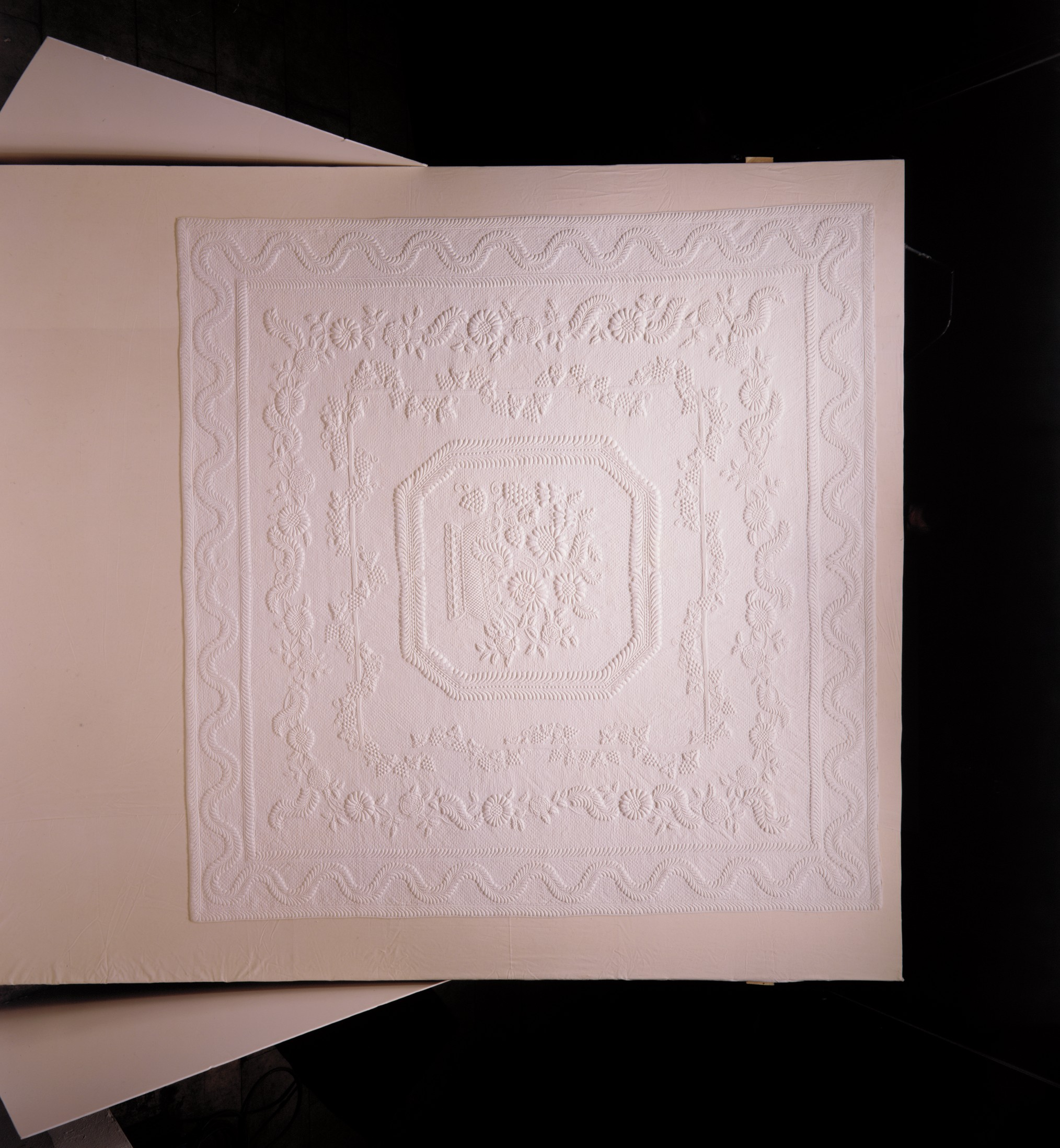
Quilting lines were drawn onto the top beforehand with chalk, pencil or a creased crease, using templates, plates, cups or cut paper shapes as guides.
Printed and digital patterns, and computer-guided machines.
The marking is where the design decisions were made and it was a separate skill. The quilting pattern is independent of the pieced pattern and can transform it, which means somebody had to work out a scheme that fitted the top, suited its seams and could be stitched continuously – all before the first needle went in.
10. The Batting Decided How Close the Stitching Had to Be
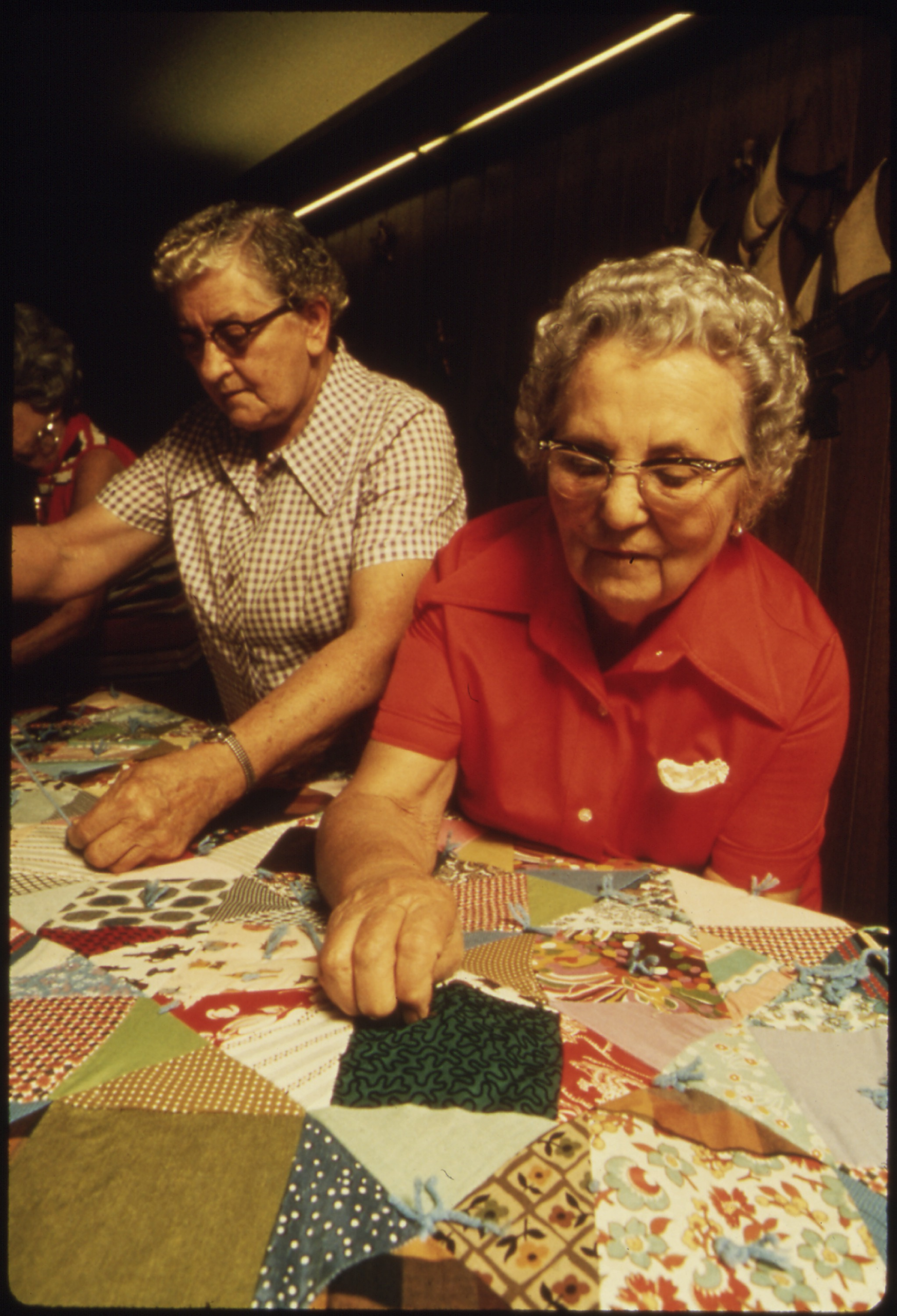
Loose carded cotton or wool filling shifts and clumps if it is not held at short intervals, so the quilting lines had to be spaced closely enough to trap it.
Modern bonded batting holds together and permits widely spaced quilting.
This is the technical constraint behind all that dense stitching, and it is usually mistaken for showing off. Those elaborate close-packed designs exist because the filling available would migrate into lumps if left unsupported – the decoration is solving a structural problem, which is the best kind of decoration.
11. A Quilting Was Also the District’s Information Exchange
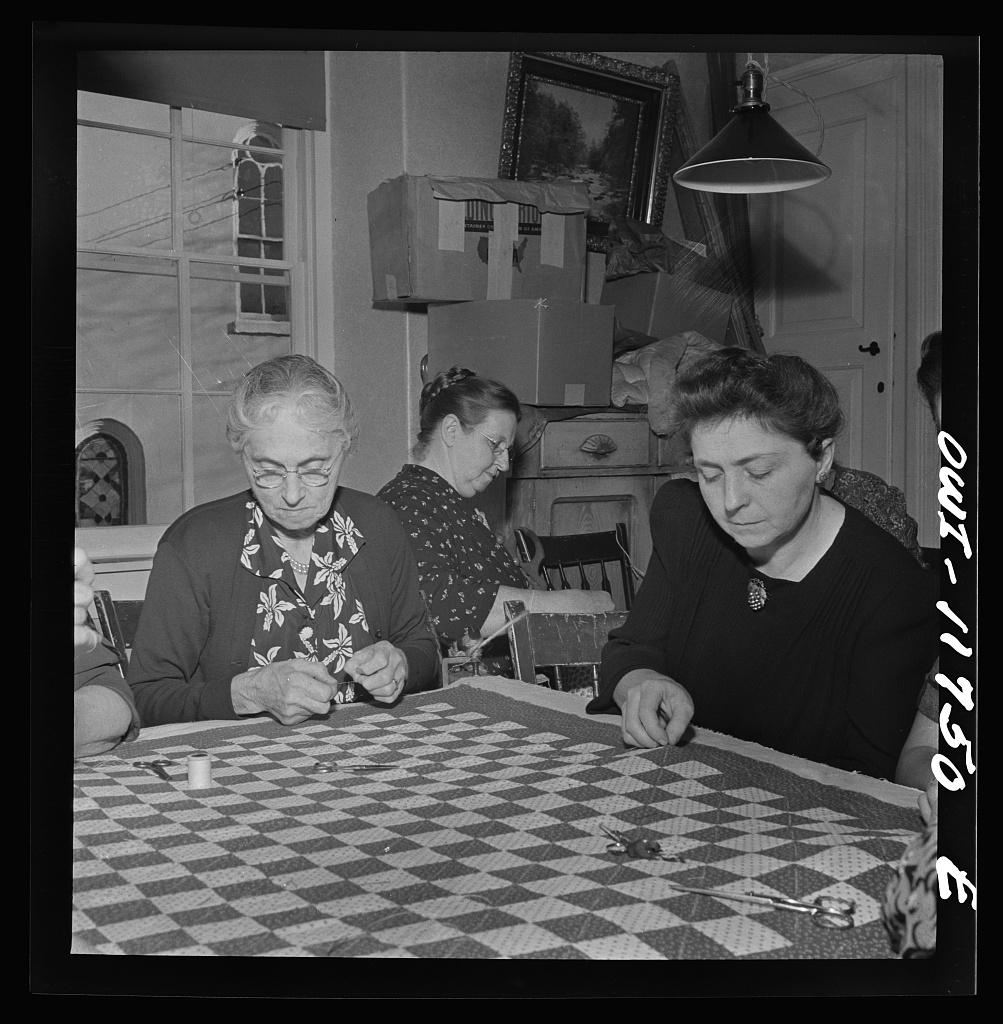
A dozen women in one room for a full day, working with their hands and facing each other, produced conversation that was the main channel by which news, advice and arrangements moved through a neighbourhood.
Not applicable.
The talk was not incidental to the occasion, it was half the point. A form of work that occupies the hands and leaves the voice free, among people who otherwise saw each other rarely, is an extremely efficient way to move information – and the women in that room were the people who knew what was happening in every household in the district.
12. Quilts Were Made for Specific Occasions and People
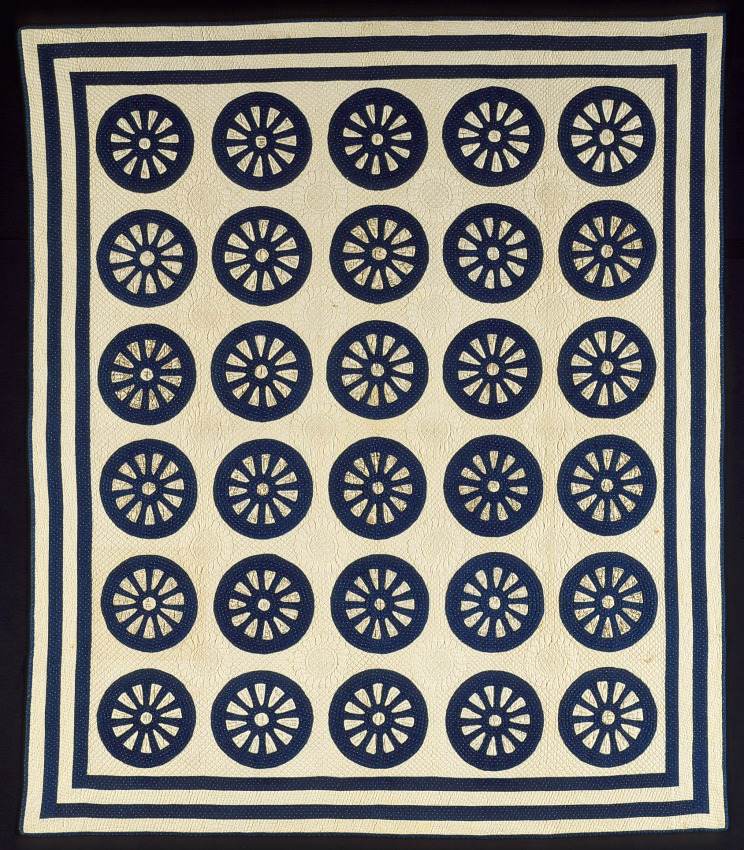
Quilts were made for a marriage, for a child, for somebody leaving, as a gift to a minister, or to raise money – and who stitched them and why was recorded in the household’s memory.
Not applicable at that scale.
The purpose is what makes these objects documents. A quilt made by twelve named women for one specific person on one specific occasion carries information that no bought object can, which is why the surviving ones are treated as records rather than as bedding.
13. Some Were Signed
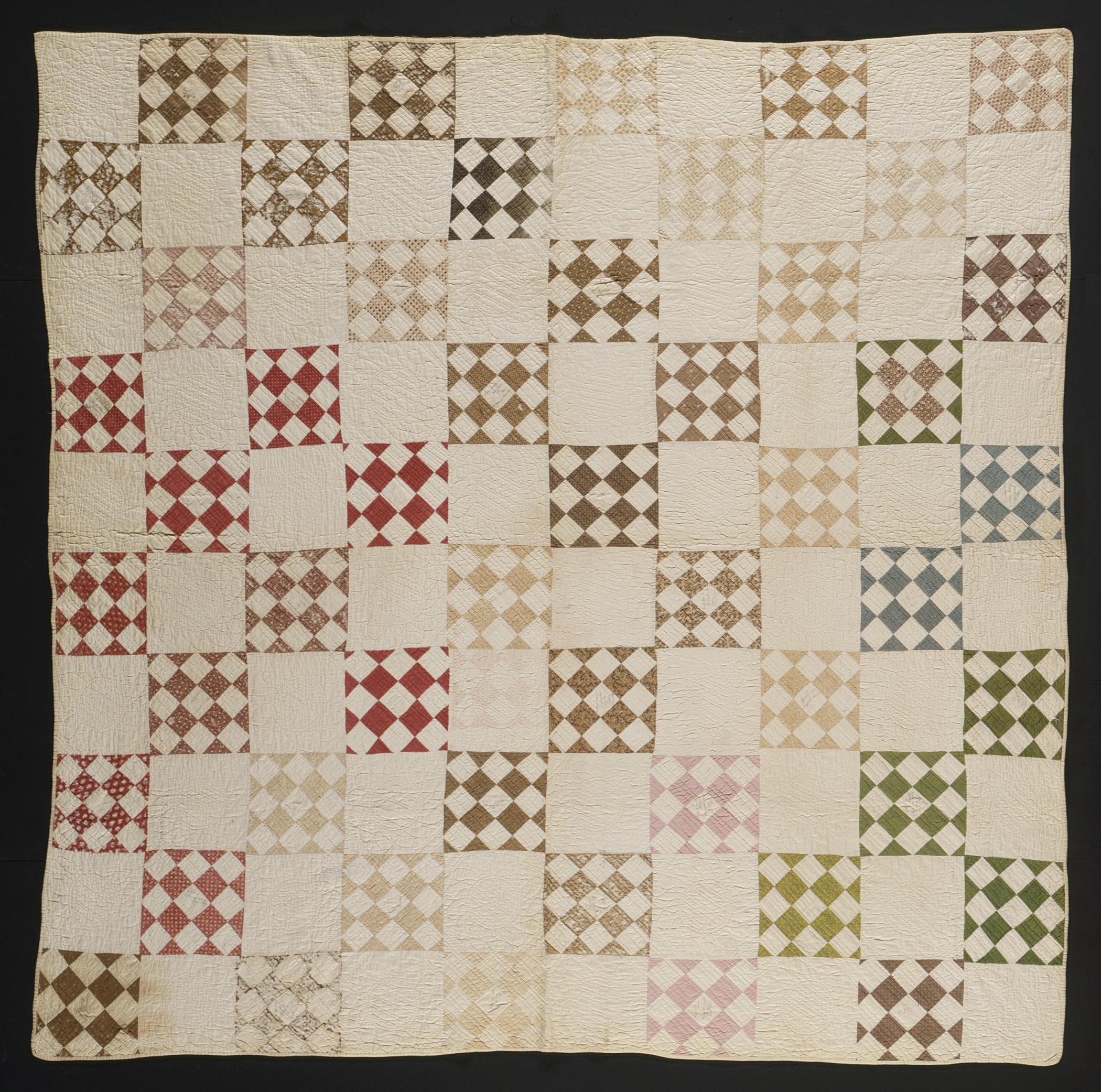
Quilters wrote their names on the pieces in ink or embroidered them, producing a quilt that is a list of everybody who worked on it.
Not applicable.
The signed quilts are the reason we know anything about this. A quilt with a dozen names on it, made at a known occasion, is a primary source about who was in a community and who they were connected to – and it is frequently the only surviving document naming any of them.
14. The Men Came at the End
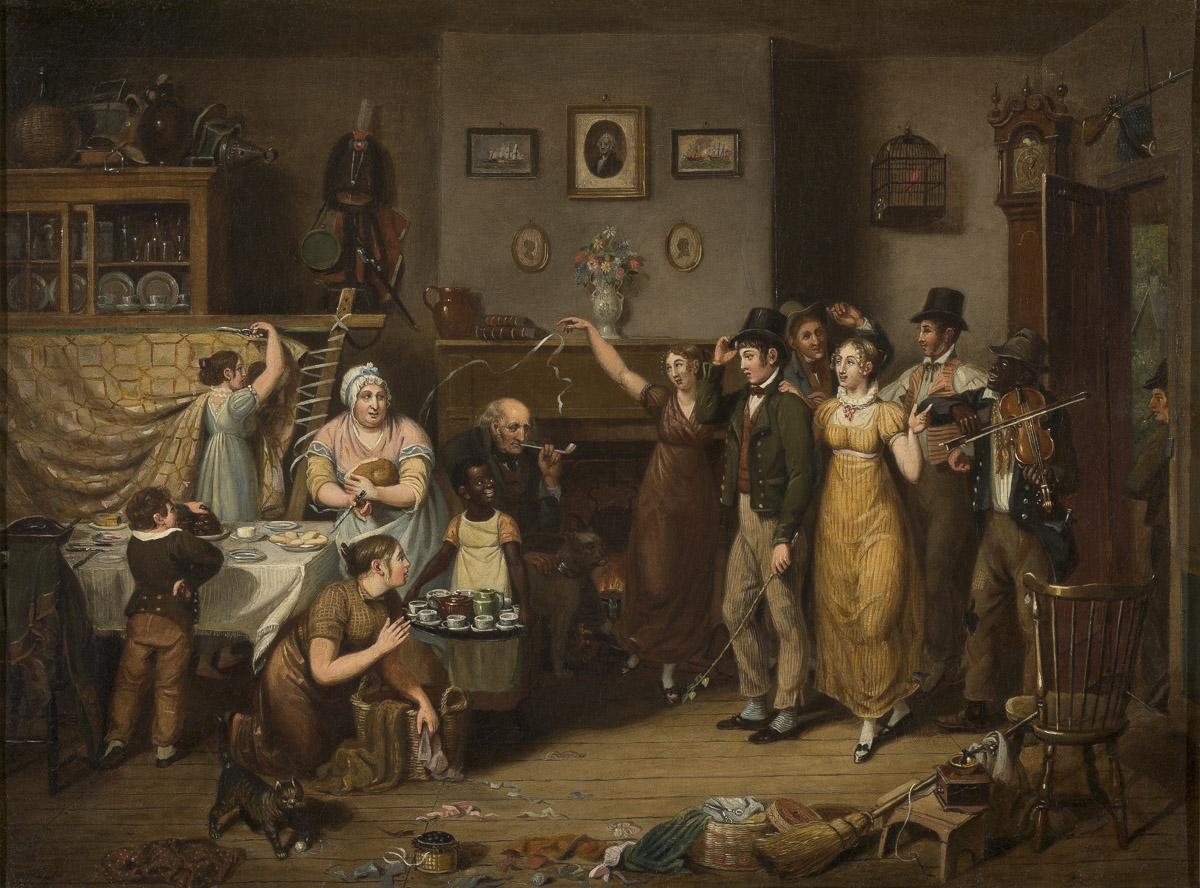
A quilting frequently finished with a supper and sometimes a gathering in the evening, with the men arriving once the work was done.
Not applicable.
The structure of the day is worth noticing because it is a precise statement of who the occasion belonged to. The work and the room were the women’s, all day, and the social event at the end was general – which made the quilting one of the very few institutions of its period that was organised by and for women as a matter of course.
15. Then the Sewing Machine Took the Piecing and Then the Quilting
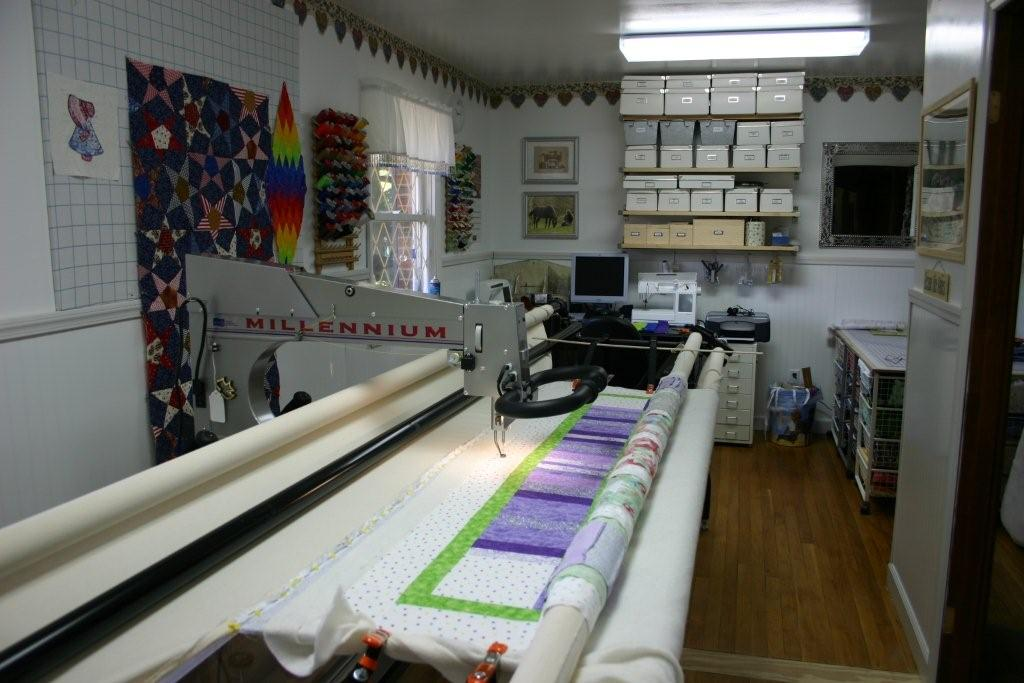
Machines made the pieced top far quicker, and eventually machines could do the quilting itself, which removed the reason for the frame and the crowd.
Universal.
Mechanisation is the straightforward cause. Once one woman with a machine can produce in days what a dozen produced in a day, the gathering is no longer necessary to the work – and an occasion that exists because a job needs many hands does not survive the job needing one.
16. And by 1964 It Was a Club Rather Than a Necessity
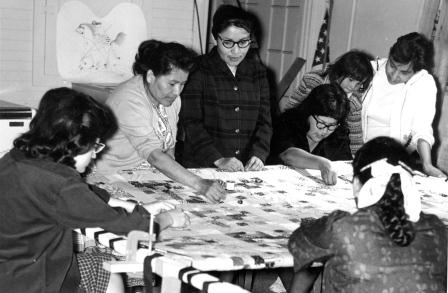
Quilting continued and still continues, but as a chosen craft and a social choice rather than as the only way to get a needed object finished.
A large and thriving craft, pursued deliberately.
And what deserves the last word is that this was a working institution that happened to be a social one. A household needed bedding, bedding needed three layers stitched together, and stitching three layers on a frame needs a room and many hands – so a dozen women came, and because they came they talked, and because they talked the district stayed informed, and because they signed their work we still know their names. None of that was anybody’s intention. It was the by-product of a technical requirement about keeping cotton batting from clumping. When machines took the job, the by-products went with it: the room, the day, the talk, the hierarchy at the frame, the girl given a corner to practise on, and the children under the stretched cloth. The craft survived in excellent health and the institution did not, because the institution was never the point – it was what happened while the work got done.
The Institution Was a By-Product of Cotton Batting
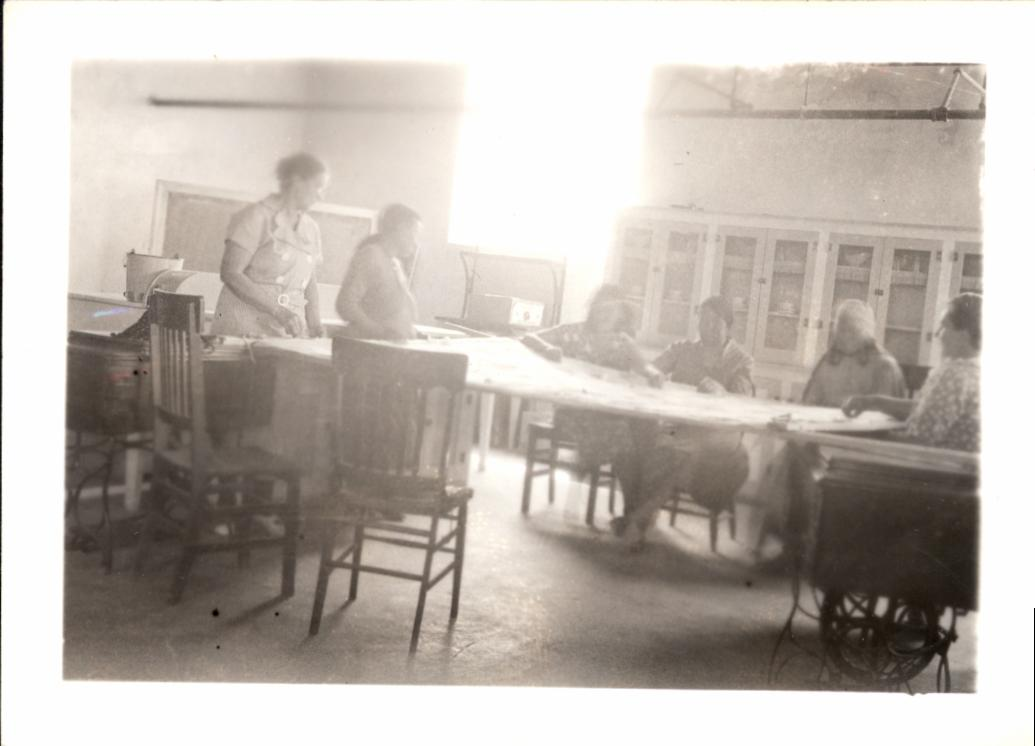
A quilting gets remembered as a social occasion, and it was one – but it existed for a technical reason, and the technical reason is more interesting than the sociability.
Start with the object. A quilt is three layers: a pieced top, a filling, and a plain backing, stitched through all three so the filling cannot move. The top is decorative and one woman could make it alone over a winter. The stitching through three layers is something else entirely – large, awkward, and only possible with the whole assembly held flat and under tension.
Hence the frame, and hence everything else.
Four long bars held the layers stretched flat on trestles or chair backs, and the assembly was as big as the quilt. Which means it filled the main room of a house for as long as the work took, and the household therefore had a strong interest in finishing quickly – so you invited enough people to do it in a day or two. In a great many houses the frame hung from hooks in the ceiling joists on ropes and could be hoisted flat against the ceiling when the room was needed, and those hooks are still up there in old houses.
Setting up was the step that decided everything. Three layers of different materials at different tensions will shift against each other as they are worked, so getting them on square and taut without wrinkles or bubbles was slow, careful, done by the most experienced woman present, and never rushed – because every error shows permanently.
Then the work proceeded inward. Quilters stitched what they could reach, and the finished band was rolled onto the bar to bring the next within reach. A frame only presents an arm’s width at a time, so the number of people who can usefully sit at it is set by its perimeter, and the quilt advances by being wound up as it is completed.
Two things about the stitching are worth understanding.
It was judged, in stitches to the inch, in evenness, and in whether the line followed its marked pattern exactly – and everybody could see everybody else’s work, permanently, side by side, for as long as the quilt existed. Which gave the occasion an edge. And not everybody was allowed at the frame: women whose stitching was not good enough got other jobs, and this was understood without being said. An occasion that displays skill publicly also sorts people by it, and a woman never asked to sit down knew what that meant. The institution was generous and it was also a hierarchy.
The density of the stitching is the part almost everybody misreads. Those elaborate close-packed designs are not showing off. Loose carded cotton or wool filling migrates and clumps if it is not held at short intervals, so the lines had to be spaced closely enough to trap it. The decoration is solving a structural problem.
And the pattern was marked before anybody stitched, with chalk or pencil, using templates, plates, cups or cut paper. The quilting pattern is independent of the pieced pattern and can transform it, so somebody had to devise a scheme that fitted the top, suited its seams and could be stitched continuously – a separate skill, exercised before the first needle went in.
Now the by-products, which are what everybody remembers.
A dozen women in one room for a full day, hands occupied and voices free, facing each other, among people who otherwise saw each other rarely. That is an extremely efficient way to move information, and the women in that room were the people who knew what was happening in every household in the district.
Children played under the stretched frame, which is a tent a child remembers for life. Slightly older girls were given a corner to practise on where the stitching would show least – which is exactly how the skill transferred.
Quilts were made for a marriage, a birth, a departure, a minister, or to raise money, and who stitched them and why stayed in the household’s memory. Some were signed, in ink or embroidery, which produced a quilt that is a list of everybody who worked on it – and such a quilt is frequently the only surviving document naming any of those women.
The day usually ended with a supper, and the men arrived once the work was done. Which is a precise statement of who the occasion belonged to: the room and the work were the women’s, all day.
Then the sewing machine took the piecing, and eventually machines could do the quilting itself. Once one woman with a machine produces in days what a dozen produced in a day, the gathering is no longer necessary to the work – and an occasion that exists because a job needs many hands does not survive the job needing one.
So the craft survived in excellent health and the institution did not.
Which is the thing worth sitting with. The room, the day, the talk, the hierarchy at the frame, the girl in the corner, the children under the cloth – none of it was anybody’s intention. It was the by-product of a requirement about keeping loose cotton from clumping.
The institution was never the point. It was what happened while the work got done.
If an old house near you has unexplained hooks in the parlor ceiling, that is what they are for.
A quilt frame hung from those, and was pulled up when the room was needed.
Like our content? Follow us for more.

