

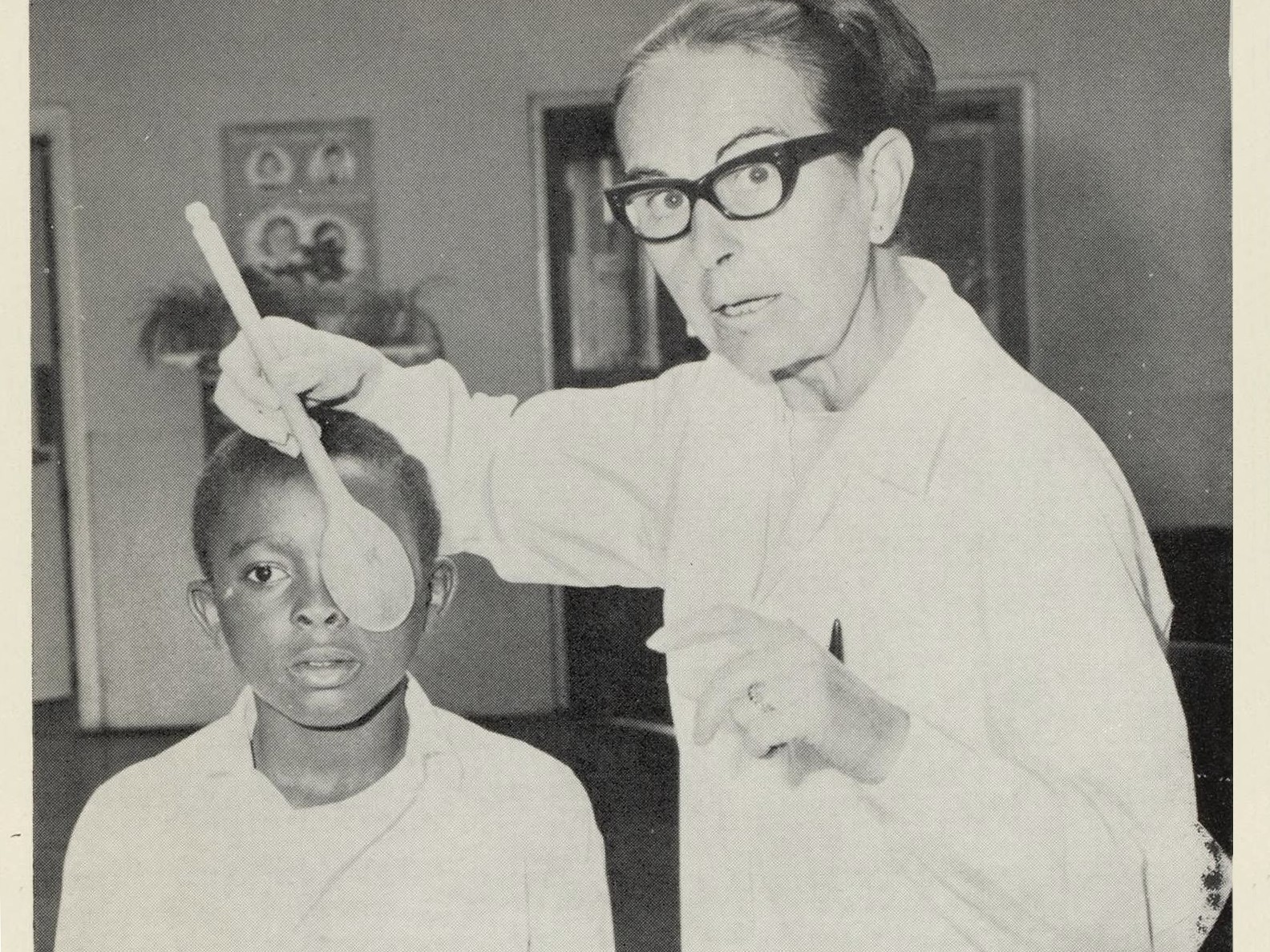
Once a year the line formed in the corridor outside the nurse’s room, and one by one you stood on a mark on the floor, covered one eye with a card and read letters off a chart on the far wall until you could not. In 1964 that two-minute performance was, for a great many children, the only sight test anybody ever gave them.
The School Was Doing It Because Nobody Else Was
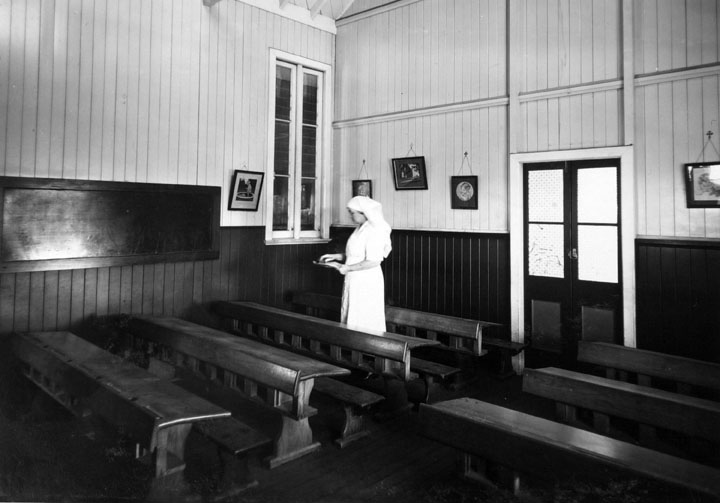
Routine eye examinations outside school were not a universal part of growing up, and a great many families had no reason to arrange one.
That absence is the whole reason the corridor line existed. A screening programme run through schools reaches every child in a district in a single week, which is a coverage figure no voluntary arrangement can approach, and the entire design follows from that.
Like our content? Follow us for more.
A Screening Is Not an Examination and That Distinction Mattered
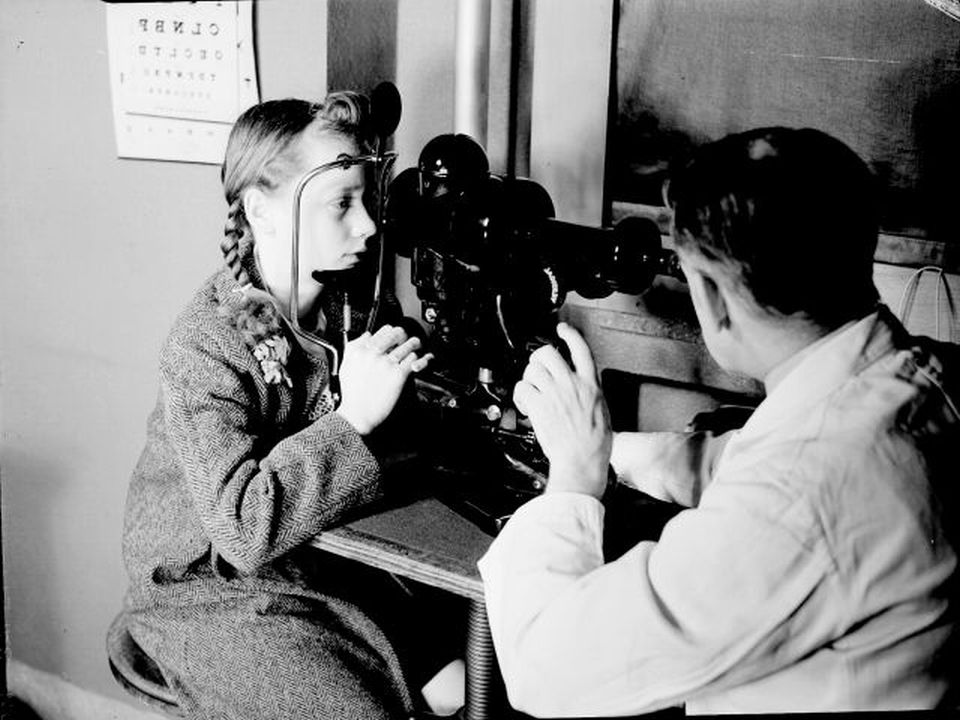
The test was built to sort children into two groups – those who could read the expected line and those who could not – and nothing more.
Confusing the two is the commonest misunderstanding of the whole subject. The school was not diagnosing anything, measuring anything precisely or deciding anything; it was identifying the children who ought to be looked at properly by somebody qualified, and that is a deliberately crude job.
The Chart Was Designed Around a Single Clever Idea
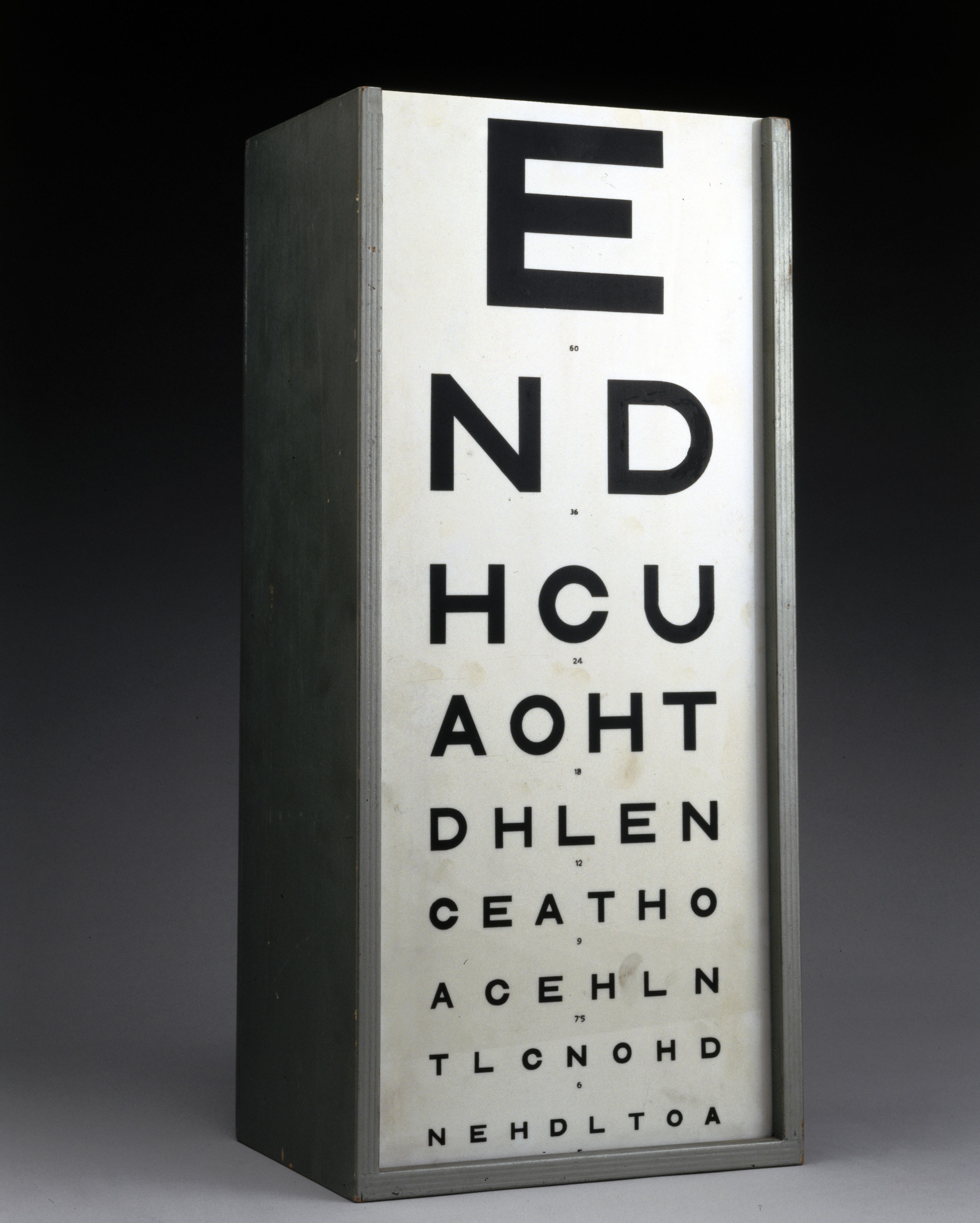
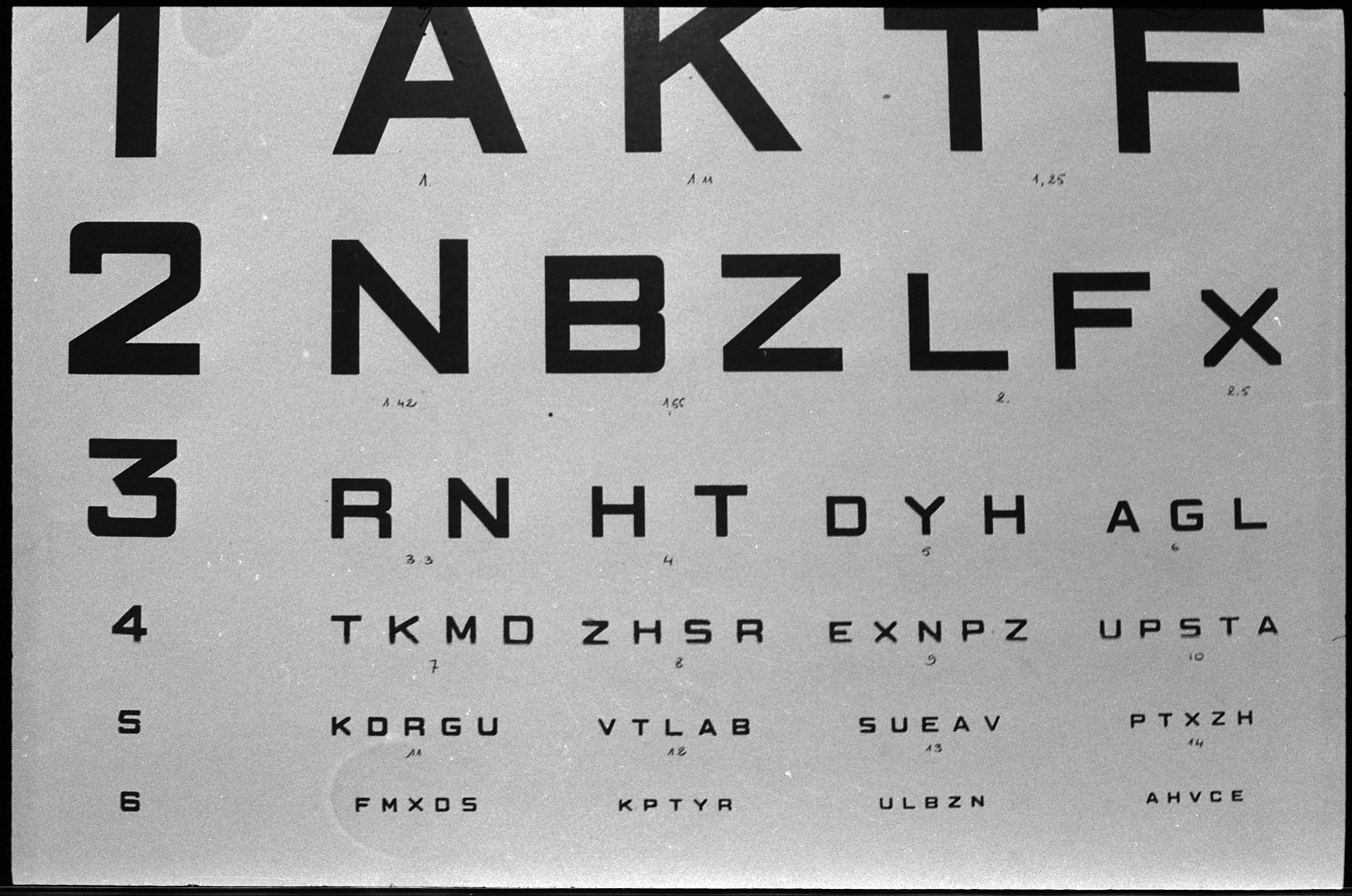
Letters of decreasing size arranged in rows, each row labelled, with the test being which row you could still read from a fixed distance.
The design is older than anybody being tested and remarkably economical. By making the letters shrink in a controlled progression and fixing the viewer’s distance, the chart turns a question about a person’s eyes into a question about which line they stopped at – a single number from a printed sheet of paper.
The Mark on the Floor Was the Instrument
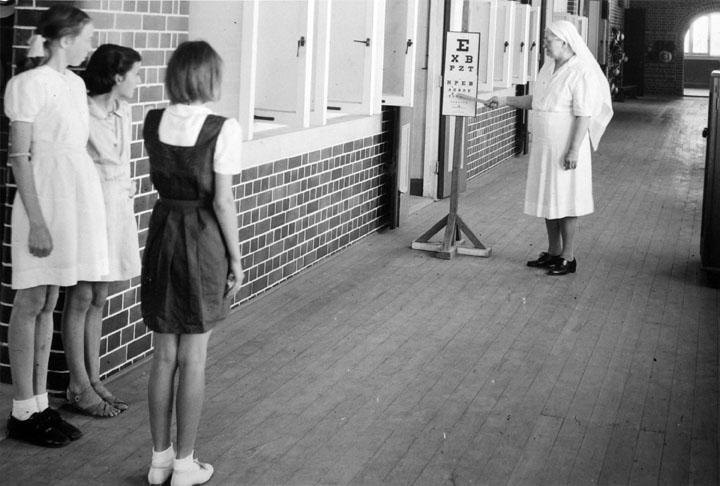
Everything depended on standing exactly the right distance from the wall, which is why there was a line taped or painted on the floor.
That tape is the only piece of calibration in the entire procedure. A chart read from too close gives a flattering result and from too far a false alarm, so the distance is not a convenience – it is the measurement, and the letters are just what you look at while standing on it.
Covering One Eye Was the Point of the Whole Exercise
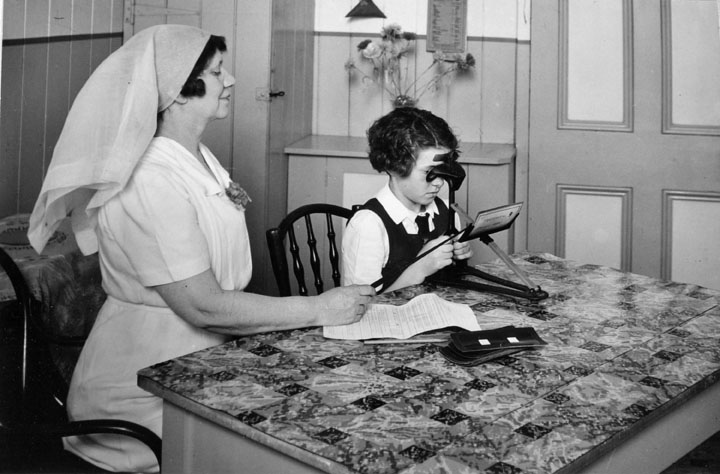
A child with one weak eye and one strong one sees perfectly well with both open, and will pass any test that does not separate them.
This is the single most important thing about the test and the reason for the card. The condition the screening was best placed to find is precisely the one that produces no symptoms and no complaint, because the good eye compensates completely and the child has no idea anything is different.
Children Had No Basis for Comparison
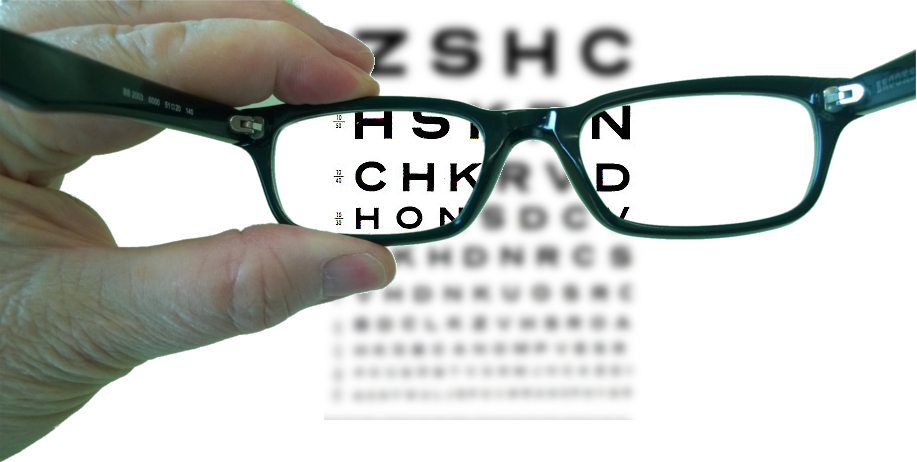
A child who has always seen a blurred blackboard has no reason to think the blackboard looks any different to anybody else.
That is why self-report was useless and a universal test was necessary. Nobody complains about a view they have always had, so the problem cannot be found by asking children whether they can see – it has to be found by having them try to do something and watching them fail.
Memorising the Chart Was Universal and Everybody Knew It
Children ahead in the queue listened to the ones in front, and a determined child could arrive knowing several lines by heart.
The staff were not naive about this. The letters were often called out of order, the chart was sometimes changed, and a child reciting fluently while squinting was obvious – but the attempt was so common that it is, in retrospect, a better measure of how badly children wanted to pass than any line on the chart.
Glasses Were the Thing Being Avoided
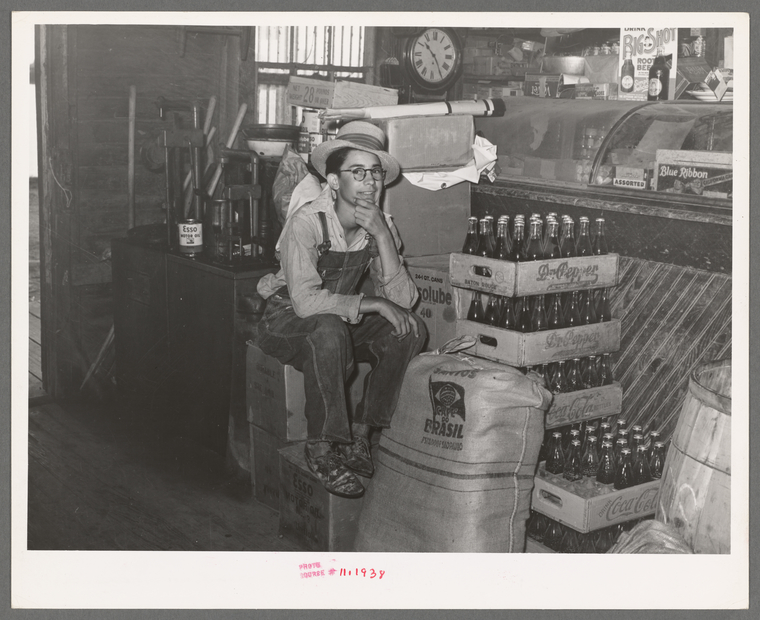
For a great many children the entire anxiety of the test was not about their eyes at all; it was about what passing or failing would mean socially.
That is the uncomfortable centre of the subject. A test designed to help was experienced by a large number of children as a threat, because the remedy it led to was visible on your face every day in a building full of other children.
The Letter Home Was the Actual Output
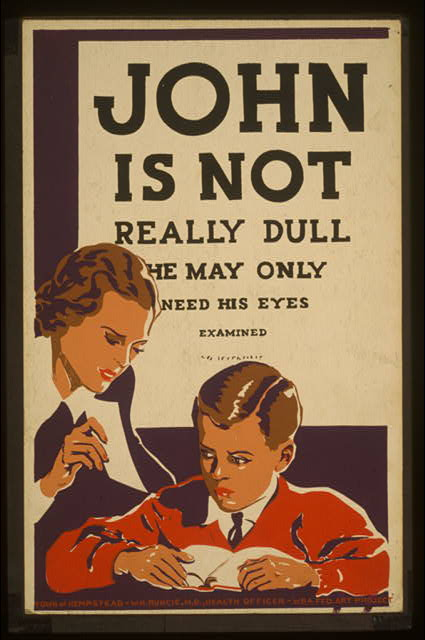
The screening produced no treatment, no prescription and no opinion – it produced a piece of paper recommending a proper examination.
Which locates the limit of the programme precisely. The school could identify a child who needed looking at; whether that child was then taken to be looked at depended entirely on the household, and the gap between those two things is where the whole system succeeded or failed.
The Picture Chart Solved the Obvious Problem
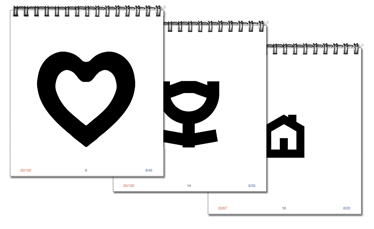
A chart of letters is useless to a child who cannot yet read, so charts of simple shapes and pictures existed for the youngest classes.
The substitution is neat because it changes the input without changing the test. The thing being measured is the size at which a shape stops being resolvable, and a drawing of a house works for that exactly as well as a letter E, which makes it possible to screen children years before literacy.
The Rotating E Was the Cleverest Version
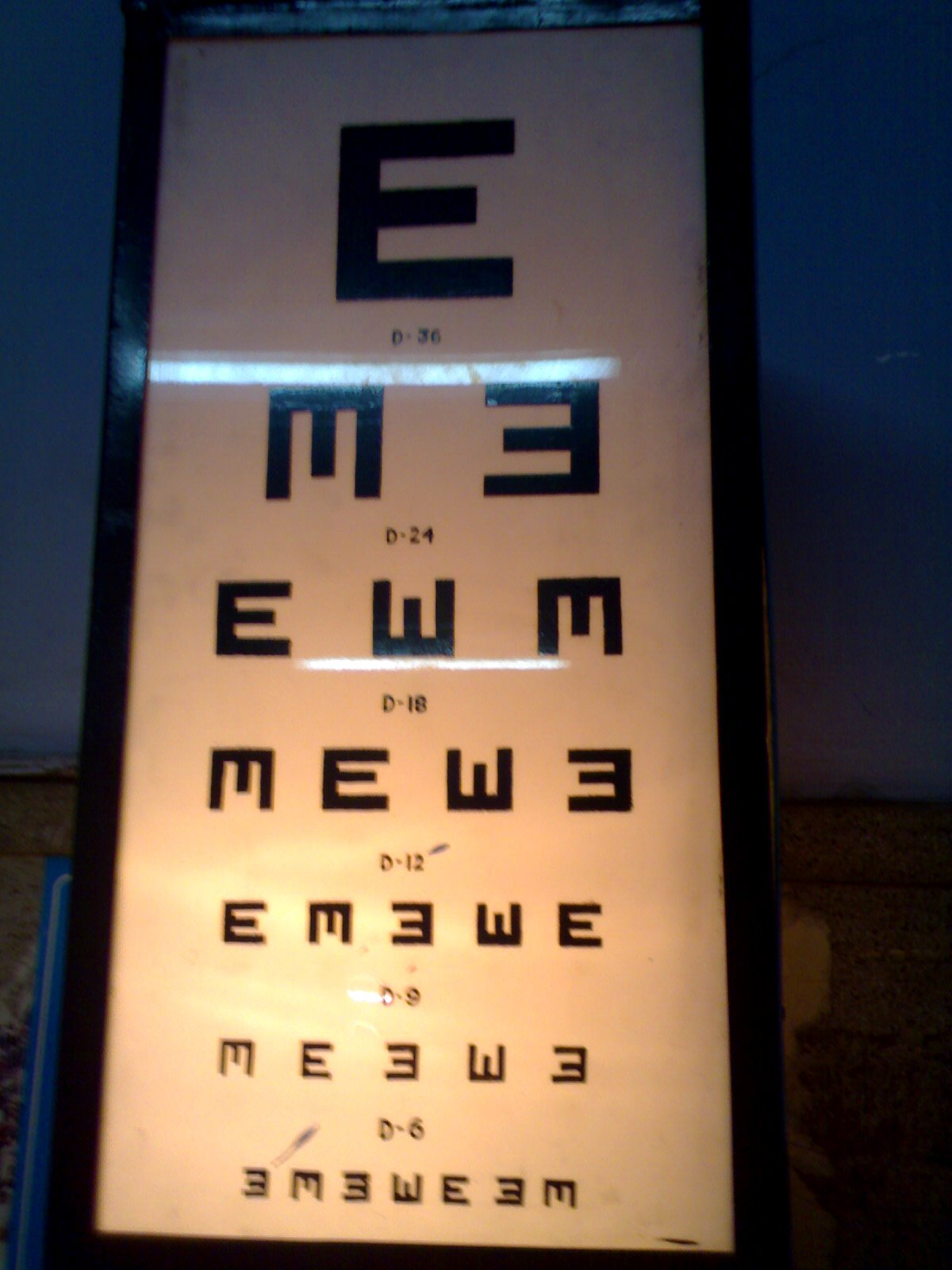
A chart of identical letters pointing in different directions, where the child says or shows which way the arms face.
It is the most elegant solution in the whole field. It needs no reading, no vocabulary and no shared language – the child only has to indicate a direction, which means the same chart screens a child who cannot read, a child who speaks another language at home, and a child too shy to speak at all.
The Test Looked at Distance and Little Else
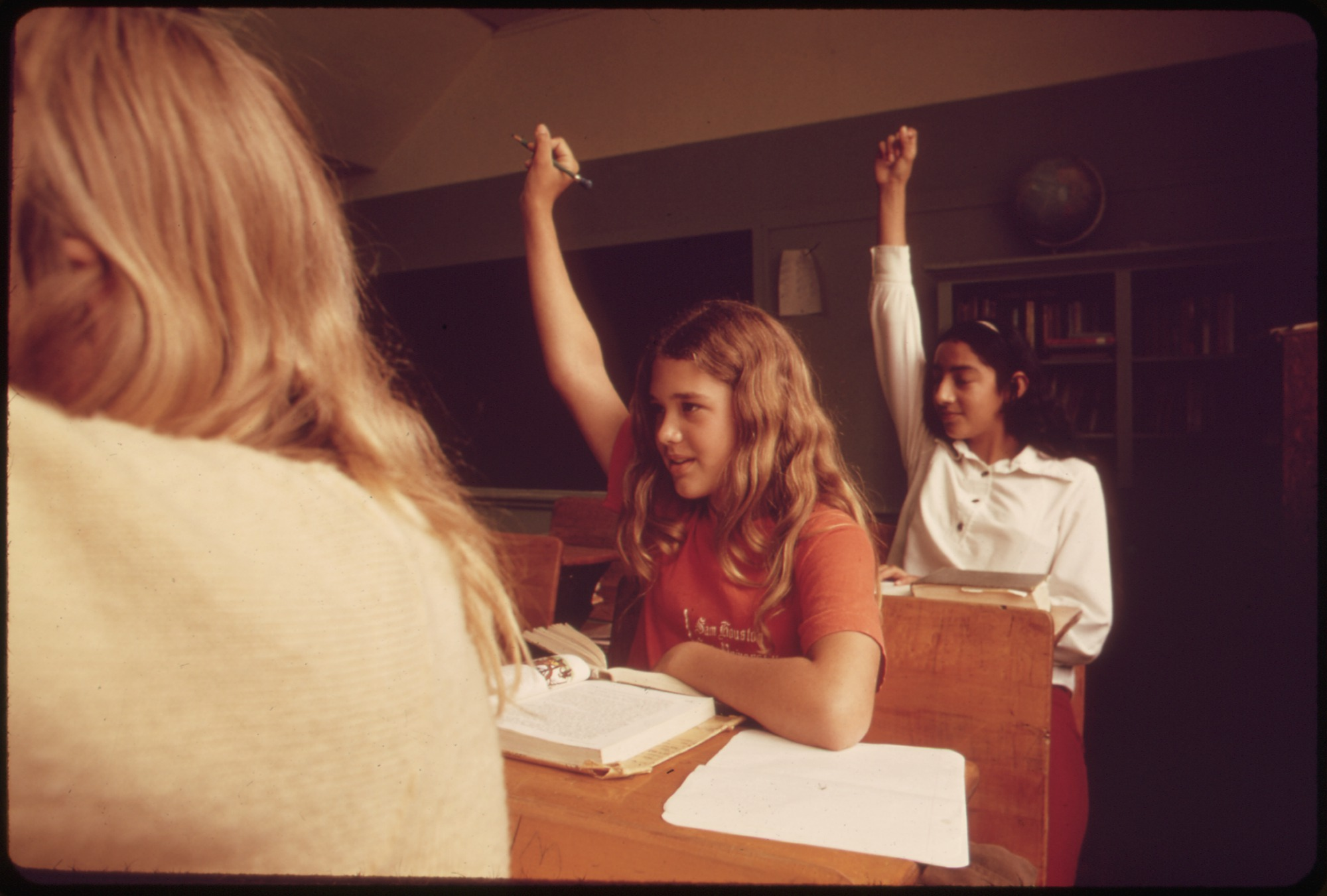
Reading a wall chart assesses how a child sees across a room, which is the thing that matters for a blackboard and almost nothing else.
That narrow focus was appropriate to the setting and is worth being honest about. A child could pass the corridor test comfortably and still have difficulty with a book held at arm’s length, because the screening asked one question – and schools in that era were overwhelmingly built around looking at the front of the room.
Being First in the Line Was Worth Something
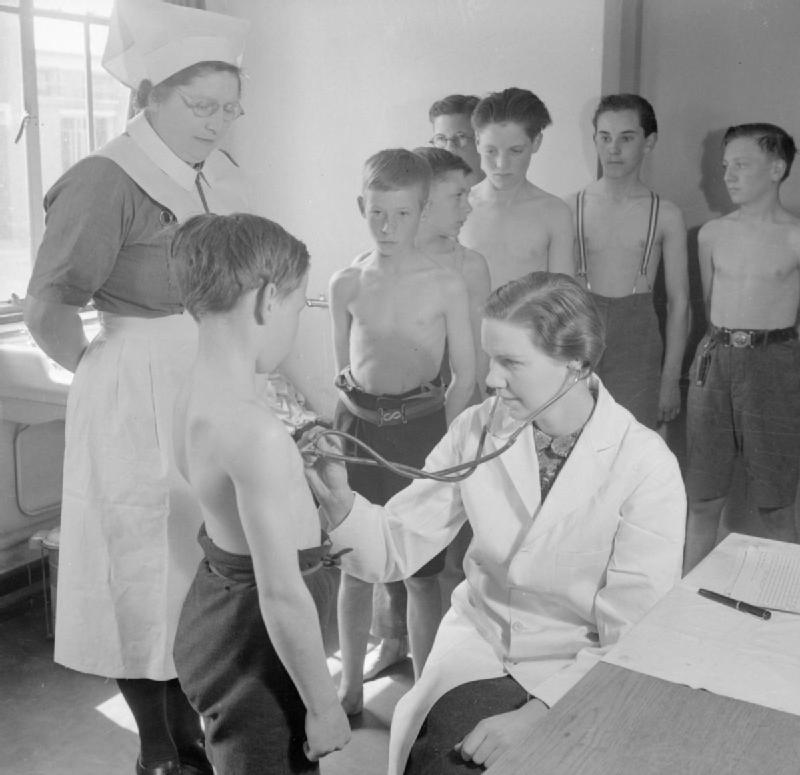
Children at the front of the queue got a quiet room and an unhurried nurse; children at the back got a corridor full of noise and somebody working at speed.
The practical variability is rarely mentioned and probably mattered. A test that depends on standing still, concentrating and admitting uncertainty is not conducted under identical conditions at nine in the morning and at half past two with forty children left.
Hearing Was Usually Screened the Same Week
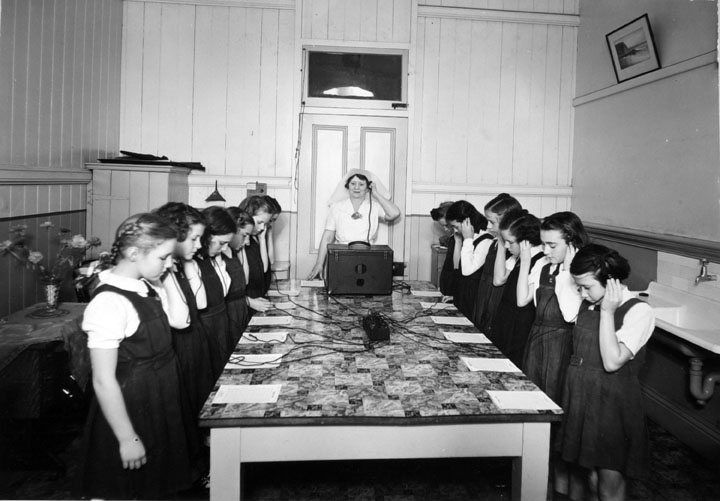
The eye test was typically one station in a short annual sequence that also included a hearing check and a height and weight measurement.
The bundling is the efficient part of the design. Setting up a screening programme is mostly the cost of getting every child out of class and through a door in an orderly way, so once that is arranged the marginal cost of adding one more quick check at the same table is very small.
The Nurse Was Often the Only Health Professional a Child Saw
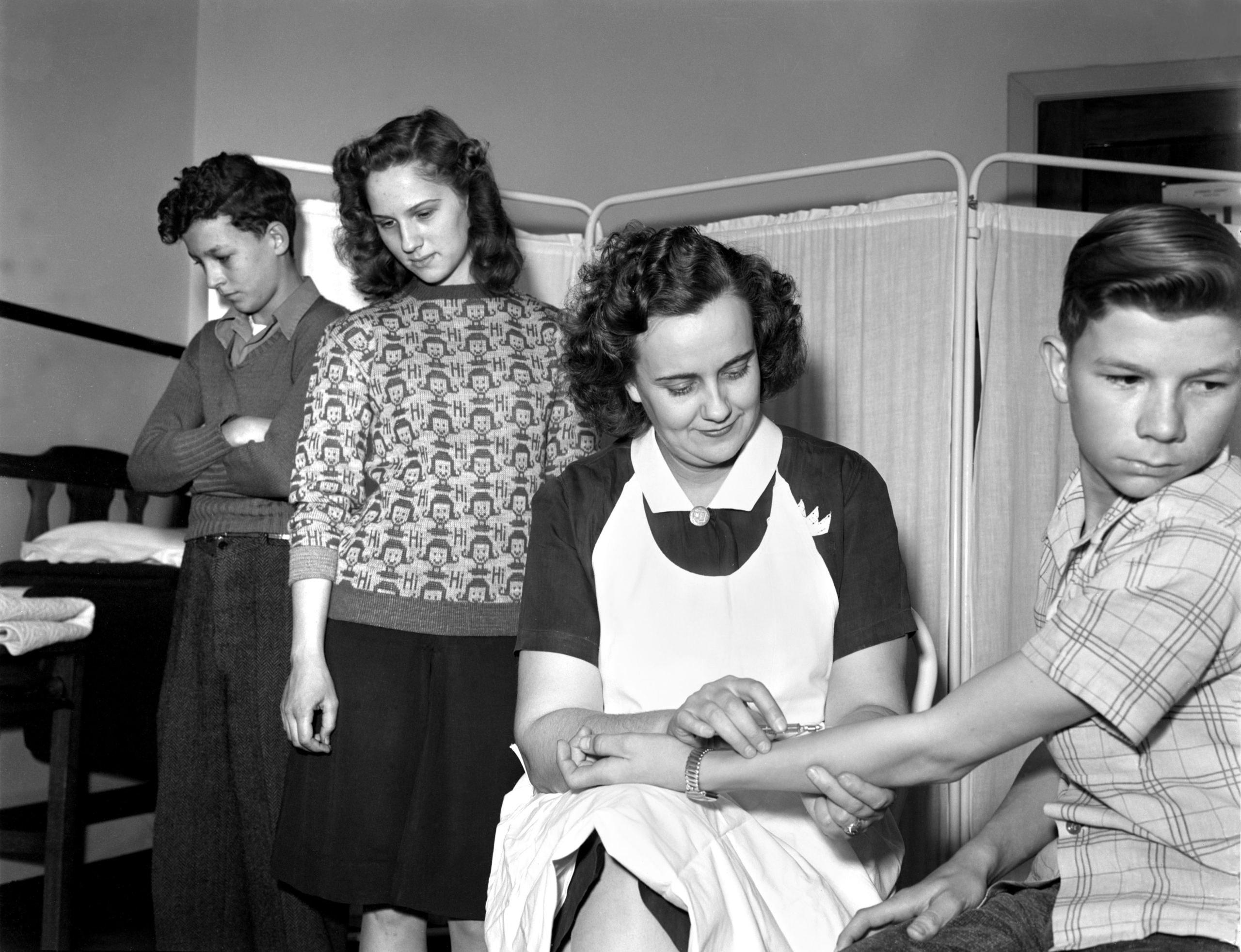
In a great many districts the school nurse was the single point of contact between a child and anybody with health training.
Which gives the annual line a weight that is easy to miss now. The person at the chart was not just administering a test; she was, for a meaningful number of children, the only person in a position to notice anything at all and to put it in writing to a parent.
It Was Also the First Time Many Children Were Tested Alone
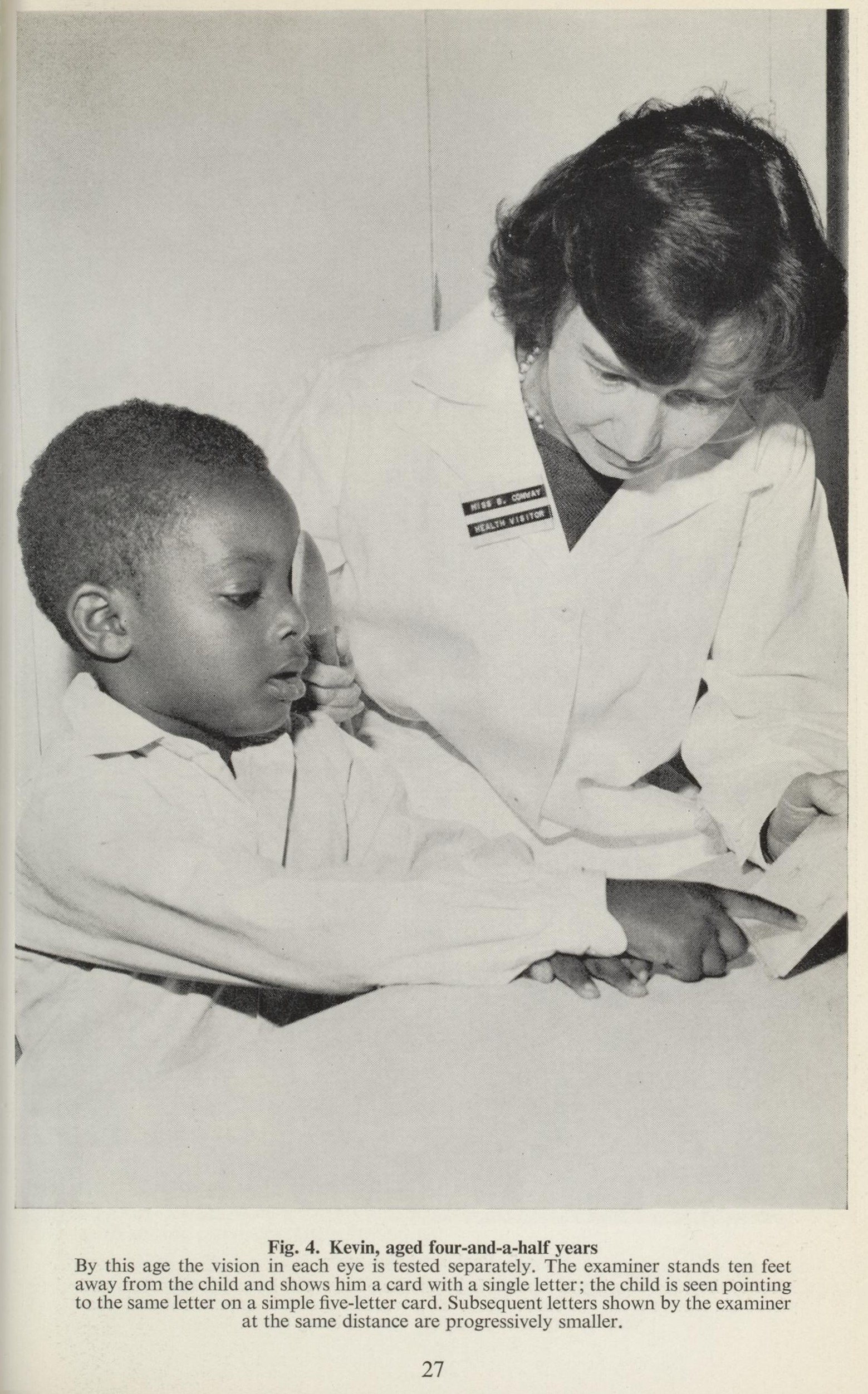
The child stood by themselves, was asked questions they could answer wrongly, and could not ask anybody for help.
That is a genuinely novel experience for a seven-year-old and part of why it is remembered so vividly. There was no right answer to be learned in advance, no way to prepare and nobody to consult – just a performance in front of an adult holding a clipboard.
The Results Followed You Through the School
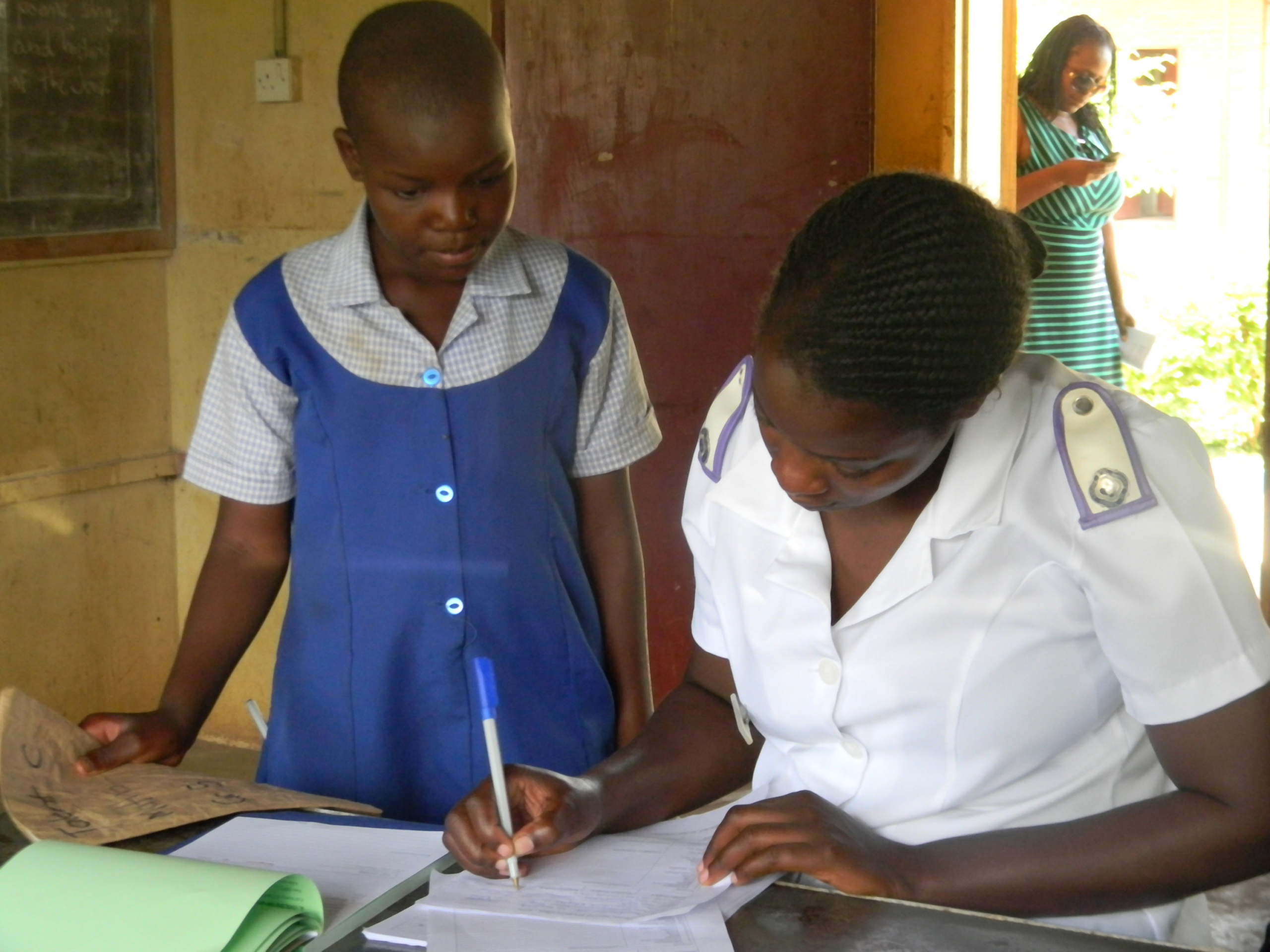
Screening outcomes went into a card or folder that travelled with the child and was consulted when a teacher wondered why a pupil was struggling.
The record is the quietly valuable part. A single year’s result tells you little, but a sequence of them tells a teacher whether a child who cannot follow the board has a sight problem or a different problem entirely, which is exactly the question a classroom cannot answer on its own.
Sitting at the Front Was the Informal Version
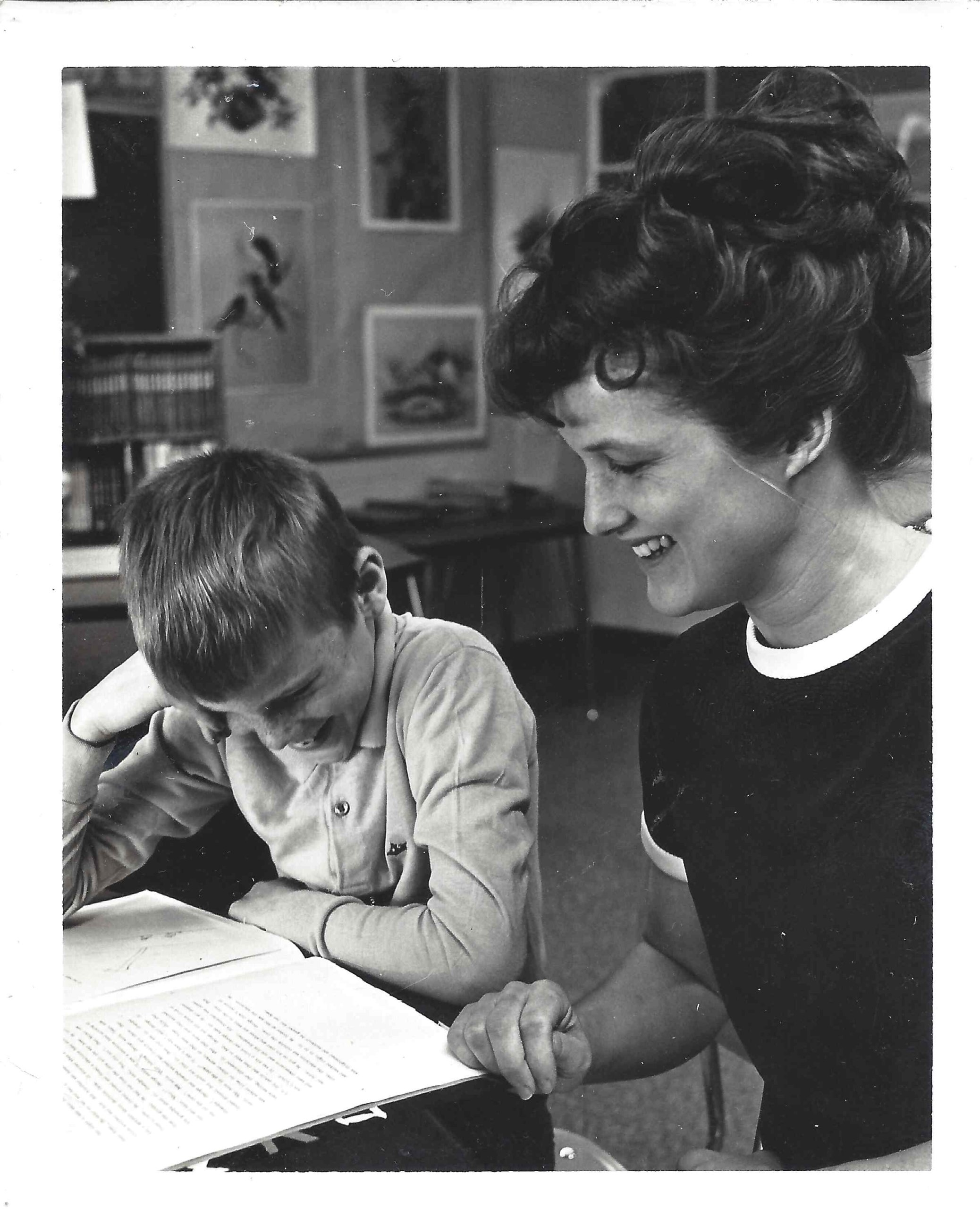
Teachers moved children who seemed to be struggling to see nearer the board, which was a useful adjustment and a poor substitute for a test.
The informal remedy is worth noting because it shows what happened in the absence of screening. Moving a child forward solves the symptom in one room for one year, and a child who moves classrooms or teachers starts again from nothing.
The Screening Could Not Catch Everything and Did Not Claim To
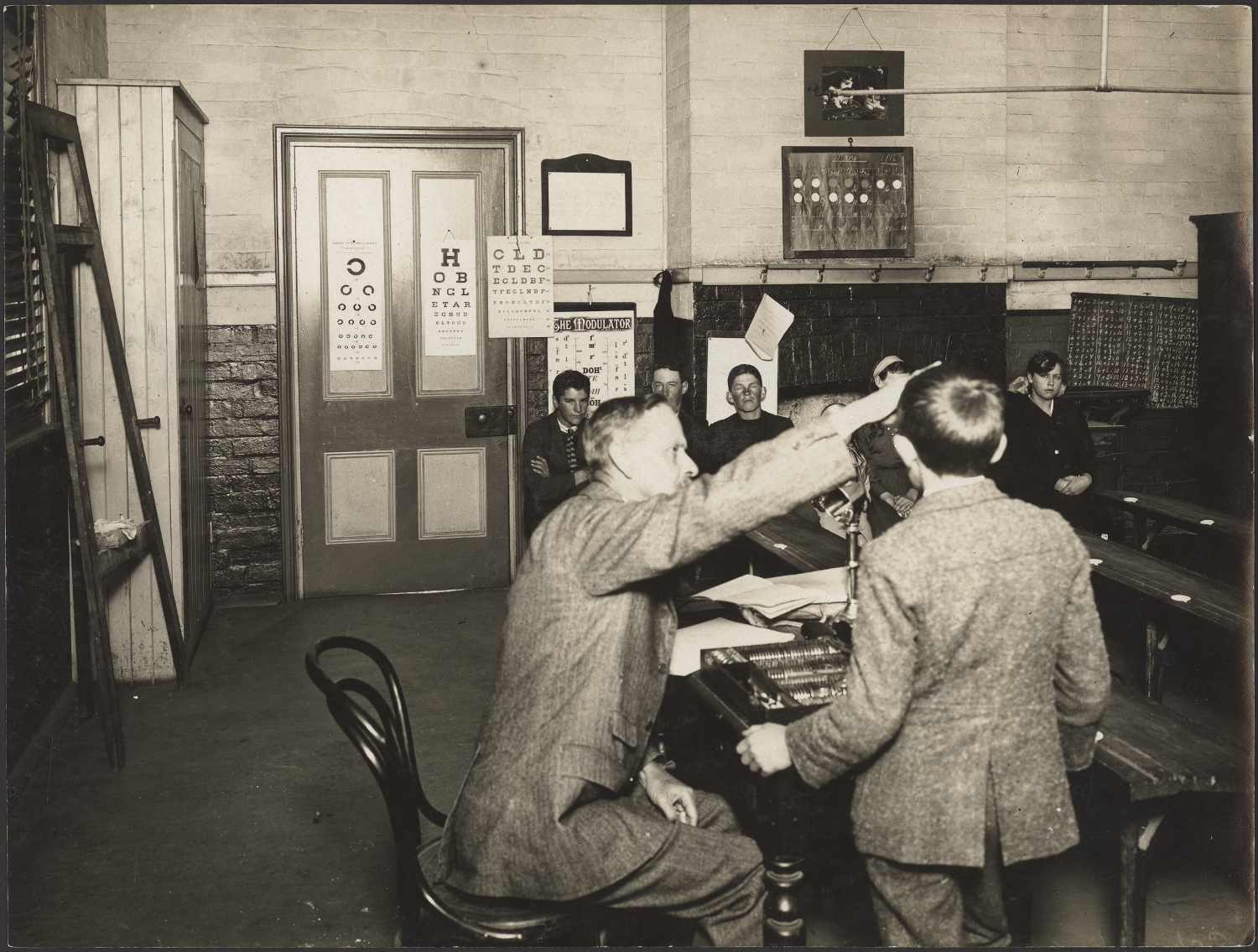
A short distance test at one moment in a year will miss things, and the people running it understood that perfectly well.
Being clear about this is the fair way to treat the subject. The programme was never presented as comprehensive – it was a wide, shallow net designed to catch the most common and most consequential problem at the lowest possible cost per child, and judged on that it did the job it was built for.
Then Eye Care Outside School Became Ordinary
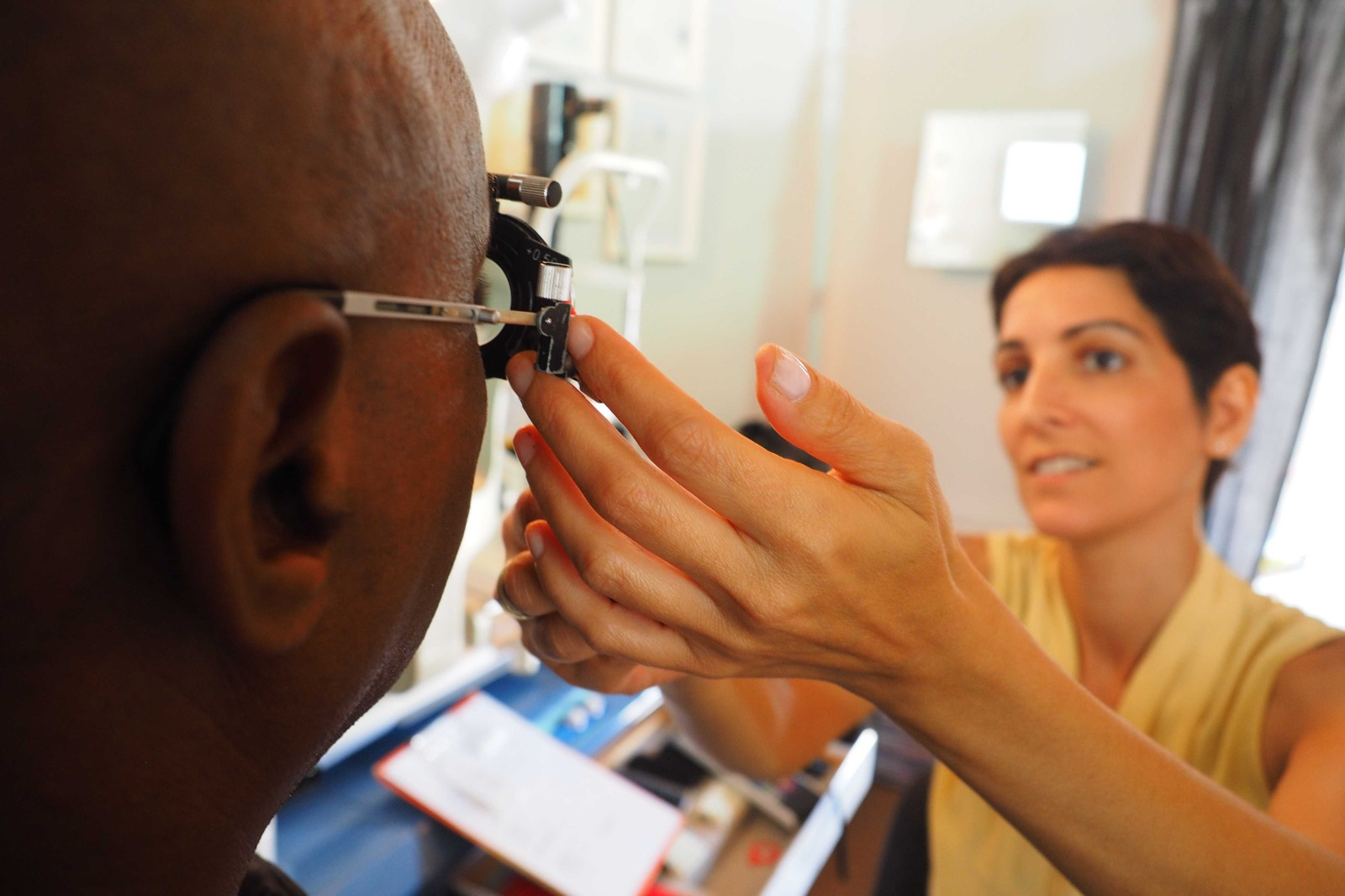
As routine examinations became a normal part of childhood for far more families, the proportion of children for whom the corridor line was their only test fell steadily.
Which changed the role of the school screening rather than ending it. A net that exists to catch children nobody else is checking becomes less central as more children are checked elsewhere, and the programme’s value increasingly lay in the children who still were not.
And the Blackboard Stopped Being the Only Thing to Look At
Classrooms built around a distant board gave way to work done at a desk, on paper and on a screen a short arm’s length from the face.
That is the structural change nobody taping a line to a corridor floor in 1964 could have anticipated. A test built to answer one question – can this child see the front of the room – was perfectly matched to a room where that was the question, and the question itself has changed shape since. What has not changed is the thing the card over one eye was there for: a child with one weak eye still does not know, still does not complain, and still has to be found by somebody who thought to look.
Like our content? Follow us for more.
