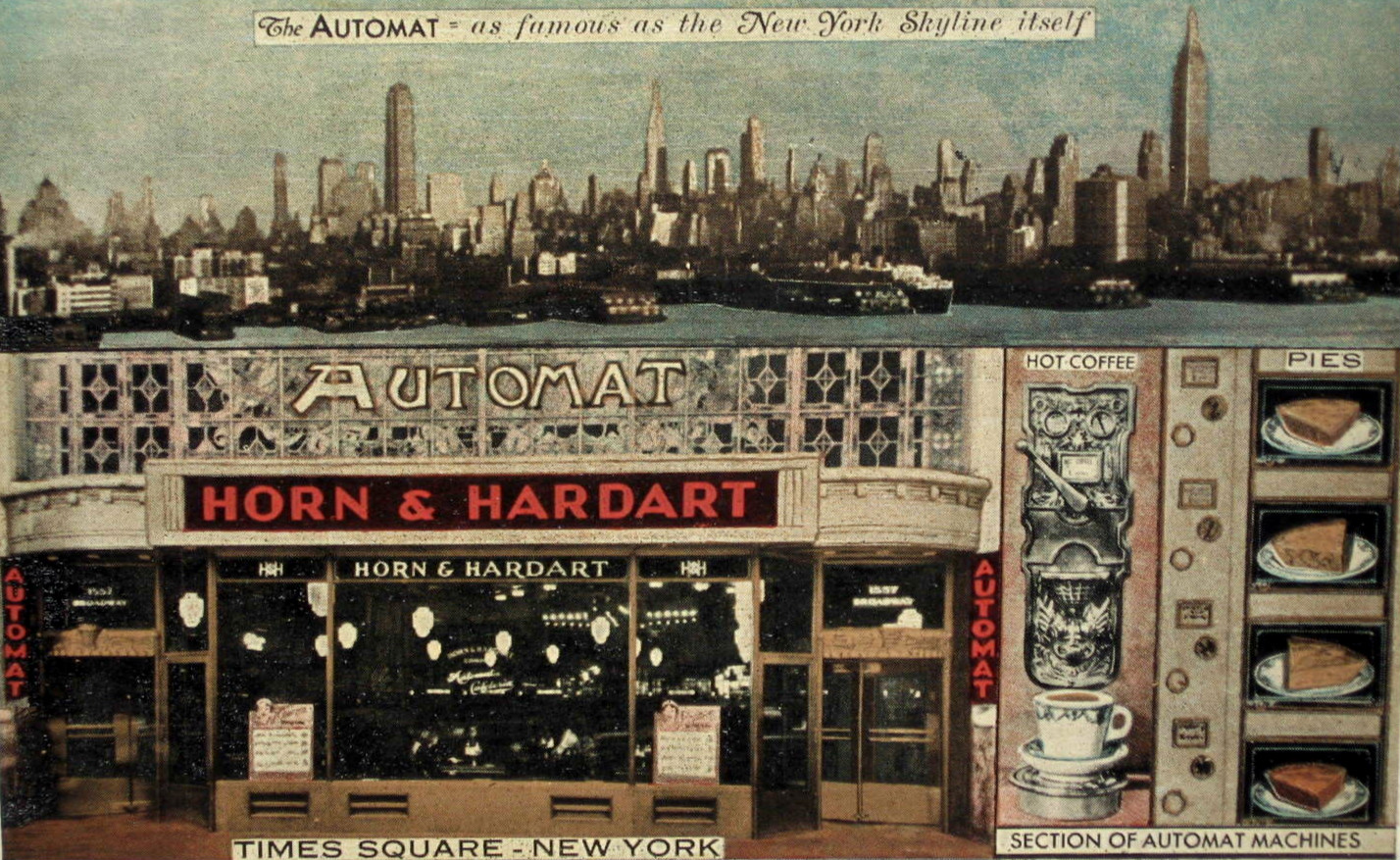
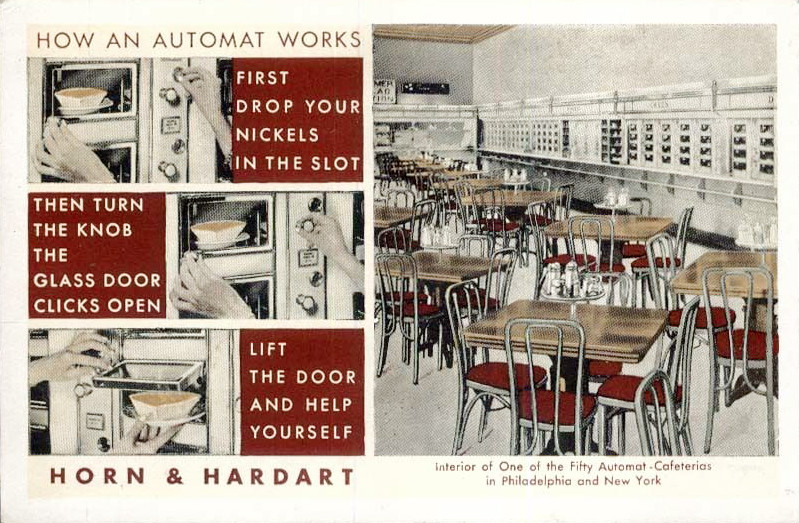
Imagine a restaurant that worked like this: you walked into a marble-and-chrome hall, changed a dollar into nickels at a booth staffed by a woman who could throw exact change down the counter without looking, walked to a wall of small glass-fronted compartments, dropped coins in a slot beside the one holding macaroni and cheese, turned a knob, lifted the door, and took your lunch. Behind the wall, unseen hands refilled the empty compartment within seconds. Coffee poured from a polished spout shaped like a dolphin’s head. Nobody took your order. Nobody brought a check. And for about sixty years, this was one of the most beloved ways to eat in America.
The Automat wasn’t a novelty act. It was an institution in full — the country’s first major self-service restaurant chain, an engine that fed office workers, secretaries, cab drivers, struggling actors, and millionaires at the same long tables, and a piece of city life so adored that its passing is still mourned by everyone old enough to have turned one of those chrome knobs.
Philadelphia First, Then the City That Made It Famous
The Automat arrived in America by way of two men named Joseph Horn and Frank Hardart, Philadelphia lunchroom operators who imported the waiterless concept from Germany and opened the country’s first Automat on Chestnut Street in 1902. The machinery — a wall of coin-operated compartments fed from a hidden kitchen — was the hook, but Horn & Hardart understood from the start that the food had to carry the show. Hardart, a New Orleans-trained coffee man, built the operation around a French-drip brew held to fanatical freshness standards, and the company’s rule became legend: coffee was timed, and anything that sat too long was poured out, not served.
New York got its first Automat in Times Square in 1912, and the city and the concept turned out to be made for each other. Manhattan ran on speed, anonymity, and small budgets, and the Automat supplied all three in a setting grander than any cafeteria had a right to be — stained glass, marble counters, brass fittings, cathedral ceilings. Over the following decades Horn & Hardart expanded to dozens of locations across New York and Philadelphia, and by the chain’s mid-century peak the Automats were commonly described as feeding several hundred thousand customers a day, ranking the company among the largest restaurant operations on Earth — all of it running on nickels.
Like our content? Follow us for more.
How the Magic Trick Worked
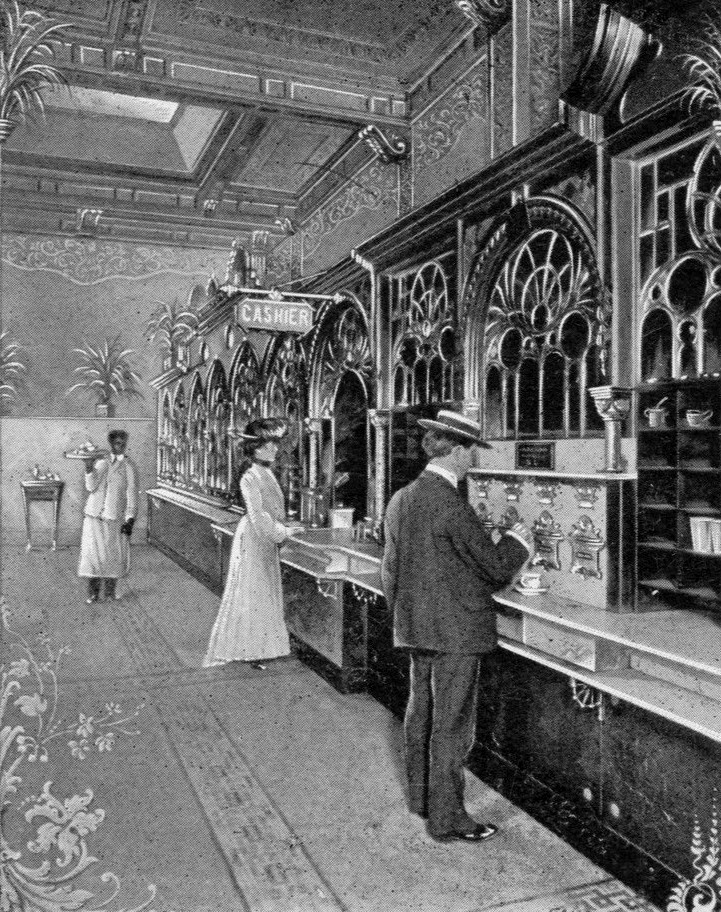
Part of the Automat’s grip on memory is that it felt automated a half-century before automation, and the secret was that it wasn’t. Behind the gleaming wall of glass doors stood an ordinary, very busy kitchen, where workers slid fresh plates into each emptied compartment through the back. Children pressed their faces to the little windows trying to catch the hidden hands at work; catching one was a rite of passage. The “machine” was theater — an honest illusion in which the machinery was mostly people, cooking at scale in central commissaries and restocking the walls all day.
The rituals became as famous as the food. The nickel throwers — the change-booth cashiers — were minor celebrities, renowned for slapping down five nickels for a quarter in one motion with the accuracy of dealers in a casino. The dolphin-head coffee spouts, modeled on Italian fountain fixtures, delivered what generations of New Yorkers flatly called the best coffee in the city for a nickel. And the tables were the great social experiment: long, shared, and unassigned, seating stenographers next to stockbrokers, and giving Depression-era New York one of its most democratic rooms. During the leanest years, some customers assembled the famous “poor man’s meal” from the condiment station — ketchup, hot water, and crackers made a free tomato soup — and the company, to its lasting credit, was known for looking the other way.
The menu underneath all this was sturdy American cooking that people crossed town for: creamed spinach, baked beans in little crocks, chicken pot pie, Salisbury steak, macaroni and cheese with a browned crust, and a pastry case — huckleberry pie, coconut custard, rice pudding — that no one who ate from it ever stopped talking about. The recipes were standardized to the gram and inspected obsessively; the company ran a daily tasting panel where executives graded dishes against the master versions. It was fast food before fast food, executed with the quality control of a fine hotel.
Everybody Ate There, and the Culture Noticed
The Automat shows up all over twentieth-century American culture because all of twentieth-century America ate there. Irving Berlin put it in a Broadway song — “Let’s Have Another Cup of Coffee” was popularly linked to the chain’s brew. Movies used the glass walls as instant shorthand for New York. Edward Hopper painted a lone woman at an Automat table in 1927 and made the room stand for urban solitude itself. Celebrities were regulars and said so: entertainers and executives alike told stories of surviving lean early years on Automat nickels, and returning famous to eat the same pie at the same tables. The company’s slogan-level reputation — “less work for mother” ran one of its actual slogans, pitching takeout long before the word existed — made it a fixture of daily life rather than an outing.
At its height, the Automat occupied a niche America has never quite refilled: food that was fast, cheap, good, and eaten in honestly beautiful public rooms where nobody hurried you and a nickel bought you a seat in the middle of the city’s whole social spectrum.
One more measure of the operation’s reach: the pie alone became an export. Horn & Hardart ran retail shops selling the same standardized dishes to take home — the day-old bread pudding had its own following — and the commissary system that supplied every location by truck each dawn was studied by the restaurant industry for decades. When food writers today trace the ancestry of ghost kitchens and centralized prep, the trail runs straight back to the Automat’s bakeries, humming before sunrise so the little glass doors would be full by eight.
What Killed the Glass-Door Restaurant
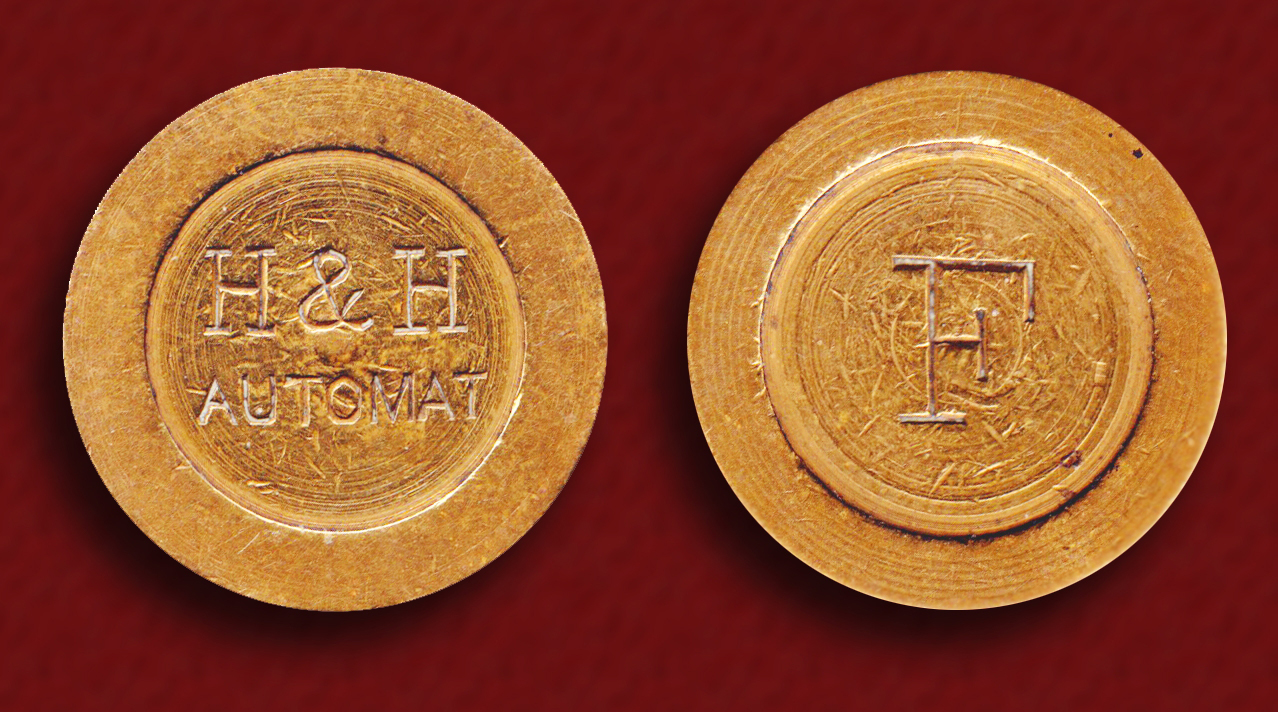
No single villain took the Automat down; the twentieth century’s second half simply dismantled every assumption it ran on. The nickel economics broke first — a machine built to vend at coin denominations coped badly with inflation, and by the 1950s and 60s the prices on the little doors required fistfuls of change and eventually bill changers, dissolving the elegant simplicity that made the system sing. Suburbanization pulled the lunchtime masses out of the downtowns the Automats were built to feed. And the company found itself outflanked by its own descendants: the drive-through and burger franchises that conquered postwar America had taken the Automat’s core insight — standardized food, minimal service, low prices — and bolted it to the automobile, which the city-bound, marble-halled Automat could never do. In a twist people at the time found either fitting or heartbreaking, Horn & Hardart itself ended up converting many of its locations into outlets of the fast-food chains that had beaten it.
The decline was long and public. New Yorkers watched the count of Automats dwindle through the 1970s and 80s, each closure covered like the loss of a landmark, until a single location remained — at 42nd Street and Third Avenue — serving as a living museum of itself. It closed in April 1991, and the wall of little glass doors went dark for good. Sections of original Automat machinery were preserved by the Smithsonian, which is where the machinery of an American lunch ended up: behind museum glass, this time with no knob to turn.
Why Nobody Ever Stopped Missing It
More than three decades after the last nickel dropped, the Automat retains a hold on American memory that few restaurants of any kind have ever managed, and the reasons say as much about now as then. Every few years, entrepreneurs announce a revival — food-locker startups, app-driven “modern Automats,” cashierless concepts — and every write-up of them reaches for the same century-old comparison, usually conceding that the original did it with more style. The documentary that revisited the chain a few years ago packed theaters with people who wanted two hours of glass doors and creamed spinach. Surviving Automat artifacts — the dolphin spouts, the door sections, the pie cases — are treated like relics.
What people miss, when they say they miss the Automat, usually isn’t the vending wall. It’s the room: cheap food served with dignity in a beautiful shared space, where a kid with a nickel and a tycoon with a newspaper had equal claim to a table, and where the machinery’s real secret — that it was people all along, cooking well and restocking fast — feels, from here, less like a trick than a promise kept. American cities have lately been rediscovering how rare that combination is. The Automat had it figured out in 1902, five nickels at a time.
Like our content? Follow us for more.