Say it back to me. Before a single child in 1964 left a house carrying anything, they stood in a doorway and recited it to the person who had just told them, and were not released until the recitation was correct.
This was a verification procedure, and it was a good one. A household about to commit information to the memory of a child with no written backup was running the only check available to it, and running it at the one moment when an error could still be corrected at no cost. Nobody involved would have described it in those terms, and everybody involved performed it perfectly.
It Happened Every Single Time
The check was not applied selectively to difficult messages or to unreliable children. It was universal.
A child who had carried forty messages correctly was still asked to repeat the forty-first, and a message consisting of four words was checked as thoroughly as one consisting of twenty. The procedure had no exceptions, which is unusual for anything in a household of that period and suggests it was not really about any particular child’s reliability at all.
Children never objected. The step was so consistently applied that it had the status of part of the errand rather than a comment on the person doing it, which is almost certainly why nobody ever resented being asked.
Like our content? Follow us for more.
Getting It Wrong Was Treated as Information Rather Than Failure
A faulty recitation produced a correction and nothing else, which is the detail that makes the whole procedure work.
An adult hearing the wrong time or the wrong name simply said the right one and asked for the recitation again. There was no sigh, no comment on the child’s attention and no suggestion that anybody had let anybody down – because the entire purpose of the check was to catch exactly that, and catching it was a success rather than a problem.
Children consequently did not conceal errors. A child uncertain about a detail said so, out loud, in the doorway, which is the behaviour the procedure was designed to produce and which no amount of criticism would have achieved.
You Repeated the Words and Not the Meaning
The recitation was verbatim, deliberately, and paraphrase was corrected.
A child who said it back in their own words was asked to say it again properly. This looks like pedantry and was not: a paraphrase proves the child has formed an understanding, and an understanding is exactly what a child carrying somebody else’s information should not be relying on – the words were the payload and anything else was reconstruction.
Nobody explained that either. Children learned that near enough was not acceptable and concluded that adults were being particular, when in fact the procedure was correctly designed and the children were the ones who had misunderstood it.
Numbers Were Checked Twice
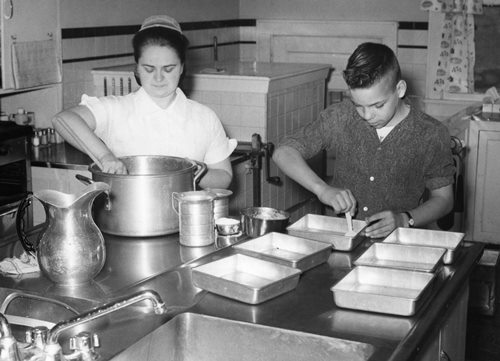
Times, quantities and anything else numerical got a second pass, every time.
The adult asking knew, from experience nobody had formalised, that a number is the part of a message a child is most likely to corrupt – and so the time was asked for again on its own, separately from the rest, as a final step at the door.
This is the single most frequently reported detail of the whole procedure. People who have forgotten everything else about being sent anywhere remember being asked what time, again, with the door already open.
The Recitation Fixed It in Place
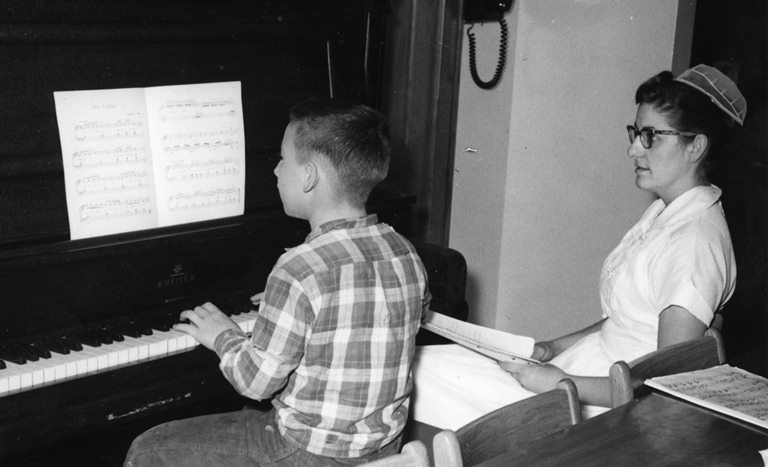
Saying the message out loud did something to a child’s retention that being told it had not.
The effect is real and was being exploited without being understood. A child who had heard a message once and a child who had heard it and then said it aloud were in measurably different positions by the time they reached the end of the path, and households of that period had arrived at this empirically across generations.
Children noticed the effect themselves. A great many people describe the sensation of the words becoming secure at the moment of repetition, which is a surprisingly sophisticated thing to have observed about one’s own memory at eight years old.
You Said It Again to Yourself on the Way
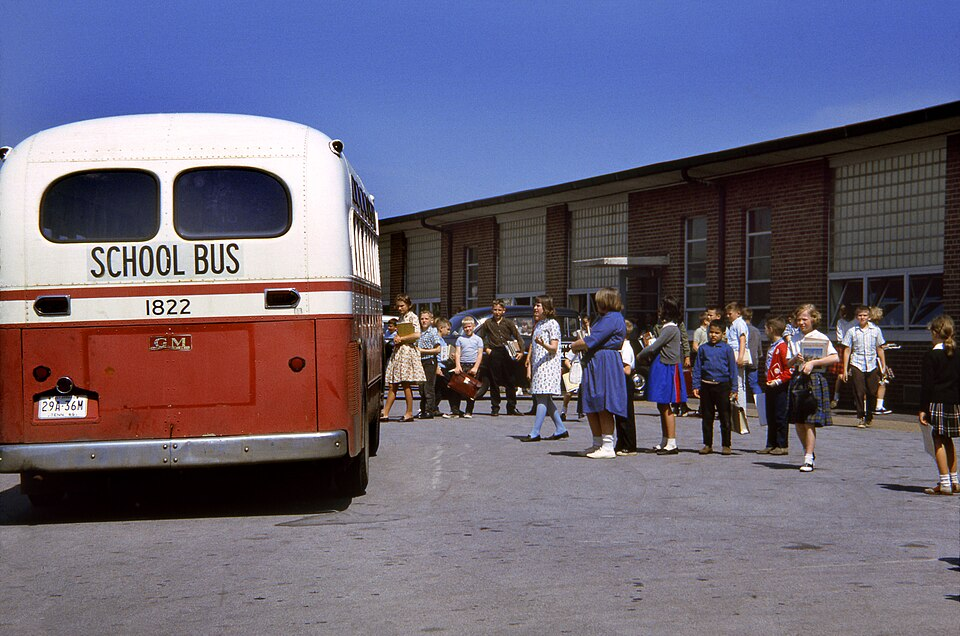
The procedure at the door was formal. The one on the path was private and nobody knew about it.
Children repeated the message to themselves continuously while walking, under their breath or silently, in the same words, for the whole duration of the errand. Nobody had suggested this and nobody was told it was happening, and it was close to universal.
It had a clear purpose and a clear cost. The repetition protected the message and occupied the entire journey, which means a child on an errand was not looking at anything, thinking about anything or enjoying anything – the walk out was spent maintaining a sentence.
Long Messages Were Broken Into Pieces
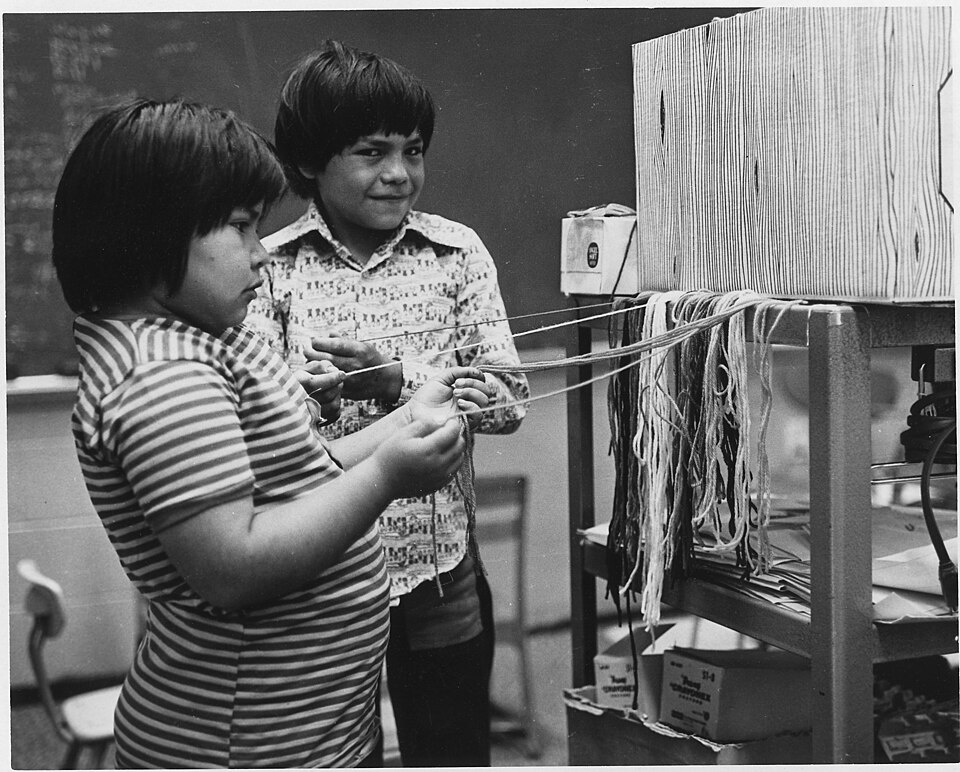
A message too long to hold as a unit was restructured, by the child, without instruction.
Children faced with four separate facts turned them into a sequence and recited the sequence, in order, in the same order every time, and would lose the lot if interrupted partway through. The ordering was arbitrary and completely rigid, which is how an unaided memory handles a list.
Adults never knew this was happening. A child who had been given four facts and was reciting them as a fixed chain looked exactly like a child who had simply remembered four things.
Somebody Always Added Something at the Last Moment
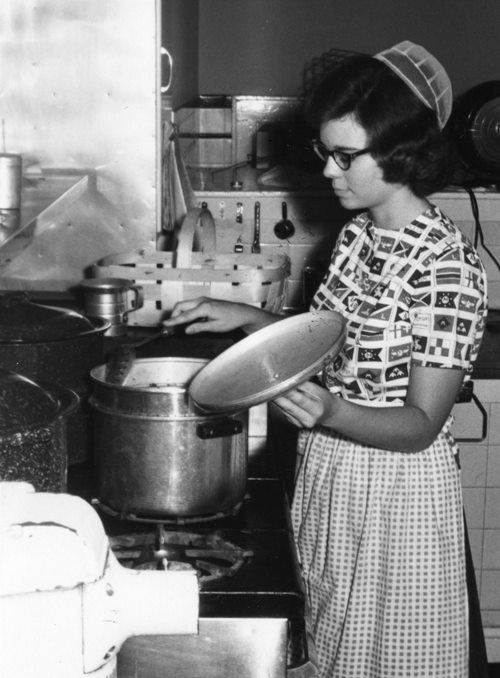
The procedure was frequently undone by an afterthought delivered after the check had passed.
An adult who had heard a correct recitation, released the child and then thought of something else called it out as the child was leaving – and that addition had not been checked, had not been repeated and arrived after the sequence was already fixed.
The late addition was the thing most likely to be lost. People describe this specifically: the message arriving intact and the afterthought not arriving at all, which was nobody’s fault and was a direct consequence of the one step being skipped.
Two Children Sent Together Were Checked Separately
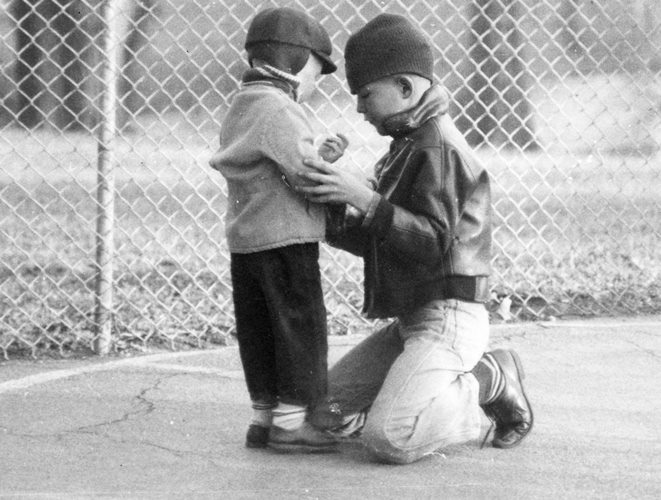
Where more than one child went, each of them had to recite it, which doubled the procedure rather than halving it.
The logic was sound and nobody stated it. Two children who had both heard the message are not twice as reliable if only one of them has been verified, because the unverified one may contradict the other at the far end – and a receiving adult hearing two versions has no way of choosing between them.
Children found the double check slightly absurd and submitted to it anyway. The second child recited the identical sentence to the identical person who had just heard it correctly, and was corrected on the same words if they got them wrong, with no acknowledgement that any of this had just happened.
Nobody Checked It at the Other End
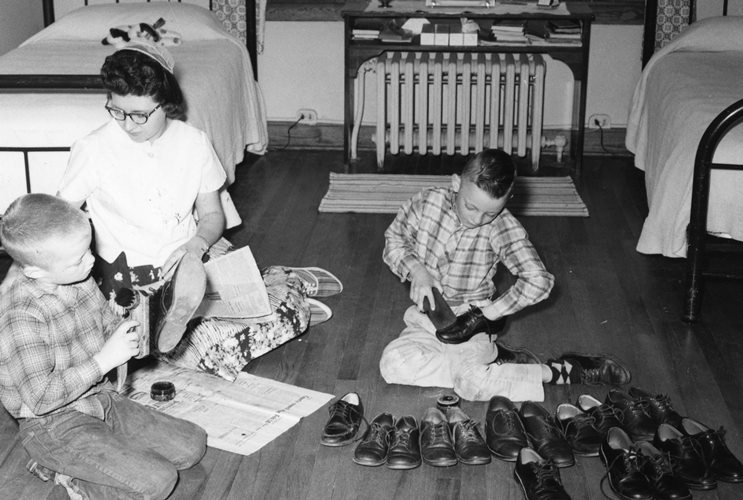
The procedure existed only at the sending house. No equivalent happened on delivery.
A child who recited a message to the receiving adult was not asked to say it again, was not questioned about it and was not verified in any way – which means the system had a check at the input and none at the output, and the words were accepted exactly as they arrived.
This asymmetry went unremarked for the entire period. The household that cared enough to verify twice at the door had no way of knowing whether the thing had landed correctly, and simply assumed it had.
You Can Still Do It
The procedure left a durable capability, and people who were put through it notice the difference.
A great many people who were sent on errands in 1964 report being unusually good at holding a verbal instruction without writing it down, and attribute it correctly to several years of being made to recite things in a doorway. The skill is genuinely uncommon now and was ordinary then.
What has not survived is the habit of checking. Almost nobody asks anybody to say it back any more, because almost nothing is transmitted in a form where saying it back would help.
The Phrase Survived Longer Than the Practice
Say it back to me outlasted the errands it existed for and attached itself to other things.
People who had been checked in doorways went on using the words about anything that mattered – an address, a time, an instruction of their own – for decades after anybody stopped sending children anywhere. The formula had been learned as a general-purpose tool rather than as part of one specific arrangement.
It is now almost gone, and its disappearance is recent. The last people who use it unselfconsciously learned it from somebody who was sending children out on foot, which makes it one of the more directly traceable survivals of the whole period.
Then Nothing Needed Verifying
Written messages, instant contact and the ability to send the words themselves rather than a person carrying them removed the whole procedure.
Every part of that is an improvement. Information that arrives in the form it was sent, that can be read again, and that does not depend on anybody’s recall is better in every respect than a sentence held in a child’s head across half a mile.
What went with it is a small piece of good design nobody designed. A check applied at the only moment it could still be free, performed identically every time, forgiving of errors by intention, and sufficiently effective that a household ran its communications on it for years.
Like our content? Follow us for more.