

Sleep in 1965 was not a subject with a science attached to it. Circadian biology was in its early stages, the laboratory study of sleep stages was about a decade old, and almost nothing that had been learned had reached a doctor’s surgery or a household. The advice people acted on was a mixture of folklore and pharmacology, and the pharmacology was worse than the folklore.
Almost every element of it has since been revised, several items have been reversed completely, and the current first-line treatment for persistent insomnia is not a drug at all. This is an account of how the guidance changed and is not medical advice; anybody who is not sleeping should be talking to a doctor rather than reading an article about 1965.
The prescription
Barbiturates were the standard hypnotic of the period and were prescribed freely for sleeplessness, in enormous quantities, often for long periods and often to people who had reported nothing more than a bad few weeks.
They have been almost entirely withdrawn from that use. The reasons are a narrow margin between an effective dose and a dangerous one, the development of tolerance within weeks so that the original dose stops working, physical dependence, a withdrawal syndrome that is itself hazardous, and serious interaction with alcohol. They were replaced from the 1960s by benzodiazepines, which were understood at the time as a safer answer and which carry their own dependence and tolerance problems, and current guidance restricts hypnotic prescribing of any kind to short courses for defined situations.
No drug, dose or regimen is named or described here beyond the class. The relevant historical point is that a complaint about sleep in 1965 produced a prescription as a matter of routine, and that the prescription was the most dangerous thing in the subject. The scale is worth registering: these were among the most widely dispensed medicines of the mid-century, held in ordinary bedside drawers in ordinary houses, in quantities that no modern prescriber would issue for a sleep complaint.
Like our content? Follow us for more.
The nightcap, which does the opposite of what it appears to do

The household advice was a whisky, a brandy or a glass of stout before bed, and the reason it persisted is that it works at the start of the night: alcohol is sedating and it shortens the time taken to fall asleep.
What it then does is the reversal. As it is metabolised it fragments the second half of the night, suppresses the stage of sleep associated with dreaming and then produces a rebound of it later, increases awakenings, relaxes the airway muscles in a way that worsens snoring and breathing interruption, and acts as a diuretic. The overall effect is more time in bed and less restorative sleep, and the person experiences it as having slept badly without connecting it to the drink.
Current guidance is consistent across every national source: alcohol is not a sleep aid and should not be used as one. It is one of the clearest reversals in this whole series, because the 1965 belief was based on a real effect that happens to be the first half of a two-part process. A person who judges a remedy by how quickly they fell asleep will rate it highly, and the part that matters happens while they are not in a position to observe it.
Eight hours, which was never a finding
The eight-hour figure was stated as a requirement for everybody and had no particular evidence behind it. It was a round number that had become conventional.
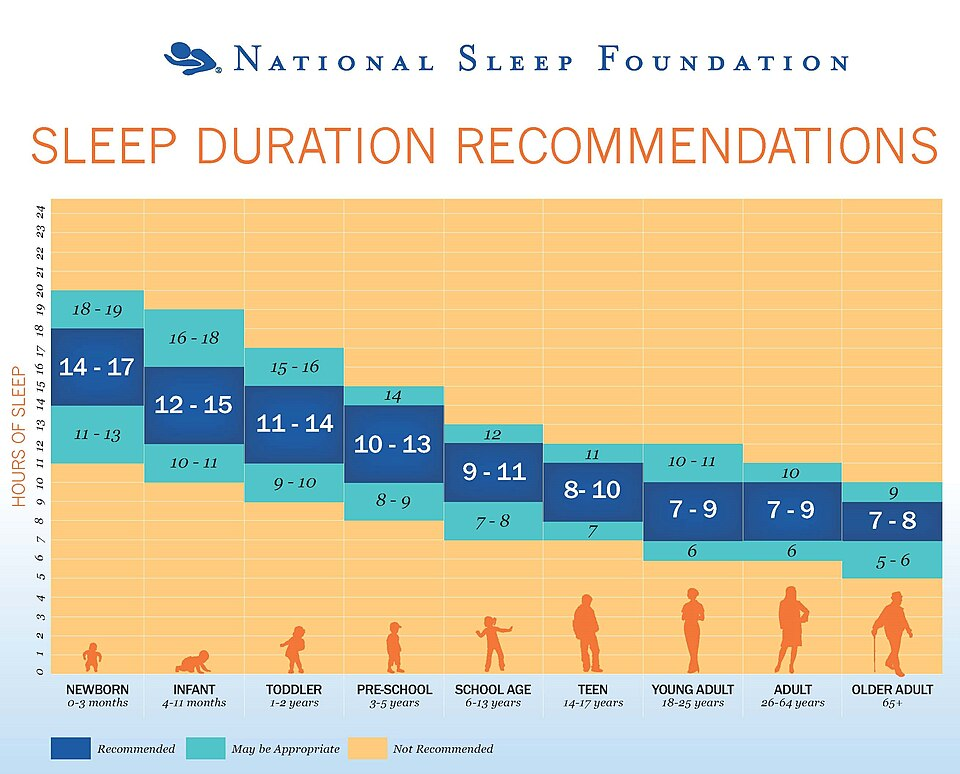
The modern position is a range that varies by age, with published guidance giving different ranges for infants, children, teenagers, adults and older adults, and with individual variation inside each range. The useful measure is not a number of hours but whether a person is alert during the day without effort, and a person who feels well on rather less than the conventional figure is not necessarily doing anything wrong.
The practical harm the eight-hour rule did was anxiety. Lying awake measuring a shortfall against a number is one of the better-established ways of making sleeplessness worse, and that connection is the basis of the treatment that eventually replaced the pills. The modern framing is deliberately loose for that reason: the guidance gives ranges rather than targets precisely because a target invites somebody to fail to meet it.
Lying there trying, which is the specific thing not to do
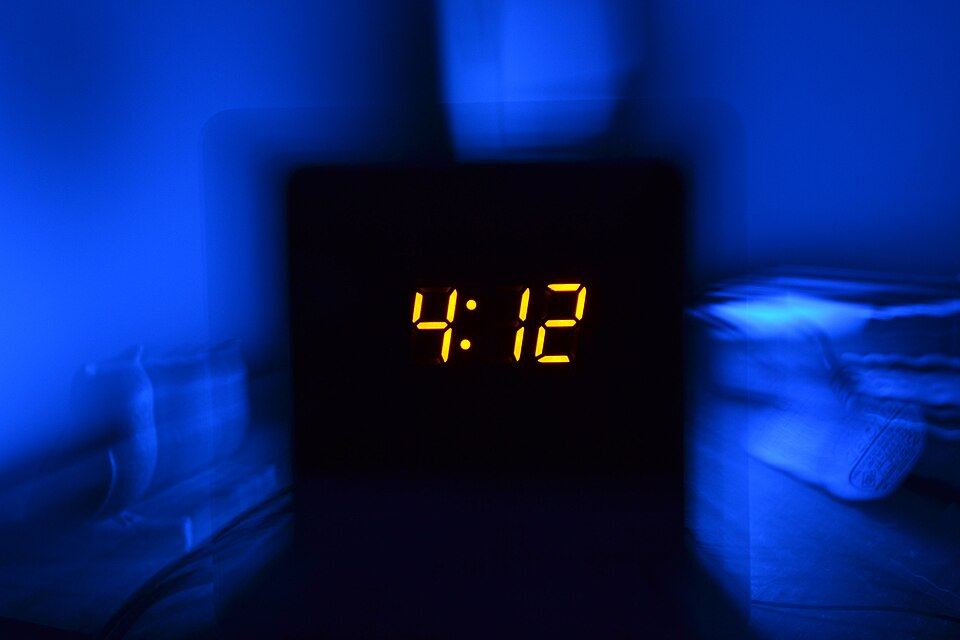
The 1965 instruction to somebody awake at two in the morning was to stay in bed, lie still, keep their eyes closed and try, on the reasoning that rest is restful even without sleep.
That is now the single most directly reversed piece of advice in the subject. The behavioural technique called stimulus control is built on the opposite instruction: if you are awake and not drowsy, get out of bed, go elsewhere, do something quiet in low light, and return when sleepy. The reasoning is that lying awake in bed teaches an association between the bed and wakefulness, and that the association is a substantial part of what maintains chronic insomnia.
This is the component of modern treatment people find most counterintuitive and it is the one with the best evidence behind it.
What replaced the prescription
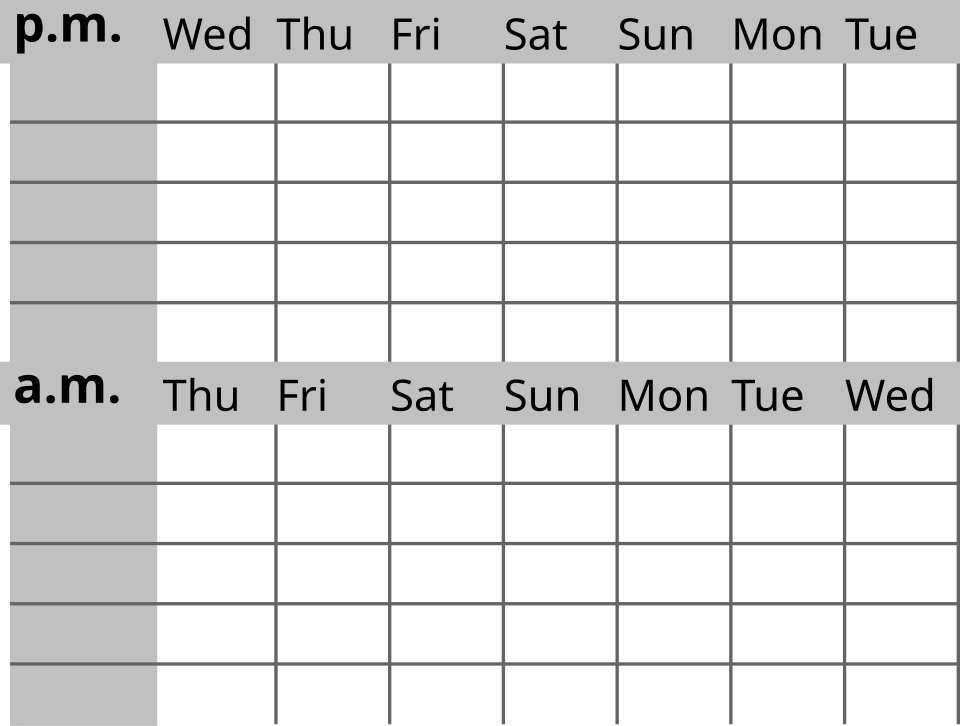
The first-line treatment for chronic insomnia in current American and international guidance is not a medicine. It is a structured behavioural programme, usually called cognitive behavioural therapy for insomnia, which combines stimulus control, a deliberate restriction and then extension of time in bed, consistent wake times, and work on the beliefs and worry that keep somebody awake.
The evidence for it is stronger than the evidence for hypnotic medication, its effects last after the programme ends where drug effects do not, and it is recommended ahead of medication for persistent insomnia rather than as an alternative to it. It is delivered by clinicians, by structured self-help and by digital programmes, and access rather than efficacy is the limiting factor.
That is a remarkable change in a single subject. The answer to a complaint that produced a barbiturate prescription in 1965 is now a course of behavioural work, and the drug has moved to the margins.
Snoring, which stopped being a joke
Snoring in 1965 was comic material and a domestic nuisance, and the household responses were an elbow, a separate bedroom and the various mechanical remedies sold in catalogues.
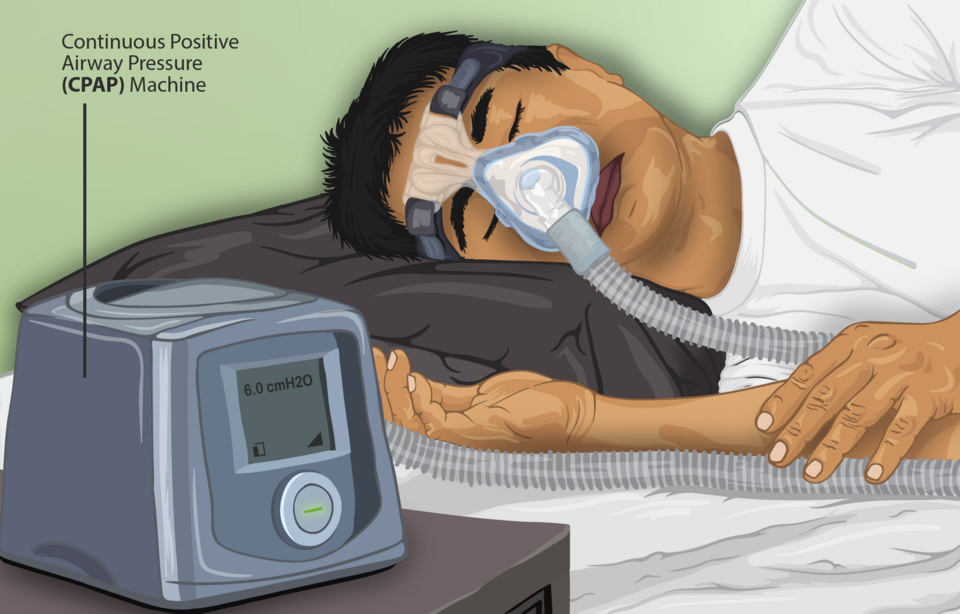
What has changed is the recognition of obstructive sleep apnoea, in which the airway repeatedly closes during sleep, interrupting breathing and fragmenting the night without the person being aware of it. It is a recognised and treatable condition associated with daytime sleepiness and with cardiovascular risk, it is diagnosed by sleep study, and the treatments are effective.
No symptom list appears here and this is not a diagnostic guide. The historical point is that the whole category did not exist as a medical matter in 1965, and the practical point is that persistent heavy snoring with daytime sleepiness is a reason to talk to a doctor rather than something to put up with.
The bedroom itself
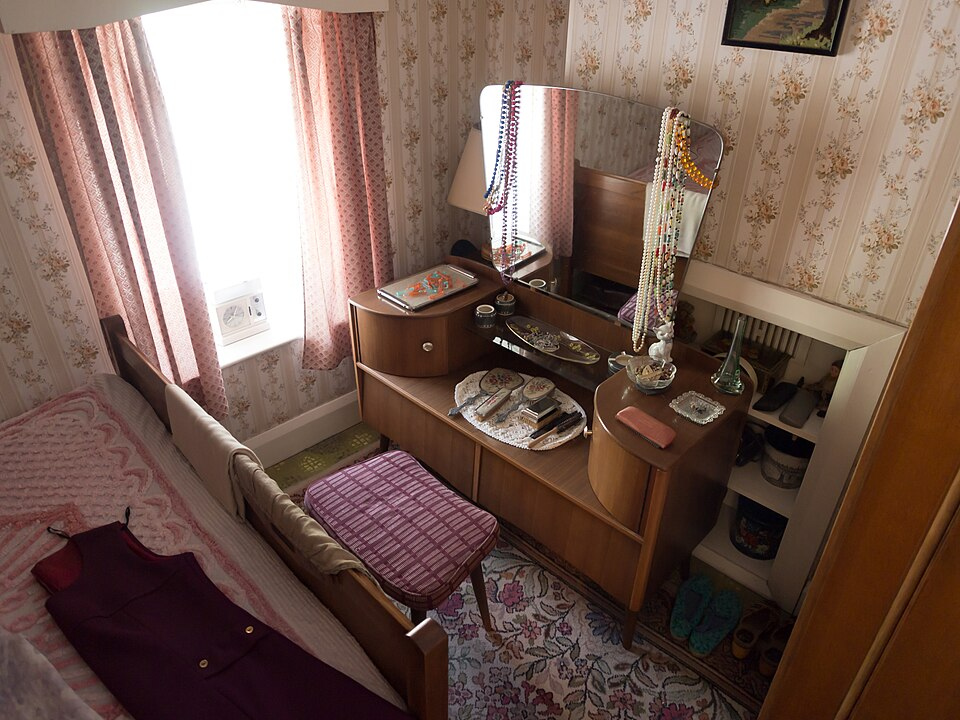
A 1965 bedroom was warmer, stuffier and lighter than the modern recommendation. Windows were closed in winter, bedding was heavy, and the idea that a cool dark room is better for sleep was not general.
Current sleep hygiene guidance is unglamorous and consistent: a cool room, darkness, quiet, a consistent wake time including at weekends, caffeine avoided in the second half of the day, no alcohol as a sleep aid, and light exposure in the morning. Most of it is about regularity and about light, which is the part that follows directly from circadian science.
The weekend point is worth separating out. The 1965 assumption that sleep lost in the week could be made up on Saturday is partly wrong: some recovery occurs and the evidence does not support full repayment, and the irregular wake time that a long weekend lie-in produces undermines the regularity that matters most.
What 1965 got right
A surprising amount, mostly for children. A fixed bedtime, a wind-down period, a dark quiet room, no stimulants in the evening and the same routine every night is close to modern paediatric sleep guidance and was simply how households operated.
The adult version failed because it was abandoned the moment somebody had trouble, at which point the answer became chemical. Warm milk, a bath and a boring book are all harmless and mildly useful; what did the damage was the prescription pad and the bottle in the sideboard.
The honest summary is that the folklore was better than the medicine, that the single most reversed instruction is to lie there and try, that the nightcap does the opposite of what it seems to, and that the modern answer to persistent sleeplessness is a course of behavioural work rather than a tablet. Anybody actually not sleeping should take that to a doctor rather than to an article.
There is one broader observation worth making, because it applies well beyond sleep. This is a subject where the folk remedies were harmless and the professional intervention was the hazard, which is the reverse of the pattern in most of the files in this series. The warm milk did nothing and cost nothing. The bath was pleasant. The boring book was a reasonable idea. What caused real damage was a medicine prescribed in good faith, in volume, for a complaint that in most cases would have resolved on its own, and the lesson the field eventually drew from it is that a sleep complaint usually needs time, regularity and an explanation rather than a treatment.
Like our content? Follow us for more.

