

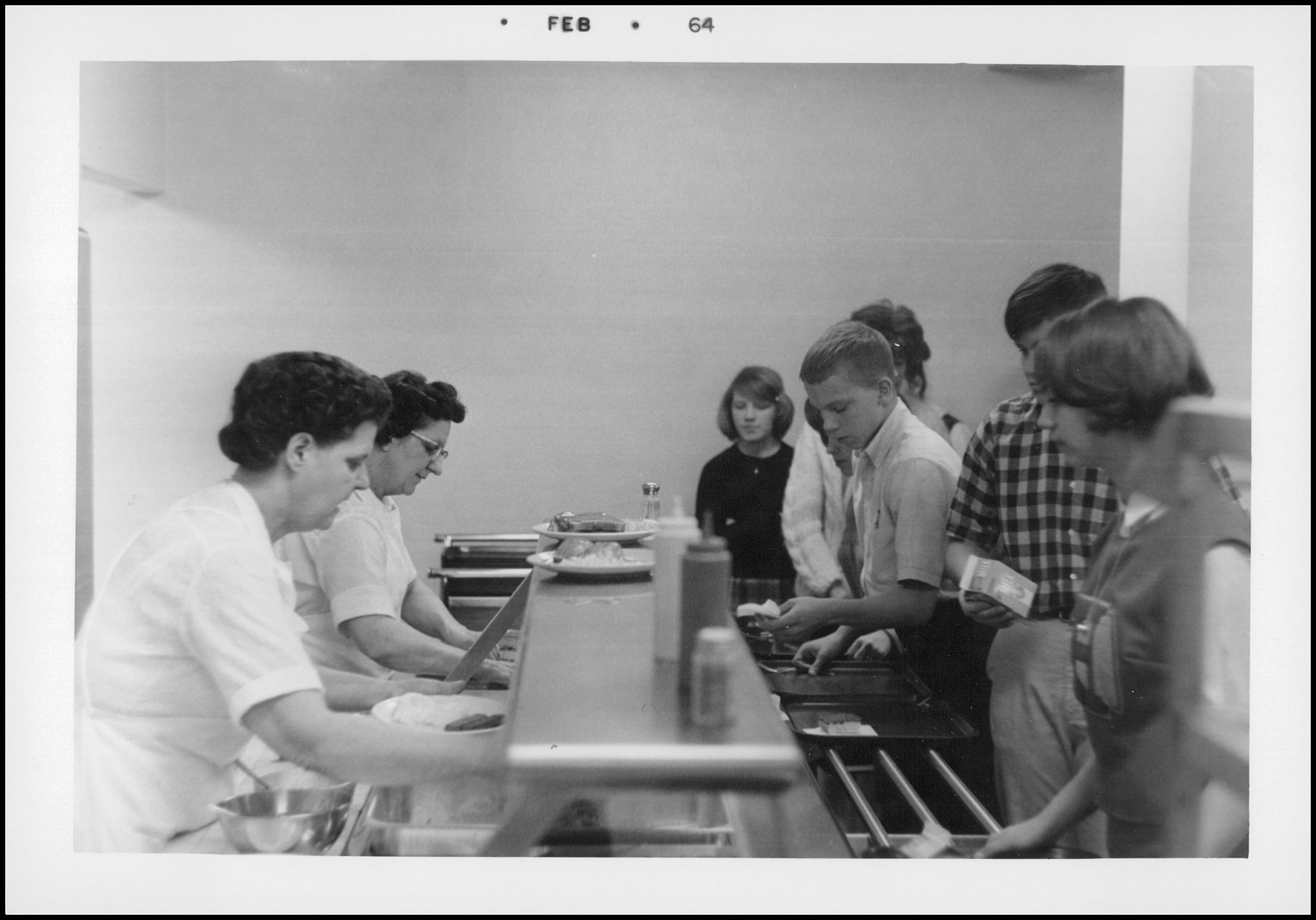
Most accounts of American school food in the 1960s are written from the tray: what was on it, what children refused to eat, what the dessert was. This one is written from the other side of the serving hatch, in the kitchen, where the women worked.
It was a genuinely skilled operation producing a great deal of food from scratch every day under real constraints, and it also operated with essentially none of the controls that a modern commercial kitchen is built around. Almost every item here is a thing a current health inspector would write up, and the last one is the thing that has been lost since. Here are sixteen things about that kitchen.
1. The menu was decided by whatever the government had too much of
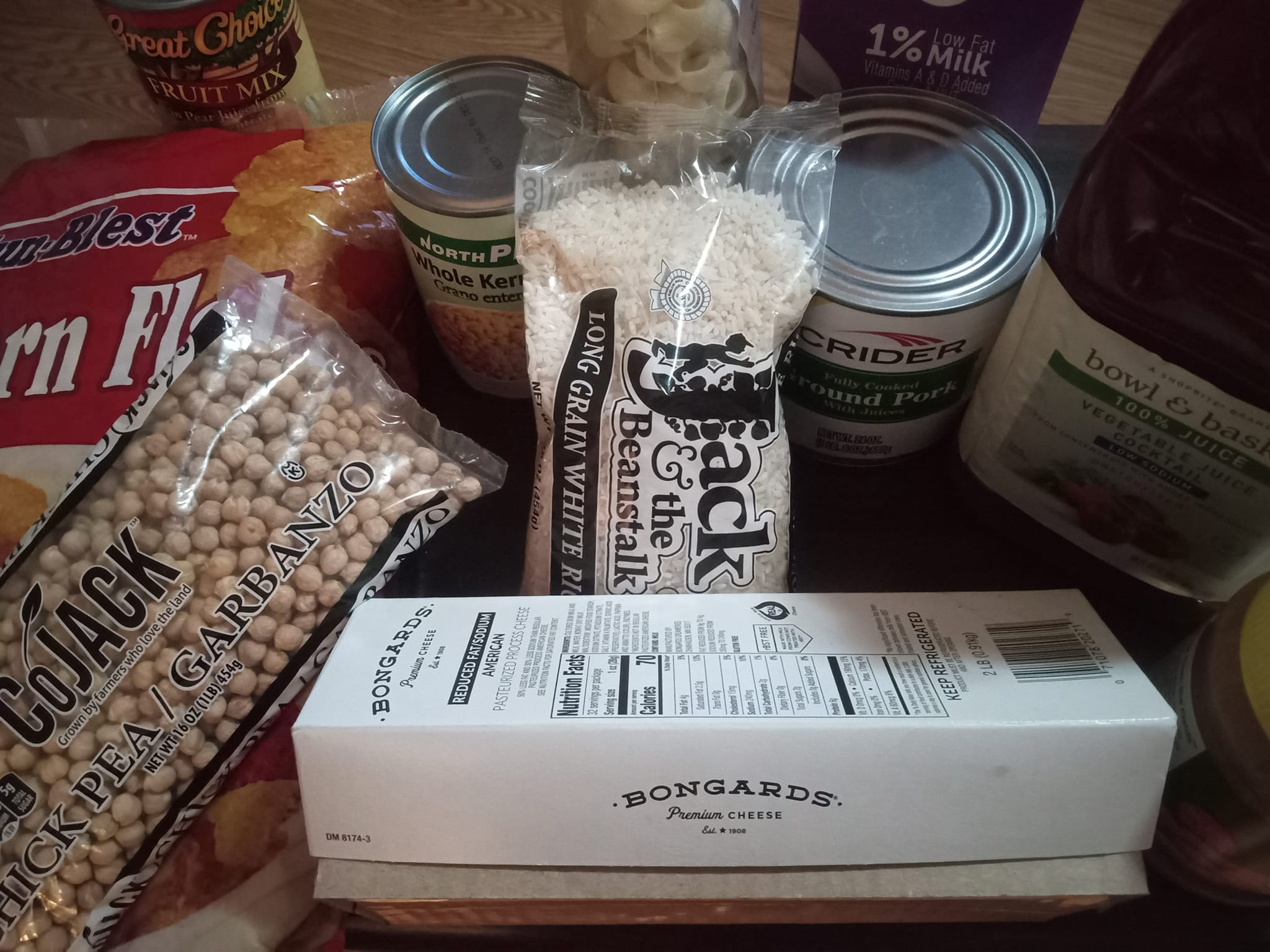
The federal commodity programme supplied schools with agricultural surplus, which meant the kitchen did not plan a menu so much as receive one. A year of heavy cheese purchases produced a year of cheese in everything, and a glut of peanut butter or dried fruit worked through the lunchroom in the same way.
Cooks became expert at absorbing whatever arrived into dishes children would eat, which is a genuine skill and was never recognised as one. The ingenuity was real and so was the monotony, and both were a consequence of a supply system designed around farm price support rather than around feeding children.
The modern programme still uses commodity foods but within nutrition standards that specify what a meal must contain, which inverts the relationship: the requirement now drives the order rather than the delivery driving the menu.
Like our content? Follow us for more.
2. Milk and eggs arrived as powder and were mixed in the kitchen
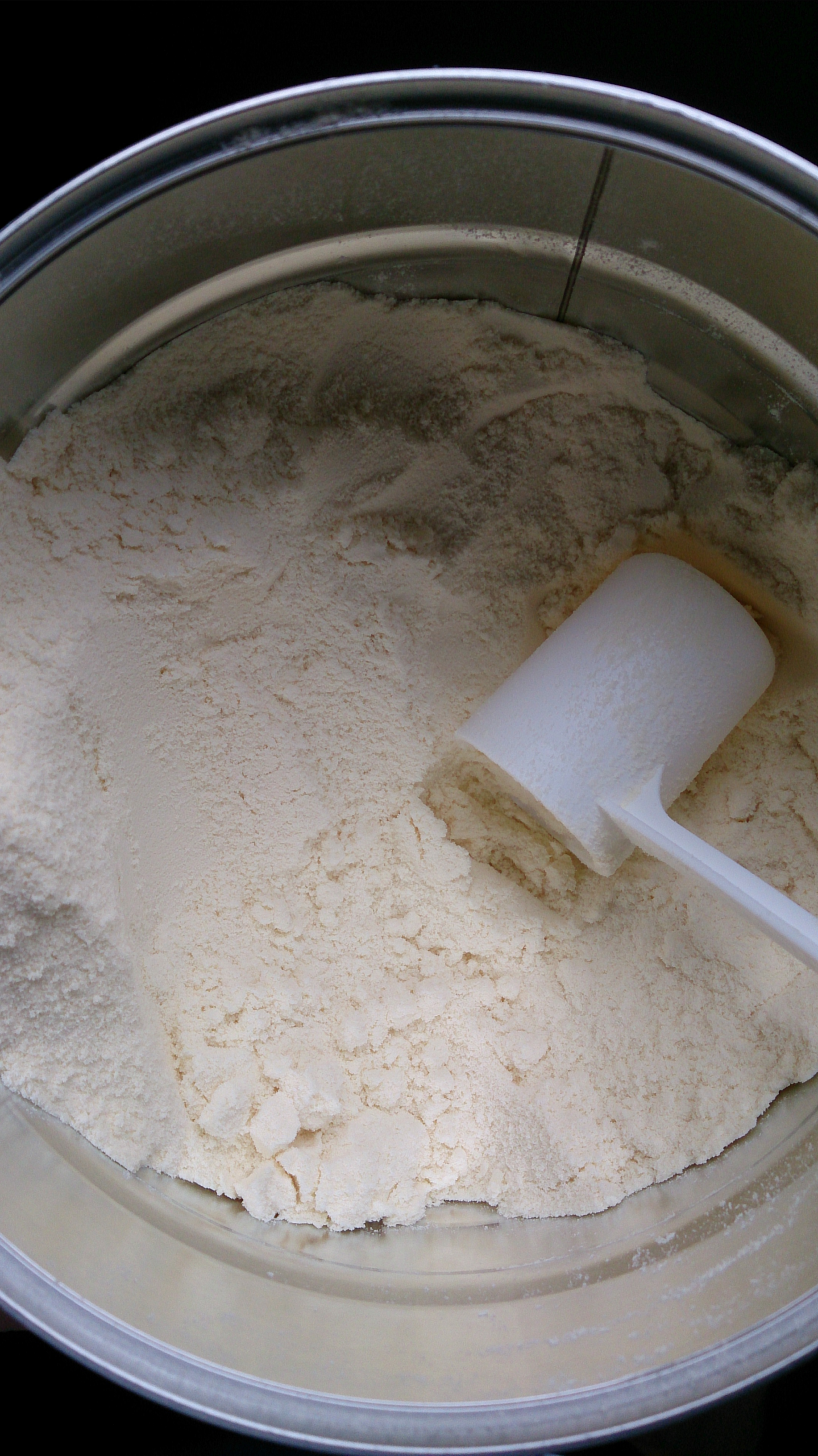
Dried milk and dried egg were staples of institutional catering, reconstituted in large quantities in the kitchen with water from the tap. The powder came in sacks and drums, was measured by eye as often as not, and was mixed in whatever vessel was free.
Reconstituting a dried product creates a perishable one, and the hazard lies in what happens between mixing and serving. A bucket of reconstituted milk standing in a warm kitchen for an hour is a different proposition from the sealed carton it replaced, and nothing in the 1965 kitchen was tracking that interval.
Dried egg in particular has largely gone from school catering in favour of pasteurised liquid egg in sealed containers, and the reason is specifically about what can grow in a reconstituted product held at room temperature.
3. The steam table held everything for as long as lunch lasted
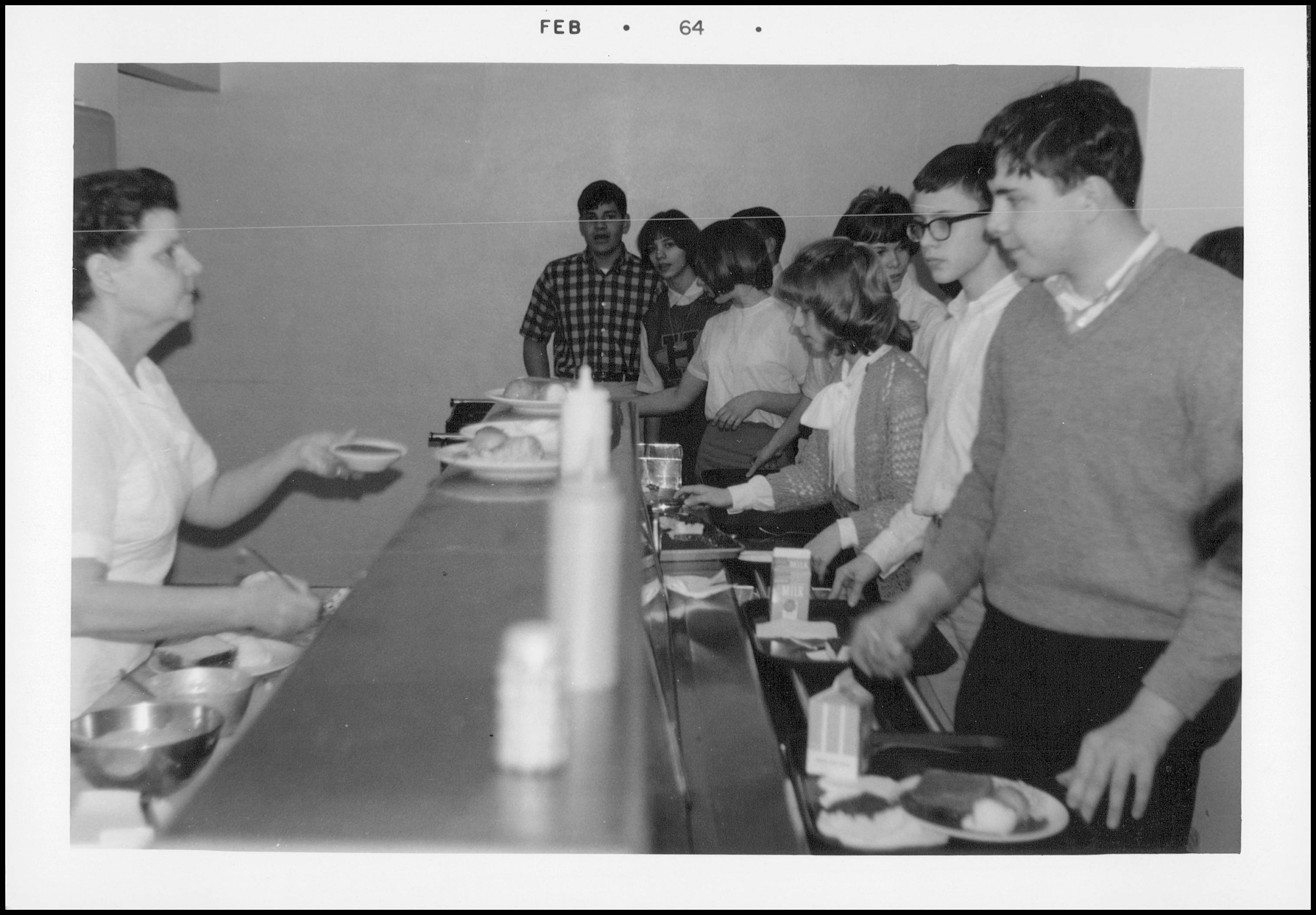
Food was cooked in the morning and transferred to a steam table, where it sat in pans over hot water through two or three sittings. The table was turned on and left on, and nobody was checking what temperature the food in the middle of a deep pan had reached.
Holding hot food is the single most regulated operation in a modern commercial kitchen, because the range between properly hot and comfortably warm is where the problems are. Current practice requires measured holding temperatures, recorded at intervals, with time limits and a documented response when a reading is out.
The 1965 arrangement was identical equipment operated entirely on judgement. An experienced cook’s judgement is often good, but it is not a record, and it does not transfer to the person covering her shift.
4. A pan of hot food was put straight into the walk-in to cool
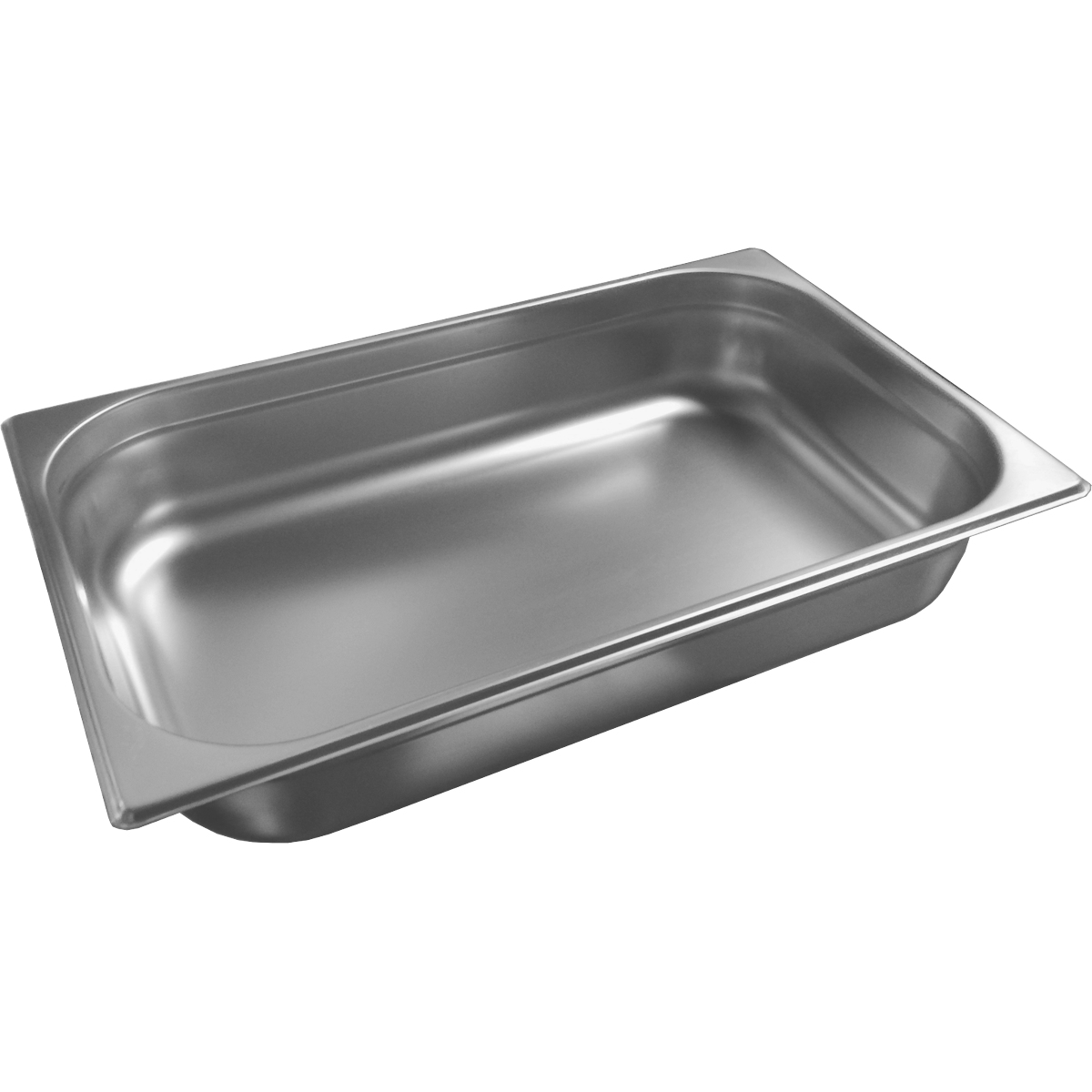
The standard practice for leftovers and for food cooked ahead was to put the full pan into the walk-in refrigerator and let it cool there. It was obvious, it used equipment already present, and it is now specifically prohibited.
A deep pan of hot food cools from the outside, and the centre can stay in the range where bacteria multiply for many hours, while the refrigerator itself is warmed by the load and everything else in it suffers. Current rules require rapid cooling in stages, achieved by shallow pans, ice baths, blast chillers or dividing the batch.
This is the item most likely to still be happening in a domestic kitchen, which is why it is worth stating plainly: a large pot of anything hot does not cool safely in a refrigerator, and dividing it is the whole solution.
5. Nobody owned a thermometer
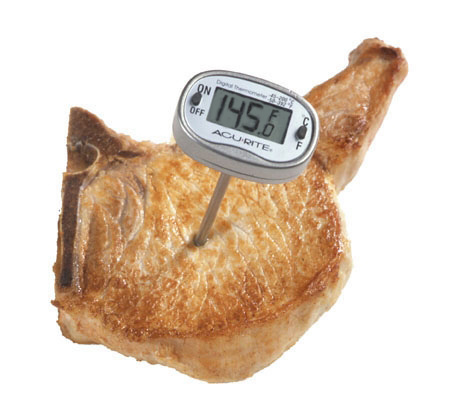
Doneness, holding and cooling were all judged by appearance, smell, touch and experience. A probe thermometer was not standard equipment in a 1965 school kitchen and in many kitchens there was not one on the premises.
Every modern food safety system rests on measurement, because the critical temperatures are not perceptible. Food can be hot enough to be uncomfortable to touch and well below a safe holding temperature, and a cook cannot tell the difference by any means other than putting a probe in it.
The cheap digital probe is one of those pieces of equipment that changed a whole field quietly. It costs almost nothing, it removed an entire category of guesswork, and its absence is the single clearest difference between that kitchen and a modern one.
6. The oven cleaner was caustic and was used bare-handed

Lye-based cleaners were the standard answer to baked-on grease in institutional kitchens, supplied as crystals or a thick liquid and applied with a brush or a cloth. Gloves were available in some kitchens and were not generally worn, and the women doing it had the hands to show for it.
Sodium hydroxide attacks skin on contact and the damage is progressive rather than immediate, which is exactly why it was underestimated: it does not sting the way an acid does, so the warning signal arrives late. Eye contact is the serious hazard and no eye protection was used at all.
Modern equivalents exist and are still hazardous, but the handling has changed completely: gloves and eye protection are required, the product is diluted and applied by a specified method, and a safety data sheet is on the premises. The chemistry is similar and the procedure around it is not.
7. The slicer was cleaned where it stood
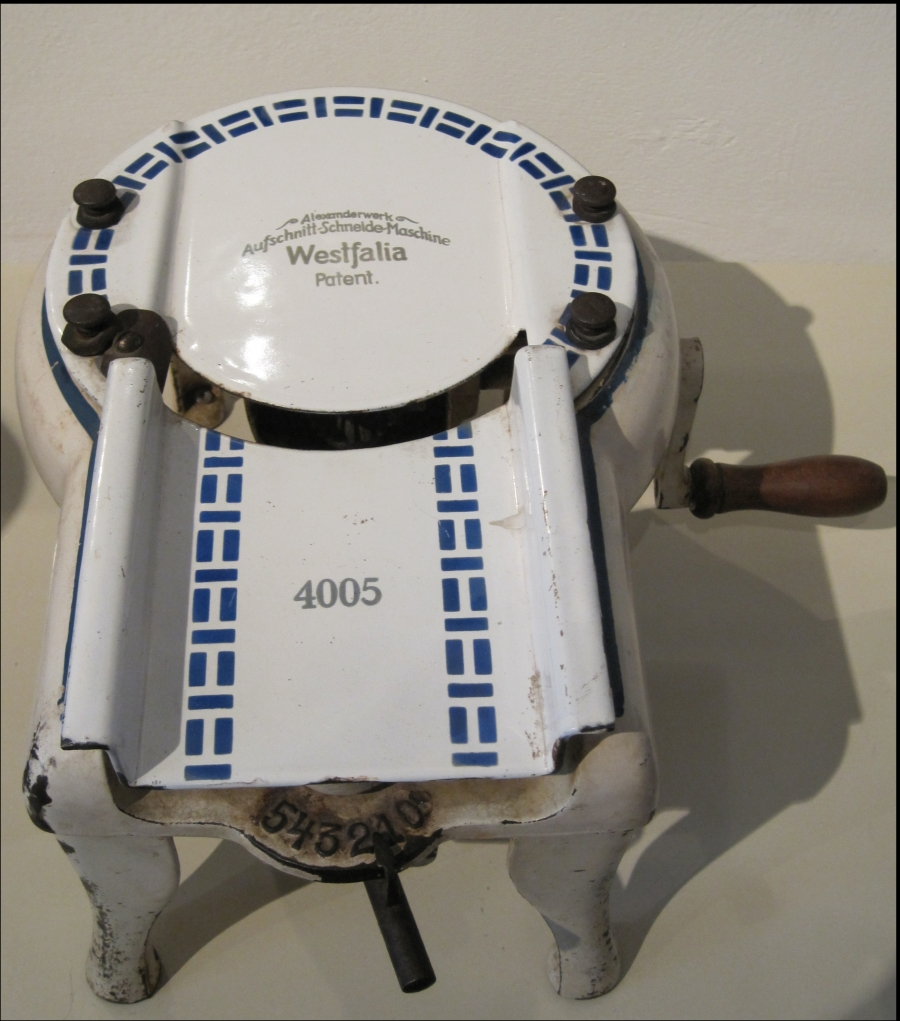
The bread and cheese slicer was wiped down in place with a cloth rather than dismantled, because taking it apart took time the lunch hour did not allow. Blade guards were removed and frequently stayed off, and the machine was used by whoever needed it.
Slicers are now treated as a specific hazard on two counts. They have to be fully disassembled for cleaning because the areas food lodges in cannot be reached otherwise, and they are among the most common sources of serious injury in commercial kitchens, which is why guarding, interlocks and restricted operation are standard.
The combination in 1965 was an unguarded blade, cleaned around rather than taken apart, operated at speed by whoever was nearest. Both halves of that have been addressed separately since.
8. Yesterday’s food came back today
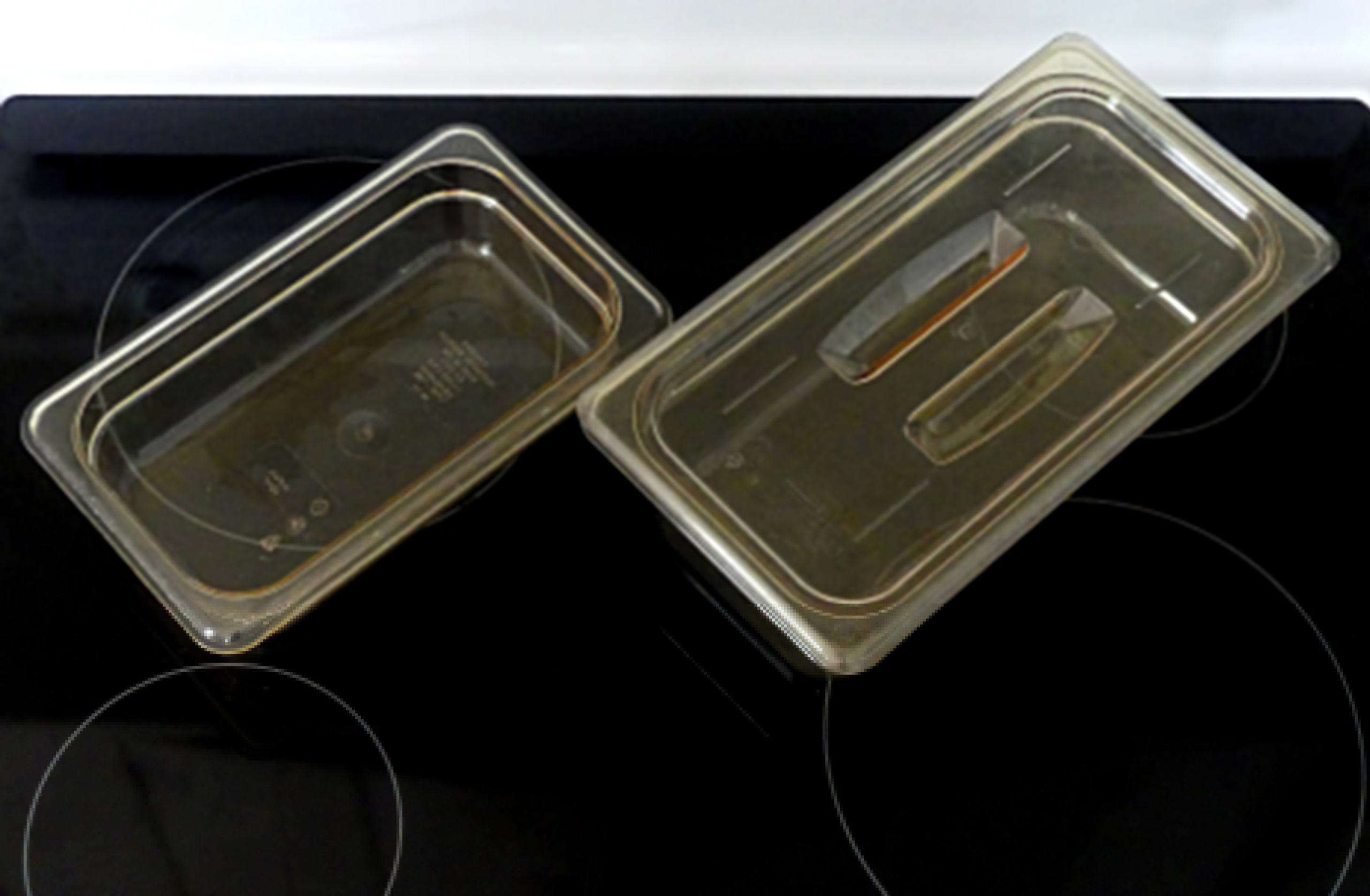
Carrying food over was ordinary thrift. What was not served was covered, refrigerated and reappeared the following day, sometimes incorporated into something else, and the institutional culture of the period regarded throwing food away as close to immoral.
The modern position is a time limit from preparation, applied regardless of how the food looks or smells, and a record of when it was made. The reason is not that reheated food is inherently unsafe but that each cooling, storage and reheating cycle is an opportunity, and that appearance is not a guide to whether anything has happened.
The waste consequence of the modern rule is real and is a live argument in the catering trade. The 1965 kitchen wasted almost nothing and tracked almost nothing, and the two facts are related.
9. Food was handled with hands, and the hands had just been elsewhere
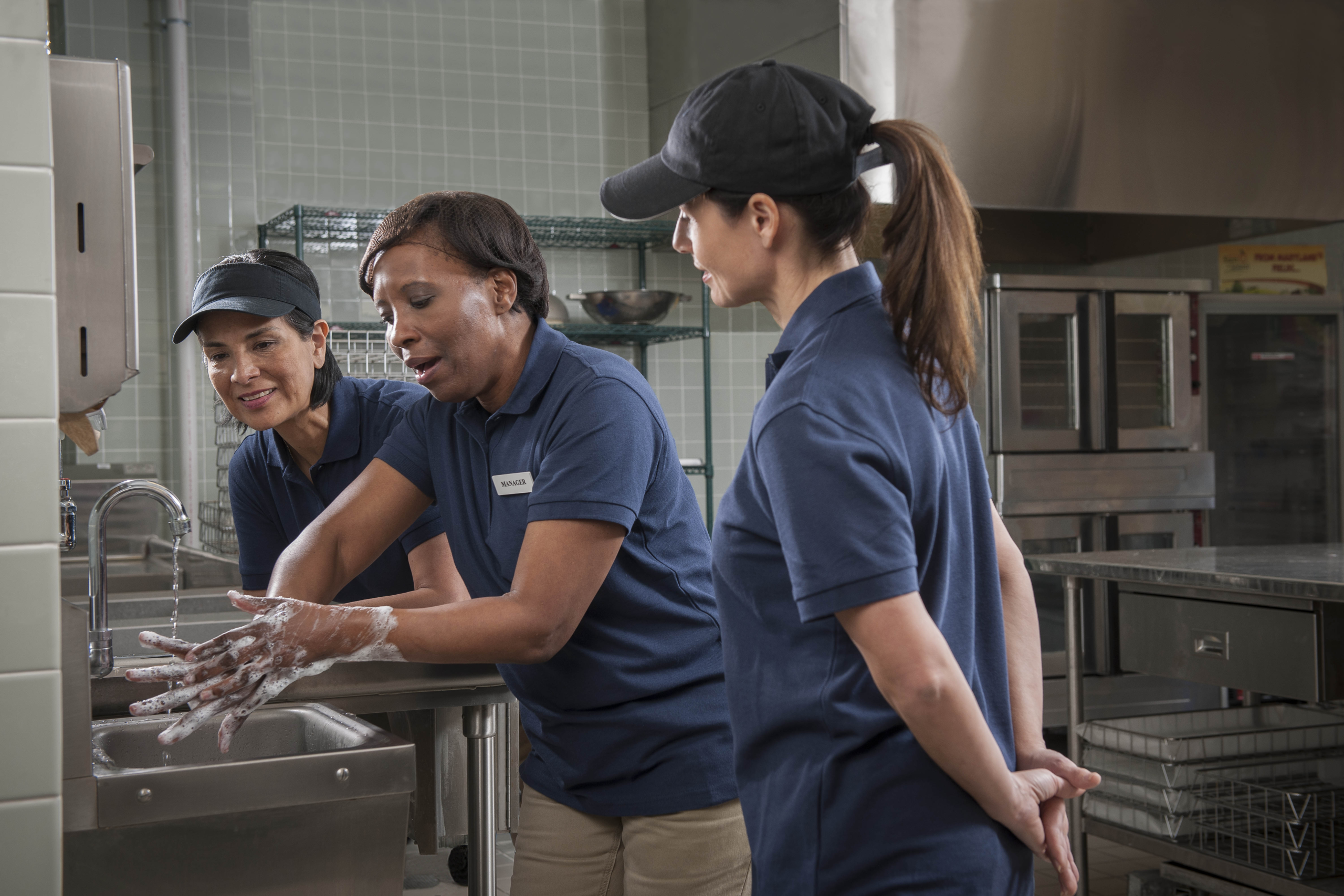
Bare-hand contact with ready-to-eat food was normal. Sandwiches were made by hand, portions were arranged by hand, and the same hands had been on the cash box, the door handle, the mop and the bin, with a rinse at a sink in between if there was time.
Current practice separates these functions: single-use gloves or utensils for ready-to-eat food, a designated handwashing sink that is not the one used for food or equipment, and a defined handwashing procedure at defined moments. The point of the separate sink is that it is always available and never full of something else.
The 1965 kitchen usually had one sink, used for everything, and the handwashing happened in it between tasks when the sink was free.
10. The dishwasher ran cooler than any code now allows
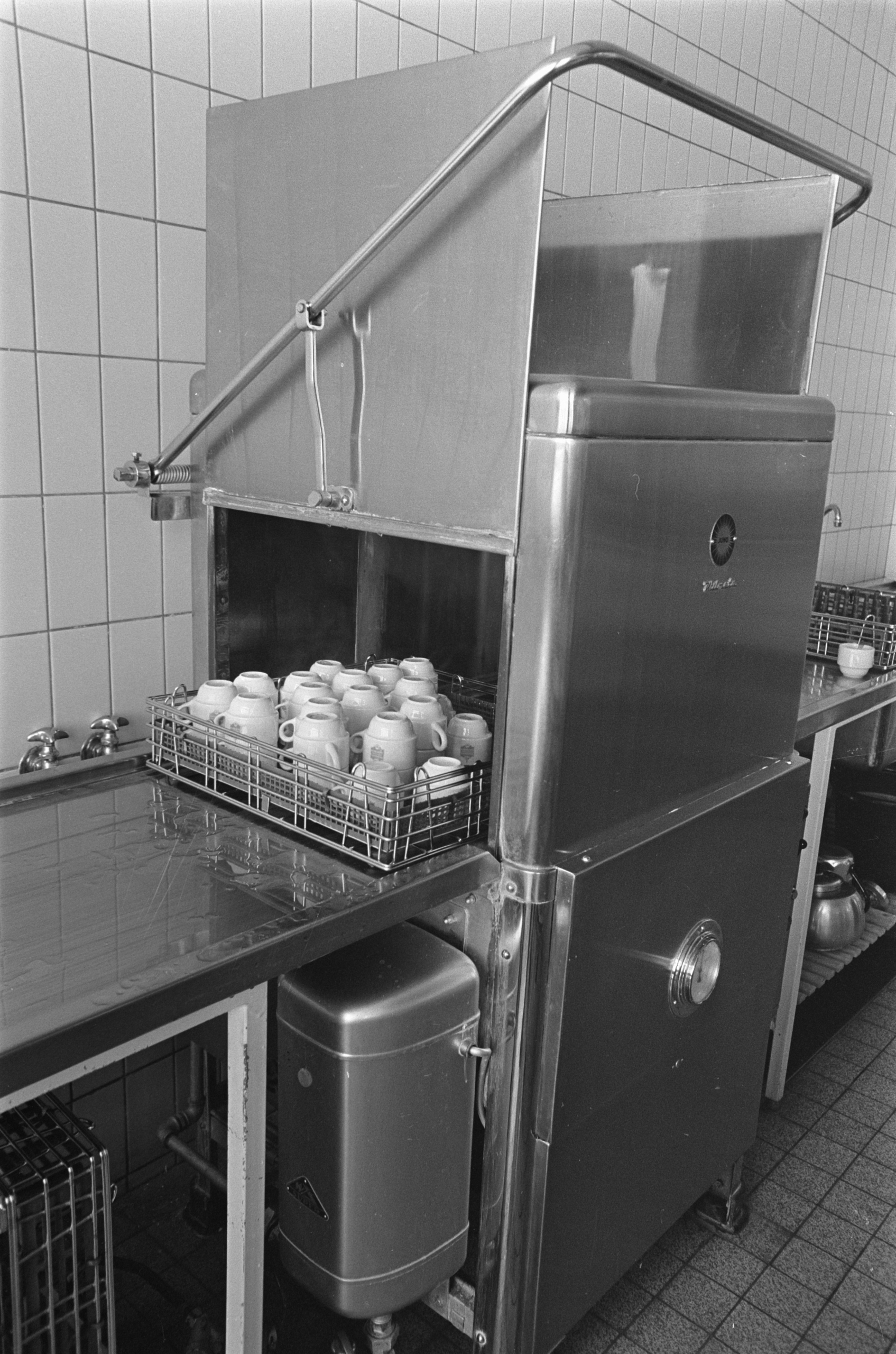
Mechanical dishwashers existed and were used, but the water temperatures and the sanitising cycle were not specified or verified, and in many kitchens washing up was done by hand in a sink with detergent and a rinse. There was no final sanitising step in the modern sense.
Current requirements are specific: a machine must reach a stated temperature at the final rinse or use a chemical sanitiser at a stated concentration, and it must be verified with a thermometer or test strip and recorded. Manual washing requires a three-compartment arrangement with a defined sanitising stage.
The equipment in 1965 was often capable of doing the job. What did not exist was any means of knowing whether it had, which is the theme running through this entire list.
11. A cook with a cold came in anyway
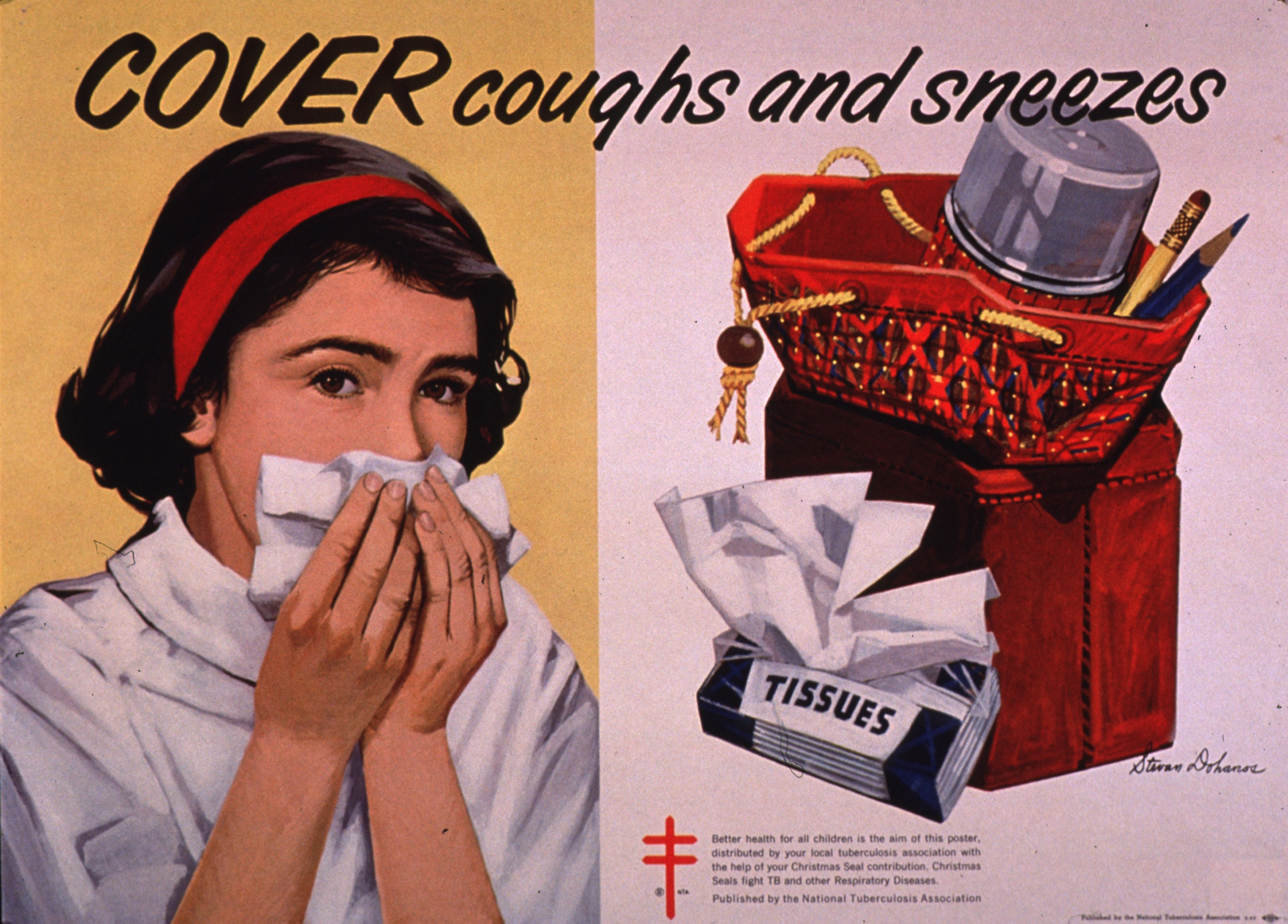
There was no exclusion policy, no sick pay for most kitchen staff and no expectation that illness was a reason to stay away. A woman with a streaming cold worked the line, because the lunch had to be served and because a day off was a day unpaid.
Exclusion of food handlers with particular symptoms is now a legal requirement in American jurisdictions, with specified conditions and specified periods before return, and it is the single most effective control against the kind of outbreak that closes a school. The rule exists because a food handler can transmit to hundreds of people in an hour.
The economics behind the 1965 practice have not entirely gone away, and the honest version of this item is that an exclusion rule only works where somebody can afford to obey it.
12. Nothing was written down
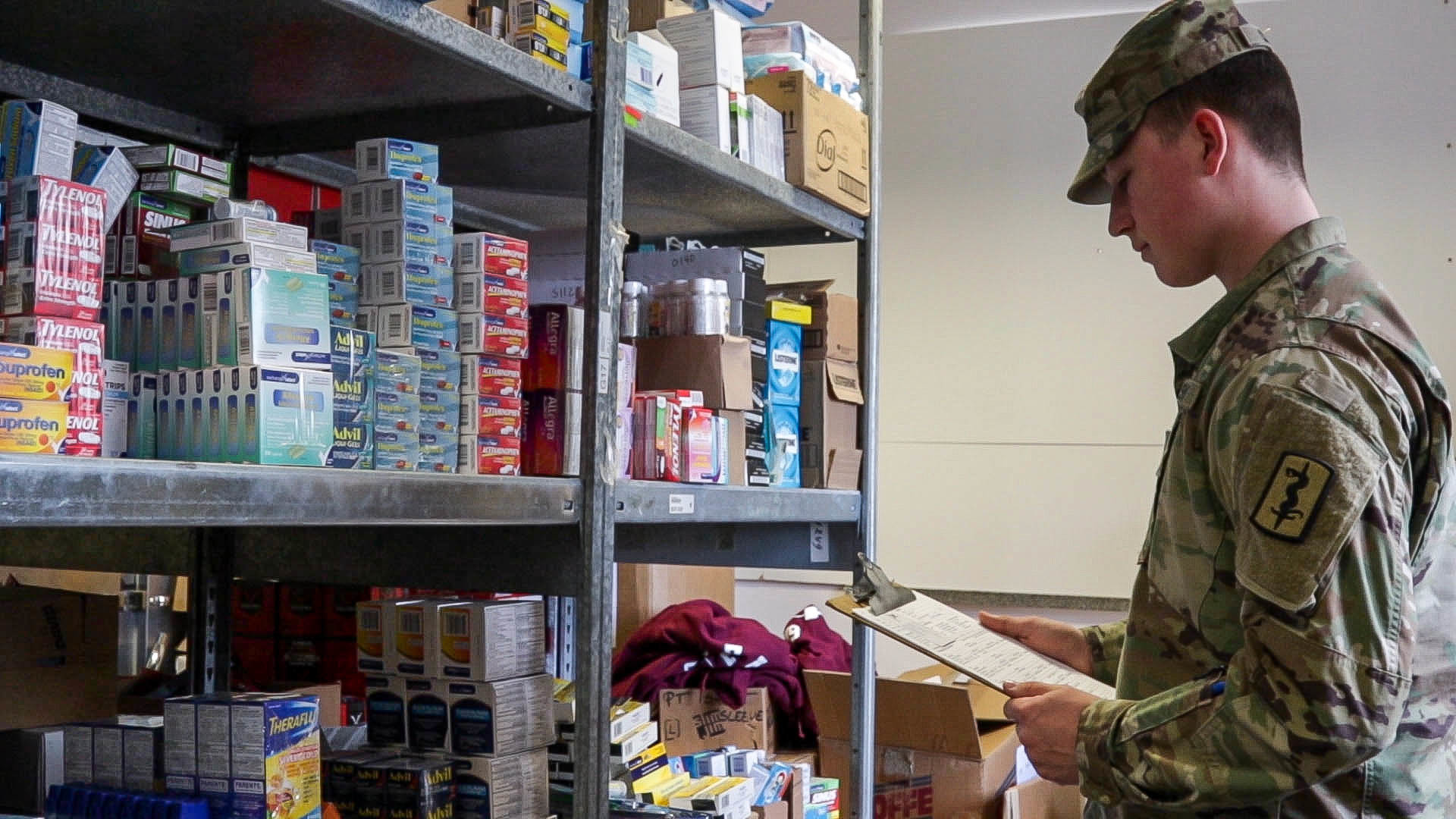
There were no temperature logs, no cleaning schedules, no delivery checks, no record of what was cooked when, and no documented procedures. The kitchen ran on the knowledge of the women in it, which was considerable and was entirely undocumented.
Modern food safety is built on written systems — hazard analysis, critical control points, monitoring records and corrective actions — and the paperwork is not bureaucratic decoration. It is what makes a kitchen’s safety independent of who happens to be working, and what allows a problem to be traced afterwards.
The 1965 kitchen was as safe as its head cook and no safer, and when she retired the knowledge left with her. That is the structural argument for the documentation that kitchen staff everywhere complain about.
13. The ranges had no fire suppression over them
Gas ranges and fryers sat under a simple extraction hood with no suppression system, and the response to a fire was a fire extinguisher on the wall and whoever reached it. Grease accumulated in the ductwork and was cleaned when somebody got round to it.
Commercial kitchen fire protection is now a specialised field: an automatic suppression system over the cooking line, discharging an agent designed for cooking oil fires and shutting off the fuel supply as it does, with scheduled duct cleaning and inspection records. The reason is that a grease fire in a duct spreads into the building structure.
This is the hazard in the list with the largest potential consequence, in a building full of children, and it is the one that has been engineered away most completely.
14. Asbestos lagged the steam pipes along the ceiling
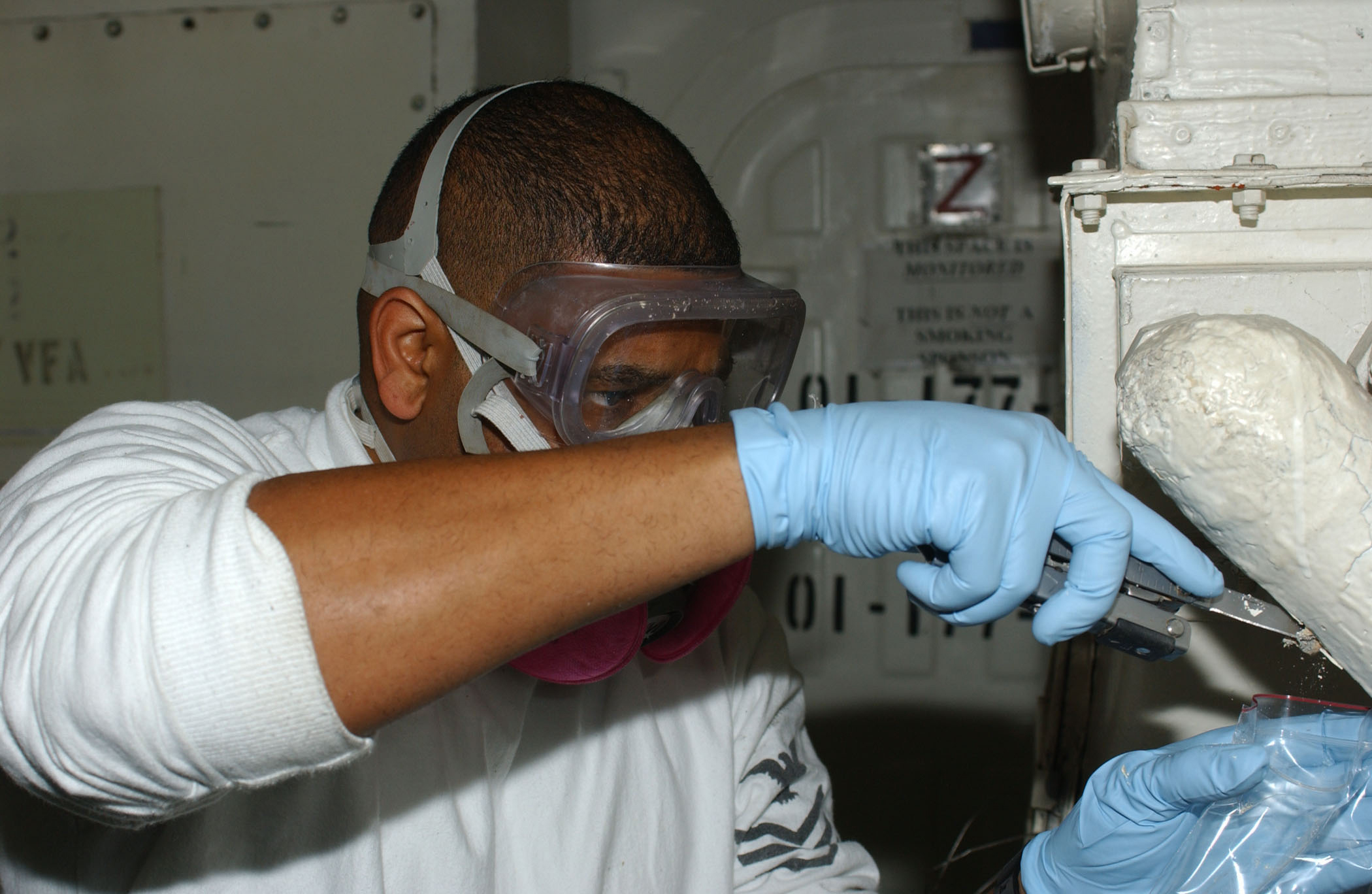
Steam and hot water pipes running through institutional kitchens of the period were insulated with asbestos-containing material, as were boiler jackets and some oven linings, and the kitchen was a place where that lagging was knocked, rubbed by trolleys and repaired badly.
The federal guidance for asbestos-containing material in buildings is to leave it undisturbed where it is in good condition, manage it in place, and use trained personnel for any work affecting it. School buildings in the United States are subject to specific requirements for identifying and managing it, which came in during the 1980s.
Any 1965-vintage institutional kitchen still in use has had this assessed, and the relevant point for a reader is the general one: material of that age and type is identified and left alone rather than removed on sight.
15. Children worked the line in exchange for lunch
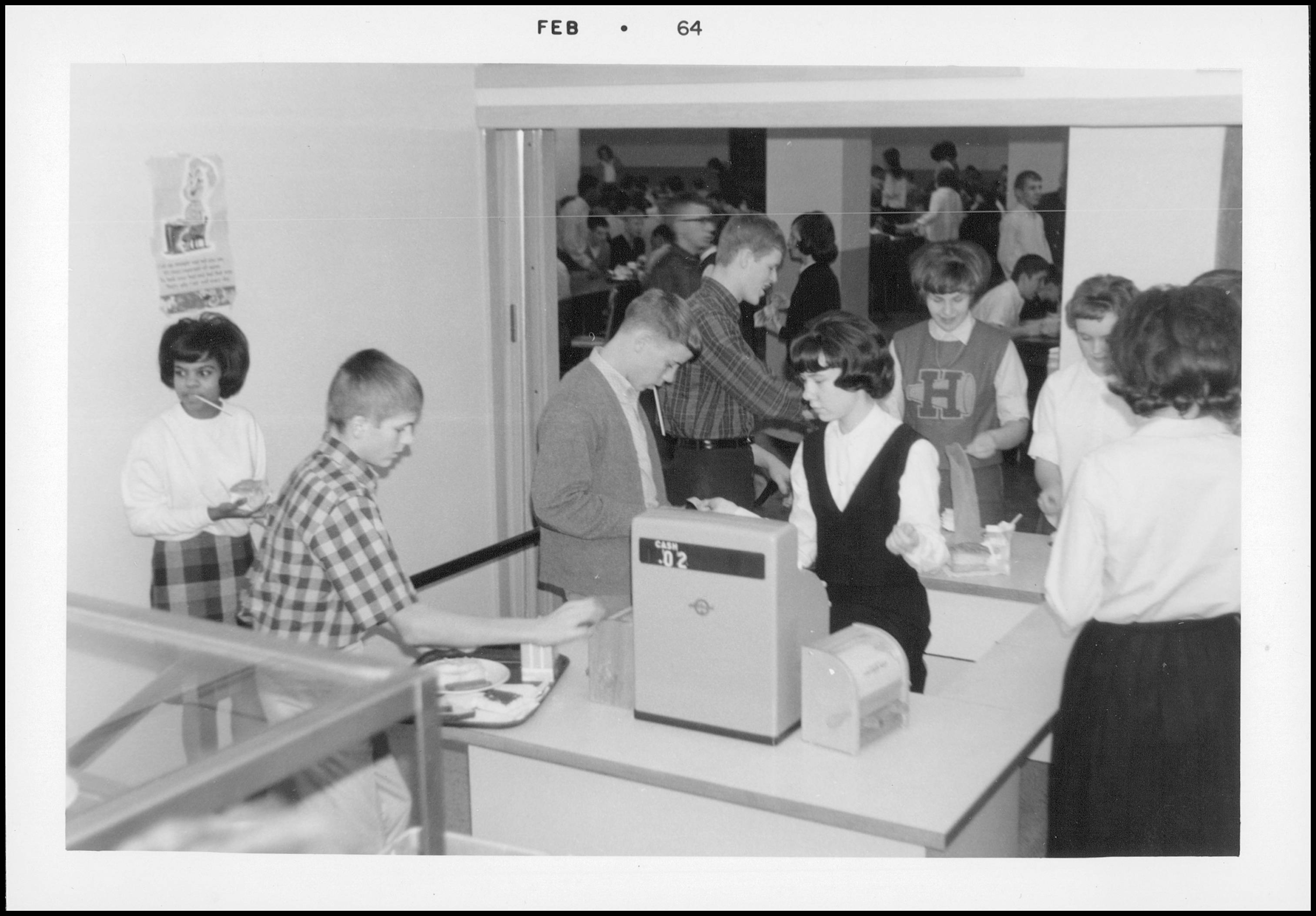
The arrangement was widespread and was regarded as entirely benign. Pupils served, cleared, wiped tables and washed up, sometimes in exchange for a free or reduced-price lunch, which meant the children doing it were visibly the ones who could not afford to pay.
Two things have changed. Child labour provisions and school policy now restrict what pupils may do in a commercial kitchen, particularly around slicers, fryers, hot holding equipment and chemicals. And the practice of making a child work for a subsidised meal in front of their classmates is now understood as a form of identification that defeats the purpose of the subsidy.
Unidentified payment systems in American school meal programmes exist specifically to stop a child’s eligibility being visible to other children, and the 1965 serving line was the opposite of that by design.
16. And the part that was better, which was most of the cooking
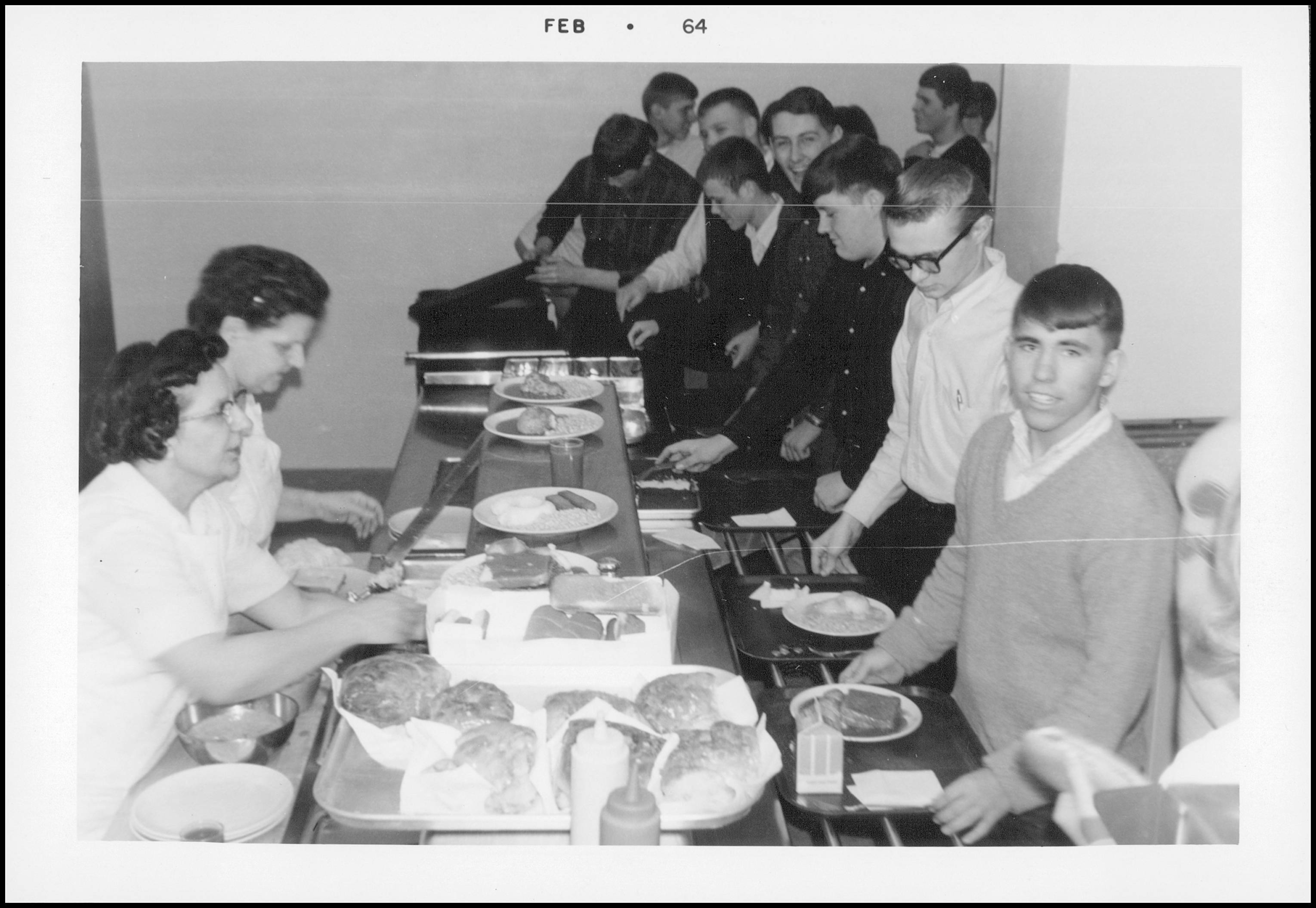
Food in a 1965 school kitchen was cooked on the premises from raw ingredients by women who could cook, in quantity, every day. Bread, pastry, pies, soups, stews and puddings were made from scratch in the building, and the smell of it reached the classrooms.
That is the thing American school catering spent the following decades losing and is now spending money trying to recover. Centralised production, reheated components and pre-portioned trays were adopted because they are cheaper, more consistent and easier to control, and the loss of scratch cooking and of skilled kitchen staff was the price.
The fair summary of this list is that almost every safety criticism of that kitchen is correct and almost every criticism of its food is not. The modern kitchen is measurably safer and the 1965 kitchen was measurably better at cooking, and there is no reason in principle that a kitchen cannot be both.
What all of it has in common

Reading the list back, the pattern is not that the 1965 kitchen was dirty or careless. It is that it had no instruments and no records. The cooking was judged by eye, the holding was judged by feel, the cooling happened wherever there was space, the washing up was presumed to have worked, and nothing anywhere was written down or measured.
That is the whole difference. A modern kitchen does roughly the same operations with a probe thermometer, a set of written procedures, a log on a clipboard and a defined response when a reading comes back wrong, and the effect is to make the kitchen’s safety a property of the system rather than a property of the head cook. It is less romantic and it transfers to the next person who walks in.
The two hazards that stand apart from that pattern are the caustic cleaner and the unsuppressed cooking line, because those were about the staff and the building rather than about the food, and both have been addressed by equipment rather than by paperwork.
The one item worth taking home from this is the cooling one. Putting a large hot pot straight into the refrigerator is still standard practice in domestic kitchens, it does not work, and dividing the food into shallow containers fixes it entirely.
The other thing worth keeping is less practical. The women who ran those kitchens were cooking from raw ingredients for several hundred children a day on a budget set by a surplus warehouse, and they were good at it. Whatever else the list says, it does not say they were not.
Like our content? Follow us for more.
