

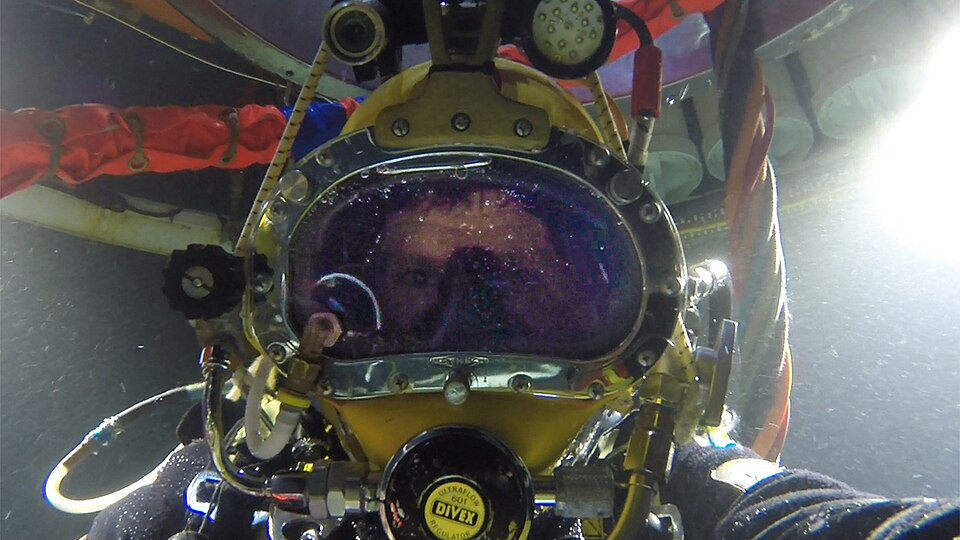
The hard-hat diver is one of the most photographed workers of the twentieth century and one of the least understood, because the equipment looks like a costume and was in fact a life support system with a single point of failure. A man went down in canvas and rubber with a copper helmet bolted to a breastplate, weighted so heavily that he could barely move on deck, and everything keeping him alive came down one hose from a pump on the surface.
The trade was skilled, well paid relative to the work around it, and governed almost entirely by custom. Most of what now governs commercial diving — the gas supply arrangements, the decompression management, the standby diver, the chamber on site, the supervisor, the written plan — arrived afterwards, and each piece of it exists because of something the old arrangement could not handle.
What the equipment actually was
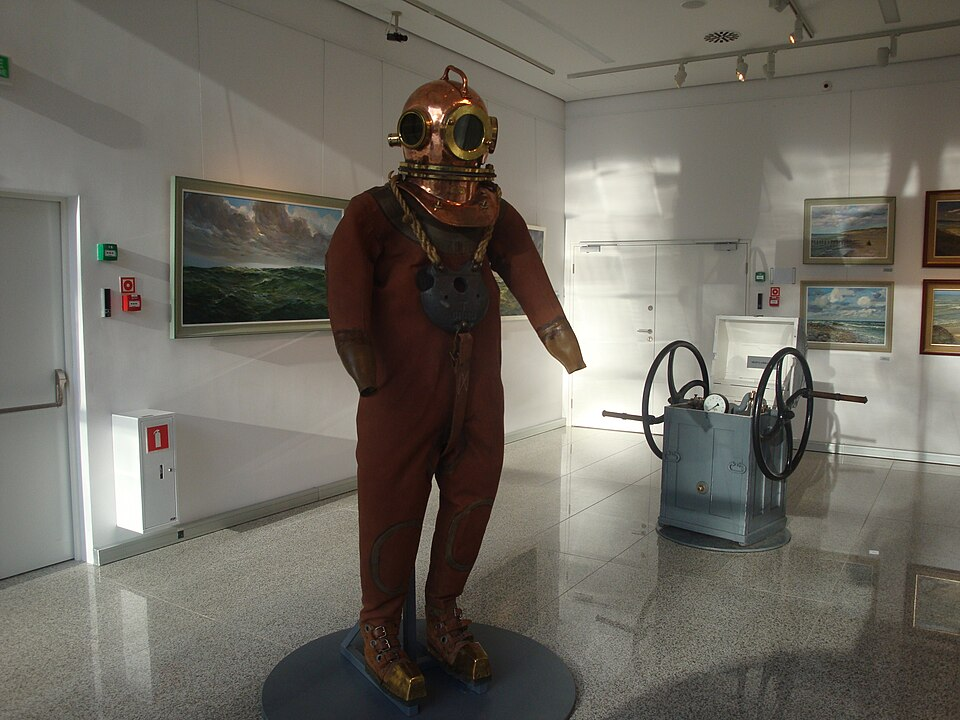
Standard dress is a system rather than a suit. A heavy twill canvas and rubber suit, a copper or brass corselet sitting on the shoulders and clamped to the suit, a helmet that screwed or locked onto the corselet, lead weights on the chest and back, and heavy boots with brass or lead soles to keep the diver upright and on the bottom.
The diver controlled his own buoyancy by managing the air in the suit, using a valve on the helmet to let it out. That is the skill the trade was built on and the reason it took years: too little air and the suit squeezes, too much and it inflates, and an inflated suit carries the diver upward whether he wants to go or not.
The weight is the part people get wrong. The whole rig is extremely heavy in air and close to neutral in water, which is why a diver had to be helped onto the ladder and could then walk on the bottom with the rig doing the work of holding him down. The boots are the detail that makes the whole system intelligible: they are there to keep a man the right way up in a suit full of air, because without them the air collects in the legs and inverts him.
Like our content? Follow us for more.
The air came down a hose, and that was the whole system
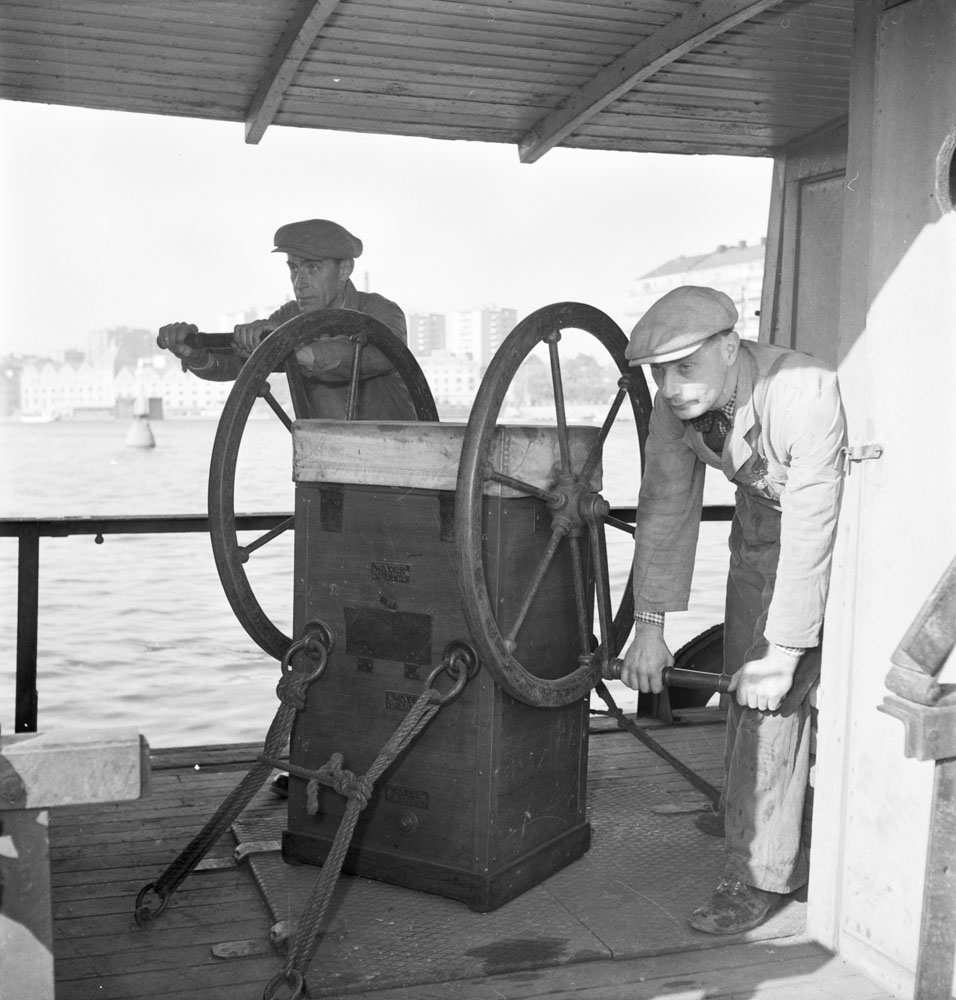
Air was supplied from the surface by a hand-operated pump in the older practice and a compressor in the newer, down a reinforced hose, into the helmet, with the diver’s exhaust valve letting it out. There was no independent reserve on the diver in the standard arrangement.
The consequence of a supply failure at depth is the reason for the single most important piece of hardware in the whole system, which is the non-return valve where the hose enters the helmet. Without it, a loss of pressure in the hose allows the pressure of the water to act on the diver through the helmet, and the outcome is immediate and not survivable. With it, the air already in the suit stays there and the diver has time to be brought up.
That valve was known, was fitted on properly equipped rigs and was not universal, and its history is the clearest illustration of how the trade’s safety worked: the engineering answer existed, and whether it was present depended on the contractor. The same was true of the hose itself, which was inspected by whoever was using it, and of the pump, which on a hand-pumped job depended on two men on deck maintaining a rhythm for as long as the diver was down.
Why the decompression tables exist
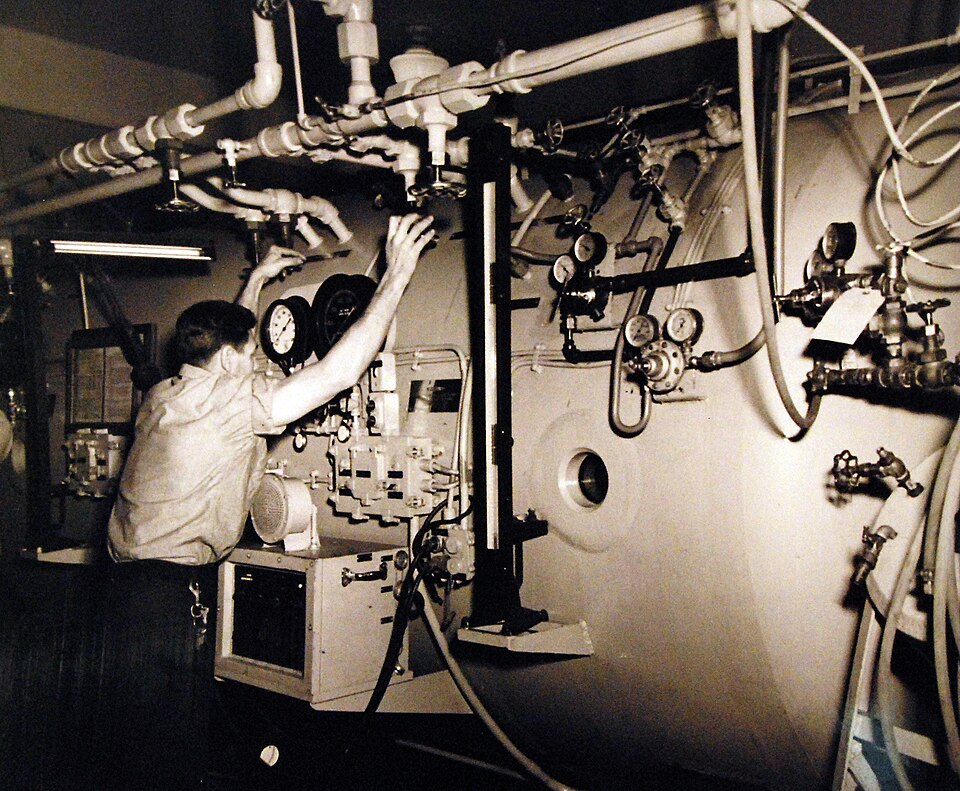
Breathing air under pressure dissolves nitrogen into the body’s tissues in proportion to the depth and the time spent there, and bringing a diver up too quickly allows that nitrogen to come out of solution as bubbles. That is decompression illness, and it was the trade’s characteristic injury.
The response was tabulation. Navies and research institutions worked out schedules specifying how long a diver may stay at a given depth and how slowly he must come up, with stops on the way, and the American naval tables became the standard reference for commercial work. A 1960 diver’s day was governed by them where the contractor applied them and by the foreman’s judgement where he did not.
No depth, time or schedule appears in this article, deliberately. What matters historically is the shift from judgement to tabulation, and then from tabulation to the modern arrangement in which a dive is planned in advance, monitored throughout, and backed by a recompression chamber on site rather than a long journey to one. The distance to a chamber was the quiet determinant of outcomes in the old arrangement, and it was a function of where the job happened to be rather than of anything the diver controlled.
The tender, the lifeline and the rope signals
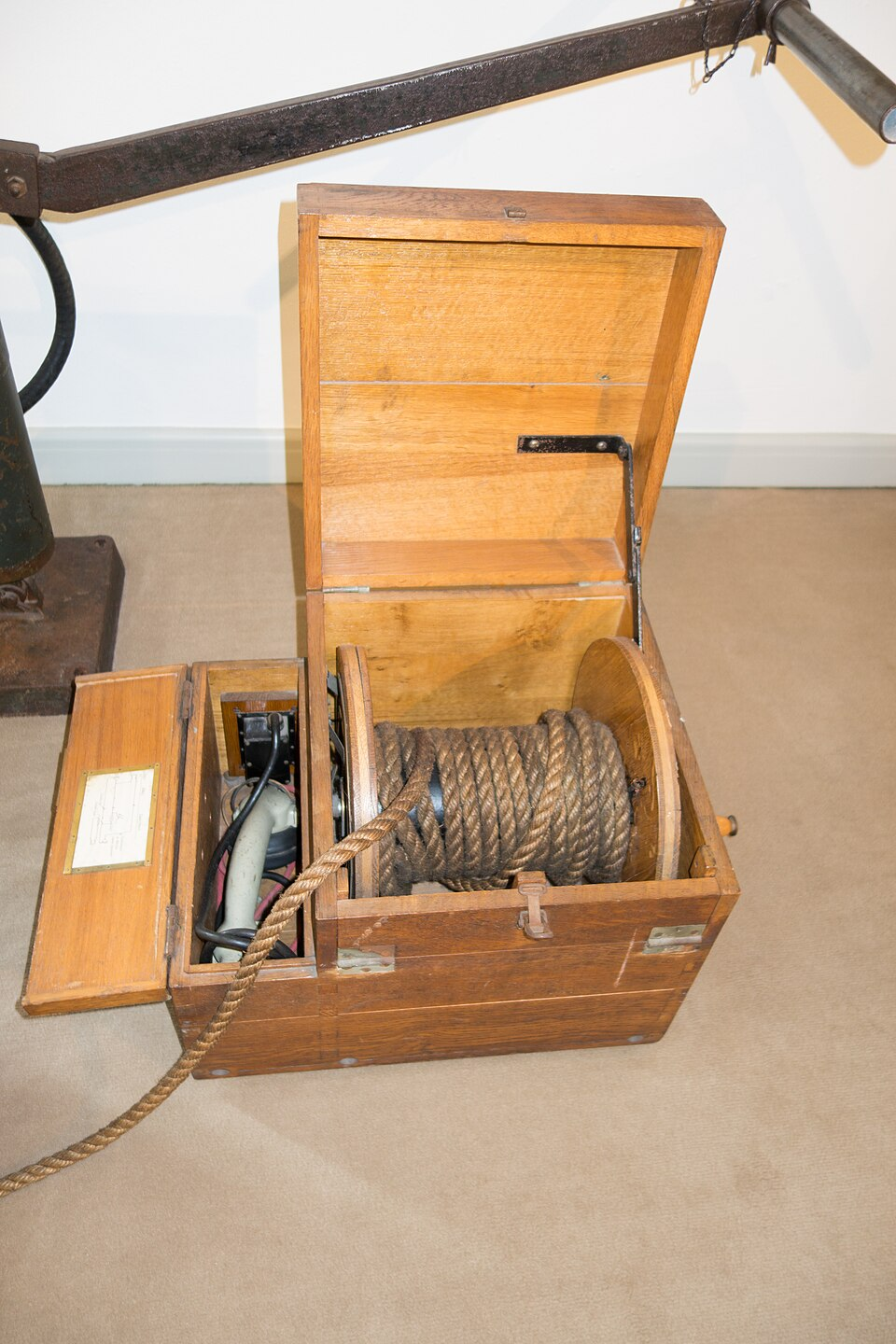
Every diver had a tender on the surface whose job was the hose and the lifeline, and the two were often bound together as an umbilical. Before voice communication reached the trade, everything the diver needed to say was said by pulling on that rope in coded sequences, and the tender’s reading of the line was how the surface knew what was happening below.
A tender also read the bubbles. The pattern of exhaust reaching the surface told an experienced man whether the diver was working, resting, moving or in difficulty, and that observation was part of the job rather than an art.
Telephone communication through the helmet existed from early in the century and became general in commercial work through this period, and it changed the trade completely: a supervisor could hear what was happening and a diver could describe what he had found. Modern practice requires two-way voice communication as a matter of course, along with a standby diver equipped and ready at the surface.
What the work was
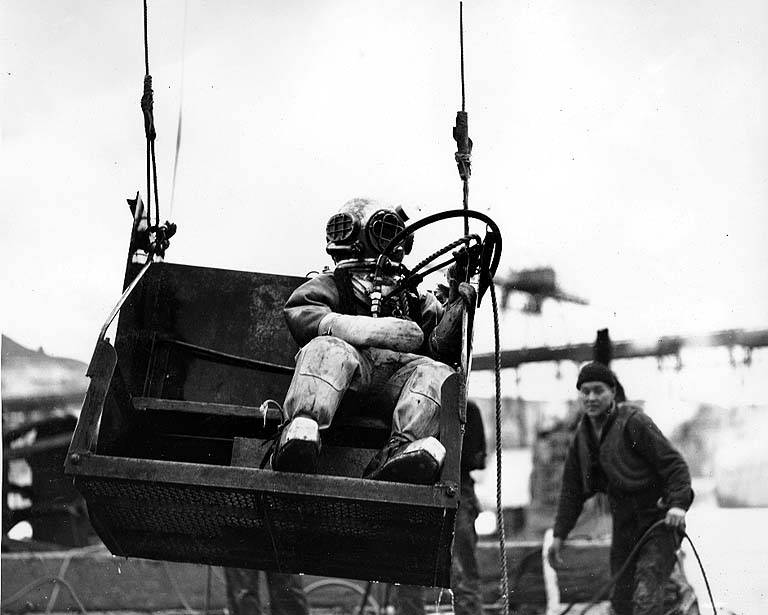
The jobs were unglamorous and structural. Harbour and dock maintenance, bridge and dam inspection, lock gates, intake screens, ship husbandry and propeller work, salvage, pipeline laying and the clearing of obstructions. A great deal of it was done in water with no visibility at all, by feel, with the diver building a mental picture of a structure he could not see.
The decade this article describes is also when the trade’s economics changed. Offshore oil and gas moved into deeper water through the 1960s, and the demand for divers who could work at depth for extended periods created the money and the pressure that produced the next generation of technique.
That is worth noting because it explains why the change came when it did. Standard dress had been essentially stable for decades; it was displaced within about fifteen years by an industry that needed more than it could deliver.
What replaced it
Three things in sequence. Self-contained equipment made short shallow tasks independent of a surface crew. Then surface-supplied diving with a modern helmet, a reclaim or open-circuit gas supply, a hot water suit for warmth and a bailout cylinder on the diver gave the hose arrangement a reserve it had never had. Then saturation diving, in which divers live under pressure in a chamber on a vessel and are transferred to the work site in a bell, removed the daily decompression entirely for deep work.
Alongside the equipment came the framework. Commercial diving in the United States is governed by specific regulation covering the dive team, the supervisor, equipment inspection and testing, decompression management, a standby diver, a recompression chamber available within a defined arrangement, breathing gas quality, and records. The operation is planned, written down and supervised in a way that a 1960 barge crew would find unrecognisable.
Standard dress itself survives in a small way. It is used for ceremonial work, for demonstration and by a handful of specialists, and the helmets are collected and restored, which is why the equipment is far more familiar to the public than the work ever was. A copper helmet is an object people recognise instantly and almost nobody could say what the man inside it was doing, which is unusual for a trade this dangerous.
What the trade had
The thing that comes through every account of this work is the competence. A diver in standard dress managed his own buoyancy by feel, worked blind in cold water on structures he could not see, understood the whole of the system keeping him alive, and relied on one man on the surface reading a rope. The relationship between diver and tender is the part surviving practitioners talk about rather than the depths.
What was wrong with it is equally clear and is not a matter of nostalgia. The gas supply had no reserve unless a valve had been fitted, the decompression was applied inconsistently, there was frequently no chamber within useful reach, and the standby arrangement was whoever was on deck. Every one of those is now a requirement, and each requirement exists because the old answer was somebody’s judgement.
This is a history rather than a guide. Commercial diving is a licensed and regulated occupation requiring formal training, and nothing in this article describes a technique, a schedule or a procedure that anybody could or should attempt.
Like our content? Follow us for more.

