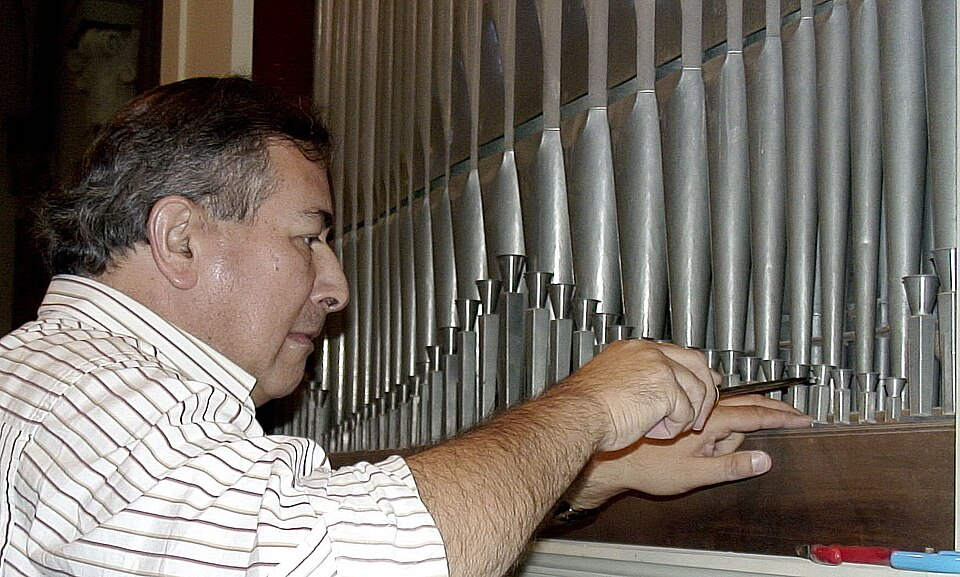
A pipe organ is a building-sized wind instrument and it has to be tuned in place. There is no way to do it from the console: somebody has to be inside the case, among the pipes, with a second person at the keyboard holding notes, while the first adjusts the pipes one at a time by ear until the instrument agrees with itself.
It is one of the few trades in this series that survives almost unchanged, because nobody has found a better way to do it. What has changed is the understanding of what the tuner is handling, how he gets to the pipes, and what the inside of an organ does to his hearing.
What tuning an organ actually involves

The pipes that make most of an organ’s sound are open or stopped flue pipes made of a lead and tin alloy, and they are tuned by altering their effective speaking length. An open metal pipe is adjusted by bending or coning the top — opening it slightly to raise the pitch, closing it to lower — with a tuning cone or the tuner’s fingers. A stopped pipe is tuned by moving its stopper. Reed pipes are tuned by moving a wire that alters the vibrating length of the tongue.
The tuner works by listening for beats, the pulsing that two slightly mismatched notes produce together, and adjusting until the pulsing slows and stops. That is the whole method: no instrument, no meter, just two notes and the interference between them.
An organ has thousands of pipes and a full tuning is days of work. In practice instruments are tuned in sections and the reeds, which drift most, are done most often, which is why an organist’s tuner visits are partly a conversation about what has gone out of tune since last time.
Why it has to be done at the temperature of use
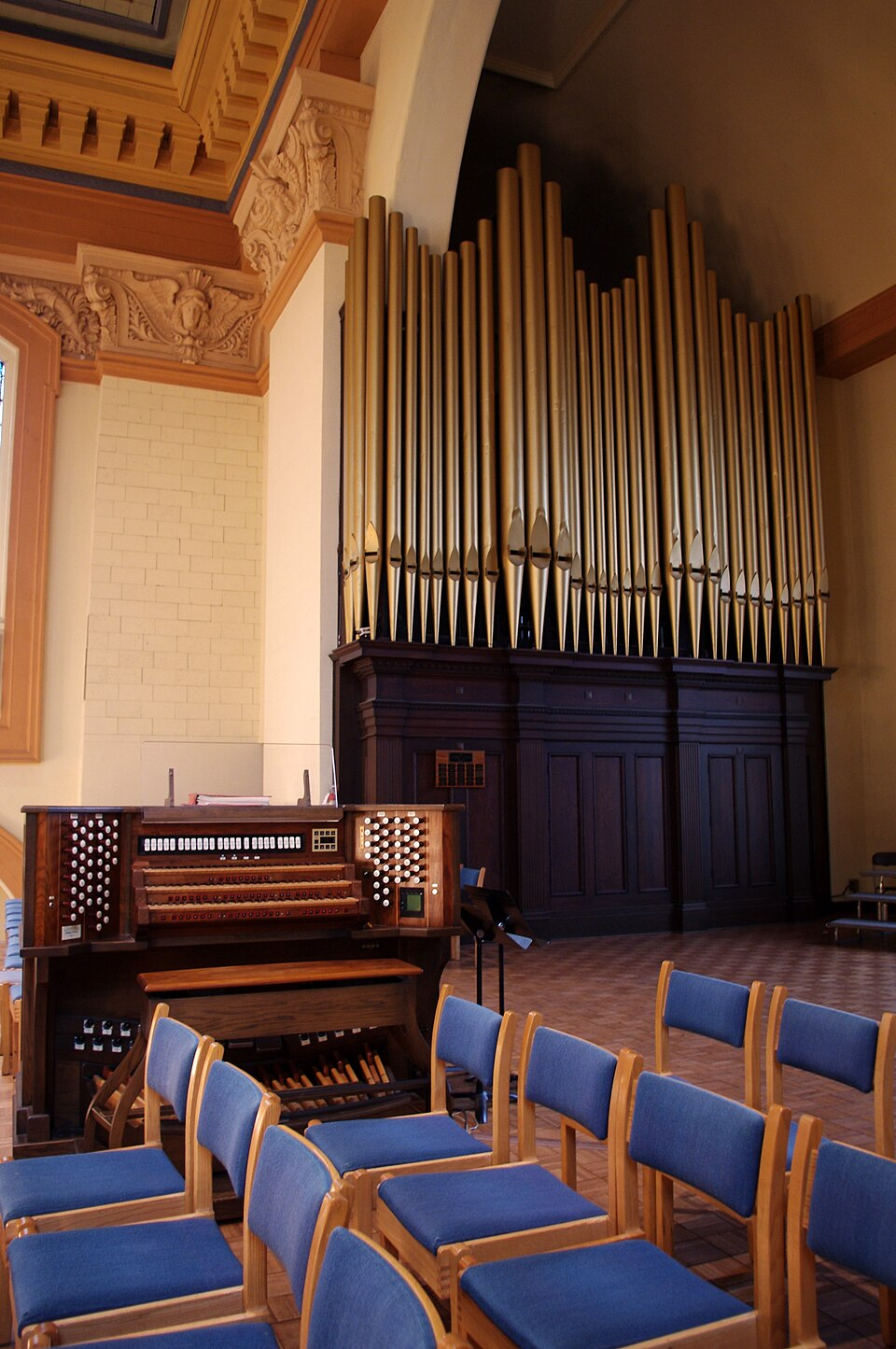
The pitch of a flue pipe depends on the speed of sound in the air inside it, and that depends on temperature. Warm the building and the organ goes sharp; cool it and the whole instrument goes flat, uniformly, which on its own is not a problem because everything moves together.
The problem is that it does not move together. Reed pipes depend mainly on the physical length of a metal tongue and are far less affected by temperature than flue pipes, so a change in temperature pulls the reeds and the flues apart. An organ tuned in a cold empty church in the morning will be out of tune at a full evening service with the heating on.
So the trade’s rule is to tune at the temperature the instrument will be played at, which means the heating is run for the tuner and the building is brought to performance temperature before work starts. That is still the requirement and it is the detail that most often surprises people paying for a tuning.
The metal is lead
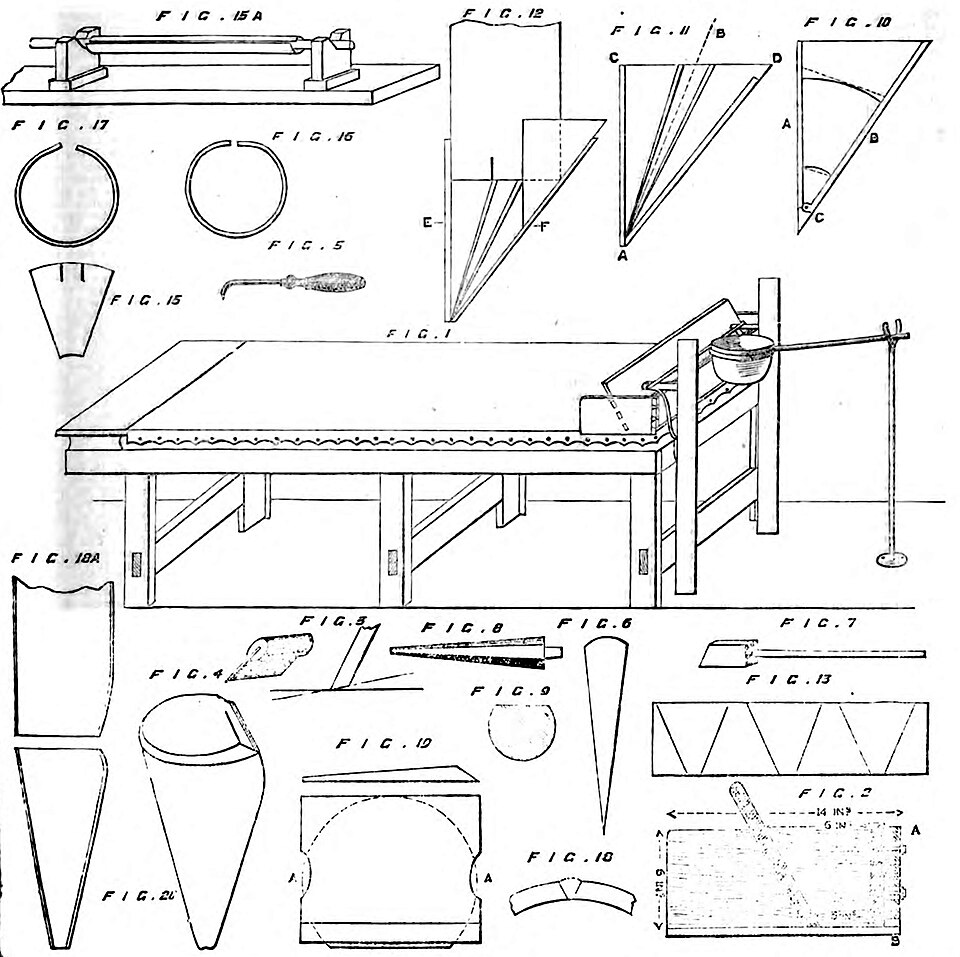
Organ pipe metal is an alloy of lead and tin in proportions that determine the tone and the working properties, running from nearly pure tin for some bright ranks to a high-lead spotted metal for others. The tuner handles it constantly: coning pipe tops, straightening damage, lifting pipes in and out of racks, and in repair work cutting, soldering and fitting new sections.
Lead’s occupational effects had been documented for well over a century by 1960 and the organ trade was not thought of as a lead trade, which is why the handling was casual. Men ate at the bench, worked bare-handed in dusty chambers full of pipe metal and lead-containing corrosion products, and nobody washed before lunch.
The modern position in organ building and maintenance is explicit: pipe metal is treated as a lead-containing material, with hand washing before eating, no eating or drinking in the chamber, control of dust, care with pipe corrosion products and in workshops where metal is cast or soldered the full set of controls — extraction, monitoring and health surveillance — that any lead process requires.
The chamber is loud, and nobody mentioned it
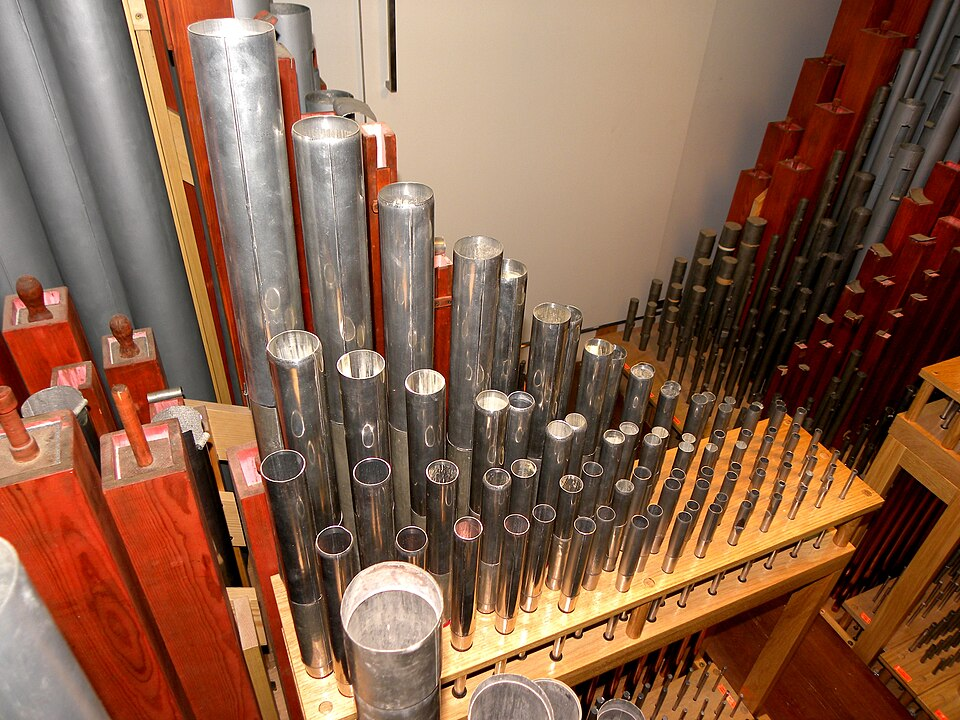
The place a tuner stands is a few feet from the mouths of pipes capable of filling a cathedral, in an enclosed chamber designed to project sound outward, while an assistant holds notes down for as long as the tuner needs them.
That is a serious noise exposure and it was not treated as one. Hearing protection was not used, partly because nobody thought about it and mainly because the tuner is listening — the whole method depends on hearing beats between two notes, and conventional protection that attenuates unevenly changes what he hears.
The modern answer is the one developed for musicians: flat-response attenuating earplugs that reduce level across the spectrum without altering the balance, which preserve the ability to hear beats while cutting the exposure. Alongside that, the practice has shifted toward limiting time in the chamber with the loudest ranks sounding and using the assistant more efficiently. It is the clearest example in this file of a hazard that was invisible because the exposure was also the work.
Getting to the pipes
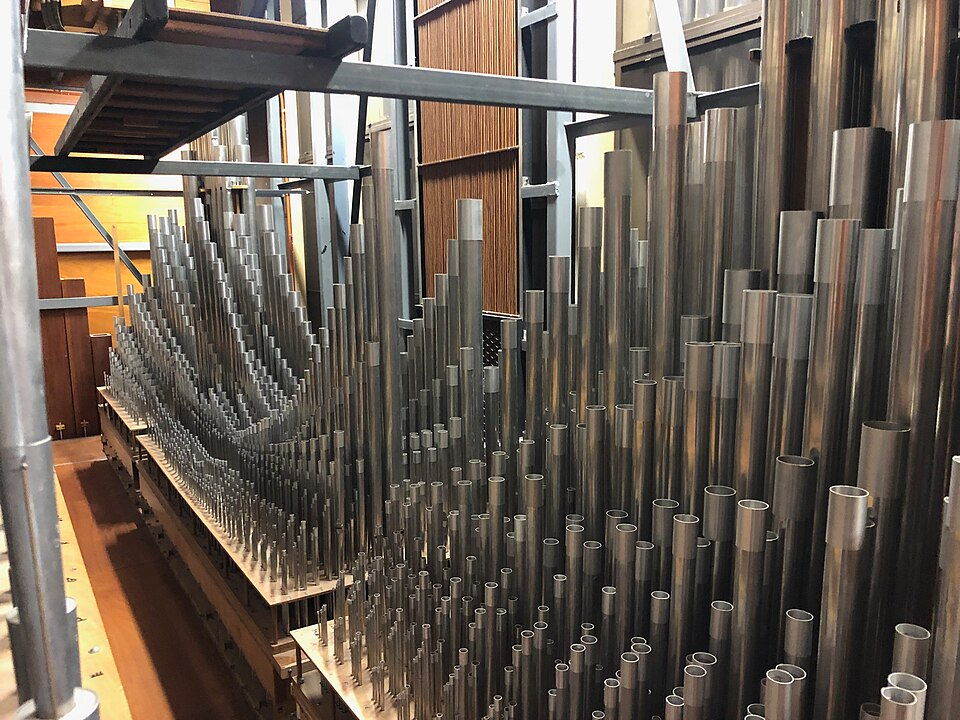
The inside of an organ is a timber structure of windchests, racks and walkboards, frequently tall, frequently reached by a vertical ladder through a trapdoor, with narrow boards to walk on and pipework on both sides that cannot be leant against or grabbed.
Falls are the trade’s obvious physical risk and the 1960 arrangement was the tuner’s own care. The modern position treats the inside of an organ as a workplace at height: boards inspected and secured, handholds provided where they can be, lighting rather than a torch in the teeth, and in large instruments proper access platforms rather than improvised ones.
The other hazard in the same space is the blower room, which in older installations contained a belt-driven blower with exposed drive belts, and in many buildings lagging and gaskets containing asbestos. The current position on material of that age is that it is presumed to contain asbestos, is left undisturbed where it is in good condition and is identified before any work affecting it.
What was in the organ loft besides the organ
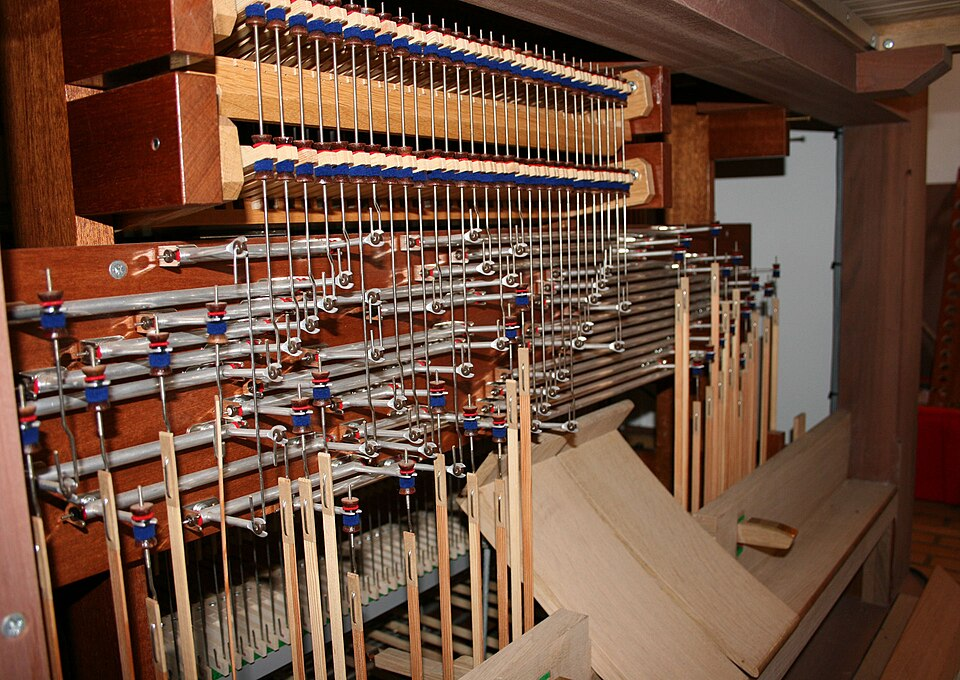
Historic instruments contain leather, hide glue, felt, wool cloth and timber, all of which is why organ work is now substantially a conservation discipline. Original leather in bellows and pneumatic actions perishes and is releathered; original glue is reversible and modern substitutes frequently are not, which is why the trade has moved back toward hide glue for restoration work.
The decision that generated the most argument in this period was electrification. Mechanical tracker action, in which the key is physically connected to the pallet, was widely replaced through the first half of the century by pneumatic and then electric action, which allowed consoles to be moved and divisions to be placed anywhere. A great many historic trackers were converted or discarded.
That has reversed completely. Tracker action is now valued for the control it gives a player, new instruments are frequently built with it, and the conversions of the earlier period are regarded as the trade’s equivalent of the library rebinding problem: conscientious work, to specification, that destroyed what is now considered the valuable part.
Why the job survived
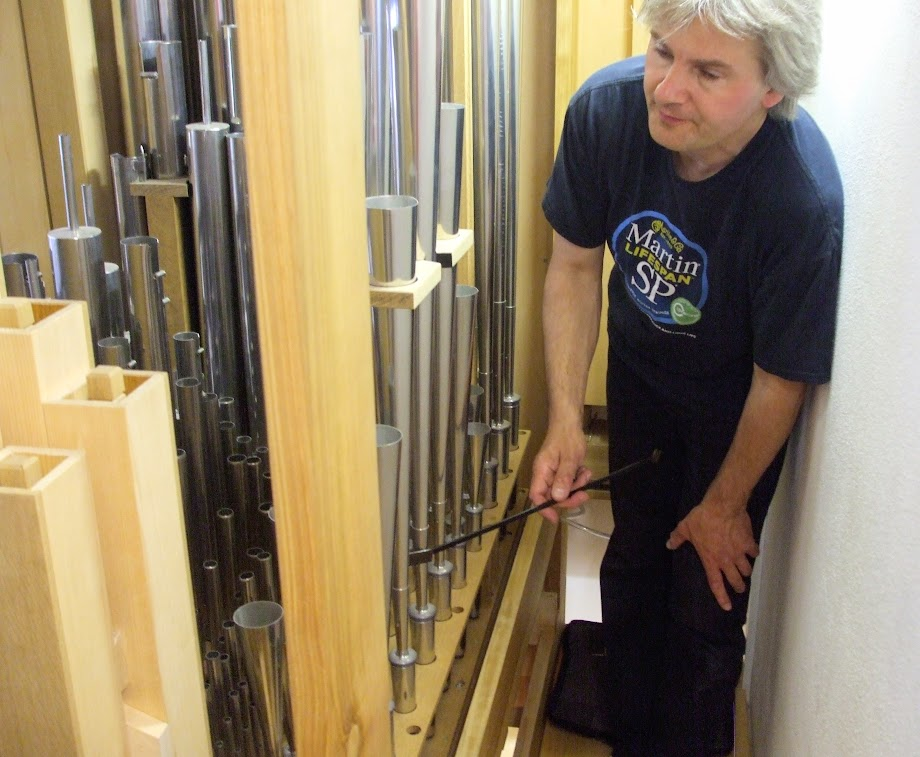
Almost every trade in this series was eliminated by a cheaper method. This one was not, for a specific reason: the thing being adjusted is a physical column of air in a metal tube in a particular building at a particular temperature, and no amount of electronics changes that.
Electronic tuning aids exist and are used, particularly for setting the initial temperament and for reference, and the fine work remains aural because the judgement is about how two pipes sound together in a room rather than about a frequency. Organ builders and tuners train by apprenticeship, the numbers are small, and the work is in steady demand because instruments do not stop needing it.
The trade has therefore followed the opposite path to the rest of this series: the hazards have been recognised and controlled while the craft has been left alone, which is the correct order and is unusual.
What it is like
Every account of this work describes the same thing, which is the strangeness of being inside the instrument. The tuner is in a wooden room full of metal tubes, in the dark apart from his own light, with somebody unseen at a keyboard playing single notes on request, in a building that is otherwise empty, for hours.
The skill is almost entirely in the ears, and it is the kind that cannot be hurried or taught quickly. A tuner can hear a pipe that is about to go out of tune, can tell a leaking pallet from a tuning problem by sound alone, and knows a particular instrument well enough to go straight to whatever has moved.
The hazards — the lead, the noise, the heights, the asbestos in the blower room — were all real and all went unremarked for the same reason: the trade was small, its members were self-employed or worked for small firms, and nobody inspected an organ loft. That is the same structural gap that runs through every small trade in this series, and this is the one where it was eventually closed without anything being lost.
Like our content? Follow us for more.