The plumber of 1960 was a lead worker first and a pipe fitter second, and the test of whether he could do the job at all was the wiped joint. It is a technique that has disappeared so completely that most working plumbers have never seen one made, and it was the ordinary way of joining two pipes in a house for roughly a century.
What makes the trade worth examining is not nostalgia for the skill, although the skill was real and considerable. It is that the 1960 plumber worked daily with two things that have since been removed from houses almost entirely — lead, and a manufactured gas that was poisonous — and that the removal of both was driven by public health rather than by anything the trade asked for.
What the trade actually covered
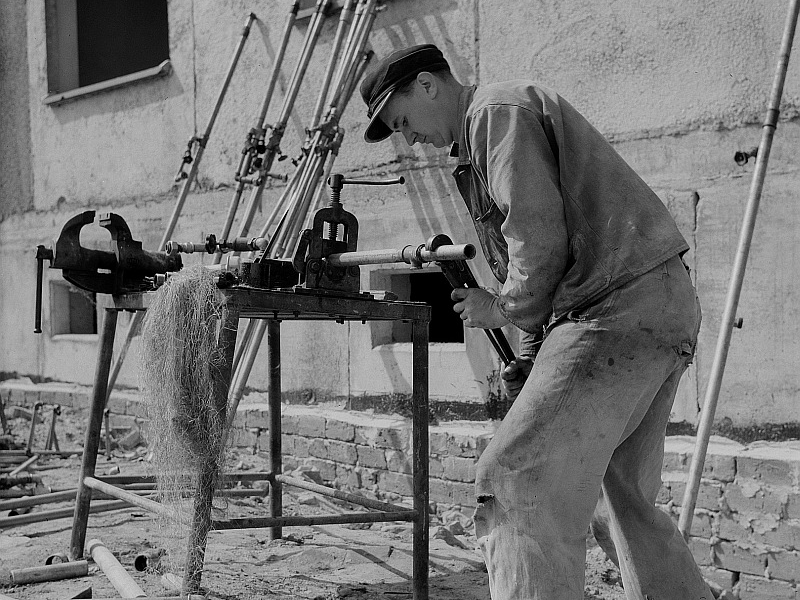
A plumber in 1960 did water supply, waste and soil drainage, hot water, gas appliances and in many cases the roof: lead flashings, valley gutters, downpipes and rainwater goods. The word plumber comes from the Latin for lead, and in 1960 that was still an accurate description of the job rather than an etymological curiosity.
The material determined the method. Lead pipe is soft, bends by hand around a former, and cannot be joined by any of the mechanical fittings a modern plumber uses, because the metal will not hold a thread and deforms under a compression fitting. It has to be joined by melting more lead onto it, which is the wiped joint.
Copper was arriving and would displace lead within a generation, first with capillary soldered fittings and then with compression fittings, and plastic followed it. Each step reduced the skill required and increased the speed, which is the same pattern as every other trade in this series.
The gas side of the work was separate in practice and not in law. Anybody could fit a gas appliance in 1960. There was no registration, no certification, no competence requirement and no inspection, and a householder could legally do it themselves.
Like our content? Follow us for more.
The wiped joint, which was the whole of the trade’s reputation
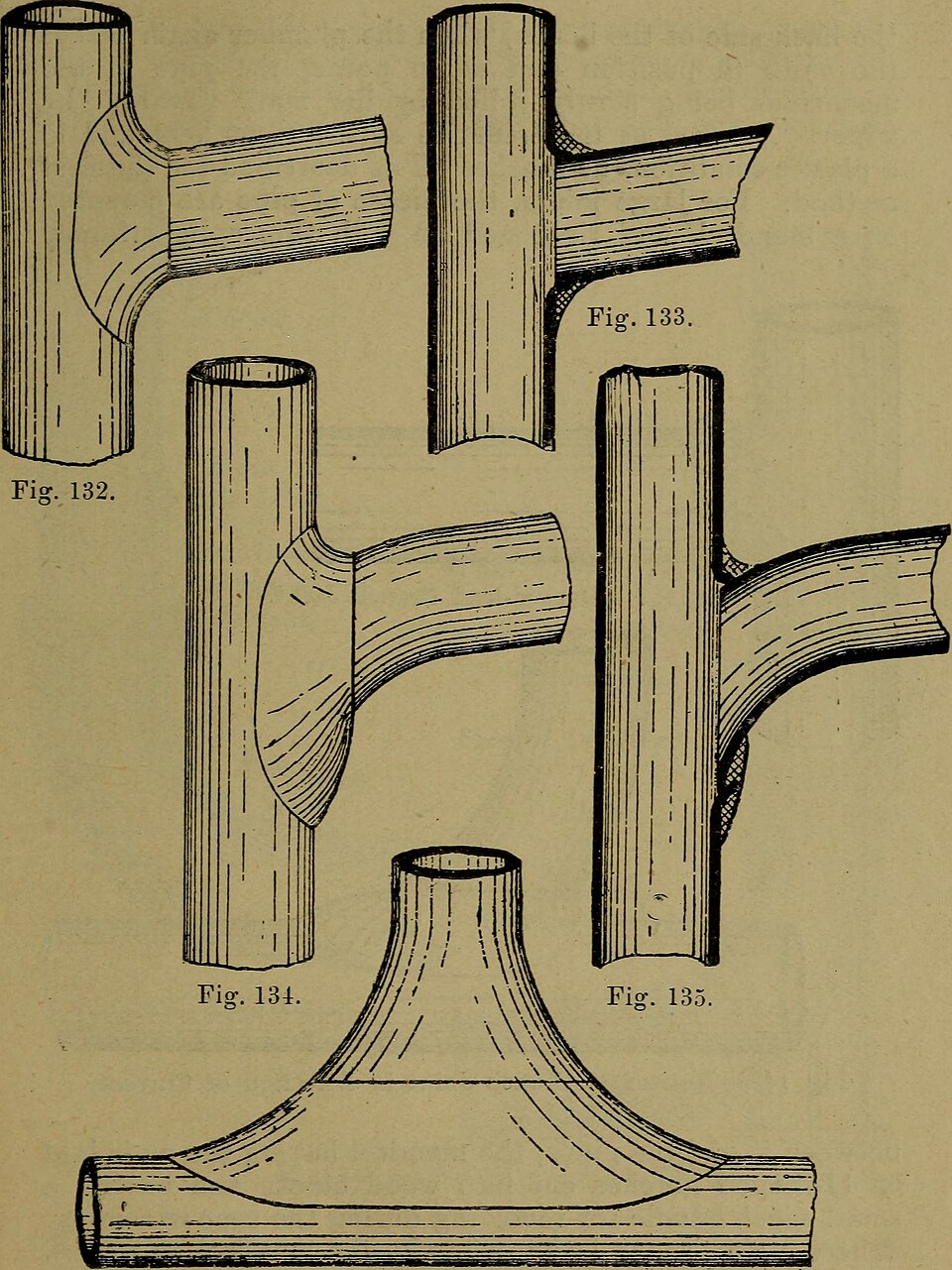
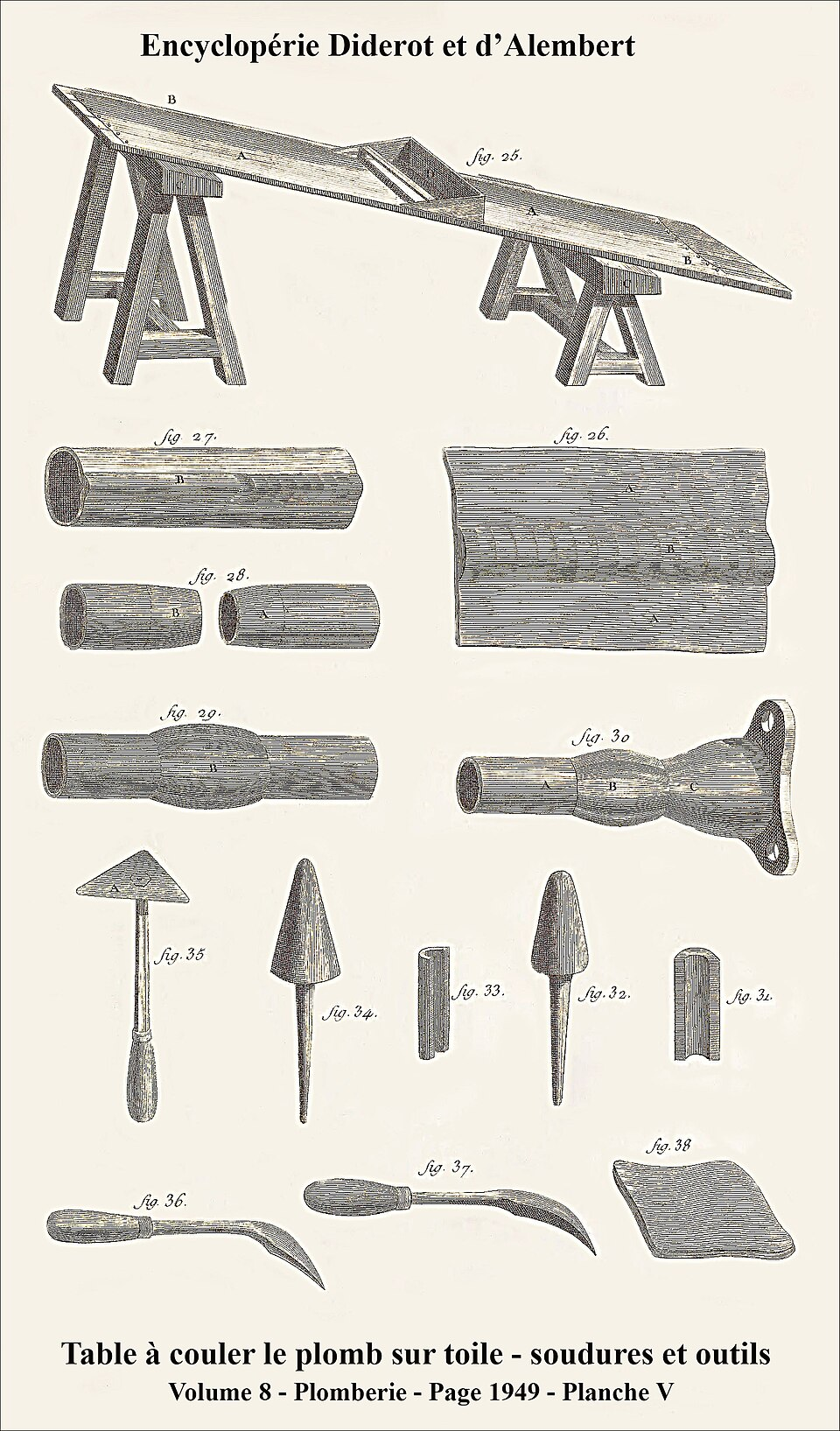
To join two lead pipes, one end was opened out and the other tapered to fit inside it. The surfaces were cleaned, the surrounding area was painted with a paste that molten lead would not stick to, and the joint was built up by pouring molten solder onto it from a ladle while shaping it by hand with a thick pad of moleskin cloth.
The plumber was therefore holding and shaping a mass of molten metal through a layer of cloth, repeatedly, until the joint had the correct shape — a smooth olive swelling around the pipe, thickest at the middle. A good one is a genuinely beautiful object and they survive in old buildings by the thousand.
The heat came from a blowlamp, in 1960 usually a paraffin pressure lamp pumped by hand, which produced an open flame of considerable size with no flame failure device, no thermocouple and no automatic cut-off. It was set down lit, carried lit, and used inside timber floors and roof spaces.
The modern equivalent is a hot works permit system: on any commercial site, work involving an open flame requires a permit, a fire watch, removal of combustible material, and an inspection of the area after the work has finished. The reason that regime exists is fires started hours after a tradesman left, which is exactly the failure mode of a blowlamp used in a roof void.
Lead in the water, and the long reckoning with it
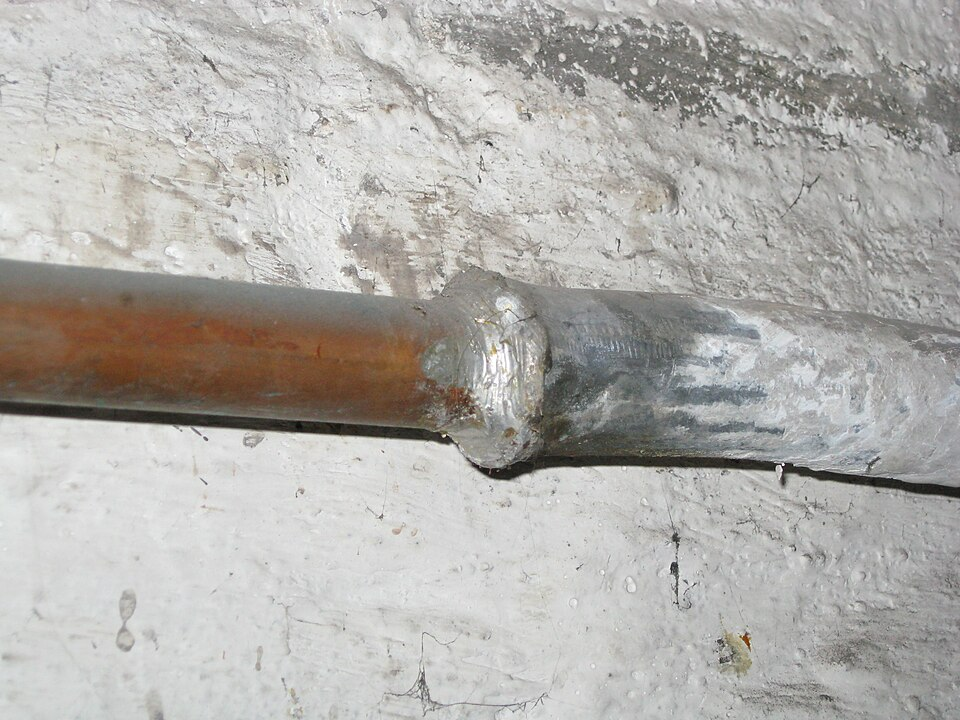
In 1960 a very large proportion of houses in the developed world took their drinking water through a lead service pipe from the main, through lead pipework inside, and in many areas from a lead-lined storage tank. It was accepted, normal and specified in building practice.
The understanding that lead is a cumulative neurotoxin with no safe exposure level, and that children are affected at far lower levels than adults, was established over the following decades and produced a complete reversal. Lead pipe has been banned for new installation everywhere in the developed world, lead solder is prohibited in drinking water systems, and water undertakings in many countries dose supplies with phosphate specifically to reduce the amount of lead that dissolves out of the pipes still in the ground.
The problem is not historical. Lead service pipes remain in enormous numbers of older properties because replacing them means digging up the connection between the main and the house, which is expensive and is split between the water company and the householder in most jurisdictions.
This is the one part of this file with a direct action attached. If you live in a house built before about 1970 and have never established what the incoming water pipe is made of, it is worth finding out, and water suppliers in most countries will test a sample on request. Where lead is present, the published advice generally includes running the tap before drawing water for drinking and never using hot tap water for food or drinks, and the supplier will explain the replacement scheme that applies.
Town gas was poisonous, and everybody knew
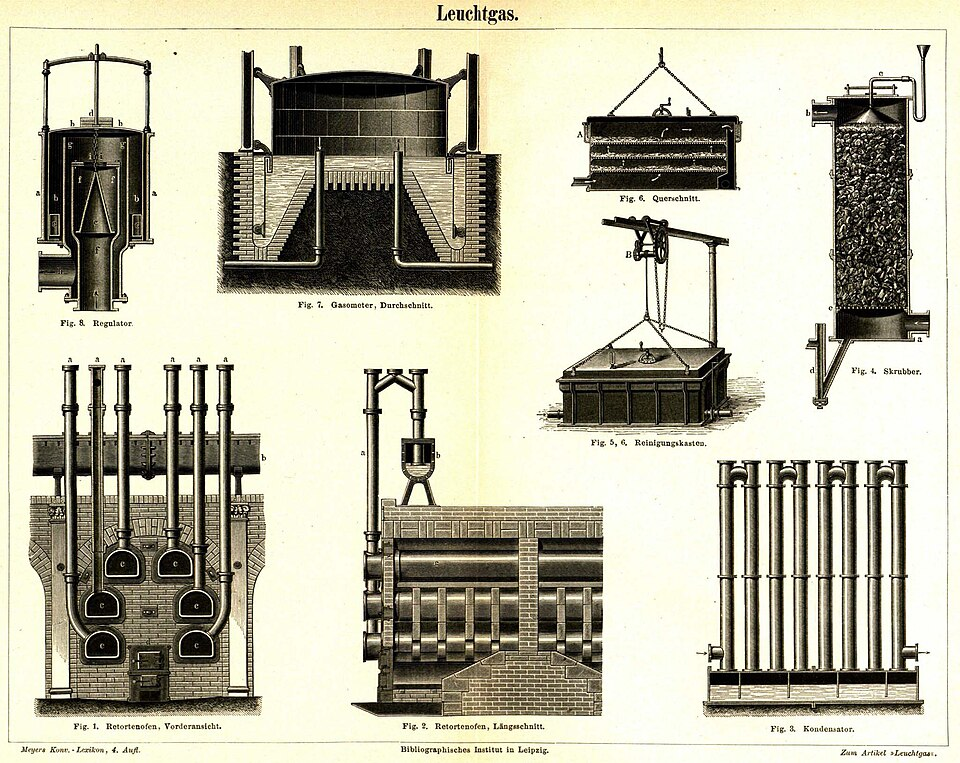
Until the conversion to natural gas, houses were supplied with manufactured gas made by heating coal, which contained a substantial proportion of carbon monoxide and was toxic if inhaled. This was not a secret or a scandal; it was a known property of the product, printed in safety literature and understood by the public.
The gas also had a strong characteristic smell, which was the main protection, and the industry’s safety effort went into leak detection, the smell, and keeping appliances in order. Carbon monoxide is odourless on its own, so the smell of town gas was from other constituents and was the warning for the mixture as a whole.
Appliances of the period had no flame supervision. A gas fire, cooker or water heater that went out — blown out by a draught, or starved by a blocked flue — would continue to release gas into the room, which is the failure the modern flame failure device exists to prevent and which is now a mandatory feature on every domestic gas appliance sold.
Nothing further about the consequences of that is set out here. The relevant modern fact is the protective one: every gas appliance now sold has flame supervision, flues and ventilation are part of the installation standard, and a carbon monoxide alarm is cheap, is recommended or required in a great many jurisdictions, and is the single most useful safety device a household with any fuel-burning appliance can own.
The conversion changed every appliance in the country
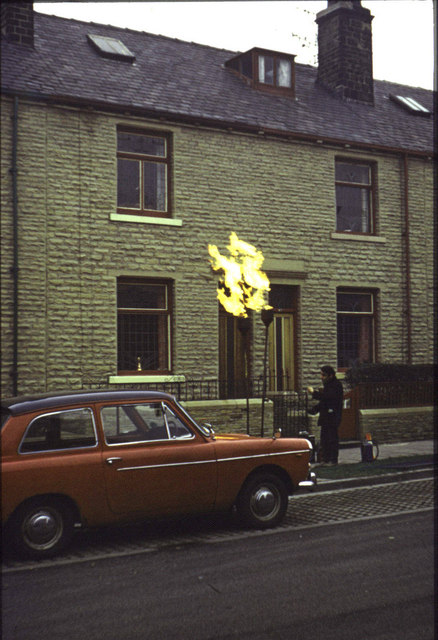
The switch from manufactured gas to natural gas, which ran through the 1960s and 1970s in different countries at different times, is one of the largest coordinated engineering operations ever carried out on domestic property. Natural gas has different combustion characteristics, so every single appliance in every house had to be adjusted or replaced by a visiting fitter, street by street.
The upside was substantial and immediate: natural gas contains no carbon monoxide as supplied, so the primary toxicity of the distributed product disappeared overnight in each converted area. It is also higher in energy content, which is why the appliances had to be re-jetted rather than simply reconnected.
Carbon monoxide did not stop being a hazard, because any fuel burning incompletely produces it, including natural gas in a badly maintained or poorly ventilated appliance. The hazard moved from the supply to the appliance, which is where the modern regulatory effort sits.
The conversion is also the moment gas work began to be controlled. Within a generation, installation and maintenance of gas appliances moved from something anybody could do to something restricted to registered engineers, with mandatory certification, notification of new installations and an offence for unregistered work.
Hot water, back boilers and the absence of a safety valve
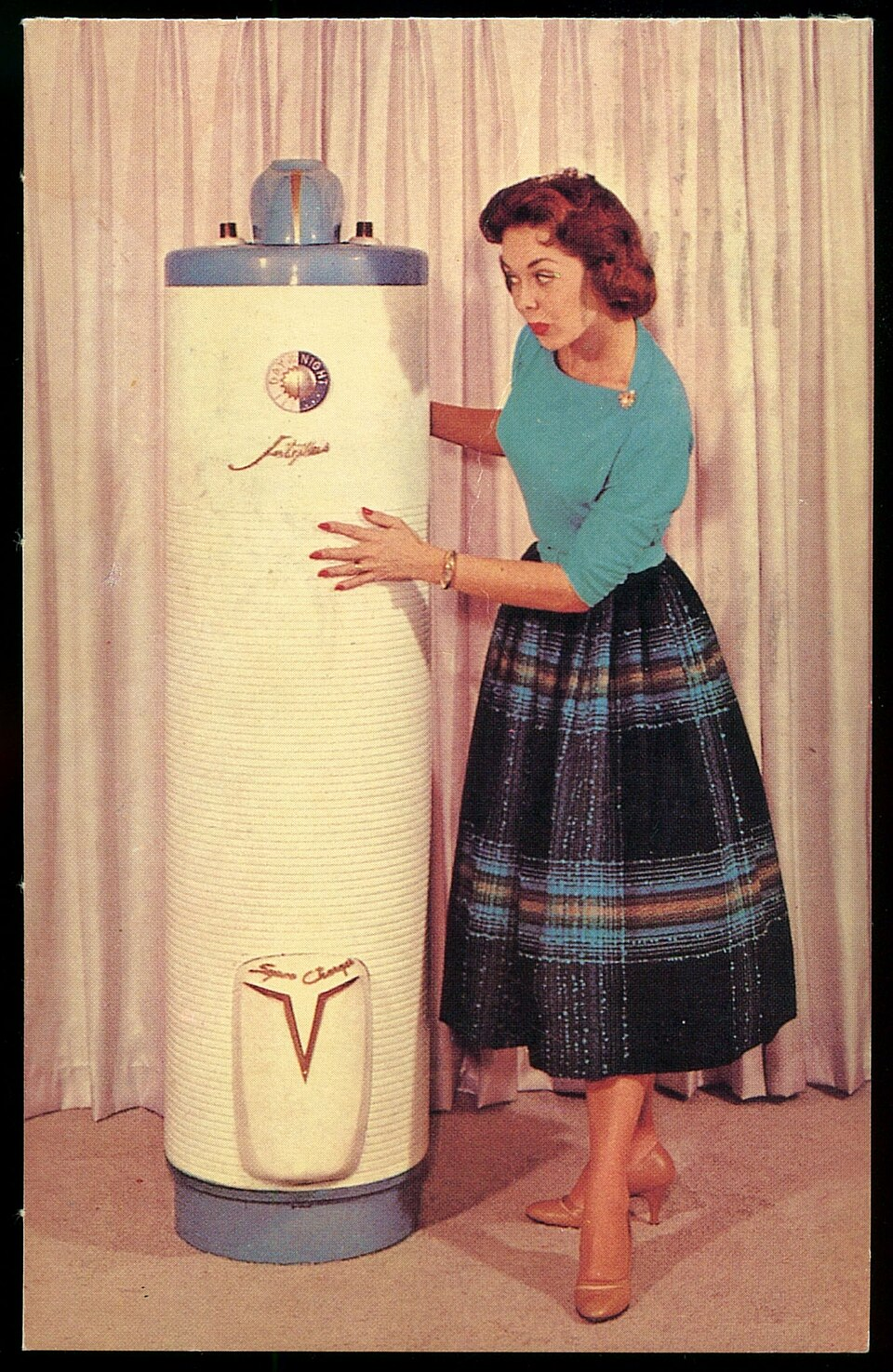
Domestic hot water in 1960 commonly came from a back boiler behind a coal fire or a gas circulator, feeding a copper cylinder, in an open-vented system with a cistern in the loft. The open vent was the safety feature, because it meant the system could never be sealed and pressurised.
The arrangements that caused trouble were the ones where that principle was compromised: a system where the vent could be isolated by a valve, a cylinder fed by a boiler with no independent thermostat, or an instantaneous water heater installed without adequate ventilation. Unvented and sealed systems existed in industry and were understood to require specific safety devices.
The modern domestic unvented cylinder is a sealed pressurised vessel and is governed accordingly: it requires an expansion vessel, a temperature and pressure relief valve, a thermal cut-out, a discharge pipe routed to a safe place, installation by a person holding a specific qualification for that work, and notification to the building control authority.
That list is the direct answer to what the old arrangement left to chance. It is also why a plumber cannot now fit the most common type of modern hot water cylinder without a separate certificate on top of a general qualification.
What the trade became
The modern plumber works in copper, plastic and increasingly in press-fit systems that need no flame at all, holds separate certifications for gas, unvented hot water and in many markets renewable heating, and works to standards that are notified, inspected and enforceable.
What went was lead, the wiped joint, the blowlamp in the roof void, and the position that anybody could fit a gas appliance. What arrived was a registration regime that is one of the clearest public health interventions in the history of building services, and a set of materials that a competent person can install reliably in a fraction of the time.
The honest summary: the wiped joint was a real craft and nobody sensible wants it back, the removal of lead from drinking water systems is the single most consequential change in the trade’s history and is still unfinished in the ground under older houses, and the two things worth acting on from this file are finding out what your incoming water pipe is made of and fitting a carbon monoxide alarm if you have any appliance that burns anything at all.
Like our content? Follow us for more.