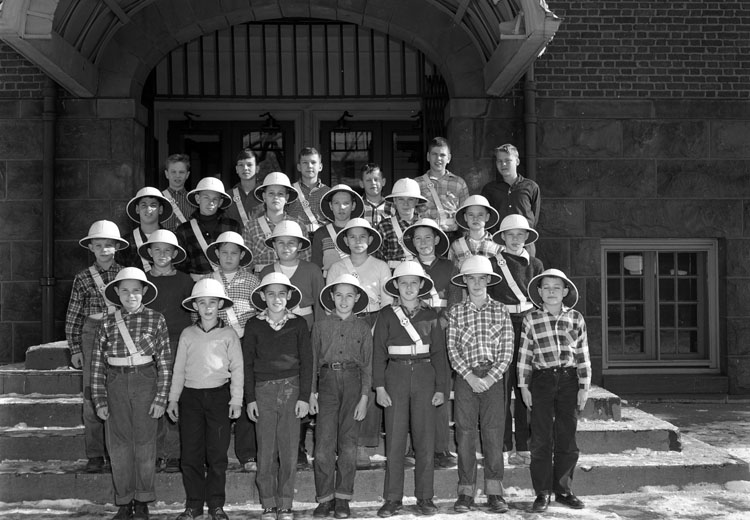
Youth sports equipment is one of the few areas where almost every change has been an unambiguous improvement, and where the improvements are cheap. A mouthguard, an earflap, a throat guard, a mat, a moulded cleat, a polycarbonate lens: none of it costs much and all of it addresses an injury that is permanent.
The one change that is not about equipment is the largest. The convention of sending a player back on after a head injury was ended by legislation in every American state, and the reasoning is not that the knock is worse than it looks but that the player is the worst available judge of their own condition. Here are fourteen things from that bag and that gymnasium, and what each of them ran into.
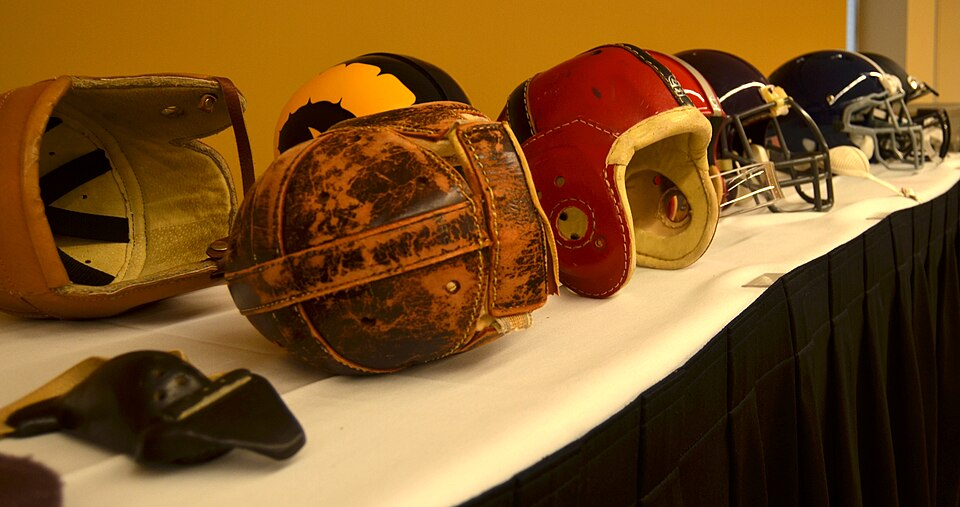
1. A leather helmet, or a plastic shell with no face mask
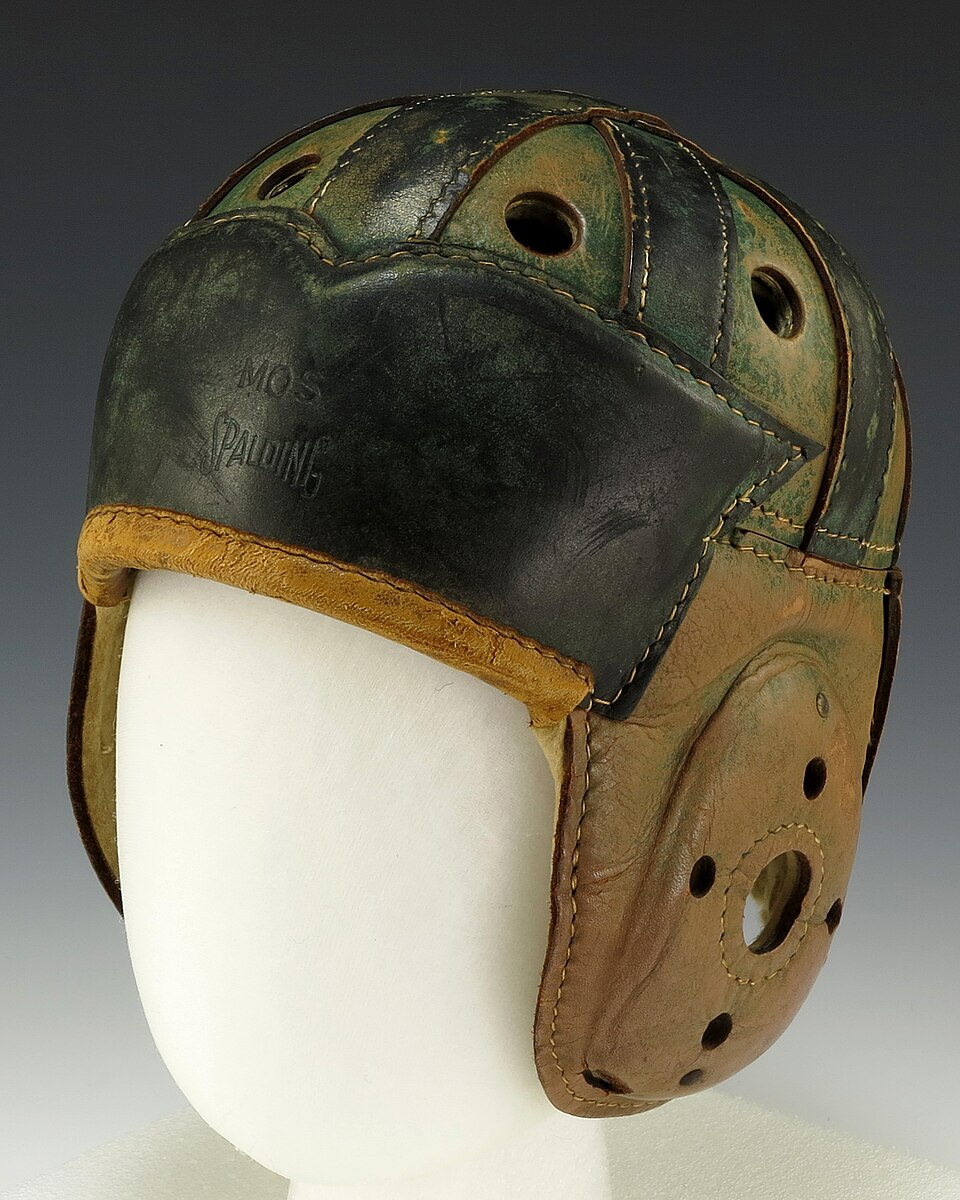
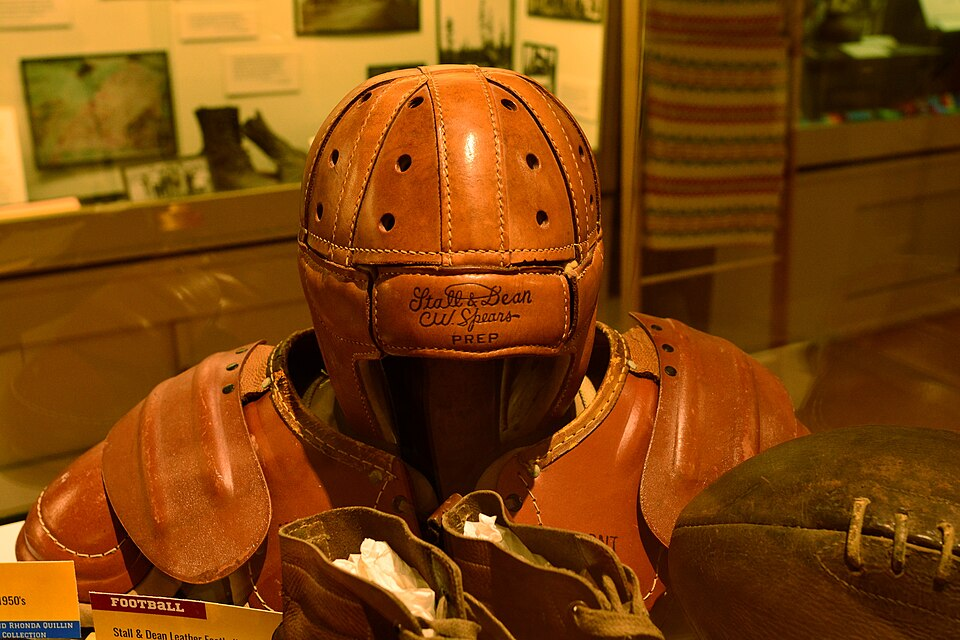
School football in the early 1960s was played in leather helmets in some places and in early plastic shells in others, and a great many of those shells had no face mask at all or a single bar across the front.
American football helmets have been manufactured to a performance standard since the early 1970s, with certification required for use in organised play from the middle of that decade, and the standard has been revised repeatedly since. Recertification of used helmets on a schedule is now standard practice in school programmes.
The helmets of this period were designed against skull fracture, which they addressed reasonably well, and not against the rotational and repeated impacts that the modern understanding is concerned with. A 1965 helmet in a display case looks like protective equipment and was built for a different question.
Like our content? Follow us for more.
2. No mouthguard
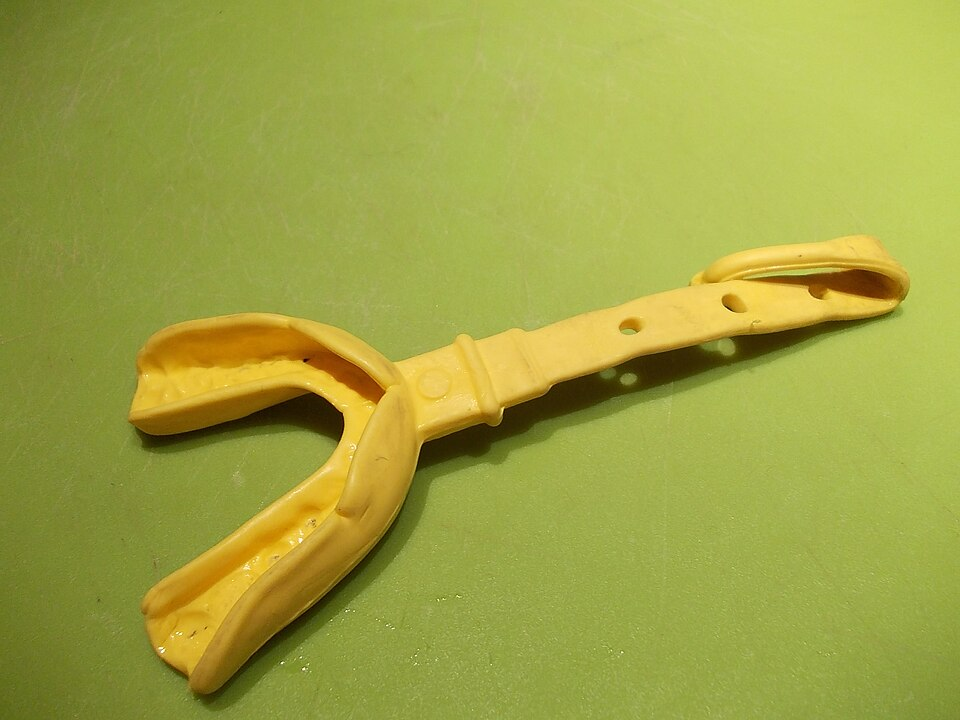
Mouth protection was uncommon in school sport in 1965 and was worn by a minority of players in contact codes. It was not required, not supplied and in many programmes not available.
Mouthguards are now mandatory in American football, ice hockey, lacrosse and several other codes at school and college level, and are recommended across contact and collision sport generally. The dental injury reduction is well established and the equipment costs very little.
Dental trauma in sport is overwhelmingly preventable and overwhelmingly expensive, and the injuries are permanent in a way most sporting injuries are not. It is the single highest-value piece of protective equipment per dollar in youth sport.
3. Batting without a helmet
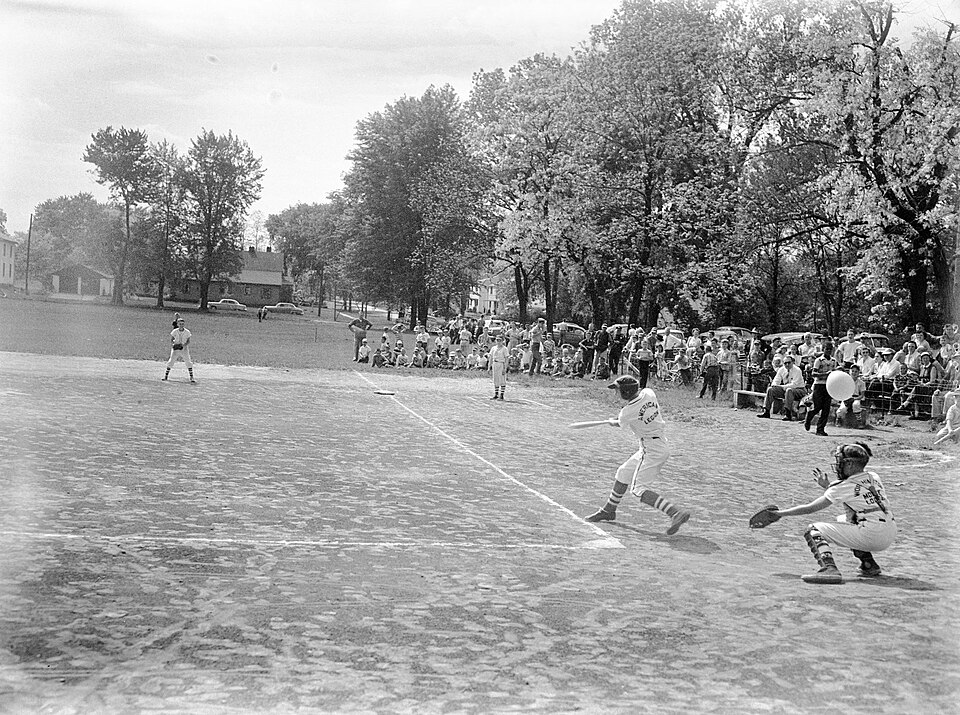
Baseball at school and recreational level was played with helmets patchily through the early 1960s, and earflaps came later. A great many American children batted bareheaded against a pitcher their own age with no control.
Batting helmets have been required in organised American youth baseball since the early 1960s and the double-earflap helmet, certified to a performance standard, is now mandatory in youth play, with helmets also required for base coaches and batboys at many levels.
The pitched ball is the fastest object in children’s sport and the head is the target it most often finds. The earflap exists because the standard helmet protected the crown and left the temple, which is the part that matters.
4. A catcher with no throat guard
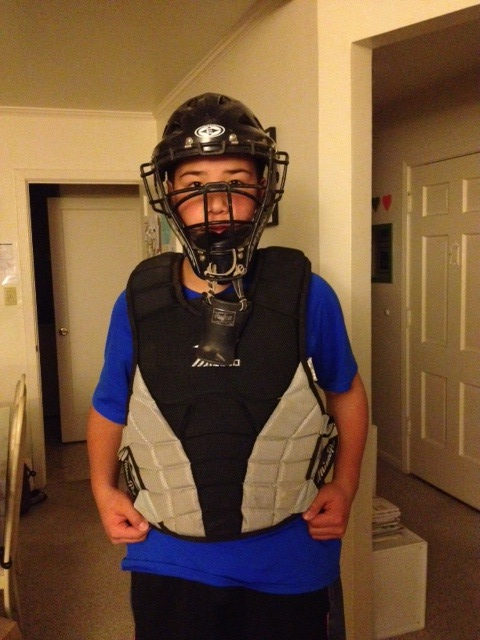
Catchers wore a mask and chest protector, and the throat was open. A ball or a bat tipping into the gap below the mask reaches the neck directly.
A throat protector attached to the mask is now required in organised American youth baseball and softball, along with a helmet rather than a cap under the mask, shin guards and a chest protector meeting a performance standard.
The throat guard is a strip of plastic that costs almost nothing and it was added because the injury it prevents is catastrophic and the gap was obvious once anybody looked. It is the clearest example in youth sport of a cheap fix to a known hole.
5. Played on after a knock to the head

The convention was to shake it off. A player who was dazed, who had been knocked down, who could not remember the previous play, was asked whether he was all right and sent back on if he said yes.
Every American state has enacted youth sports concussion legislation, and the framework is consistent: a player suspected of concussion must be removed from play immediately, may not return the same day, and requires written clearance from a qualified provider before returning. Coaches and parents receive mandatory education.
Nothing is described here. The two findings that produced the law are that a concussed brain is more vulnerable to a second impact before it has recovered, and that the player is the worst available judge of their own condition. The rule removes the judgement from the person least able to make it.
6. Climbed a rope to the gymnasium ceiling over a bare floor
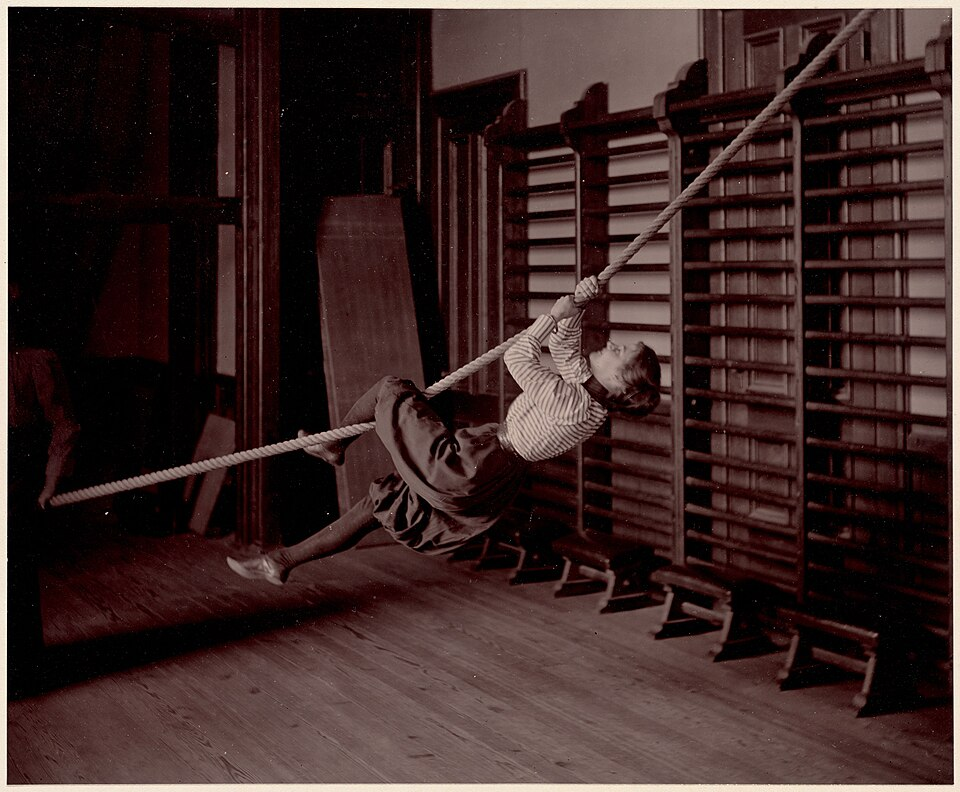
The rope climb was a standard American physical education exercise. A child climbed a knotted or plain rope to a beam twenty feet up, on a hardwood floor, with no mat beneath and frequently with the class watching.
American physical education guidance and school safety practice now require impact-attenuating matting beneath climbing apparatus, spotting, height limits appropriate to age, and progression, and many districts have removed the ceiling rope climb entirely rather than make it compliant.
The fall is the whole hazard and the floor was the whole problem. The exercise itself is excellent and survives in modified form at lower heights over mats, which is the usual shape of these changes: keep the activity, change the surface.
7. The trampoline in the gymnasium
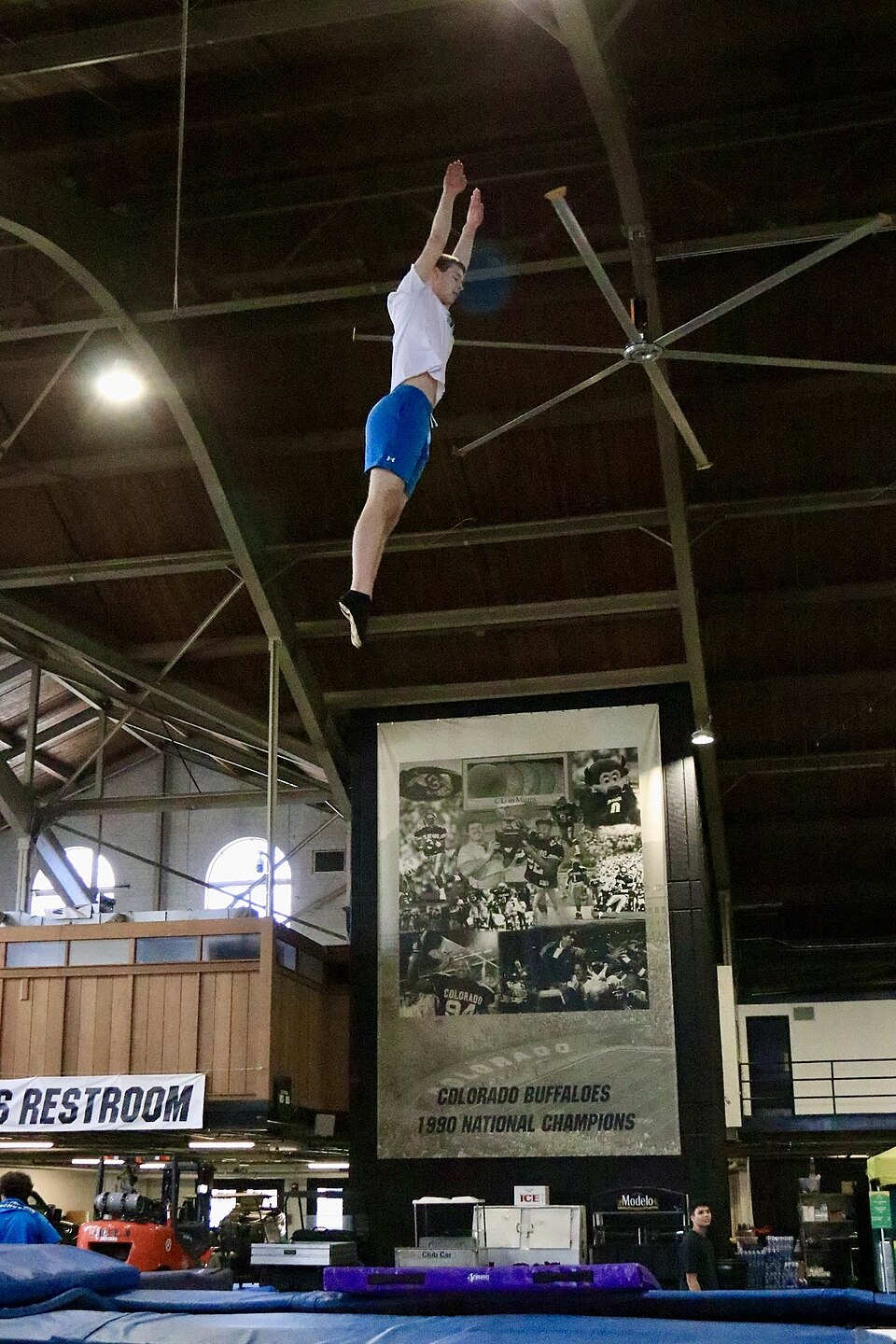
Trampolines were widely used in American school physical education and gymnastics programmes in the 1960s, including for somersaulting, with instruction varying from expert to nonexistent.
American paediatric guidance has long recommended against recreational trampoline use by children, and organised gymnastics use is confined to supervised programmes with coaching, spotting, matting and progression. School physical education use of trampolines has been withdrawn almost entirely.
The specific concern is cervical spine injury from inverted landings, which is why the recommendation is unusually firm for a piece of play equipment. It is one of the few items in children’s sport where the guidance is against the activity rather than about how to do it.
8. Gymnastics apparatus over thin mats
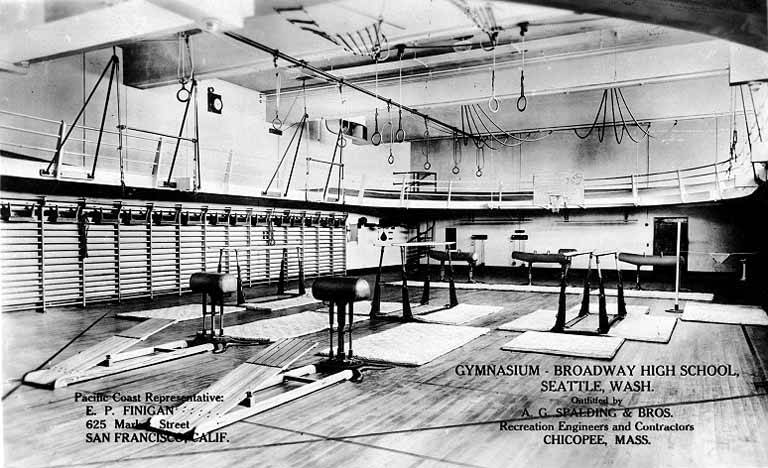
Vaulting horses, parallel bars, beams and high bars were used over mats that were thin canvas-covered horsehair or hair-and-cotton pads, two inches thick, laid on a hardwood floor.
Modern American gymnastics matting is engineered for impact attenuation at specified thicknesses by apparatus and skill level, with landing mats, pits and skill-progression requirements, and the equipment standards and coaching certification regimes developed through the following decades.
A two-inch hair mat on hardwood is close to no mat at all for a fall from a high bar, which was understood at the time in the sense that everybody knew it hurt. The engineering question of how much energy a mat absorbs had not been asked.
9. Metal spikes, on everything
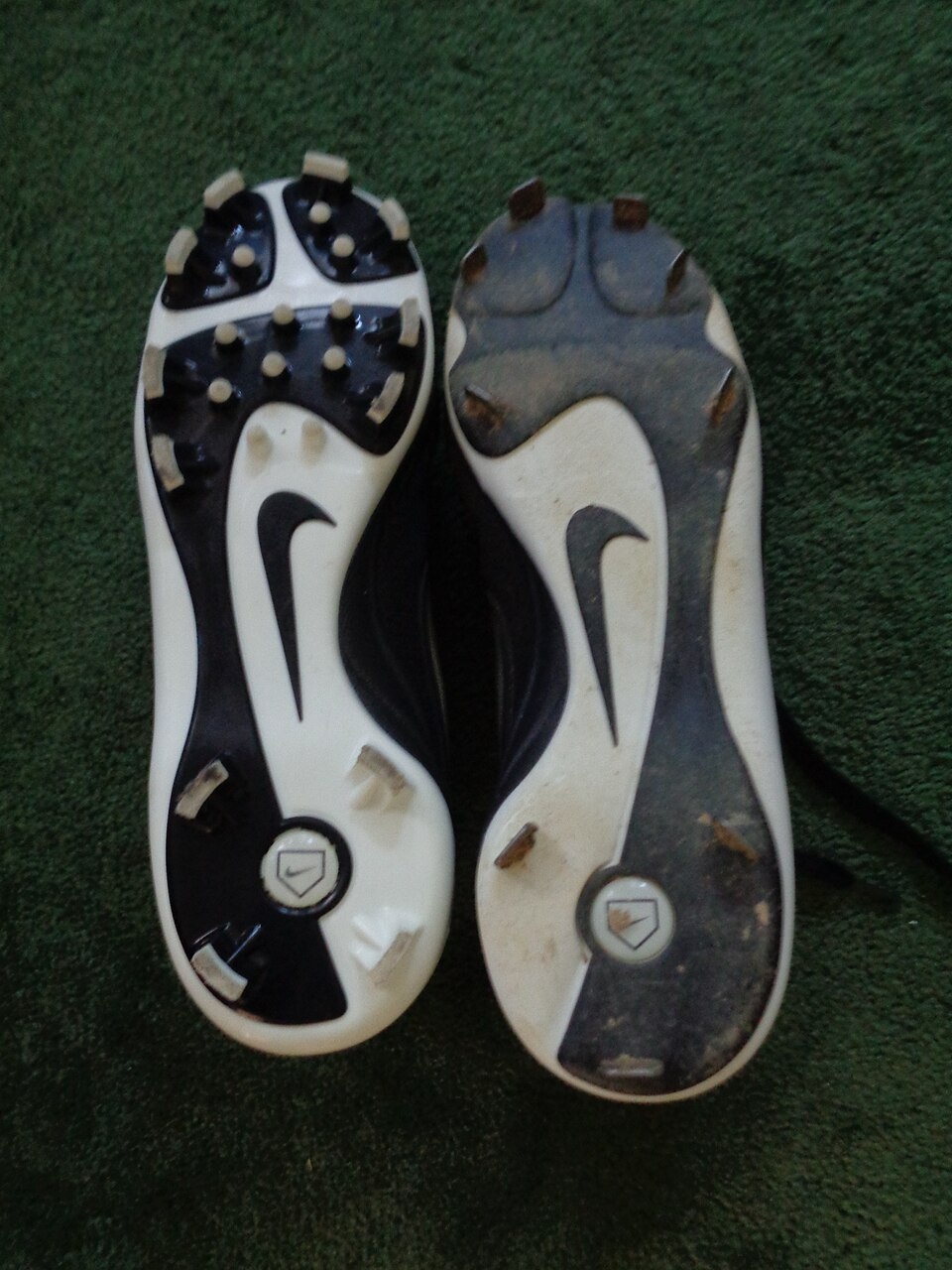
Baseball, football and track shoes had metal spikes and cleats, used on hard ground, on tracks and in contact with other children’s legs in sliding and tackling.
Metal spikes are prohibited in most American youth baseball below a defined age and in many youth football programmes entirely, with moulded plastic or rubber cleats required instead, and track spike length is regulated by surface.
The injury pattern is lacerations and puncture wounds to other players rather than to the wearer, which is why the prohibition is in the rules of play rather than in an equipment standard. The moulded cleat performs nearly as well for a child who is not competing nationally.
10. Canvas and leather shoes with no support at all
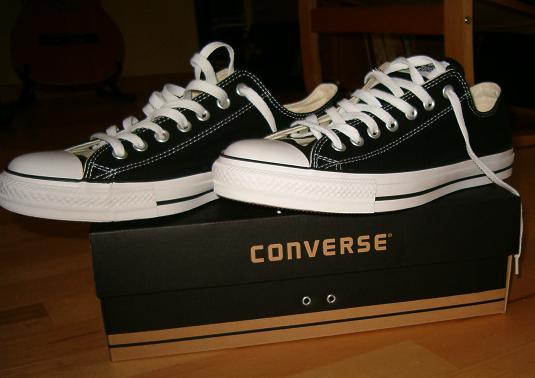
The standard American school athletic shoe was canvas with a flat rubber sole, or leather for basketball, with no arch support, no heel counter worth the name and no cushioning.
There is no regulation here and the change came entirely from the industry and from sports medicine, with cushioning, support and sport-specific design now standard and ankle and overuse injury patterns in youth sport a recognised field.
This item is included because it is the clearest case of a genuine improvement that arrived with no rule attached. Nobody banned the canvas shoe. It was outcompeted by a better product, which is the other way these things change.
11. Spectacles instead of eye protection

Children who wore glasses played in them, in basketball, racquet sports, baseball and contact codes, in ordinary frames with glass lenses that broke.
American standards for protective eyewear in sport specify polycarbonate lenses in frames tested for impact, by sport, and eye protection is mandatory in several codes and recommended across the rest. Ordinary prescription spectacles are not protective eyewear and glass lenses are not permitted.
The glass lens is the part that reads worst now. A broken glass lens in an eye socket is the injury the whole standard was written against, and prescription sports goggles solve it completely and were not available.
12. The medicine ball
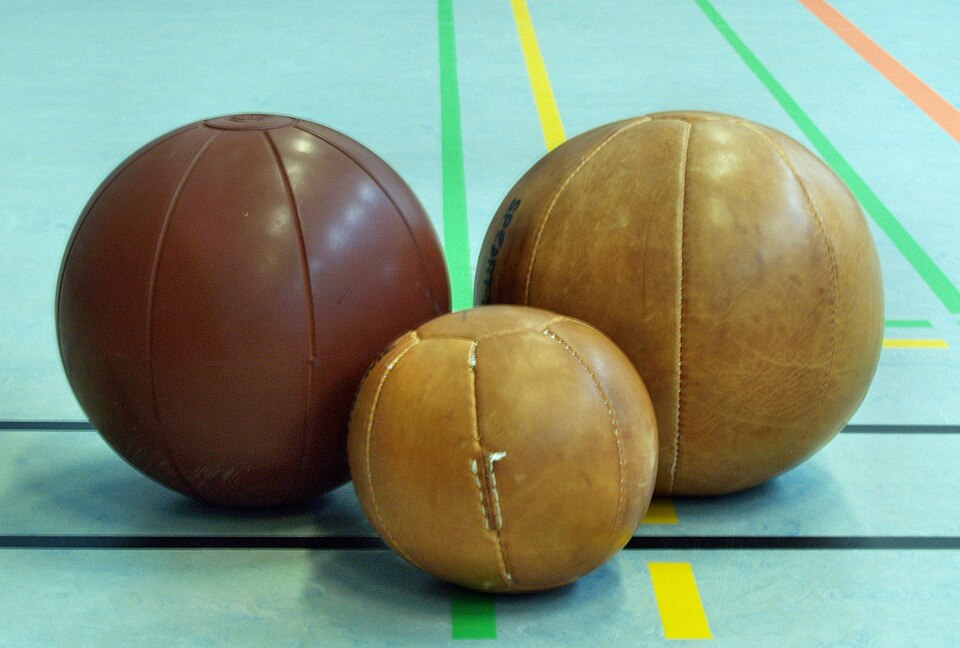
The medicine ball was a heavy leather sphere, often twelve or fifteen pounds, thrown between children in physical education classes as a conditioning exercise and as a game.
The modern equivalent is a graded set of lighter, gripped, controlled-rebound balls used with instruction on technique and loading appropriate to age, and the throwing-at-each-other use has gone entirely in favour of controlled movements.
The leather ball was effectively a weight with no handles thrown at a child’s midsection, and it is the item on this list that most people remember with a specific physical memory attached. The exercise is sound and the implement and the delivery were not.
13. Throwing events on an open field with no cage
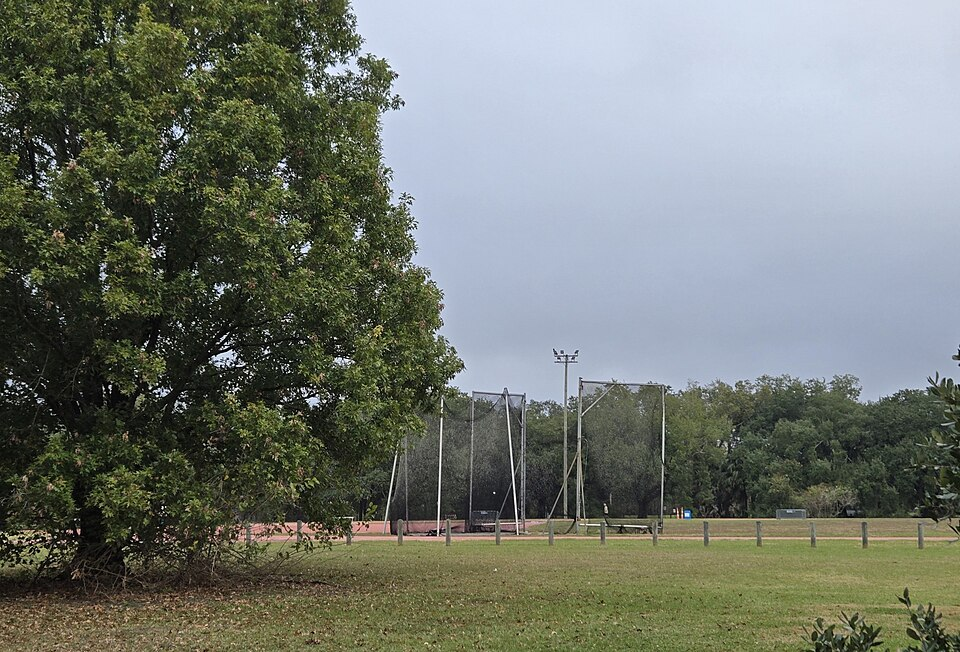
Shot put, discus and javelin were practised and competed on school fields with no throwing cage, no marked exclusion zone and spectators and other athletes in the surrounding area.
American track and field facility standards require a cage for discus and hammer, defined sector markings, exclusion of all persons from the landing area during throws, and specific officiating procedures. Javelin requires a cleared sector and controlled retrieval.
The discus and the hammer are the ones the cage exists for, because a release at the wrong moment sends the implement in a direction nobody has planned for. The rule is about geometry rather than about the thrower’s competence.
14. Diving into the shallow end

Children dived into whatever depth was available: the shallow end of a school pool, a backyard pool, a lake off a dock, from the side, from a board, head first, on a dare.
American pool standards now specify minimum depths for diving, prohibit diving in shallow areas with required markings and signage, set standards for board installation and have effectively removed diving boards from residential pools through insurance and liability pressure as well as code.
Diving into shallow water is among the leading causes of catastrophic spinal injury in young people, and that is the whole reason for the depth markings, the signage and the no-diving tile. Nothing is described here; the markings on the side of every modern pool are the summary.
Cheap fixes to known holes
Read the list and the pattern is that almost none of it required a technical breakthrough. The gap below the catcher’s mask was visible. The temple left exposed by a single-earflap helmet was visible. The hardwood under the rope was visible. The glass lens in a child’s spectacles on a basketball court was visible. In each case somebody eventually counted the injuries and added a strip of plastic, a flap, a mat or a lens.
The exceptions are the two that needed research rather than observation. The helmet standard required an understanding of what a helmet can and cannot do, which is still developing. And the concussion rules required two findings that are not obvious at all: that a brain is more vulnerable before it has recovered, and that the person least able to judge the situation is the one who was being asked.
If a parent takes one thing from this it is the mouthguard, because it is the cheapest item in the bag, it prevents the most permanent and most expensive injuries in youth sport, and it is still not worn as consistently as it should be in the codes where it is only recommended rather than required.
The other is the concussion rule, which exists to remove the decision from the child and from the coach in the moment. It is not a judgement about toughness. It is an acknowledgement that nobody in that situation is in a position to assess it.
Like our content? Follow us for more.