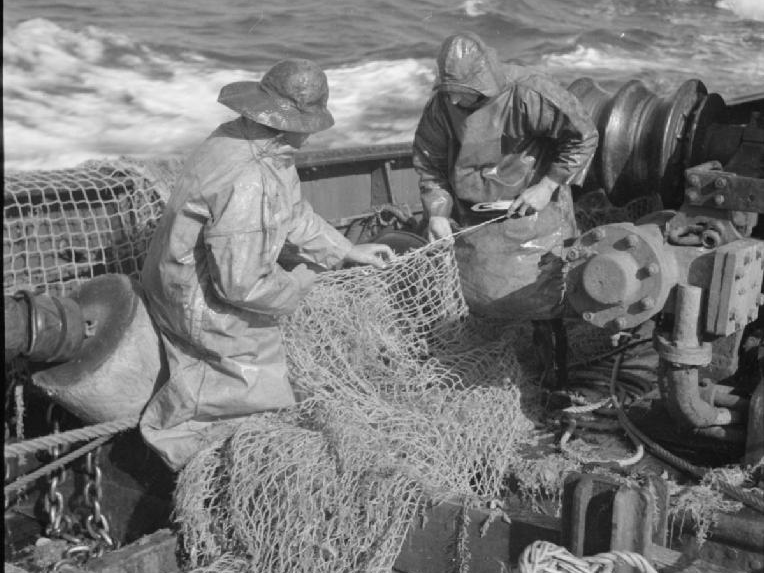
Distant-water trawling in 1960 is consistently described by the people who studied it as one of the most dangerous occupations in the industrialised world, and the men who did it knew that and went anyway, because it paid better than anything else available to them.
This file is about the work rather than about what happened to the people doing it. No vessel, no voyage and no event appears in it, and no figures are given. What is worth setting out is the ordinary condition of the job: the hours, the deck, the gear, the absence of any protective equipment at all, and the specific engineering problems that the modern regulatory regime was built to address.
The trip, and what the hours actually were
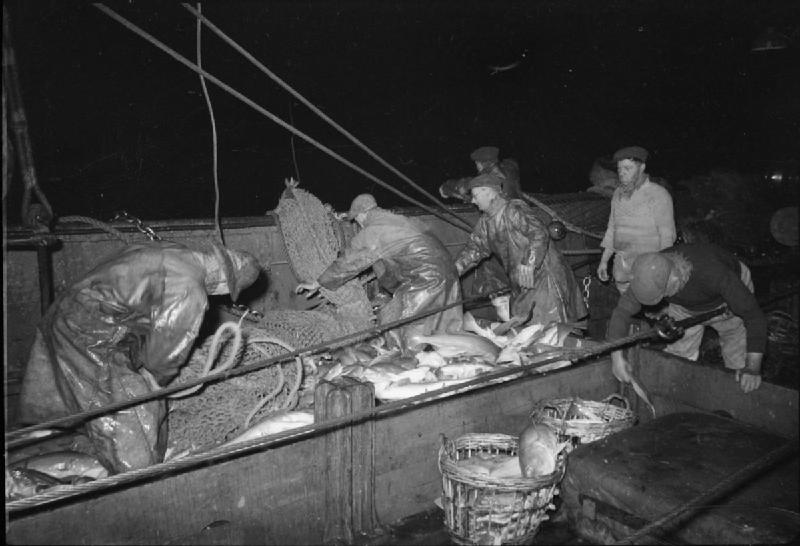
A distant-water trip ran for weeks: steaming out for days, fishing for as long as the hold took, steaming back. The crew were paid on a share of the catch rather than by the hour, which meant that time spent not fishing was money not earned, and the working pattern followed from that arithmetic rather than from anything else.
When the fish were there, men worked the deck in watches that in practice ran together, with sleep taken in short blocks in a bunk forward where the motion was worst. Accounts from the period describe twenty hours or more on deck in heavy fishing, repeatedly, for the length of a trip.
The modern position is that fatigue at sea is a safety matter with hard rules attached. There are minimum hours of rest within any twenty-four hour period and within any seven-day period, records that have to be kept, and responsibility placed on the skipper and the owner for compliance.
The share system itself has not disappeared and is still common in fishing, which is why the hours rules matter: an incentive structure that rewards continuous work needs an external limit, and that is precisely what it now has.
Like our content? Follow us for more.
The deck was the hazard, and the gear did the damage
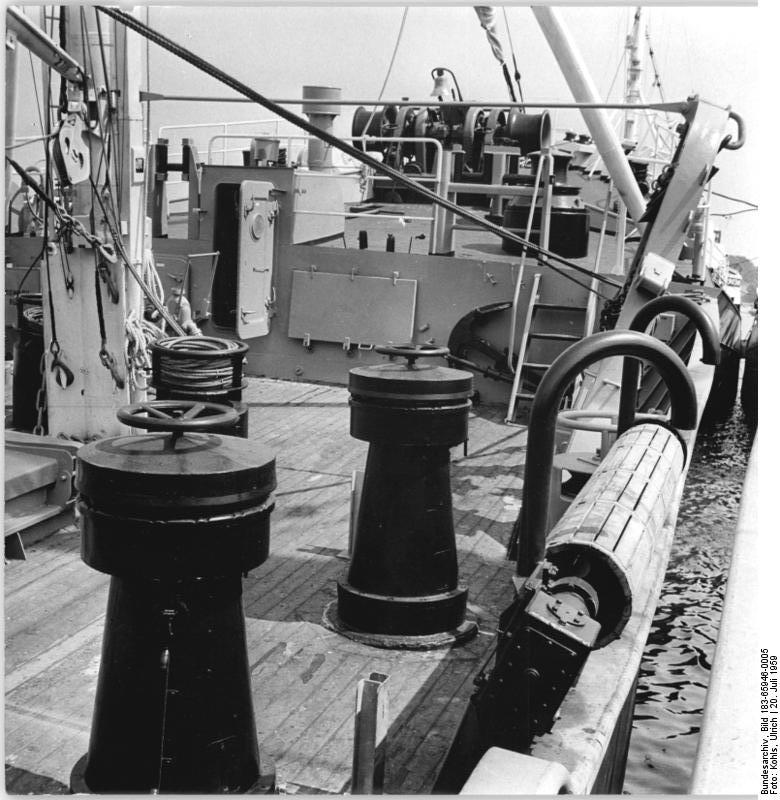
Trawling means putting a net over the side on two steel wires, towing it, and bringing it back. The wires run under enormous tension through blocks and over the rail, the net and its gear weigh what they weigh, and all of it moves across a wet steel deck that is pitching in both axes.
The specific dangers were well understood by the men and controlled by nothing but their own judgement: a wire under tension that parts and whips across the deck, a block or a shackle that fails, the trawl doors swinging as they come aboard, and the cod end coming over the rail with several tonnes in it. The deck also had no edge protection worth the name, because a trawler’s working rail has to be low enough to haul over.
Modern fishing vessel safety law addresses all of it directly: guarding of machinery and winches, emergency stops, prohibition on standing in the bight of a rope or wire, deck layout and handrail requirements, non-slip surfaces, and mandatory safety training for every crew member covering sea survival, firefighting, first aid and vessel stability before they sail.
That training requirement is the single largest change. In 1960 a boy went to sea with no training of any kind and learned by standing next to somebody, in the most hazardous working environment in the country.
Gutting at sea, by hand, in the open
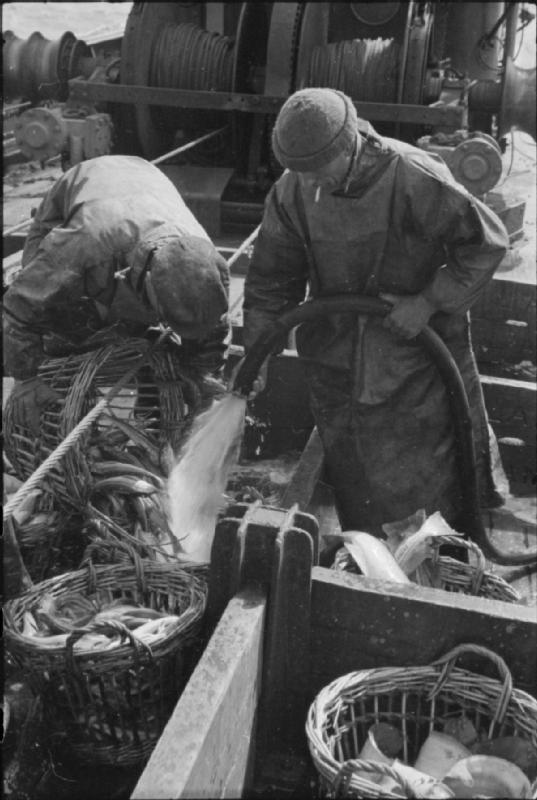
The catch was gutted on deck as it came aboard, by hand, with a knife, standing at a pound board in whatever weather there was, for hours. It was done in the open because there was nowhere else to do it, and in winter in northern waters that meant doing it in spray and freezing air.
The hands are what the men talk about. Salt water, fish, cold and a knife produce cuts that do not heal, and the resulting infections had their own trade names and were accepted as part of the work. Cold injury to the hands was universal and permanent in many cases.
The modern vessel does this under cover, on a deck with a shelter or a factory space, with protective gloves, waterproof clothing designed for the purpose, and a first aid regime including a requirement for someone aboard with recognised medical training and a medical chest to a specified scale.
No clinical detail belongs here. The point is that the injuries were not accidents but a predictable consequence of doing fine knife work with cold wet hands for twenty hours, and that the modern answer is shelter, gloves and limits rather than tougher men.
No lifejacket, no immersion suit, no drill
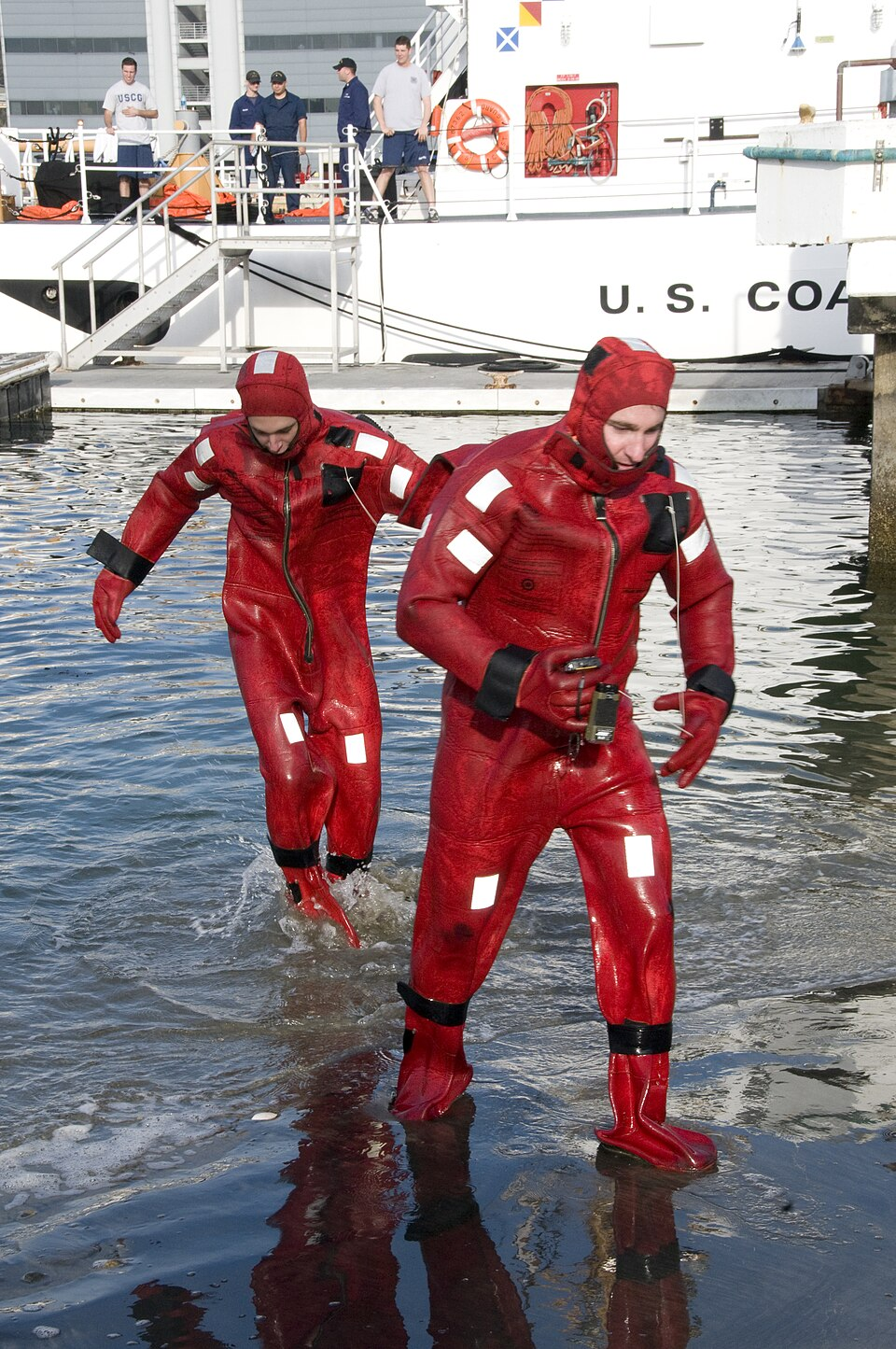
Personal flotation was not worn. It existed, it was aboard in some form, and nobody working a deck wore it, because the bulky lifejackets of the period made it impossible to work and because the culture was against it. Immersion suits for abandoning ship were not in general use on fishing vessels.
The water temperature in the northern fishing grounds is the central fact here, and it is why this matters more than anywhere else. Cold water removes a person’s ability to help themselves very quickly, which means that flotation and thermal protection have to be already on the body rather than somewhere on the vessel.
The modern regime reflects that completely: personal flotation devices designed to be worn while working, immersion suits carried for every person aboard, personal locator beacons in widespread use, liferafts with hydrostatic release so that they float free, and mandatory drills.
The cultural change took longer than the regulatory one, and the fishing industry’s own safety bodies in several countries spent decades on campaigns specifically about wearing flotation on deck. It is now normal, and the men who remember 1960 are generally the strongest advocates for it.
Stability, and the problem that ice created
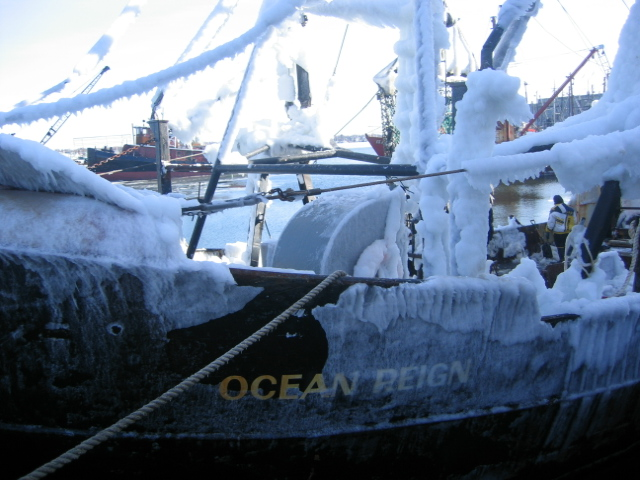
A fishing vessel’s stability is a live engineering question rather than a fixed property. It changes as fuel burns off, as fish go into the hold, as water comes aboard, and as gear is lifted from the side. Lifting a heavy load over the rail raises the centre of gravity at the worst possible moment.
In northern winter fishing there was an additional and well-documented problem: ice accumulating on the superstructure, rigging and decks in freezing spray, adding weight high up, where it does most harm to stability, and doing so faster than a tired crew could clear it with axes and mallets.
The modern requirements are specific and they are the direct answer: stability information for the vessel in a form the skipper can use, limits on loading, freeing ports sized to clear water off the deck, watertight integrity of hatches and doorways as an enforced matter rather than a habit, and ice accretion addressed explicitly in stability criteria for vessels operating in those waters.
Watertight integrity is the unglamorous one and it is the one that appears most often in modern safety guidance. A hatch or door left open for convenience changes a vessel’s behaviour in a way that is invisible until it matters.
Communications, and what help meant
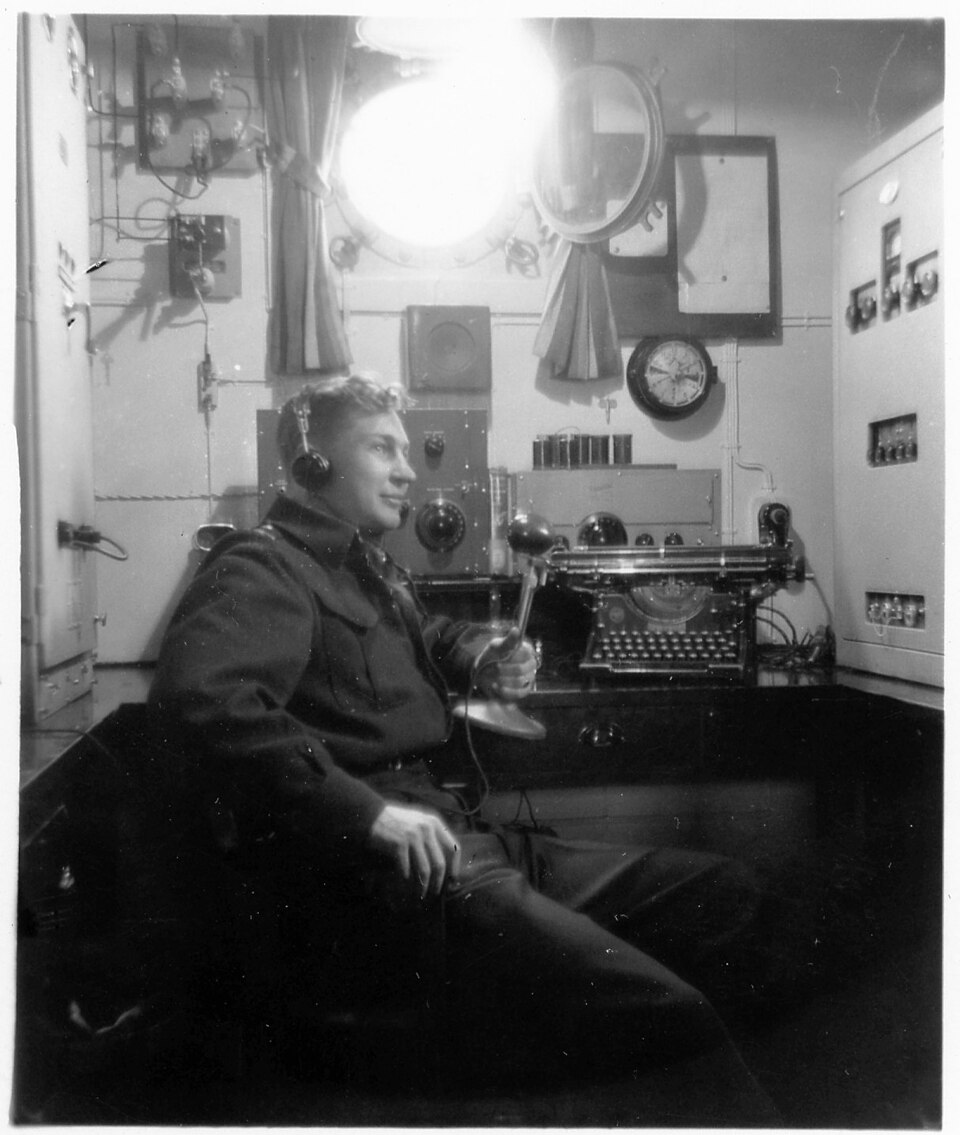
A distant-water trawler in 1960 had radio, operated by a radio officer on larger vessels and by the skipper on smaller ones, and that was the entirety of its connection to the world. Position was worked out by navigation rather than known, weather information was limited and arrived late, and vessels fished in loose company partly for that reason.
There was no satellite communication, no satellite navigation, no automatic distress alerting, no shore-based monitoring of where a vessel was, and no means by which anybody ashore would know that something had gone wrong except by a radio call or by a vessel failing to arrive.
Every one of those gaps has been filled. Satellite navigation gives continuous position, emergency position-indicating radio beacons alert automatically and give a location, digital selective calling puts a distress alert out at the press of a button with the vessel’s identity and position attached, vessel monitoring systems record where boats are, and weather forecasting is both better and continuously available.
This is the part of the file where the change is least arguable. The rest of the modern regime reduces the chance of trouble; this part changed what happens after trouble starts.
What the job is now
Fishing remains dangerous and is still, in most countries that keep the statistics, among the higher-risk occupations. What has changed is that it is now a regulated occupation rather than an unregulated one: certificated skippers, mandatory basic safety training for all crew, vessel survey and certification, stability information, hours of rest, equipment requirements and accident investigation by a statutory body whose reports are published.
The distant-water fleets that the 1960 trade belonged to have largely gone, dismantled by changes in fishing limits, by quota systems and by economics, and the ports that depended on them were changed permanently by that. That is a separate subject from safety and the two are often conflated in accounts of the period.
The honest summary: the hours were set by an incentive structure that still exists and now has legal limits around it, the deck hazards were real and are now guarded, the single most consequential change is that flotation and thermal protection are designed to be worn while working rather than fetched, and the second most consequential is that a vessel in trouble can now tell somebody automatically. The men who did this work in 1960 are the reason all of it is written down.
Like our content? Follow us for more.