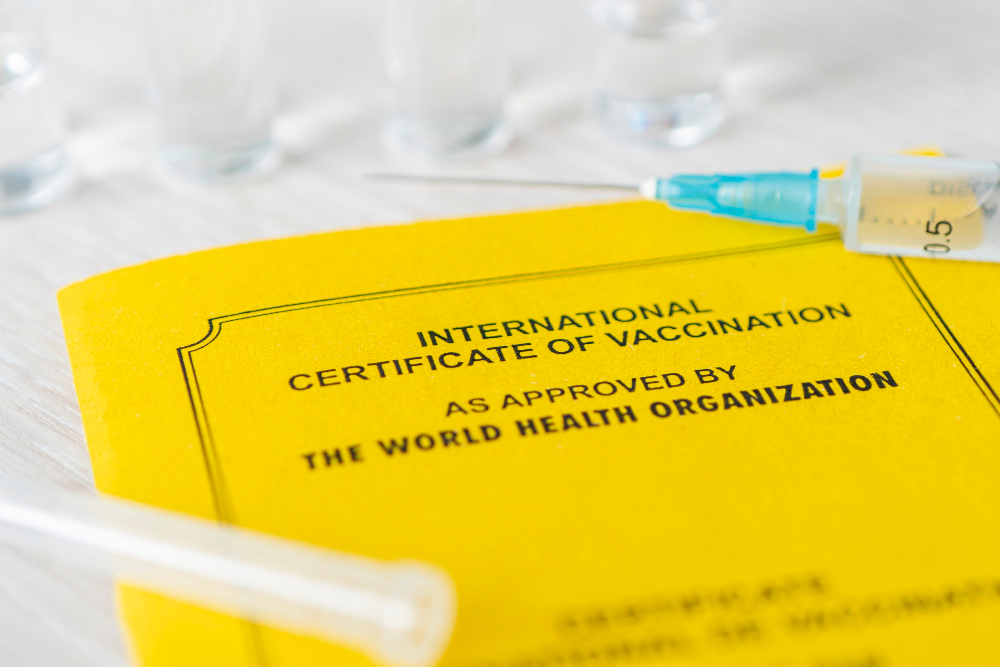
Here are fifteen rules about vaccination and health documentation at borders. The distinction in the first item is the one that causes most of the trouble, and the second explains why a routing change can create a requirement out of nothing. This is general information dated 2026, it is not medical or legal advice, and it contains no schedule, dose or interval for anything.
1. The rules are set by where you are going, not where you are from

Entry health requirements are imposed by the destination, and they apply to arriving travellers regardless of nationality or residence. Your own country’s recommendations for travellers are a separate thing entirely and have no standing at another country’s border.
That distinction catches people who have checked their own government’s travel advice, found a list of suggested vaccinations, and assumed it describes what will be asked for on arrival. It describes what their own health service recommends.
Check the destination’s own entry requirements as well as your own country’s travel health advice. This file is general information dated 2026 and not medical or legal advice; requirements change, and a travel health clinic and the destination’s authority are the sources to use. Neither a forum nor a booking site is.
Like our content? Follow us for more.
2. Requirements can be triggered by countries you merely passed through

A certificate requirement is frequently written in terms of where the traveller has recently been, not only where they are now travelling from. Arriving from, or having transited, a country in a defined category can trigger a requirement that would not otherwise apply.
The transit threshold is sometimes a stay of a defined length and sometimes any airport transit at all, which means a routing choice can create a documentary requirement out of nothing.
Work out your requirements from the whole itinerary including connections, and keep the boarding passes that show where you actually were. A routing changed after booking can change what you need. An airline rerouting you through a different hub can do it without anybody mentioning it.
3. One certificate is genuinely international and standardised

The yellow fever certificate is the only vaccination certificate with a long-standing international legal basis for entry purposes, issued on a standard form and recognised across countries as a condition of entry for travel involving defined areas.
It is issued by designated centres rather than by any clinician, it has to be completed correctly to be valid, and an incorrectly completed one can be refused.
If your itinerary touches an area where this requirement operates, get the certificate from a designated centre, check that every field is completed and that the centre’s stamp is present, and carry the original. Check it before you leave the building, because returning later is harder than it sounds.
4. That certificate’s validity was extended to the life of the holder
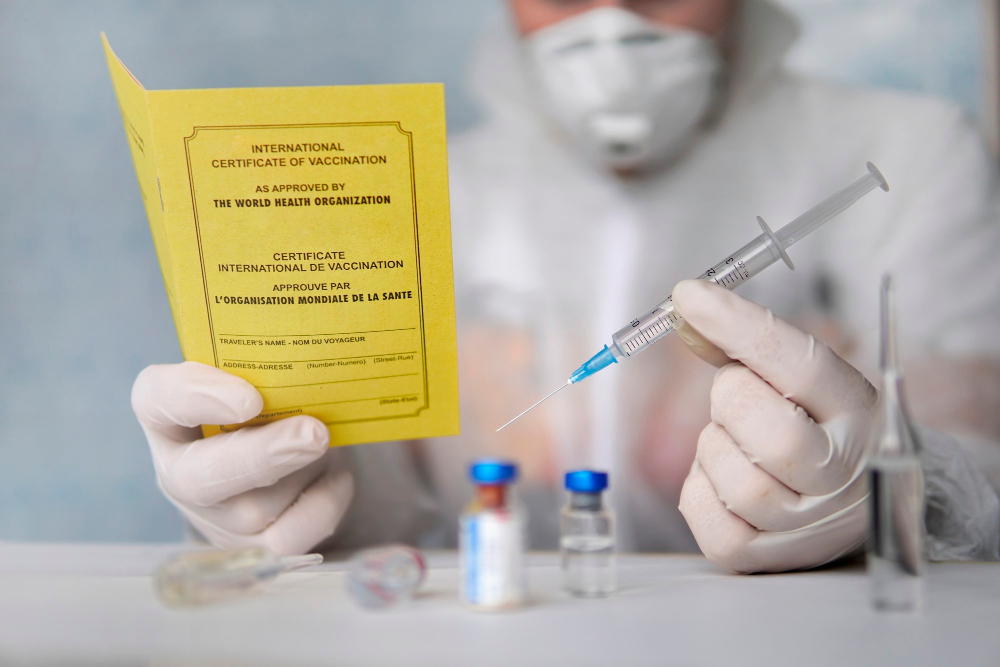
The validity period for the yellow fever certificate was extended to the life of the person vaccinated, replacing the previous fixed period, which means a certificate obtained years ago may still be valid.
Older certificates with an expiry date printed on them are generally treated as valid notwithstanding the printed date, under the amended arrangement, though a traveller may have to point this out.
Keep the original certificate indefinitely and do not discard one that appears to have expired. Check the current position before travelling, because this is exactly the kind of detail border officials and airline staff may not have. A printed copy of the current rule has resolved a great many of these conversations.
5. The certificate book is a document and should be treated as one
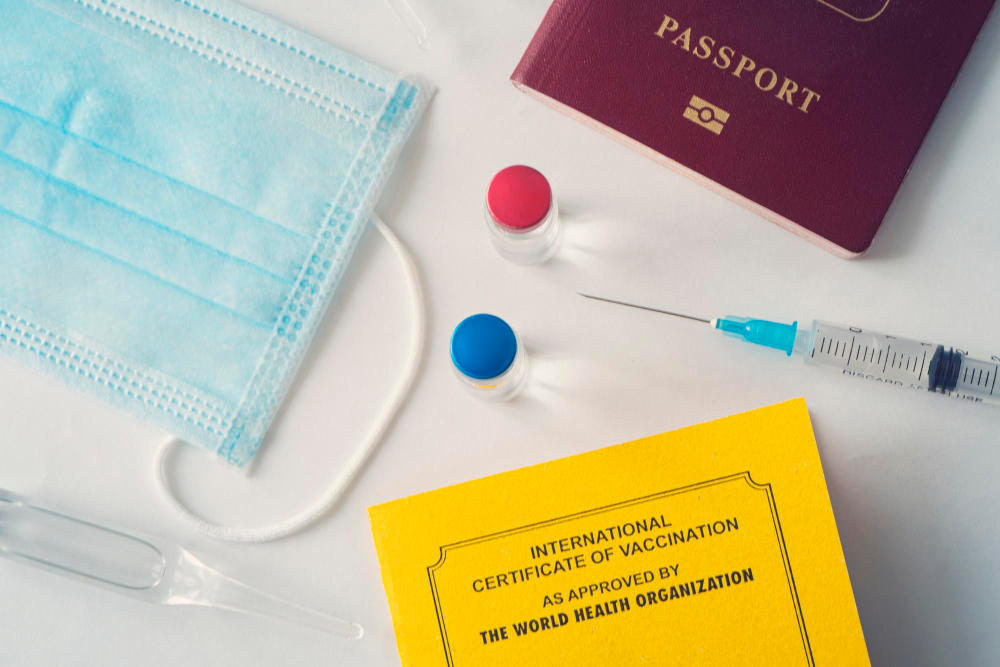
The international certificate of vaccination is a small booklet that records entries over a lifetime, and it functions as a document rather than as a medical record. A lost one is a problem that takes time to reconstruct.
It is not a passport and it has no legal force of its own beyond the entries in it, but the entries are what a border official reads, and legibility, stamps and correct dates matter more than people expect.
Photograph every page, store the images where you can reach them, and carry the original rather than a copy, because copies are routinely not accepted. The booklet lives with the passport or it gets left behind.
6. A polio certificate requirement exists for a small number of countries
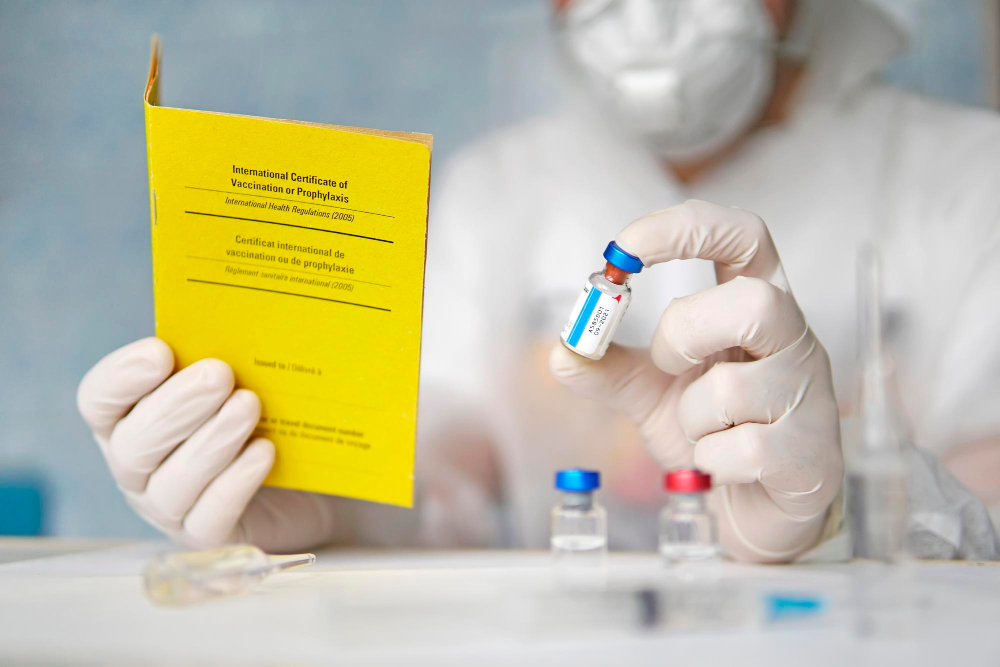
A separate certificate requirement for polio vaccination applies to travellers leaving or entering a small number of specified countries, under international public health arrangements that are reviewed periodically.
The list of affected countries changes, the requirement is sometimes on departure rather than arrival, and the timing of the vaccination relative to travel can matter for the certificate’s acceptance.
If your itinerary involves a country on the current list, establish the requirement from an authoritative source and from a travel clinic well before departure. This is one of the few requirements that can apply when leaving a country. That asymmetry surprises people who have only ever thought about arrival.
7. Health declarations are a different document from a certificate

A health declaration is a form completed by the traveller, often electronically before arrival, stating recent travel, symptoms or contacts. It proves nothing and records what you have said.
These come and go with circumstances, are frequently introduced and withdrawn at short notice, and are sometimes required alongside a certificate rather than instead of it.
Check within a few days of travel whether a declaration is currently required, because this is the category that changes fastest and is usually announced with the least notice. A requirement in force when you booked may be gone, and the reverse is equally likely.
8. Exemptions exist and have to be documented in a particular way

Where a vaccination is medically contraindicated for an individual, destination requirements generally provide for an exemption supported by a letter from a clinician, and in the case of the standardised international certificate there is a designated way of recording it.
A letter written in general terms is weaker than one that follows the format the requirement specifies, and the question of whether an exemption will be accepted is for the destination rather than for the clinician who writes it.
If you need one, ask the travel clinic specifically how the exemption should be recorded for the requirement in question, and allow time to get it right. A letter that has to be rewritten once has cost you a fortnight.
9. Vaccinations need lead time and some need a course

Several travel vaccinations require a period before departure to be effective or before a certificate becomes valid, and some are given as a course over weeks. A clinic appointment the week before a trip is frequently too late.
This file gives no schedule, no interval and no dose for anything, because those are clinical matters that depend on the individual, the destination and current guidance.
Book a travel health appointment as soon as the trip is decided, six to eight weeks ahead where possible, and take the full itinerary with you including connections and rural stops. Where you are going within a country matters as much as which country it is.
10. Preventive medication is not a certificate and is not checked

Medication taken to prevent disease while travelling is a clinical matter between the traveller and a clinician, is not certificated, and is not something a border official will ask about.
It is sometimes confused with a certificate requirement because both come up in the same travel clinic conversation, and the two have nothing to do with each other at a border.
Carry any prescribed medication in its original labelled packaging with the prescription, which is a separate subject covered elsewhere, and do not expect it to satisfy any documentary entry requirement. They are two conversations that happen in the same room and have nothing else in common.
11. Airlines check what the destination requires, before you fly

Carriers verify entry documentation including health requirements, because they are liable if a passenger is refused on arrival, and that check is made at the departure airport.
So a missing certificate is normally discovered at check-in rather than on arrival, which is the better outcome, and the airline’s information is usually drawn from the same databases that border agencies rely on.
Have the certificate accessible in hand luggage, not in a checked bag, and present it when asked rather than arguing about whether it is needed. The agent is reading the same requirement you should have read.
12. Requirements for children are not the same as for adults

Age thresholds apply to several requirements, and an infant or young child may be exempt, may require a different arrangement, or may need an exemption letter where a vaccination is not given below a certain age.
The thresholds differ by requirement and by destination and no figure is given here. A family itinerary needs the requirement checked for each traveller rather than for the adults and assumed for the children.
Raise the ages of everybody travelling at the travel clinic appointment, and get the position for each one in writing if anything is unusual. Assuming a child inherits an adult position is the error here.
13. A certificate can be required for a visa application, not only at the border

Some countries require evidence of vaccination as part of a visa or residence application, assessed in advance by a consulate rather than by an officer at a port, and sometimes through a designated medical examination.
That is a different and usually more demanding process than showing a certificate on arrival, with its own approved providers, forms and validity periods.
If you are applying for a long-stay visa or residence rather than visiting, check the medical requirements of the application itself as a separate exercise from entry requirements. They can be stricter, and they are assessed before you travel rather than when you arrive.
14. Keep the originals and keep them together
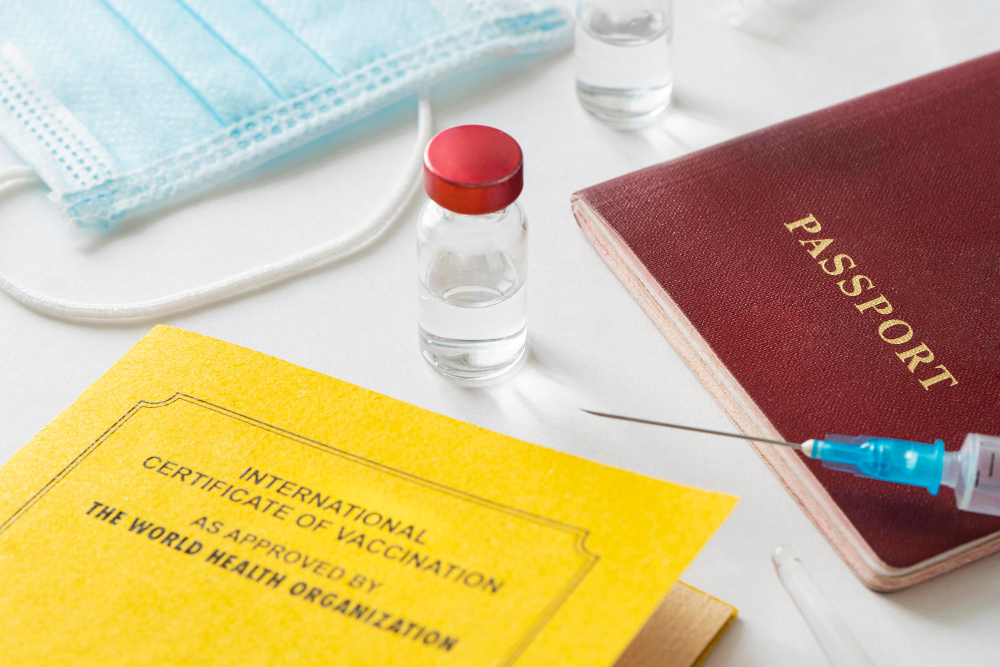
The practical failure in this whole subject is documentary rather than medical: a certificate left at home, a booklet lost, an unstamped entry, an exemption letter in the wrong format, or a certificate in a checked bag.
Keep the certificate booklet with the passport, photograph everything, and keep an exemption letter with the certificate it relates to rather than filed separately.
If a document is refused as invalid at a desk, ask what specifically is wrong with it and write the answer down, because that is what a clinic will need to correct it. A vague account of a refusal is very hard for anybody to act on afterwards.
15. And the sequence that gets it right
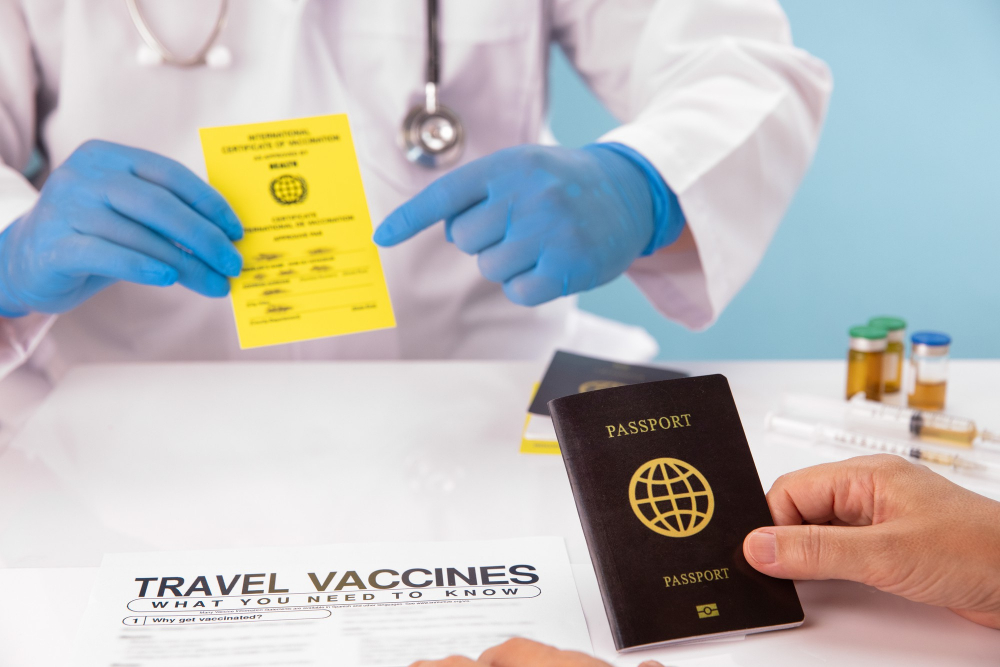
As soon as a trip is decided, list every country on the itinerary including transits. Check each one’s entry health requirements on its own official source, and check your own country’s travel health advice separately as a recommendation rather than a requirement. Then book a travel clinic appointment with the full itinerary.
Allow six to eight weeks, get the certificates from designated centres where the requirement specifies one, check every field and stamp before leaving the centre, photograph everything, and carry the originals in hand luggage.
Everything in this file is general information dated 2026 and is not medical advice, clinical guidance or legal advice. It contains no schedule, dose or interval for anything. Requirements change, and a travel health clinic together with the destination’s own authority are the only reliable sources.
What this file is and is not

It is a documentary guide. It describes which health documents exist as conditions of entry, who sets them, what makes one valid or invalid, and how travellers lose certificates or present them wrongly. Those are travel administration questions and they are the questions that actually stop people at desks.
It is not clinical guidance and it deliberately contains no schedule, interval, dose, age threshold or list of recommended vaccinations for any destination. Those depend on the individual, the itinerary, the season and current guidance, and they are the business of a travel health clinic working from the traveller’s own history. The file also takes no position of any kind on vaccination; it describes requirements imposed by states and how to satisfy them documentarily.
The sequence that works is simple and has to start early: list the countries including transits, check each destination’s own official requirements, check your own country’s advice separately as a recommendation, then take the whole itinerary to a travel clinic six to eight weeks out.
Nearly every failure in this area is a paperwork failure rather than a medical one: the certificate in the checked bag, the field the centre did not complete, the booklet left in a drawer, or the exemption letter written in the wrong form. The medicine is handled by a clinic; the documents are handled by you.
Like our content? Follow us for more.