The boxed cake mix is one of the few genuine revolutions in American domestic life that happened quietly and completely inside a decade. In 1945 almost nobody used one. By the end of the 1950s it was the normal way an ordinary American household produced a cake, and it stayed that way.
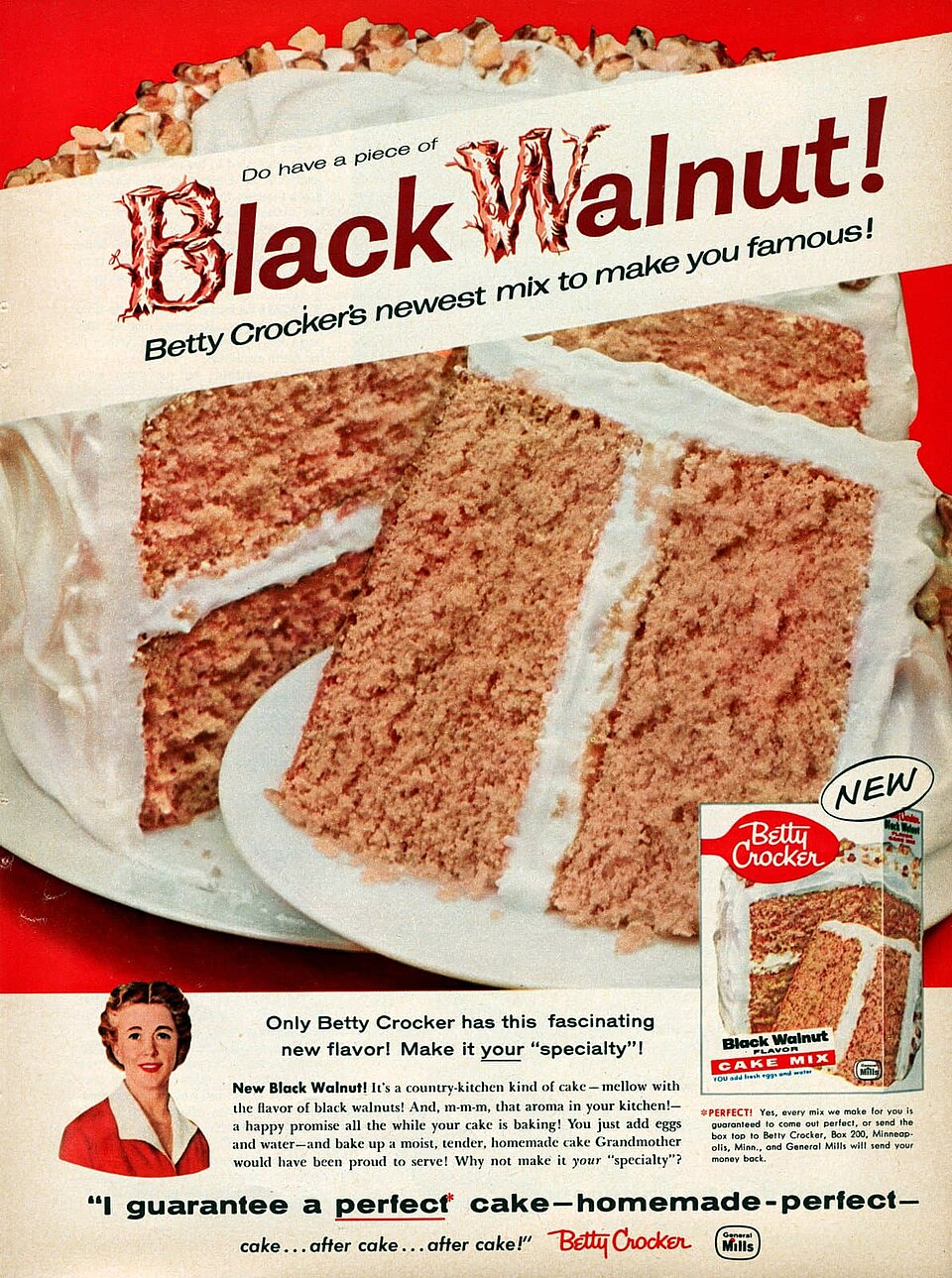
What is interesting about it is not the convenience, which is obvious, but what was in the box and what the box was allowed to say. A 1958 mix was a piece of industrial chemistry sold without an ingredient list, containing at least three things that have since been removed from the American food supply or are on their way out, and backed by claims no manufacturer could print now. None of that was concealment. There was simply no requirement on anybody to tell a shopper anything, and the whole apparatus of disclosure that a modern baker takes for granted arrived later, one statute at a time.
The egg, and the story everybody tells about it
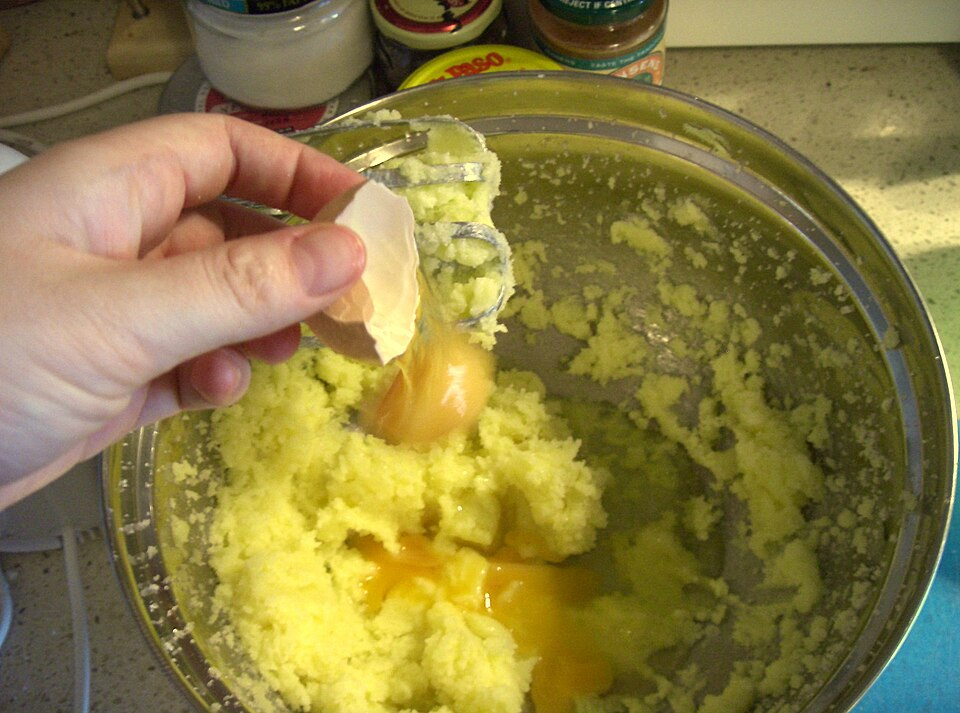
The best-known story in American food marketing concerns this product. Early mixes contained dried egg and needed only water. They sold poorly. The mixes were reformulated to require the baker to add a fresh egg, sales improved, and the explanation that has attached itself to this is psychological: that women felt guilty using a product that asked nothing of them, and that adding an egg restored a sense of participation.
That account is usually credited to a particular mid-century motivational researcher and it is worth treating with some care, because the attribution is disputed and the documentary trail is thinner than the retelling suggests. There is a much better-documented practical reason sitting underneath it. Dried egg of the period was variable and it degraded on the shelf, and a cake made with a fresh egg has better structure, better rise and better keeping quality than one made with reconstituted powder. The reformulation improved the cake. Whether it also improved how the baker felt about herself is a claim that has been repeated so often that it now gets reported as settled, and it is not.
Like our content? Follow us for more.
Shortening, and the reason the texture changed
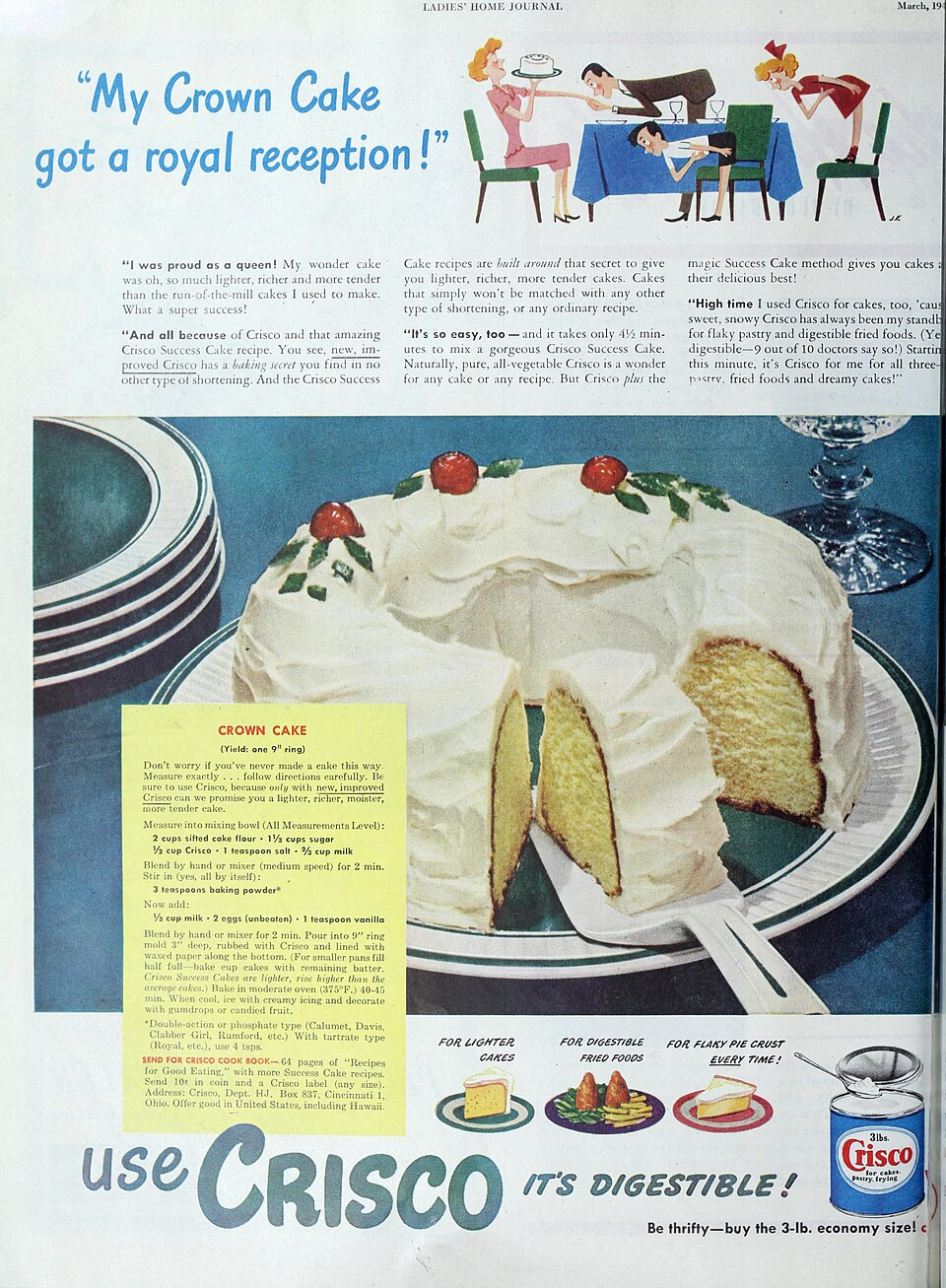
The fat in a 1958 mix was partially hydrogenated vegetable shortening, and it was there for reasons that have nothing to do with flavour. A solid fat made by partial hydrogenation is stable on a shelf for months, behaves consistently in a dry mix, and produces the fine even crumb that boxed cakes are known for. Butter cannot do any of that in a cardboard box.
The Food and Drug Administration determined in 2015 that partially hydrogenated oils were no longer generally recognised as safe, following the finding that industrially produced trans fat affected cardiovascular risk markers worse than the saturated fat it had been introduced to replace. The ingredient left the American food supply by the end of that decade. Mixes were reformulated around palm and other fats, and the people who insist that boxed cakes do not taste the way they remember are describing a real change rather than nostalgia. The functional property that was removed was structural, and nothing has reproduced it exactly.
The colours
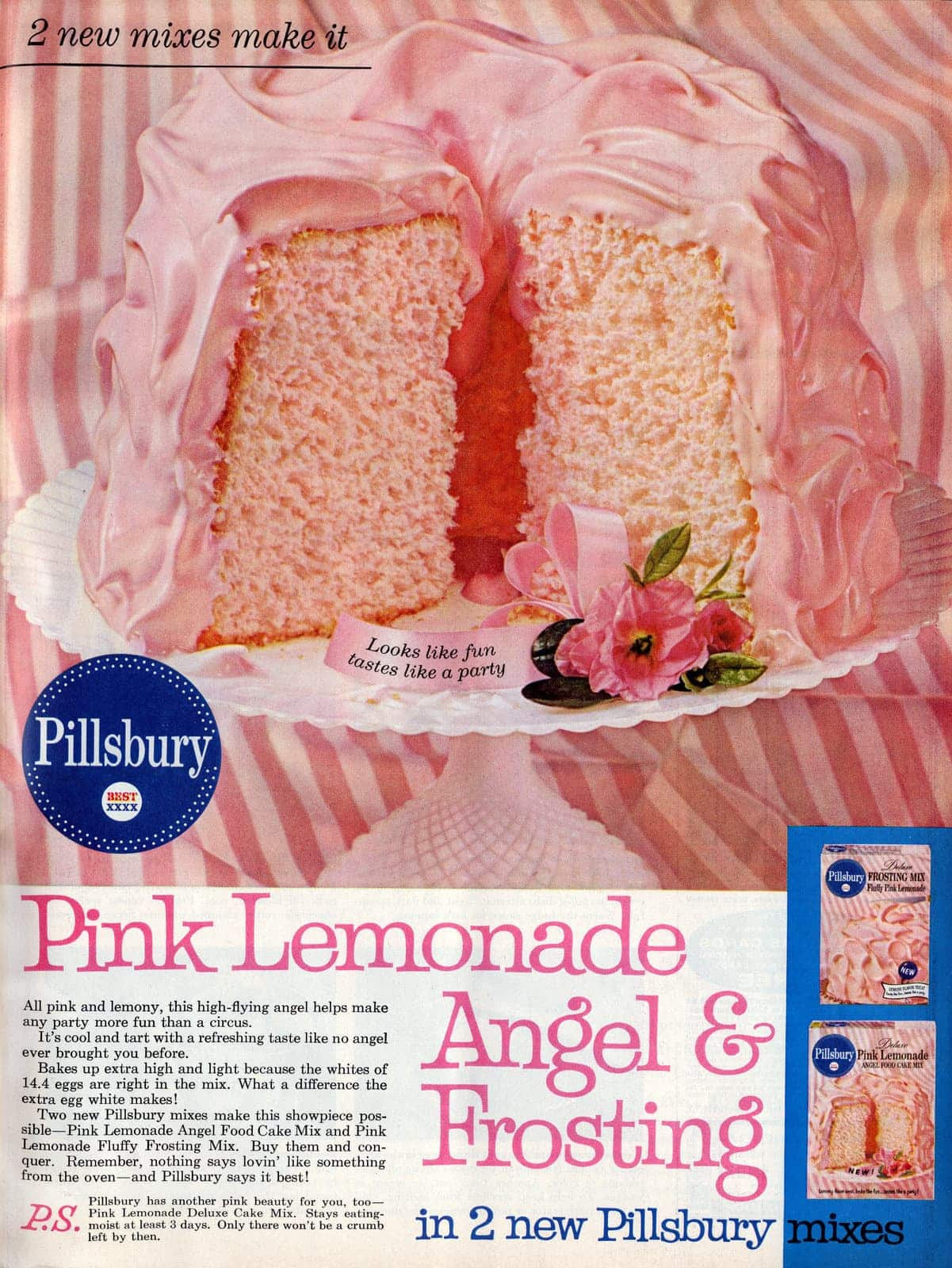
Frosting mixes, coloured layer mixes and the decorating products sold alongside them used colour additives from a list that American regulators have substantially shortened. Red No. 2, in very wide use across the whole food supply, was banned by the Food and Drug Administration in 1976, and others permitted in 1958 were delisted before and after it.
There has been a second and quite different wave recently, in which manufacturers have removed synthetic dyes from products aimed at children under consumer pressure rather than under prohibition, replacing them with plant-derived colours that do not reach the same saturation. A 1958 birthday cake with a bright pink or vivid green frosting is therefore an object that could not now be reproduced, partly because one of its colours is illegal and partly because the industry has walked away from the others. Photographs of them look retouched. They were not.
The flour improver still being argued about
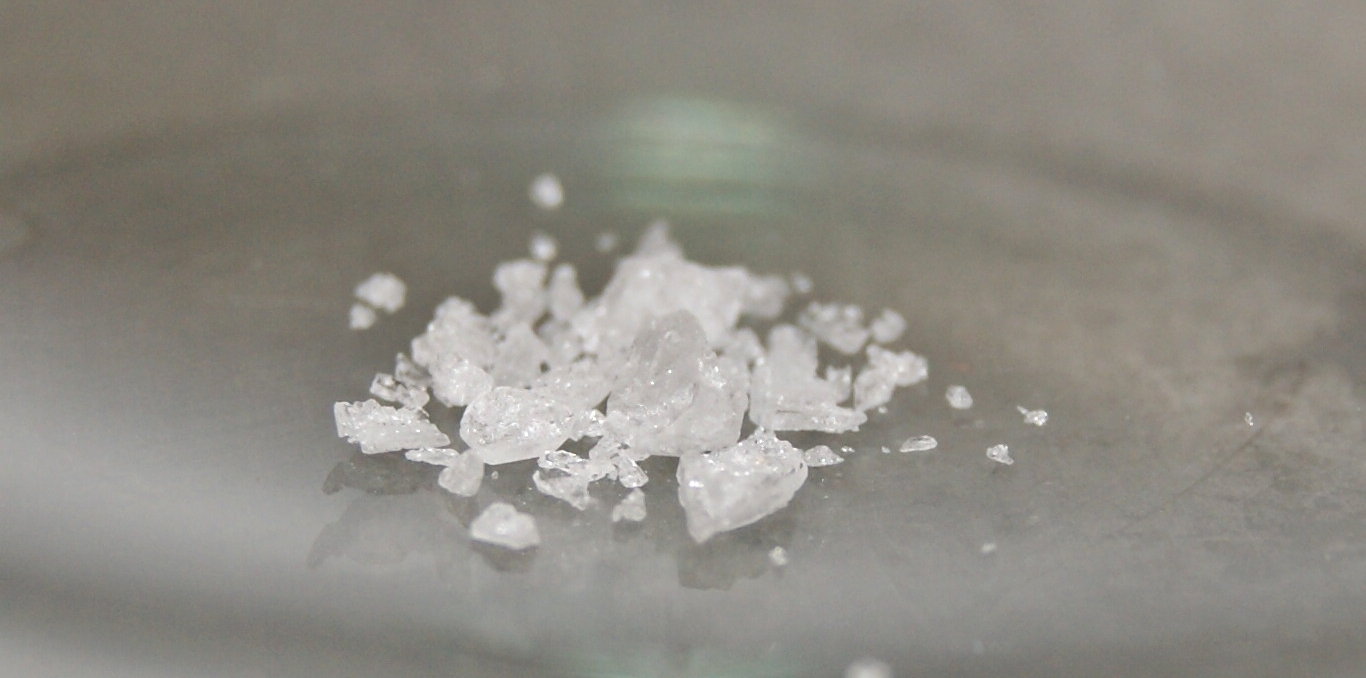
The one ingredient on this list whose story has not finished is potassium bromate, a flour treatment agent used to strengthen dough and improve rise. It was standard in American commercial flour and in mixes, and it has been prohibited in the European Union, the United Kingdom and Canada for many years.
In the United States it has remained federally permitted. California passed legislation in 2023 banning several additives including potassium bromate in food sold in the state, with effect later this decade, which is the same state-by-state route that ended phosphate detergents and that usually precedes a national change. So a 1958 mix contains an additive that is simultaneously legal in most of the United States, illegal across most of the developed world, and scheduled to become illegal in the largest American state. That is an unusually honest picture of how food regulation actually works, and it is a reason to be careful about treating the current rules as settled.
The diet versions, and the sweetener that went
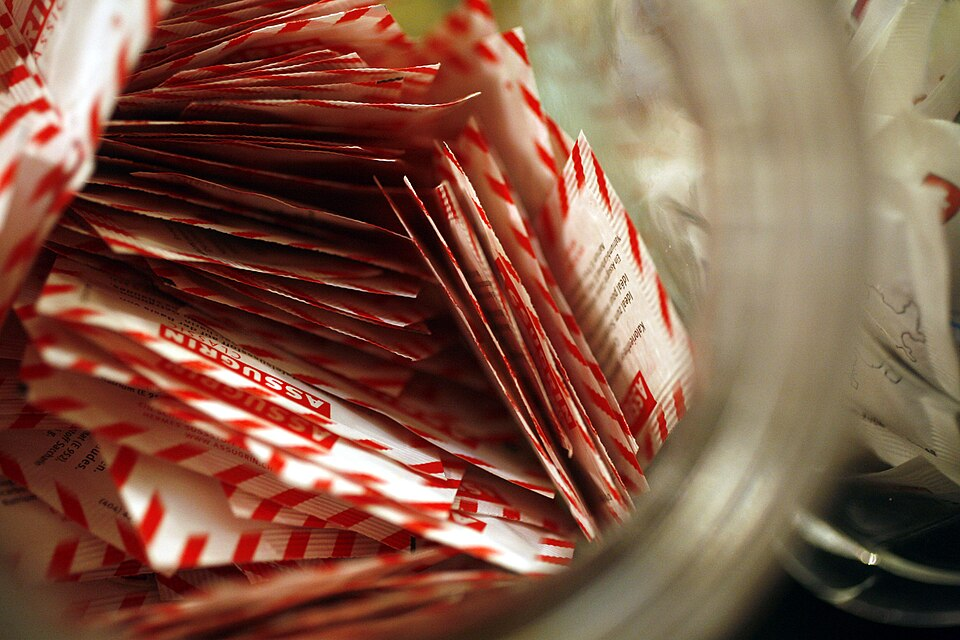
Reduced-sugar and diabetic cake and frosting mixes were a real product category and they were built on cyclamate, often blended with saccharin because the combination tasted better than either alone. It was a major American sweetener in very wide use.
The Food and Drug Administration banned cyclamate at the end of the 1960s following animal study findings. The petition to reinstate it has been pending for decades, and it remains unapproved in the United States while being permitted in a number of other countries. Saccharin, which carried the category afterwards, was itself proposed for prohibition in 1977, saved by a congressional moratorium, required to carry a cancer warning label for more than twenty years, and had the label removed in 2000 once the human evidence had failed to support the finding. A diet cake mix from this period is an artefact of a regulatory argument that went in both directions.
A box that told you almost nothing
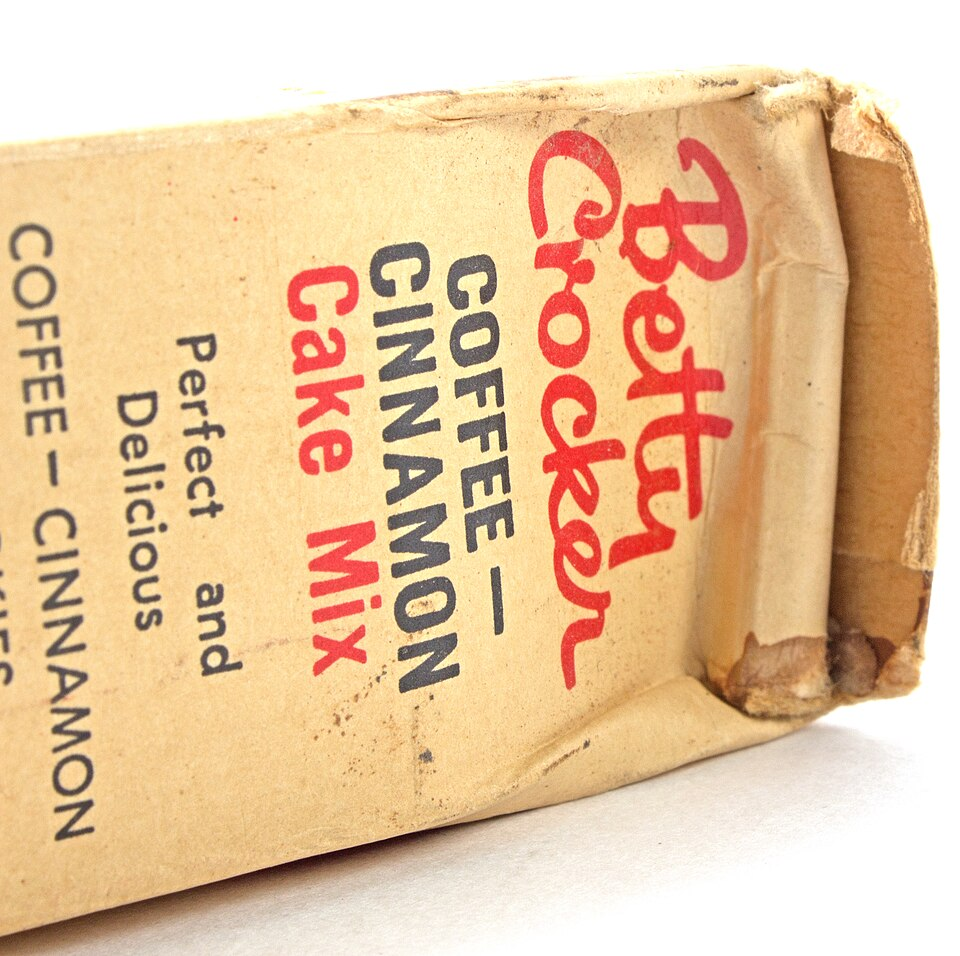
Everything above was inside the box and almost none of it was on the outside. A 1958 package carried the brand, the product, the weight, the preparation instructions and whatever claims the manufacturer wished to make. There was no ingredient list, no nutrition panel, no allergen declaration and no date a shopper could read.
Ingredient labelling came progressively under the fair packaging and labelling framework of the 1960s. The nutrition panel was voluntary until the Nutrition Labeling and Education Act of 1990 and became mandatory in 1994. Allergen declaration took effect in 2006 under separate legislation. Open dating spread through American groceries in the 1970s and is still largely a matter of manufacturer practice. For a mix, which contains wheat, milk solids, soy and sometimes egg and nut traces, the allergen reform is the one that matters most, and it arrived forty-eight years after the box described here.
What a mix was actually competing against
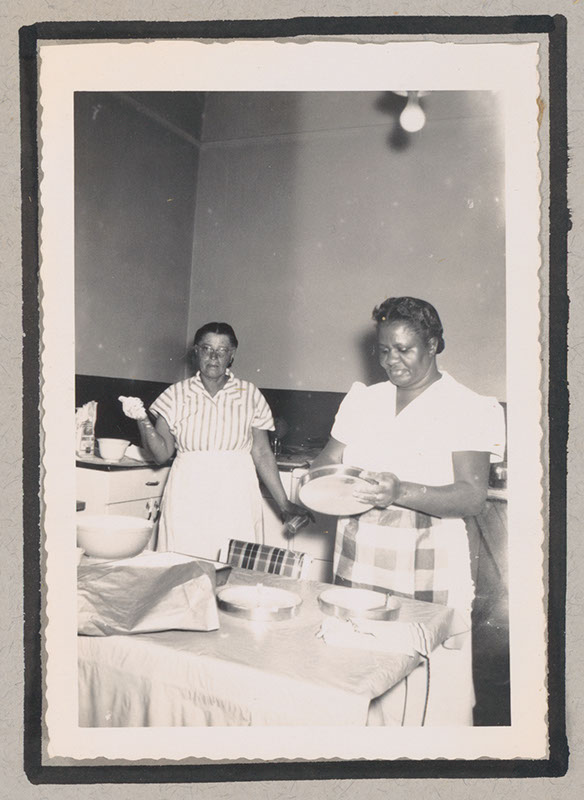
It is easy to read all of this as a story about industrial food displacing something better, and the comparison deserves to be made properly. What a 1958 mix replaced was not an idealised scratch cake. It was a cake made by a woman with several children, no stand mixer, an oven whose thermostat was approximate, flour of uncertain protein content, and shortening or lard measured by eye.
The mix produced a more reliable result than most households could achieve, every time, for less money and in a fraction of the time, and it did so in an era when a birthday cake mattered and a failed one could not be replaced at short notice. That is why it won, and it won fast. The criticism of what was in the box is entirely fair and it is a separate matter from the question of whether the people buying it were making a reasonable choice. They were, with the information they had, which was essentially none.
What is still in the cupboard
The strange ending to all this is how little the category has moved. Boxed mixes are still a very large part of American home baking, several of the biggest brands of 1958 are still on the shelf under names a 1958 shopper would recognise, and the preparation method is unchanged: tip in, add egg and oil or water, beat, bake.
What changed is entirely on the outside of the box and in the formulation behind it. The shortening has gone, one of the colours is illegal, the flour improver is on borrowed time in at least one state, the sweetener in the diet version has been unapproved for half a century, and the panel on the back now runs to more lines than the recipe on the front. The cake is a little different and the information is a different universe, and the second of those is the larger change by a long way.
Like our content? Follow us for more.