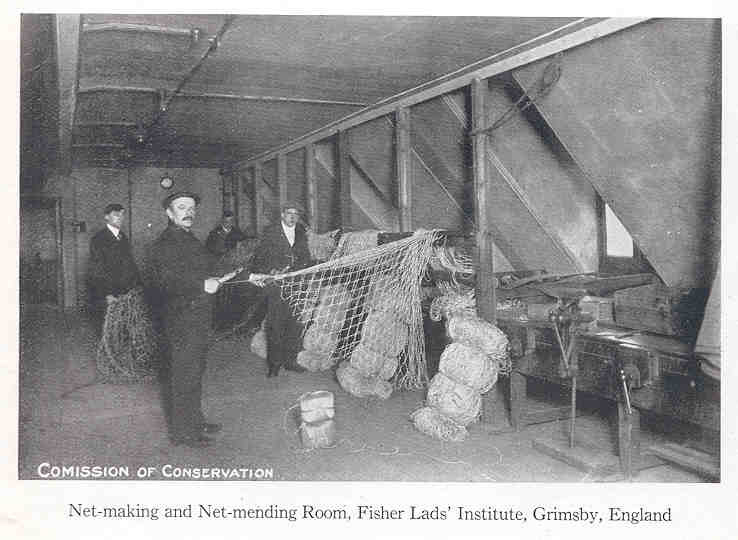
Here are sixteen things done by hand in the net loft in 1960, in the shore trade that supplied the boats. The whole working year of this craft was organised around one fact — that natural fibre rots when it is wet — and when a synthetic twine arrived that did not, most of the trade went inside about fifteen years.
1. Braided every mesh by hand with a needle and a gauge
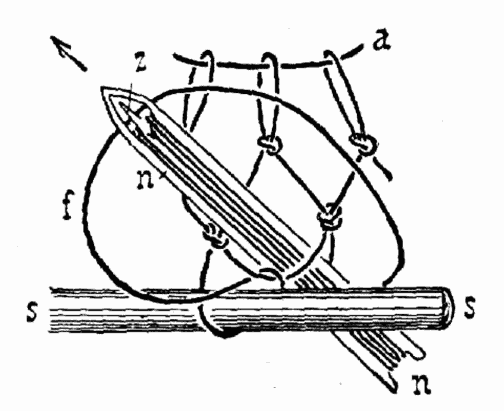
A net is made one knot at a time. The braider worked with a flat wooden needle wound with twine and a mesh gauge — a smooth strip of wood or bone of a precise width — forming each loop over the gauge and knotting it to the row above.
The gauge is what makes the mesh uniform, because every loop is formed over the same object. Change the gauge and you change the mesh size, which changes what the net catches and what it lets through.
Machine-braided netting now comes off a loom in sheets of specified mesh, twine and depth, and hand braiding survives for repair, for specialist shapes and in places where the machine product does not fit the job.
Like our content? Follow us for more.
2. Worked in a loft because a net needs length and nothing else

The net loft was a long upper floor, frequently above a store or a workshop on a harbour, with headroom, hooks along the beams and very little else in it. A net cannot be made in a small room.
Work was done standing or sitting with the net hung from a hook at head height, the braider working downward and sideways across the sheet, moving along as the rows were completed.
The buildings survive on a great many harbours and are now flats, studios, restaurants and museums, which is the usual fate of a long upper room with a view of the water.
3. Counted meshes rather than measuring anything
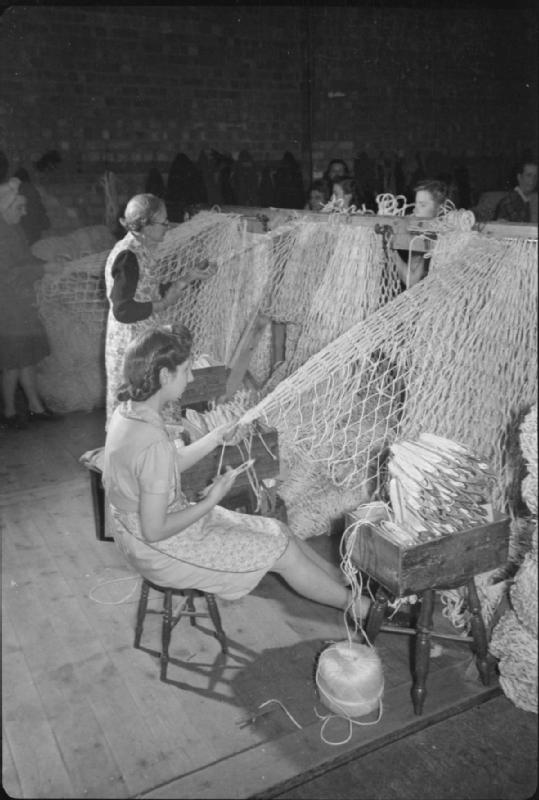
The dimensions of a net are specified in meshes, not in feet. A sheet is so many meshes deep and so many along, and the braider counted as he went because there is no way to measure a slack net accurately.
Shaping was done by taking in or letting out meshes at calculated intervals, which is how a flat sheet becomes a bag, a cone or a shaped wing.
That arithmetic is still how netting is specified and ordered today, and a modern net plan is a drawing in meshes with cutting rates written along the edges, which would be entirely legible to a 1960 braider.
4. Used natural fibre twine that rotted and had to be treated
Twine was cotton, hemp, manila or sisal, all of which are vegetable fibres that rot when kept wet, which is the central problem of every natural-fibre net ever made.
The answer was barking: steeping the net in a hot tannin solution, traditionally from oak or other bark, and later in proprietary preservatives, which both stiffened the net and slowed the rot.
Synthetic twine needs none of it. That single difference removed the barking tank, the drying ground, the smell and a substantial part of the working year from the entire industry.
5. Spent days of every month drying nets rather than using them
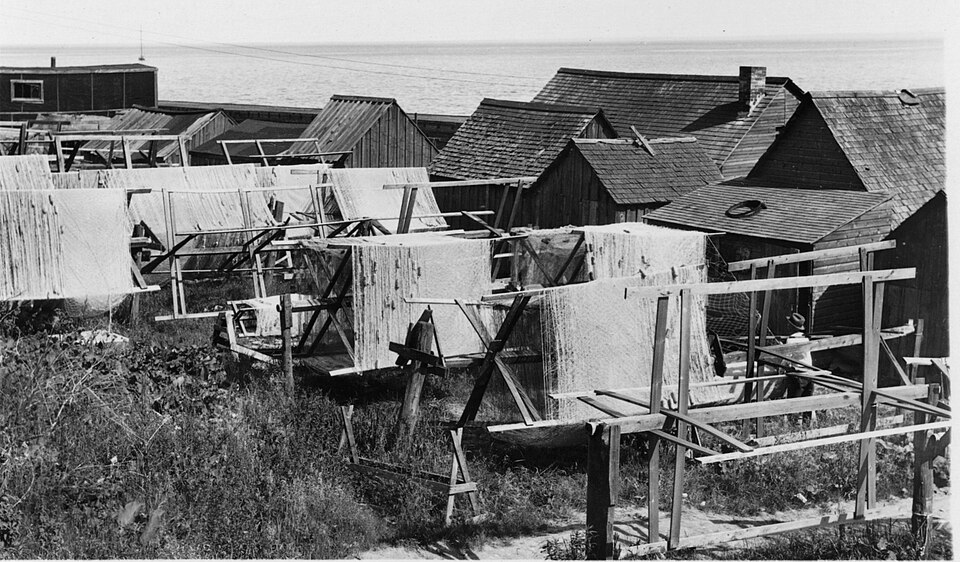
A natural fibre net that is put away wet is a net that is being destroyed, so nets were hauled out, spread on a drying ground, a wall, a beach or a rack, and left until dry before storage.
That required space, labour and weather, and it governed the rhythm of the shore end of the industry as firmly as the tides governed the sea end.
Synthetic netting can be stowed wet indefinitely. The drying grounds became car parks and the net lofts became something else, and the reason was a change of material rather than a change of fishing.
6. Repaired constantly, because a net is always damaged
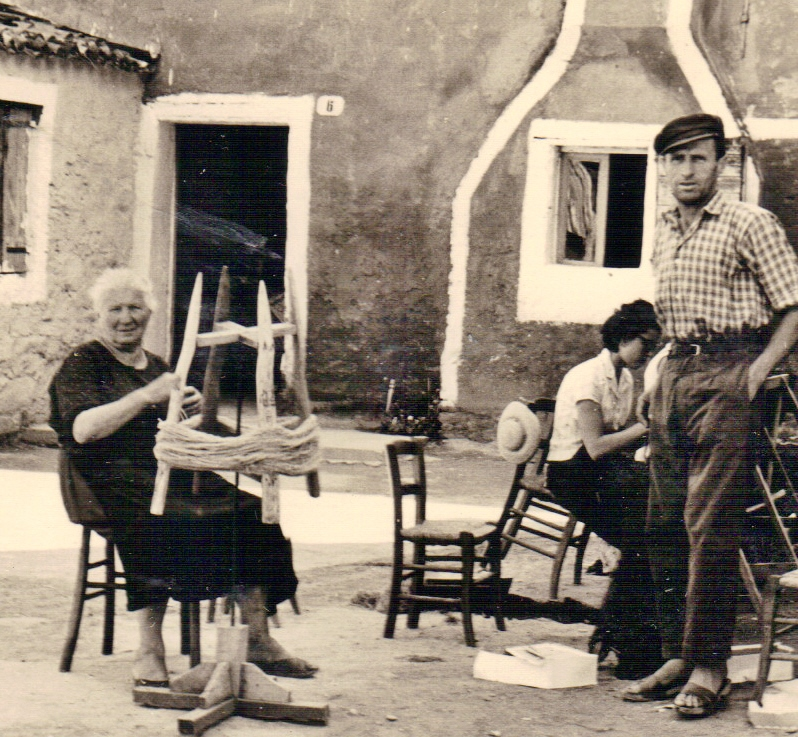
Nets tear on the bottom, on wreckage, on their own gear and on the catch, and the ordinary condition of a working net is partly broken. Mending was a larger part of the trade than making.
A mender finds the hole, cuts it back to a clean shape, and braids the gap closed matching the original mesh and twine so that the repair carries the same load as the rest.
Mending is still done by hand, still with a needle, and is still the skill the trade is judged by. It is the one part of the job that synthetic twine and machine braiding did not take away.
7. Mounted the netting onto ropes, which is a different skill again
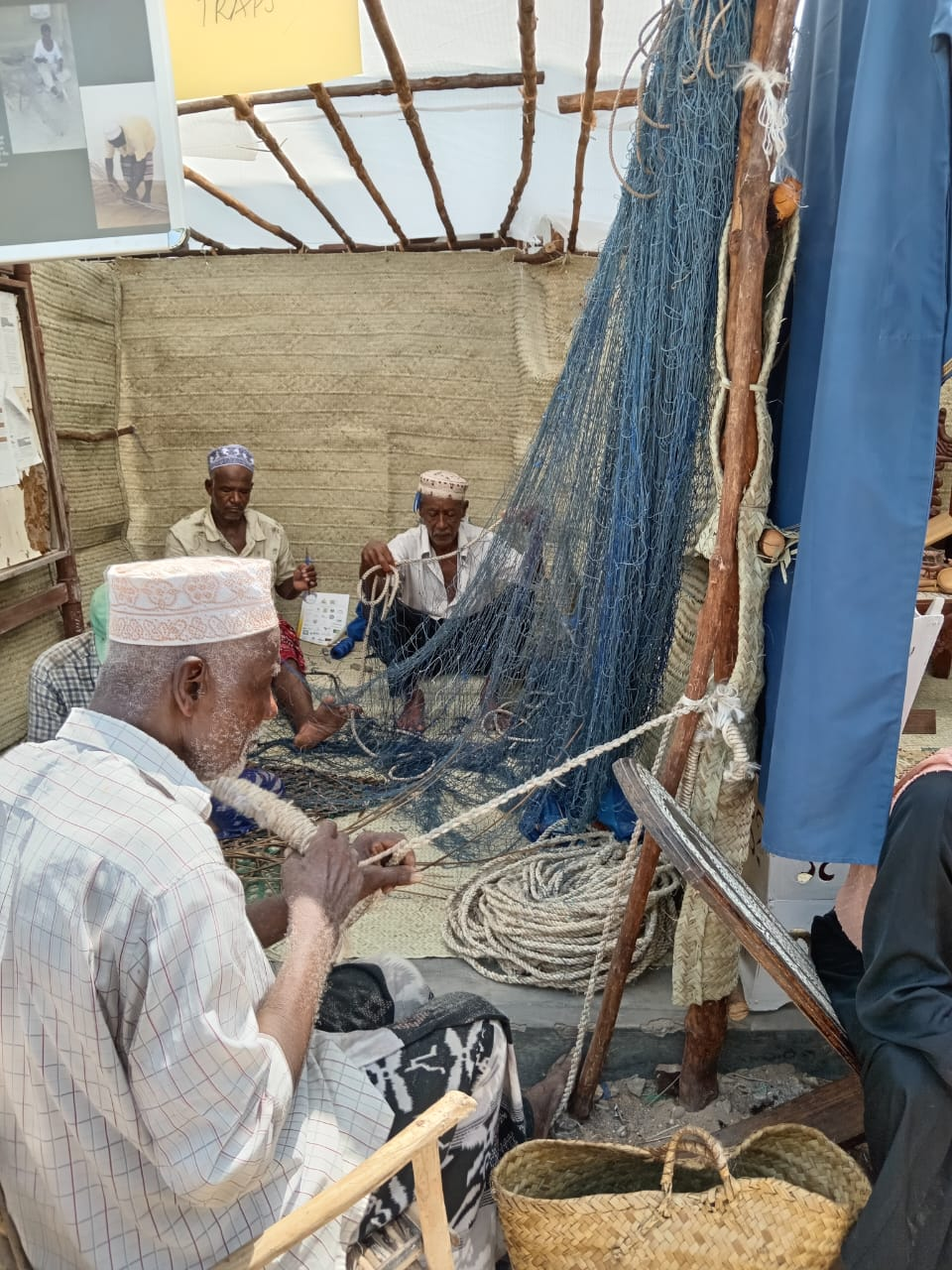
Netting on its own is not a net. It has to be mounted onto head ropes and foot ropes, with the number of meshes attached per unit of rope deliberately less than the netting would naturally span.
That deliberate slackness is the whole design. How much is taken in determines how the net hangs, how it opens and how it fishes, and getting it wrong produces a net that works badly for reasons the crew cannot see.
This is still a specialist job, still done by people rather than machines for anything other than the simplest gear, and it is where the design judgment in a net actually lives.
8. Attached floats and weights by hand, in the right proportion
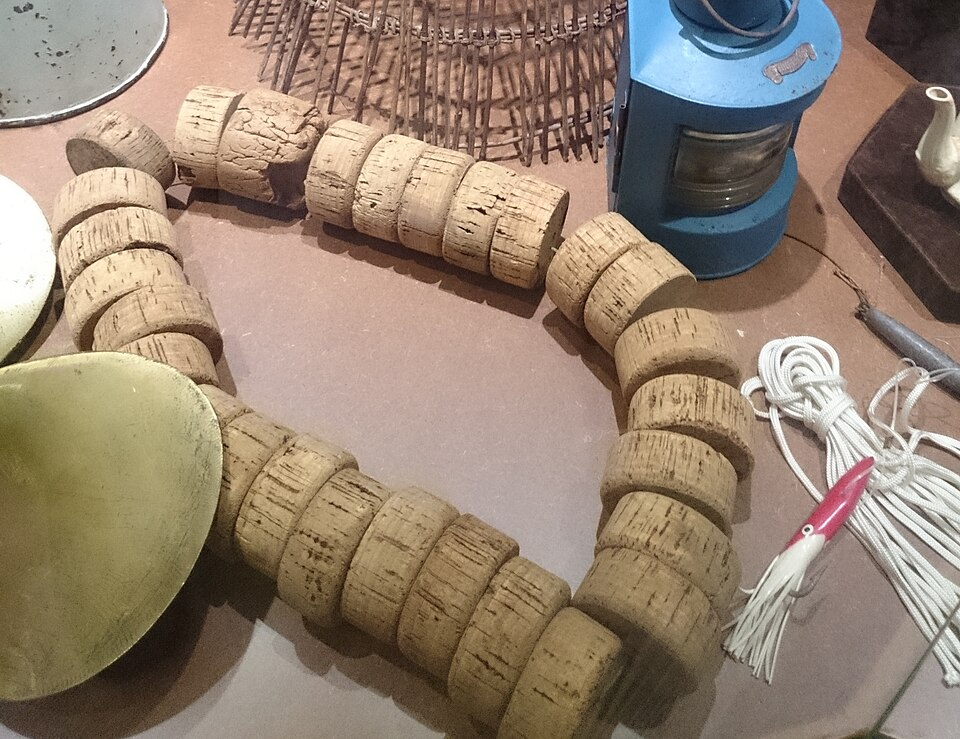
A net’s shape in the water is set by the balance between buoyancy along one edge and weight along another, and in 1960 the floats were cork or glass and the weights were lead.
Fitting them was repetitive hand work and the spacing was part of the specification, since too much of either in the wrong place collapses the net or lifts it off the bottom.
Plastic floats and modern weighting have replaced the materials and not the principle, and cork and glass floats are now collected as decoration by people who have no idea what they were for.
9. Made each net for a particular fishery and nothing else
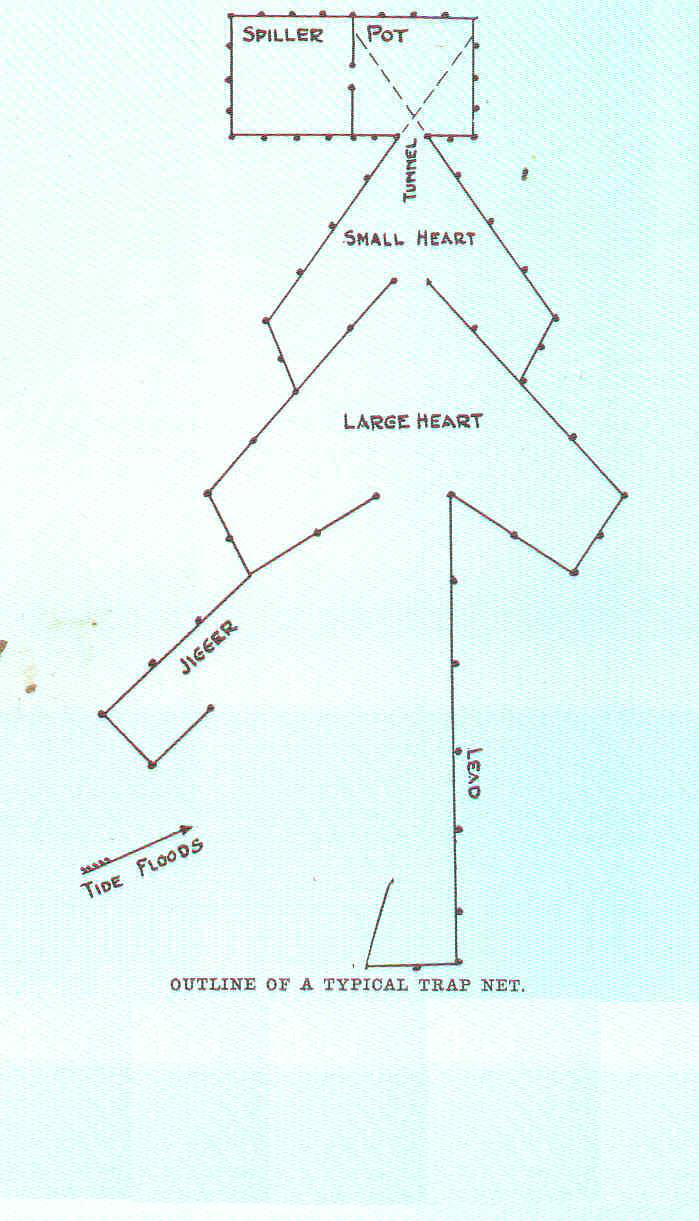
A net is designed for a species, a depth, a seabed and a method. Mesh size, twine thickness, depth in meshes, hanging ratio, float and weight distribution all change between fisheries, and a net built for one is useless for another.
The loft therefore worked to the requirements of local boats and local grounds, and the knowledge of what worked where was held between the braiders and the skippers who bought from them.
Net design is now an engineering discipline with tank testing, modelling and instrumentation on the gear itself, and mesh sizes are set by regulation rather than by preference, which is a change this list comes back to at the end.
10. Took work home, and much of it was done by women
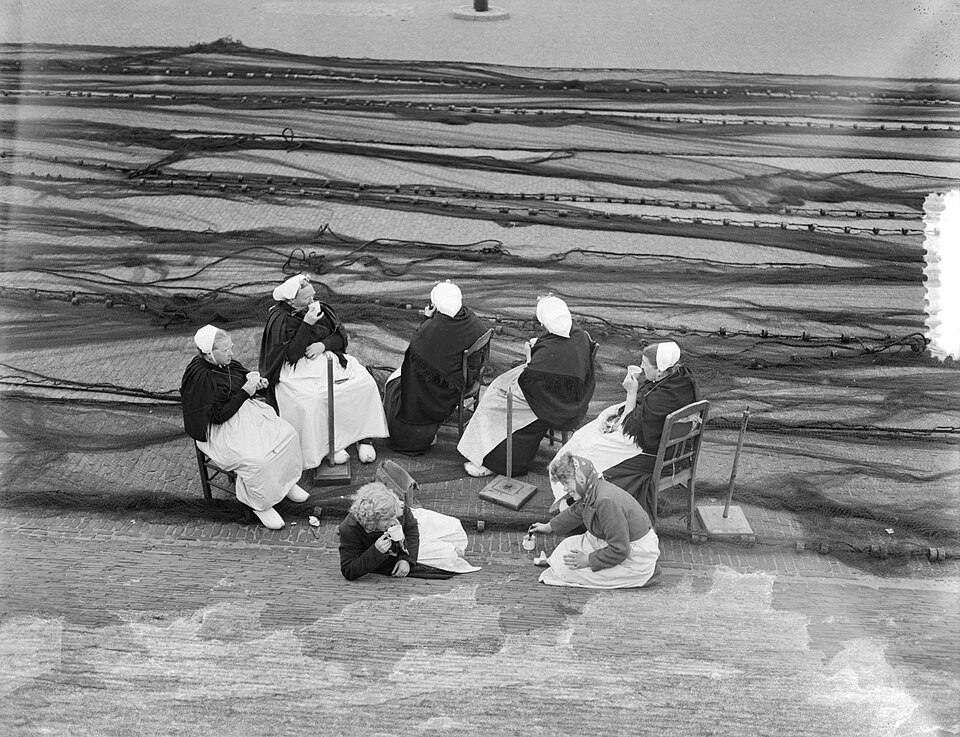
Braiding was widely done as outwork, paid by the piece, at home, in the evenings, and in many fishing communities it was predominantly women’s work and a significant part of household income.
It required almost no equipment — a needle, a gauge, twine and a hook on a wall — which is exactly why it suited outwork, and the skill was learned in childhood and held across a community rather than in a workshop.
That whole economy disappeared with machine netting. The loss was not only of the income but of a skill distributed through an entire population, which is a kind of loss that does not appear in any production figure.
11. Was paid by the mesh and the hour was nobody’s business
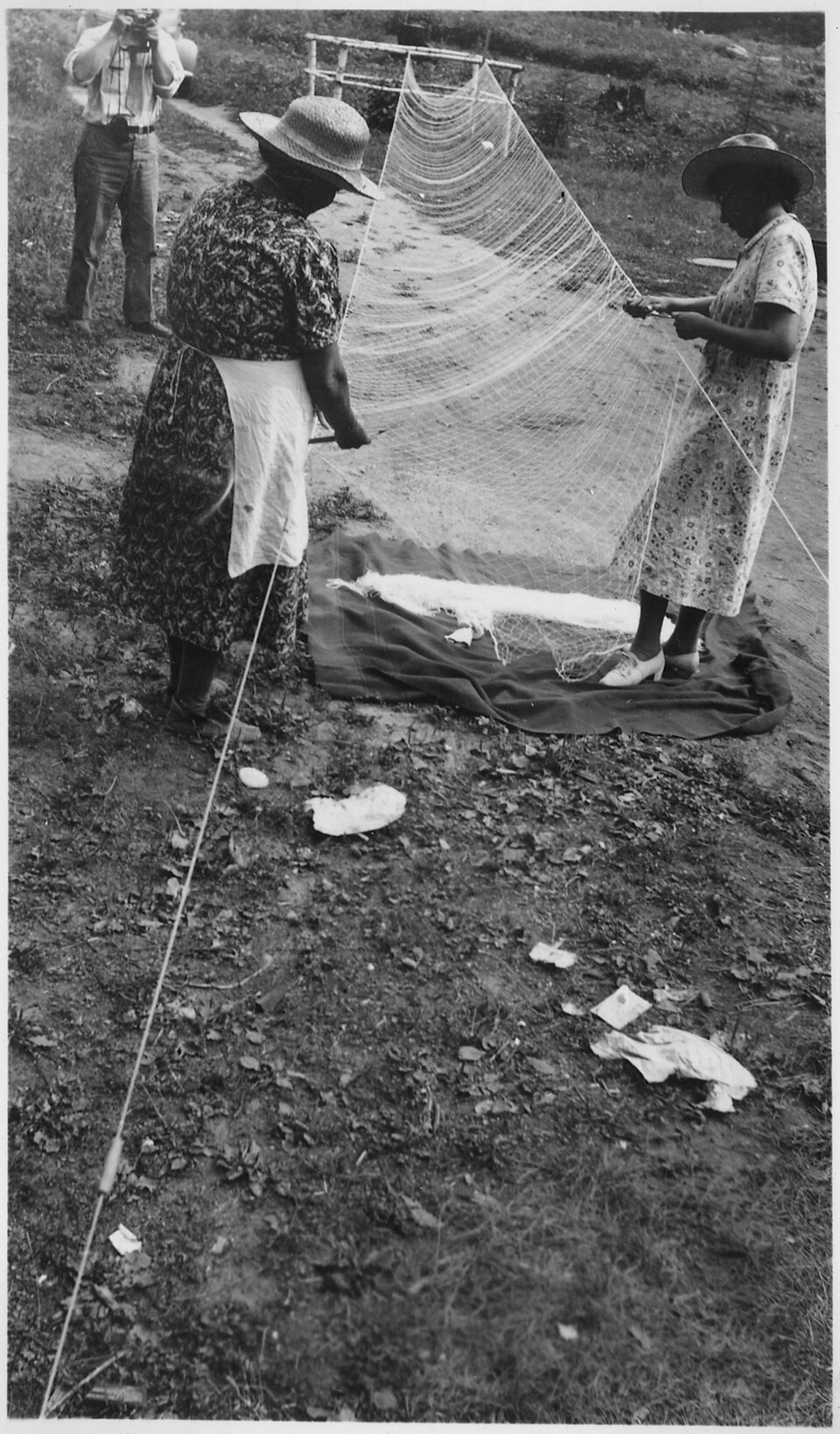
Piece rates per unit of netting were the normal arrangement, and a fast braider earned more. The rate was the central dispute in the trade and was argued over continuously.
There was no recorded working time, no premises standard for outwork and nothing resembling an employment relationship for a great many of the people doing the work.
Outwork of this kind is now regulated where it exists at all, and the piece-rate arrangements that supported it have largely gone from manufacturing in developed economies.
12. Worked with hands that the twine destroyed
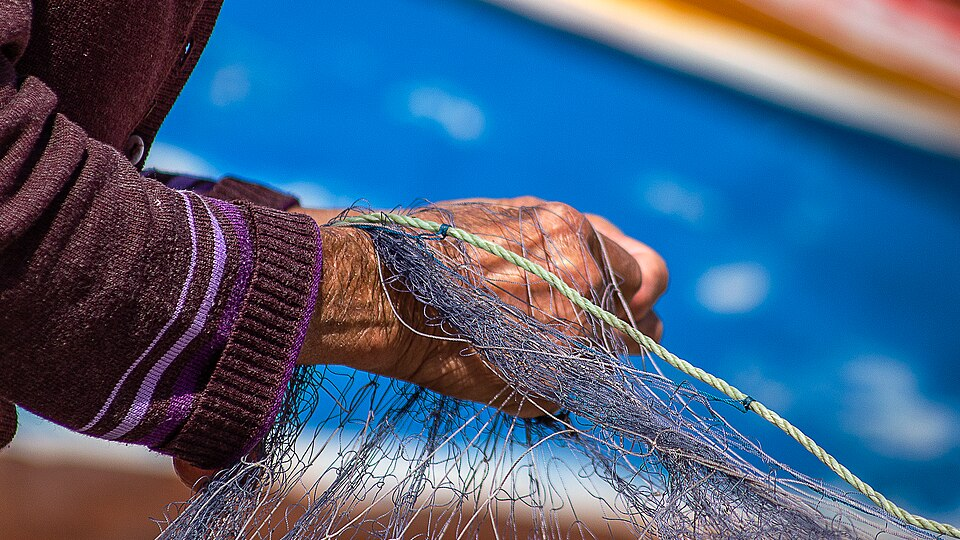
Pulling wet natural twine tight, thousands of times a day, cuts and hardens the hands, and braiders’ and menders’ hands were recognisable. Barking solutions and preservatives were handled bare-handed.
None of this was treated as an exposure or an injury. It was simply what hands looked like in that trade, and the same was true of rope workers and fishermen generally.
Skin protection, glove selection matched to the chemical, and assessment of repetitive hand-intensive work are now ordinary requirements in any comparable occupation.
13. Supplied an industry that was about to be regulated by mesh size
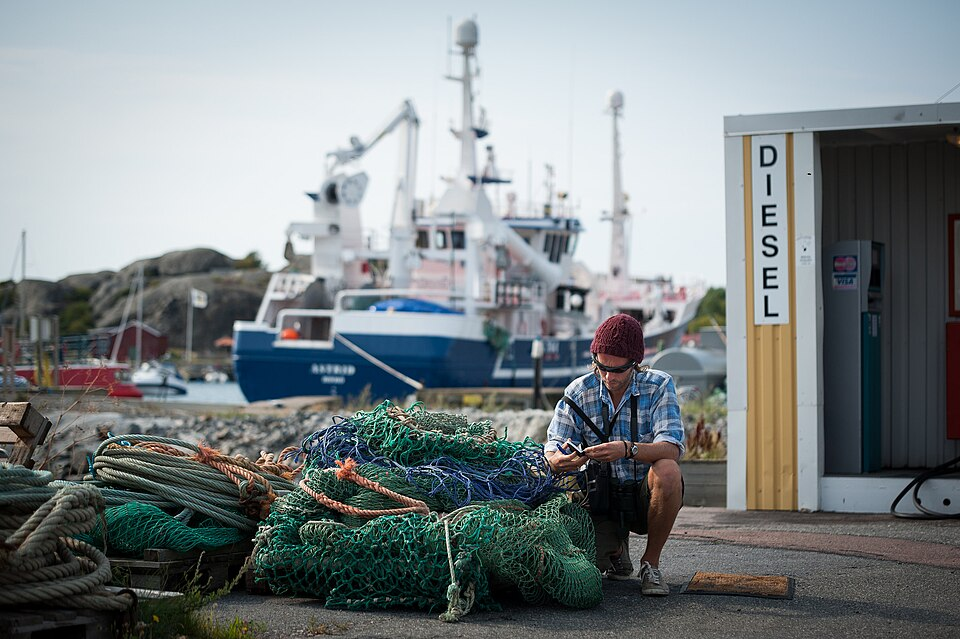
The single most important control in modern fisheries management is the minimum mesh size, because mesh size determines which fish are retained and which pass through, and therefore which year classes a fishery removes.
In 1960 mesh size was a design choice made between a skipper and a net maker. It is now a legal specification, enforced by measurement, with square-mesh panels, escape windows and selectivity devices added by regulation.
That turned net making from a craft serving a customer into a manufacturing activity serving a specification, and it is the most consequential change in the whole trade.
14. Lost its material to nylon within about fifteen years
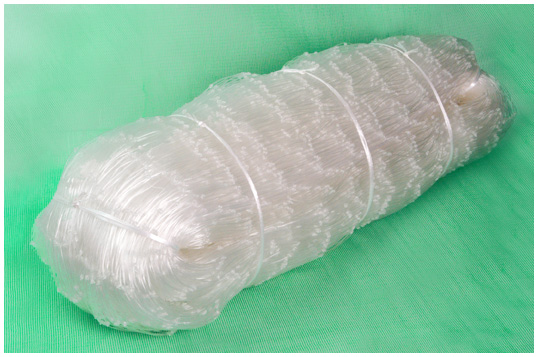
Synthetic twines — nylon and later other polymers — arrived through the 1950s and spread rapidly, and they are stronger for a given thickness, do not rot, need no barking, can be stowed wet, last far longer and in some fisheries are less visible in water.
Every one of those properties removes a job from the shore. No barking, no drying, no seasonal re-treatment and far less frequent replacement of whole nets.
The trade did not lose an argument about quality. It lost to a material that was better on nearly every measure, and the lofts emptied because the work that filled them had stopped being necessary.
15. Left behind a problem nobody anticipated
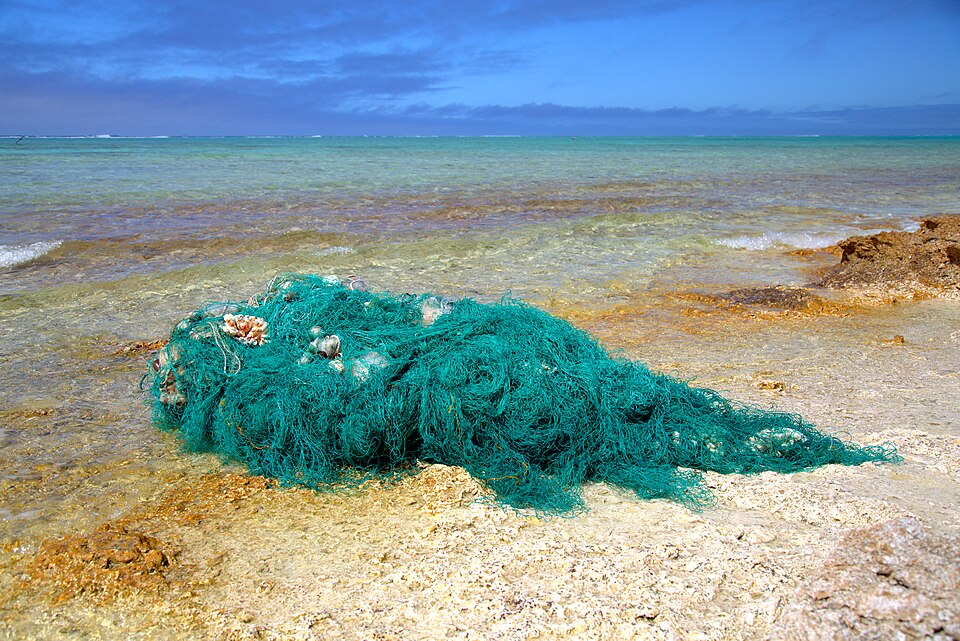
A natural-fibre net lost at sea rotted away within a season or two. A synthetic net does not, and lost or abandoned synthetic gear persists, continues to entangle, and breaks down into smaller fragments rather than disappearing.
That is now a recognised and substantial environmental issue, addressed by gear marking, mandatory reporting of lost gear, retrieval programmes, port reception facilities for end-of-life netting and a growing recycling industry.
It is a clean example of a material solving every problem it was adopted for and creating a different one that took decades to become visible.
16. And the honest position on what was lost

The craft was real: counting meshes, shaping a sheet by taking in at calculated rates, hanging netting on rope to a ratio that makes it fish, and mending a hole so it carries the same load as the rest of the net.
Most of it survives, because mending and mounting are still hand skills and the arithmetic of netting is unchanged. What went was the volume, the outwork economy and the entire working year that natural fibre required.
The honest summary is that the shore side of fishing was transformed by a change of twine, that the change was overwhelmingly for the better for the people doing the work, and that one of its consequences is still being dealt with on the seabed.
One change of material, and everything else followed
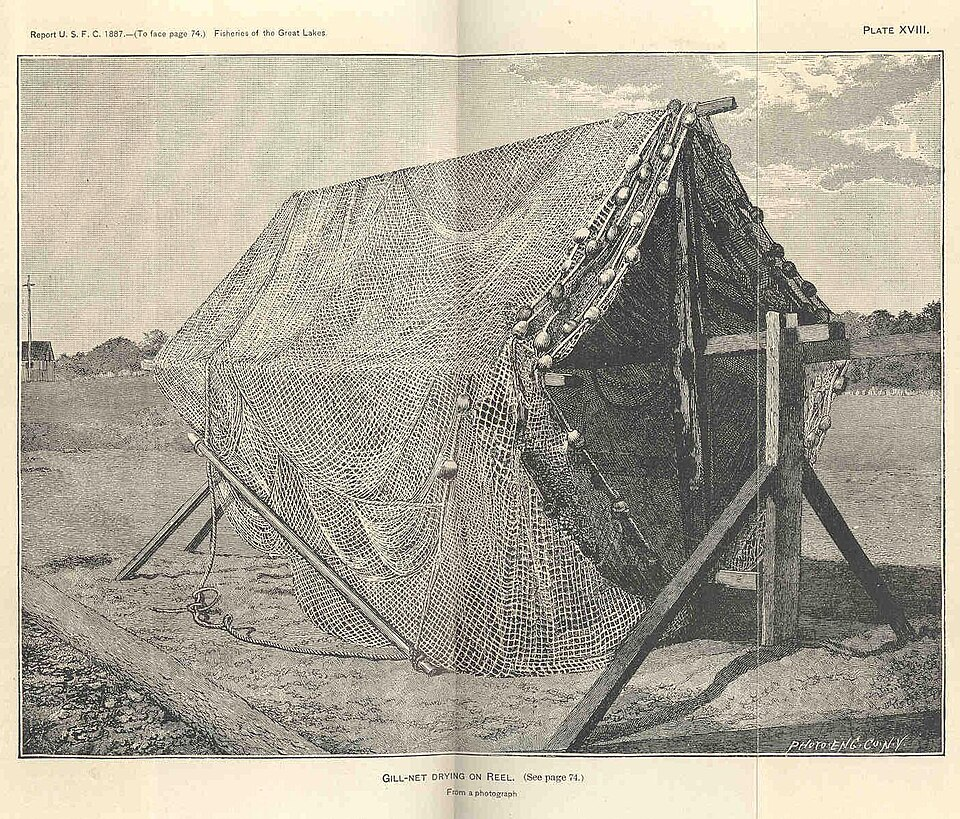
Natural fibre nets rot. That single property generated the barking tank, the hot tannin solution, the drying grounds, the seasonal re-treatment, the labour of hauling nets out and spreading them, and the frequent replacement of whole nets that had reached the end of their lives. A very large part of what the net loft did was not making nets but keeping them alive.
Synthetic twine is stronger for its thickness, does not rot, needs no treatment, can be stowed wet and lasts several times as long. Every one of those properties deleted a shore job, and the lofts emptied not because anybody preferred machine netting but because the work that had filled them was no longer necessary. The craft that survived is the part a machine still cannot do: mending a hole so that it carries the same load as the rest of the net, and hanging netting onto rope at the ratio that makes it fish properly.
The part nobody anticipated is on the seabed. A lost natural-fibre net was gone in a season or two; a lost synthetic one is not, and that consequence took decades to become visible and is now being addressed by gear marking, lost-gear reporting, retrieval programmes and recycling.
Mesh size, which in 1960 was a design choice between a skipper and a net maker, is now the central instrument of fisheries regulation, measured and enforced, with escape windows and selectivity panels specified by law. That turned the trade from a craft serving a customer into manufacturing serving a specification, which is the change the people in it felt most.
Like our content? Follow us for more.