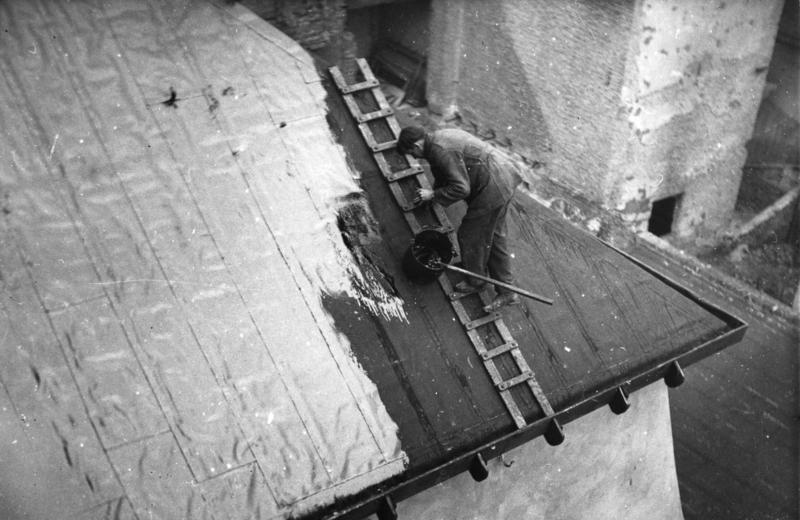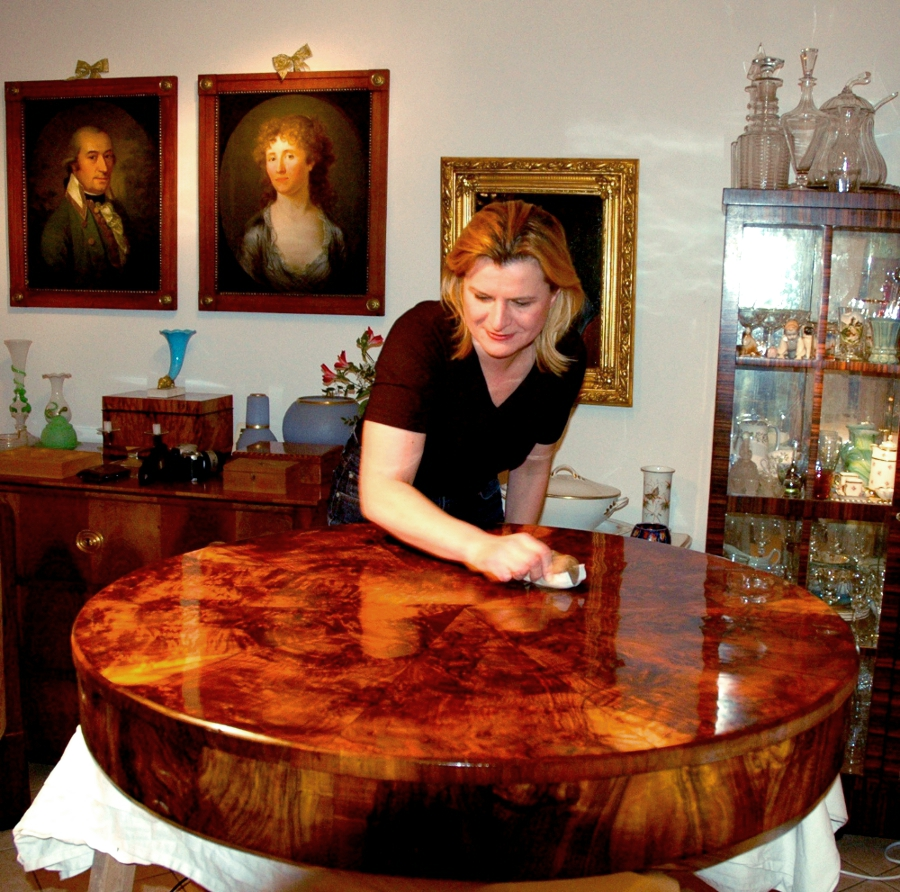
A French polisher’s entire kit fitted in a small case: a tin of shellac flakes, a bottle of spirit, a bag of cotton wool, some clean linen, pumice powder, and oil. No brushes, no spray gun, no machine. The finish was applied with a pad he made himself, in circles, in coats so thin that each one dried in seconds, and a good job took days.
By 1960 the furniture trade had largely moved to sprayed lacquer, which did in twenty minutes what a polisher did in a week. The craft survived anyway, and the reason it survived tells you something about how finishes actually fail.
What shellac is
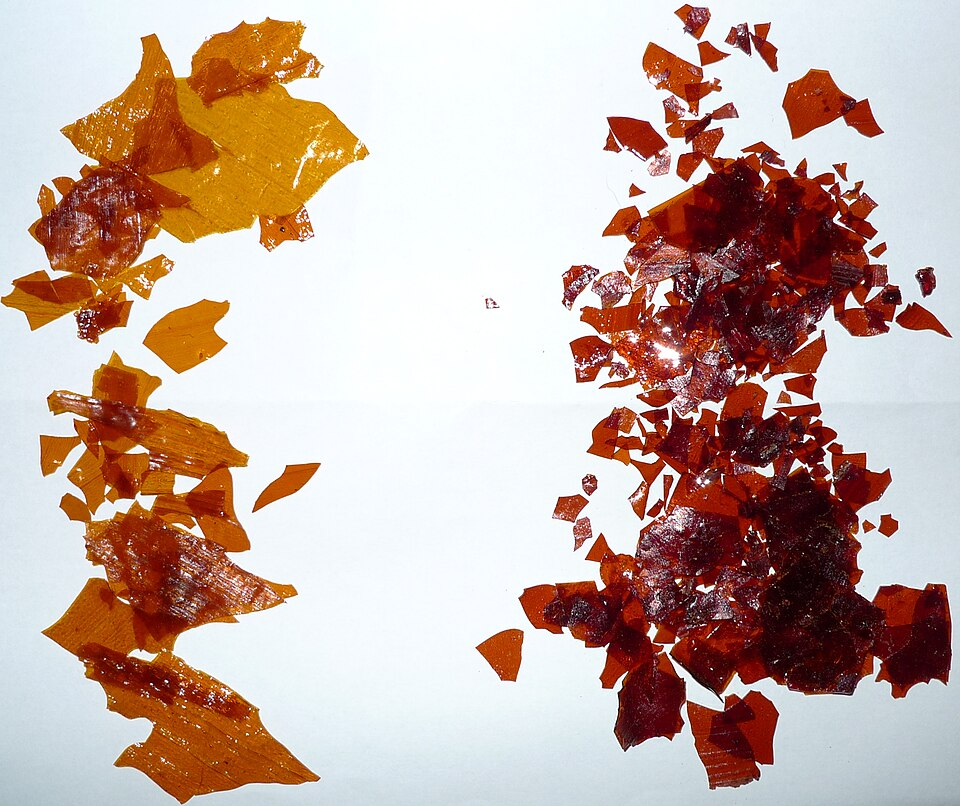
Shellac is a natural resin. It is secreted by a scale insect on certain trees, principally in India and Thailand, scraped off as a crust, then washed, melted, filtered and dried into thin sheets which are broken into flakes.
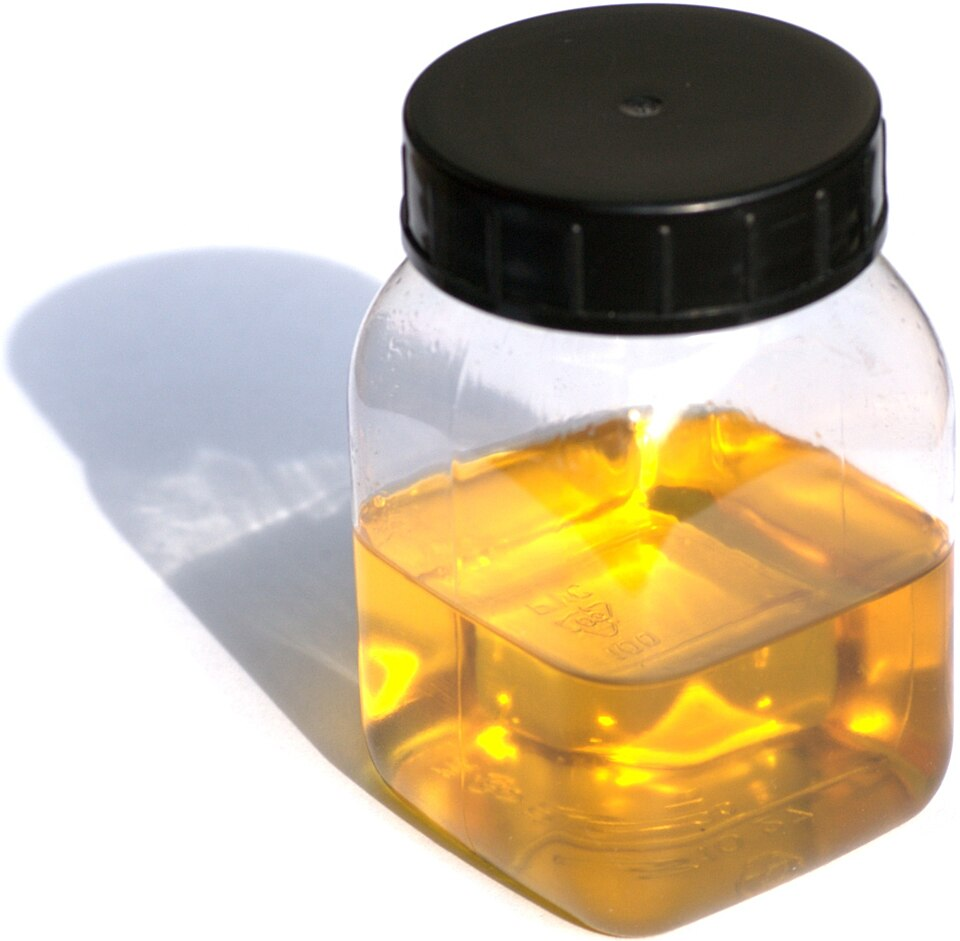
It dissolves in alcohol and in nothing much else that matters, which is the key to the whole method. Dissolve the flakes in denatured spirit and you have a solution that dries purely by the spirit evaporating, leaving the resin behind. No chemical cure, no oxidation, no waiting.
That means each coat is dry almost immediately and that a new coat partly redissolves the one beneath it, so successive applications fuse into a single film rather than stacking as separate layers.
It comes in grades from very pale to dark orange-brown, and the choice affects the colour of the finished work, which is why a polisher kept several. Dewaxed grades behave differently from those with the natural wax left in.
The material is also edible in the regulatory sense, which is why it still coats confectionery and tablets, and is one of those substances most people consume regularly without ever hearing its name.
Like our content? Follow us for more.
The rubber, and how the polish goes on
The tool is called a rubber. A handful of cotton wool is shaped into a pear, charged with shellac solution, and wrapped in a square of soft linen twisted up at the back to form a handle. The linen face is what touches the work.
It is never pressed flat and never stopped in one place. The polisher moves it continuously in overlapping circles and figures of eight, across the whole surface, so that the deposit is even and no edge of a stroke shows. Stopping leaves a mark that has to be worked out.
A trace of oil on the face lubricates it so the pad does not stick as the surface becomes tacky. That oil has to be removed later, which is a separate stage, and failing to remove it leaves a finish that looks cloudy in a year.
The pressure reduces as the work progresses and the rubber empties. A full rubber is used lightly; a nearly dry one is used harder.
The skill is almost entirely in the hand. There is no way to measure it, no way to automate it, and no way to learn it except by doing it badly for a long time.
The stages, in order
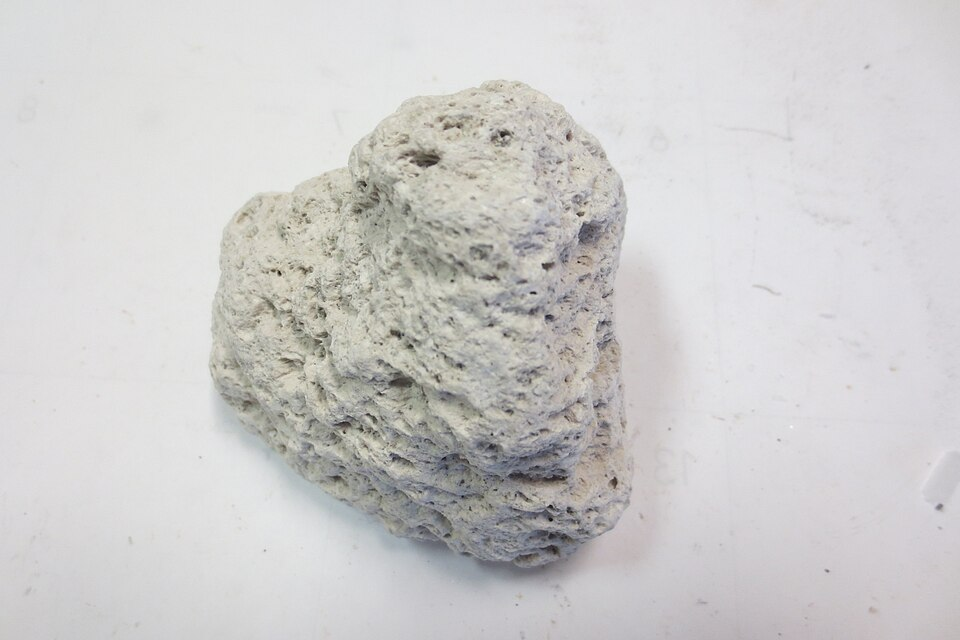
First the grain is filled, because an open-grained timber will otherwise absorb polish indefinitely and never come up level. Traditionally this was done with fine pumice powder worked into the surface with the rubber, so that the wood’s own dust fills its own pores.
Then bodying up: session after session of charged rubber work, building the film, with rests between so the spirit leaves the body of the finish rather than being sealed in.
Then stiffing, with a drier rubber and more pressure, to level and consolidate.
Then spiriting off: an almost dry rubber charged with spirit alone, used very lightly to remove the oil and burnish the surface to its final clarity. This is the stage that goes wrong, because spirit on a shellac film will dissolve it if you linger.
Finally, in some shops, a wax or a burnish depending on the sheen wanted. A full gloss, a satin and a dull finish are the same material finished differently rather than different products.
Why it was worth doing at all
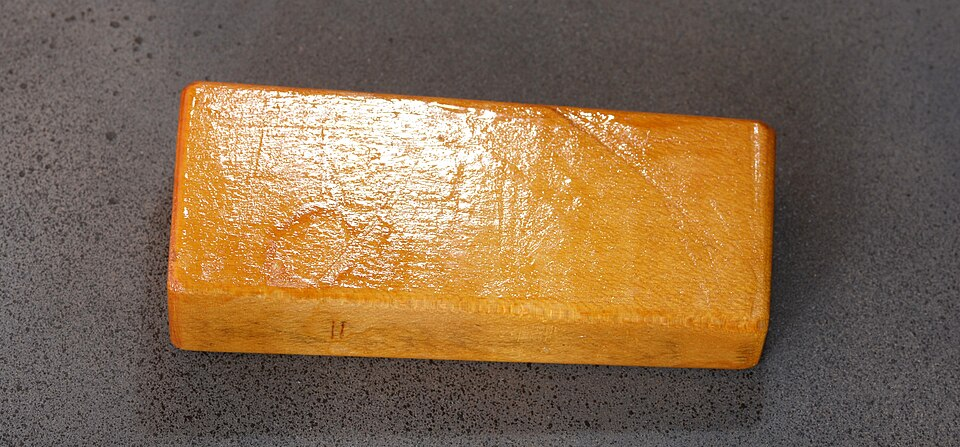
Because of the optical result and because of repairability, and the second matters more than the trade usually admitted.
Optically, a shellac film is thin and sits close to the wood rather than floating above it as a thick plastic coating does, so the grain reads with depth. It is the look people mean when they say an old piece of furniture glows.
Repairability is the practical argument. A shellac finish is damaged easily — by water, by heat, by alcohol, by a wet glass — but because each coat redissolves in spirit, damage can be worked out and the finish re-formed in place, invisibly, without touching the rest of the piece.
A modern catalysed lacquer is far tougher and will shrug off a wet glass, but when it does fail it cannot be fused back together. The repair is to strip the whole surface and refinish it.
So the two finishes fail in opposite ways: one is fragile and endlessly mendable, the other resists everything until it does not, and then the failure is total. For anything intended to last a century and be looked after, the fragile one is arguably the better engineering choice.
Working conditions, which were poor in a specific way
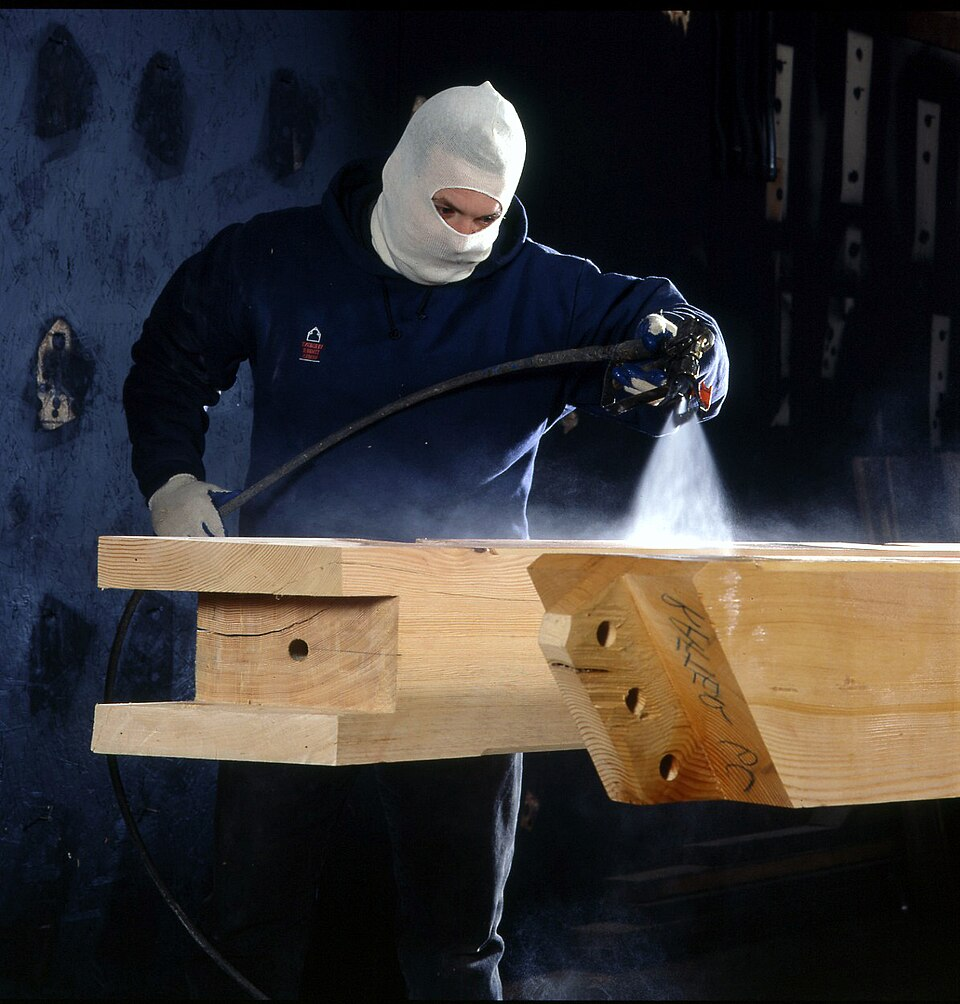
The solvent. Denatured alcohol evaporates readily, a polisher worked with his face close to the surface for hours, and the rooms were frequently small, unventilated and in winter closed up entirely.
It is also flammable, in quantity, in a workshop full of wood dust and shavings, often with a stove in it for warmth, and the finishing room in an old furniture works was the fire risk on the site.
The modern treatment of exactly the same work is extraction at the bench or a ventilated booth, solvent storage in proper cabinets, no ignition sources, and respiratory protection where ventilation cannot do the job. The material has not changed; the arrangements around it have.
Spray finishing, which replaced it, brought hazards of its own rather than removing them. Atomising a finish puts far more of it into the air than wiping one on ever did, and some two-pack systems involve chemistry that requires air-fed breathing equipment and health surveillance.
So the honest comparison is not safe modern against dangerous old. It is controlled modern against uncontrolled old, with the materials in some respects more hazardous now, not less.
Who the polishers were
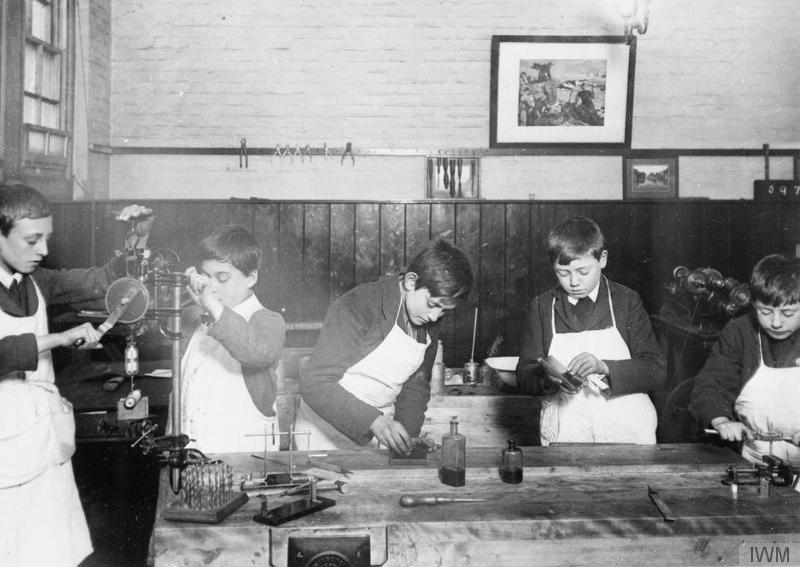
Often the last trade in the shop and frequently the most senior in pay, because the finish is what the customer sees and a poor one wastes everything done before it.
Many worked freelance, moving between workshops, and a great many worked in people’s houses: French polishing in situ on staircases, panelling, bar tops, church fittings and pianos was ordinary work, and the polisher arrived with his case and a bottle and set up in the room.
The piano trade was a substantial employer in its own right, since a piano case was a large area of high-gloss work and the instrument business was still large in 1960.
There was also a steady trade in reviving rather than refinishing: cleaning, reamalgamating a tired surface with spirit, touching in damage and rewaxing, which is skilled work that leaves no trace of itself.
That last skill is the one in demand today, and it is why the trade did not die.
What the trade is now
Smaller, specialised and solvent. The volume furniture industry finishes by spray and by UV-cured coatings applied on lines, and no amount of nostalgia will change that, because the economics are not close.
What remains is restoration and conservation: antique furniture, historic interiors, musical instruments, and high-end commissioned work where the client wants the material rather than the appearance of it. Conservation in particular values the finish precisely because it is reversible, which is a principle of the field.
Training has moved from apprenticeship to short courses and to a small number of specialist programmes, which is a real loss of depth, since the only way to acquire the hand is time.
The honest summary: shellac is an insect-secreted resin dissolved in denatured alcohol, drying purely by evaporation so that each coat partly redissolves the last and the whole fuses into one thin film; it is applied with a hand-made cotton wool and linen rubber kept constantly moving in circles and figures of eight, lubricated with a trace of oil that must be removed later; the stages are grain filling with pumice, bodying up, stiffing and spiriting off; the finish is easily damaged by water, heat and alcohol but can be re-formed in place invisibly, whereas a catalysed lacquer resists damage and must be stripped entirely when it fails; the working hazard was solvent vapour in unventilated rooms and fire in a dust-filled workshop, now controlled by extraction, booths, proper storage and respiratory protection; and the trade survives because reversible finishes are what conservation requires.
Like our content? Follow us for more.