

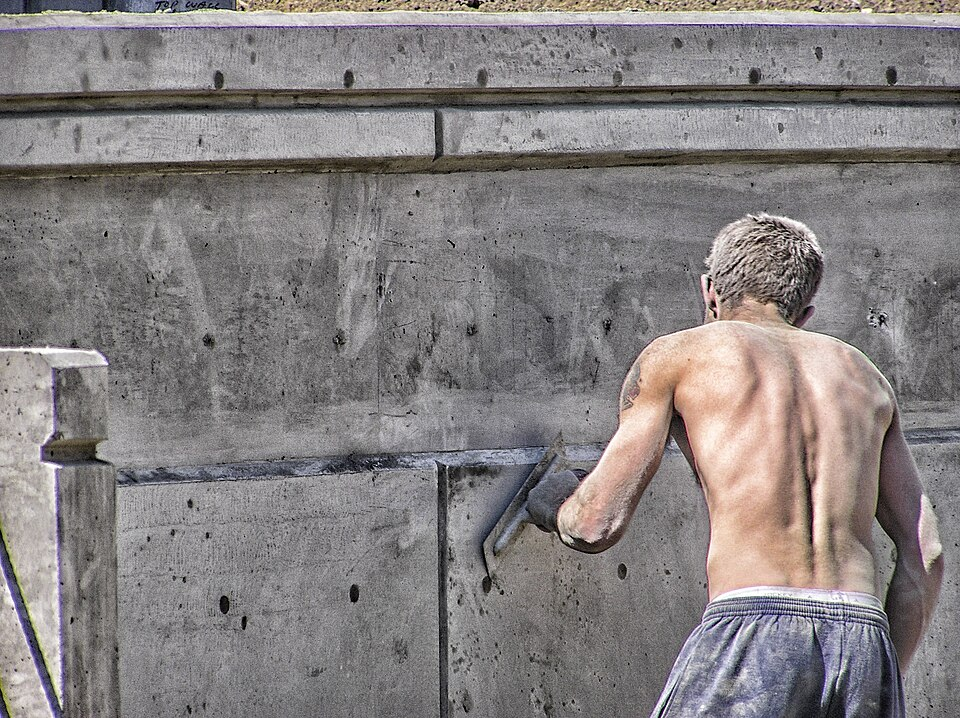
Terrazzo in 1960 was mixed, poured, levelled, ground and polished where it lay, by men working on their knees in wet cement and standing water. Here are sixteen things about that work, several of which no site would now permit.
1. The floor was mixed on site and poured by hand, in one go
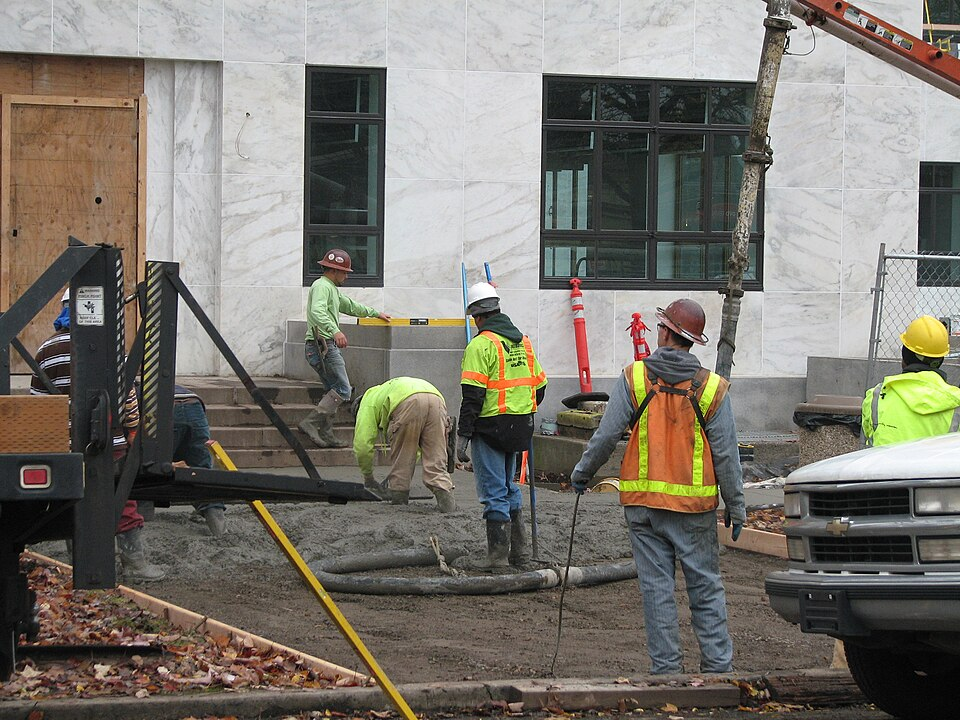
Terrazzo is marble or stone chippings set in cement, ground flat and polished until the chips show as a solid pattern of stone. In 1960 the whole of it was made where it was laid: the chips and cement mixed in a barrow or a small mixer, spread by hand over a base, levelled and tamped down by a man on his knees.
There was no prefabrication and no tile. A corridor or a stair landing was a single continuous surface made that day, and if the mix was wrong the floor was wrong for the life of the building.
Almost all terrazzo now arrives as precast tiles or slabs made in a factory to a controlled mix and cured properly before it reaches site. Poured-in-place terrazzo still exists for large prestige floors, but it is a specialist option rather than the normal method. The reason is partly quality control and partly that a building programme can no longer absorb a trade occupying a floor for a fortnight.
Like our content? Follow us for more.
2. Brass strips were set by eye to control where the floor would crack
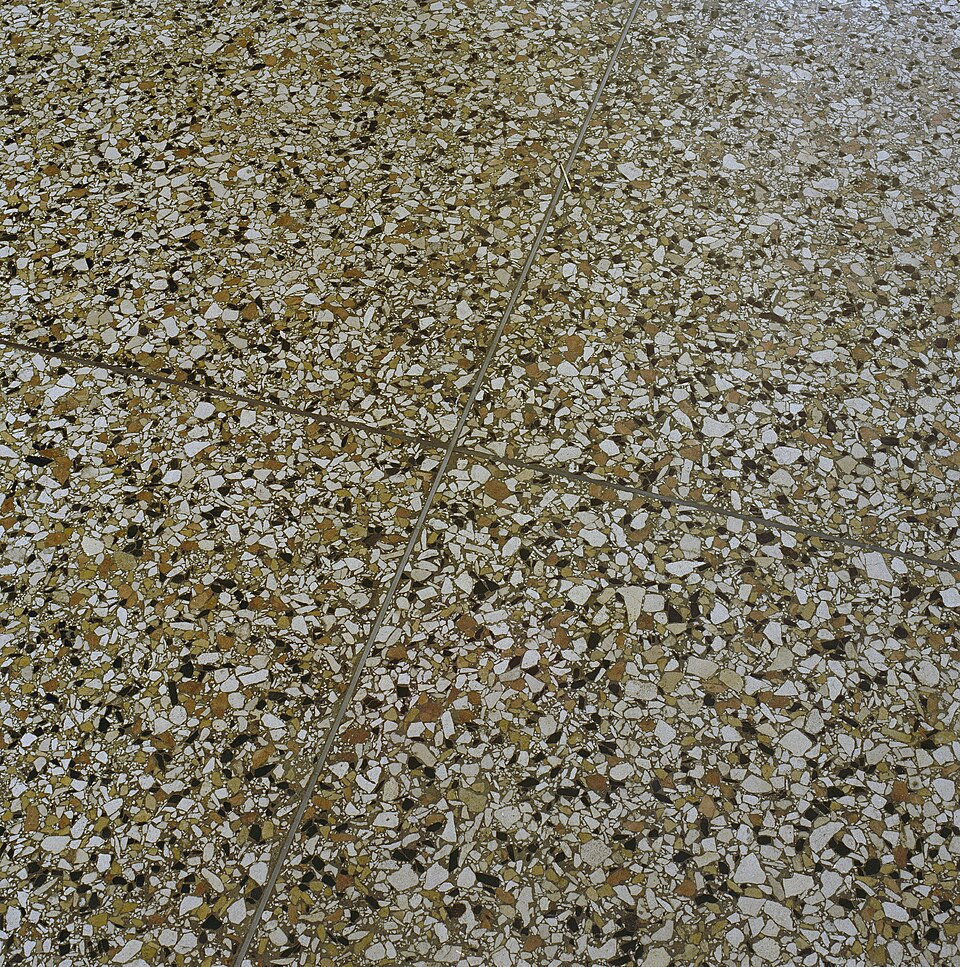
A large cement floor cracks as it dries and moves, and the terrazzo layer’s answer was to divide it into panels with thin strips of brass or zinc set on edge, so that any movement happened at a line that looked deliberate.
Setting those strips was the most skilled part of the job, because they had to be dead level, dead straight and laid out so the pattern made sense in the finished room, all before any terrazzo went down.
The principle is unchanged and the practice is not. Divider strips are now set out from a drawing with laser levels and the panel sizes come from a specification rather than from the layer’s judgement about how a corridor would read. Something is lost there, because a layer standing in the actual corridor could see what a drawing cannot.
3. Grinding was done wet, by machine, and it made a river of slurry
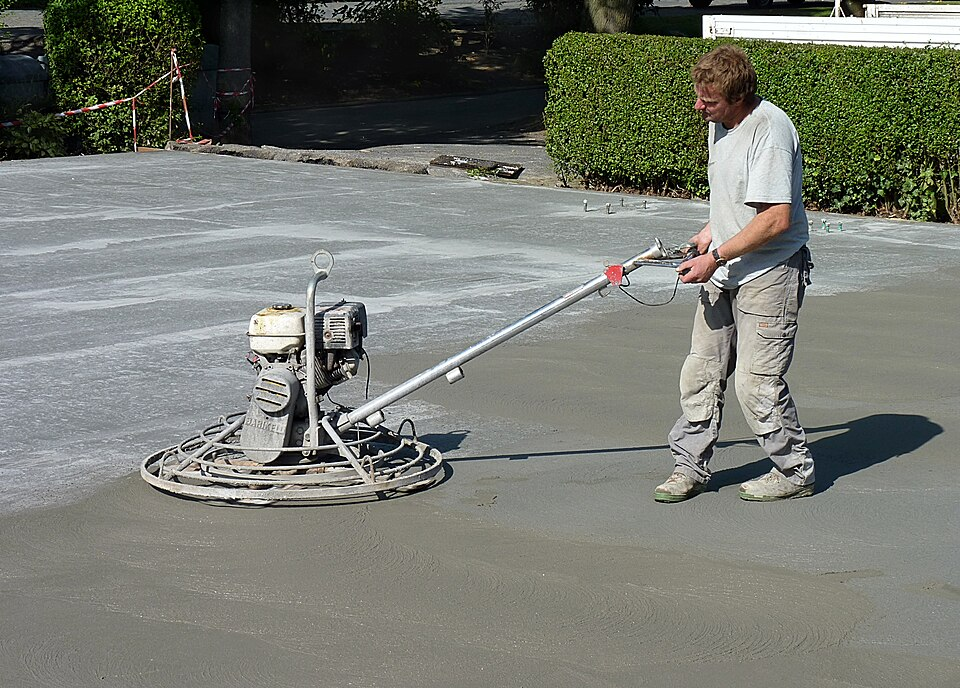
Once the terrazzo had cured, it was ground flat with a heavy rotating machine using stones, flooded with water to keep the stones cutting and to carry away what came off.
The result was an enormous volume of grey slurry that ran across the floor, down the stairs and into whatever drain was nearest, and dealing with it was simply part of the job.
Slurry is now contained, collected and disposed of as a controlled waste, and the water is often recycled through the machine. Grinding wet remains correct practice for a quite different reason, which is that dry grinding this material is not acceptable at all. The slurry, incidentally, sets like weak concrete wherever it is left, which is why so many old buildings have grey streaks down the back stairs.
4. Dry grinding and cutting are the part the modern trade will not do
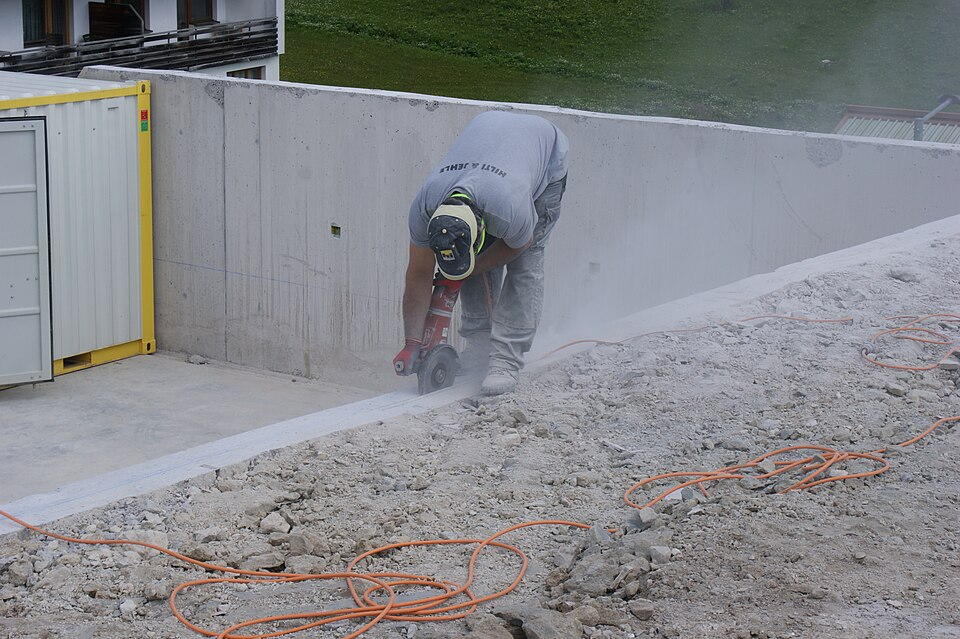
Marble, cement and stone chippings all contain crystalline silica, and cutting or grinding them dry produces a dust whose hazard was not understood in 1960 in anything like the way it is now.
A 1960 site would cut strips, patch edges and work into corners with whatever was to hand, often dry, often indoors, with no extraction and no respiratory protection.
That is the single clearest prohibition separating then from now. Silica dust is a regulated workplace hazard with exposure limits, mandatory controls — water suppression, on-tool extraction, respiratory protection — and health surveillance, and no modern site would allow dry cutting of this material in an enclosed space. Anybody working with these materials today should be following current regulation and taking advice from a competent professional, which is a different thing entirely from reading about 1960.
5. Knees were the tool nobody thought about
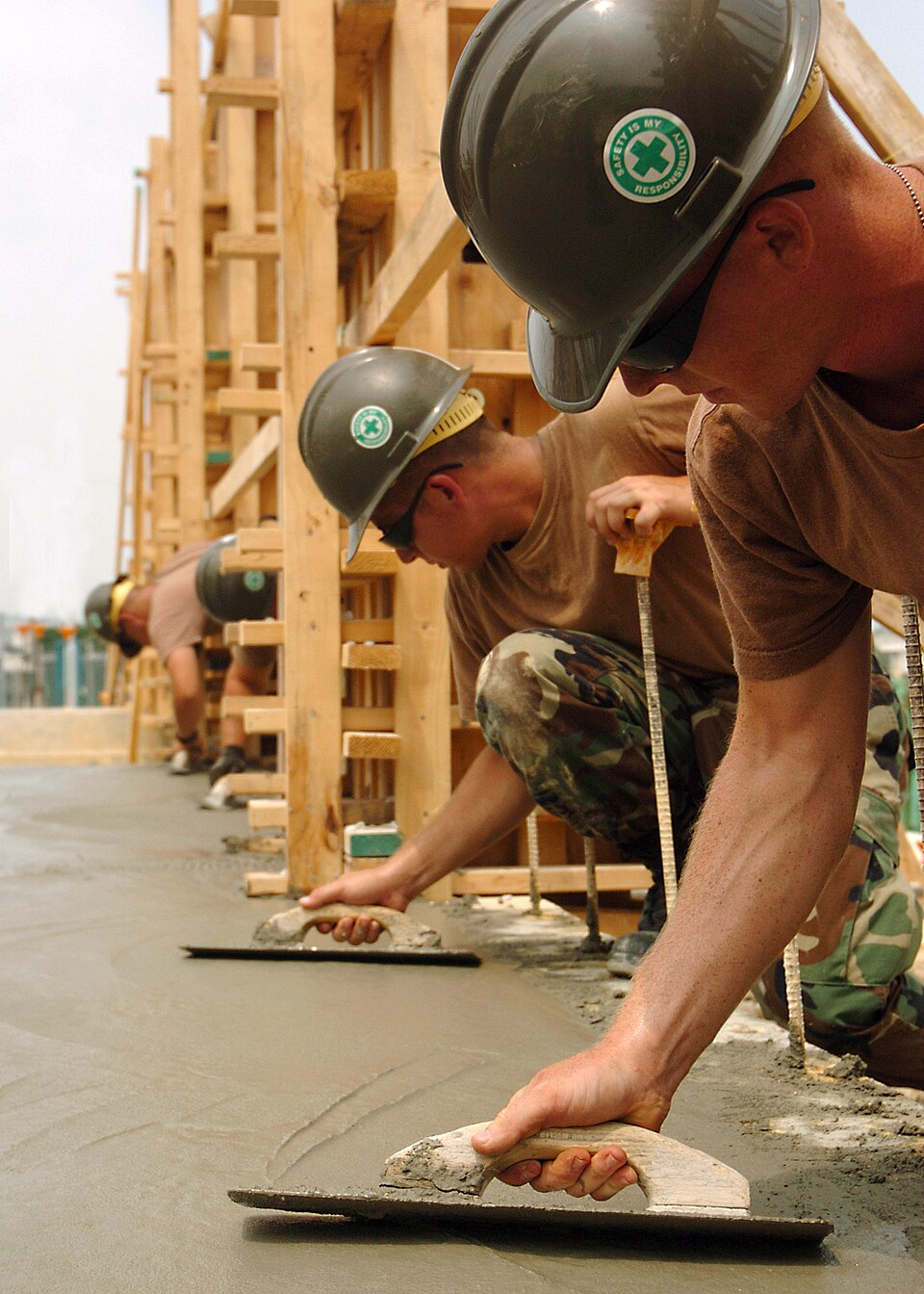
Laying, tamping and finishing terrazzo is done from a kneeling position for most of a working day, on a hard, wet, abrasive surface.
In 1960 a layer knelt on a folded sack or a scrap board, and the cumulative effect of years of that was accepted as a normal consequence of the trade.
Knee protection, kneeling boards and task rotation are now standard, and the long-term effects of kneeling work are a recognised occupational matter rather than a private misfortune. It is a small change that the men who did the job would have valued enormously. Kneeling is also the reason the trade aged visibly, and retired layers tend to mention it before they mention anything else.
6. Cement burns were treated as an inconvenience
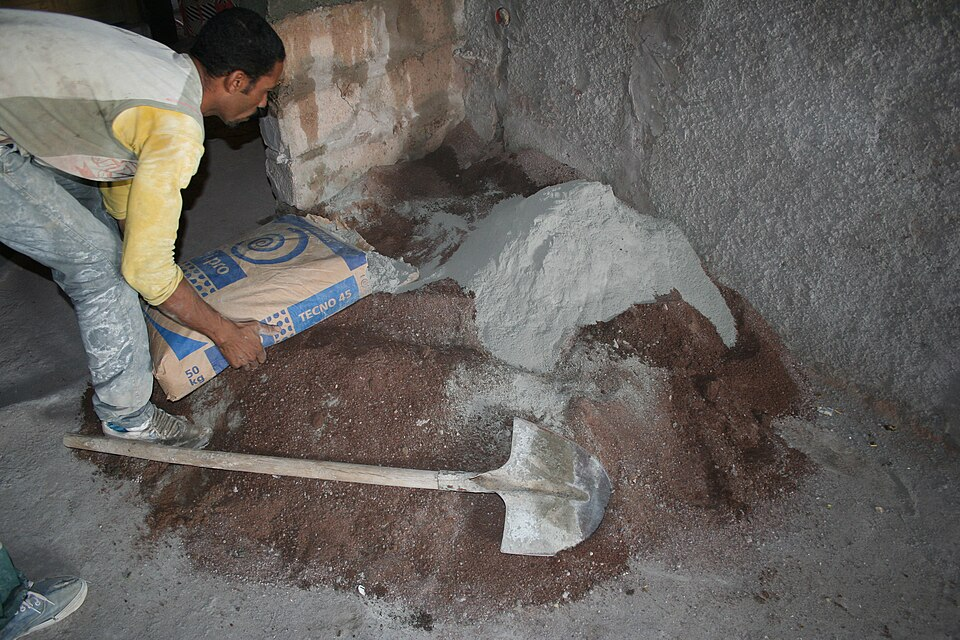
Wet cement is strongly alkaline, and a layer working it with bare hands and bare forearms for hours had skin contact with it constantly.
In 1960 that was regarded as part of the job and the response was a wash when the shift finished, with gloves worn by preference rather than by requirement.
Skin protection against wet cement is now a specified control, with gloves, barrier arrangements and washing facilities expected wherever it is handled. The change here is not a new discovery so much as a decision to act on something that was already perfectly obvious. Everybody on a 1960 site knew what wet cement did to skin; what was missing was any sense that the employer should do something about it.
7. The colour and pattern were decided by the man mixing
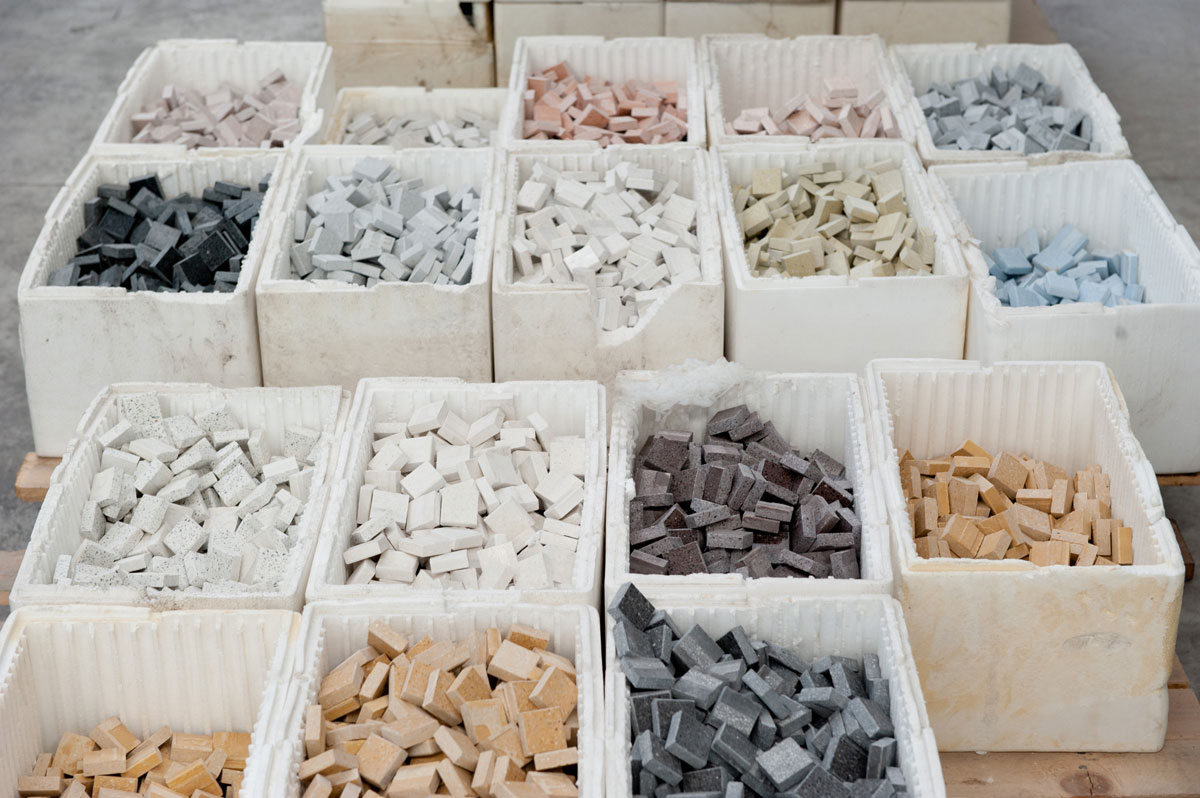
A terrazzo floor’s appearance depends on the size, colour and proportion of the chips and on the colour of the cement, and in 1960 those were set by a mix the layer knew rather than by a product specification.
Two floors laid to the same nominal mix by different men could look noticeably different, and a good layer’s sample panels were how a client chose.
Precast and specified terrazzo now comes with a documented mix, a batch reference and a sample that the delivered material will match. Consistency has improved and the individual signature of a particular layer has gone with it. Specifiers will occasionally go to some trouble to reproduce an old floor’s look, which is an odd compliment to pay a man nobody can name.
8. Curing meant covering the floor and waiting, in the way of everybody
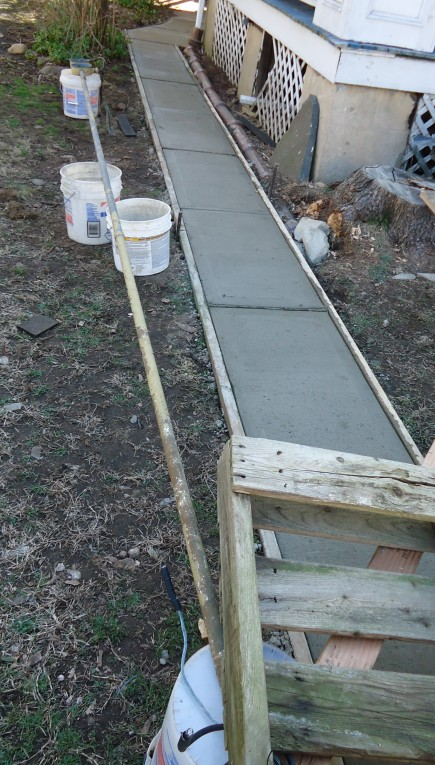
Terrazzo had to cure before it could be ground, which meant a newly laid floor sat covered and protected for days in the middle of a building site that wanted to get on.
Protecting it from other trades was a continuous argument, and a footprint in a green floor was a repair that would always be visible.
Modern sequencing treats floor finishes as a late trade with controlled access, and precast terrazzo removes the curing period from the site programme altogether. The argument has not disappeared; it has moved to a programme meeting. That is a genuine improvement in a trade whose finished work was historically ruined by whoever came through next with a ladder.
9. Stairs were the test of whether a man could do the job
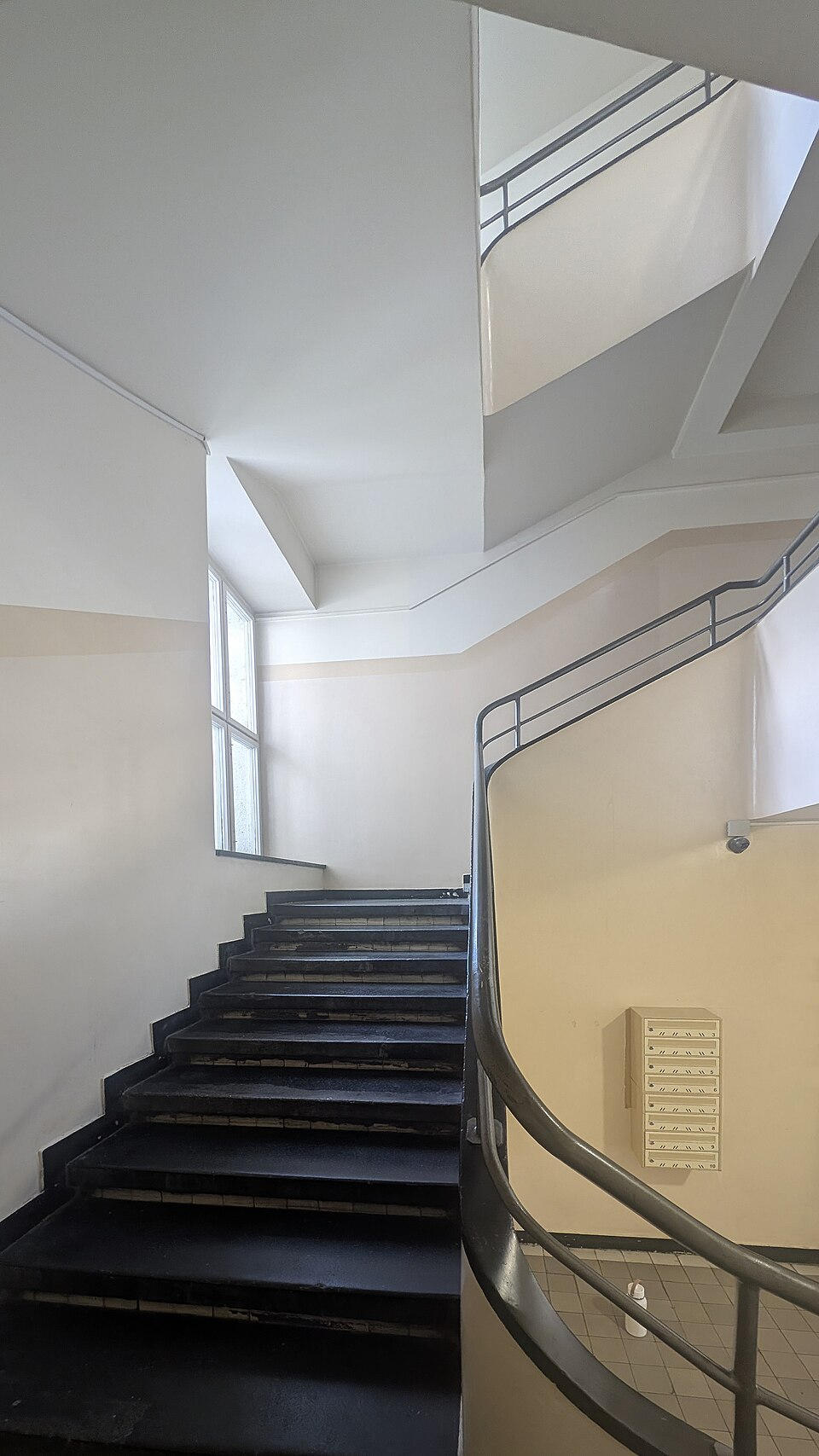
A terrazzo stair means a tread, a riser, a nosing and a junction at every step, all of which have to be level, square, consistent and finished to the same quality as a flat floor.
That was hand work of a high order done in an awkward position, and the nosing — the front edge, which takes all the wear — was the detail that separated competent work from the rest.
Stair finishes are now very often precast units with a cast-in slip-resistant nosing, fixed rather than formed. The skill of running a terrazzo stair in place survives in a small number of specialists doing restoration. A hand-run nosing on a seventy-year-old stair is usually still the best-wearing part of the building, which tells you something.
10. Slip resistance was a matter of opinion

Polished terrazzo is a hard, smooth surface, and in 1960 whether it was dangerous when wet was treated as a question of judgement and of where you put the matting.
Entrance halls, corridors and stairs in public buildings were laid in it as a matter of course, with no measurement of how slippery the result was.
Slip resistance is now a measured property with test methods and specified minimum values for different locations, and flooring is selected against those numbers. That is probably the most consequential single change in the whole of floor finishing. It also changed the material itself, because modern terrazzo for circulation areas is finished and specified with that measurement in mind.
11. The trade travelled, and brought its own vocabulary
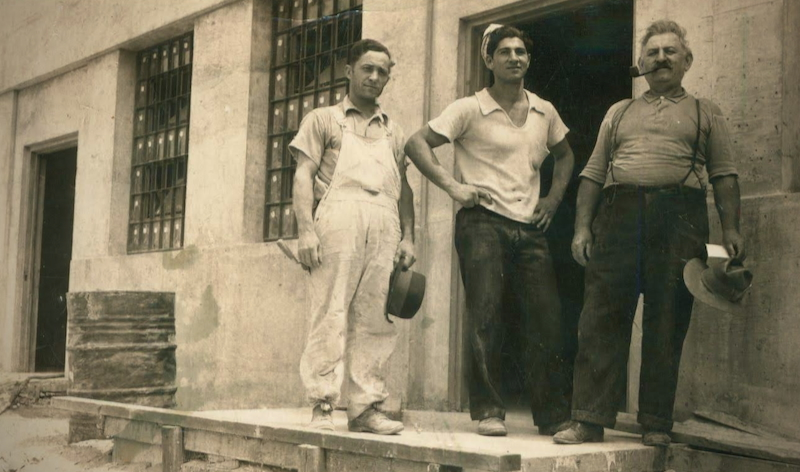
Terrazzo laying in Britain and in much of the world was for generations a trade carried by families from particular regions of Italy, who brought the method, the vocabulary and the training arrangements with them.
That gave the trade a distinct identity on site, with its own words for operations and tools and a strong tradition of training within families and communities.
The trade is now entered through conventional construction training and the concentration in particular families has largely dispersed. What has survived is the technical vocabulary, much of which is still Italian. Trades carried by particular communities were common across the whole of construction, and terrazzo is simply the clearest surviving example.
12. Measuring a floor meant a tape, a string and a straight edge
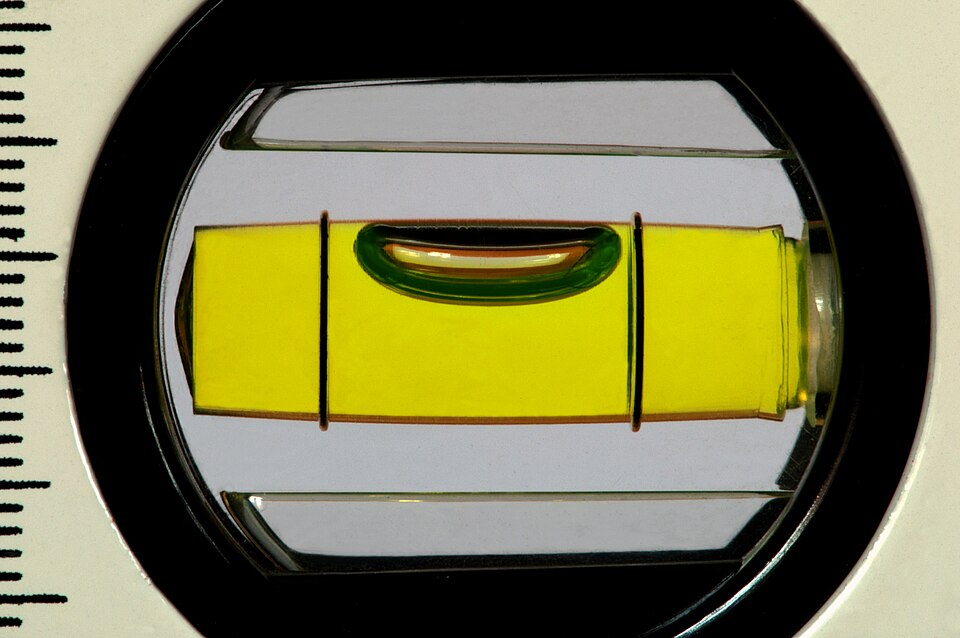
Levels were set with a water level, a long straight edge and a spirit level, and a long corridor was divided and checked by eye along a string line.
A skilled layer could produce a floor flat to a tolerance that would satisfy a modern specification, but he could not demonstrate it with a number.
Floor flatness is now a measured, specified and surveyed property, checked with laser and profile equipment and signed off against a tolerance. The work is similar; the proof is entirely different. That gap between doing something well and being able to demonstrate it is the quiet theme of every one of these trades.
13. The machines were heavy, electric and casually wired

A terrazzo grinder in 1960 was a heavy electric machine used in standing water on a construction site, fed from whatever supply was available.
The combination of mains electricity, water and a steel machine on a wet floor was understood to be a bad one and managed by experience rather than by equipment.
Site electrical supplies are now reduced-voltage or protected by residual current devices as a matter of course, and equipment used in wet conditions is specified for it. This is another of the changes that is purely a gain. There is no version of the 1960 arrangement that anybody defends, including the men who worked under it.
14. Repairs were made to match, by hand, years later
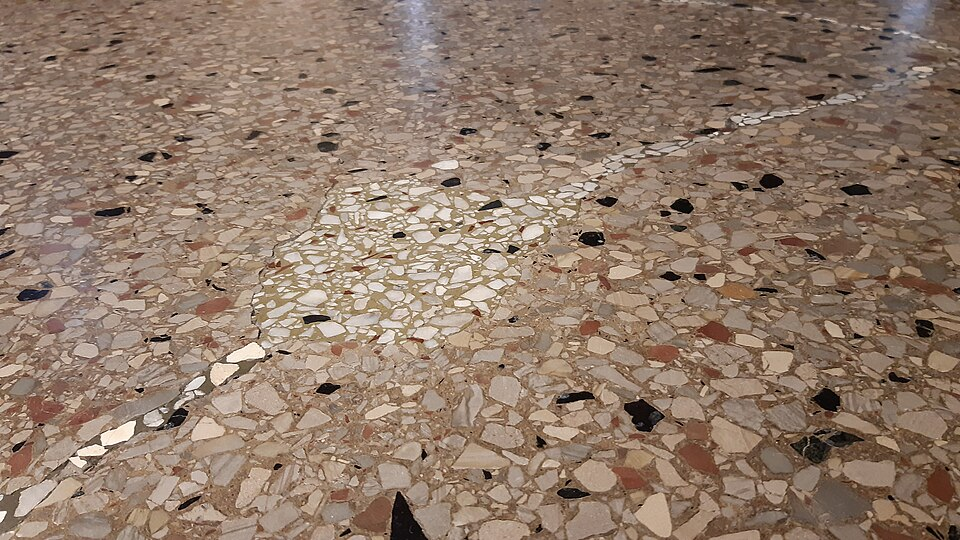
A terrazzo floor lasts for decades, and a layer was often called back to patch a section after a service had been cut through it, which meant matching a mix laid long before.
That was done by eye against the existing floor, chipping out, relaying, grinding the patch flush and polishing it in, and a good repair was invisible.
That skill is now the core of the surviving in-situ trade, because the remaining demand is largely for the repair and restoration of existing floors rather than for new ones. The craft has quietly become a conservation craft. It is also better paid than it was, for the same reason that any scarce skill with inelastic demand is better paid.
15. Nobody recorded what was in the floor
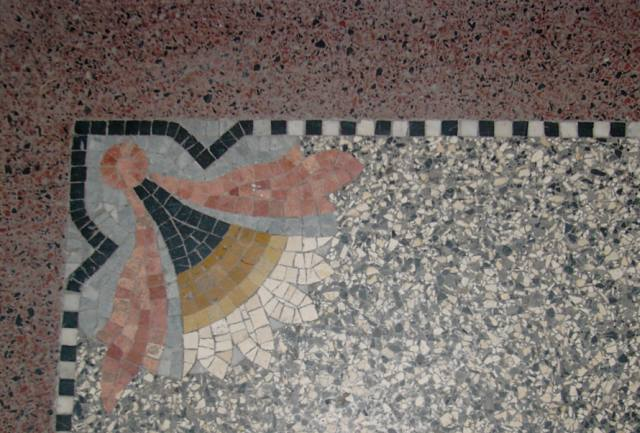
There was no mix record, no batch number and no specification kept for most 1960 terrazzo, so a building owner wanting to repair a floor sixty years later has to work out what is in it by looking at it.
That is why restoration work begins with analysis rather than with a drawing, and why matching an old floor is a genuinely difficult technical problem.
Modern installations are documented, with mix, source, batch and installer recorded as a matter of routine. The floors laid now will be repairable in eighty years in a way the 1960 floors are not. Record-keeping is the least glamorous improvement in construction and probably the one with the longest payoff.
16. The finished floor was expected to last the building
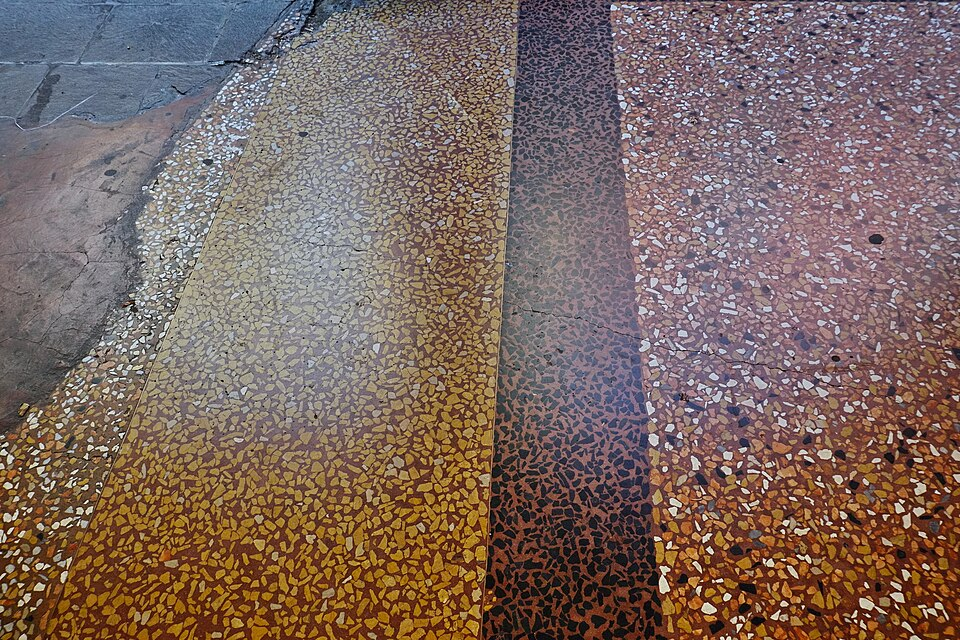
Terrazzo was chosen in 1960 for hospitals, schools, stations, banks and civic buildings because it is extraordinarily durable and can be reground and repolished rather than replaced.
That assumption — that a floor should outlive several generations of occupants — shaped how much was spent on it and how carefully it was made.
Most modern commercial flooring is specified against a much shorter replacement cycle, which is cheaper initially and more expensive over a building’s life. Terrazzo’s revival in prestige work is largely an argument about that arithmetic.
What actually changed
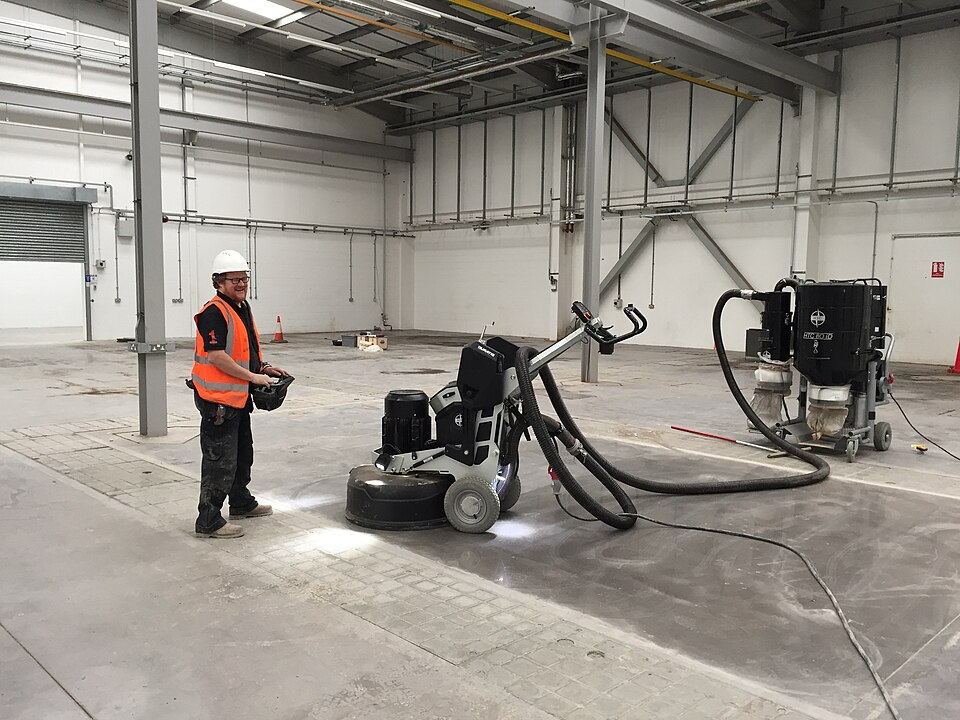
Two things, and they pull in opposite directions. The hazards the trade simply lived with — silica dust from dry cutting, wet cement on bare skin, heavy electrical machines in standing water, a working life spent kneeling — are now regulated, measured and controlled, which is an unambiguous gain. And the floor itself moved into a factory, which made it consistent and took away the part that depended on one man’s mix and one man’s eye.
The floors those men laid are still in service, which is the strongest argument anybody has ever made for the material. The conditions they laid them in are not an argument for anything.
Like our content? Follow us for more.
