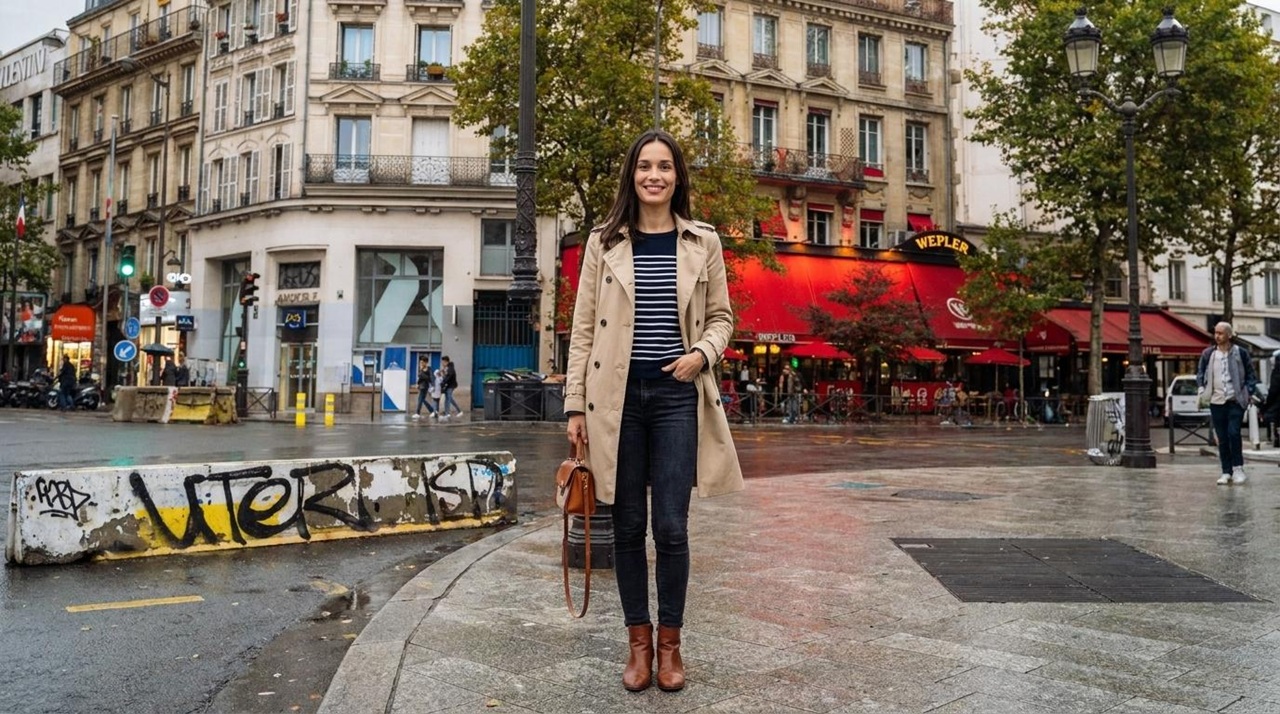
Most people experience Paris through a very specific lens. Landmarks, cafés near famous streets, crowded museums, and a constant sense of movement. It’s beautiful, but it’s also curated.
Living in a non-touristy neighborhood shifts that perspective almost immediately. The city slows down. It becomes less about seeing and more about being. Daily routines replace sightseeing, and the details that once felt invisible start to stand out.
After a few weeks, Paris stops feeling like a destination and starts feeling like a place people actually live. And that’s where things get interesting.
The pace of life feels noticeably calmer
In tourist-heavy areas, everything feels accelerated. People are moving quickly, lines are long, and there’s a constant background noise of activity.
In quieter neighborhoods, the pace softens. Mornings feel slower. Streets are less crowded. People are not rushing from one attraction to another. Instead, they are walking to work, picking up groceries, or sitting at a café without checking the time.
It creates a different kind of energy. Less urgency, more rhythm.
Cafés feel more local than performative
In central areas, cafés often feel like part of the experience. People sit for long periods, take photos, and treat it as a destination.
Outside those zones, cafés are simpler and more functional. People stop for a quick coffee, chat briefly, and move on. There’s less emphasis on presentation and more on routine.
You start to notice regulars. The same faces, the same orders, the same quiet interactions. It feels less like a scene and more like a habit.
English is not always the default
In tourist areas, it’s easy to get by without thinking about language. Many interactions happen in English, and everything is designed to be accessible.
In non-touristy neighborhoods, that changes. French becomes the default, and even simple tasks require a bit more effort. Ordering food, asking for directions, or handling everyday interactions feels more immersive.
At first, it can feel slightly uncomfortable. But over time, it becomes one of the most rewarding parts of the experience.
Daily routines become more visible
When you’re not rushing between attractions, you start noticing how people structure their day.
Mornings often begin with a visit to the local bakery. Afternoons feel quieter, with shops closing briefly. Evenings pick up again, but in a more relaxed way than the city center.
These routines are subtle, but they shape the entire experience. You begin to align with them without even realizing it.
Food feels less commercial and more consistent
Restaurants in tourist areas often cater to expectations. Menus are broader, presentation is more polished, and the focus is on appeal.
In local neighborhoods, food feels more consistent and less adjusted for visitors. Menus are simpler. Portions are straightforward. The focus is on doing a few things well rather than offering everything.
It feels less like dining out and more like eating as part of everyday life.
Neighborhood identity stands out more
Paris is often talked about as one city, but each neighborhood has its own personality.
In non-touristy areas, that identity becomes clearer. Some streets feel residential and quiet. Others have a stronger community feel with small shops and local gatherings.
You begin to recognize patterns. Which streets are busiest, where people gather, how the neighborhood moves throughout the day.
It makes the city feel more layered and less uniform.
You feel less like a visitor over time
Without the constant presence of tourists, you start blending in more naturally.
You’re not navigating crowds or following maps all the time. You’re going to the same places repeatedly, recognizing familiar faces, and moving through the area with more confidence.
It’s a subtle shift, but it changes how you experience the city. You’re no longer observing from the outside.
The city feels more livable than expected
Paris has a reputation for being intense and fast-paced. But outside the main zones, it feels surprisingly livable.
There’s a balance between activity and calm. Enough happening to stay interesting, but not so much that it feels overwhelming.
Living in a non-touristy part reveals a version of the city that is more grounded, more routine, and easier to settle into than most people expect.
Conclusion
Seeing Paris is one thing. Living in it, even briefly, is something else entirely.
Away from the main attractions, the city becomes quieter, more consistent, and more real. You start to notice the patterns that shape daily life rather than just the highlights that draw visitors in.
And once you experience that version of Paris, it’s hard to see it the same way again.