From Craco, Italy (1980 earthquake) to Oradour-sur-Glane, France (1944 Nazi massacre, preserved exactly as left) to Tyneham, England (1943 military requisition, never returned), these villages mark specific historical moments preserved in stone. Most can be visited. Each represents a different way Europe’s 20th century stopped certain places permanently.
The 20th century left Europe with a specific kind of memorial that doesn’t exist elsewhere — entire villages preserved at the moment they stopped being inhabited. Some were destroyed by war and left as testimony rather than rebuilt. Others were evacuated for military or industrial purposes and never returned to civilian use. A few were abandoned after natural disasters with such finality that nobody came back.
These aren’t quite ruins in the ancient sense. The buildings still stand. The walls still hold. In some cases, household items remain visible inside houses where families once lived. The villages mark specific moments — sometimes specific dates — when normal life ended and never resumed.
For travelers interested in something deeper than typical tourism, these six villages produce experiences that conventional historic sites can’t match. Walking through them is genuinely time travel — into a 20th century that stopped, in a specific year, for specific reasons that locals and historians can describe in detail.
1. Oradour-sur-Glane, France — June 10, 1944
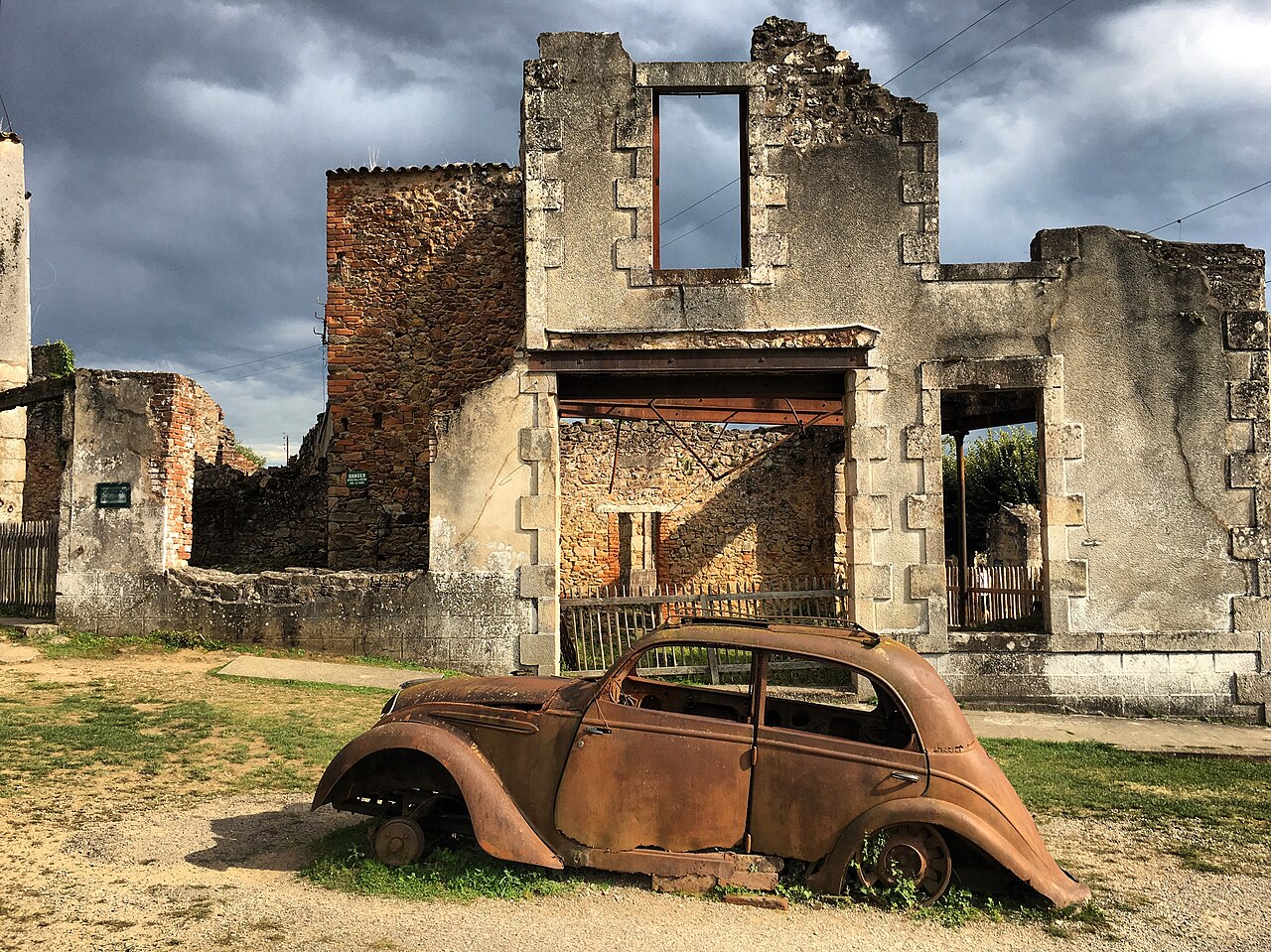
The most haunting of all European preserved villages. On June 10, 1944 — four days after the D-Day landings — soldiers from the 2nd Waffen-SS Panzer Division “Das Reich” entered the small village of Oradour-sur-Glane in the Limousin region of central France. They rounded up the entire population: 642 people including 247 children. The men were shot. The women and children were locked in the village church, which was then set on fire. Almost no one survived.
The exact reasons for the massacre remain partially debated by historians. The most-supported theory holds that the unit was retaliating for French Resistance activity, possibly conflating Oradour-sur-Glane with the village of Oradour-sur-Vayres (a different village) where Resistance fighters had been active.
After the war, French President Charles de Gaulle decided that Oradour-sur-Glane should be left exactly as the Nazis had left it — burned-out, with personal items still visible, as a permanent testimony to Nazi atrocities. The village has been preserved in this state since 1944, with maintenance limited to preventing further deterioration.
A new village called Oradour-sur-Glane was built nearby. The original ruins are now the Centre de la Mémoire, with a museum that opened in 1999. Visitors walk through streets where rusted automobiles still sit at intersections, where sewing machines stand in abandoned tailoring shops, where children’s bicycles lean against walls. The church — where most of the women and children died — remains as it was that day in June 1944.
The experience is among the most emotionally affecting any traveler can have in Europe. The combination of preserved physical detail with the specific human story produces something that conventional Holocaust memorials, however thoughtfully designed, cannot quite replicate.
How to visit: Located near Limoges in central France. Free admission to the village ruins. Museum tickets approximately €7. Open year-round with reduced winter hours. Combine with broader Limoges or Périgord region travel.
2. Tyneham, England — November 1943 (and the broken promise)
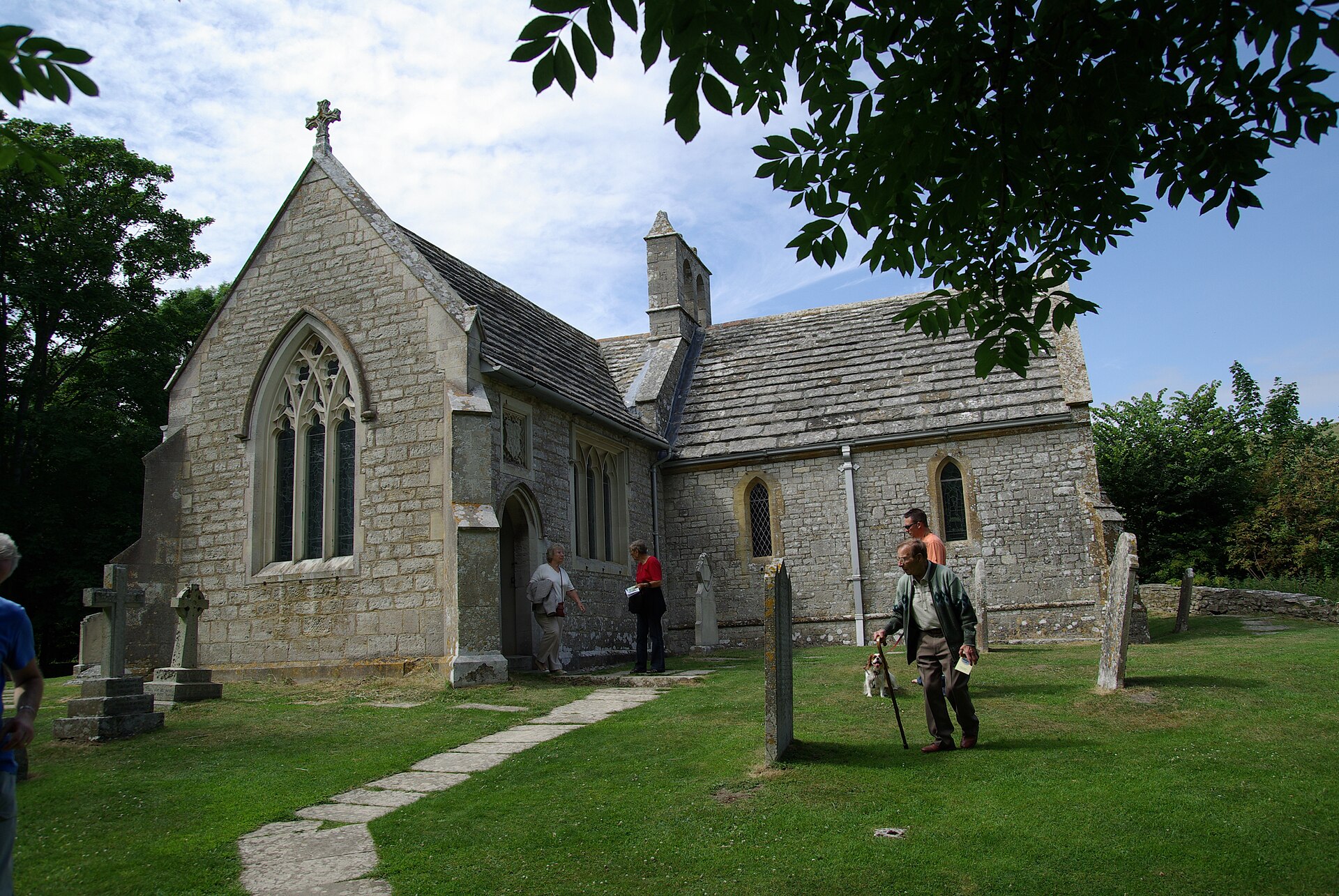
In November 1943, residents of Tyneham village in Dorset received an evacuation order. Britain’s War Office needed the area for military training in preparation for the D-Day landings. The villagers were given approximately one month to leave. Many left a sign on the church door reading: “Please treat the church and houses with care; we have given up our homes where many of us lived for generations to help win the war to keep men free. We shall return one day and thank you for treating the village kindly.”
They never returned.
After the war, the British government determined that the military firing range was too valuable to give back. In 1948, the government took out a compulsory purchase order, formalizing the permanent loss of the village. The Tyneham villagers and their descendants have campaigned periodically over the decades for a right to return, with no success.
The village remains in active military training use as part of the Lulworth firing ranges. Live ammunition is regularly fired in the surrounding area. The village itself is preserved — buildings have been kept structurally sound, though they remain uninhabited. Tyneham is open to the public on weekends and select public holidays, with the schedule tied to military training timing.
Walking through Tyneham is genuinely strange. The schoolhouse still has the children’s desks. The church is still consecrated. Wildlife — particularly rare species protected by the absence of agriculture and human residence — has thrived in the surrounding area. The combination of preserved village structure with the broken-promise context produces a specific kind of regret that other preserved villages don’t replicate.
How to visit: Located in Dorset, southern England. Free admission. Open weekends and public holidays — check the Lulworth Estate website for current schedule. Combine with Jurassic Coast travel.
3. Imber, England — November 1943 (the parallel evacuation)
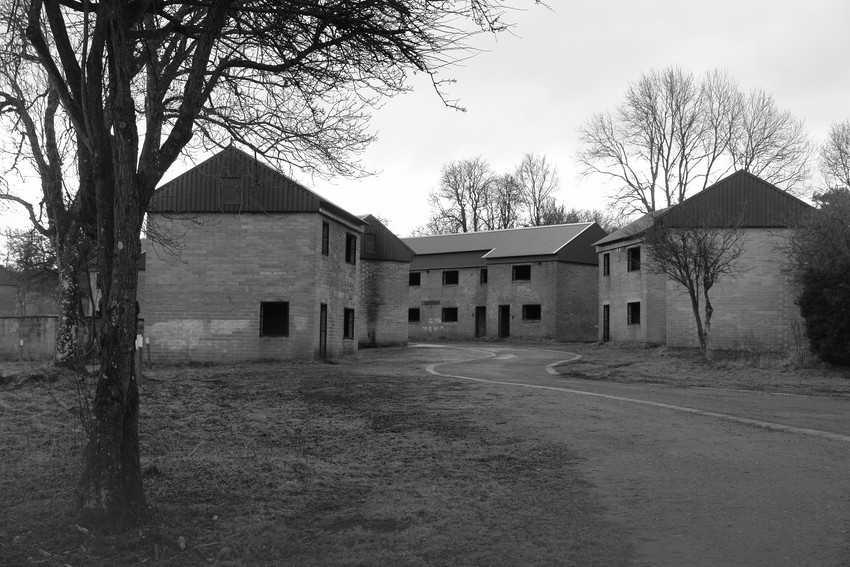
Coincidentally, Tyneham was not the only English village evacuated in November 1943 for military training. In central Wiltshire, the village of Imber on Salisbury Plain received a similar evacuation order. Villagers were given just 47 days notice. The eviction date was December 17, 1943. Many older Imber residents had lived in the village for their entire lives.
Like Tyneham, Imber’s residents were promised they could return after the war. Like Tyneham, they never were allowed to.
Unlike Tyneham, Imber is more actively used for military training — including urban combat exercises that have damaged some original village structures. The village is open to the public only on a limited number of dates per year, typically a few weekends in summer plus December 17 (the anniversary of evacuation, when descendants of original residents often return).
The Imber Court Christmas concert (held December 17 each year) draws hundreds of people including descendants of the original villagers. The St. Giles Church — preserved in active condition — hosts the concert. The Imber experience is more focused on memorial and family history than the more visually evocative Tyneham experience.
How to visit: Located in Wiltshire, England. Open only on specific announced dates per year. Check the Imber Conservation Society website for current schedule.
4. Belchite, Spain — September 1937
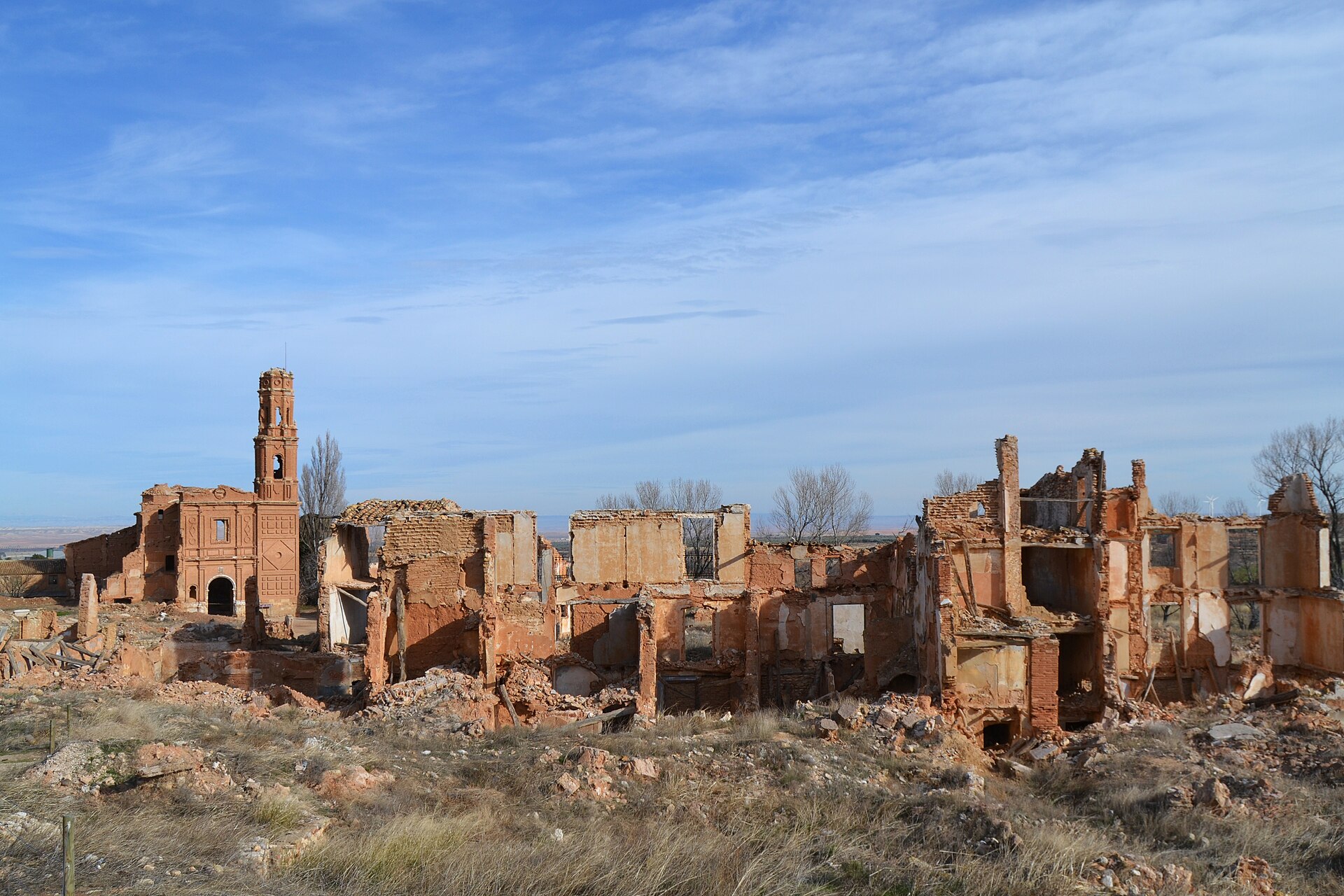
In northeastern Spain, between Zaragoza and Teruel, lies the haunting ruin of Belchite. The original village was the site of one of the bloodiest battles of the Spanish Civil War. From August 24 to September 7, 1937, Republican and Nationalist (Francoist) forces fought a weeks-long siege that destroyed most of the village’s structures and killed approximately 6,000 people total on both sides.
After Nationalist victory in the broader war (1939), General Francisco Franco made a decision similar to de Gaulle’s later choice for Oradour-sur-Glane: rather than rebuild the original Belchite, the ruins would be preserved as a monument. A new Belchite was constructed nearby for surviving residents. The old village was left exactly as the Civil War had left it.
The preserved Belchite has remained as Civil War ruins for nearly 90 years now. The bombed-out churches with their distinctive Mudéjar (Moorish-Spanish) architecture, the shells of houses, and the streets where the battle was fought are all visible. The site is unsettling in ways that pure ruins from antiquity are not — Belchite is recent enough that grandchildren of the original residents are alive, and the architectural style is unmistakably 19th and early 20th century rather than medieval or ancient.
The site has been used by various film productions over the decades, particularly for war scenes. Spanish Civil War history remains politically contested in Spain, and Belchite’s status as a Francoist-designed monument has been debated. A 2023 reorganization of the site provides more context about the broader war and its consequences than the original Franco-era interpretation provided.
How to visit: Located approximately 50 km southeast of Zaragoza. Guided tours required (no free wandering). Tickets approximately €6. Combine with Zaragoza or Teruel travel.
5. Craco, Italy — November 1963 (and again 1980)
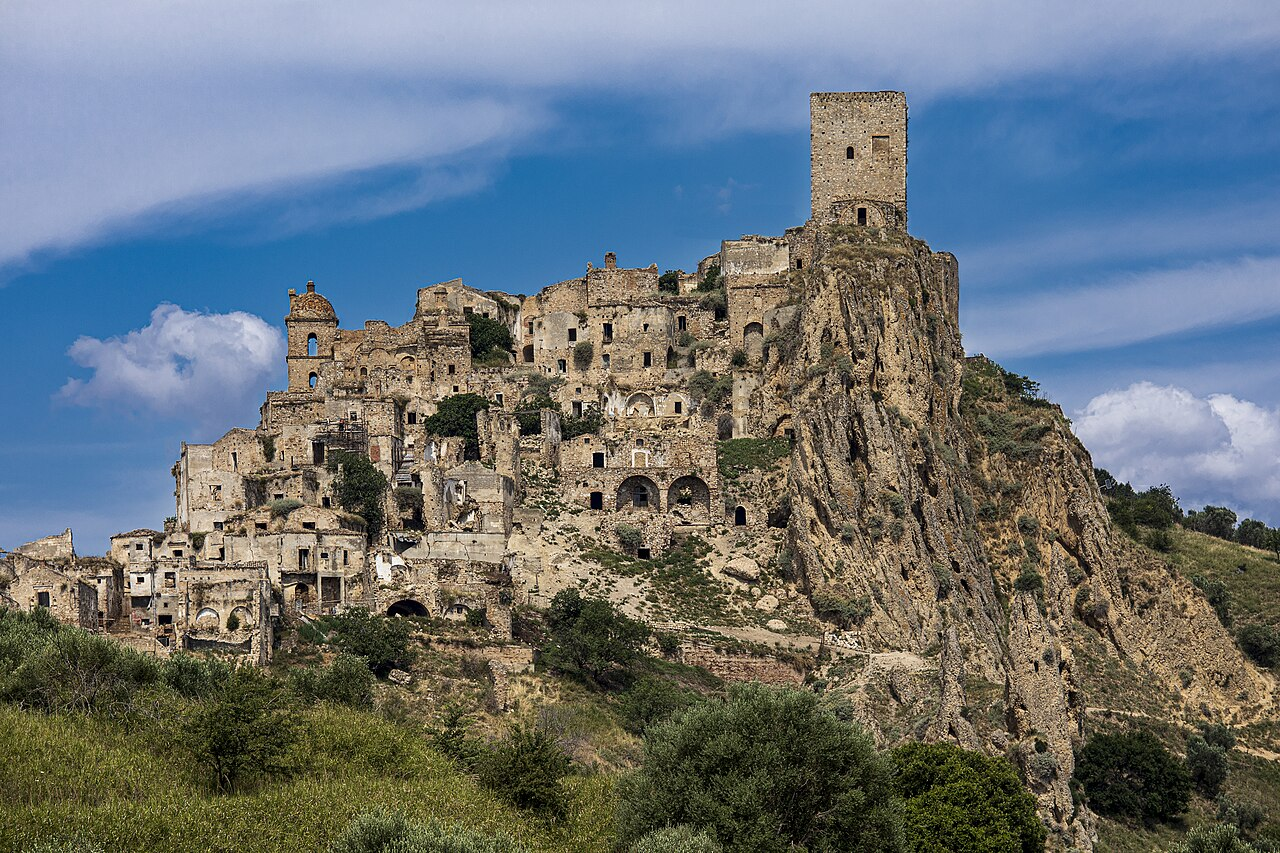
Craco is the visually most stunning of these preserved villages. Built on a 1,300-foot hill in southern Italy’s Basilicata region, the medieval village had been continuously inhabited since the 8th century. The vertical architecture, with houses stacked up the steep hillside and a Norman tower at the summit, produces one of the most photographed abandoned places in the world.
The village’s collapse came in two waves. In 1963, sewage and water infrastructure work destabilized the hillside, triggering serious landslides. Most residents were evacuated to a new town built lower on the valley floor. Some refused to leave their ancestral homes. Then in 1980, the Irpinia earthquake (which killed 2,914 people across southern Italy and registered 6.9 on the Richter scale) finished what the 1963 landslides had started. Craco was completely abandoned.
The empty village has become a tourist destination and film location. Productions filmed at Craco include Mel Gibson’s The Passion of the Christ (2004) and the James Bond film Quantum of Solace (2008). The village’s combination of medieval architecture, dramatic hilltop location, and total abandonment produces visuals that no other location in Europe can quite match.
The Craco experience is more aesthetic than emotionally affecting compared to Oradour-sur-Glane or Belchite. The abandonment came from natural disaster rather than human atrocity. But the village’s visual power and the slow takeover by nature (vegetation now growing through some buildings) produces a different kind of meditation on impermanence.
How to visit: Located in Basilicata, southern Italy. Required guided tours from the visitor center. Tickets approximately €10. Helmets required (loose stones are a real hazard). Combine with Matera (UNESCO World Heritage city) travel — about 90 minutes away.
6. Pyramiden, Norway — March 1998
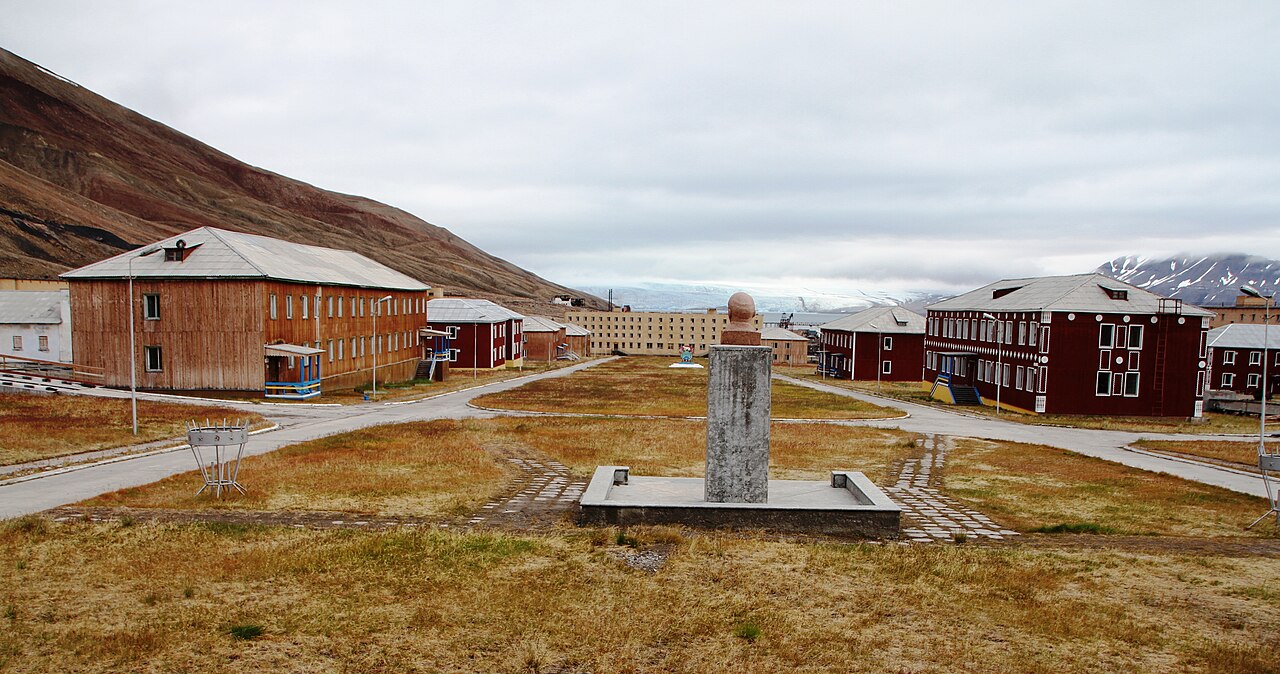
The unusual entry on this list. Pyramiden was a Soviet coal mining settlement on Spitsbergen island in the Norwegian Svalbard archipelago, established in 1910 and operated by the Soviet Union (later Russia) under a treaty that allows multiple nations to operate on Norwegian-sovereign territory.
At its peak in the 1980s, Pyramiden had about 1,000 residents. The settlement included apartment buildings, a sports complex, a school, a hospital, the world’s northernmost statue of Lenin, the world’s northernmost grand piano, and other Soviet-era infrastructure. It was a fully functional town in the Arctic, designed to demonstrate Soviet capability in extreme conditions.
In March 1998, after the collapse of the Soviet Union and economic deterioration of the operating company, Pyramiden was rapidly abandoned. Workers were given short notice and left dishes on tables, books on shelves, and personal items in apartments. The combination of Arctic preservation conditions (extreme cold, dry air, limited biological decay) and rapid evacuation produced a remarkably preserved Soviet-era town.
Pyramiden has become a tourist destination accessible by boat from the larger Norwegian settlement of Longyearbyen. Visitors can tour the abandoned buildings, see the Lenin statue still standing, and observe Arctic ecology gradually reclaiming the structures. Polar bears wander through the empty streets. The grand piano (a Red October model) is still in the cultural center.
The Pyramiden experience differs from the other villages on this list — it’s more recent, more industrial, more specifically Cold War in its meaning. But the preservation quality is exceptional, and the Arctic location adds context that European villages can’t replicate.
How to visit: Accessible only by boat or snowmobile from Longyearbyen on Spitsbergen, Norway. Required guided tours (independent visits not permitted due to polar bear risk and weather). Cost typically $200-400 for full-day boat trip from Longyearbyen. Best in summer (May-September) when ice doesn’t block the fjord.
What these places actually represent
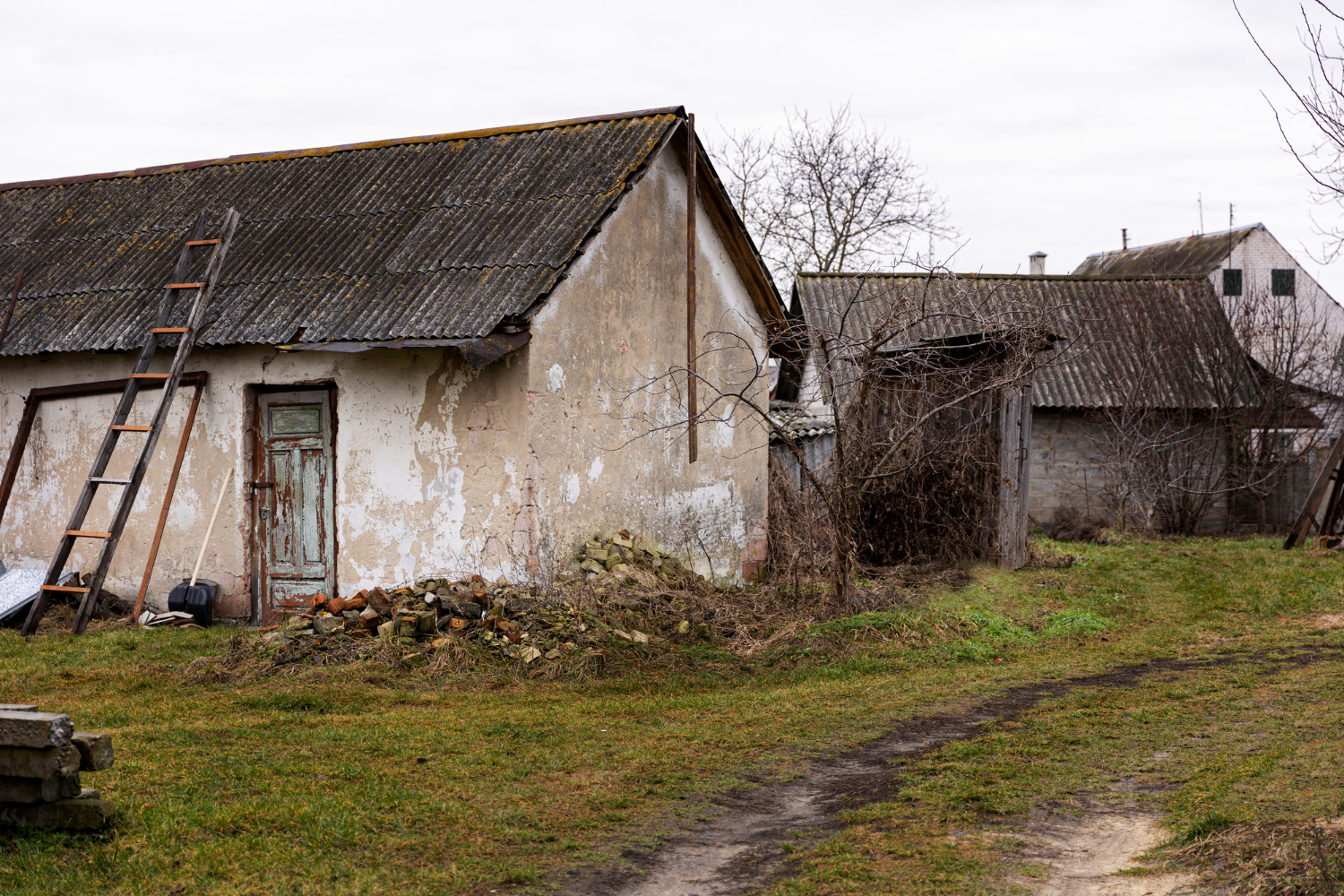
The preserved villages of 20th-century Europe represent a specific historical phenomenon: places where modern history happened so violently or so finally that the conventional process of rebuilding, redevelopment, and reuse couldn’t take place. Each represents a different vector:
Oradour-sur-Glane preserves the German Nazi atrocity of WWII, deliberately maintained as historical testimony. Tyneham and Imber preserve British WWII military requisition that was never reversed despite official promises. Belchite preserves Spanish Civil War destruction, preserved by Francoist regime ideology and maintained through political transitions. Craco preserves Italian seismic and infrastructure failures of the 1960s and 1980s. Pyramiden preserves Soviet collapse of the 1990s in Arctic conditions.
Together, the villages document specific kinds of 20th-century European catastrophe that the more famous historical sites (concentration camp memorials, war monuments, museum exhibits) cannot fully convey. The catastrophe at these places didn’t get rebuilt over. The buildings, streets, and household items remain visible — making the historical events concrete in ways that abstract memorials can’t replicate.
For travelers willing to engage with this specific kind of historical tourism, the six villages produce experiences that conventional European travel doesn’t. They’re not entertainment. They’re not Instagram destinations. They’re places where modern history is genuinely close enough to touch — and where the silence speaks louder than any guidebook description can convey.
The practical recommendation: visit at least one, ideally on a longer European trip rather than as a primary destination. Allow appropriate time for the emotional weight of the experience (Oradour-sur-Glane in particular often produces visitors needing time afterward to process what they’ve seen). Read the historical context before visiting rather than after. The places communicate more meaningfully when visitors understand specifically what happened there, when, and why the village was preserved rather than rebuilt.
Some of these villages will eventually be lost to natural decay, despite preservation efforts. The preserved buildings of Oradour-sur-Glane have been gradually deteriorating since 1944; some structures have been more actively stabilized in recent decades, but the original “exactly as the Nazis left it” condition has slowly evolved over 80+ years. The village ruins of Belchite are similarly aging. Pyramiden’s Arctic preservation is unusual but won’t last forever as climate conditions change.
The window for visiting these places in their currently preserved condition is closing — slowly, but definitely. The 80th anniversary of D-Day in 2024 produced renewed attention to Oradour-sur-Glane and Tyneham. The 90th anniversary of the Spanish Civil War siege at Belchite (in 2027) will produce similar attention to that site. Each major anniversary draws additional preservation funding and visitor interest. Future centennial anniversaries will draw more attention still. But the buildings themselves are aging, and what’s preserved today will not be preserved indefinitely.
For the European traveler whose interest extends beyond the famous tourist circuits, the preserved villages offer something specific that the broader tourism industry has only partially recognized. They’re not pleasant. They’re not relaxing. But they communicate something about modern history that no other type of site can quite match. Visiting them is, for many travelers, the most meaningful European travel they ever do.