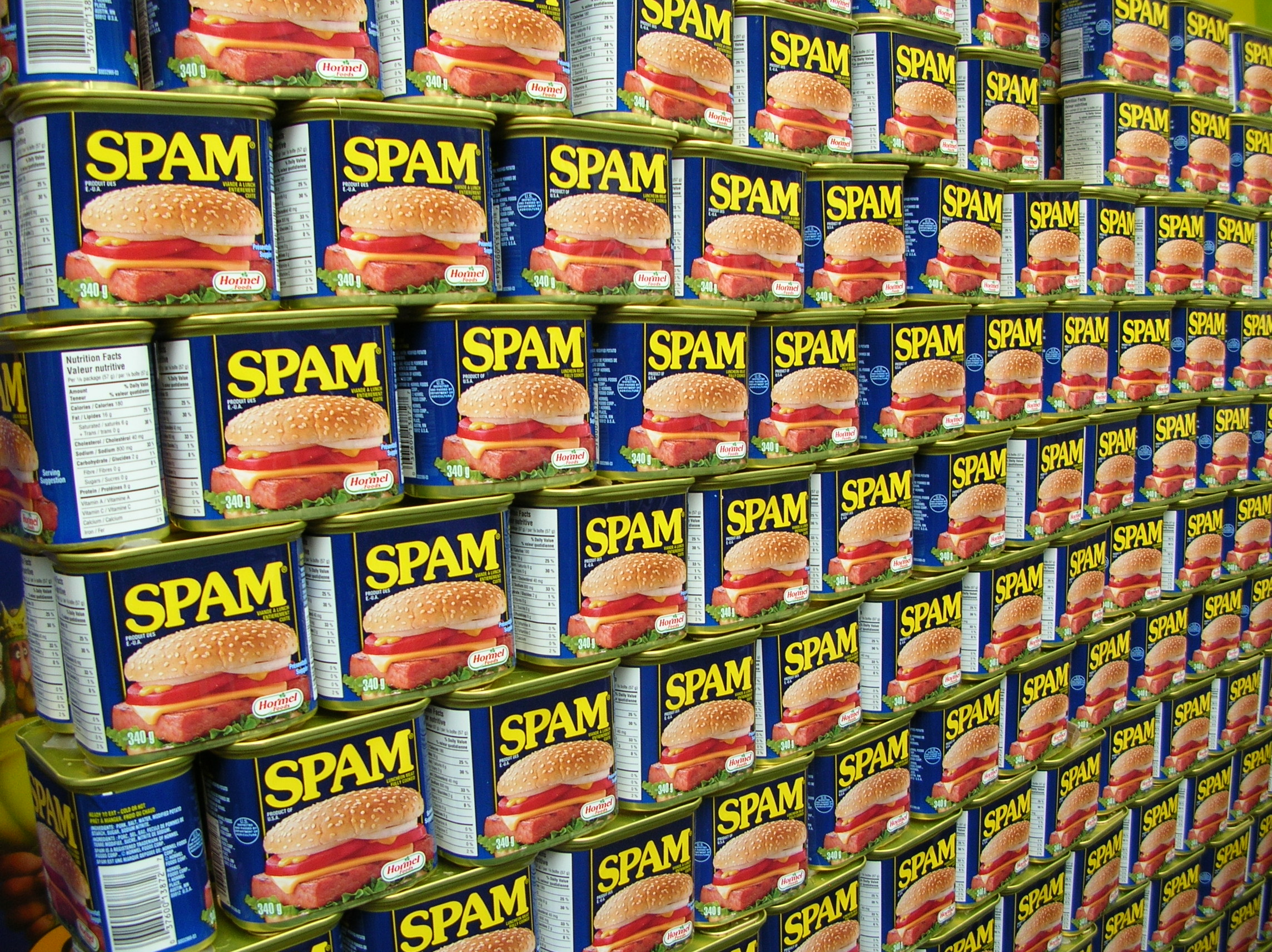
The product was launched in 1937. The name came from a Broadway actor at a New Year’s Eve party in 1936, won a $100 prize, and may or may not have stood for “Spiced Ham” — Hormel won’t officially say. World War II made Spam a global icon. Over 150 million pounds were sent to feed Allied troops. Eisenhower personally wrote Hormel after the war to “officially forgive” them. Here’s the full history of one of America’s most surprising commercial success stories.
In 1936, Jay Hormel had a problem. The Hormel Foods Corporation, founded by his father George Hormel in Austin, Minnesota in 1891 as a meatpacking operation, had launched a canned pork shoulder product the year before. It was innovative — cooked in its own can, addressing the era’s need for shelf-stable meat at a time when refrigerators weren’t common in most American households. But it wasn’t selling. Cheaper competitors had quickly flooded the market. The product needed something to break through.
Jay Hormel’s solution was characteristic of mid-1930s American marketing: throw a party and turn the naming problem into a contest. At the New Year’s Eve party held at his Minnesota home on December 31, 1936, Hormel announced a name-the-product contest with a $100 prize (substantial money in Depression-era America — equivalent to roughly $2,200 today). The 65 guests in attendance had to “purchase” their drinks by completing contest entry forms.
“Along about the third or fourth drink they began showing some imagination,” Hormel later recalled in interviews. By the end of the evening, the butler brought Hormel a sheet of paper containing the winning entry. The winner was Kenneth Daigneau, a Broadway actor who happened to be the brother of Hormel vice president R.H. Daigneau. (The nepotism question has been debated ever since, though Daigneau’s entry was reportedly selected on its merits among the various submissions.)
The name Daigneau wrote down was “Spam.”
What it stood for, exactly, has never been officially confirmed by Hormel.
What Spam actually stands for (the multiple theories)
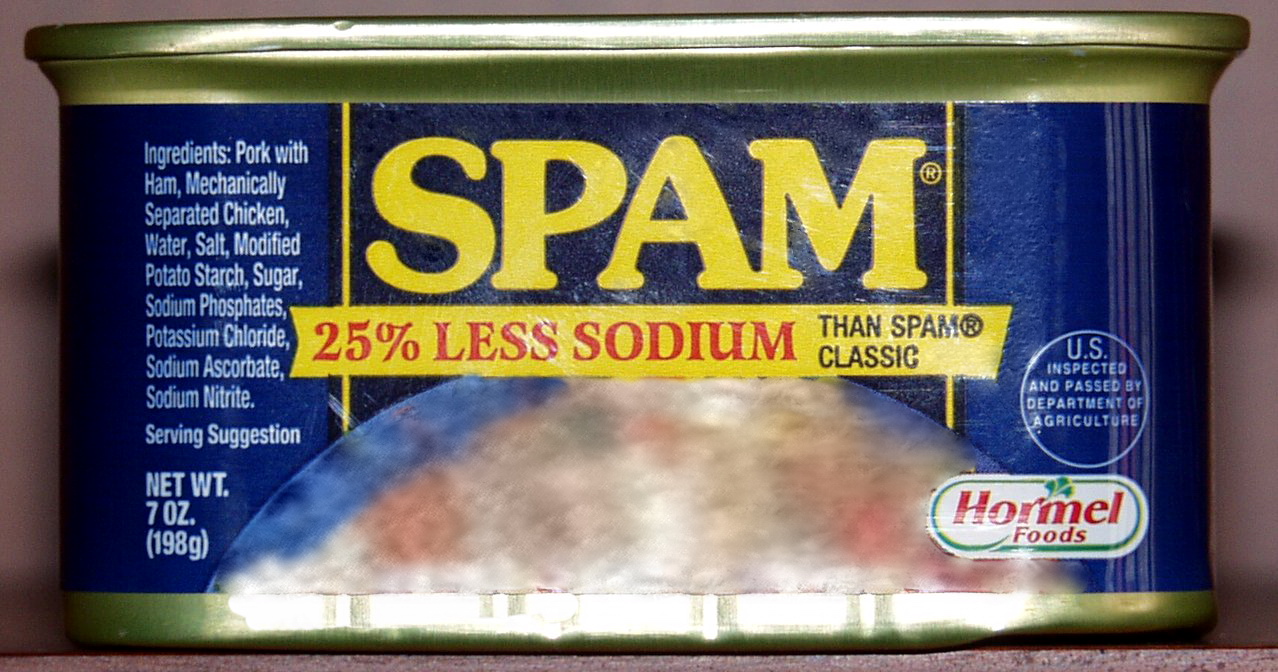
The most-cited explanation is that Spam is a portmanteau of “Spiced Ham” — though Hormel itself has been deliberately ambiguous about the official meaning. Several other interpretations have been proposed:
Spiced Ham. The most-cited theory. Daigneau’s original intent appears to have leaned this direction, though documentation is incomplete.
Shoulder of Pork And Ham. A more literally accurate description of the product’s actual ingredients.
Spiced Ham Austin Minnesota. A nod to Hormel’s headquarters location.
Special Processed American Meat. A military-era nickname that has become so widely used some sources treat it as the actual meaning.
Supply Processed American Meat. A wartime British interpretation.
Various humorous backronyms. “Stuff, Pork and hAM,” “Scientifically Processed Animal Matter,” “Something Posing As Meat” — all popular military-era jokes that became part of Spam’s cultural identity.
Hormel’s official position has remained deliberately mysterious. The company has stated only that “the real meaning of the name ‘Spam’ is known by only a small circle of former Hormel Foods executives.”
The 1937 launch
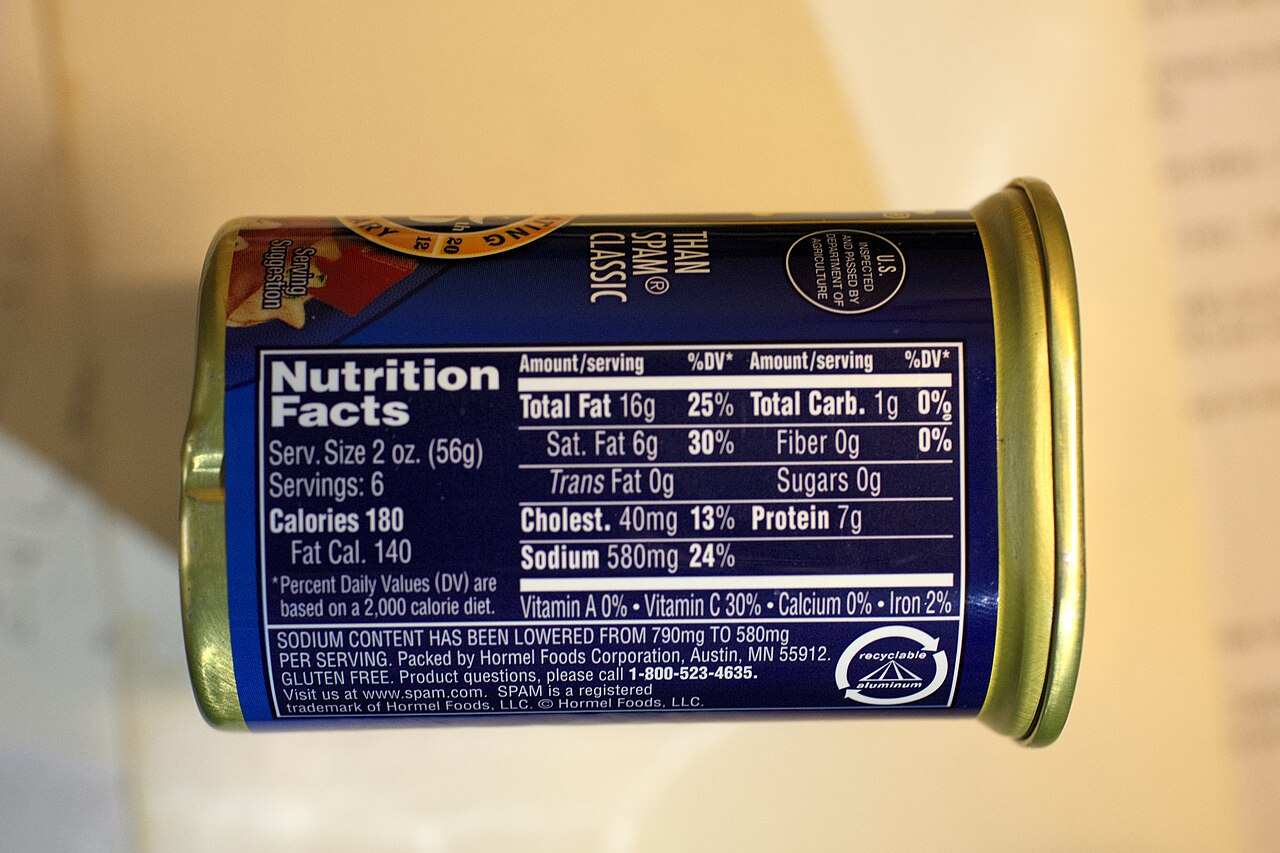
Spam was officially introduced on July 5, 1937 — a date Hormel celebrates as the brand’s birthday. The product’s six original ingredients were straightforward: pork shoulder, ham, salt, water, sugar, and sodium nitrate (used as a preservative). Modified potato starch was added in 2009 to prevent the gelatinous texture that occasionally formed in older cans.
The launch came at a specific moment in American food history that explained Spam’s appeal:
The Great Depression was ending but household budgets remained tight. Spam was affordable — substantially cheaper than fresh meat and offering reliable protein.
Refrigeration wasn’t universal yet. Most American households didn’t have refrigerators until the 1940s. Shelf-stable meat that didn’t require refrigeration solved a real practical problem.
Time-saving products were having a moment. Canned, dried, and preserved foods were rapidly gaining acceptance as American homes adopted convenience-focused approaches to cooking.
Punchy brand names were trendy. As Smithsonian Magazine noted in their Spam history coverage, “Names of that period were very punchy” — alongside contemporaneous brands like Ritz crackers, Skippy peanut butter, and Kit-Kat bars that all premiered in roughly the same era.
The early marketing emphasized Spam’s versatility. Hormel’s 1940 recipe book featured 50 ways homemakers could incorporate Spam into meals. The radio jingle “Cold or hot, Spam hits the spot” became widely known, featured prominently on the popular Burns and Allen radio show, which also featured appearances by “Spammy the Pig.”
By 1941, Spam had built a meaningful market presence in American grocery stores. Then World War II turned a regional brand into a global icon.
The World War II transformation

When the United States entered World War II in December 1941, the Allied military faced a specific logistical challenge: how to feed millions of soldiers fighting across multiple theaters with limited refrigeration and complex supply chains. Canned meats became essential, and Spam became one of the most-shipped food products in the entire war effort.
According to multiple historical sources including Hormel’s own records and Smithsonian Magazine’s coverage:
- Over 150 million pounds of Spam were sent abroad during World War II
- Hormel was shipping 15 million cans of Spam overseas every week at peak production
- Spam reached troops in every major theater — European, Pacific, North African, Asian
- Allied countries received Spam through the Lend-Lease Act — Britain and the Soviet Union became major recipients
The reception varied dramatically:
American troops developed substantial Spam fatigue. Eating Spam two or three times a day for months produced what historians have called legendary anti-Spam sentiment. Service members invented derogatory nicknames: “ham that didn’t pass its physical,” “meatloaf without basic training,” “Special Army Meat,” “Something Posing As Meat.”
Jay Hormel maintained a “scurrilous file” of hate mail. In a 1945 New Yorker interview, Hormel described the volume of abusive letters from troops. “The language people use!” he said, adding that he’d been compared to Hitler and Hirohito by frustrated soldiers. “It’s alright…”
Civilians in war-affected countries embraced Spam. While American troops complained, British civilians under strict food rationing were grateful for the protein. Prime Minister Margaret Thatcher later referred to Spam as a “wartime delicacy.” War correspondent Edward R. Murrow reported from London during a wartime Christmas broadcast: “Though their tables will not be lavish, there will be Spam for everyone.”
Soviet leadership credited Spam with military success. Nikita Khrushchev wrote in his memoir Khrushchev Remembers: “Without Spam, we wouldn’t have been able to feed our army.” This is a remarkable acknowledgment from a Cold War-era Soviet leader of dependence on American food aid.
Pacific island populations adopted Spam permanently. During World War II and the occupations that followed, Spam was introduced into Hawaii, Guam, Okinawa, the Philippines, and other Pacific islands. Decades later, these populations remain among the world’s heaviest per-capita Spam consumers.
Eisenhower wrote Hormel after the war. In a 1966 letter to Hormel President H.H. Corey, former Supreme Allied Commander Dwight D. Eisenhower wrote: “During World War II, of course, I ate my share of Spam along with millions of other soldiers. I’ll even confess to a few unkind remarks about it — uttered during the strain of battle, you understand. But as former Commander-in-Chief, I believe I can still officially forgive you your only sin: sending us so much of it.”
The post-war global expansion
After World War II ended, Spam faced an existential question: would the populations that had been forced to eat it during wartime continue buying it voluntarily during peacetime?
The answer, surprisingly, was yes — but with substantial geographic variation:
American consumption normalized. Returning American troops largely turned away from Spam (many had eaten enough during the war to last a lifetime). But the broader American household market continued, with Spam becoming a stable mid-tier protein option rather than a wartime necessity.
Pacific consumption exploded. Hawaii became (and remains) the highest per-capita Spam consumption market in the United States. Guam similarly maintained heavy consumption. The Philippines, Korea, and other Pacific nations integrated Spam into traditional cuisine in lasting ways.
British consumption persisted. The British wartime acceptance of Spam continued into peacetime, with British recipes (Spam fritters, Spam sandwiches) becoming established parts of cuisine.
Soviet/Russian consumption continued. Lend-Lease deliveries had introduced Spam to Russian populations, who continued purchasing it through Cold War trade arrangements when available.
The billion-can milestone. Hormel celebrated the sale of the one billionth can of Spam in 1959 — just 22 years after launch.
The cultural moments
Several specific events expanded Spam from a food product into a genuine cultural phenomenon:
The 1970 Monty Python sketch. The famous “Spam, Spam, Spam, Spam” sketch from Monty Python’s Flying Circus — set in a café where every menu item contained Spam, with Vikings repeatedly singing “Spam, Spam, lovely Spam, wonderful Spam” — became one of the most-quoted comedy sketches in television history. The sketch eventually inspired the term “spam” for unwanted email and other unsolicited electronic communications.
The Hormel Girls (1946-1953). A musical troupe of 60+ female World War II veterans toured the country performing songs and promoting Spam. The group eventually starred in a top-rated radio show on three national networks. The Hormel Girls represent one of the more unusual postwar marketing campaigns in American business history.
Spamarama (1976-2007). An annual Spam-themed cooking festival in Austin, Texas (not to be confused with Hormel’s Austin, Minnesota headquarters) celebrated Spam in increasingly elaborate ways for over three decades.
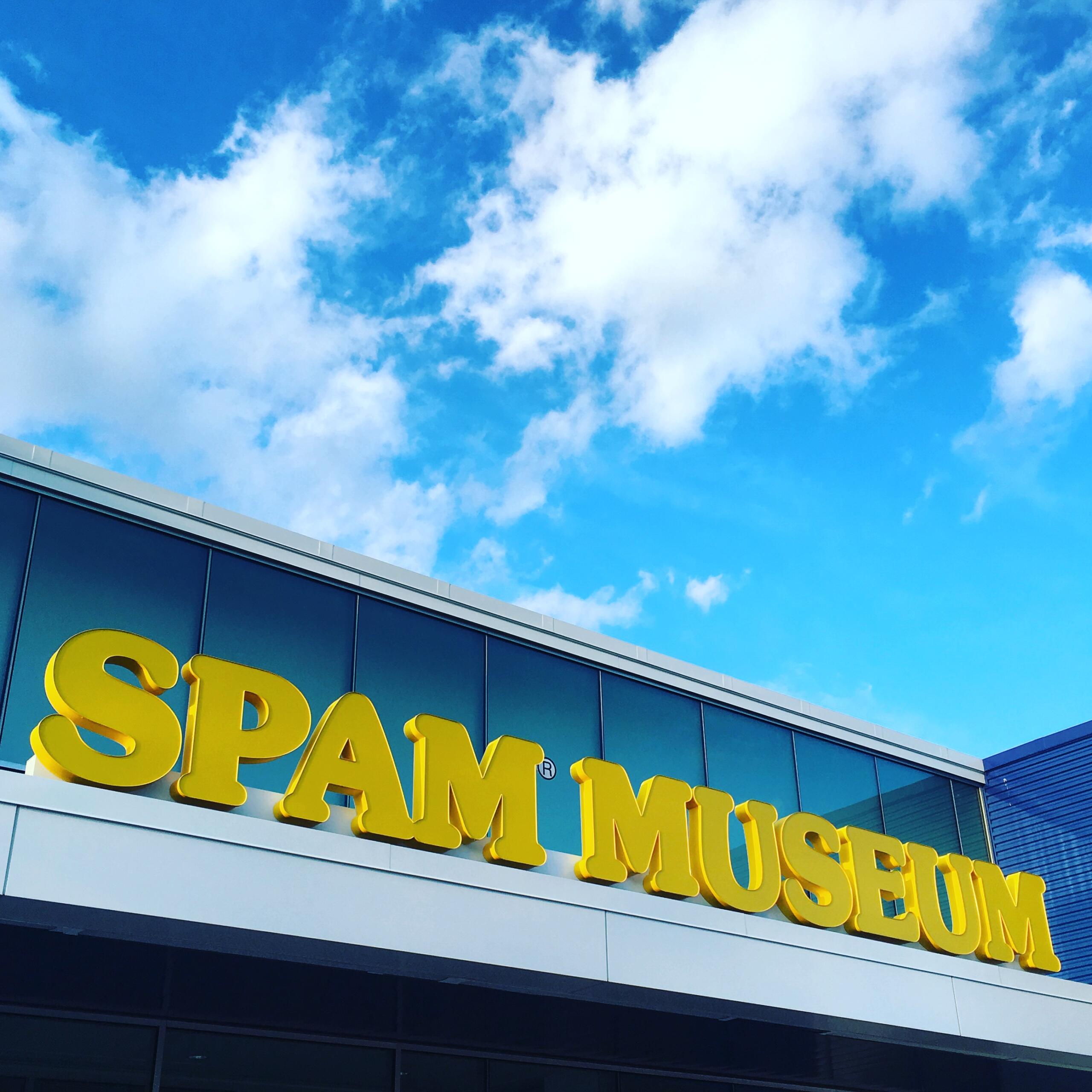
The Spam Museum (opened 1991). Hormel opened the official Spam Museum in Austin, Minnesota, dedicated entirely to Spam history, marketing, and cultural impact. The museum has become a tourist destination for Spam enthusiasts globally.
Spamalot (2005). Eric Idle’s Broadway musical adaptation of the Monty Python and the Holy Grail film took its name from the Spam sketch. The musical won the Tony Award for Best Musical and ran for nearly 1,500 performances on Broadway alone.
The Smithsonian recognition. Hormel donated original Spam packaging to the Smithsonian Museum, where it joined the collection of artifacts representing American commercial and cultural history.
Annual Spam JAM festivals. Multiple festivals continue annually — including the Waikiki Spam Jam in Hawaii, a major event that draws tens of thousands of attendees each year.
The numbers (the actual scale of Spam)
The commercial scale of Spam over its 88+ year history is genuinely remarkable:
- Over 9 billion cans of Spam have been sold globally since 1937 (Hormel’s 2026 estimate)
- 48 countries currently sell Spam
- More than 100 countries have Spam trademarks
- Approximately 13 cans of Spam consumed every second globally (2022 Hormel estimate)
- 122 million cans sold annually in the United States alone (1990s data, likely similar or higher today)
- At least 10 different varieties sold in the Philippines alone
- Approximately 1.25 million kilograms sold annually in the Philippines
For perspective: 9 billion cans laid end-to-end would stretch over 800,000 miles — more than three times the distance to the moon. The product launched at one Depression-era New Year’s Eve party in 1936 has produced a roughly continuous chain of canned meat that, if assembled, would reach beyond the lunar orbit.
What Spam actually represents in food history
The Spam phenomenon illustrates several important patterns in 20th-century food history:
The shelf-stable protein revolution. Pre-Spam, accessing reliable protein required either fresh meat (expensive and refrigeration-dependent) or specific traditional preservation techniques (salting, smoking, etc.). Spam represented a new category — industrially-produced, shelf-stable, affordable protein that could be transported anywhere and stored indefinitely. The category eventually expanded to include canned tuna, canned chicken, jerky, protein bars, and various other products that took the same fundamental approach.
The military-civilian product transfer. Many products that became American household staples followed similar paths: developed for or popularized by military use, then transferring to civilian markets. M&Ms (developed for military rations), Cheez Whiz, Tang, instant coffee, and numerous other products followed similar trajectories. Spam is one of the most prominent examples.
The global food culture impact of war. World War II didn’t just kill millions of people — it permanently transformed global food cultures by introducing American food products to populations that hadn’t previously encountered them. The Spam consumption patterns established in the Pacific during World War II have persisted for 80+ years.
The marketing-driven brand creation. Spam’s success owes substantially to marketing strategy: the contest naming, the Hormel Girls, the recipe book promotions, the radio sponsorships, the willingness to lean into the cultural jokes (Hormel embraced rather than fought the Monty Python association). Modern brand management practices owe much to Hormel’s mid-20th century innovations.
The persistence of “joke products” that aren’t actually jokes. Spam has been a cultural punchline for decades — appearing in comedy sketches, becoming the inspiration for the unwanted-email term, getting referenced in countless jokes about bad food. Yet through all the mockery, the product has continued selling at scale, with an estimated 13 cans purchased every second globally. The joke and the commercial success have somehow coexisted indefinitely.
What this all reveals about consumer products generally
For anyone interested in how modern consumer products achieve and maintain commercial success, Spam provides several specific lessons:
A clear use case matters more than premium positioning. Spam succeeded by addressing real practical needs (shelf-stable protein for budget-conscious households) rather than competing on perceived prestige. The lesson applies to many product categories.
Cultural moments can be inflection points. World War II turned a regional brand into a global product. Modern equivalents include products that benefit from major cultural events, viral moments, or generational shifts in consumer behavior.
Embracing humor can be effective brand strategy. Hormel’s willingness to lean into Spam jokes (rather than fighting them) made the brand more rather than less commercially successful. The lesson has been studied in business school case studies for decades.
Geographic markets can develop independent trajectories. Spam in Hawaii is different from Spam in continental America is different from Spam in the Philippines. Successful global brands often allow regional adaptations rather than enforcing strict consistency.
Persistent products outlast trends. Spam has survived dozens of food trends, cultural shifts, and competitive threats since 1937. Genuinely useful, affordable, shelf-stable products tend to outlast products that depend on temporary fashion.
The bottom line on Spam
The next time you walk past the Spam in your grocery store and dismiss it as a wartime relic, remember:
- The product is currently sold in 48 countries
- More cans of Spam have been produced than there are humans on Earth
- The name came from a 1936 New Year’s Eve party where Broadway actor Kenneth Daigneau won $100
- Eisenhower personally wrote Hormel to “officially forgive” them after World War II
- Khrushchev credited Spam with feeding the Soviet Army
- Margaret Thatcher called it a “wartime delicacy”
- Monty Python made it the inspiration for the term that now describes every unwanted email in your inbox
- Hawaii, Guam, the Philippines, and Korea have integrated Spam into their cuisines as permanent staples
- Hormel still doesn’t officially confirm what the name means
The little blue can sitting on shelves around the world represents one of the most successful, longest-running, most culturally significant brand stories in American commercial history. It launched at the right moment with the right product attributes, got an unexpected promotional boost from World War II, embraced its cultural mockery as marketing, and has continued selling for nearly 90 years to populations from Honolulu to Moscow to Manila.
Not bad for a portmanteau dreamed up by a Broadway actor at a Minnesota New Year’s Eve party in 1936 — for which he won $100 from a meatpacker who couldn’t figure out how to sell his canned pork shoulder. The Hormel family’s bet on the name Spam has produced one of the most distinctive brand legacies in American business history. The little blue can keeps selling, the cultural moments keep accumulating, and the question of what Spam actually stands for continues to be one of the most enduring mysteries in marketing.
The most likely answer? Spiced Ham. But Hormel will never officially confirm it. And honestly, after 9 billion cans, who needs them to?