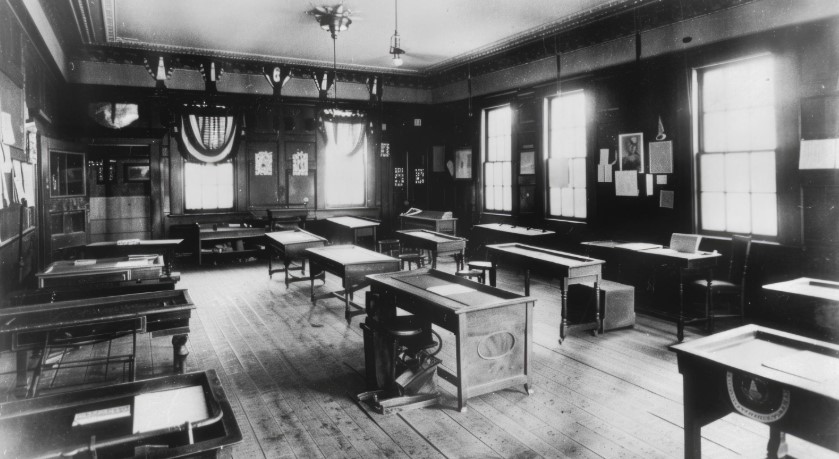

American schools in the 1970s operated under fundamentally different assumptions about liability, discipline, parental involvement, and child safety than they do today. The shift from 1970s to modern schooling wasn’t gradual — it was driven by specific legal decisions, cultural shifts, and institutional liability concerns that happened primarily in the 1980s-90s. Understanding what changed requires understanding why it changed.
1: The Corporal Punishment Era

Corporal punishment was legal and widely practiced in American schools through the 1970s. Paddling, strapping, and hitting were administered by principals and teachers with little accountability. The 1977 Supreme Court case Ingraham v. Wright ruled that corporal punishment did not constitute “cruel and unusual punishment” under the Eighth Amendment. This decision effectively protected corporal punishment legally. However, it simultaneously created a liability framework. Schools could legally use physical punishment, but they were also liable for injuries resulting from that punishment.
2: Why Corporal Punishment Declined

Corporal punishment didn’t decline because of new laws — it declined because of insurance costs and liability exposure. By the 1990s, schools discovered that insurance companies charged premiums for schools with corporal punishment policies. Lawsuits over injuries from paddling became more common. The administrative burden of documenting justifiable punishment exceeded the perceived benefit. By 2000, corporal punishment had become rare in northern states and less common (though still legal) in southern states. The change was economic and administrative, not legislative.
3: The Transportation Model Shift

School bus transportation in the 1970s operated on a principle of unsupervised child movement. Students rode buses with minimal adult supervision. Drivers operated on loose protocols. This worked partly because students were culturally expected to behave, partly because the world seemed safer, partly because nobody was tracking liability meticulously. By the 1990s, bus discipline policies tightened, documentation increased, and bus companies added oversight. The shift wasn’t law-driven — it was insurance and liability-driven.
4: The Outdoor Play Transformation

1970s playgrounds featured equipment that would be considered dangerously negligent today — metal slides that burned skin in summer, concrete surfaces that produced serious injuries from falls, unpadded climbing equipment. Injuries were treated as inevitable parts of childhood. Teachers weren’t present in many playgrounds — students were essentially unsupervised. The shift happened because of liability lawsuits. A series of high-profile playground injury cases in the 1980s-90s established that schools were liable for inadequate safety measures. Equipment manufacturers changed designs, surfaces changed, and supervision requirements changed.
5: The Dress Code Relaxation

1970s schools enforced strict dress codes and appearance standards. Girls couldn’t wear pants to school in many districts. Hair length was regulated. Certain clothing was prohibited. These rules were enforced through detention or suspension. The rules declined not because they were declared illegal but because enforcement became administratively expensive and legally risky. A single lawsuit threatening to argue that dress codes violated expression rights was often enough to cause districts to relax enforcement. By the 1980s, most formal dress code enforcement had been abandoned.
6: The Discipline Documentation Era

The 1970s featured disciplinary decisions made by individual teachers and principals with little documentation. A student could be paddled, suspended, or expelled based on a single adult’s decision. By the 1990s, districts required documentation, parent notification, and formal process. This didn’t happen because of law — it happened because districts discovered that documentation was cheaper than litigation. If you could prove you followed procedure, you were harder to sue. If you couldn’t prove you followed procedure, you were vulnerable. Documentation became liability protection.
7: The Parental Involvement Shift
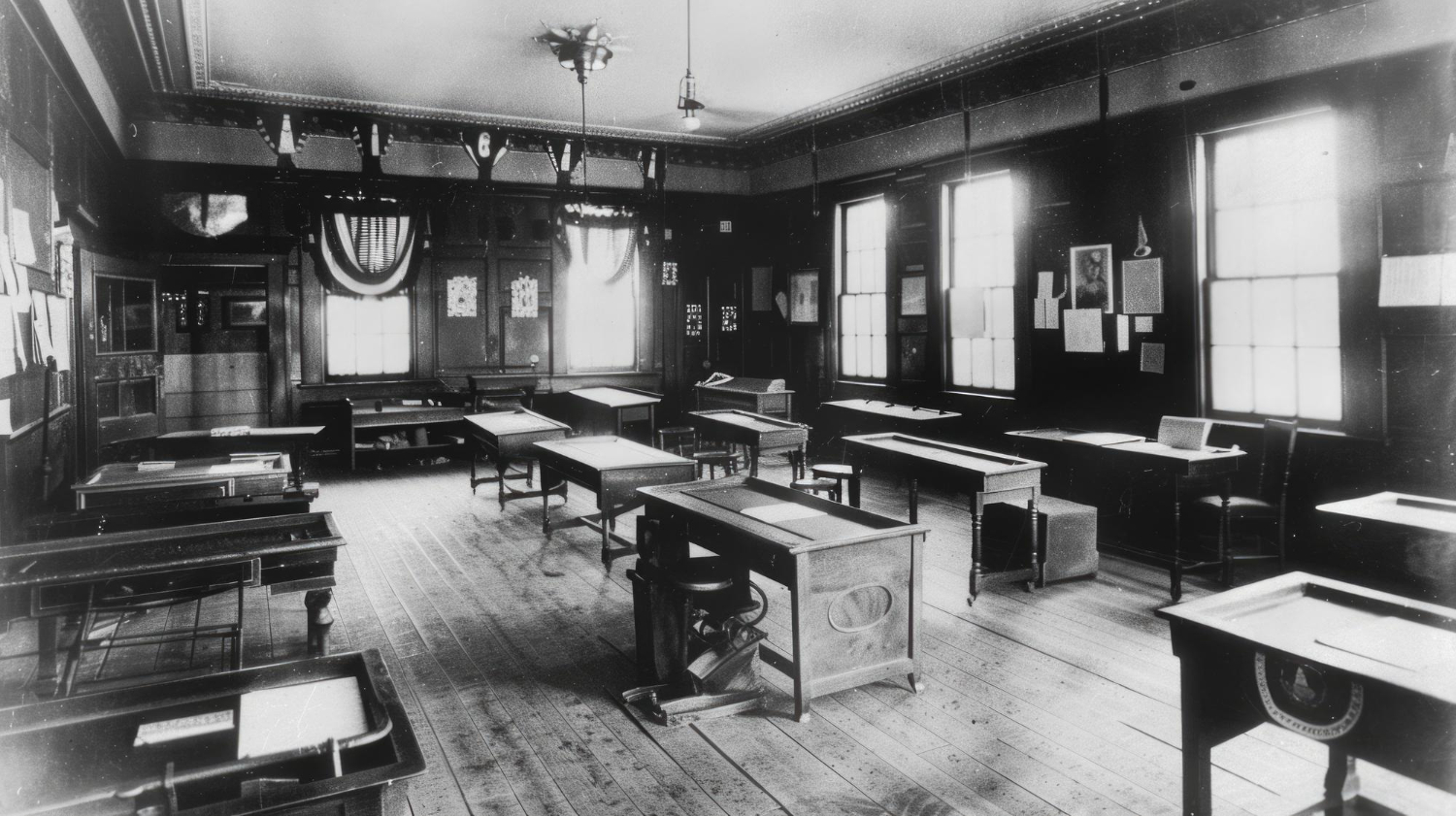
Parental involvement in schools decreased significantly through the 1970s as more mothers entered the workforce and as school was culturally positioned as the exclusive domain of educators. Schools expected deference from parents. By the 1990s, parental involvement became legally mandated through federal law (IDEA requiring parental involvement in special education decisions). The culture shifted from “trust the school” to “verify the school.” This shift was partly legal, partly economic (working parents had less time), and partly cultural (more litigious society).
8: The Special Education Transformation

The 1970s featured minimal special education services. Students with disabilities were often excluded from school or mainstreamed without support. The Education for All Handicapped Children Act (EAHCA) passed in 1975, requiring free appropriate education in the least restrictive environment. This law fundamentally changed schools. By the 1990s, schools had legal obligations to identify disabilities, provide services, and accommodate students. The shift was law-driven (federal mandate) but the actual cultural implementation took two decades.
9: The Recess Reduction Phenomenon

Recess in the 1970s was unstructured play with minimal supervision. Students had roughly 40 minutes of outdoor free time daily. By the 2000s, recess had been reduced and structured. Teachers supervise more closely. Certain games (tackle football, dodgeball) were banned. The shift happened partly because of liability (injuries during unstructured play), partly because of curriculum pressure (more testing meant less recess time), and partly because of changing assumptions about appropriate risk. Modern parents worry more about liability than 1970s parents, and schools respond to parental anxiety.
10: The Teacher Discretion Decline

1970s teachers had substantial discretion over classroom management and grading. A teacher could fail a student arbitrarily, assign severe punishment, or make curricular decisions independently. By the 1990s, district policies constrained this discretion. Grade books had to follow standardized formats. Discipline followed district guidelines. Curriculum followed state standards. The shift was driven by accountability demands and liability concerns. When every decision could be litigated, standardization became safer than discretion.
11: The Age of Parental Consent

1970s field trips required minimal parental notification. School medical decisions (like school-provided aspirin) required no parental consent. School counseling happened without parental knowledge. By the 2000s, parental consent was required for nearly every school activity. This shift happened because of litigation over liability — if parents knew about an activity and agreed to it, the school was safer from liability claims. Consent forms became liability protection for schools.
12: The Metal Detector and Surveillance Era

1970s schools had minimal security. Students moved freely, no one checked bags, metal detectors didn’t exist. This changed in the 1990s partly because of school violence (Columbine was 1999) but also because of general liability anxiety. Schools began treating student movement as a security issue. Surveillance cameras appeared. Visitor sign-in became mandatory. Recess became supervised. These changes were reactive to specific incidents but embedded themselves permanently.
13: The Liability Culture Legacy

The fundamental difference between 1970s and modern schools isn’t pedagogical — it’s administrative. Modern schools operate under assumption that every activity creates liability risk. Teachers and administrators are increasingly liable for student injuries, emotional harm, and regulatory compliance. The 1970s operated on assumption that schools were essentially protected from liability and that reasonable supervision sufficed. This shift has real consequences: schools are more risk-averse, more documentation-heavy, and less willing to tolerate unstructured activity or teacher discretion.