

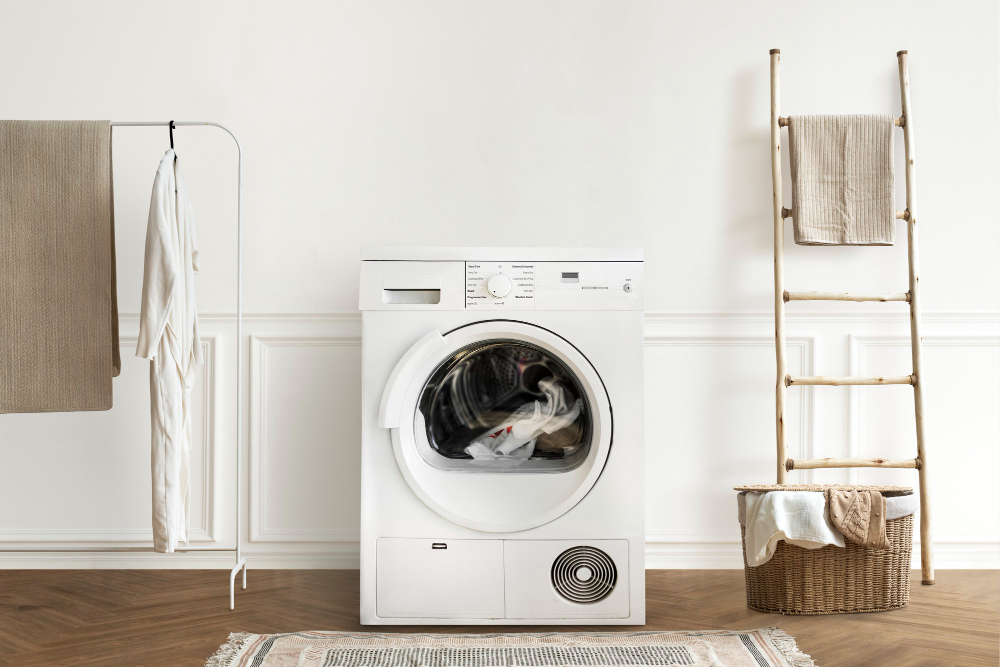
An American moving to Europe discovers a washing machine the size of a filing cabinet, built into a kitchen run, with a round glass door and a cycle that takes two hours. A European moving to America discovers an enormous machine with a lid on top, standing in a basement or a garage, that finishes in thirty-five minutes.
Each finds the other baffling, and each tends to assume the other country is simply behind. Americans think front-loaders are slow and fussy. Europeans think top-loaders are crude and wasteful.
Both designs have been available in both markets for the whole period. The divergence is not technological. It comes from four things that were different about the buildings the machines went into and the resources they used, and once those four things are laid out, each market’s choice is the sensible one for its own conditions.
Reason One: Americans Had a Basement and Europeans Had a Kitchen
This is the single biggest factor, and it is the one most people never think of.
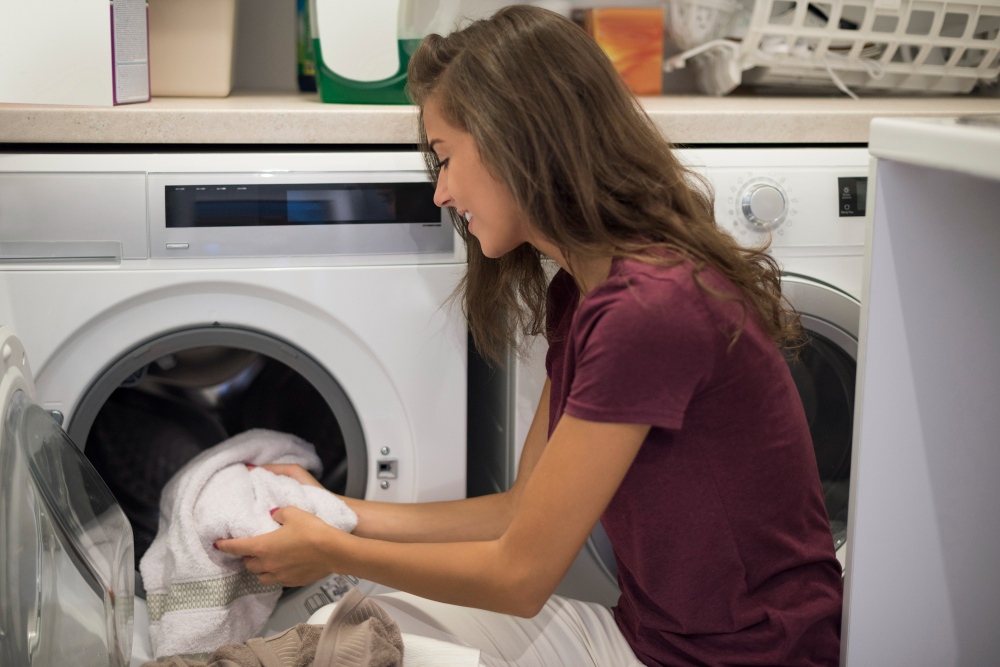
American housing stock, particularly in the regions where washing machines first became common, overwhelmingly had a basement, a utility room or an attached garage – a space that was not living space, that frequently had a floor drain, and in which the appearance and noise of a machine did not matter. There was no reason to make the machine small, no reason to make it quiet, no reason to make it fit under anything, and no reason for it to be beautiful.
European housing, especially postwar urban housing, generally did not have that space. The machine went into the kitchen or the bathroom, in the living area of a flat or a small house, and it had to fit the room. That meant one specific thing: it had to go under a worktop and between cabinets, in a slot of standard width and height.
A machine that must fit under a counter cannot open from the top. The constraint forces the door onto the front, and once the door is on the front the whole architecture of the machine follows – a horizontal drum, a sealed door, a different suspension, a different way of getting clothes to move through water.
Like our content? Follow us for more.
Reason Two: Water Cost Different Amounts
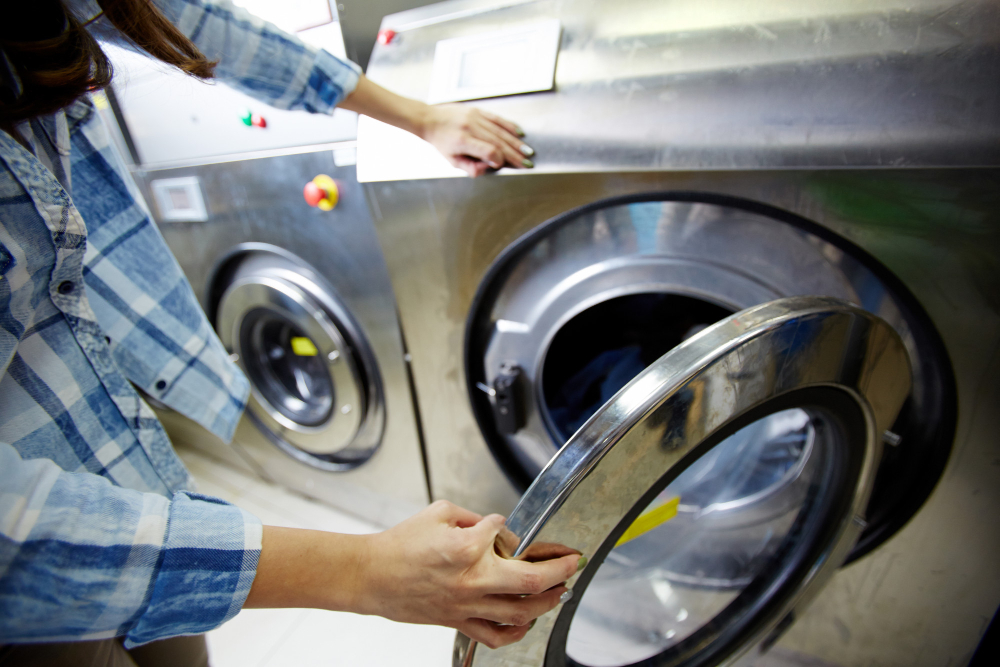
A top-loading machine with a central agitator works by suspending the laundry in a drum substantially full of water and moving it about. A front-loader works by tumbling laundry through a shallow pool at the bottom of a horizontal drum, lifting and dropping it so that the clothes are repeatedly carried into and out of a much smaller quantity of water.
The consequence is that a front-loader uses considerably less water for the same load, and because it heats less water, considerably less energy.
For most of the twentieth century, water and domestic energy were cheap in the United States and expensive in Europe – the gap was large and sustained. That changes the calculation entirely. If water is almost free, the top-loader’s consumption is not a reason to reject it, and its advantages are real: a shorter cycle, a simpler and cheaper mechanism, the ability to add a forgotten item mid-cycle, and no need to bend down.
If water and electricity are expensive, the front-loader’s economy dominates everything else, and a two-hour cycle is an acceptable price for it.
Reason Three: European Machines Had to Heat Their Own Water
There is a plumbing difference underneath this that explains the cycle times, and it surprises most Americans.
An American washing machine is conventionally connected to both hot and cold supplies and draws hot water from the household system, which is already hot. A great many European machines take a cold fill only and heat the water themselves with an internal element.
That single difference accounts for much of the cycle-length gap. A machine heating its own water from cold to a selected temperature spends a large part of its cycle doing nothing but heating, and the higher the selected temperature the longer it takes. It also allows precise temperature selection, which is why European machines are labelled in degrees and American ones conventionally in words.
The reason for the difference is again the building. Centralised domestic hot water of the American kind – a large tank, generous capacity, long pipe runs – was less universal in European housing, and a machine that heats its own water will work in any flat regardless of what the hot water arrangement is. Designing for that independence made the machine slower and more expensive to run but installable anywhere.
Reason Four: The Agitator Patent Landscape and a Manufacturing Lock-In

Once each market had settled, manufacturing made the split self-perpetuating.
American manufacturers built enormous capacity for vertical-axis machines with agitators, and the economies of scale in that configuration were large. The machines were cheap to make, cheap to sell, and sold in vast numbers into a market that expected them. A manufacturer proposing to switch would have been investing heavily to make a machine their customers thought was worse.
European manufacturers did the same thing in the opposite direction, building capacity for horizontal-axis machines of standard dimensions. The standardisation went deep – the width and height of a European machine are effectively fixed by kitchen cabinetry conventions, which makes the product more interchangeable and the market more competitive on everything except size.
Retailers, installers, plumbers, kitchen fitters and repair networks all grew up around the respective designs. By the time anybody might have reconsidered, the question was not which machine was better but what an entire supply chain was tooled for.
Why America Is Now Changing Anyway
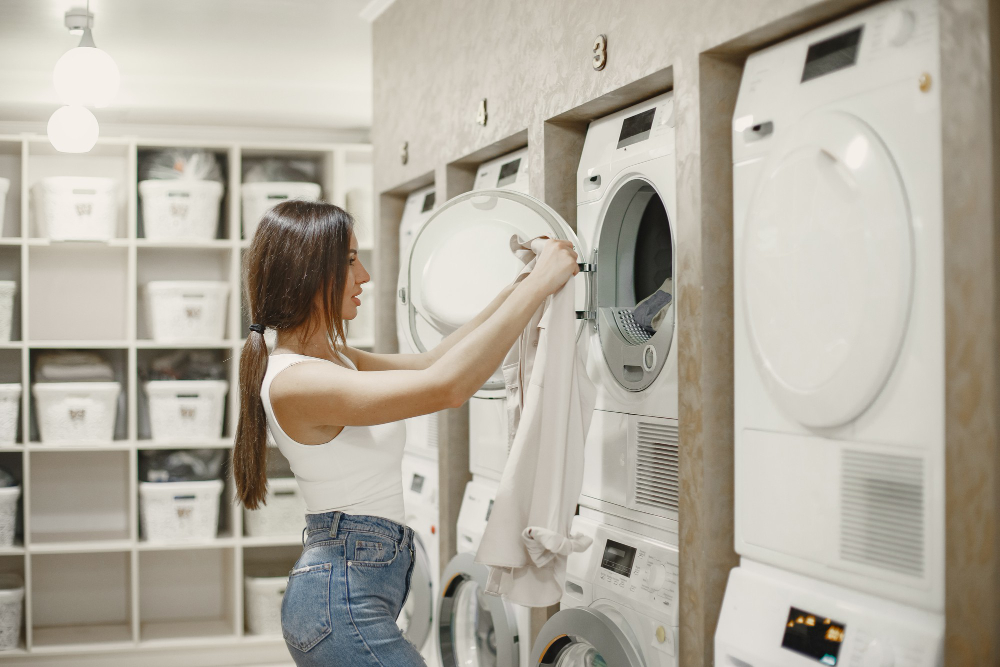
The interesting development is that the American market has been moving, and the reason is that one of the four conditions stopped holding.
Water and energy efficiency requirements tightened in the United States, and efficiency became a selling point rather than an irrelevance. A machine suspending laundry in a full drum of heated water has a hard ceiling on how efficient it can be, which put the traditional agitator design under genuine pressure.
Two things followed. Front-loading machines took a substantial share of the American market, sold largely on efficiency and on being stackable – which matters because American housing has been getting smaller and laundry has been moving upstairs into the living space, exactly the condition that produced the European design in the first place. And the surviving top-loaders changed internally: a great many now have no central agitator at all, using an impeller or plate at the base and far less water, which makes them a different machine wearing the familiar shape.
So the convergence is happening, and it is happening because American buildings and American utility prices have moved closer to the conditions that shaped the European machine.
What Each Design Is Genuinely Better At
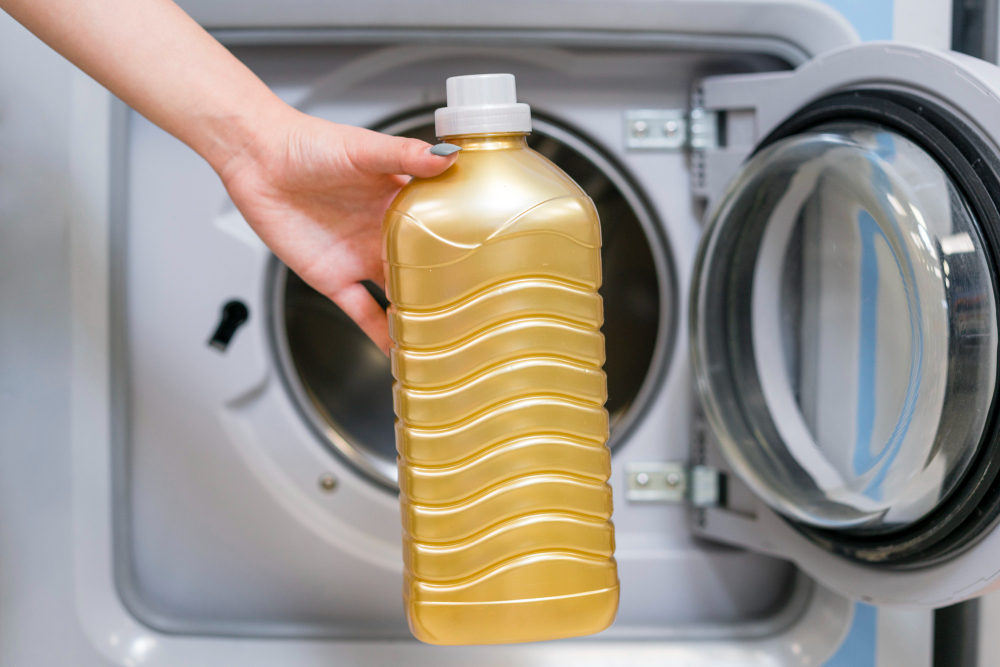
It is worth stating the trade honestly, because both sides of this argument are usually conducted badly.
The top-loader’s real advantages: a shorter cycle, a lower purchase price, a simpler mechanism with fewer expensive failure points, no door seal to go mouldy, no need to bend to load, and the ability to open it mid-cycle and add something.
The front-loader’s real advantages: far less water and energy, gentler mechanical action on fabric, a much higher spin speed which removes more water and shortens drying, a smaller footprint, the ability to fit under a counter or stack, and a sealed door that permits that installation in the first place.
Those are not rankings, they are different machines for different conditions. A household with a basement, cheap water and a large family is well served by one. A household with a kitchen slot, metered water and two people is well served by the other. The genuine mistake is assuming the machine you grew up with is simply correct.
The Honest Summary
American washing machines load from the top because they went into basements, utility rooms and garages – spaces where nothing constrained the size, the noise or the appearance of the machine, and where there was no counter to fit under.
European machines load from the front because they went into kitchens and bathrooms in the living space, had to fit a standard slot under a worktop, and therefore could not open upward. Everything else about the design follows from the door being on the front.
Cheap American water and energy made the top-loader’s consumption irrelevant and its shorter cycle attractive. Expensive European water and energy made the front-loader’s economy decisive and its long cycle tolerable. The European habit of cold-fill with internal heating, adopted so a machine would work in any flat whatever its plumbing, explains most of the remaining difference in cycle times.
Then manufacturing capacity, retail expectation and repair networks locked both markets in for decades.
And the split is now closing from the American side, because efficiency standards arrived and American laundry started moving out of the basement and into the living space – which is where the European machine came from all along.
Like our content? Follow us for more.
