There is a useful way of framing biological questions that makes familiar things strange, and sleep is the clearest case.
The framing is to ask what a trait costs, and then ask what it must deliver to be worth that.
Sleep costs an enormous amount. An animal asleep is not eating, not mating, not watching for danger and not doing anything else. For a large proportion of its life it is defenceless and unaware.
A trait that expensive persists only if the benefit is substantial and cannot be obtained any other way. And sleep is not merely common — it appears in every animal with a nervous system that has been examined properly, including creatures with very simple ones.
That universality is the strongest argument that it is doing something fundamental, and it is also why the absence of a settled explanation is so striking.
Before going further: this article concerns comparative biology and research. It contains nothing about anybody’s sleep, no advice and no health information, and questions of that kind belong with a doctor.
What Sleep Actually Is
Defining it turns out to matter, because the definition determines which animals count.
The behavioural criteria are: a characteristic posture or place, reduced responsiveness to the surroundings, rapid reversibility distinguishing it from unconsciousness, and — critically — a rebound effect, where an animal prevented from sleeping subsequently sleeps more.
That last criterion is what makes it sleep rather than rest. A regulated state that the body compensates for when deprived is under homeostatic control, which means something is being accumulated and discharged.
Applying those criteria has extended sleep far beyond where it was once thought to exist. Animals with very simple nervous systems, including some with no brain in any conventional sense, meet them.
That extension is significant. If sleep appears in organisms with a few hundred neurons, its function is unlikely to be something requiring a complex brain.
Like our content? Follow us for more.
The Leading Explanations
Several accounts are argued, each with support and none sufficient alone.
Memory consolidation is the best-known. Evidence indicates that material learned before sleep is retained better after it, that patterns of activity from waking are replayed during sleep, and that disrupting sleep impairs certain kinds of learning.
That account is well supported and has a limitation: it does not explain sleep in animals with minimal capacity for the kind of learning involved, and those animals sleep too.
Clearance is a more recent account. Activity produces metabolic by-products, and evidence suggests that the removal of some of these is more efficient during sleep than waking, possibly because the spaces between cells change.
That is attractive because it applies to any nervous system regardless of complexity, and the evidence is still developing.
Energy conservation is the oldest account. Reducing activity reduces consumption, and sleep is metabolically cheaper than quiet waking.
The saving, however, is modest — substantially smaller than the cost of being defenceless — which makes it a contributing factor rather than an explanation.
Synaptic regulation proposes that connections strengthened during waking are globally weakened during sleep, preventing saturation and preserving the capacity to learn. It is supported and contested.
There is a point about regulation worth adding. Sleep is governed by two interacting systems – a daily rhythm setting when it should occur, and a pressure that accumulates with time awake and discharges during sleep.
Those can be separated experimentally, and they explain why sleepiness depends both on how long you have been awake and on the time of day rather than on either alone.
The Animals That Should Not Be Able To
The most informative cases are the ones where sleep appears impossible and happens anyway.
Some marine mammals must surface to breathe, which means unconsciousness would be fatal. The solution documented in several species is to sleep one half of the brain at a time, with one eye open, alternating.
That is a remarkable adaptation and it makes a specific point: the requirement was severe enough that it was worth evolving an entirely different mode rather than abandoning sleep.
Some birds do something comparable during extended flight, sleeping one hemisphere while continuing to fly, and there is evidence of brief episodes of both hemispheres sleeping simultaneously in flight.
Animals in situations demanding continuous vigilance — during migration, in the period after birth in some species — reduce sleep dramatically for extended periods without the consequences that would be expected.
Each of those is a case where the cost of sleep was extreme and the response was to modify it rather than to do without, which is the strongest available evidence that it is not optional.
What Varies and What Does Not
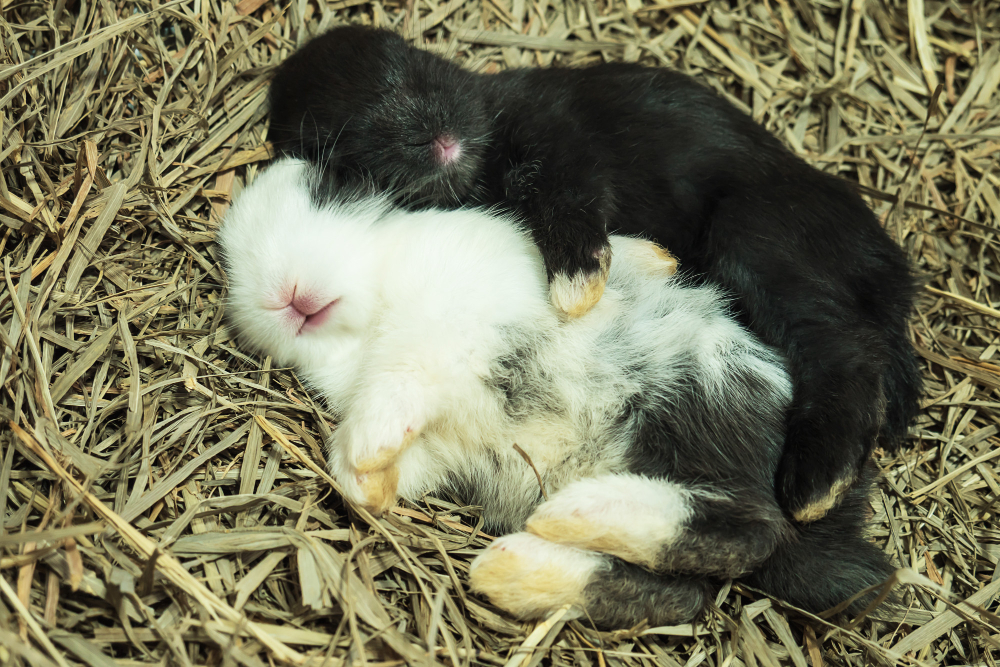
The comparative picture shows enormous variation in the details and consistency in the requirement.
Duration varies from a couple of hours to twenty in different species, with no simple relationship to body size, brain size or diet that explains it fully.
Pattern varies. Some animals sleep in one block, some in many short episodes, some by day and some by night, and some shift according to season or circumstance.
Depth and structure vary. The distinct stages familiar from mammals are not universal, and the equivalent states in other groups differ substantially.
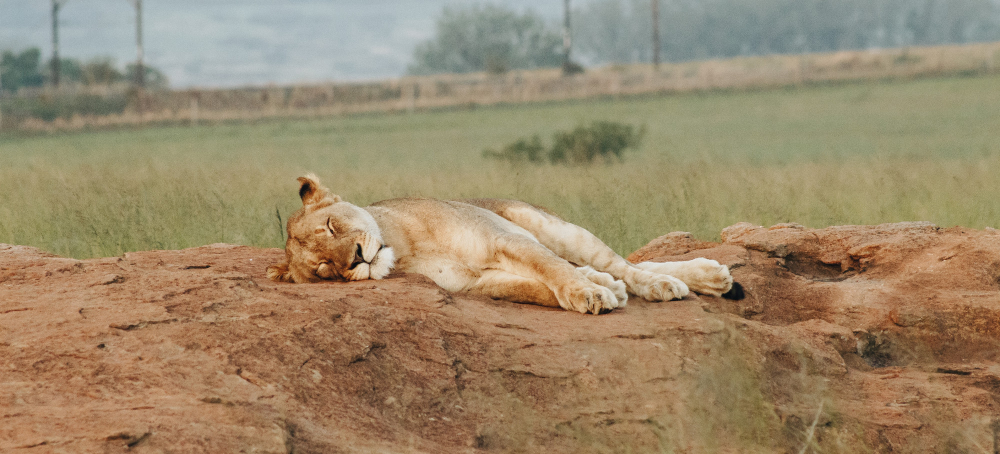
Position varies to a remarkable degree, with animals sleeping standing, hanging, floating, in motion and in locations that appear entirely unsuitable.
What does not vary is that it happens. Nothing has been found that dispenses with it, and the animals that came closest turned out to be sleeping in a modified form rather than not at all.
Why It Stays Open

The obstacles are worth understanding because they explain the lack of resolution.
Deprivation is the obvious experiment and it is confounded. Preventing sleep requires disturbing the animal, which produces stress, and separating the effects of lost sleep from the effects of being disturbed is truly difficult.
The proposed functions are not mutually exclusive. Sleep may be doing several things at once, which means evidence supporting one account does not count against another.
Different functions may dominate in different species, which would explain why no single account covers everything.
And the state itself is heterogeneous, with distinct stages in some animals that may serve distinct purposes, so asking what sleep is for may be asking about several things under one name.
What Happens to the Body
The physiological changes during sleep are worth setting out, because they establish that it is an active state rather than an absence of activity.
Body temperature falls, following a daily rhythm that anticipates sleep rather than resulting from it — the drop begins before sleep starts.
Heart rate and breathing slow and become more regular, and blood pressure falls.
Muscle tone reduces substantially, and in certain stages it is actively suppressed to the point that voluntary movement is essentially blocked, which prevents an animal acting out whatever its nervous system is doing.
Hormone release follows patterns tied to sleep rather than to time of day, with some released predominantly during it.
And brain activity does not decrease overall. It changes character — becoming highly synchronised in some stages and resembling waking activity in others — but the organ is not switched off at any point.
That last observation is the one that most clearly rules out the simplest account. If sleep were rest for the brain in the way that sitting down is rest for the legs, activity would fall. It does not; it reorganises, which indicates that something is being done rather than merely suspended.
The Shape of the Answer
What can be said with reasonable confidence is narrower than popular accounts suggest.
Sleep is universal among animals with nervous systems, is regulated homeostatically, and is not optional — animals that need to remain alert modify it rather than abandoning it.
It is almost certainly serving more than one function, with restoration, clearance and information processing all supported to varying degrees.
And the reason it remains unresolved is not neglect. It is one of the most studied phenomena in biology, and the difficulty is that a behaviour this universal and this old is likely to have accumulated several functions rather than one.
Which is a reasonable place to leave it. Every animal with a nervous system spends a substantial portion of its existence in a state that makes it vulnerable, this has been true for as long as nervous systems have existed, and nothing has found a way around it — which is about as strong an indication as biology offers that something important is happening in there.
That is worth sitting with rather than resolving. A behaviour that expensive, that universal and that old is almost certainly doing several things at once, and the reason the question has stayed open is that it was probably the wrong question – there may be no single answer to find.
Like our content? Follow us for more.