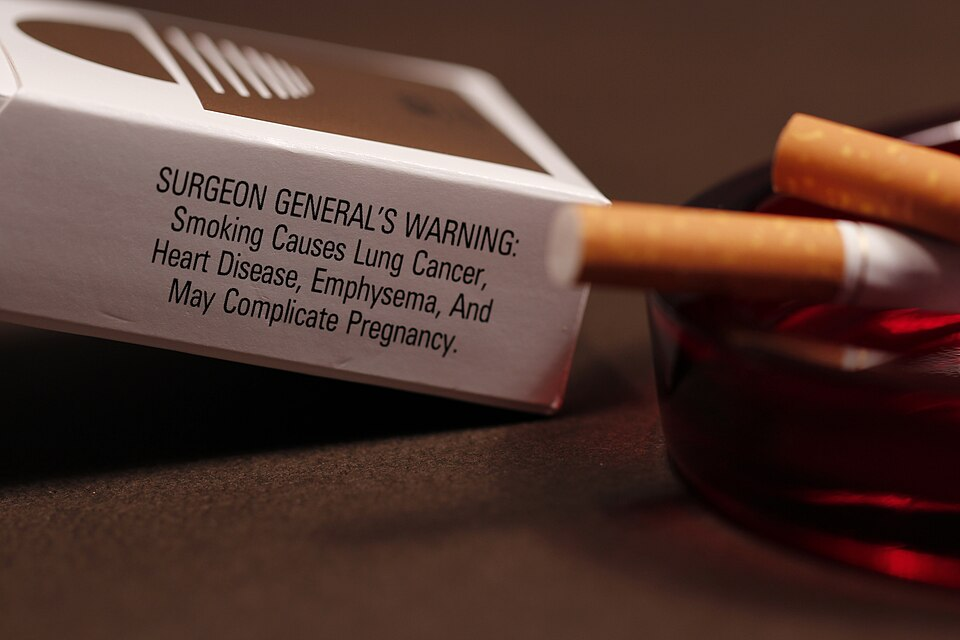
The ashtray is the most thoroughly deleted object in the American house. Not reduced, not modernised — deleted. A 1965 household owned several, chose them as decorative items, received them as gifts, and positioned them in every room where anybody sat down. By 2005 a visitor to an American home would have had difficulty finding one, and a child could grow up without learning what the object was for.
The interesting part is the pace. The medical case was made in public in January 1964, and the ashtrays did not leave the living room for another twenty-five years. Almost nothing about that gap is explained by people not knowing. It is explained by the difference between knowing something about your own risk and accepting something about the risk you impose on other people in the room, and the second argument was not made properly until the 1980s.
What 1965 looked like

Smoking in 1965 was woven through the fabric of the house rather than confined to it. Ashtrays were part of the furniture set and were sold as such. Cigarette boxes with hinged lids sat on coffee tables so that guests could be offered one. Table lighters were wedding presents. The smell was in the curtains, the upholstery and the ceiling paint, and the yellowing of a ceiling above a favoured chair was a recognised decorating problem.
It extended outward in every direction. Cars had ashtrays front and rear, including in the backs of front seats where children sat behind them. Aircraft had them in the armrests. Cinemas, hospitals, trains, offices, restaurants, teachers’ lounges and the waiting rooms of doctors and dentists all provided them. Supermarkets sold cigarettes at the checkout and candy cigarettes a few feet away, in packets designed to look like the adult product, which is a detail that tends to stop a modern reader.
Like our content? Follow us for more.
The 1964 report and what it did not do
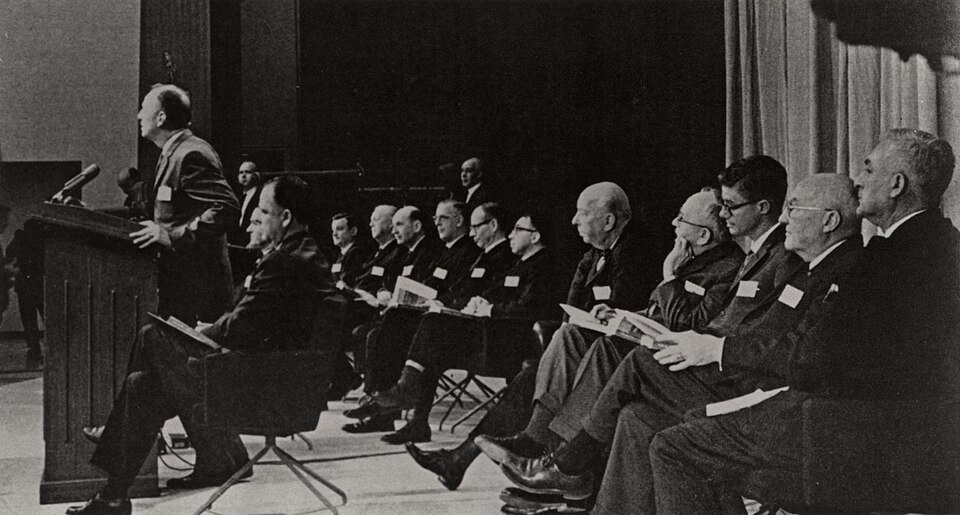
The Surgeon General’s advisory committee report was published on 11 January 1964, and it established the link between smoking and lung cancer and other disease in language that was not open to much interpretation. It is correctly remembered as the turning point. What it turned was public knowledge and federal policy about the product, not household behaviour.
The legislative sequence that followed addressed the packet and the advertising. Warning labels were required by an act of 1965 and appeared the following year. Broadcast advertising for cigarettes ended on American television and radio in early 1971, under an act of 1970. These are substantial measures and they are all aimed at the point of sale and the point of persuasion. None of them says anything at all about whether a father should smoke in a closed car with his children in the back, because in 1965 that was not understood to be a question about the children.
The argument that moved the ashtray
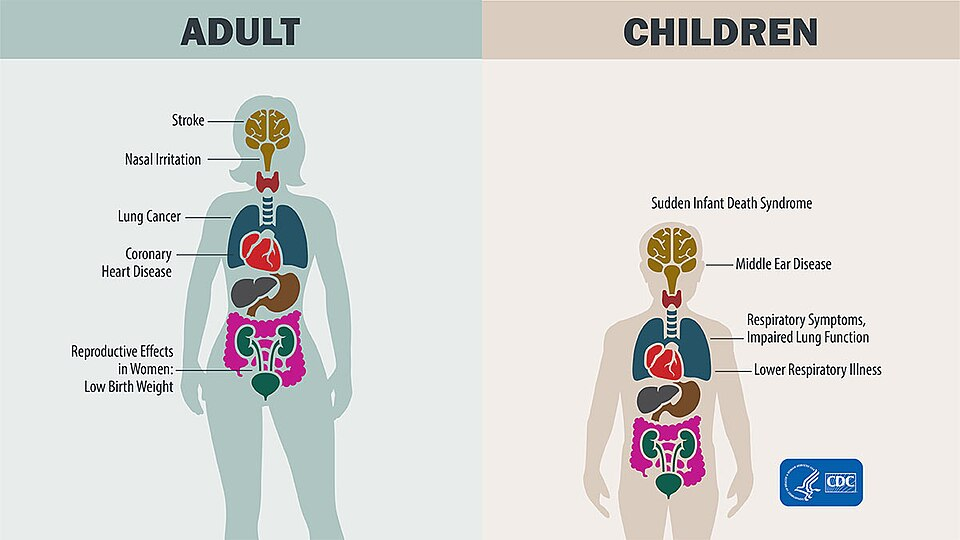
The shift came with secondhand smoke. The Surgeon General’s report of 1986 was devoted to involuntary smoking and concluded that it caused disease in non-smokers, including in children of smoking parents. In 1992 the Environmental Protection Agency classified environmental tobacco smoke as a known human carcinogen. A later Surgeon General’s report, in 2006, stated that there is no risk-free level of exposure.
That sequence is what emptied the rooms, and it did it by changing the subject. An adult can decide to accept a risk to themselves, and a great many adults in 1965 did exactly that with their eyes open. The involuntary-smoking finding reframed the living room as a place where somebody else’s lungs were involved, and once that was established the ashtray in the child’s bedroom became indefensible in a way that the ashtray on the coffee table had never quite been. Smoking bans in American workplaces, restaurants, bars and public buildings followed through the 1990s and 2000s, state by state and city by city, and the home followed the public space rather than leading it.
The car and the aeroplane
Two enclosed spaces make the change unusually easy to date. Smoking on American domestic flights was restricted and then prohibited in stages at the end of the 1980s, with the ban on most domestic routes taking effect in 1990, and ashtrays disappeared from new cabin fittings afterwards. Anybody who flew before that remembers a smoking section separated from the rest of the cabin by nothing but a row of seats and an optimistic assumption about air.
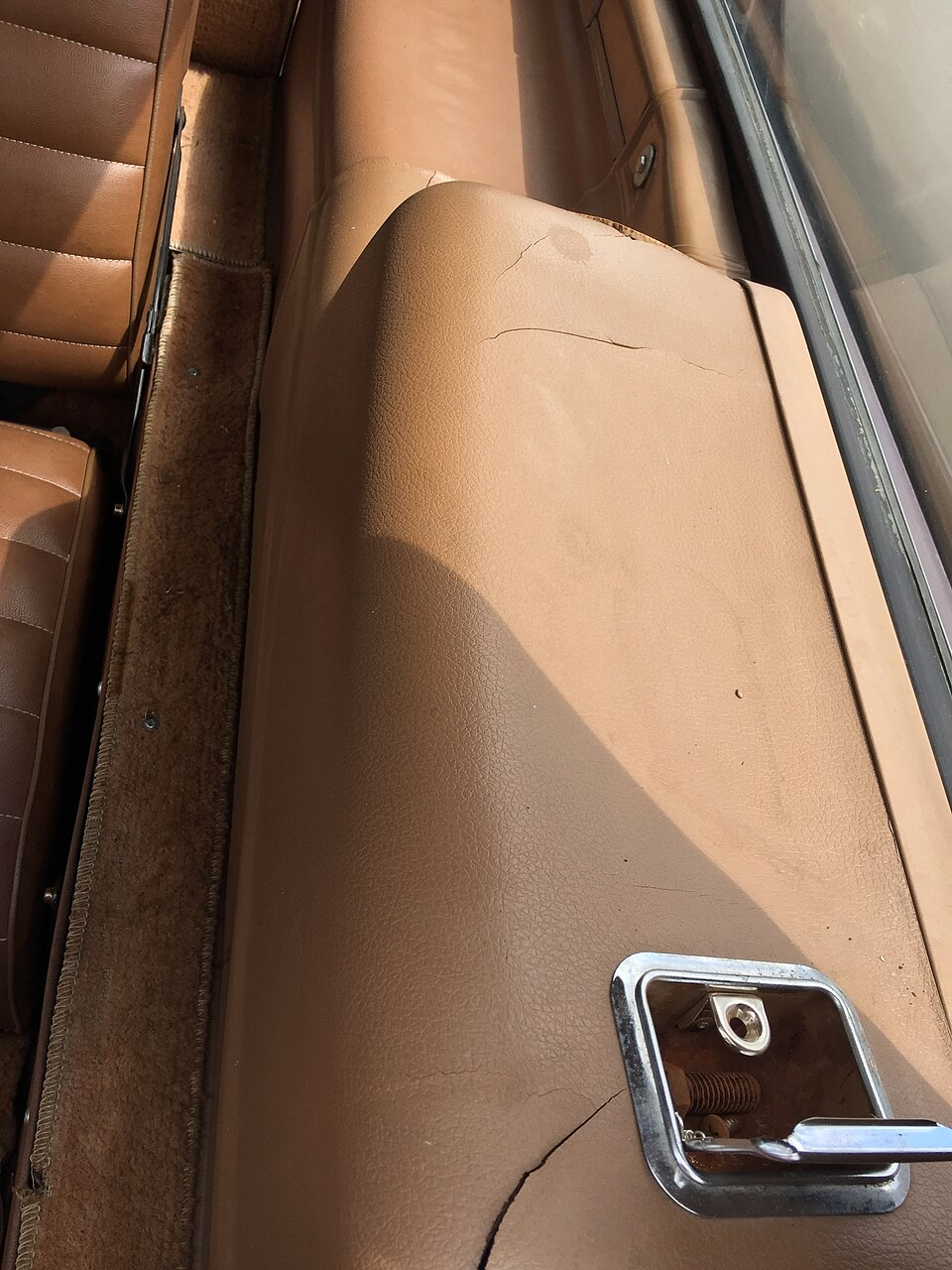
The family car went the other way round: no federal rule, but a complete change of behaviour, followed much later by laws in a number of states prohibiting smoking in a vehicle carrying a child. The car ashtray survived as a fitting long after it stopped being used for its purpose. For a whole generation of American children the little chrome drawer in the back of the front seat was where you kept coins, and most of them never saw it used for anything else.
Doctors in the advertising
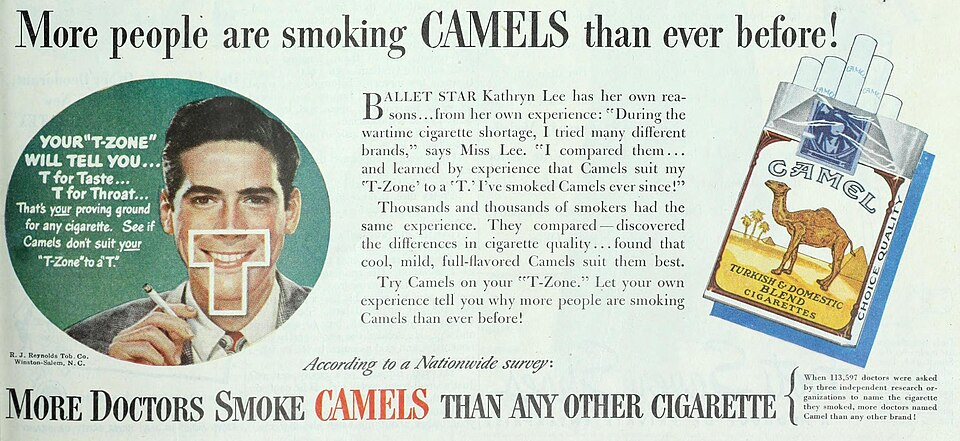
It is hard to discuss 1965 without the advertising, because the medical profession was in it. Cigarette campaigns of the 1940s and 1950s used physicians directly, with claims about which brand doctors preferred and reassurances about throat irritation. Those campaigns were running within living memory of the 1964 report, and some of them ran in medical journals.
The profession’s own position moved well before the public’s. By 1965 American physicians were smoking at markedly lower rates than the general population and falling, which is the clearest signal available of what the people with the best access to the evidence actually concluded. The gap between the doctor who had quit and the waiting room that still had an ashtray in it is a fair summary of the whole period: the knowledge was settled and the furniture was not.
The same lag shows in the schools. American children in 1965 were taught about tobacco, in some districts thoroughly, and the lesson was overwhelmingly about what it would do to them if they took it up. The teachers delivering it very often smoked, in a staff room along the corridor, with an ashtray on the table, and nobody in the building found that contradictory, because the message was about a choice the child would make later rather than about the air in the building. The reframing that arrived in 1986 is what made it look contradictory in hindsight, and hindsight is doing a great deal of work in most accounts of this period.
What a 1965 parent was and was not told
It matters to be fair about this, because it is easy to read a 1965 living room as careless and it mostly was not. A parent smoking in the house in 1965 had been told, clearly and recently, that smoking would damage their own health. They had not been told, by anybody with authority, that the smoke in the room would damage their children, because that finding was twenty years away.
That is a real distinction and it should not be collapsed. The 1986 report is not a document that confirmed what everybody already knew. It changed what the behaviour meant. Families who gave up smoking indoors in the late 1980s and the 1990s very often describe it as a response to being told something new, and the record supports them.
It is also worth not reading the household evidence backwards. The fact that a particular family remembers no illness, or remembers a grandfather who smoked for sixty years and was fine, is not evidence about the risk. Those are the recollections a family keeps; the ones it does not keep are the deaths attributed to other causes, the children with persistent chest trouble that nobody connected to the room, and the relatives who are not there to be remembered as counterexamples. The population-level finding and the family anecdote are answers to different questions, and the first one is the one the reports were addressing.
The object that survived
A curious residue of all this is that the ashtrays themselves are still around, because they were made of heavy glass and cut crystal and brass and ceramic, and objects like that do not get thrown away. They are in the backs of American cupboards in enormous numbers, repurposed as dishes for keys, paper clips, buttons and loose change.
That is probably the honest monument. The habit is gone from the room, the advertising is gone, the social convention of offering a guest a cigarette from a box on the table is gone so completely that the box is unrecognisable. What is left is a heavy glass dish with four notches in the rim, holding somebody’s spare buttons on a shelf, with nobody in the house quite sure why the notches are there.
Like our content? Follow us for more.