
Nutrition advice is unusual among kinds of official guidance in that almost everybody receives it, almost nobody reads the source, and the version that reaches a household is a simplified instruction rather than a finding. That makes the reversals unusually visible in hindsight. A mother in 1970 was not acting on a vague cultural mood. She was acting on specific instructions, printed and broadcast, issued by people with authority, and in several significant cases those instructions turned out to be either wrong or built on an inference that did not survive testing.
The point of going through them is not that nutrition science is unreliable. It is that the chain from a research finding to a sentence a parent can act on involves several steps of compression, and compression is where the errors happen. In at least one of the cases below, the research itself was never the problem. The problem was an entirely reasonable-sounding leap that nobody had tested until somebody finally did.
Margarine instead of butter
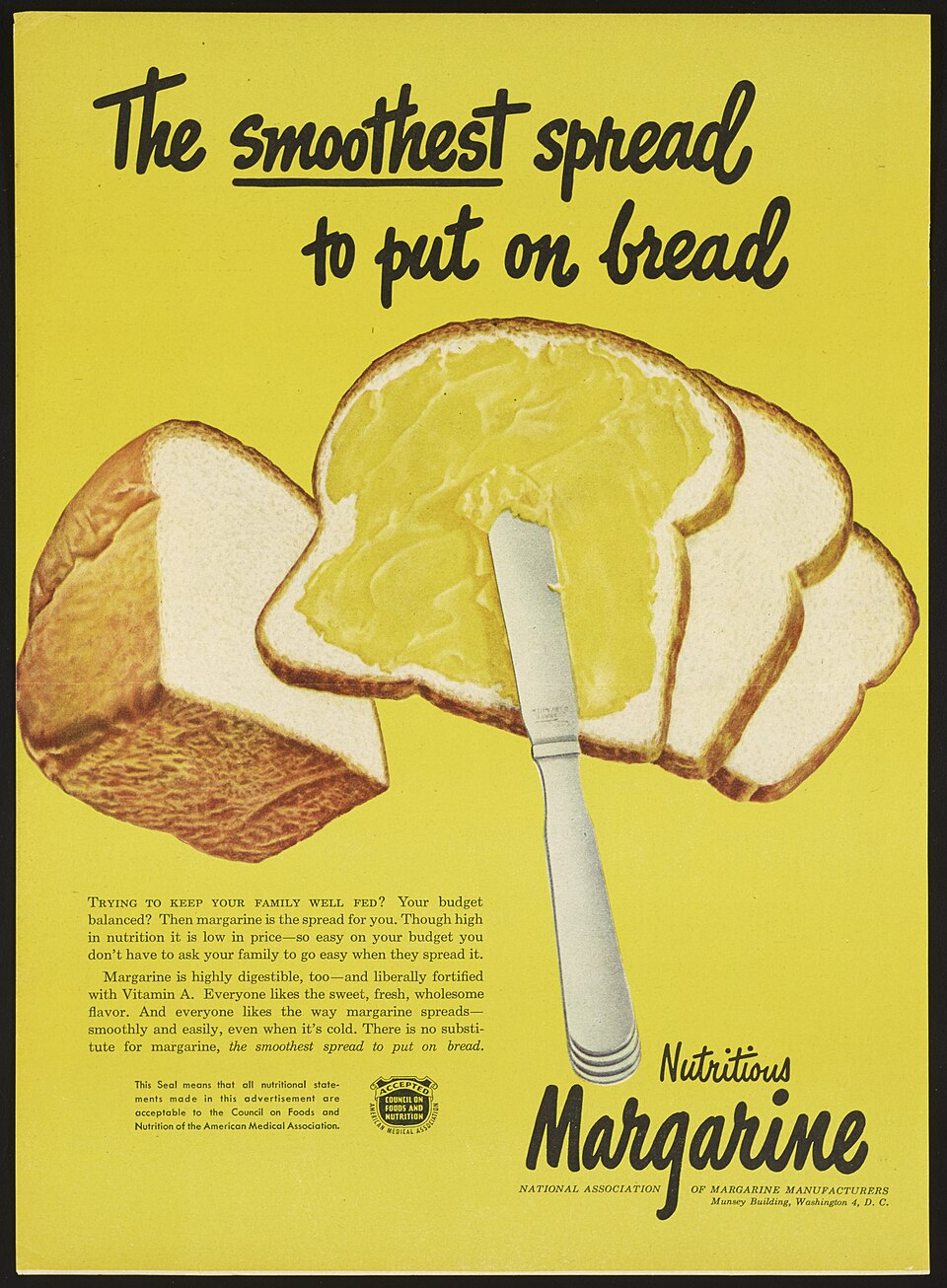
This is the clearest reversal of the set, and the one with the largest consequences. Through the middle of the century American households were steered away from butter and toward margarine on the grounds that butter’s saturated fat was implicated in heart disease and vegetable oil was not. The advice was given in good faith and it rested on real evidence about saturated fat.
What it overlooked was how margarine was made. Liquid vegetable oil was turned into a solid spread by partial hydrogenation, and partial hydrogenation produces trans fatty acids. Research through the 1990s established that industrially produced trans fat was worse for cardiovascular risk than the saturated fat it had been recommended to replace, affecting blood lipids in both unfavourable directions at once. The Food and Drug Administration required trans fat labelling from the middle of the following decade, determined in 2015 that partially hydrogenated oils were no longer generally recognised as safe, and the ingredient was removed from the American food supply by the end of the decade. A household that followed the 1970 instruction precisely was eating the worse of the two options for roughly a quarter of a century.
It is worth sitting with how that happened, because no part of it was negligent. The evidence on saturated fat was sound. The recommendation to reduce it was reasonable. The industry’s solution to delivering a solid spread without saturated fat was ingenious. The failure was that nobody had asked what the hydrogenation process produced, because trans fatty acids were not understood to be a separate category of concern, and a question nobody asks returns no answer. The entire chain was competent and the output was wrong.
Like our content? Follow us for more.
Counting the eggs

The egg restriction came out of a chain of reasoning that was intuitive and turned out not to hold. Eggs are high in cholesterol; blood cholesterol is associated with heart disease; therefore eggs raise risk. American guidance from the 1960s onward imposed a ceiling on dietary cholesterol, and households translated that into a number of eggs per week.
The step that failed was the first one. For most people, cholesterol eaten in food has a modest effect on cholesterol in blood, because the body adjusts its own production in response. The advisory committee for the 2015 federal dietary guidelines examined the evidence and dropped the specific dietary cholesterol ceiling, concluding that it was not a nutrient of concern for overconsumption in the way the earlier advice had assumed. Current guidance discusses dietary patterns and saturated fat rather than policing a cholesterol number, and eggs are not restricted on that basis. People with particular conditions are still advised individually, which is the right place for that kind of instruction to sit.
Keeping peanuts away from the baby

This one is the most striking, because it is the case where the advice itself appears to have made the problem worse, and because the correction came from a trial built specifically to settle it.
For years the guidance to American parents of infants at risk of allergy was avoidance: delay peanuts, delay eggs, delay the other common allergens, on the reasonable theory that an immature immune system should not meet a potential allergen early. Rates of peanut allergy rose anyway. The hypothesis that avoidance might be causing rather than preventing sensitisation was tested in a randomised trial published in 2015, which gave one group of high-risk infants peanut protein early and the other group none. Early introduction produced a large reduction in peanut allergy. American guidance was rewritten in 2017 to recommend early, deliberate introduction for infants at risk, with medical assessment first for the highest-risk group. That is close to the exact opposite of the 1970 instruction, and it is one of the cleanest examples anywhere of a guideline being overturned by a trial rather than by argument.
Solids in the bottle at six weeks
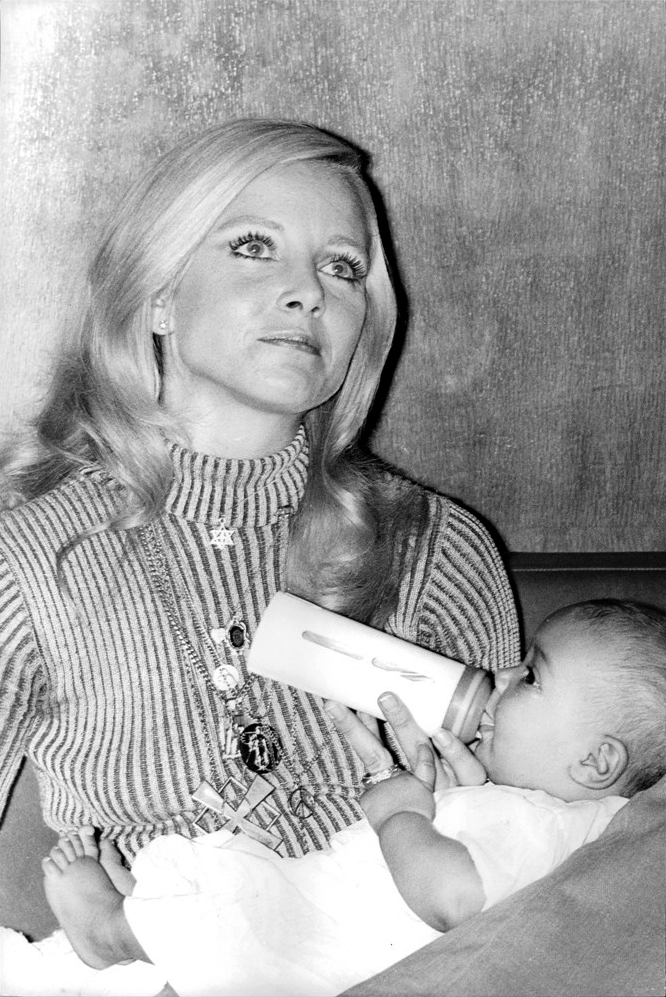
Infant feeding advice moved as far as anything in the period. In the 1960s and into the 1970s it was common American practice to begin cereal very early, sometimes within the first weeks, sometimes mixed into a bottle and widened at the nipple so the baby could take it. The rationale offered was that it helped a baby sleep and that it was a step toward solid food.
Current guidance is to begin complementary foods at around six months, and specifically not to add cereal to a bottle, both on developmental grounds and on safety grounds. Nothing about the earlier practice was eccentric at the time; it appeared in mainstream advice literature and was recommended by physicians. It is simply a different answer, arrived at as the developmental picture became clearer, and it is worth noting that the change came quietly rather than as a public reversal, which is why so many grandmothers and parents end up giving each other conflicting instructions about the same baby.
The low-fat decade
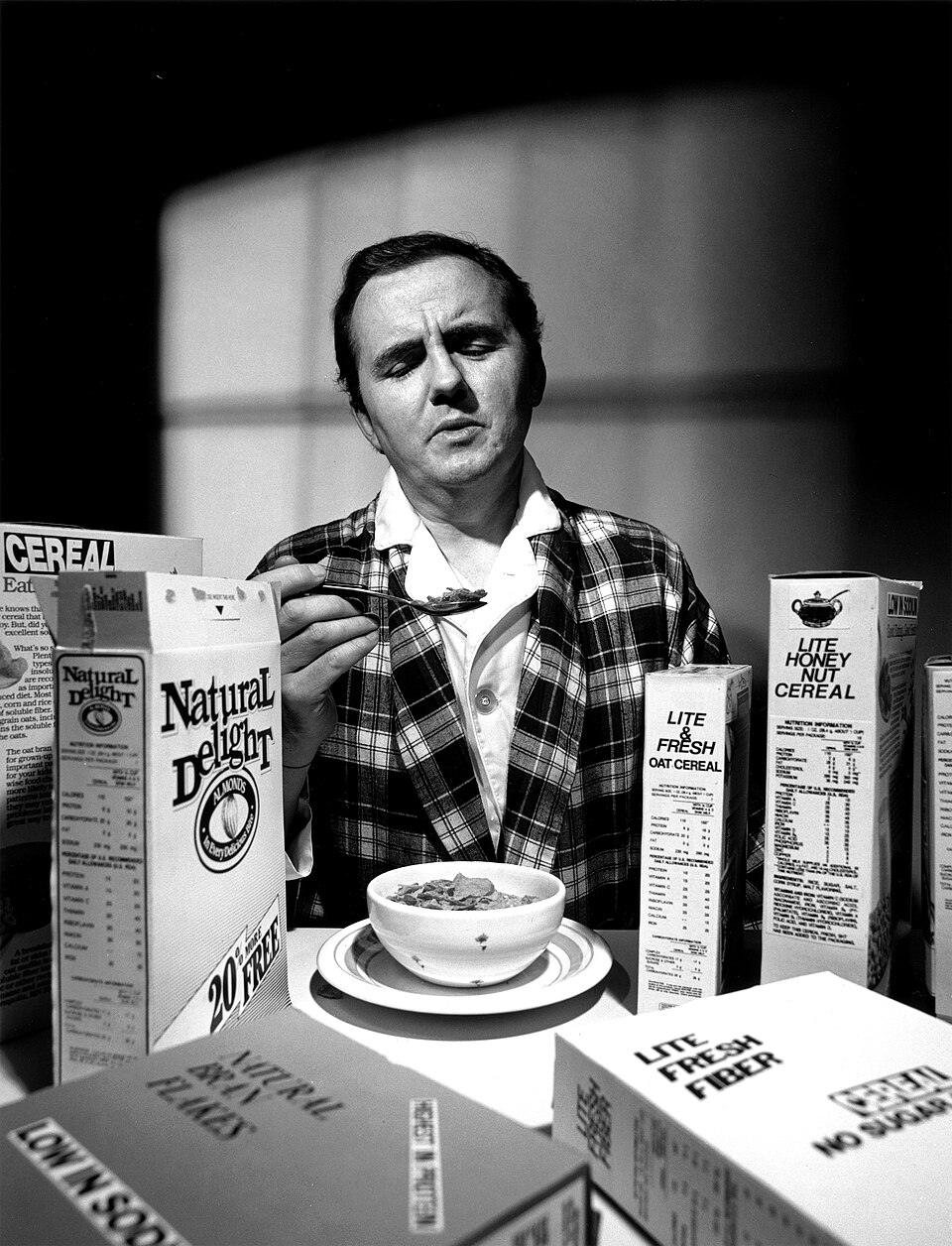
The largest change was structural rather than item-by-item. American federal dietary advice through the late 1970s and the 1980s set out to reduce total fat in the diet, and the food industry responded at scale with a generation of reduced-fat products. What went into those products in place of the fat was very often refined starch and added sugar, because fat carries flavour and texture and something has to do that job.
The reduction in total fat was achieved. The health outcome that was expected to follow did not arrive in the form predicted, and the period coincided with a sharp rise in metabolic disease. Current American guidance has moved away from a total fat target and toward the type of fat and the overall pattern of eating. The lesson researchers most often draw from the episode is about substitution: advice to eat less of something is incomplete without saying what takes its place, because households and manufacturers will answer that question themselves.
The vitamins in the cupboard

Supplement advice ran the same course. Megadose vitamin C for colds became a mass practice after a prominent chemist advocated it around 1970, and the subsequent trials have not supported the claims made for it in preventing colds in the general population. The broader antioxidant-supplement hypothesis was tested properly in large trials in the 1990s, and the results were sobering: beta-carotene supplementation in trials conducted among smokers was associated with higher lung cancer incidence, not lower, which is the reverse of what the observational data had suggested.
That pair of findings did more than correct two specific recommendations. It is a large part of why nutrition research now treats an observed association between a nutrient and an outcome as a question rather than an answer, and why the isolated-nutrient supplement has given ground to advice about whole foods and patterns.
How to read the next reversal
The honest conclusion is not that nutrition advice should be ignored, which is the use this history is most often put to. Three of the reversals above moved in the direction of less restriction, and people sometimes take that as licence to discard the rest. The trans fat case points the other way: it was a correction toward more restriction, and the people who ignored the official advice and kept eating butter were right by accident rather than by insight.
What the record actually supports is modest and useful. Guidance built on a measured outcome is sturdier than guidance built on a plausible mechanism. Instructions that specify a single number for everybody are the most likely to be revised. And anything framed as avoidance of a whole food deserves more scepticism than it used to get, because the infant allergy case showed that avoidance is an intervention with its own effects rather than a neutral default. This article describes how guidance changed and is not dietary advice; anything about a particular person’s eating belongs with their own clinician.
One further note on reading the history fairly. The reversals above are the memorable cases precisely because they were reversals, and a list of them gives a distorted impression of the field. Over the same decades the advice to fortify flour, to iodise salt, to add folic acid, to fluoridate water and to get children off evaporated milk and onto an adequate diet all held up, and between them they account for enormous reductions in deficiency disease. Those are not remembered, because advice that works becomes invisible. Any honest account of guideline reversals has to put them beside the far larger body of guidance that did not need reversing.
Like our content? Follow us for more.