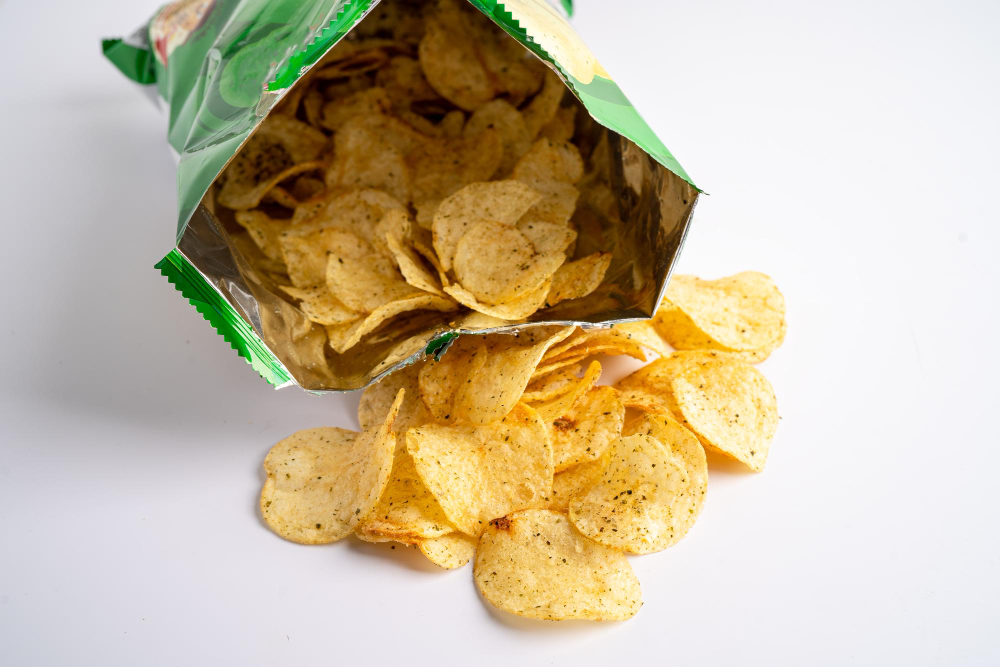
Everybody has the same reaction to opening a large bag and finding it a third full. It feels like a swindle, it has its own name online, and there are entire photo galleries devoted to it.
The gas is not air, though. It is nitrogen, and it is in there to stop the contents going stale and to stop them being crushed. Whether you are also being short-changed on quantity is a separate question with a separate answer, and the two keep getting run together.
What Actually Makes a Crisp Go Soft
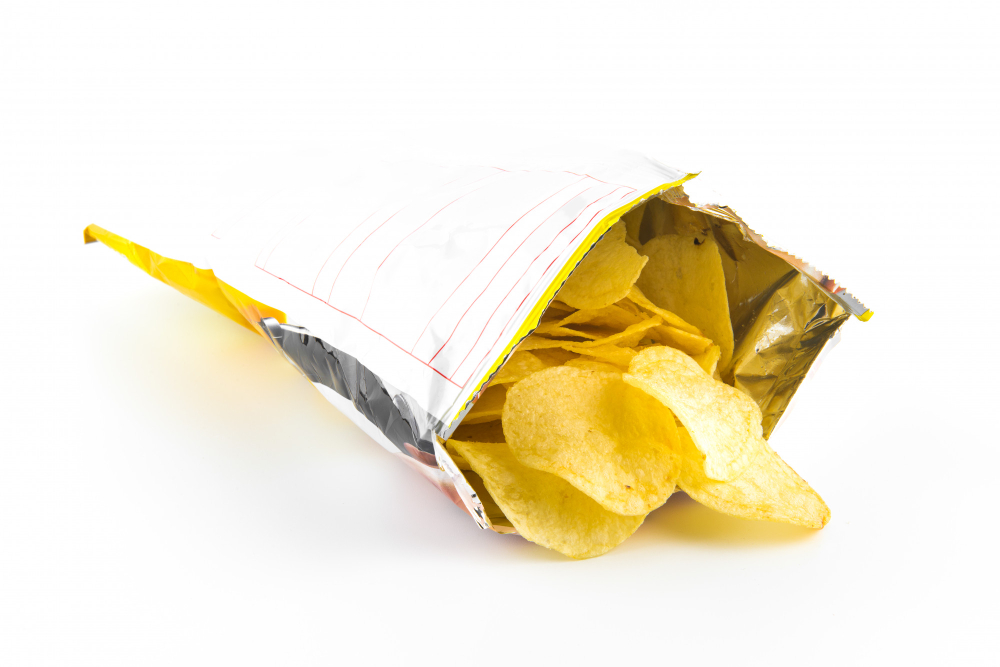
A potato crisp is a thin slice of starch fried in oil until almost all the water has gone. Two things then attack it.
Oxygen reacts with the fat. The fats in the frying oil oxidise on contact with air, producing the specific stale, cardboard, slightly waxy flavour that an old crisp has. This is rancidity, and it is a chemical reaction that proceeds as long as there is oxygen present. Light and heat speed it up.
Water comes back. A crisp is drier than the air around it, so it pulls moisture out of that air until the two are in balance, and a crisp that has absorbed moisture is a soft crisp. This is why a packet left open overnight is ruined even if nothing has touched it.
Ordinary air is about a fifth oxygen and carries whatever humidity the room has. Seal a crisp in it and both processes start immediately.
Like our content? Follow us for more.
Why Nitrogen
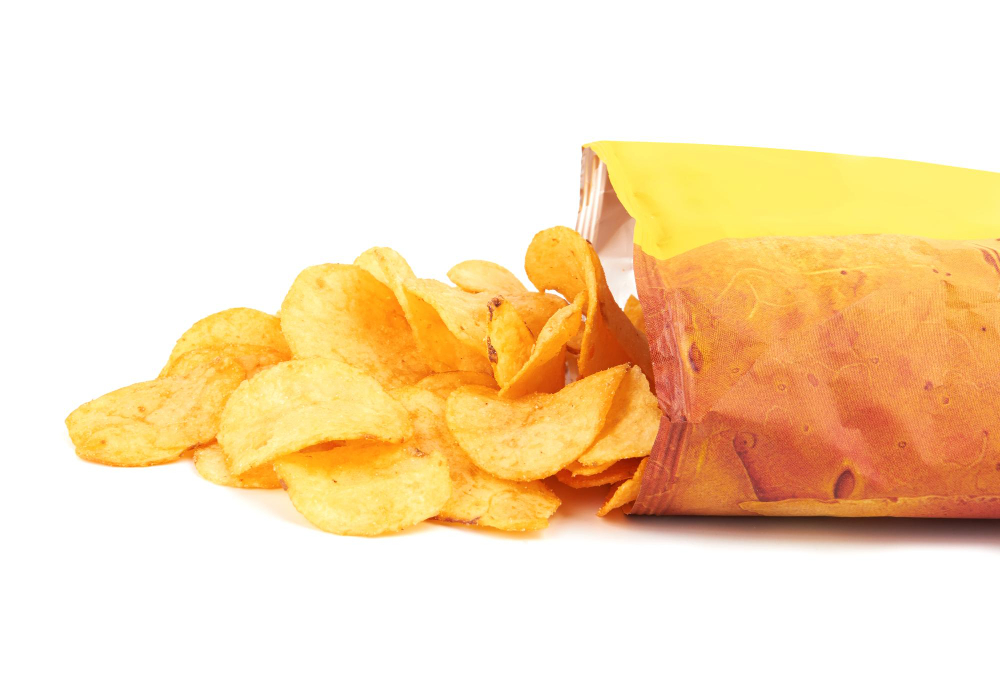
Nitrogen makes up most of the atmosphere already and is almost completely unreactive at ordinary temperatures. It will not oxidise the fat, it carries no moisture when supplied dry, it is cheap, it is abundant, and it is obviously safe to have in contact with food.
The process is called modified atmosphere packaging. The bag is flushed with nitrogen as it is formed and filled, displacing the air, and then sealed. The target is usually a very low residual oxygen level – a few percent at most, and in good lines well under that.
The effect on shelf life is not marginal. A crisp packed in air stays acceptable for a matter of days or a couple of weeks. The same crisp packed under nitrogen holds for months. Without it the product could not be manufactured centrally, distributed nationally and sat in a warehouse and a shop, which means it could not exist at the price it does.
The Cushion Is the Other Half of the Job
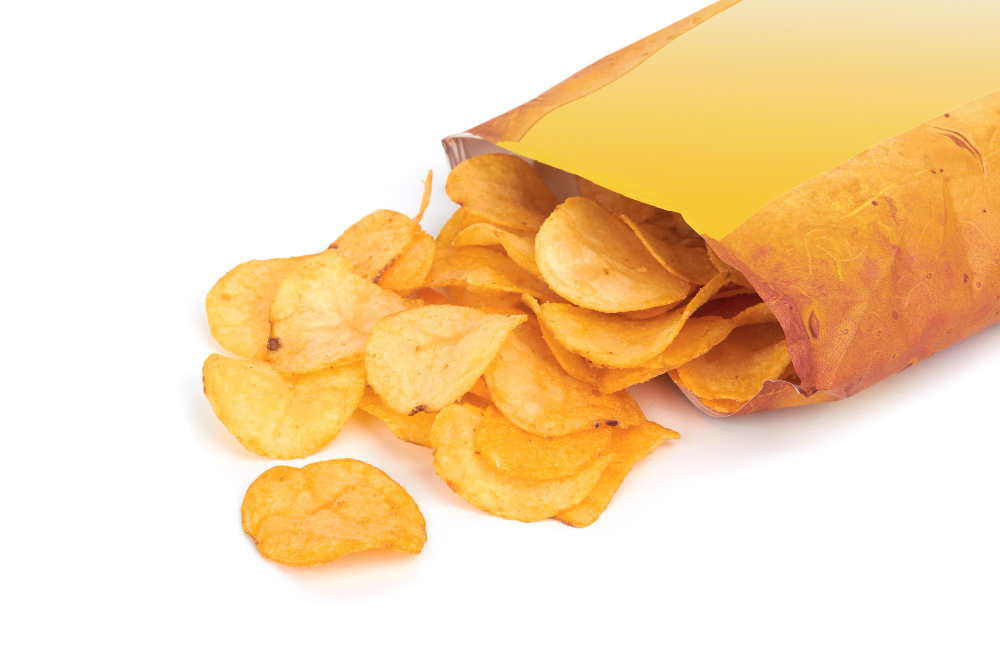
The gas does a second job that is just as important and gets even less credit.
A crisp is one of the most fragile manufactured foods there is. It is thin, brittle and has no structural strength whatsoever. Between the factory and the shelf it is dropped into a bag, carried along a conveyor, packed into a case, stacked on a pallet, driven several hundred miles, unloaded, carried, shelved, and then thrown into a shopping bag with a tin of beans on top of it.
An inflated bag is a cushion. The gas lets the contents move and settle rather than being pressed against each other, and it absorbs impact across the whole surface of the pack. Deflate the bag and the same journey produces a bag of fragments.
This is why the practice is not limited to crisps. Anything light and breakable gets the same treatment, and anybody who has opened a bag of tortilla chips or prawn crackers has seen the same thing for the same two reasons.
So Are You Being Short-Changed or Not
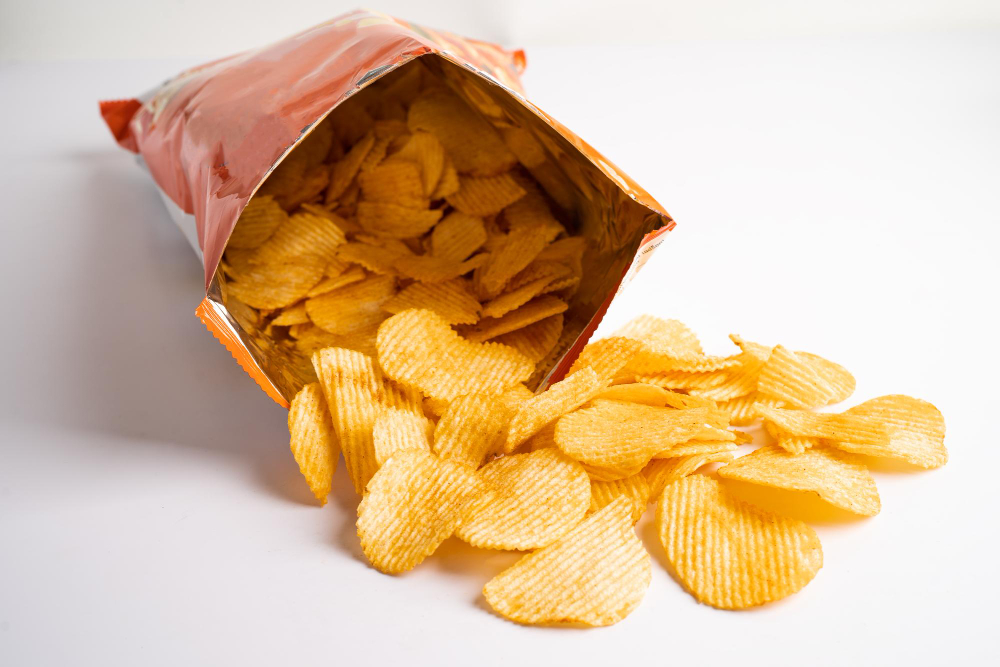
Here is where the two questions have to be separated, because the honest answer is: not by the gas, and sometimes by something else.
The gas is not a substitute for product. The bag states a weight, and the weight is what you are buying. A packet labelled as containing a particular number of grams has to contain it, subject to the ordinary tolerances that apply to any packaged goods, and this is enforced by weights and measures regulation in essentially every market. Nobody is selling you nitrogen by the gram.
What is a genuine issue is the size of the pack relative to its contents, which regulators call slack fill. A bag that is far larger than the product requires makes the quantity look greater on a shelf, and that is a presentational practice rather than a weight one. Legislation in a number of jurisdictions distinguishes between functional slack fill – space that is there for protection, settling, the machinery, or the gas flush – and non-functional slack fill, which is space that exists only to make the package look bigger. The first is permitted and the second is not, and the arguments are about where the line sits.
So the useful question to ask of a large, light bag is not whether there is gas in it. It is whether the stated weight is what you wanted to buy, which is printed on the front and is the only number that means anything.
The Weight Has Been Shrinking, and That Is Real
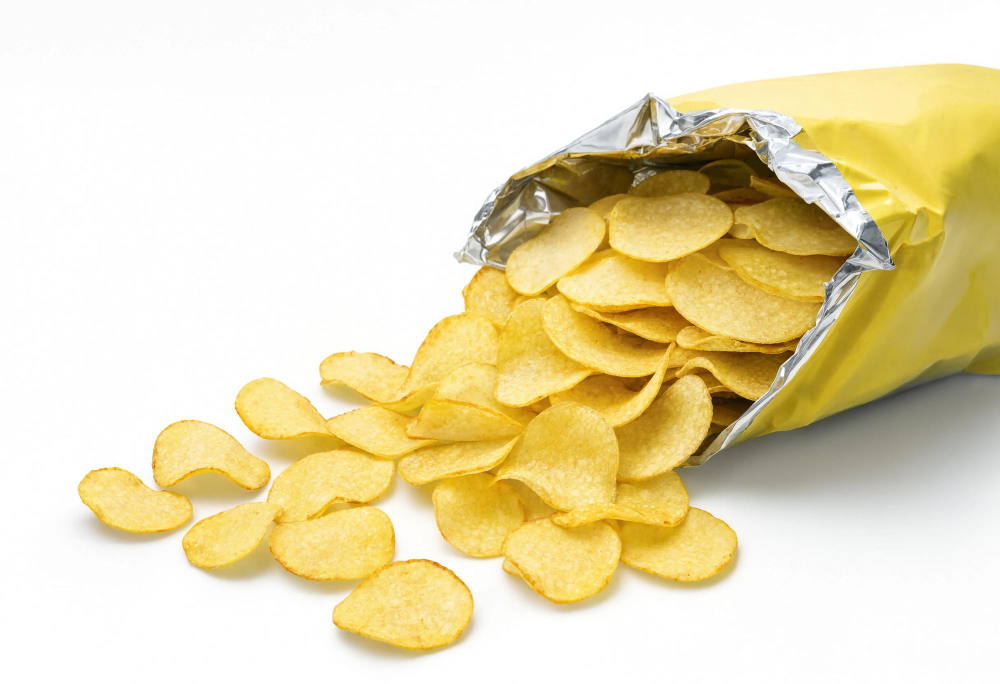
The complaint people are usually reaching for when they complain about the air is a different and entirely legitimate one.
Pack sizes have fallen repeatedly while prices and packaging have stayed the same, a pattern now common enough to have a name in both consumer journalism and economics. A bag that held a certain weight ten years ago frequently holds noticeably less today in the same-looking pack.
Manufacturers do this because a reduction in quantity is far less visible to a shopper than an increase in price, and because the alternative – raising the shelf price – risks losing the product’s position in a retailer’s price architecture. Several countries have introduced or debated requirements to flag size reductions on packaging, with mixed enforcement.
That is the thing worth being annoyed about. It is measurable, it is deliberate, and it is on the front of the pack where anybody can check it. The nitrogen is doing a job.
The Same Trick Is Doing Quiet Work All Over the Shop
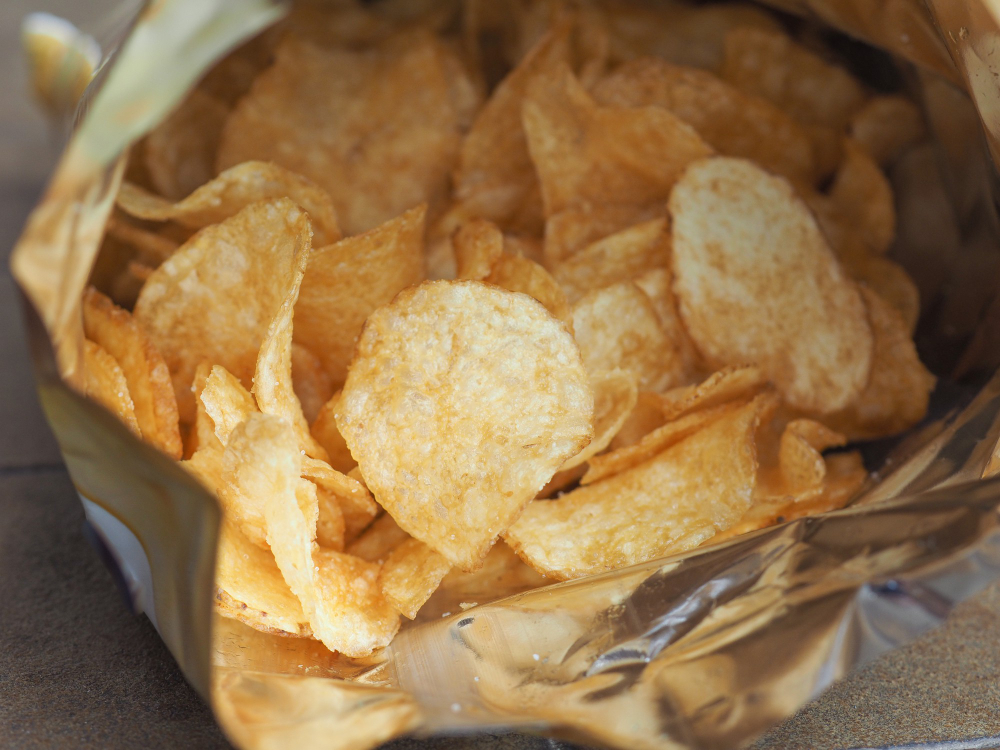
Once you know what the gas flush is for, a supermarket reads differently, because modified atmosphere packaging is in a very large share of what is on the shelves and it almost never announces itself.
Bagged salad is packed in an atmosphere with reduced oxygen and raised carbon dioxide, tuned so the leaves keep respiring slowly without browning. The film itself is engineered to let gases through at a particular rate, which is why a salad bag is not simply a sealed plastic pouch.
Pre-packed meat in a tray sits under a high-oxygen mixture, specifically because oxygen keeps the pigment in red meat bright red. That one is worth knowing: the colour you are reading as freshness is partly a packaging decision, and meat that has gone slightly brown in the pack is frequently nothing more than meat that has used up the oxygen.
Coffee is flushed and then given a one-way valve, so the carbon dioxide the beans release can escape without letting air back in – which is why a bag of coffee puffs up and why squeezing one lets you smell it.
Hard cheese, sliced meats, fresh pasta and ready meals all use variations. None of it is listed on the front of the pack, because there is nothing to declare: the gases used are ordinary atmospheric ones and they do not become part of the food.
So the inflated crisp packet is the only one most people ever notice, and it is noticed precisely because the contents are light enough for the bag to stay visibly inflated. Everything else is doing the same thing without the shape giving it away.
How to Tell Whether a Bag Was Packed Properly
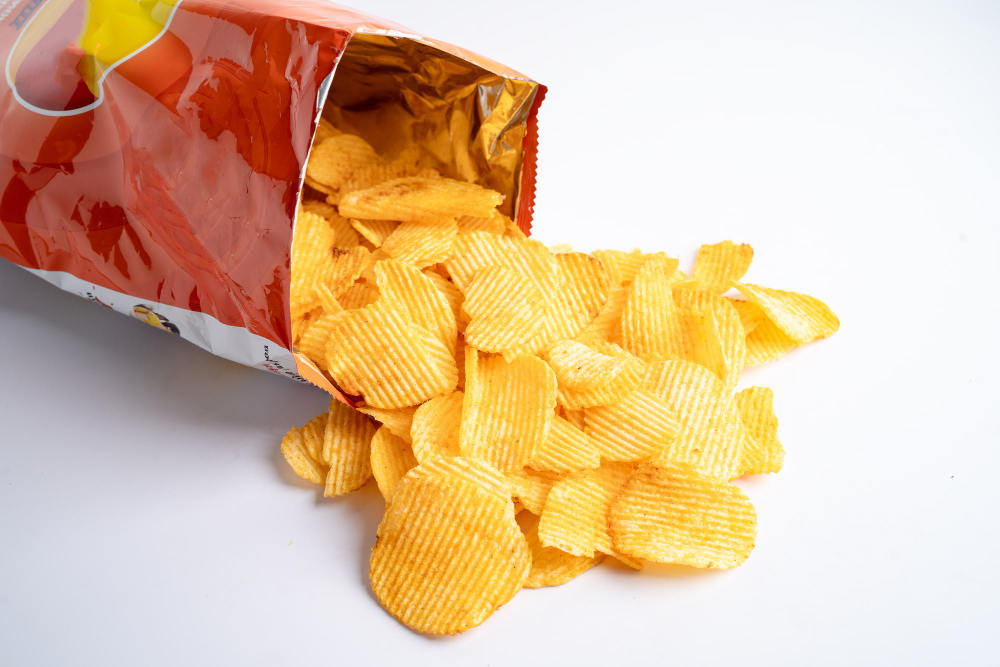
A few things are genuinely readable from the outside.
A firm, well-inflated bag that resists squeezing has a good gas fill and an intact seal. A bag that is soft or partly collapsed has either lost gas through a pinhole or a bad seal, or has been through a pressure change. A bag that arrives at altitude – driven over a mountain pass or flown – will be noticeably tighter, which is normal and not a fault.
A bag with no inflation at all has usually failed. The contents will be more broken than they should be, and if it has been like that for a while they will taste stale, because the seal that lost the nitrogen has let air in.
The best-before date is about the gas as much as the food. It is an estimate of how long the barrier and the atmosphere inside will hold before oxidation becomes noticeable, which is why the date on a bag of crisps is months away and the date on an opened one is immediately.
Why the Bag Is Not Just Plastic
The last piece is the material, and it explains why a crisp bag feels different from any other packaging in a kitchen.
A crisp bag is a laminate of several layers, typically including a very thin metallised layer which blocks light and provides a far better barrier to oxygen and water vapour than plastic alone. Light accelerates the oxidation of the fats, so a transparent bag would undo a good part of the nitrogen’s work. The metal layer is what makes the bag opaque, what makes it crackle, and what makes it awkward to recycle, because separating the layers is difficult and the result is a mixed material that most kerbside systems cannot process.
That is the actual trade in the packet. The gas and the laminate together take a food that would be stale in a week and hold it for half a year, at the cost of a wrapper that is hard to deal with afterwards. A number of manufacturers have moved to recyclable mono-material films and to in-store collection schemes, and the barrier performance of those is the engineering problem that has kept the change slow.
All of which is a surprising amount of technology standing between a sliced potato and your sofa, and none of it is there to make you think you are getting more than you are.
Like our content? Follow us for more.