

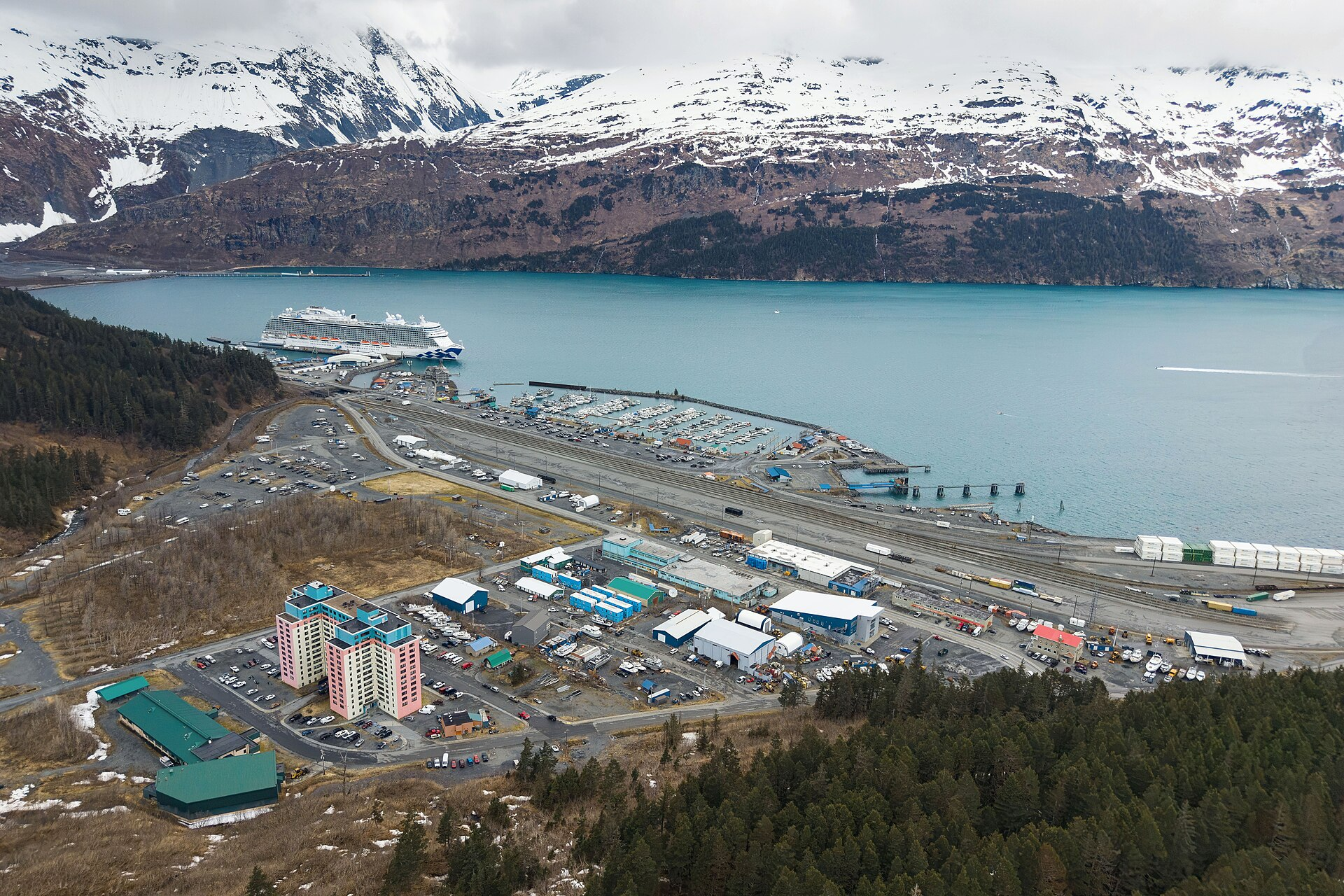
Imagine a town where you could live your entire life without stepping outside. Where your apartment, your neighbor’s apartment, the mayor’s office, the general store, the police, the clinic, the post office, and the church are all inside the same building — and where your kids get to school through a tunnel, without ever facing the weather. That town exists. It’s called Whittier, Alaska, and almost its entire population lives together under one roof in a single former military high-rise, in what may be the most extraordinary living arrangement of any community in the United States.
Whittier is often described, only half-jokingly, as “a town under one roof,” and the description is close to literal. This tiny, remote port on Alaska’s Prince William Sound, hemmed in by mountains and battered by ferocious weather, has evolved one of the most unusual urban forms on Earth: a whole community consolidated into essentially one building, reachable only through a tunnel that it shares with trains and that locks up at night. It sounds like the setting of a novel, but it is a real, functioning American town — and understanding how it came to be reveals a fascinating story of military history, brutal geography, and human adaptation to one of the harshest inhabited places in the country.
A Town the Army Built for a Secret
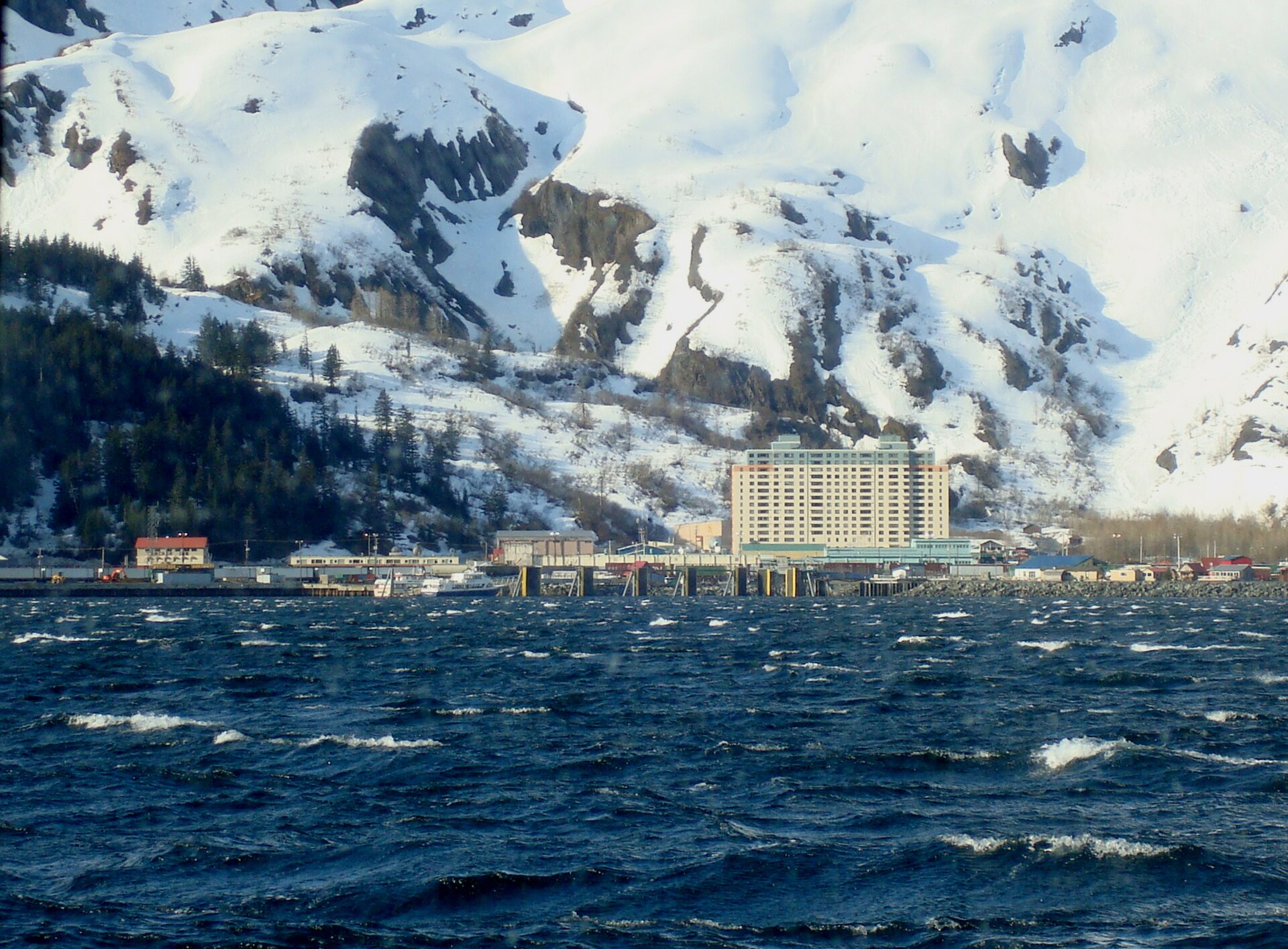
Whittier owes its existence to the U.S. military. During the Second World War, the Army sought a location on the Alaskan coast that could serve as a secret, sheltered port and supply point — somewhere hidden, defensible, and connected to the interior. Whittier’s spot on Prince William Sound was ideal: it offered a deep-water port, and it was screened by mountains and frequent heavy cloud cover that helped conceal it. The catch was that it was almost impossibly isolated, blocked from the rest of Alaska by the mountains that also hid it.
The Army solved the access problem by boring a long tunnel straight through the mountain to connect Whittier to the railroad and the outside world, and it developed the port as a strategic military installation. To house the personnel in such a hostile, cramped, weather-lashed location, the military built large buildings designed to hold entire functions under one roof — an efficient response to a place where going outside was often truly dangerous. Among these was a massive high-rise that would, decades later, become the heart of the civilian town. Whittier, in other words, was purpose-built as a consolidated, indoor community from the very start, its unusual form dictated by the demands of war and weather.
Like our content? Follow us for more.
Begich Towers: The Building That Is a Town
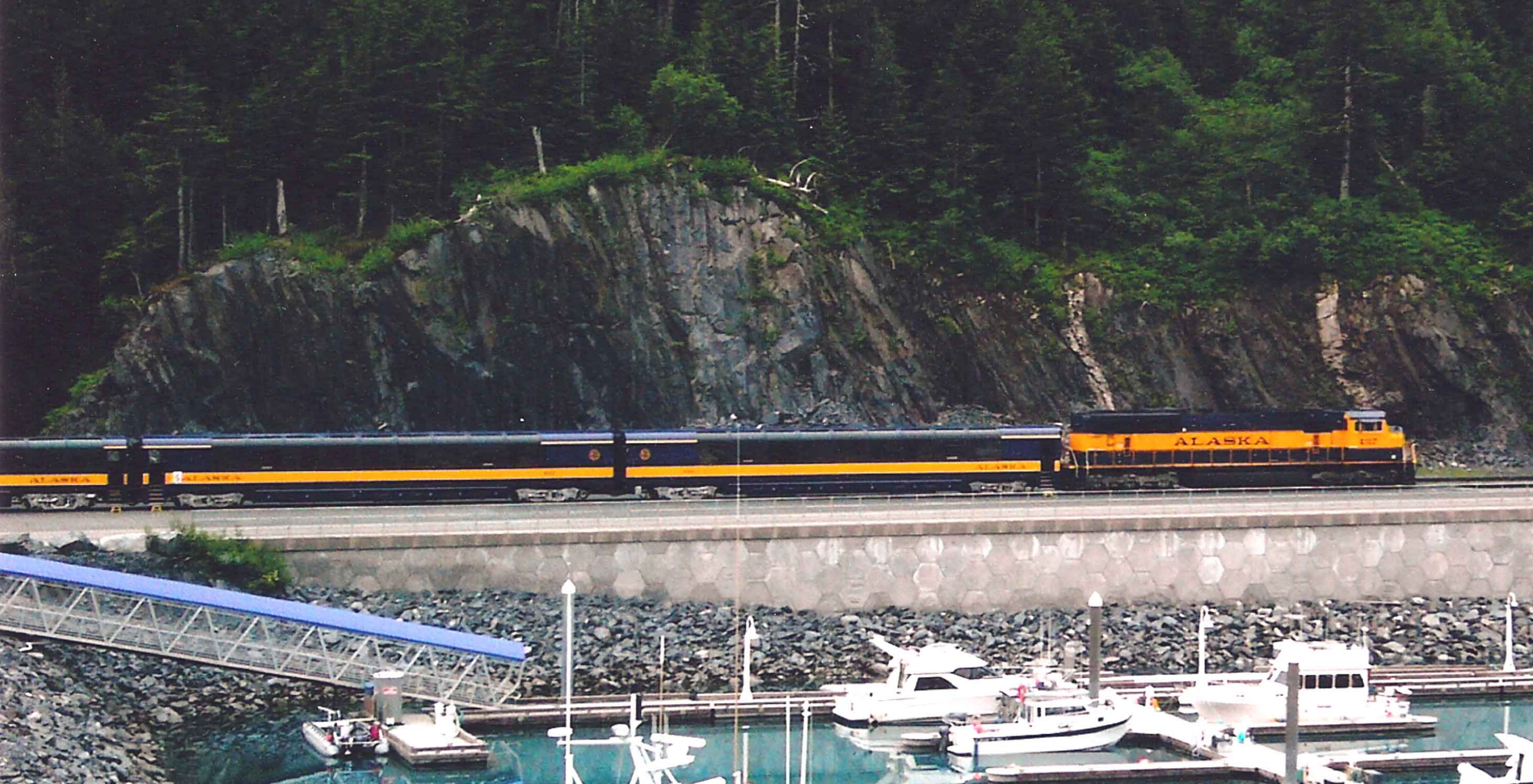
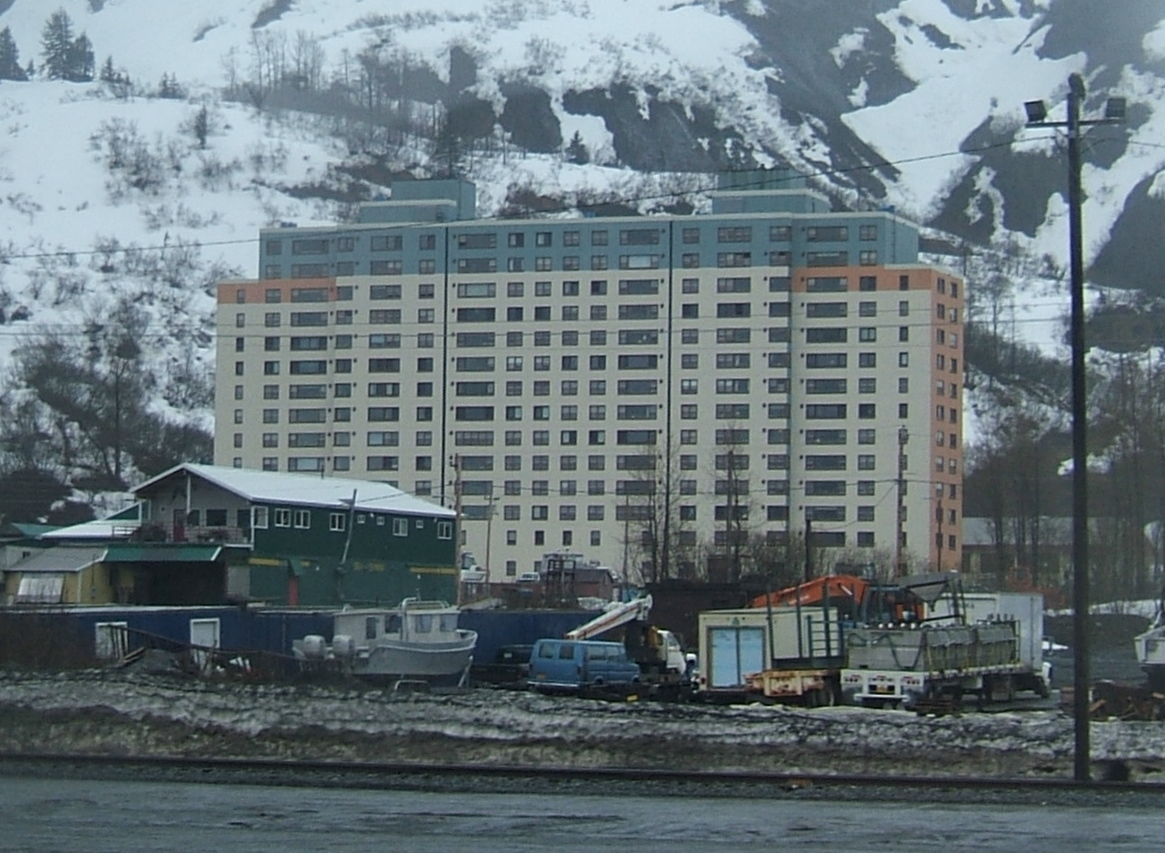
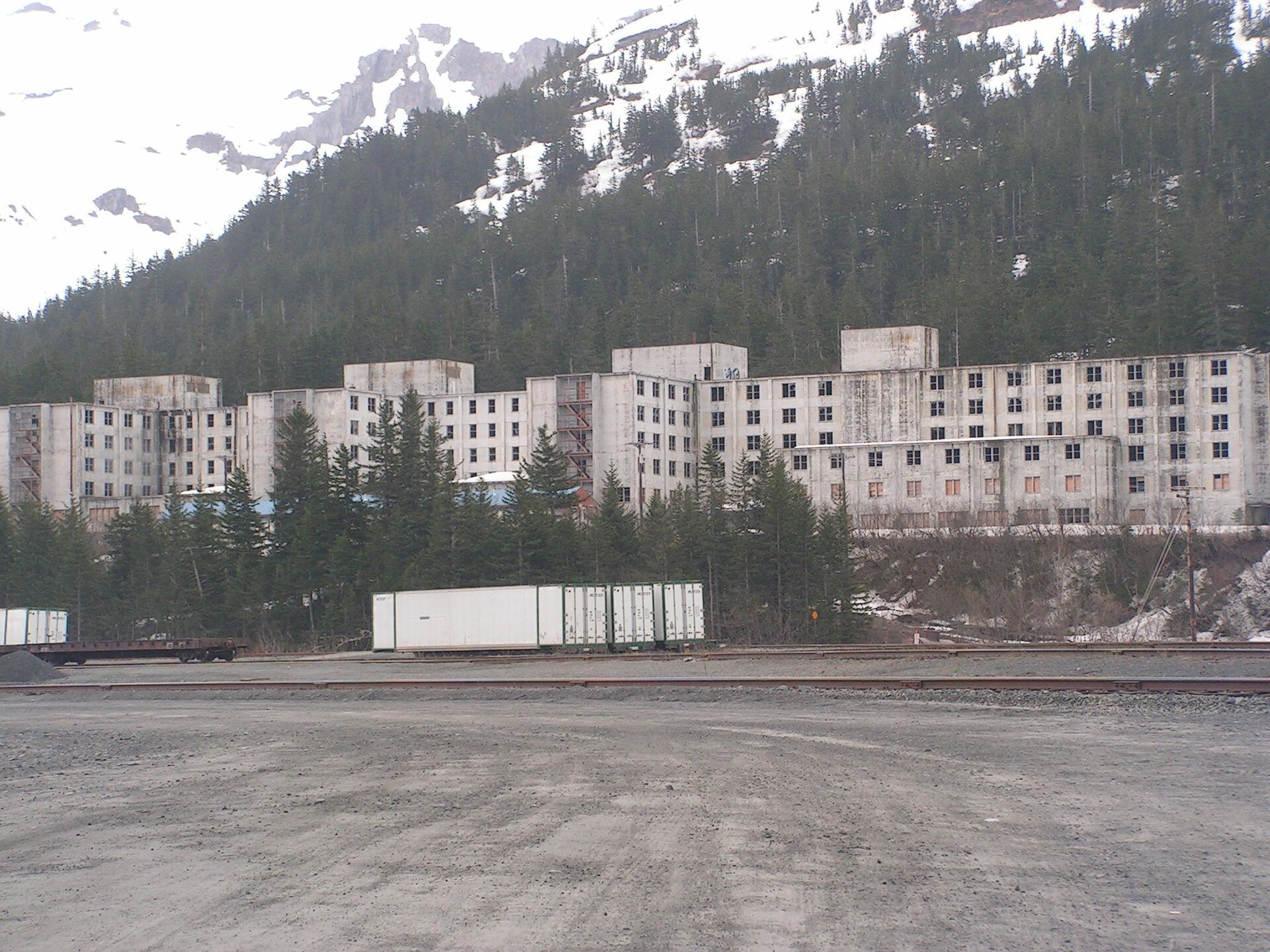
When the military eventually wound down its presence, the base’s infrastructure remained, and a small civilian community took root, inheriting the buildings the Army had left behind. Over time, the population consolidated into one of these structures — a 14-story high-rise now known as Begich Towers — which became home to the overwhelming majority of Whittier’s residents and, remarkably, to most of the town’s essential services as well.
Today, this single building functions as a vertical town. Its floors hold residents’ apartments, but tucked among and beneath them are the institutions a community needs: a post office, a small grocery and general store, a police station, a health clinic, a laundromat, a church, and the offices of local government, along with amenities for residents. A person living in Begich Towers can, in principle, collect their mail, buy their groceries, see the doctor, report a crime, attend a service, and go to work without ever stepping outside — a real advantage in a place where winter brings punishing winds, heavy snow, and cold. The building even connects, by an underground tunnel, to the school, so that Whittier’s children can walk to class in shirtsleeves while a blizzard rages overhead. The whole town, essentially, lives and functions inside one climate-controlled structure, a self-contained community that has fascinated visitors and documentary-makers precisely because it upends every assumption about what a town looks like.
The Tunnel That Controls Everything
If living in one building is Whittier’s first great oddity, getting there is its second. For most of the town’s history, Whittier could be reached only by boat or by the railroad through the original military tunnel — there was no ordinary road in. That changed when the tunnel was converted to also allow cars, but the solution came with extraordinary conditions that shape daily life to this day.
The route into Whittier runs through the Anton Anderson Memorial Tunnel, a two-and-a-half-mile passage through the mountain that is famous for being one of the longest of its kind in North America and for a singular feature: it is shared by both cars and trains, running on a single lane. Because cars and trains cannot use the one-lane tunnel simultaneously, traffic is tightly controlled and runs in one direction at a time on a fixed schedule, with vehicles waiting their turn to convoy through and yielding entirely to trains. And crucially, the tunnel closes at night, sealing the town off from road access for hours until morning. This means Whittier is one of the only towns in America where, for part of every day, you simply cannot drive in or out — the community locked behind its mountain until the tunnel reopens. Residents plan their lives around the tunnel’s schedule, and the arrangement reinforces Whittier’s profound, almost otherworldly isolation.
Life at the End of the Tunnel
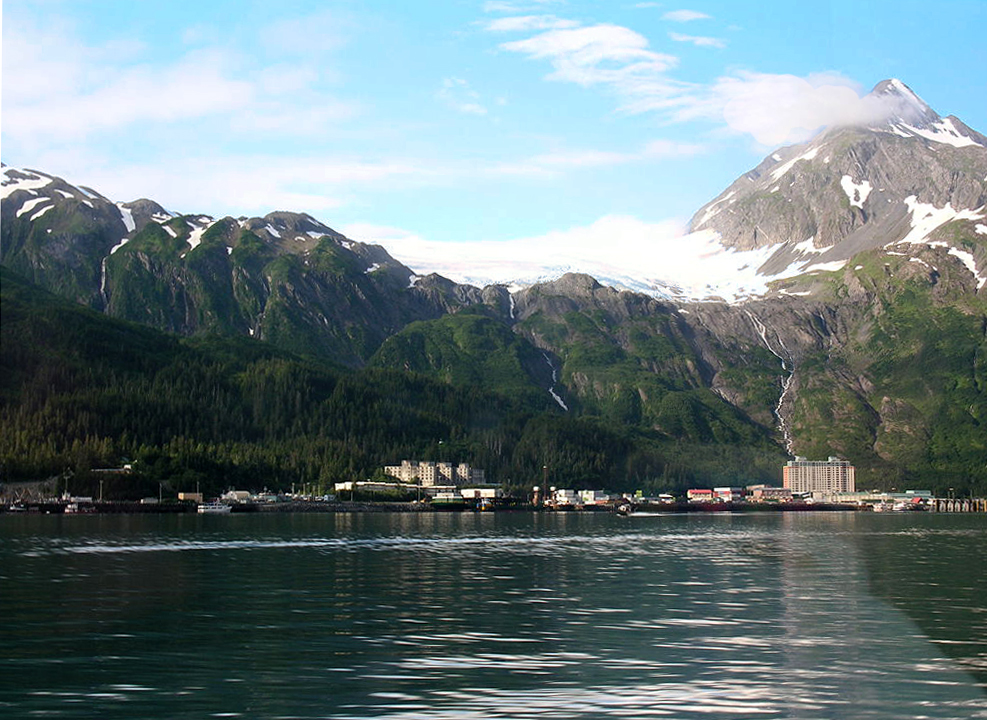
Life in Whittier is shaped entirely by its geography and its weather, both of which are extreme. The town sits in a spot that receives enormous amounts of precipitation and endures fierce winds funneling off the sound and the mountains, making outdoor life really challenging for much of the year — which is exactly why the indoor, consolidated model makes so much sense. The population is small, numbering only a few hundred, and the community is famously tight-knit in the way that only a group of people who quite literally live in the same building and depend on the same tunnel can be. Everyone knows everyone; the social life of the town unfolds in shared hallways and common rooms.
Yet Whittier is far from a grim place. It sits on the stunningly beautiful Prince William Sound, surrounded by glaciers, waterfalls, mountains, and abundant marine life, and in the summer it transforms into a lively hub for tourism, fishing, and boating. Cruise ships and visitors arrive to explore the spectacular scenery, wildlife cruises head out among the glaciers and whales, and the town’s port bustles with activity during the brief, bright northern summer. The contrast is striking: a place that huddles indoors against the winter opens up in summer as a gateway to some of Alaska’s most magnificent wilderness. Whittier’s residents endure the hard months for the payoff of living amid honestly world-class natural beauty, at the edge of one of the great scenic sounds on the continent.
A Place That Fascinates the World
Whittier’s singular arrangement has made it a magnet for curiosity far beyond Alaska. Documentary crews, journalists, and travel writers have profiled the town repeatedly, drawn by the almost unbelievable premise of a whole community living in one building at the end of a one-lane tunnel, and it regularly turns up on lists of the world’s most unusual places to live. For residents, the attention is a mixed blessing — the town is a real home, not an exhibit — but it speaks to how truly rare Whittier’s way of life is. There is simply nowhere else quite like it, and people are endlessly fascinated by the idea of a town that solved the problem of a brutal environment by, essentially, moving everyone indoors together.
The Strangest Town in America
Whittier endures as a place unlike any other — a town that answers a question no one else quite asks: what if an entire community simply moved indoors? Born of military necessity, refined by brutal geography, and preserved by the practical wisdom of consolidating life under one roof in a place where the outdoors can be dangerous, it has become a real curiosity of American settlement, drawing fascination from around the world for the sheer strangeness of its arrangement. A whole town in one building, reached through a one-lane tunnel it shares with trains, sealed off every night behind a mountain — it reads like fiction, and it is entirely real.
There’s a deeper charm to Whittier beneath the novelty, though. It’s a testament to human adaptability, to the way communities shape themselves to survive and even thrive in the most demanding environments, finding ingenious solutions where nature offers no easy ones. The people of Whittier have built a functioning, close-knit life in a place that seems designed to repel it, and they’ve done it by embracing togetherness in the most literal way imaginable — sharing not just a town but a single roof. For the traveler willing to time the tunnel and make the trip, Whittier offers a glimpse of one of the most unusual ways of living anywhere in America, set against a backdrop of glaciers and sound that ranks among the most beautiful in Alaska. Just be sure to check the tunnel schedule. In Whittier, the whole town runs on it.
Like our content? Follow us for more.
