

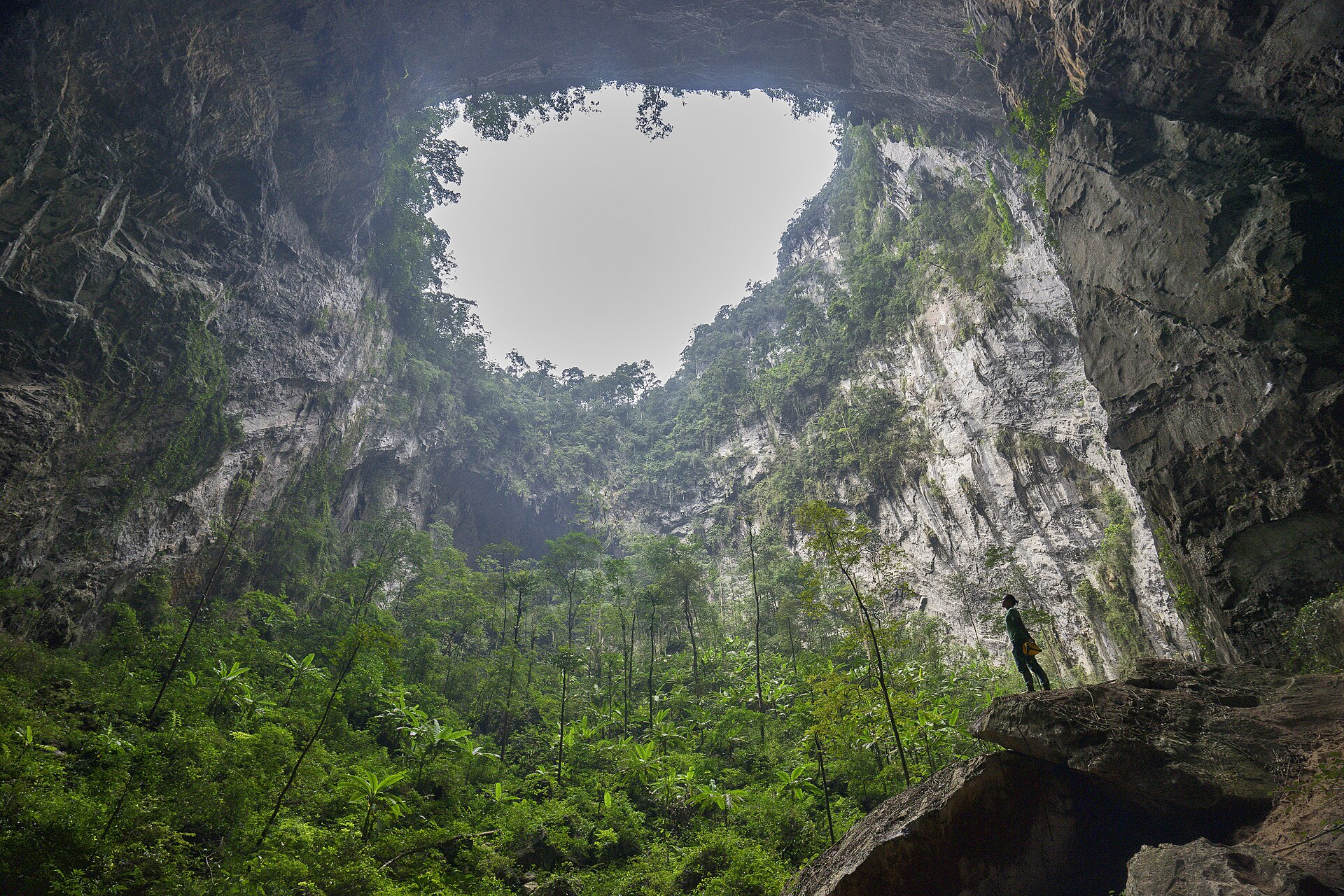
Somewhere beneath the jungle of central Vietnam is a cave large enough to hold a 40-story skyscraper, with a river running through it, a forest growing inside it, and clouds that form under its ceiling. It is the largest cave on Earth, and for most of human history no one knew it was there. The man who found it was a local hunter sheltering from a storm, and after stumbling on the entrance once, he lost it for nearly two decades before he could lead anyone back. The story of Hang Son Doong is part geology, part adventure, and part sheer luck. Here’s how the world’s biggest cave was found, what makes it so staggering, and what it takes to step inside.
A note on the geography: Hang Son Doong sits inside Phong Nha–Ke Bang National Park in central Vietnam, near the border with Laos, a region riddled with limestone and underground rivers. The name translates roughly to “mountain river cave.” Here’s the full picture.
A Local Hunter’s Accidental Discovery
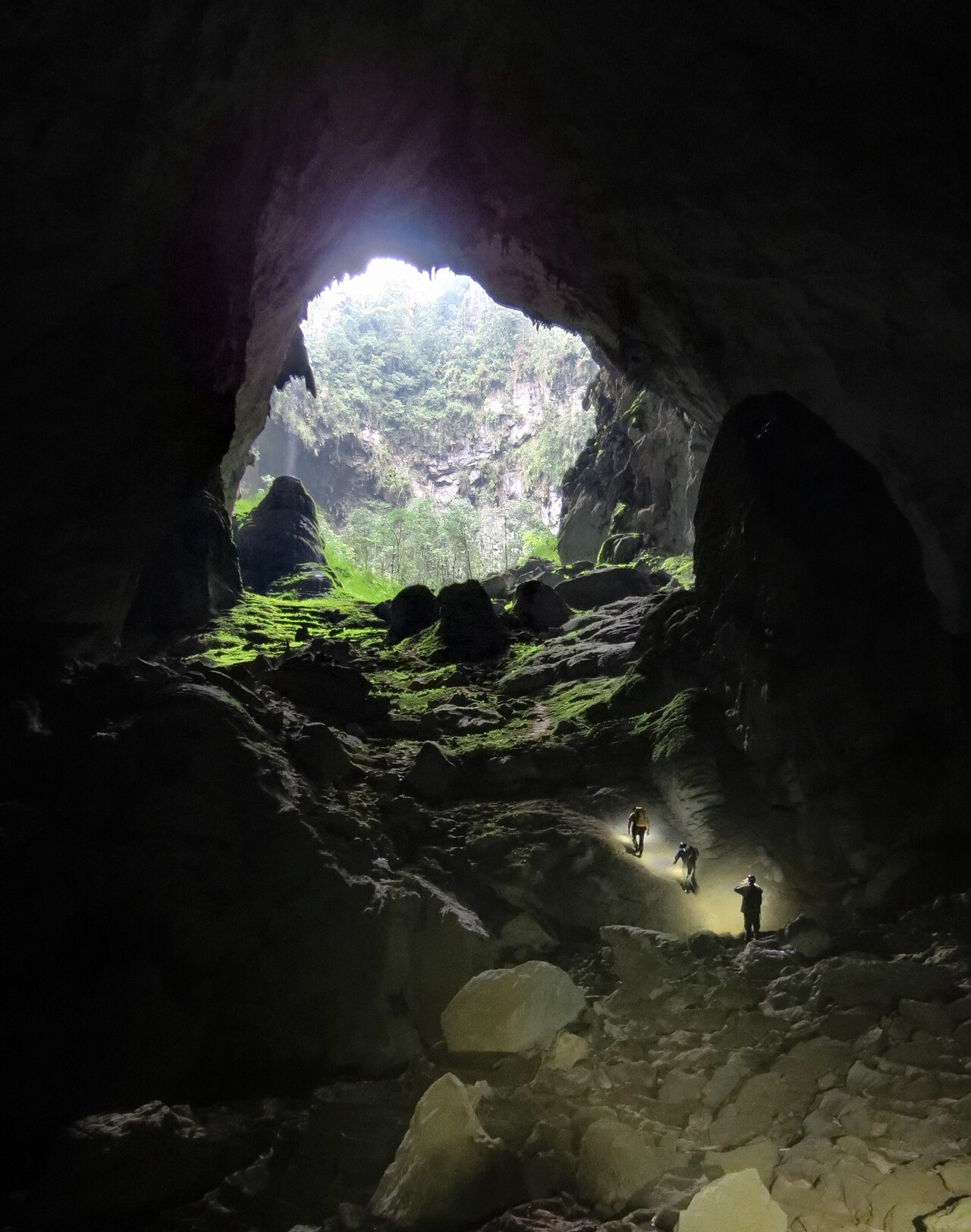
The cave owes its discovery to one man, Ho Khanh, who grew up trekking the jungles of Phong Nha in search of food and timber, and of agarwood, a rare and valuable fragrant wood prized across Asia. Around 1990, while out in the forest, he took shelter from a storm near a limestone cliff and noticed something strange: a powerful wind blowing out of an opening in the ground, carrying mist and the distant sound of rushing water. He didn’t go in. The vertical drop was dangerous and the roar from below was unnerving, and like other locals, he kept his distance. But the memory of that wind stayed with him, and it would turn out to mark the entrance to the largest cave passage on the planet.
Like our content? Follow us for more.
Lost for Almost Two Decades
The remarkable twist is that Ho Khanh couldn’t find it again. The jungle is dense and trackless, the entrance is well hidden, and for years the exact spot eluded him. In the early 2000s, British cavers who had been exploring the region heard about the wind-blasting cave and asked him to relocate it, recognizing that such a strong draft signaled an enormous cavern below. He searched repeatedly without success. It wasn’t until 2008, roughly seventeen to eighteen years after his first encounter, that he finally retraced his route and pinpointed the entrance again. Today there is writing on the rock outside commemorating his persistence, because without it the cave might still be a rumor.
The 2009 Expedition That Stunned the World
Once Ho Khanh found the way back, he led a team from the British Cave Research Association, headed by speleologists Howard and Deb Limbert, into the cave in 2009. Caver Peter MacNab was among the first to step inside, and the team descended into total darkness with no idea what lay ahead. What they found exceeded anything they had imagined. Using laser measuring equipment, they established that the main passage was the largest ever surveyed, and the expedition announced Son Doong as the world’s largest natural cave, with a volume of about 38.5 million cubic meters. National Geographic helped bring the find to global attention that year, and in 2013 Guinness World Records formally recognized it as the largest cave on Earth.
Big Enough to Hold a Skyscraper
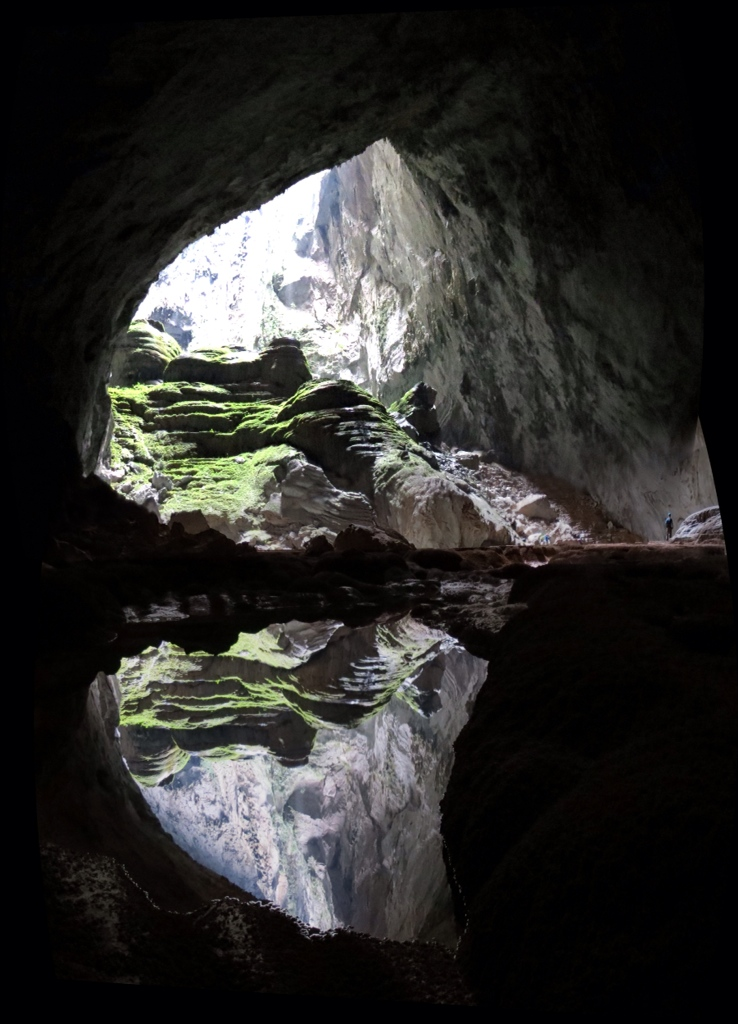
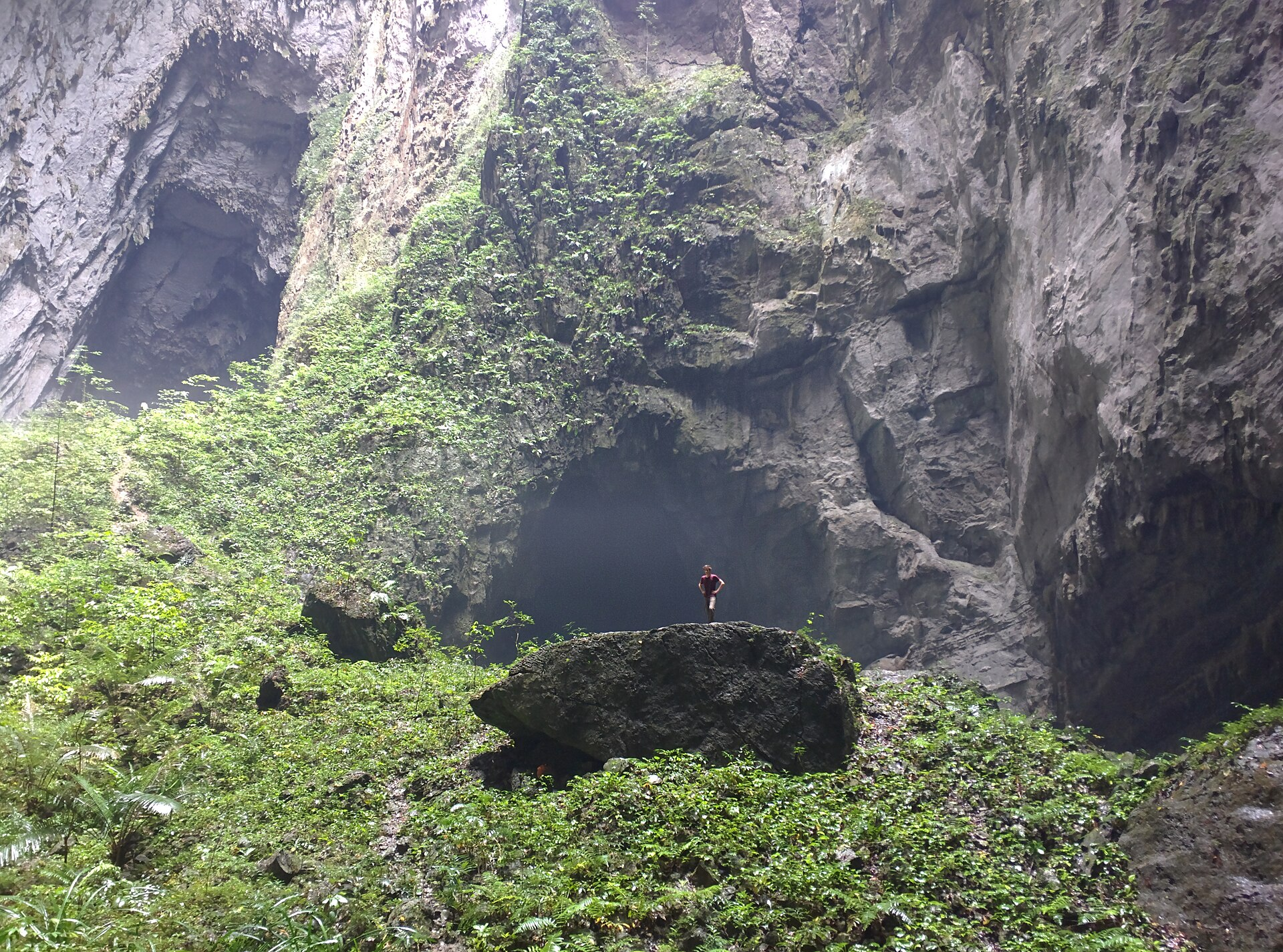
The numbers are hard to picture until you translate them into things people know. The surveyed passage runs for several kilometers, with chambers reaching more than 200 meters high and around 175 meters wide. That’s tall enough to fit a 40-story skyscraper standing upright inside the cave, with room to spare, and wide enough to swallow an entire city block. Comparisons to aircraft and skyscrapers are not exaggeration; sections of Son Doong genuinely dwarf the largest things humans build. It was measured at roughly five times the size of Phong Nha cave, which had previously held the title of Vietnam’s largest. Standing in the main chamber, explorers describe a sense of scale closer to being outdoors than underground.
A Jungle, a River, and Weather of Its Own
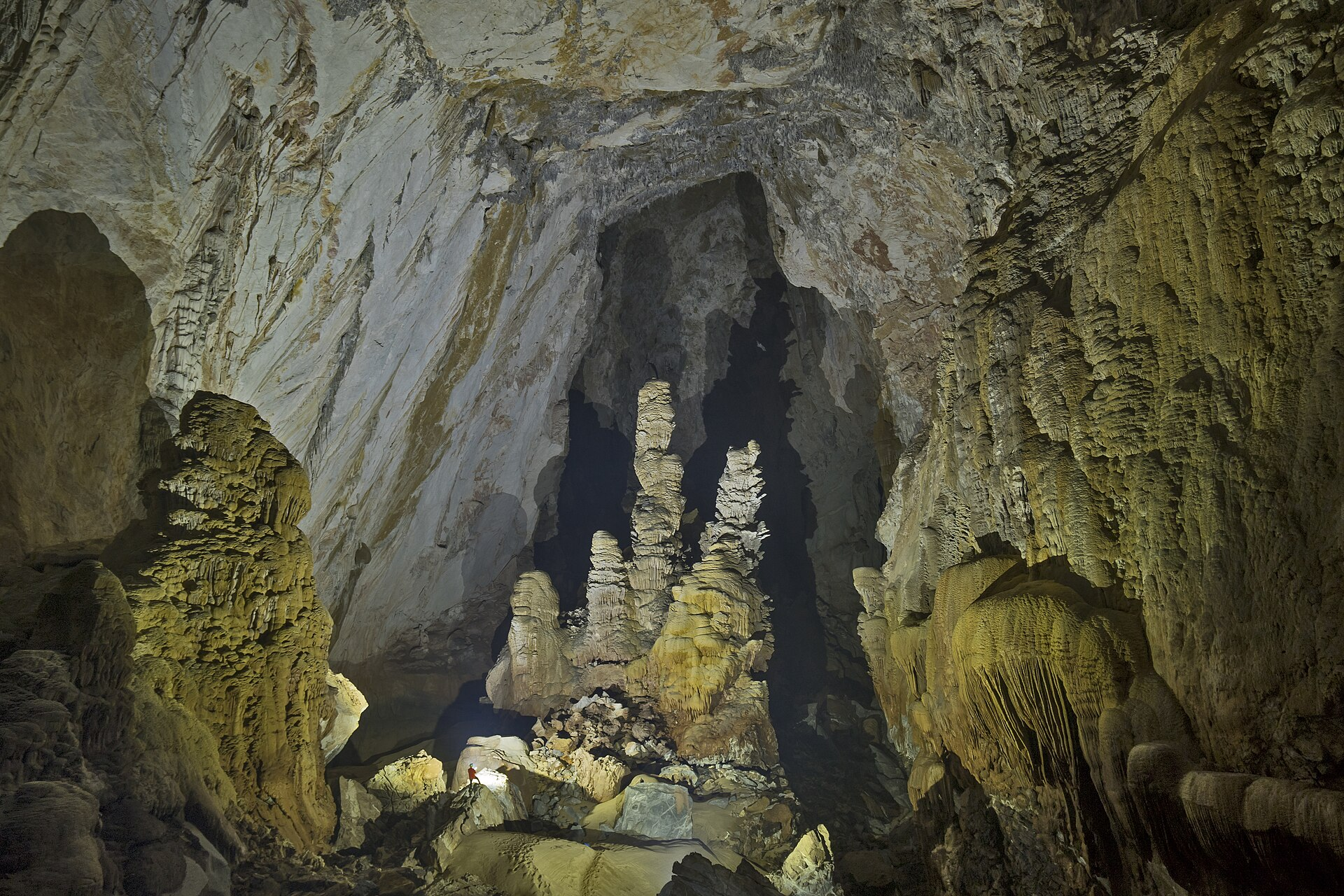
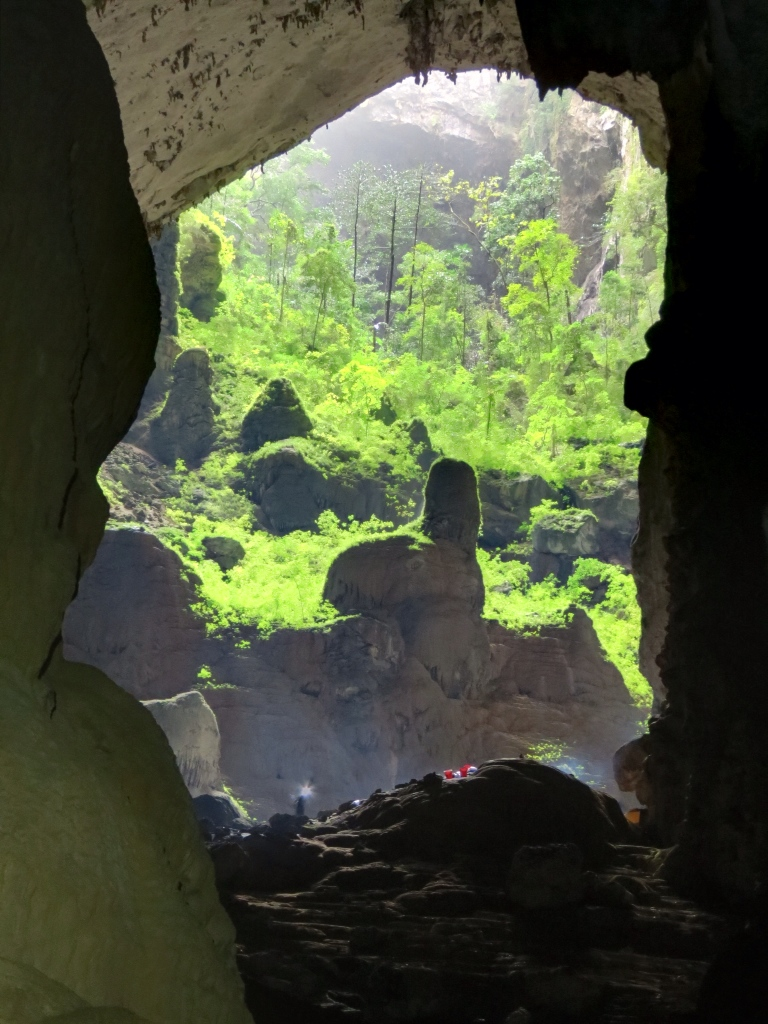
What truly sets Son Doong apart isn’t only its size, but what lives and happens inside it. In two places the cave’s ceiling has collapsed over the ages, creating enormous skylights, called dolines, that let sunlight pour in. Where the light lands, a genuine forest grows. One of these, nicknamed the Garden of Edam, is a lush, primeval jungle thriving some 200 meters inside the cave, complete with tall trees, ferns, and the wildlife that comes with them. A river, the Rao Thuong, flows through the cave’s floor, the same water that carved the passage in the first place. And the cave is so large that it generates its own microclimate: moisture and temperature differences cause clouds and mist to form beneath the ceiling, weather happening entirely indoors. Few places on the planet blur the line between cave and landscape so completely.
The Great Wall of Vietnam
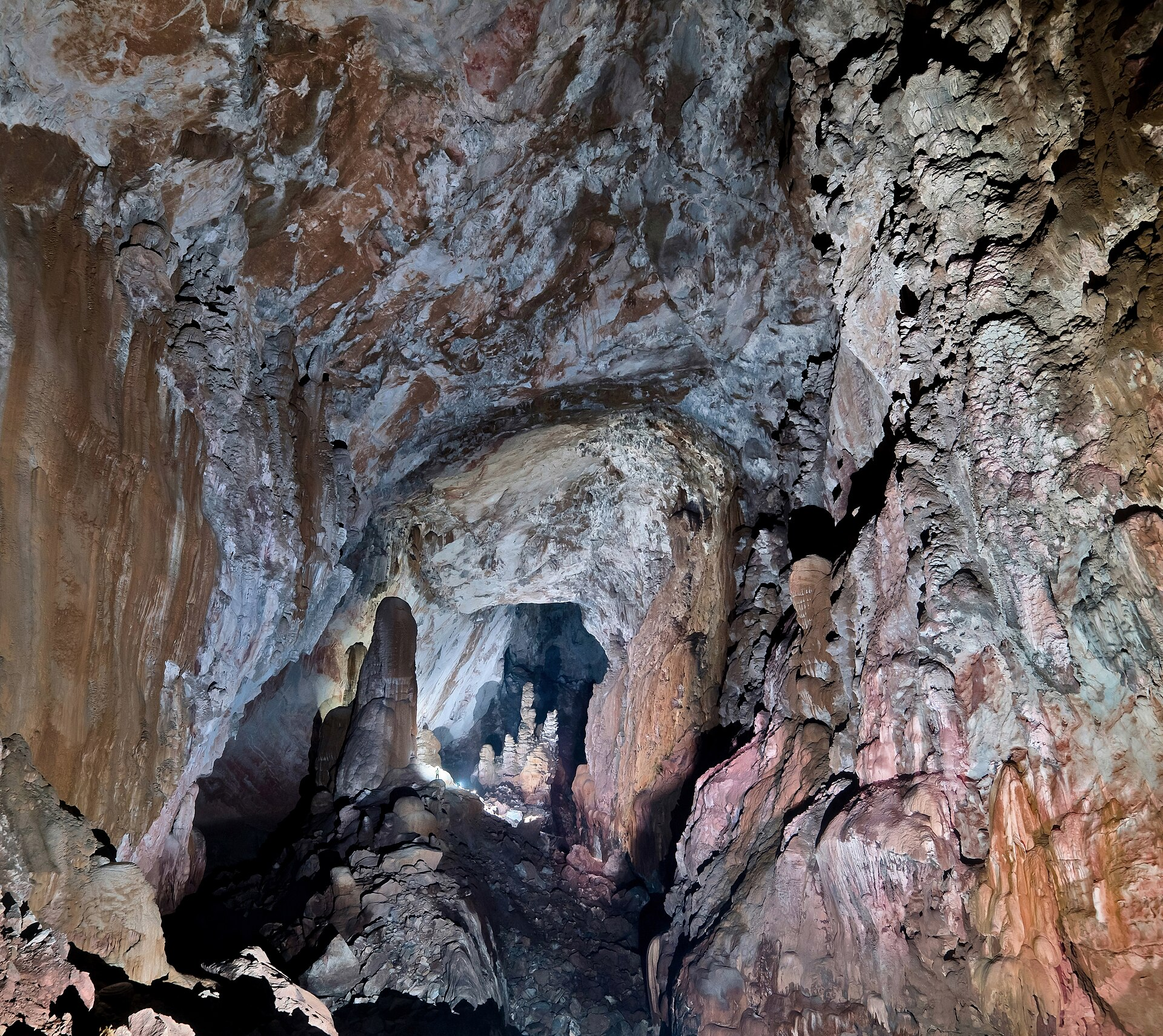
The 2009 expedition didn’t reach the end on its first attempt. Deep inside, the team ran into a massive wall of calcite flowstone rising nearly 90 to 100 meters, blocking the way forward. Lacking the specialized climbing gear to get over it, they turned back, and not knowing what lay beyond it, they named the barrier the Great Wall of Vietnam. A later expedition returned with the right equipment, and it took the cavers two days to scale the wall and continue. Beyond it they found more passage and, eventually, the cave’s far exit. The wall remains one of the expedition’s defining challenges and a measure of just how immense the cave is.
What Explorers Find Inside
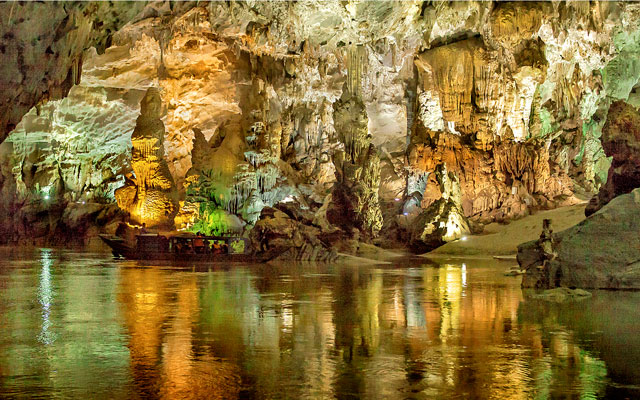
For the few who make it in, the interior is a sequence of wonders rather than a single empty void. Expeditions camp inside the cave for multiple nights, pitching tents on sandy banks beside the underground river and waking to shafts of daylight angling down from the dolines far overhead. The chambers have earned nicknames over the years: formations like the Wedding Cake, a towering stalagmite ringed with hundreds of stacked mineral layers, and passages where ancient cave pearls and fossils sit undisturbed in the rock. In places the ceiling soars so high that the beam of a headlamp simply disappears into the dark before reaching the top. Explorers consistently describe the strange sensation of weather and life where neither should exist: mist drifting between stone walls, birds and monkeys in the interior jungles, and the constant sound of water that built the whole place. It is less like touring a cave than like discovering a lost world sealed beneath the mountains, which is precisely how the first expedition described it.
How a Cave This Big Forms
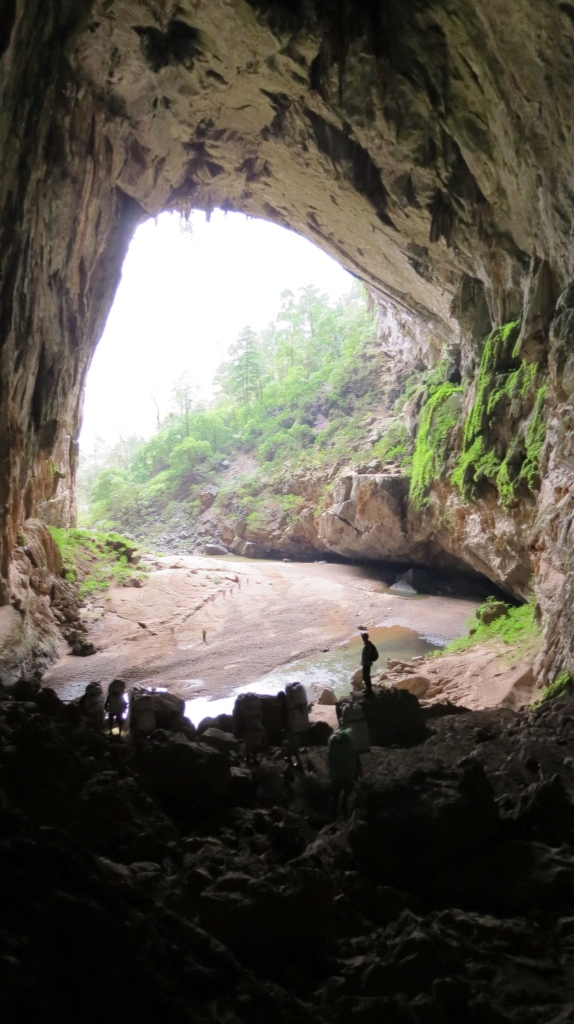
Son Doong is the product of geological time on a scale that matches its size. Scientists estimate it began forming somewhere between two and five million years ago, as the Rao Thuong River found a line of soft, soluble limestone and slowly dissolved it away, hollowing out the mountain from within. Over the eons the river carved an ever-larger passage, and where the rock above grew too thin and weak to support itself, the ceiling collapsed, opening the great skylights that now feed the underground forests. The acidic river water is still at work today, which means the cave, in geological terms, is still being shaped. It is a living example of karst landscape, the dramatic limestone scenery that makes this corner of Vietnam so riddled with caverns.
What It Takes to Visit Today
Son Doong is not a casual day trip, and that is by design. The cave is managed by the national park, and a single licensed operator runs the multi-day expeditions into it, with strict limits on how many people may enter, capped at small groups led by experienced guides, several of whom were part of the original exploration. Tours began in 2013, and the number of visitors who have ever set foot inside remains small, in the thousands rather than the millions that pour into famous landmarks. Reaching the cave is an expedition in itself: there are no roads, so visitors trek for hours through the jungle, splash across roughly twenty river crossings, contend with leeches, and descend a wall some 30 stories tall just to reach the cave floor. It is expensive, physically demanding, and booked far ahead. But the deliberate difficulty is exactly what has kept Son Doong pristine, its forests undisturbed and its chambers as awe-inspiring as the day Ho Khanh first felt that strange wind rising from the ground.
A Cave Worth the Wait
The story of Hang Son Doong lands so well because it has everything: an ordinary man and a chance discovery, a secret lost and found, a scientific revelation, and a place so extraordinary it bends the rules of what a cave is supposed to be. Most people will never make the trek, and the cave’s guardians prefer it that way, protecting a one-of-a-kind environment from the crowds that have worn down so many other wonders. But the existence of a place this vast and this hidden, found only because a hunter remembered a gust of wind, is a reminder that the planet still holds genuine secrets. Son Doong isn’t just the largest cave in the world. It’s proof that some of Earth’s greatest spectacles were waiting, in the dark, for someone to walk back in and find them.
Like our content? Follow us for more.
