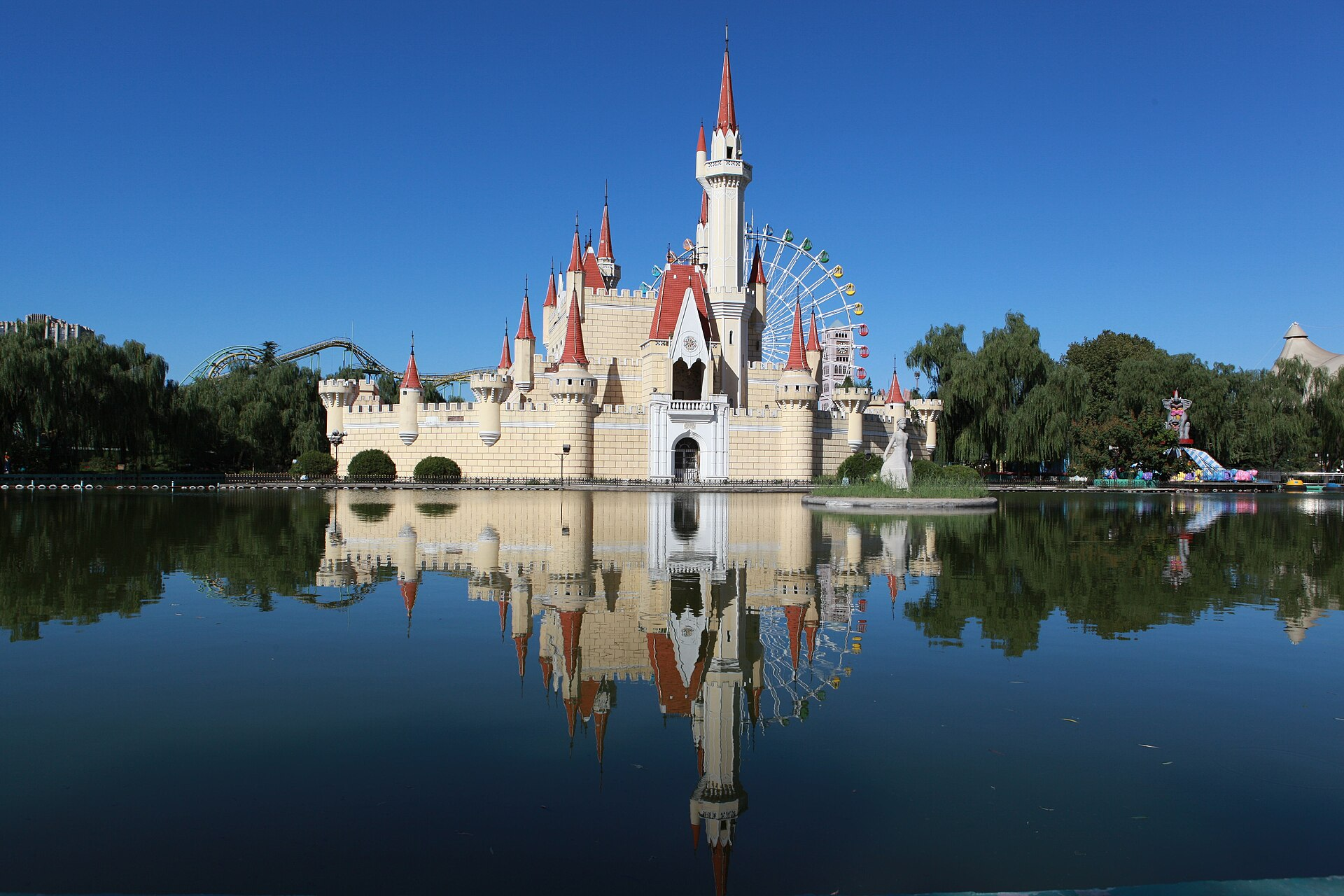
On the outskirts of Beijing, roughly 20 miles from the capital’s center near the famous Badaling section of the Great Wall, an unfinished fairy-tale castle once rose out of the surrounding farmland, its towers and spires standing empty against the sky for a decade and a half. Wonderland Amusement Park was never completed, never opened, and ultimately demolished, but for fifteen strange years, it stood as one of the world’s most surreal abandoned attractions, a Chinese answer to Disneyland that vanished before it ever truly existed.
An Ambitious Bet on Asia’s Biggest Theme Park
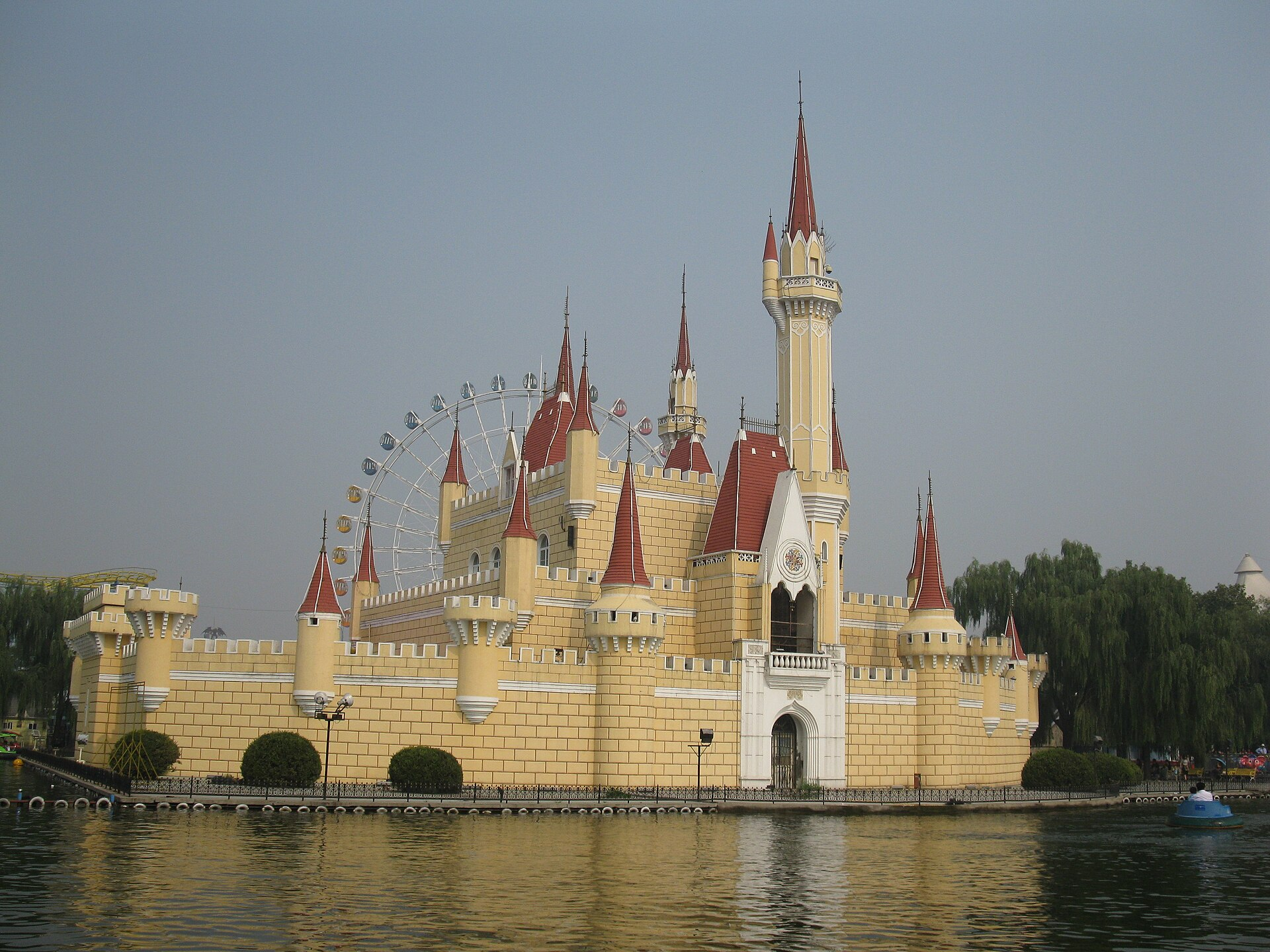
Conceived in the mid-1990s by the Thailand-based Reignwood Group, a company with significant business interests across China including Red Bull’s local distribution rights, Wonderland was designed to be the largest amusement park in all of Asia, spanning roughly 120 acres, larger even than Tokyo Disneyland. Located in Chenzhuang Village in Beijing’s Changping District, the park was planned around a medieval European theme, complete with a soaring central castle clearly reminiscent of Disney’s own iconic fairy-tale towers, along with a surrounding themed village of shops and attractions.
Like our content? Follow us for more.
Construction Halted Without Warning
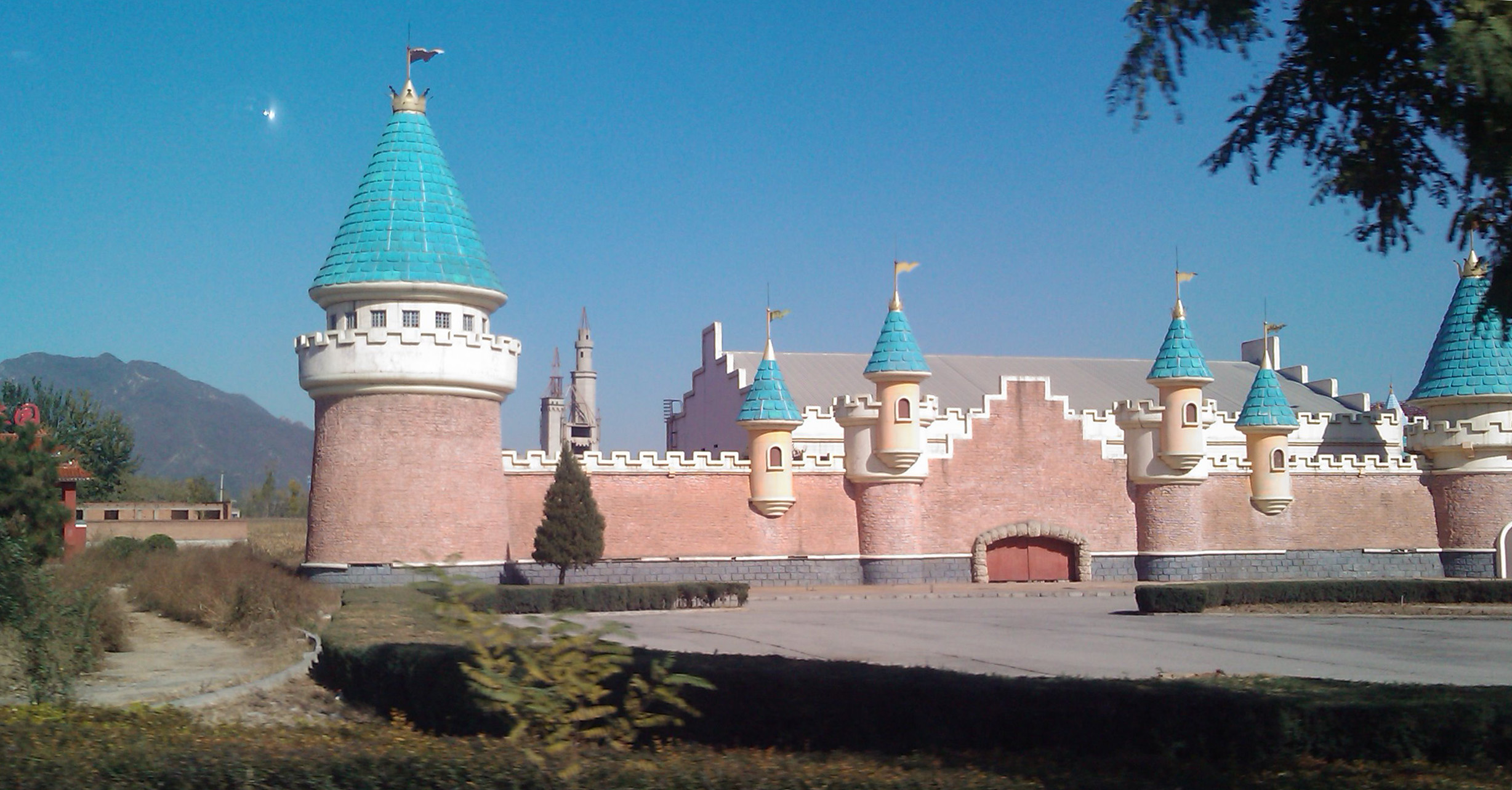
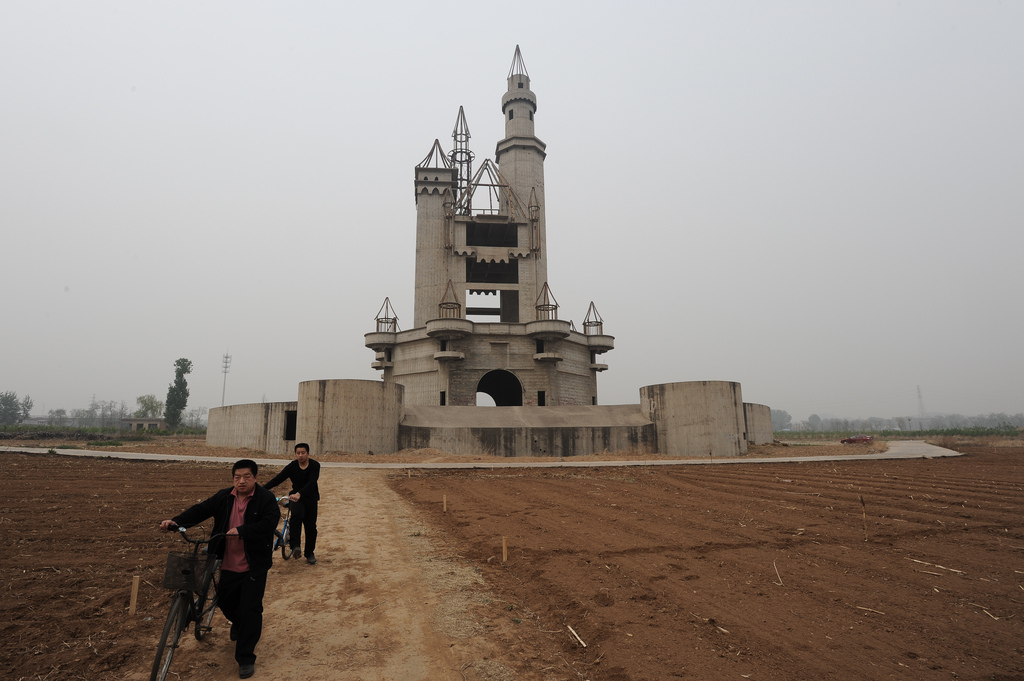
Work began in the mid-1990s, and substantial progress was made on the park’s central structures before everything came to an abrupt halt in 1998. The official explanation pointed to financial disputes with local officials and complications over land rights, a casualty of China’s broader property market difficulties at the time. The castle framework, largely built but never fully finished on the inside, along with a cluster of medieval-style village buildings, was simply left standing exactly as construction had abandoned it.
Rumors, Superstition, and a Missed Disney Deal
In the years following the sudden shutdown, local rumors swirled about the true cause of the abandonment, some residents claimed the site was haunted, while others suggested construction crews had uncovered burial grounds during excavation. The far more mundane truth appears to have been a straightforward property financing collapse. In a striking twist of timing, Hong Kong signed its own agreement with the Walt Disney Company for an official Disneyland just one year after Wonderland’s abandonment, followed decades later by Shanghai Disneyland, both official parks succeeding where Beijing’s unofficial attempt never got the chance to compete.
Farmland Reclaims the Fairy Tale
With construction permanently stalled, local farmers gradually reclaimed the surrounding land, planting cornfields and grazing livestock directly beneath the shadow of the unfinished castle, creating an almost surreal juxtaposition of medieval fantasy architecture rising out of ordinary agricultural fields. A brief attempt to revive the project in 2008 similarly failed to gain traction. For over a decade, the site became a magnet for photographers, urban explorers, and curious travelers willing to make the trip out from central Beijing.
A Strange but Genuine Tourist Curiosity
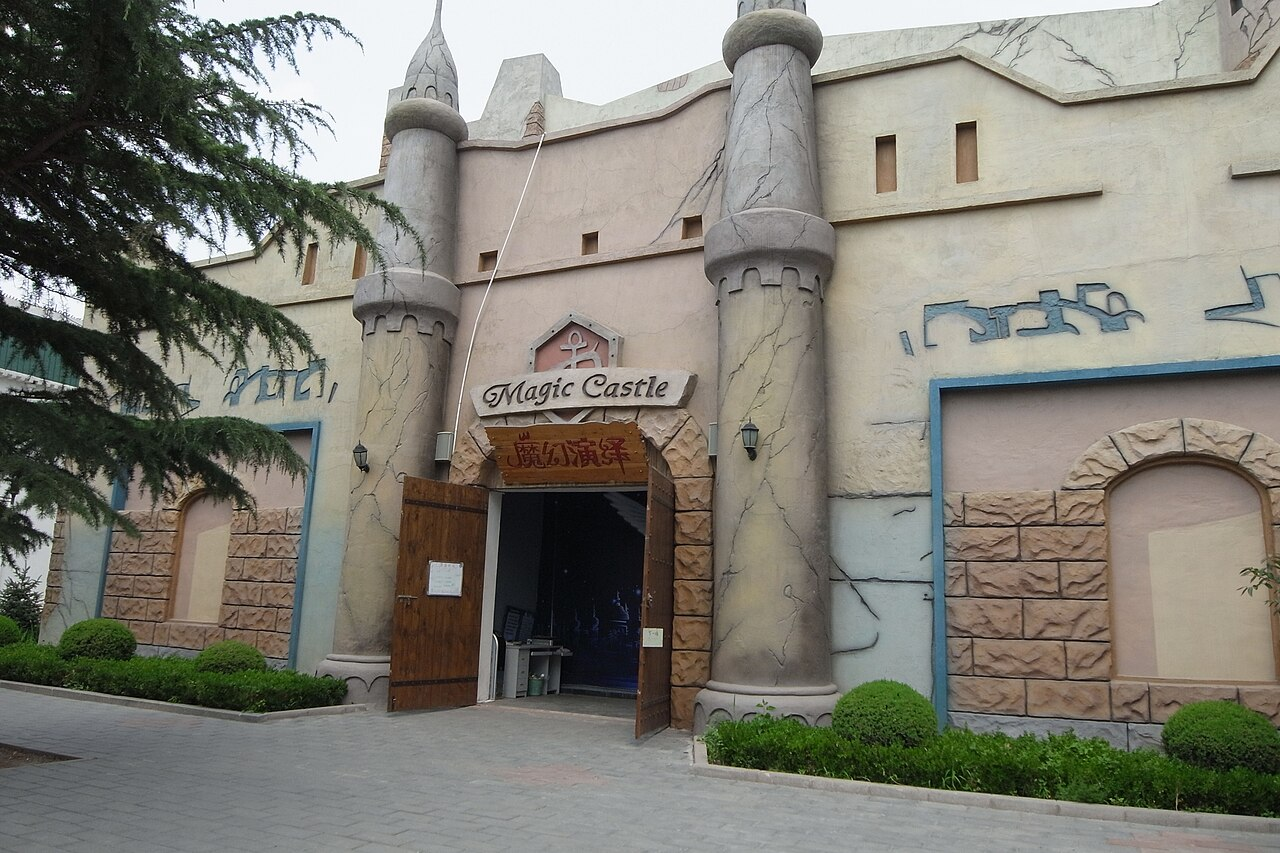
For much of its abandoned existence, Wonderland was surprisingly accessible, reachable by public bus from Beijing’s subway system, and visitors described wandering freely through the overgrown grounds, climbing partway into the castle’s lower levels, and photographing the eerily unfinished medieval-village facades. Some accounts even mention parking attendants occasionally still present at the otherwise empty site, seemingly there simply to manage the steady stream of curious sightseers who kept coming despite the park never having opened to a single paying customer.
An Ending Written in Demolition
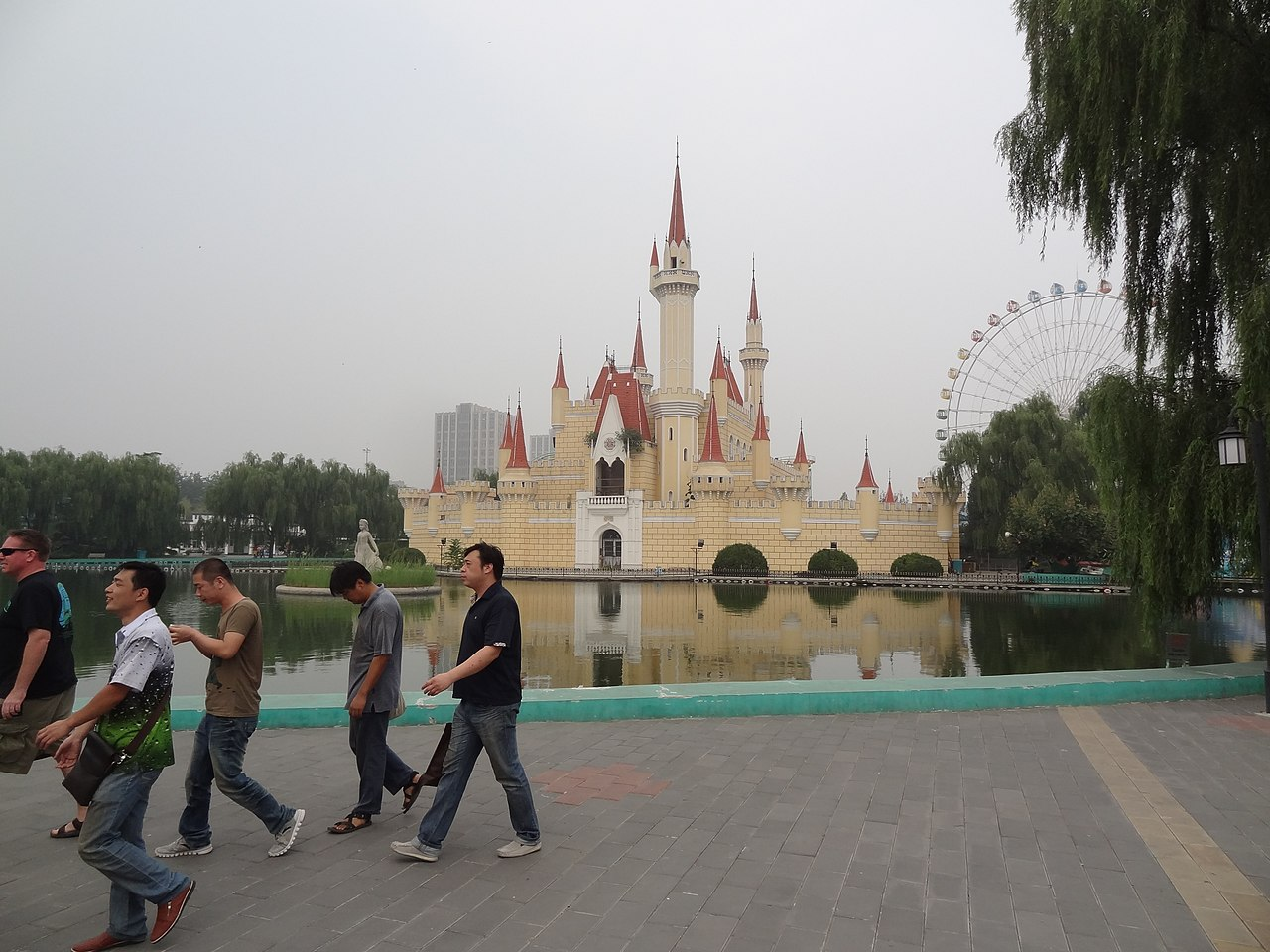
After a final failed redevelopment attempt, demolition crews arrived at Wonderland in April 2013, and within a matter of weeks the castle and surrounding structures that had stood for fifteen years were reduced to rubble and foundations. The site was eventually redeveloped into a shopping outlet center. Today, there is nothing left of Wonderland to visit, the fairy-tale ruins that once drew curious travelers from around the world exist now only in the extensive photography and video documentation captured during its long, strange years of abandonment.
A Fantasy That Never Got to Open
Wonderland’s story endures as one of the more poignant entries in the genre of abandoned amusement parks, a project that spent fifteen years as a ruin without ever having spent a single day as a functioning attraction. Its castle, glimpsed now only in old photographs standing incongruously above rows of Chinese cornfields, remains a genuinely striking symbol of ambition meeting economic reality, a fairy tale that was abandoned before its story ever really began.
The site’s unusual limbo, neither a genuine historical ruin nor an operating attraction, made it a particularly compelling subject for the broader urban exploration community that grew increasingly active online through the 2000s and early 2010s. Photographers who documented Wonderland in its final years often noted the eerie contrast between the castle’s clearly Western, fairy-tale-inspired architecture and its distinctly rural Chinese setting, cornfields stretching to the horizon beneath towers that were never meant to preside over anything but a lively theme park crowd. That contrast, more than almost any other detail, is what made Wonderland such a lasting curiosity among fans of abandoned places worldwide, even in a genre already full of striking, unlikely locations.
Today, with the site fully redeveloped, Wonderland exists primarily as a case study in how quickly an ambitious, half-finished project can vanish entirely, leaving behind little more than a substantial photographic record and a story that continues to circulate among those fascinated by architecture, urban exploration, and the strange afterlives of failed developments around the world.
Like our content? Follow us for more.