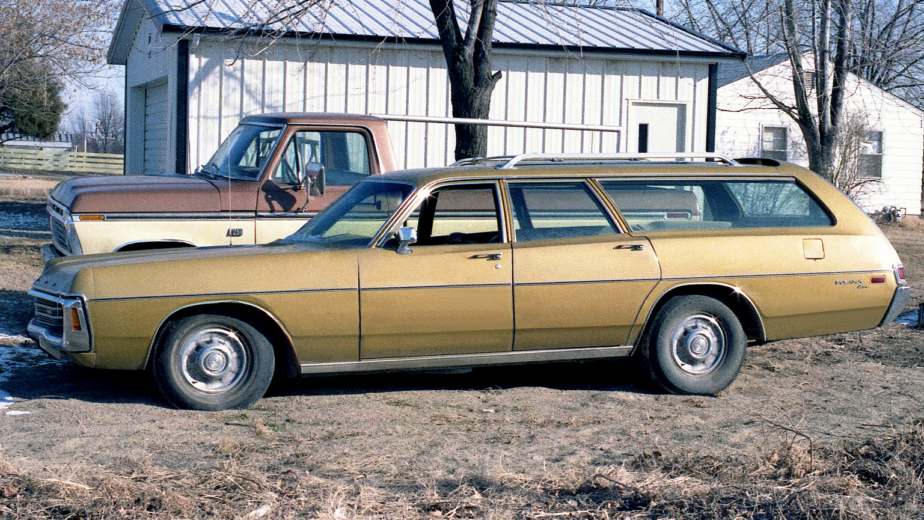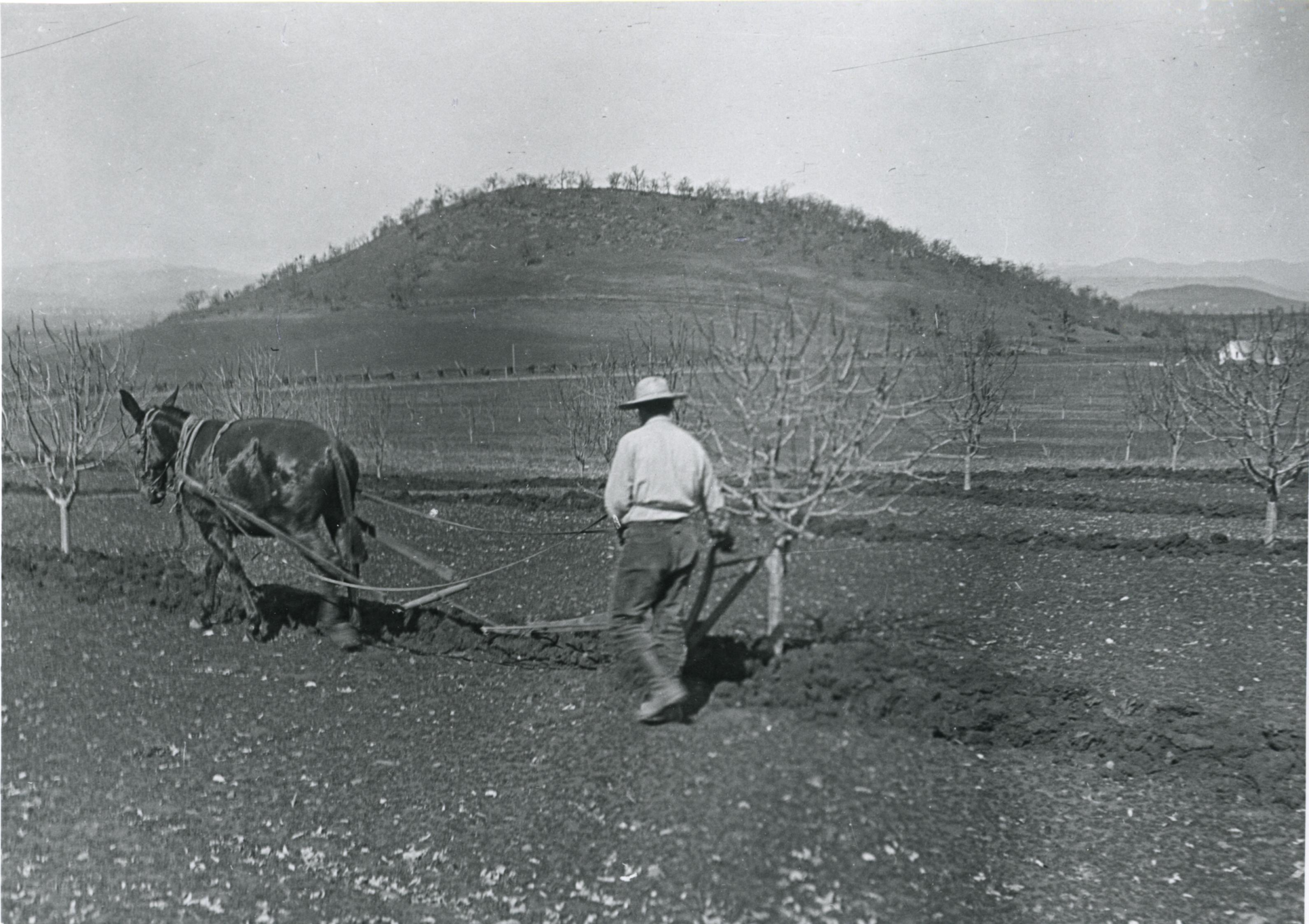
There is a plow leaning against a shed near where I grew up, and the part that catches the light is a curved steel surface about the size of a shovel blade, polished to a mirror by use. For years I assumed a plow worked like a shovel, by digging. It does not dig at all. It cuts a long slice of earth, lifts it, rolls it over and lays it upside down beside itself, continuously, as fast as a horse walks – and that curved surface is the entire reason it can.
Plowing Is Inversion, Not Excavation
Start with what the job actually is.
Plowing turns the surface under. It buries the weeds and the stubble from last season, brings soil from below up to the top, breaks the crust and opens the ground to air and water. What matters is that the top ends up at the bottom.
Digging a trench does none of that – it moves soil out of the way and leaves it in a heap. So the tool is not trying to make a hole. It is trying to flip a continuous ribbon of earth over, and the furrow is simply the gap left behind.
Like our content? Follow us for more.
The Share Cuts and the Moldboard Turns
The two working parts do two different jobs and it is worth separating them.
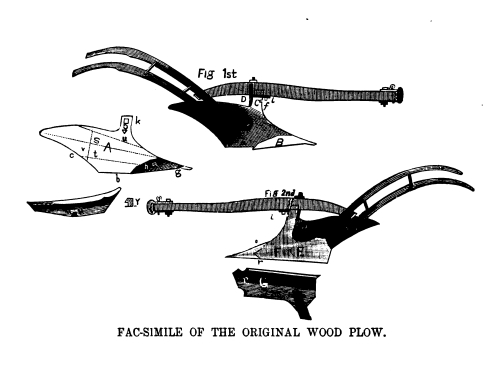
The share is the leading edge at the bottom, which slices the soil horizontally and separates the slice from the ground beneath. Ahead of it, a vertical cutter – a coulter or the plow’s own standing edge – slices the side of the slice free.
So between them, the slice has been cut loose on the bottom and on one side, and is still attached at the far side. Then the moldboard takes over: the curved surface behind the share, up which the slice rides, twisting as it goes, until it goes over and falls.
That is the whole machine. Cut underneath, cut the side, and then let a curve do the rolling.
The Curve Had to Be Right or Nothing Worked
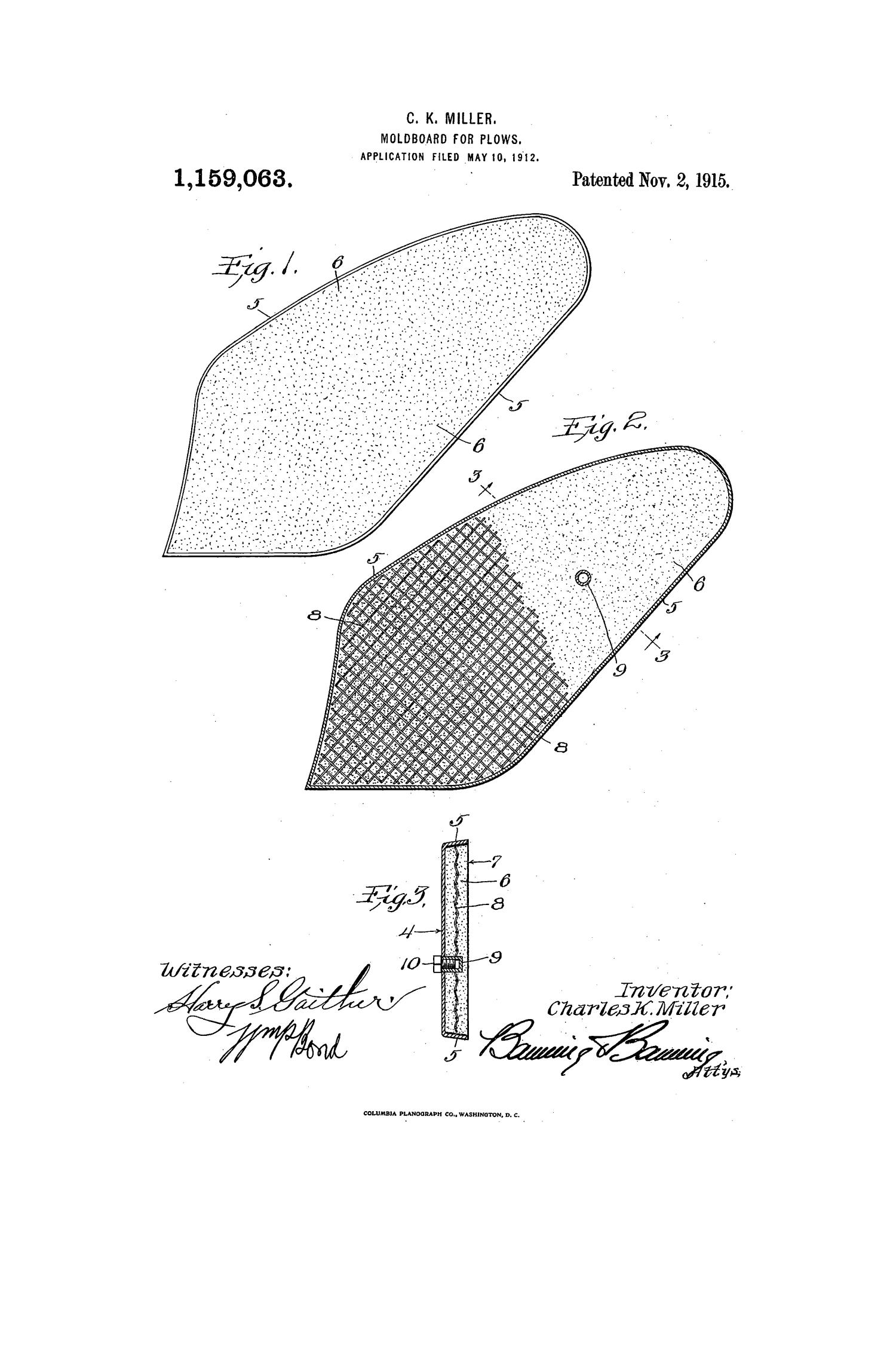
Here is why the shape mattered so much.
A moldboard that is too abrupt pushes soil instead of lifting it, which jams, builds up resistance and stops the plow. One that is too gentle lifts the slice without turning it over, so it falls back the way it came. One with the wrong twist breaks the slice into clods instead of laying it as a ribbon.
The curve has to raise the slice, rotate it through a bit more than a right angle, and release it at the moment it will fall the correct way up – and it has to do that smoothly enough that the soil keeps moving rather than piling.
That surface is a solved geometry problem. It is not a guess, and the people who got it right were taken extremely seriously.
Steel Was the Breakthrough, Not the Shape
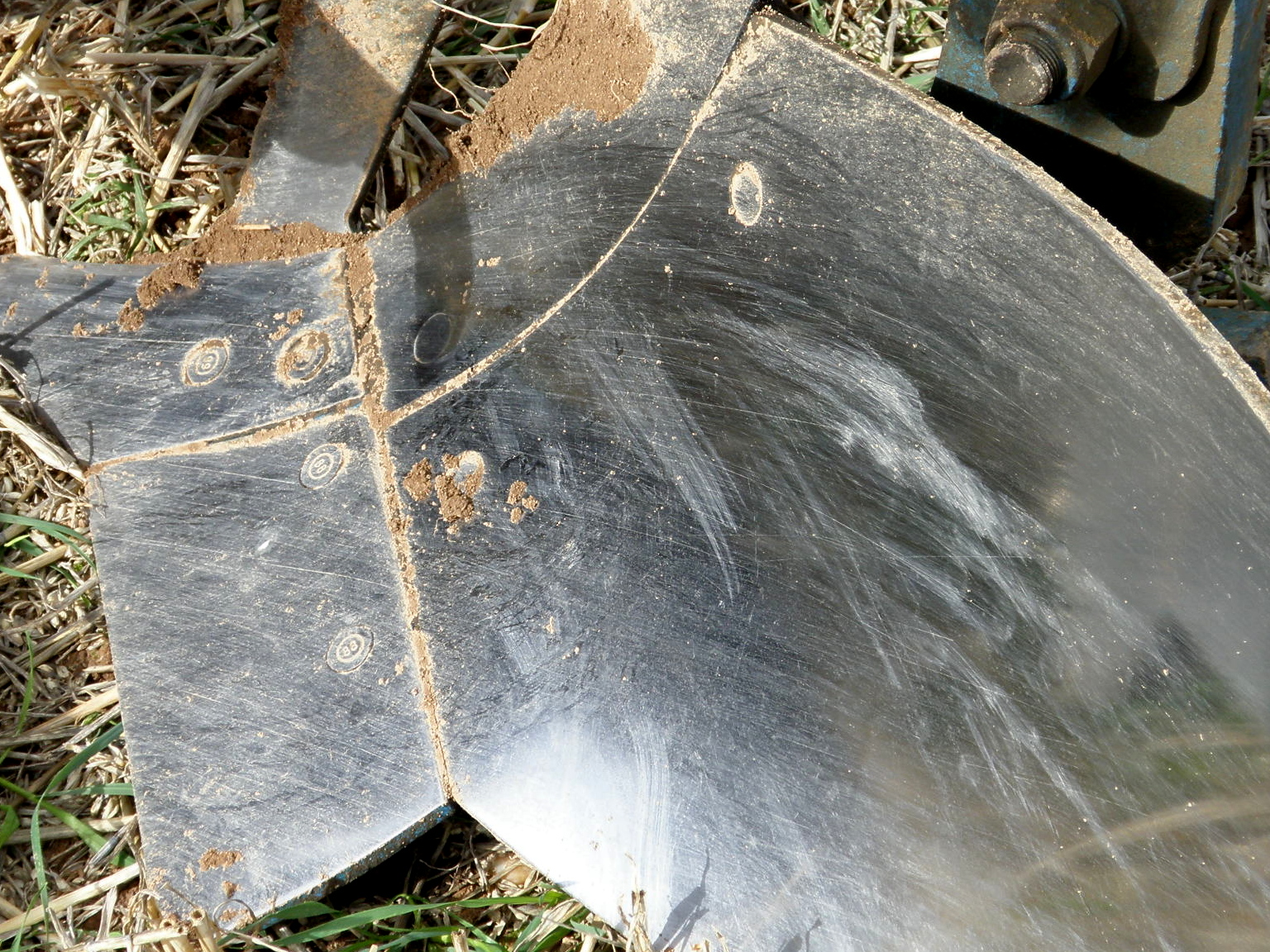
And this is the part that is genuinely about American conditions.
Earlier plows had wooden or cast iron moldboards, which worked in light sandy soils. In heavy sticky soil they did not, because the soil adhered to the surface instead of sliding across it – and once a layer of mud is stuck to the moldboard, the curve is gone and the plow is pushing a lump.
A man working a field like that had to stop every few feet and scrape the plow clean, which makes the ground effectively unworkable.
Polished steel was the answer. It is smooth, it is hard enough to stay smooth, and soil slides off it rather than sticking – and the more it is used the more polished it gets, which means a working plow improves. That is why the shiny surface on the one by the shed is not neglect or wear. It is the plow in correct condition.
The Plow Had to Be Self-Steering
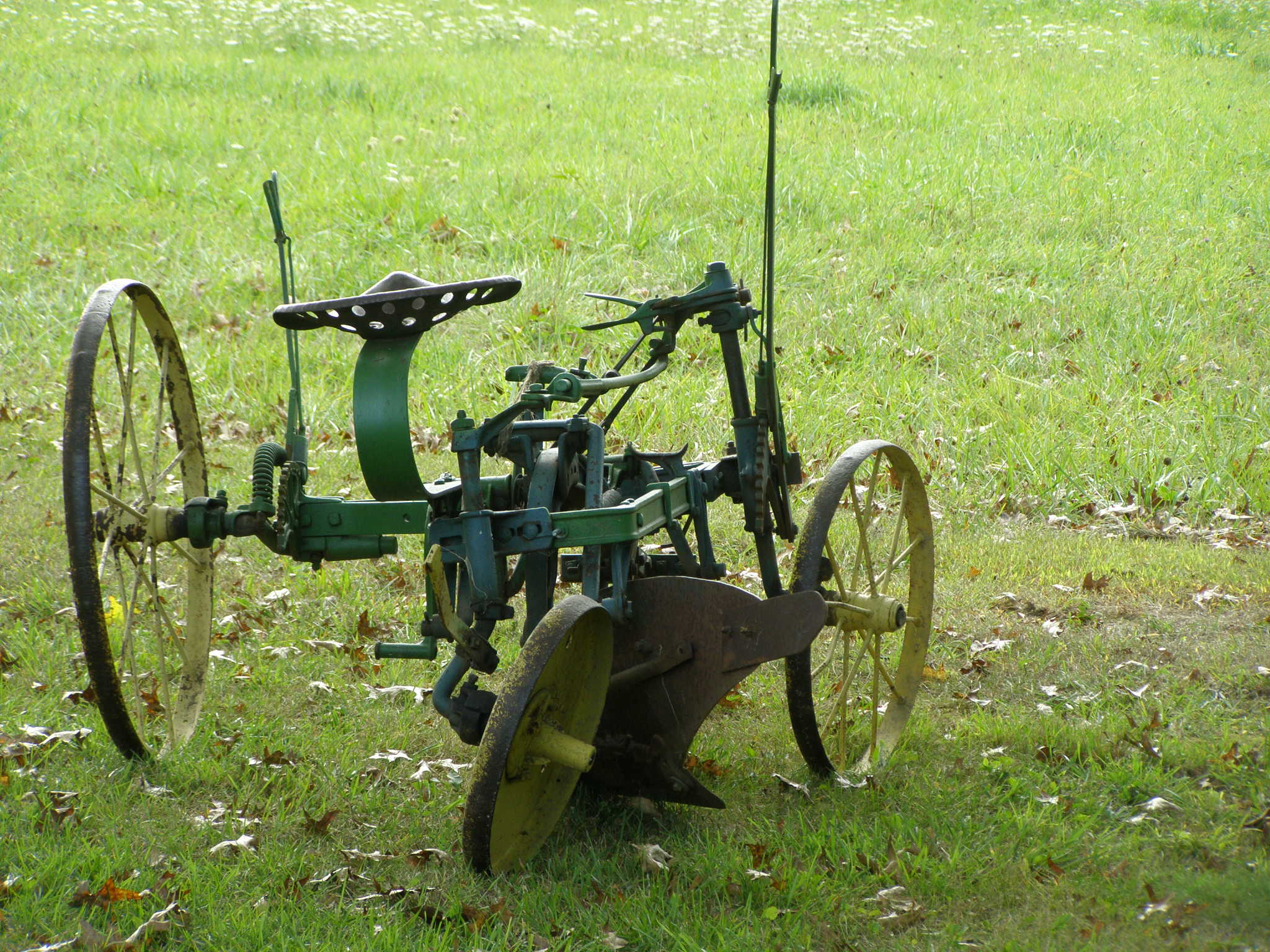
A subtlety that took me a long time to notice.
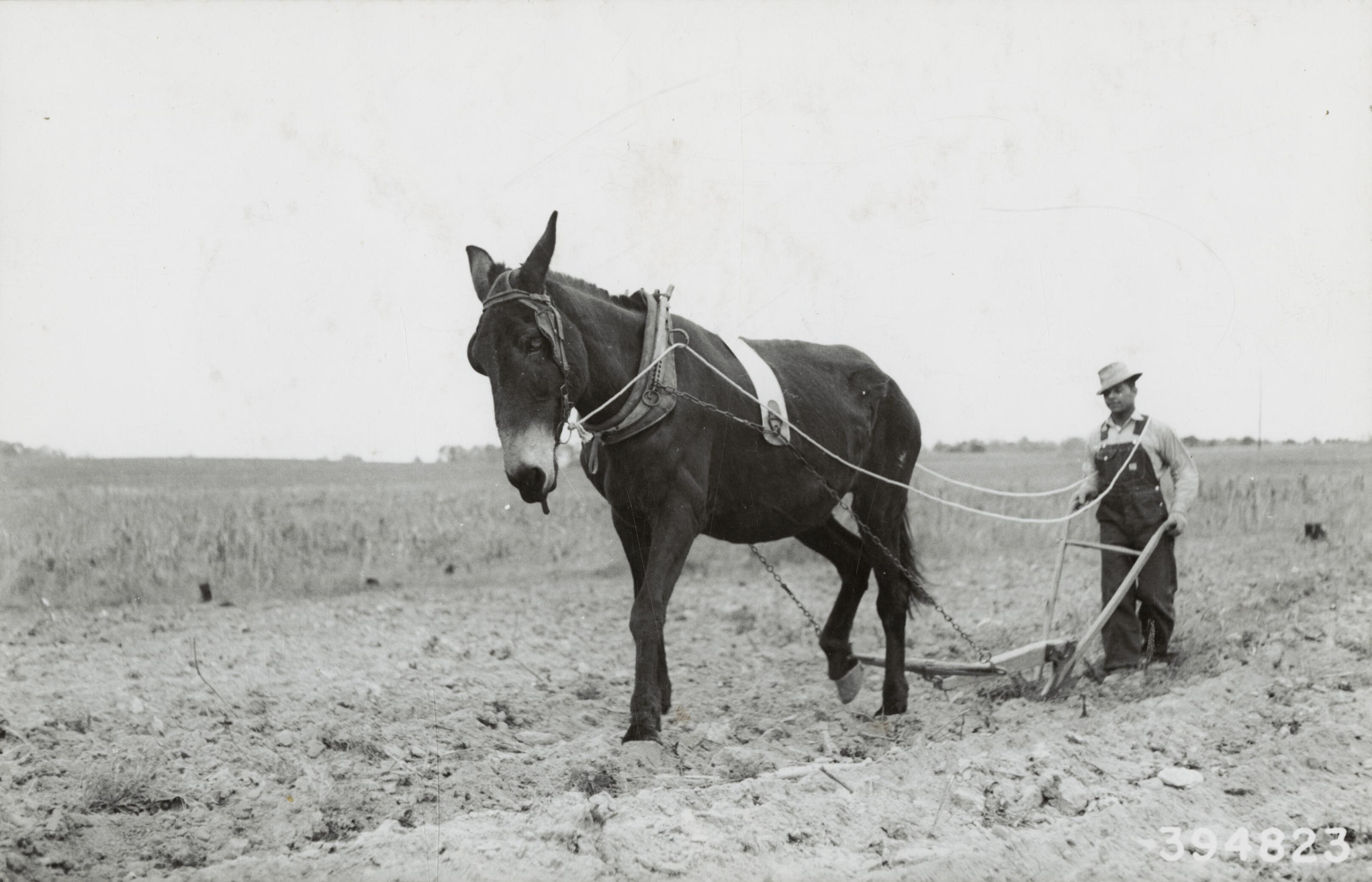
A man walking behind a plow with two handles cannot physically hold it to a line against the pull of a team – the forces are far too large. So the geometry has to make the plow run straight by itself.
It does this by pressing against the furrow wall and the furrow bottom. The vertical face bears on the side of the last furrow, which keeps it from wandering sideways; the sole bears on the bottom, which keeps the depth constant. The pull is arranged so that these contacts are maintained automatically.
Which means the handles are for correcting and lifting rather than for steering. A correctly set plow runs in its own groove, and a man’s job is to keep it there and deal with obstructions – not to aim it.
Setting It Was the Skill
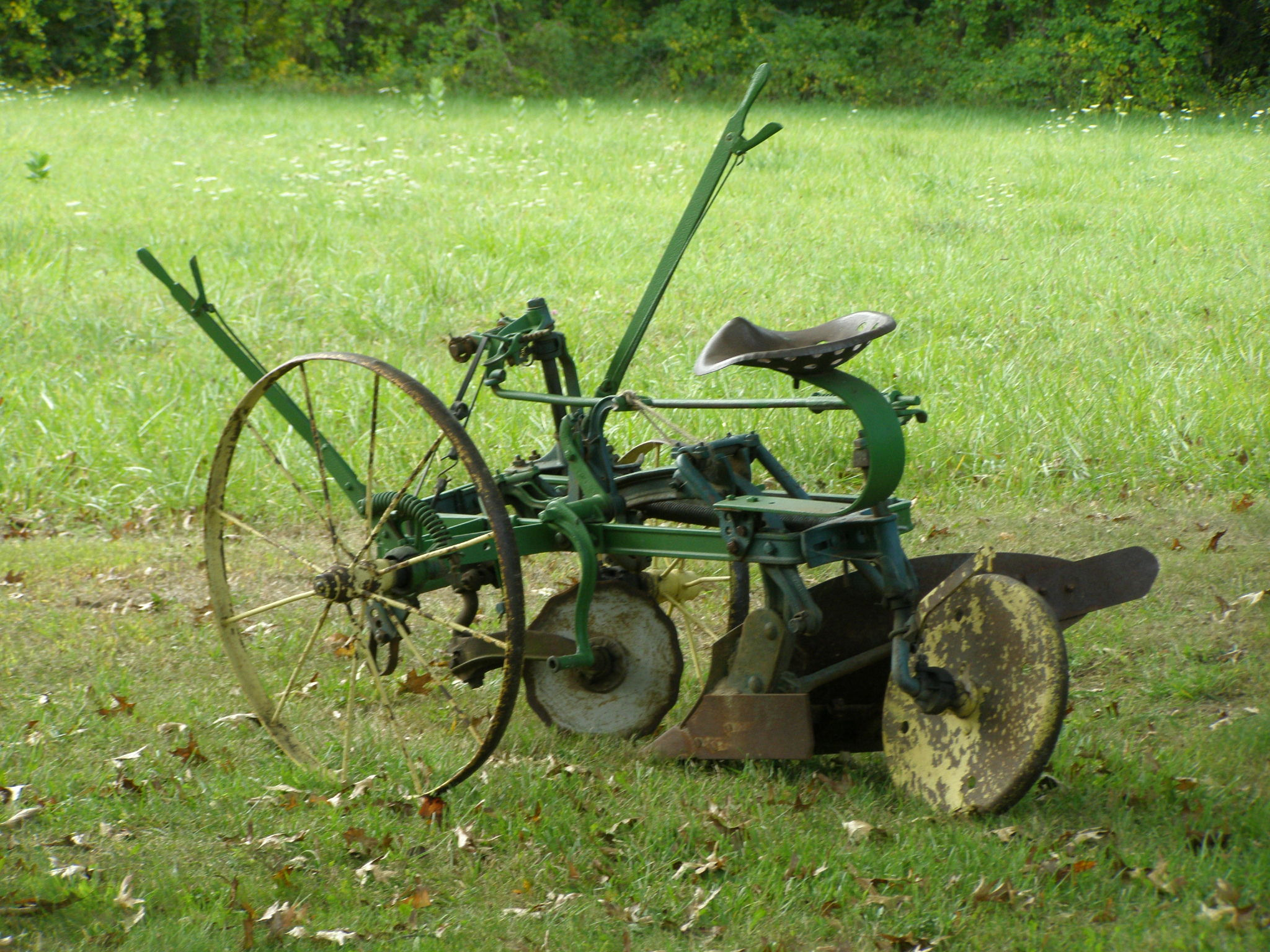
And that geometry is adjustable, which is where the expertise lived.
The point where the team’s pull attaches can be moved up, down and sideways. Moving it up or down changes the depth; moving it sideways changes the width of the slice. The angle of the whole frame changes how the share enters.
Get it right and the plow pulls easily, runs level, holds its depth and turns a clean furrow with very little effort from the man. Get it wrong and it runs shallow, or dives, or crabs sideways, or requires constant muscle on the handles for a whole day.
So the difference between an easy day and an exhausting one was a few minutes of adjustment at the start, and that judgement is the thing an experienced plowman had that a beginner did not.
The Furrow Was Also the Guide
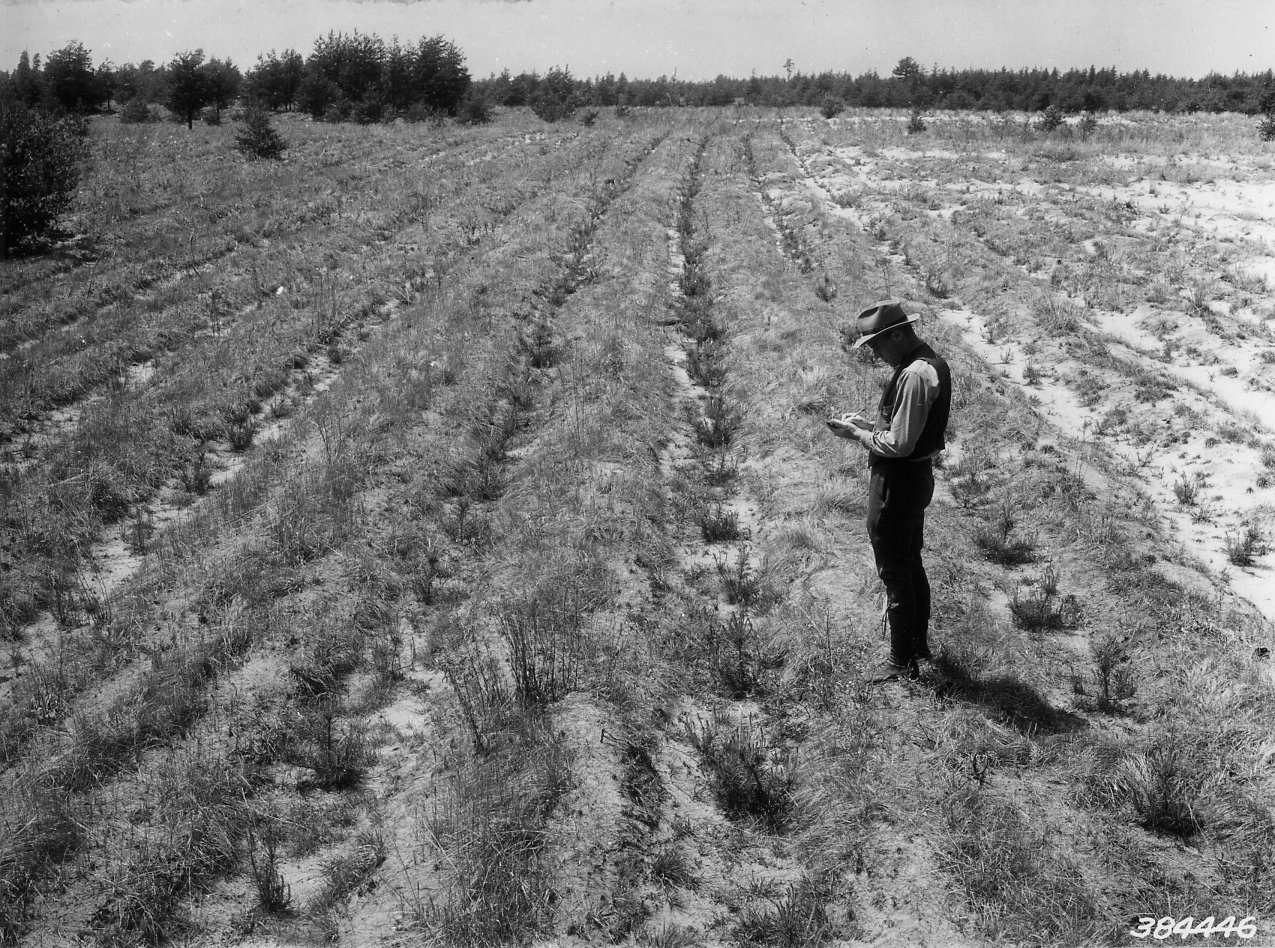
Which explains the appearance of a plowed field.
Each pass runs with one wheel or the plow’s side bearing in the previous furrow, so the furrows are laid side by side with the slices all turned the same way. The field is therefore built up one ribbon at a time, each one depending on the one before.
That is why the first furrow of a field matters enormously. A crooked first pass propagates, because every subsequent furrow follows it – and a man who could open a straight first furrow across a field by eye was displaying a genuine skill that the whole neighbourhood could see for the rest of the season.
Straight Furrows Were a Public Reputation
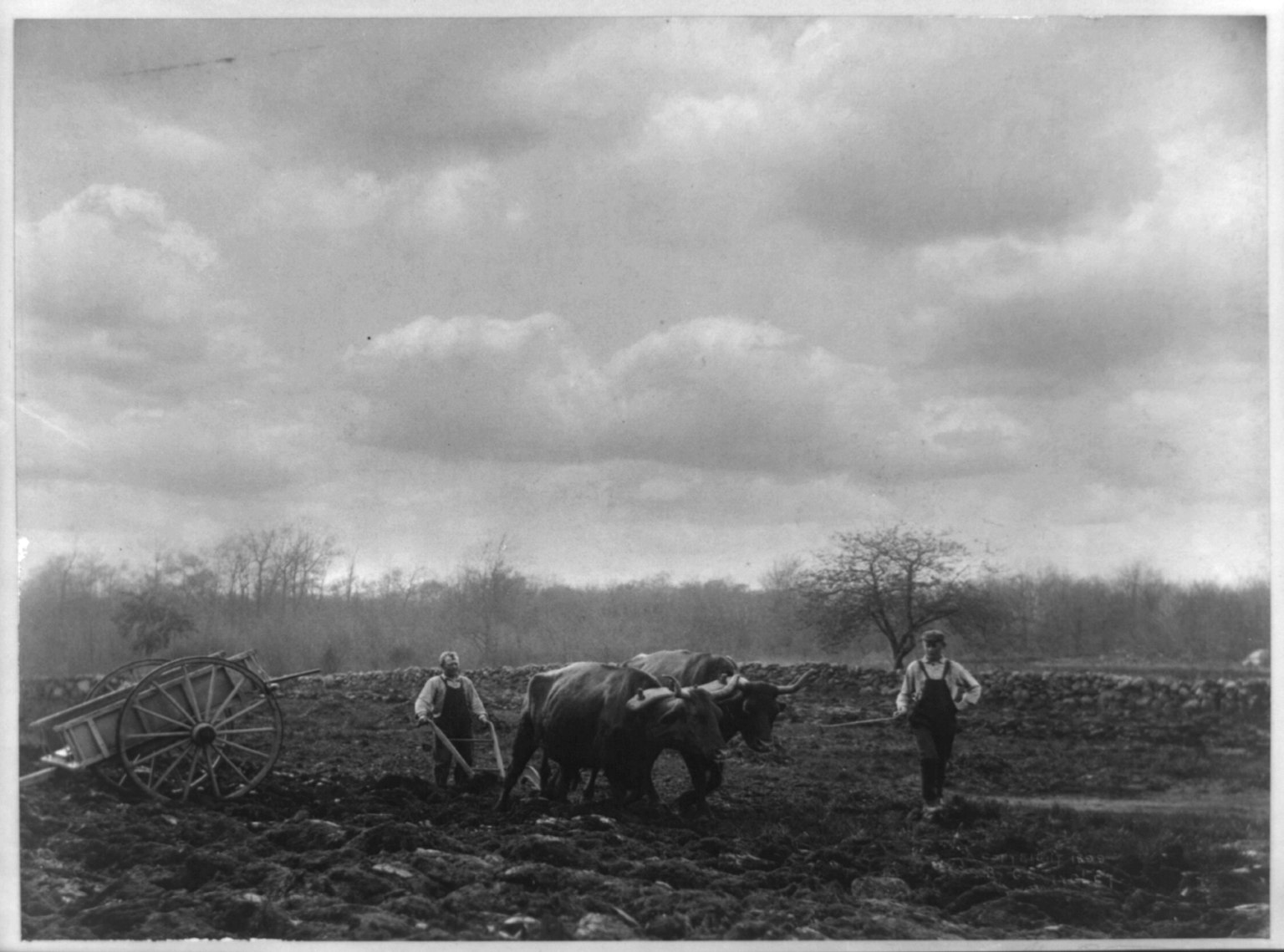
On which there is no need to be coy.
A plowed field is a large, visible, permanent-for-the-season record of how well somebody did a job. Straight even furrows at a consistent depth are obvious from the road, and so is the opposite.
So plowing was judged, compared, and talked about, and matching contests existed specifically to judge it. Which is the same arrangement as the quilting frame or the box social – a working skill performed in public and ranked by everybody who could see it.
The Team Was Half the Equipment
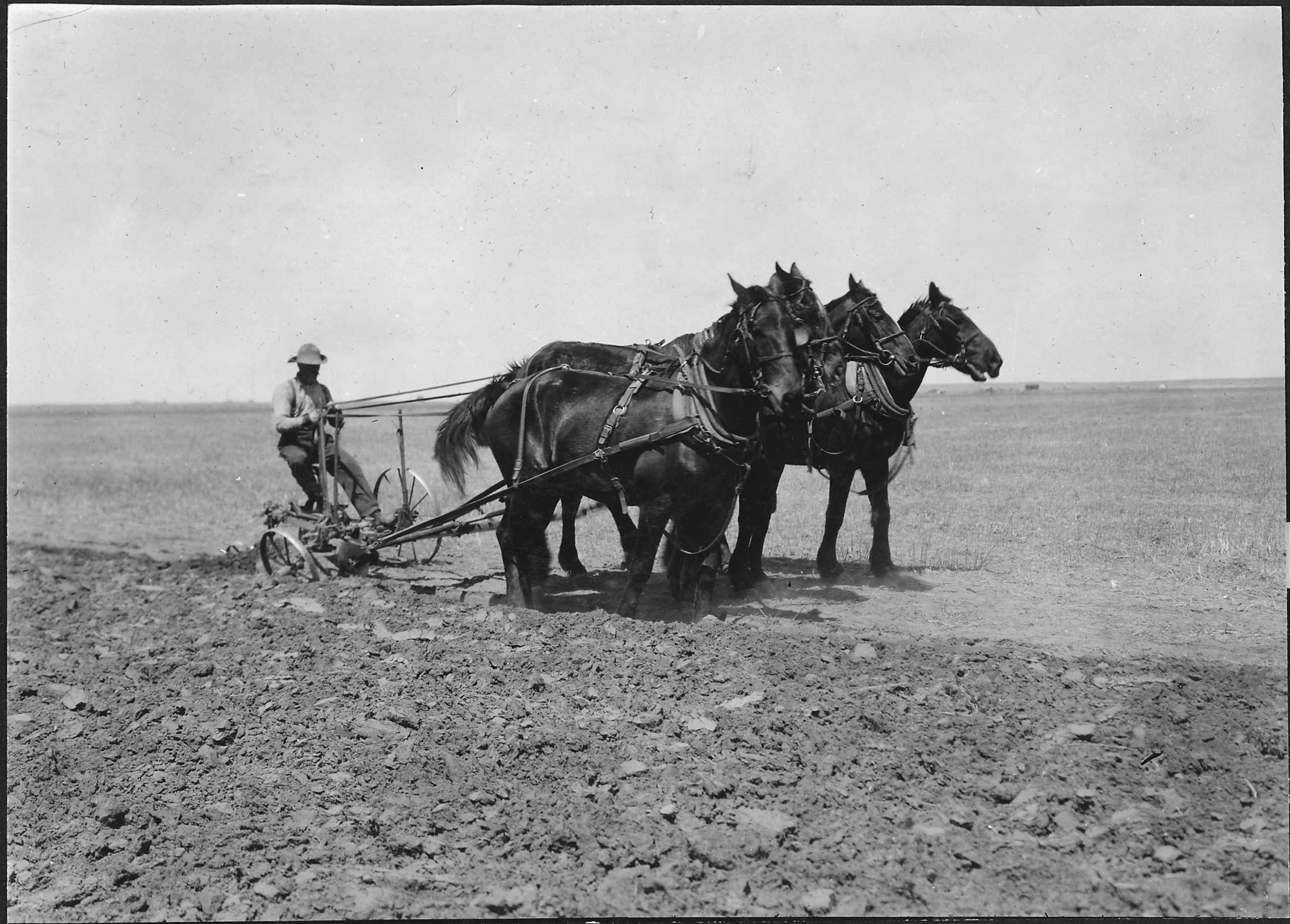
A plow does nothing by itself and the animals were part of the system.
A team had to walk at a steady pace, hold a straight line, stop on command and turn at the end of a row in a confined space without fouling the plow or each other. That is trained behaviour, and an animal that would not do it made a hard job impossible.
Which means a plowman was managing two things at once – the setting and running of a machine, and the behaviour of large animals doing repetitive work in heat – and the accounts of the job are as much about the horses as about the implement.
The Walking Was the Cost
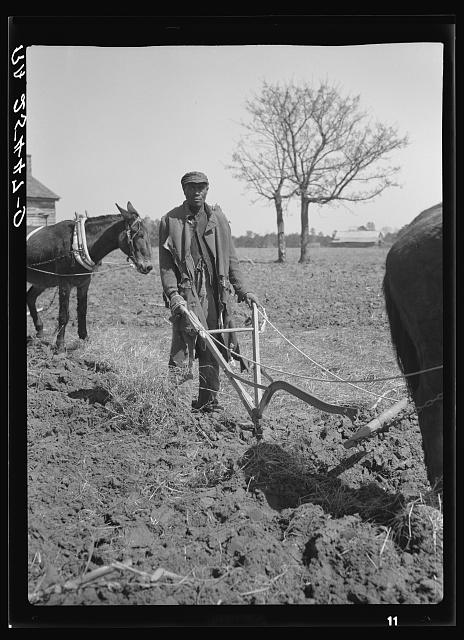
The part that gets romanticised and should not be.
A man walking behind a plow walks the entire length of every furrow in the field, which over a season is an enormous distance on broken ground, in a twisted posture, with his hands occupied and frequently a boot in the furrow bottom.
It is slow, it is hard, and the acreage one man and a team could turn in a day was small. Everything that came afterwards – the riding plow with a seat, the gang plow with several bottoms, the tractor – exists because that limitation was the binding constraint on how much land a household could farm.
Then the Tractor Multiplied Everything
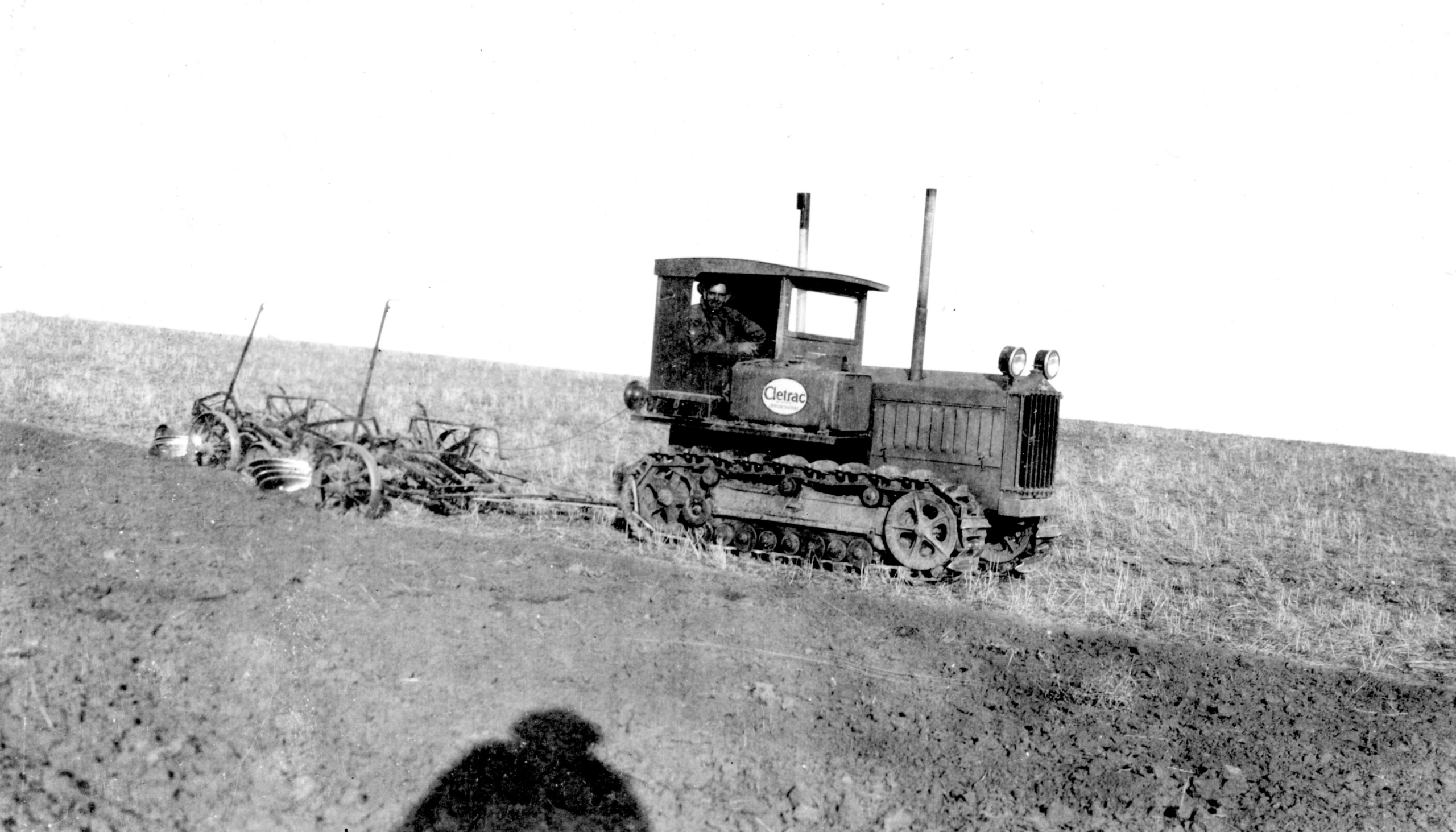
The replacement did not change the principle at all, which is the interesting part.
A tractor plow has the same share, the same moldboard and the same curve. What changed is that an engine can pull several bottoms at once, at speed, all day, without tiring – so one operator turns in an hour what a man and a team turned in a day.
The geometry survived intact because it was already correct. The thing that was replaced was the walking, the team and the limit on scale, which is why a modern plow bottom is recognisably the same object as the polished one against the shed.
Then Plowing Itself Was Questioned

And this is the genuine change, which came much later.
Turning the surface under has costs as well as benefits – it exposes soil to wind and water, it breaks up structure, and it uses fuel. So reduced tillage and no-till methods were developed that leave the residue on the surface and plant through it.
That is a live agricultural argument with real evidence on several sides, and this article takes no position on it. What is worth saying is that it is the first challenge in the whole story to the idea of inversion itself. Everything before it was an argument about how to turn soil over better.
What the Shiny Part Is
So the curved polished surface on that plow is a specific thing.
It is a shape calculated to lift a cut slice of earth, rotate it past the vertical and release it face down, smoothly enough that the soil keeps moving – made in steel because steel is the only material of the period that heavy soil will slide off rather than stick to, and polished by its own use so that it works better the more of it is done.
A man set it by eye in a few minutes, walked behind it all day, kept it in its own furrow and opened the first pass of a field straight enough for the neighbours to see. And the shape is still in use, on machines that do in an hour what took him a day, because it was right the first time.
Like our content? Follow us for more.