

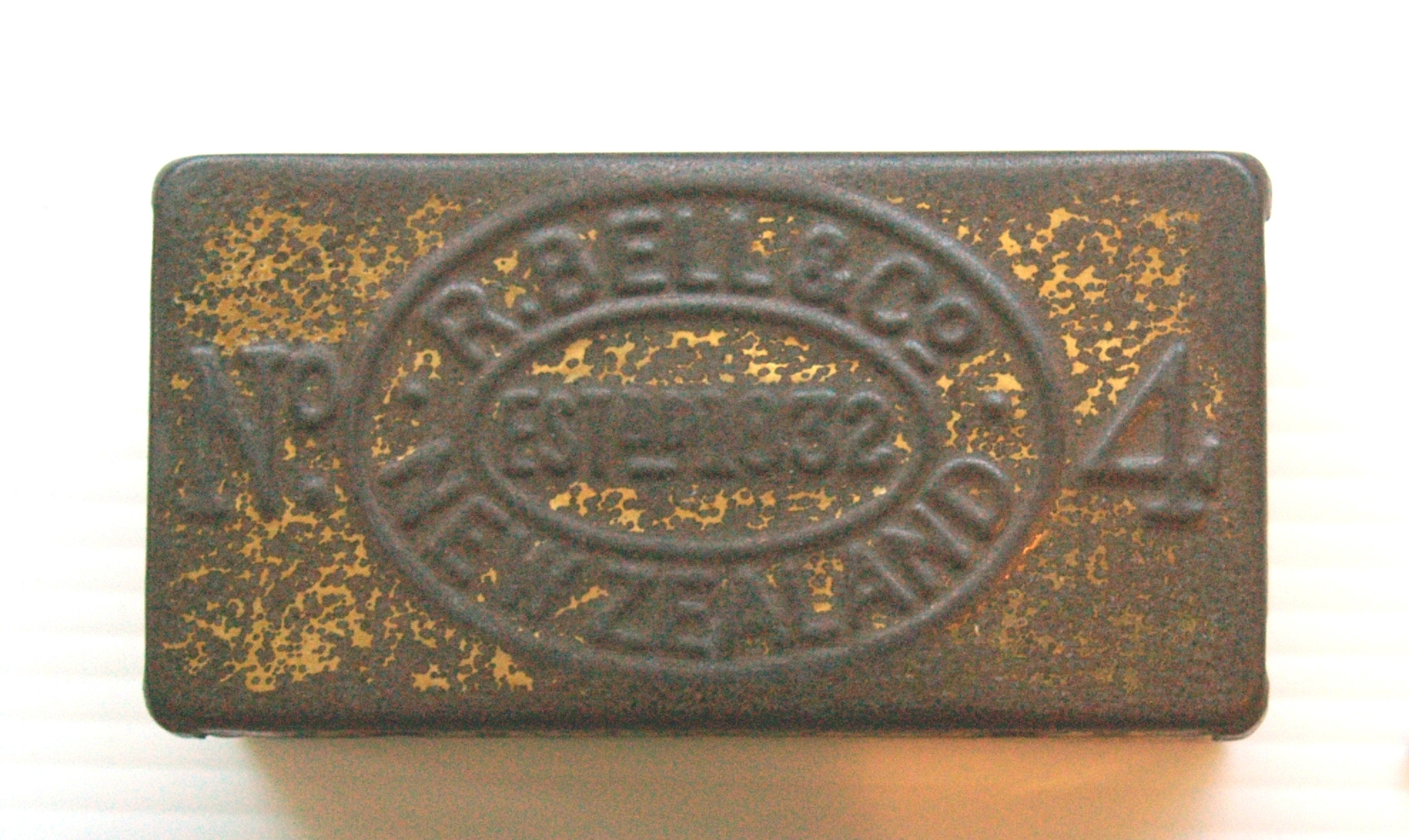
The little hinged metal box screwed to the wall beside my grandparents’ stove was always described to me as a match holder, which made it sound like a convenience. It is not a convenience. It is a metal container with a close-fitting lid, mounted out of reach, for a product that could ignite by itself – and the reason it is metal and the reason it has a lid are the same reason.
Fire Used to Be Difficult to Start
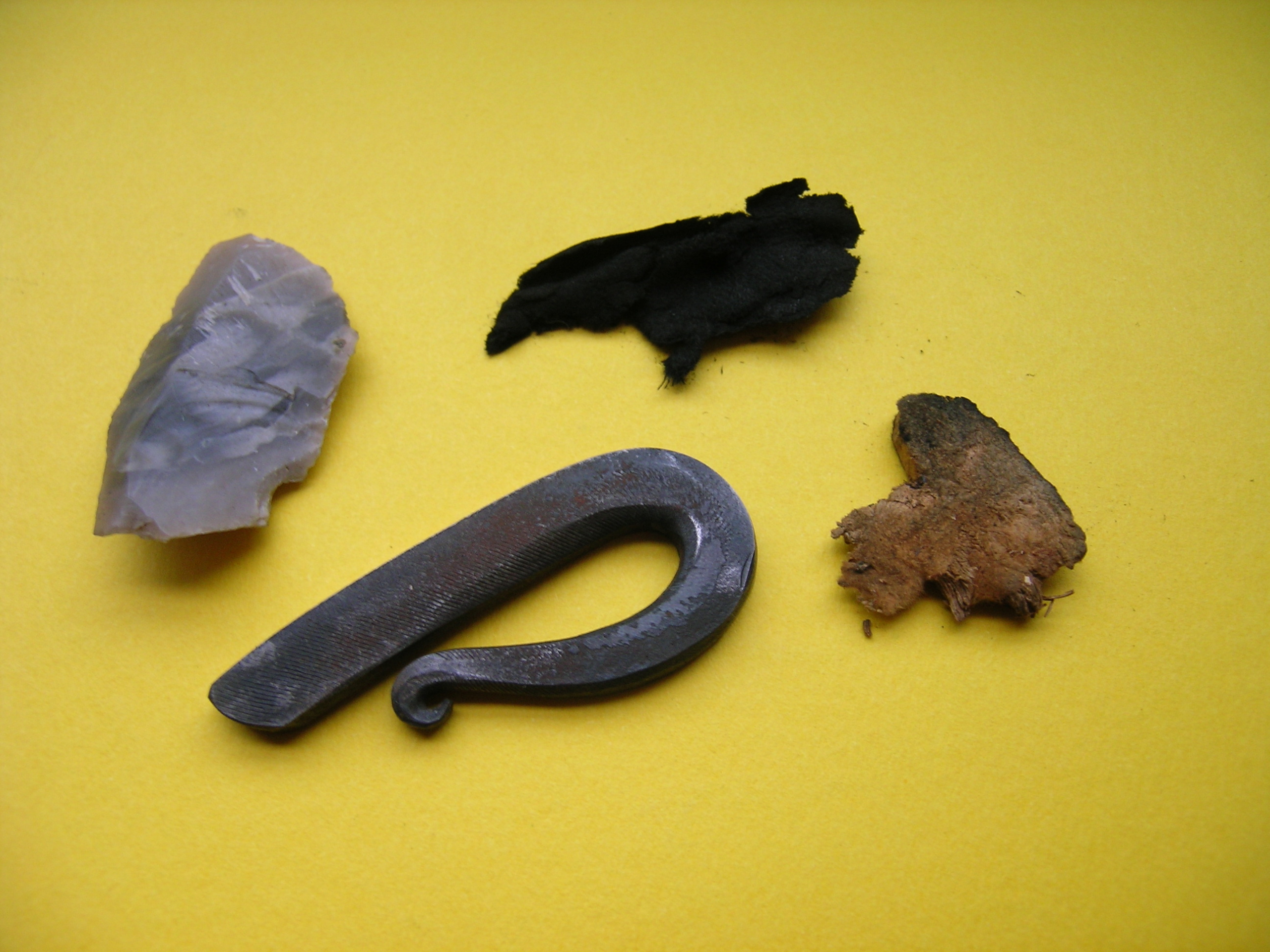
Start with what matches replaced, because the scale of the improvement explains the risk people accepted.
Before friction matches, starting a fire meant striking sparks from flint and steel into prepared tinder and coaxing that into flame – a process that took skill, dry materials and several minutes, and that failed regularly in damp weather.
Which is why households kept a fire going continuously rather than letting it out. Banking a fire overnight was not thrift; it was avoiding the alternative. A household whose fire went out either rebuilt it the hard way or sent a child to a neighbour with a shovel to carry coals home.
Like our content? Follow us for more.
A Match Put Fire in a Pocket
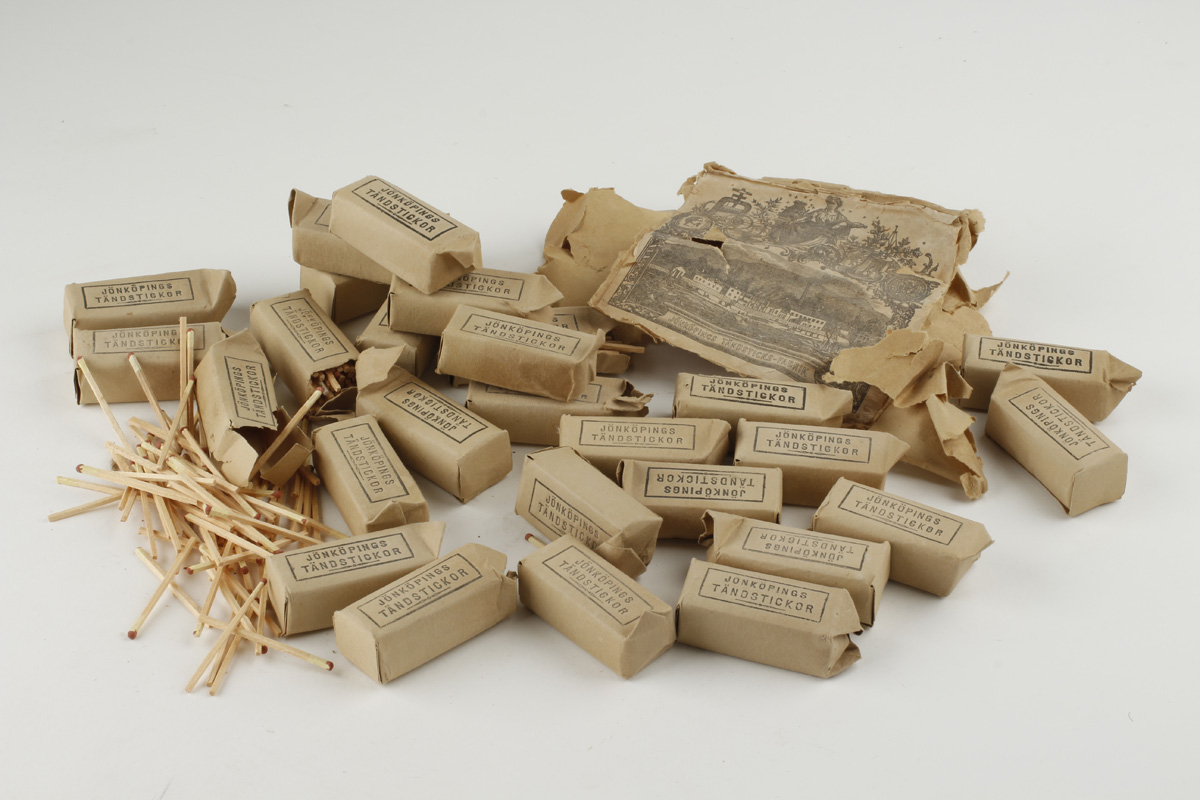
And that is the change, which is genuinely enormous.
A friction match produces flame on demand, instantly, from an object small enough to carry, for a trivial price. Fire stopped being something a household maintained and became something anybody could produce anywhere, at any time, in any weather.
That is one of the largest practical changes in ordinary life in the whole period, and it is almost never described as such – because the object is small and cheap and nobody thinks about it.
The Early Ones Were Genuinely Hazardous
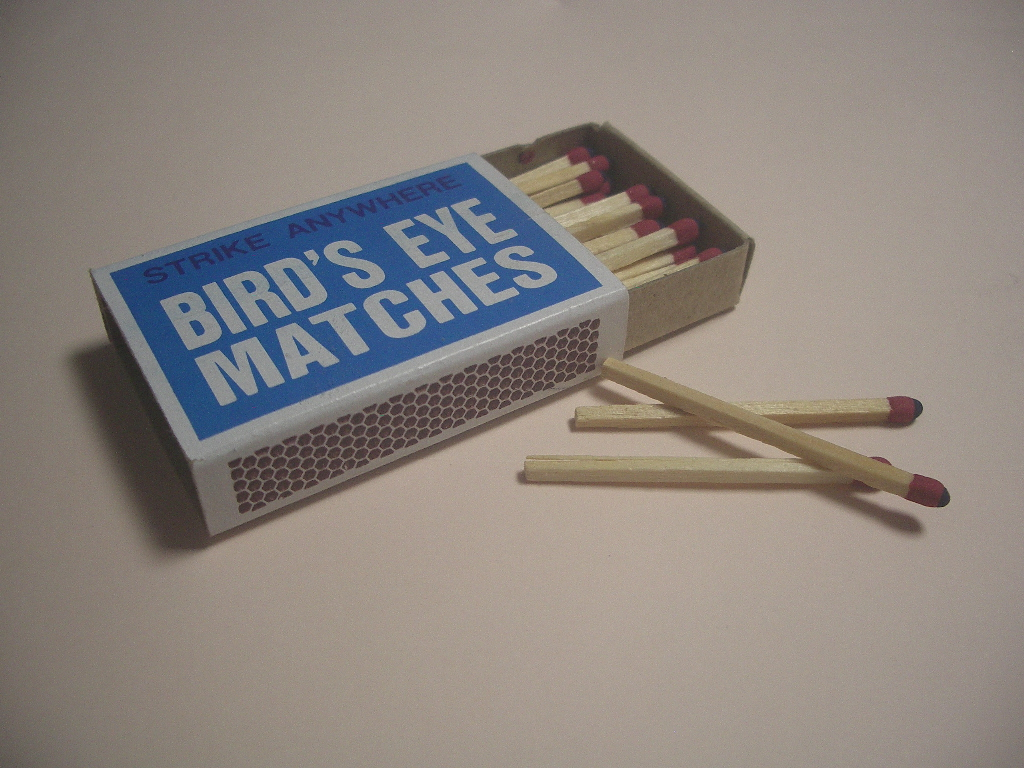
Now the cost, which is the whole reason for the box.
The earliest friction matches would strike on any rough surface, which is convenient and means they will also strike on a floorboard, a wall, the inside of a pocket, or each other if a box is knocked or dropped. They were sensitive to heat as well as to friction.
So a quantity of matches loose in a drawer, a box in a warm place, or a handful in a coat pocket was a real hazard rather than a theoretical one. Accounts from the period treat them with a wariness that looks excessive until you understand that the ignition was that easy.
Which Is Why the Container Was Metal
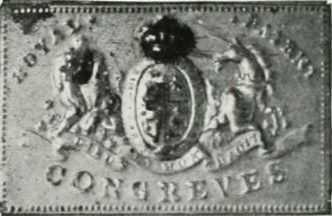
The design follows directly.
A metal box with a close-fitting lid does three things. It contains a fire if one starts inside, rather than feeding it. It keeps the contents dry, which matters because damp matches are useless and were a genuine nuisance. And it holds them in a known place so they are not loose anywhere else.
Wood and card containers do none of the first and only some of the second, which is why the purpose-made safes are metal and why so many survive – the material that was chosen to resist fire also resists a century in a shed.
Mounting It on the Wall Was the Other Half
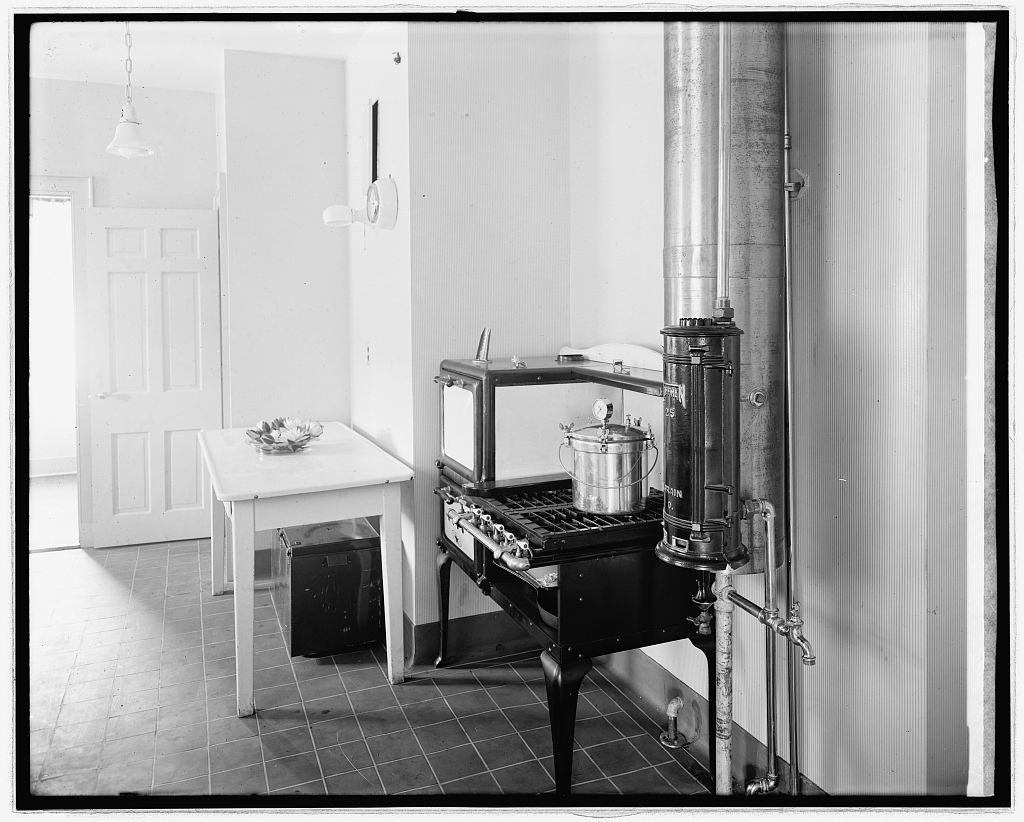
And the position is as deliberate as the material.
A wall-mounted safe is in a fixed place, which means nobody is hunting for matches in the dark. It is off any surface, so it cannot be knocked off a table or sat on. And it is at adult height, out of a small child’s reach.
That last point is the one that matters most. A box of matches on a low shelf in a house full of children is an obvious problem, and the standard answer was to put the matches on the wall above the height a child could get to – which is a safety measure implemented by carpentry.
It Had Two Compartments in the Good Ones
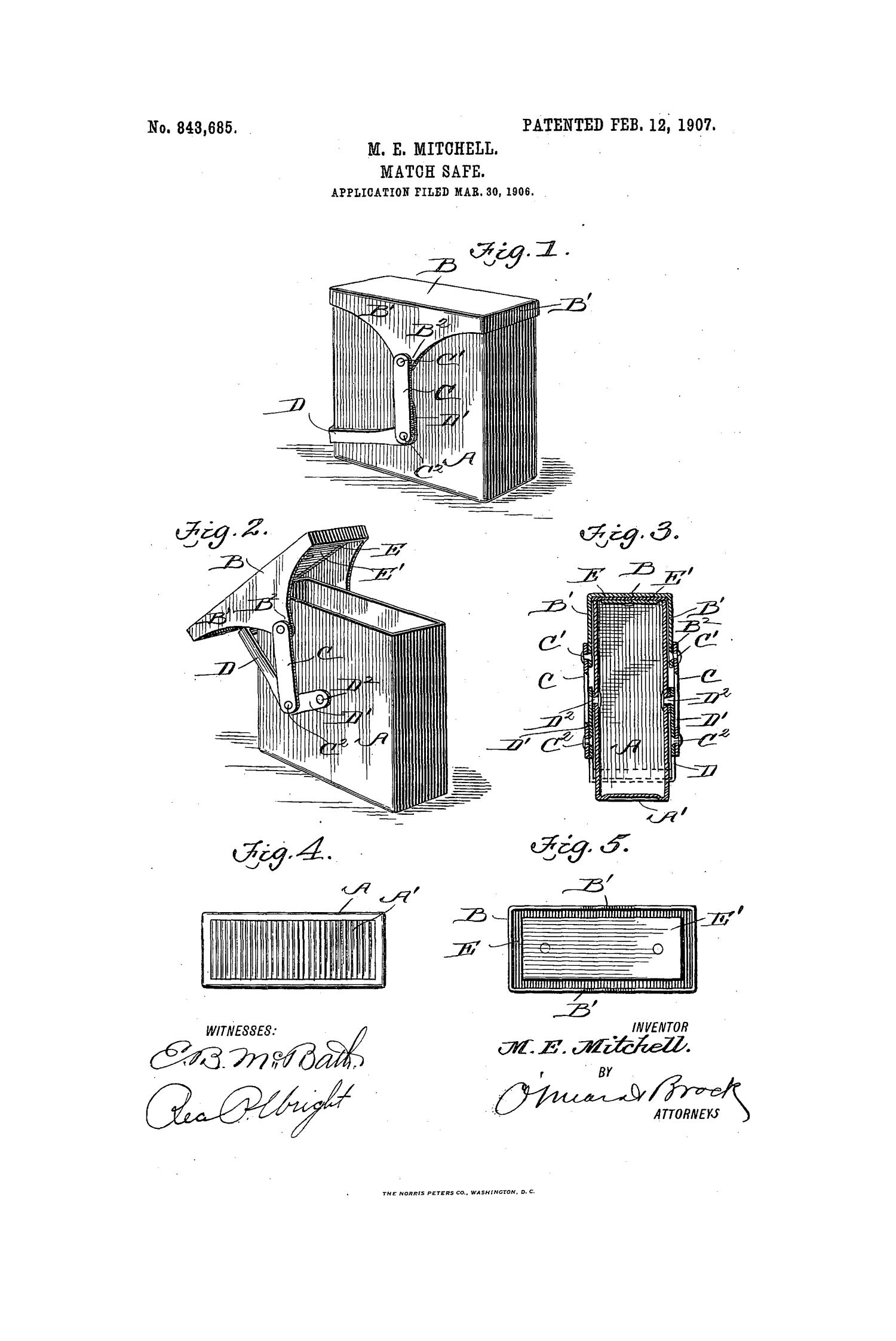
A refinement worth noticing.
Better safes have a second, smaller space below the main one, usually open at the bottom, for used matches. Which solves a problem people do not think about: a just-extinguished match is still hot, and dropping it in a wood box, a wastebasket or a coal scuttle is how fires start.
So the object provides somewhere to put the dead one, in metal, immediately, without anybody having to walk anywhere. That is a genuinely thoughtful piece of design for a small stamped object that cost almost nothing.
The Pocket Version Was a Separate Object
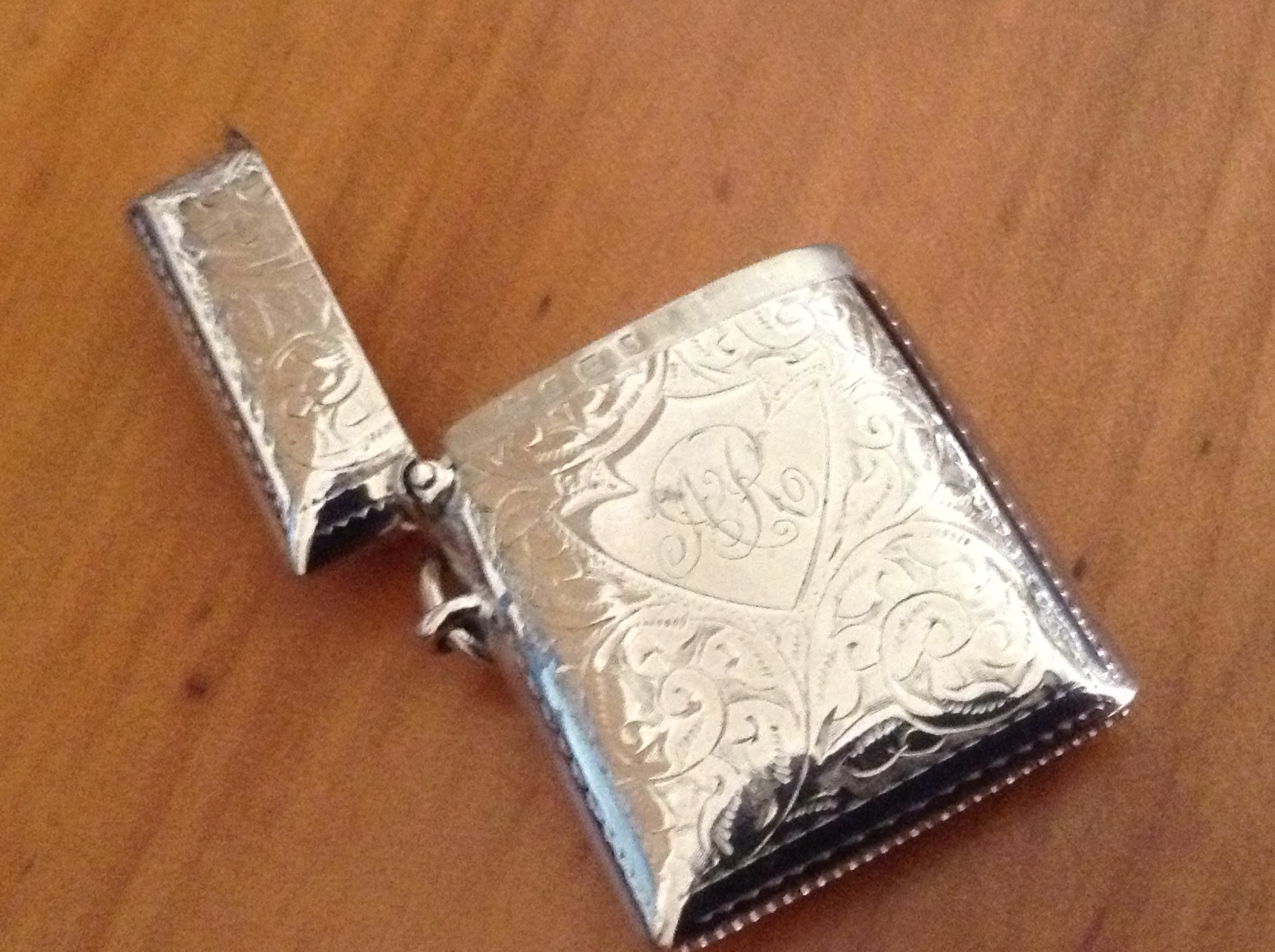
There is a whole second category of these.
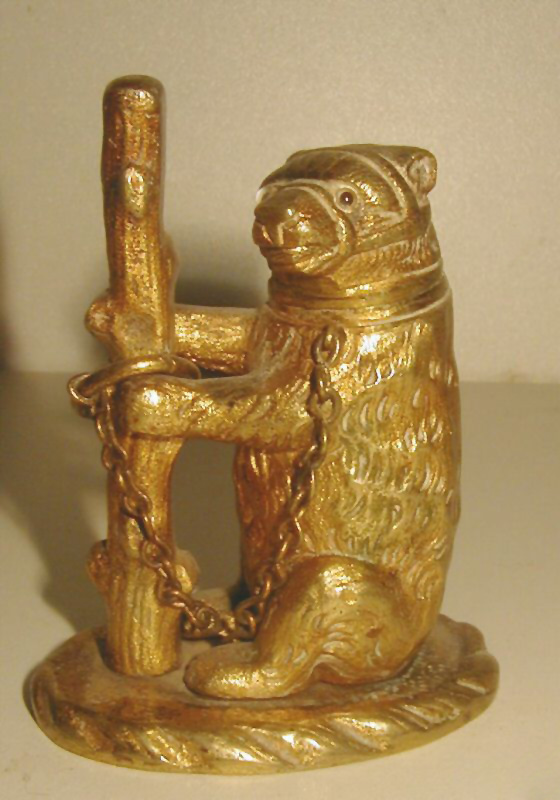
A man carrying matches needed them dry and needed them not to light in his clothing, so small hinged metal cases were made to be carried – frequently decorated, frequently on a watch chain, and made in enormous variety.
Those are the ones that get collected now, because they are small, personal and attractive. But the function is identical to the thing on the wall: a metal box with a tight lid, because the contents were the problem.
They Were Also Advertising
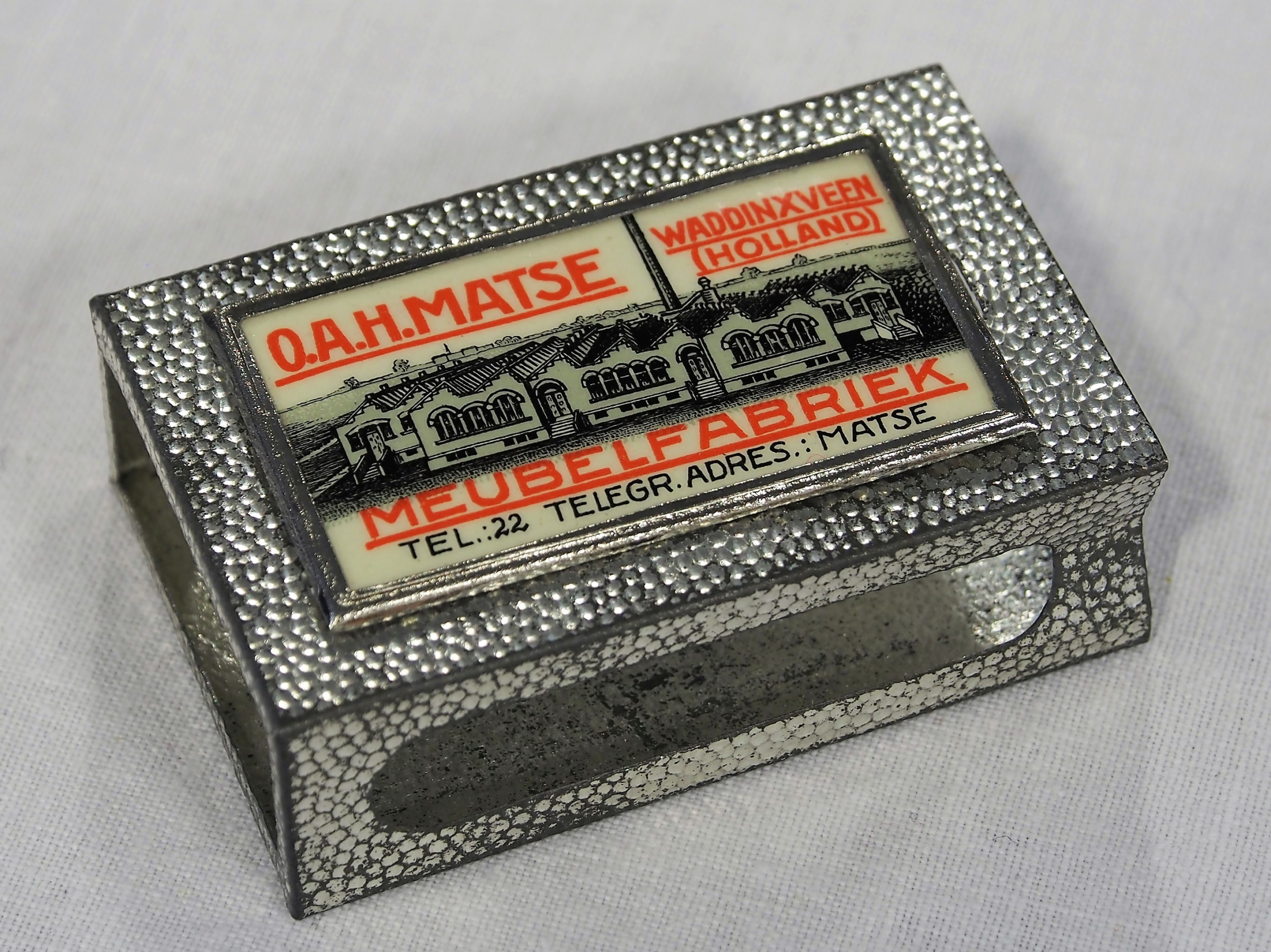
A commercial detail that explains why so many different ones exist.
A small metal object that hangs permanently on a kitchen wall and is used several times a day is an advertising position of exactly the kind described elsewhere in these files, and businesses understood that. So match safes were given away by stoves dealers, hardware stores, insurance agents, feed dealers and anybody else who wanted their name in front of a household.
Which means a great many of them carry a business name, a trade and a town pressed into the metal, and they were acquired free rather than bought. A household might have several and keep the best-looking one.
And it is the reason they survive in such variety. A plain safe is a plain safe, while an advertising one is a collectable, so the ones that have been kept and traded are disproportionately the ones with somebody’s name on them.
Damp Was the Everyday Problem Rather Than Fire
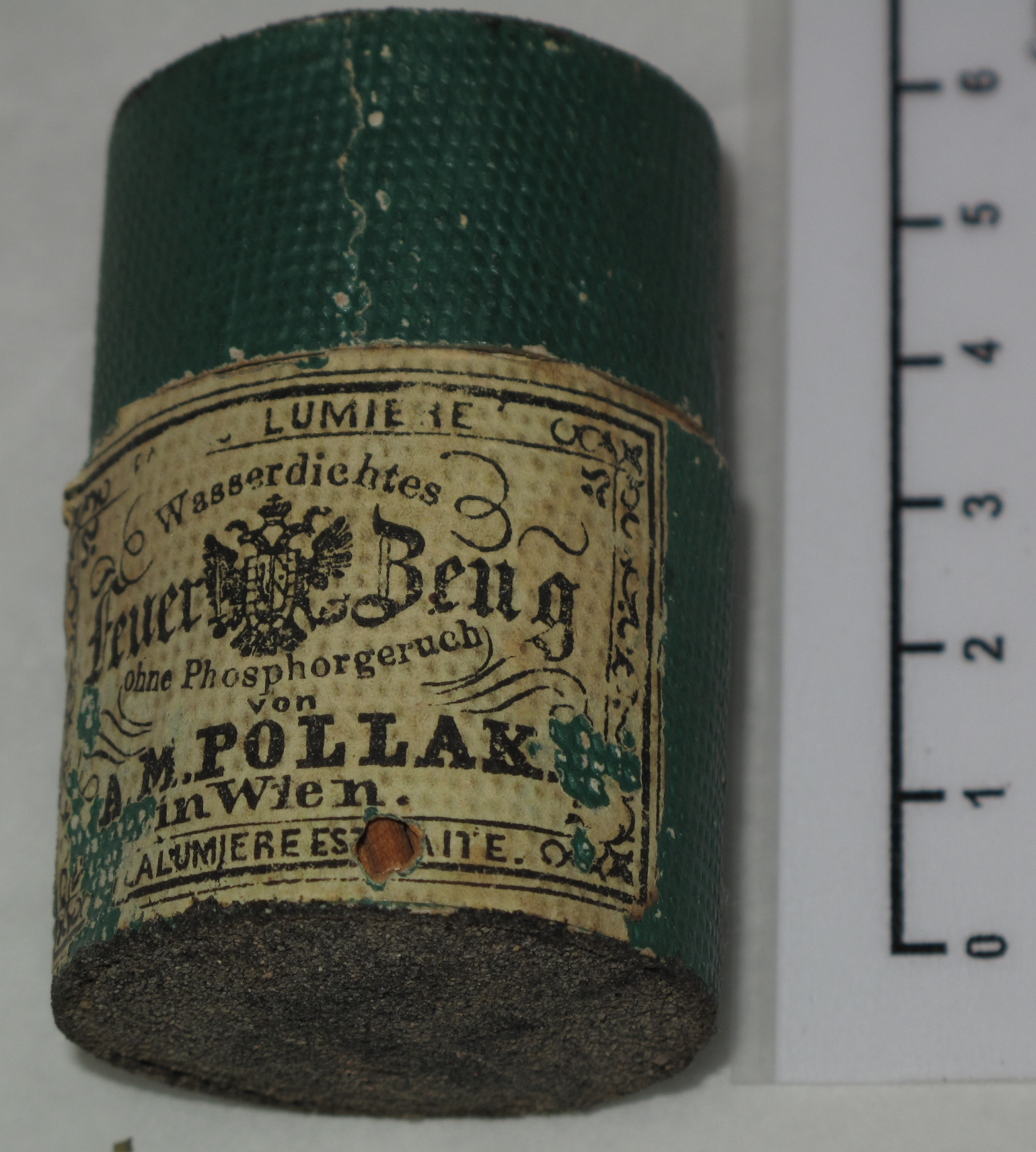
One last practical point, because it is what actually bothered people day to day.
Fire from a box of matches is a serious possibility and a rare event. Matches that will not strike because they have absorbed moisture out of a humid kitchen are a certainty and a daily nuisance – and a match that fizzles and goes out is worse than useless because it has been used up without lighting anything.
So the lid was being closed for that reason far more often than for the other one, and the position near the stove was chosen partly because it is the driest place in the room. Which is the same reasoning as the salt box on the wall beside the fire: a hygroscopic problem solved by putting the container where the air holds the least water.
The Striking Surface Came Later and Changed Everything
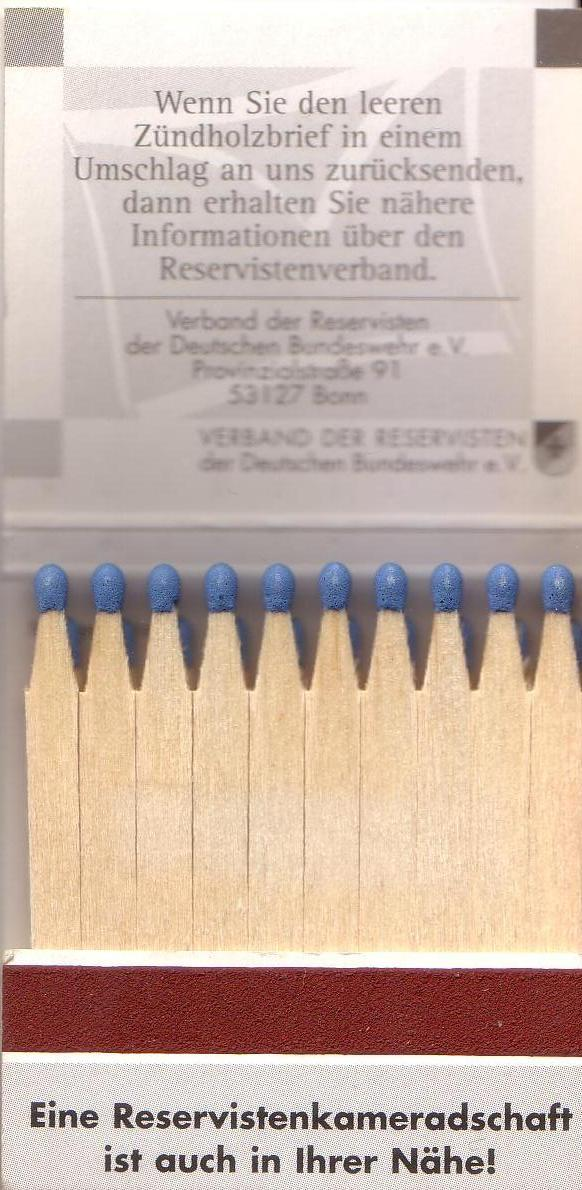
This is the fix, and it is a good one.
A match that will light on anything is the hazard. So the chemistry was divided: part of what is needed for ignition was moved out of the match head and onto a prepared strip on the box, which means the match will not light on an ordinary surface at all. It needs its own box.
That single change removes almost the entire problem. Matches can now be carried loose, stored in card, kept in a drawer and handled by anybody without the risk of accidental ignition – and the metal safe becomes unnecessary within a generation of that chemistry becoming standard.
The Cardboard Book Finished the Metal Box
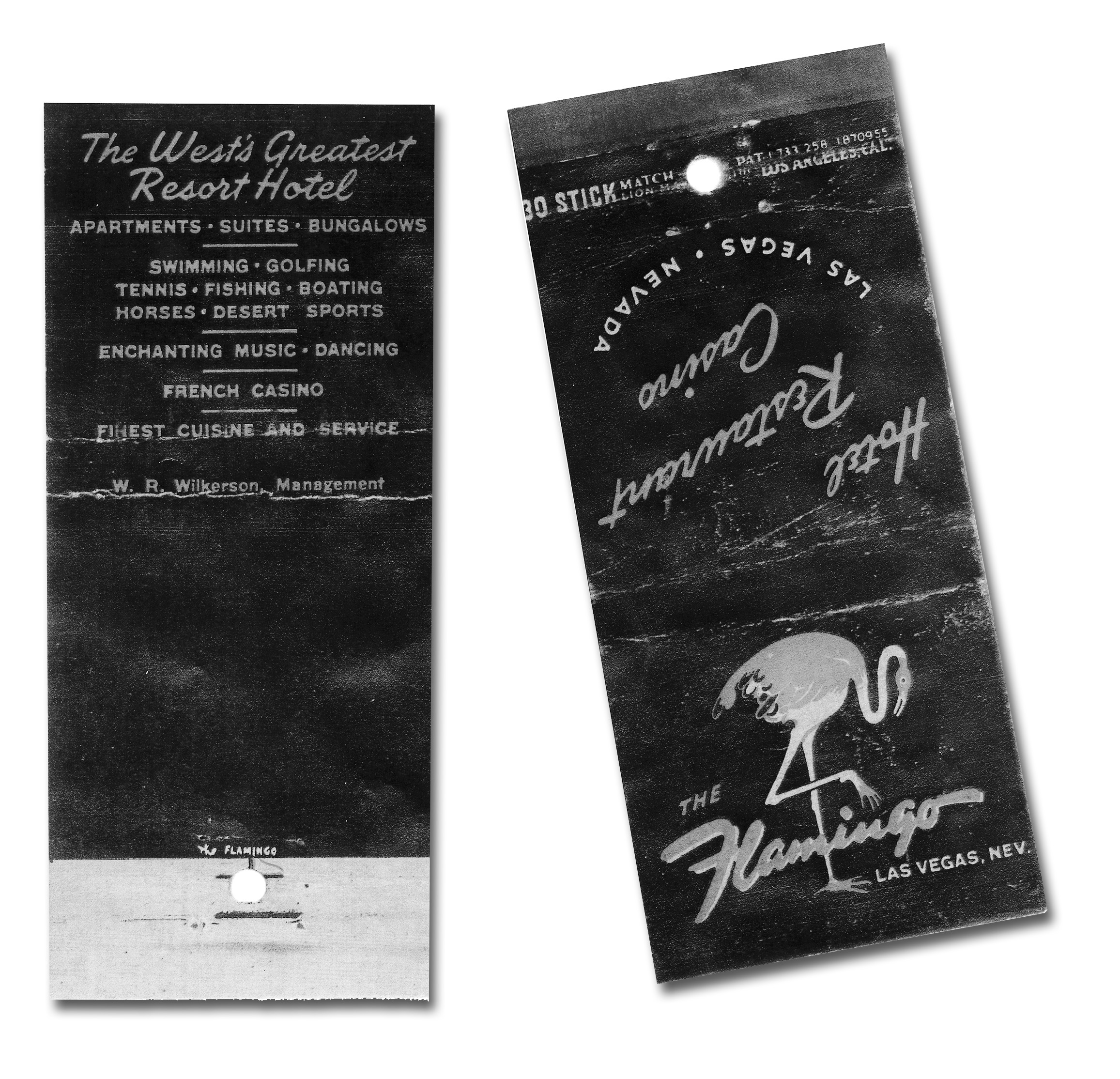
The next step is the one most people remember.
Paper matches in a folding card cover with a striking strip on it are cheap enough to give away, flat enough to carry anywhere, and safe enough that nobody worries about them. They were produced in enormous numbers as advertising, which means a household acquired them without ever buying any.
Against a free flat card book that cannot light itself, a mounted metal container has nothing to offer. So the safes came off the walls, and the holes where they were screwed on are still in the plaster of a great many kitchens.
Children and Matches Was the Permanent Worry
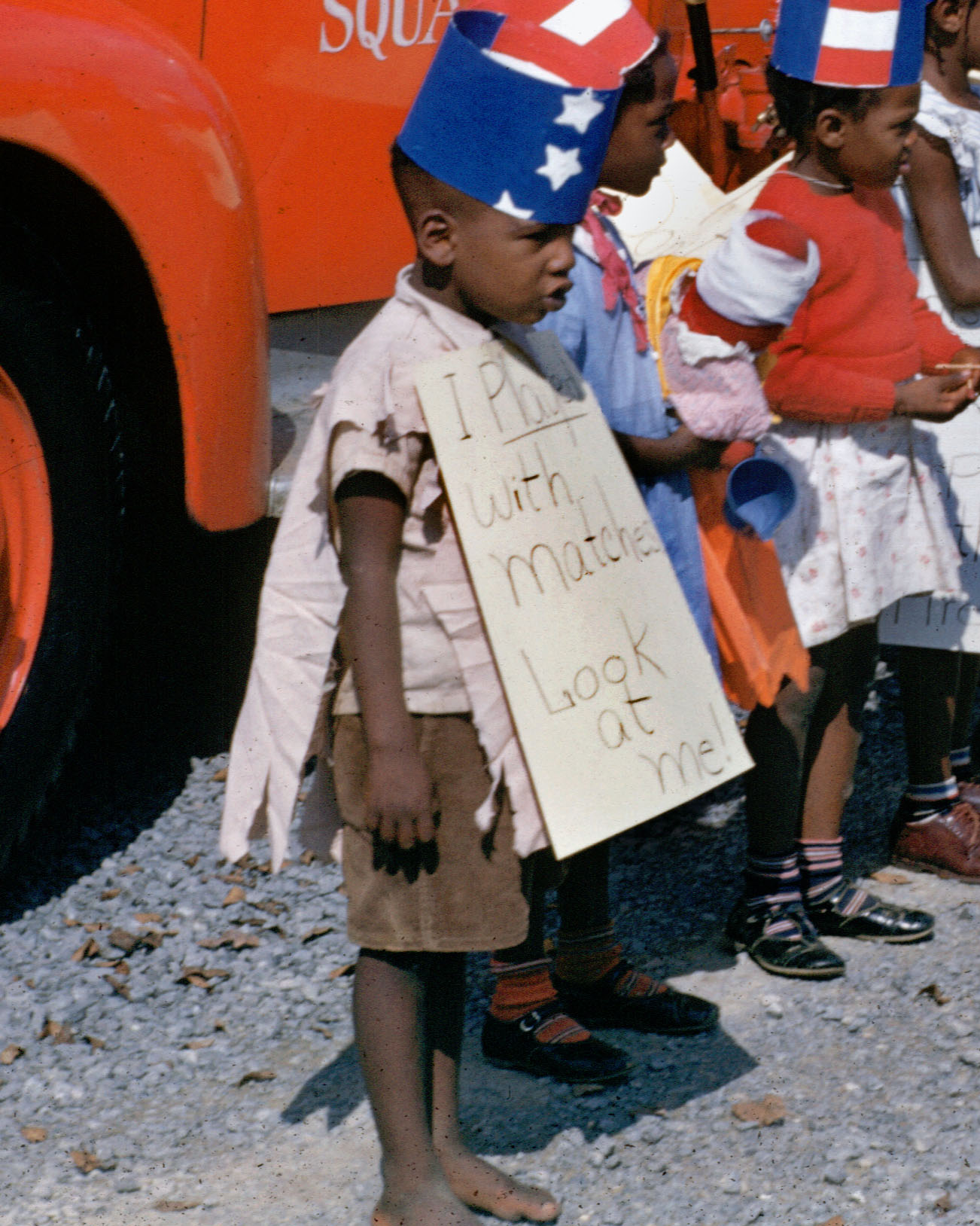
Which has to be said directly rather than implied.
The thing every household with children was managing was that matches are small, interesting, and produce fire instantly – and the measures taken were exactly what you would expect: keep them high, keep them in one place, keep them in metal, and count them.
That concern did not go away when the chemistry improved; it simply stopped being about spontaneous ignition and became entirely about access. Which is still the situation, and is why matches and lighters are kept out of reach in houses now for the same reason the safe was screwed to the wall above a child’s head.
The Holes in the Plaster Are the Evidence
And this is what is left.
Two small screw holes at about shoulder height beside where a stove used to be, usually painted over, frequently the only trace. In houses that have not been redecorated, the paint shadow of the box is sometimes still visible.
I find that a good marker because it is so specific. A pair of holes at that height, in that position, is almost always a match safe – and once you know what you are looking at, old kitchens are full of them.
What the Box Was Admitting
So the object is not a holder. It is a containment vessel.
A household bought a product that had transformed daily life by making fire portable and instantaneous, and then took sensible precautions against the fact that the same product could light itself. Metal because fire is contained by metal. A tight lid because damp ruins them and air feeds a fire. A fixed position so nobody searches in the dark. On the wall so it cannot be knocked over. Above child height for the obvious reason. And a separate compartment for the dead ones, because a hot match in a wood box is how houses burn.
Every one of those features is an admission. Which is why I think the match safe is one of the more honest objects of its period: it is a small metal box that says, plainly, that the thing inside it is dangerous and the household knew it.
Like our content? Follow us for more.

