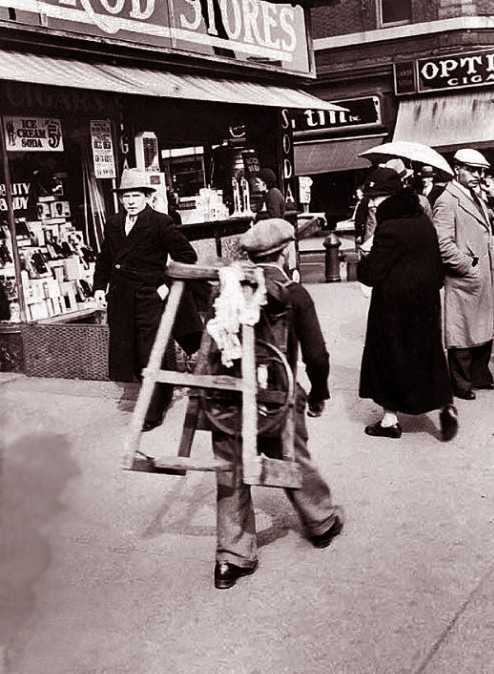
He came down the street pushing a cart, or riding a bicycle rigged with a wheel, and he rang a bell or called out, and women came out of houses with knives wrapped in a dishtowel.
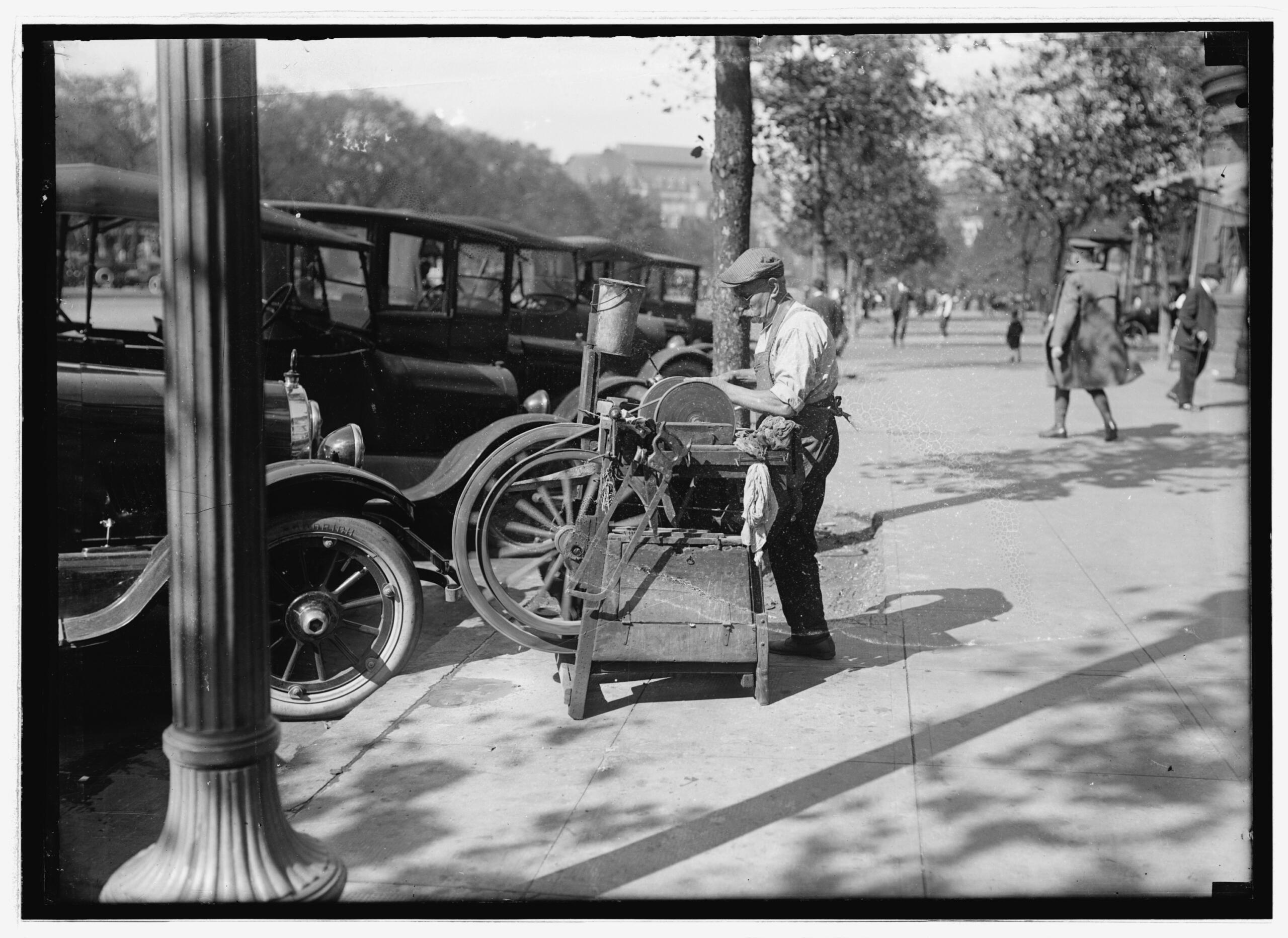
He set the cart up at the kerb, worked a treadle with his foot, and a stone wheel spun up and threw a thin line of sparks. Children stood as close as they were allowed, which was closer than it should have been.
The Machine Was the Whole Business
The equipment is worth describing because it was an entire livelihood built into one object.
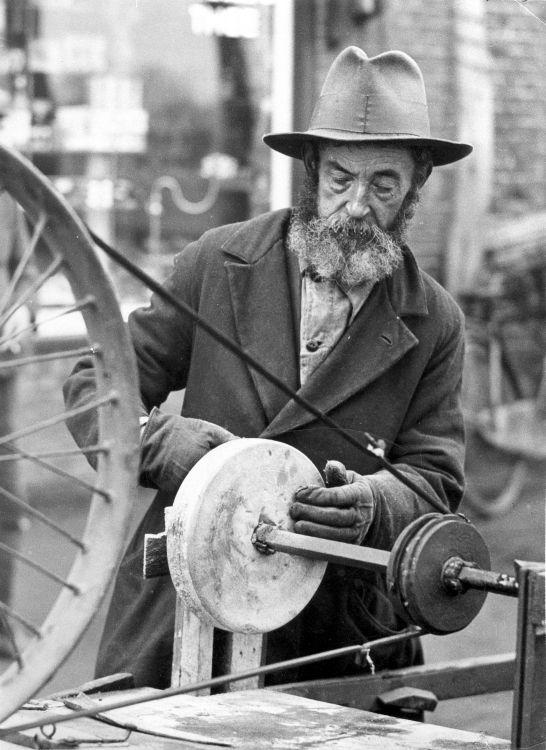
The cart carried a grinding wheel – usually a composite abrasive stone, sometimes natural sandstone – mounted on a spindle and driven by a belt from a large flywheel. The flywheel was turned by a foot treadle, a hand crank, or on bicycle rigs by the pedals and the chain with the back wheel jacked up off the ground.
The gearing mattered. A stone needs to run at a specific surface speed – too slow and it will not cut, too fast and it heats the steel – and the ratio between a slow treadle and a fast wheel was built into the frame. Alongside the coarse wheel there was usually a finer one, a leather strop, a can of water for cooling, and a tray to catch the slurry.
The whole thing cost less than a horse and needed no premises, which is precisely why the trade existed. A man with a cart and a stone had a business that required no shop, no stock, no licence in most places, and no capital beyond the cart itself.
Like our content? Follow us for more.
He Sharpened Everything, Not Just Knives
The itinerant grinder’s trade was far broader than kitchen knives, and the breadth is what made it viable.
Scissors and shears, which are harder to sharpen than knives and which almost nobody could do at home. Garden tools – shears, pruners, hoes, spades, sickles and scythes. Axes and hatchets. Lawn mower blades, which on a reel mower is a specialist job requiring the whole cylinder to be ground true. Razors, in the era before the disposable blade. Butchers’ knives. Ice skates. And in farming districts, a long list of implement edges.
A household in 1960 owned perhaps a dozen edged tools, all of which went dull, none of which it could restore, and all of which were expensive enough to be worth maintaining. That is a service with a market.
Sharpening Is Genuinely Difficult and That Was the Point
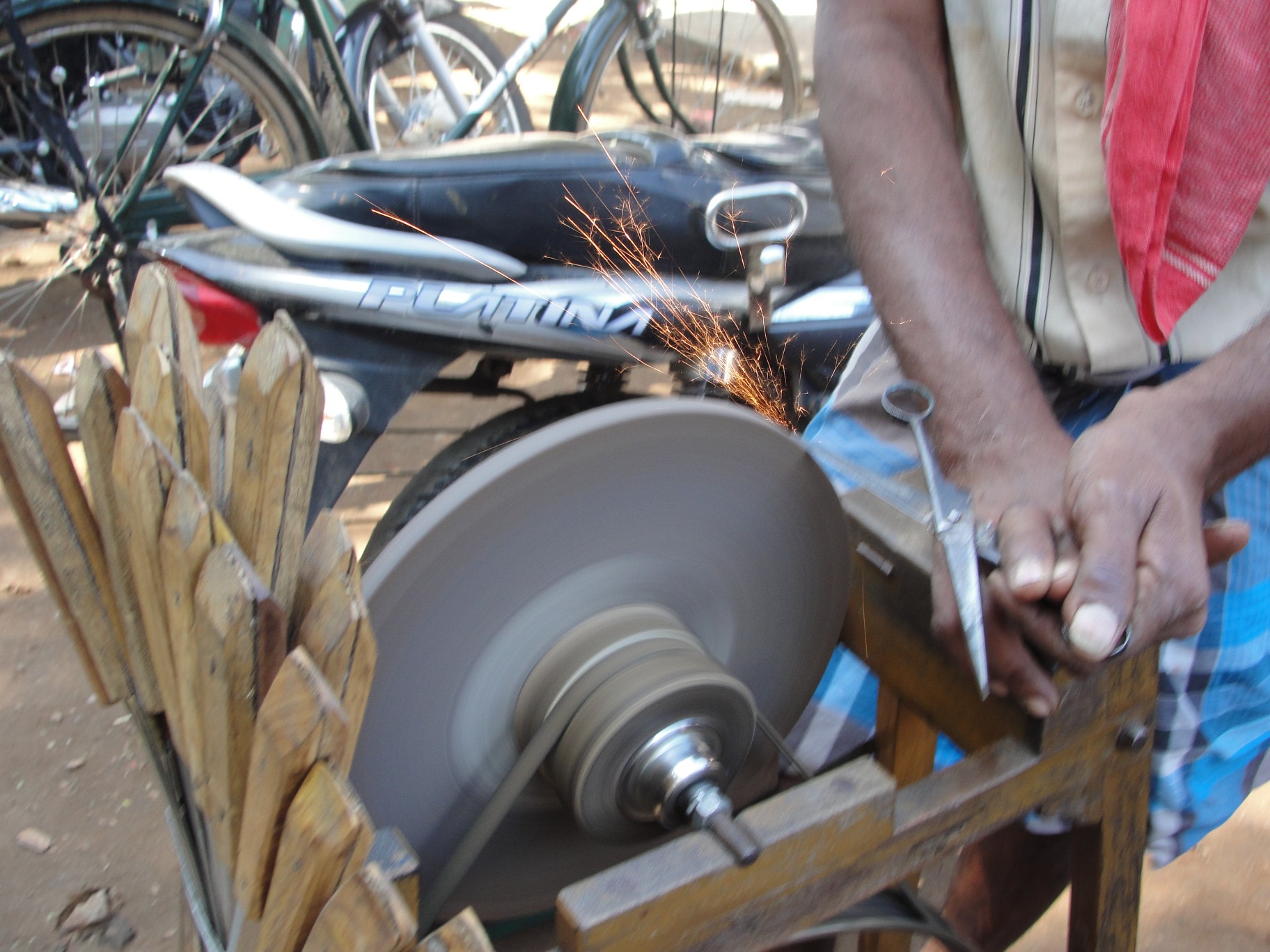
The reason this was a trade rather than a household chore comes down to the fact that sharpening is a skill, and a specific one.
An edge is the intersection of two surfaces, and a sharp edge is one where those surfaces meet in a line narrow enough to be invisible. Producing that requires holding a consistent angle along the whole length of a blade, at the correct angle for that tool – a carving knife, a cleaver, a pair of dressmaker’s shears and an axe all want different ones – and then removing the burr that grinding raises.
Get the angle wrong and you produce a blunt wedge, polished and useless. Vary the angle along the stroke and you produce a wavy edge that cuts in some places and not others. Overheat the steel on a dry wheel and you draw the temper – the hardness goes out of the metal at the very edge, permanently, and no amount of further sharpening fixes it.
Which is why the water can and the slurry tray were not optional. A grinder who burned a customer’s knife had destroyed it, in front of them, and would hear about it on the same street in a fortnight.
He Was Also an Information Service
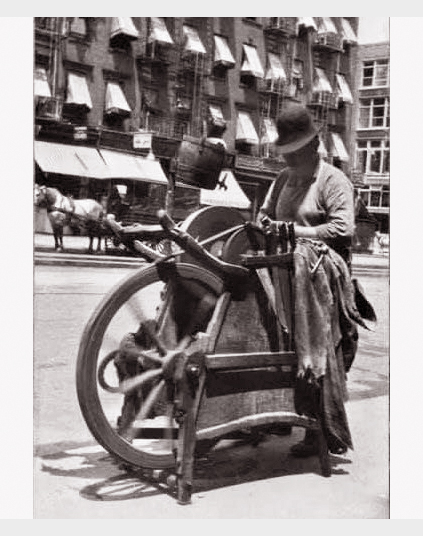
The grinder came round on a circuit – every few weeks, or seasonally – and he visited every house on every street.
Which made him one of a small number of people who moved horizontally across a neighbourhood rather than vertically within one household. He talked to every woman at every door, in sequence, for twenty minutes at a time, several hundred times a month.
So he carried news. Who had moved, who was ill, whose son had come home, which streets were worth his time, where there was work. The same was true of the other itinerant trades – the rag and bone man, the junk man, the man who bought scrap, the peddler with a case – and collectively they were the connective tissue of a town in a way that is almost impossible to reconstruct now.
He also extended credit, informally, and remembered who had paid.
The Bell, the Call and the Route Were All Part of the Job
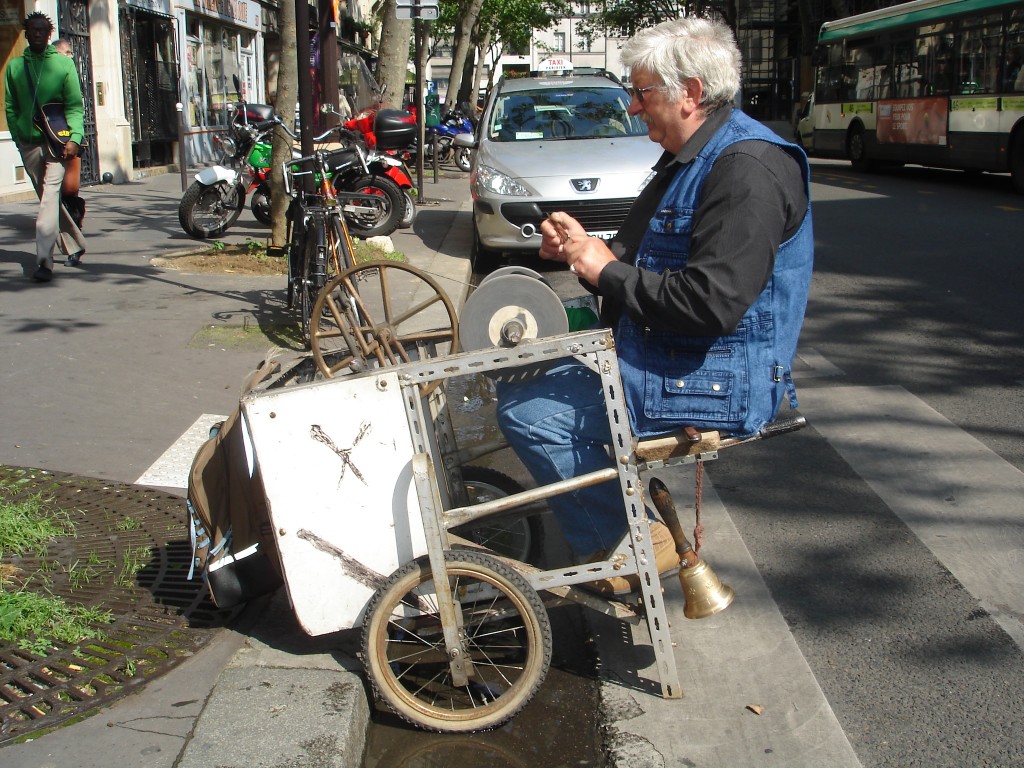
The commercial side of the trade was conducted entirely by sound and memory, and it was more sophisticated than it looks.
Each grinder had his own call or his own bell, and the point was recognition. A household did not need to know a name; it needed to know, from inside the house, which trade had just arrived in the street – because the grinder, the ragman, the fish man and the man selling produce all announced themselves the same way and a woman in a kitchen had to decide in four seconds whether to go out.
The route was the real asset. A grinder knew which streets produced work, which houses had a lot of tools, which had a garden, which had a seamstress in it, and – the hardest part – how long to leave between visits – too soon and nothing has gone dull, too late and somebody else has been round. That knowledge was built over years, it was worth money, and in some trades it was sold or handed to a son.
Pricing was per item, settled at the kerb, with no list. A kitchen knife was pennies, scissors more because they are harder, a mower cylinder a real sum – and the grinder read the household as he quoted, which is a skill nobody writes down.
The Sparks Were the Advertisement
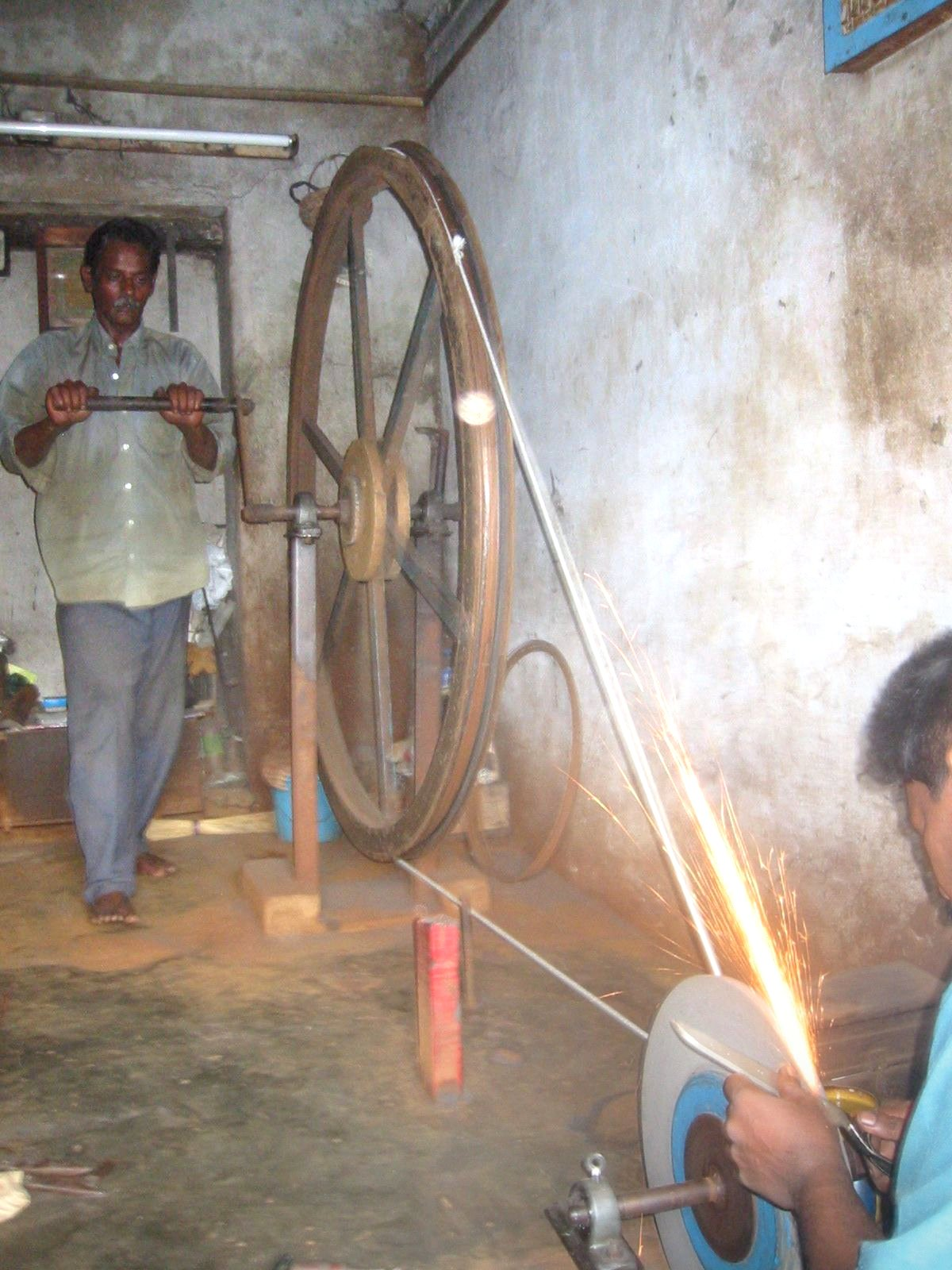
The most commercially useful thing about the whole operation was that it was spectacular to watch.
A stone wheel against steel throws a visible spray of hot particles, in daylight, on a residential street, accompanied by a rising note as the wheel loads and unloads. Children came. Children brought other children. Adults looked out of windows to see what the noise was, and having looked out, remembered that the scissors were blunt.
Which means the grinder’s pitch was his process. He did not have to canvass; he set up at a kerb, started work on the first knife of the morning, and the street came to him – and a man who arrived, worked in silence and left would have taken a fraction of the business.
It is one of the clearest examples of a trade whose marketing was indistinguishable from its labour, and it is also the reason so many people remember these men vividly despite having no idea what they were called.
Three Things Ended the Trade
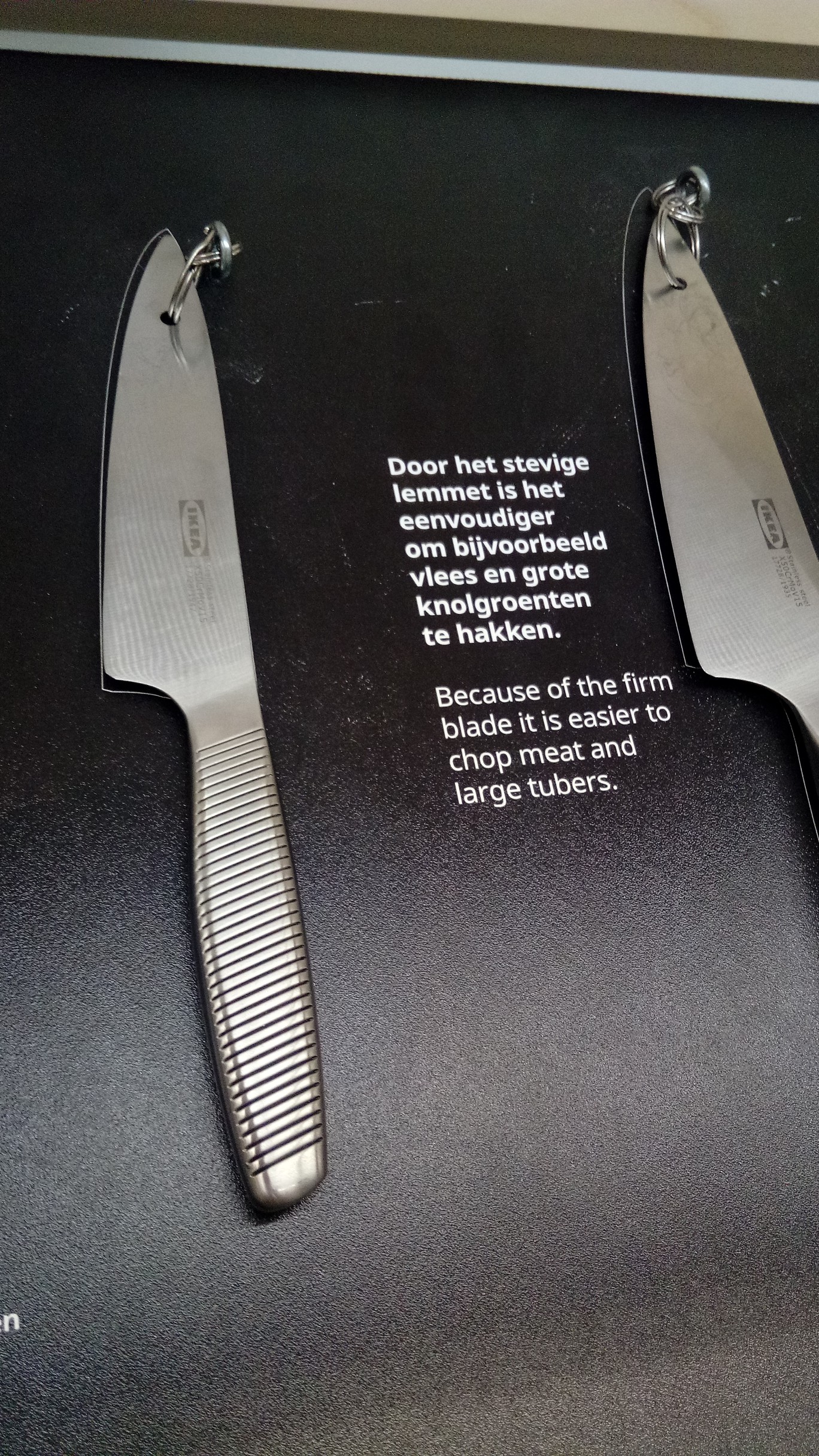
The first is that knives got cheap. A stamped stainless-steel blade in a moulded handle, mass produced, costs less in real terms than the price of having a good knife sharpened twice – which means the economic case for maintenance collapsed entirely. You do not sharpen a thing you can replace for less than the sharpening.
The second is stainless steel itself, and this is more interesting than it sounds. Carbon steel takes a superb edge easily and loses it quickly and rusts if you look at it wrong. Early stainless resisted rust, held an edge adequately, and was considerably harder to sharpen on a simple stone – so as households moved to stainless, home sharpening became less rewarding and professional sharpening became more necessary at exactly the moment the economics turned against it.
The third is the household itself. A family that ate a roast joint, broke down a chicken, cut its own bread and dressed its own vegetables needed sharp knives daily. A household buying portioned meat, sliced bread and prepared vegetables needs one adequate knife, occasionally – and an adequate knife is one almost nobody notices is blunt.
The Twist: Blunt Knives Are More Dangerous and Everybody Has One
Here is the part worth knowing, because it inverts the usual assumption about safety.
A sharp knife cuts where you point it with little force. A blunt knife requires pressure, slips off the surface of whatever you are cutting rather than entering it, and slides – and a blade moving sideways under force, with a hand behind it, is the mechanism of most kitchen knife injuries. Professional cooks say this constantly and are correct: the dangerous knife is the dull one.
So the aggregate outcome of the trade’s disappearance is that American kitchens are full of knives that are harder to use and more likely to cut their owner, belonging to people who have never used a sharp one and therefore have no idea what they are missing.
The service did not vanish because it stopped being useful. It vanished because it stopped being worth anybody’s time to sell at a price anybody would pay – which is a different thing entirely, and the gap it left has been filled by nothing.
There is a small revival, and the shape of it is telling. Sharpening services exist at farmers’ markets, at hardware shops, as mail-in businesses and as mobile vans working by appointment – and they are used overwhelmingly by people who cook seriously and by trades who depend on an edge. Which is to say that the grinder’s customer base narrowed from every household on the street to the small number of people for whom a sharp edge is still obviously worth paying for.
The man with the cart served everybody because in 1960 everybody needed him. Nobody needs him now, and almost everybody would benefit.
Like our content? Follow us for more.