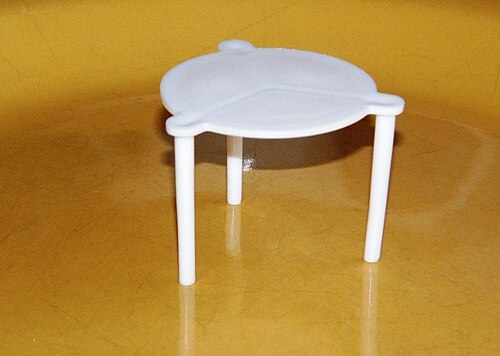
Everybody has picked one out of the middle of a pizza, looked at it for a second, and thrown it away. Children use them as dolls’ house furniture, which is the single most common thing anybody ever says about them.
It has a name. The patent calls it a package saver. In the trade it is a pizza saver, and in ordinary speech it is the little plastic table. It was patented in 1983 by Carmela Vitale, and it is solving a specific structural problem that a cardboard box has when you put something hot and wet inside it.
The Problem Is Steam, Not Weight
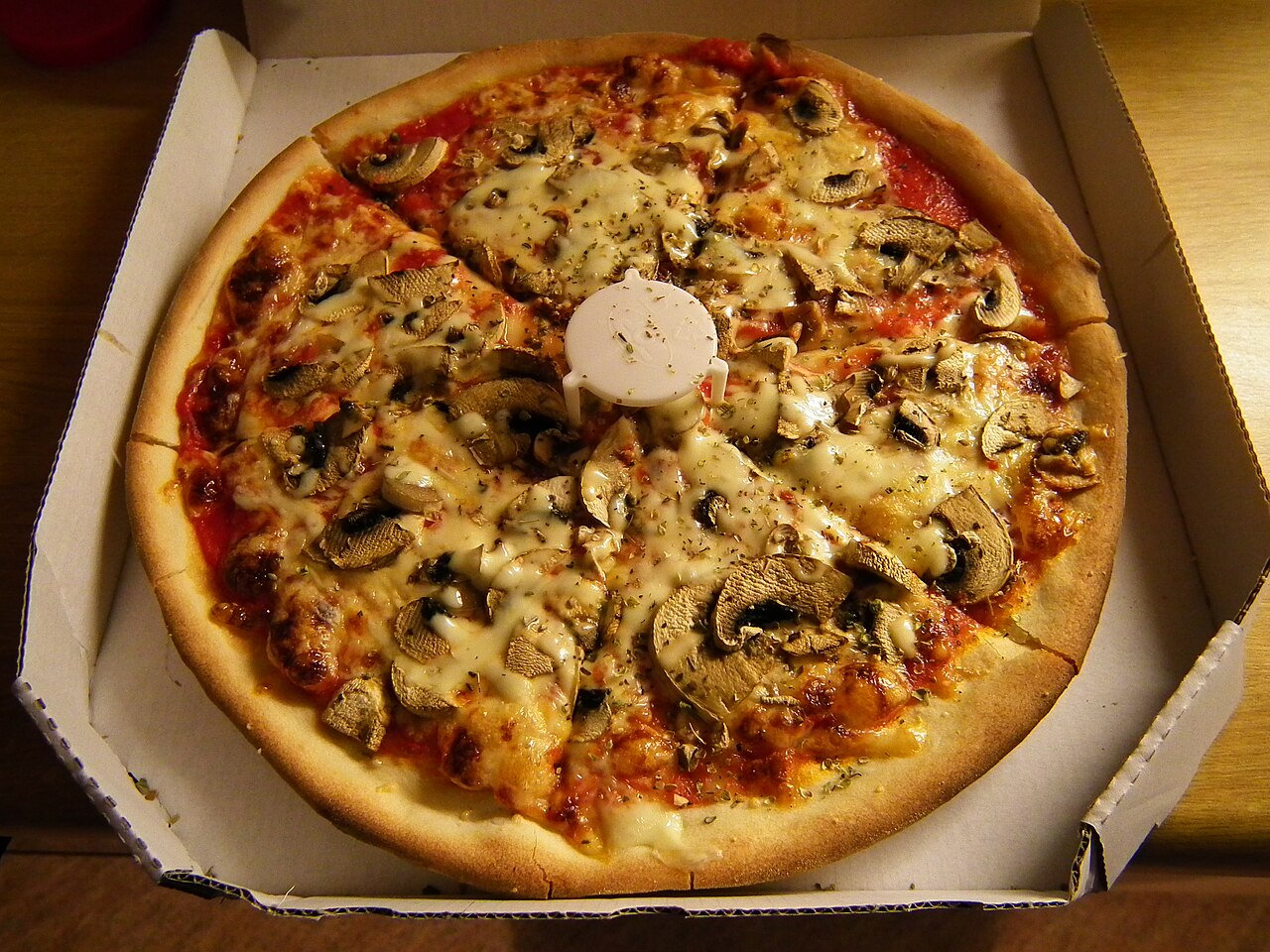
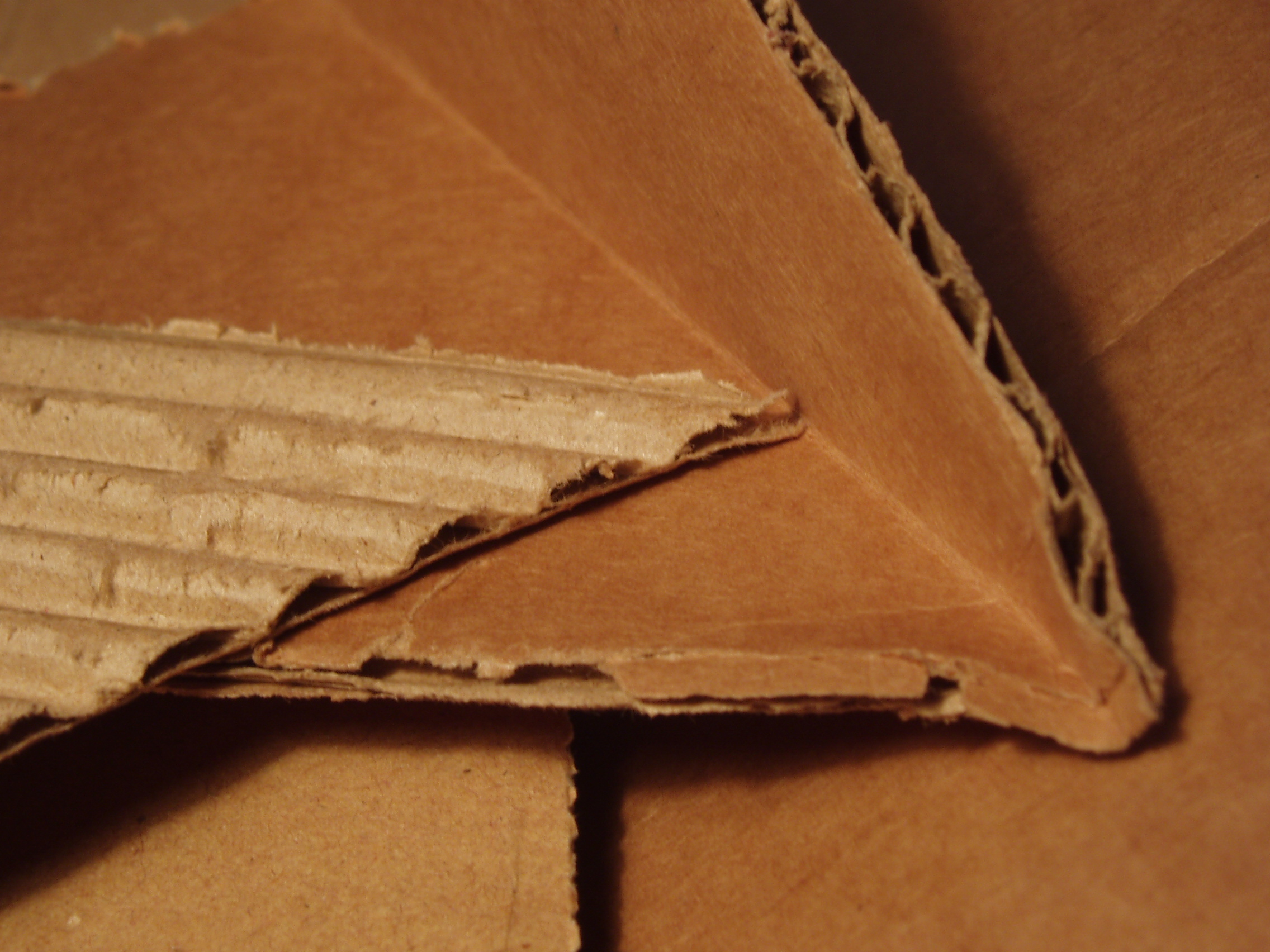
A pizza box is corrugated cardboard, which is strong in compression along its flutes and weak in bending across a large unsupported span. The lid of a large box is exactly that – a wide flat panel supported only at its edges.
Put a hot pizza inside and the box fills with steam. Cardboard absorbs moisture readily, and damp corrugated board loses a great deal of its stiffness. Within a few minutes of leaving the oven the lid is softer than it was, and it begins to sag in the middle.
Stack a second box on top, or let a delivery rider rest a hand on it, and the lid touches the pizza. On a hot pizza the cheese is molten, so the lid does not simply touch it – it sticks, and when the box is opened the topping comes up with the lid.
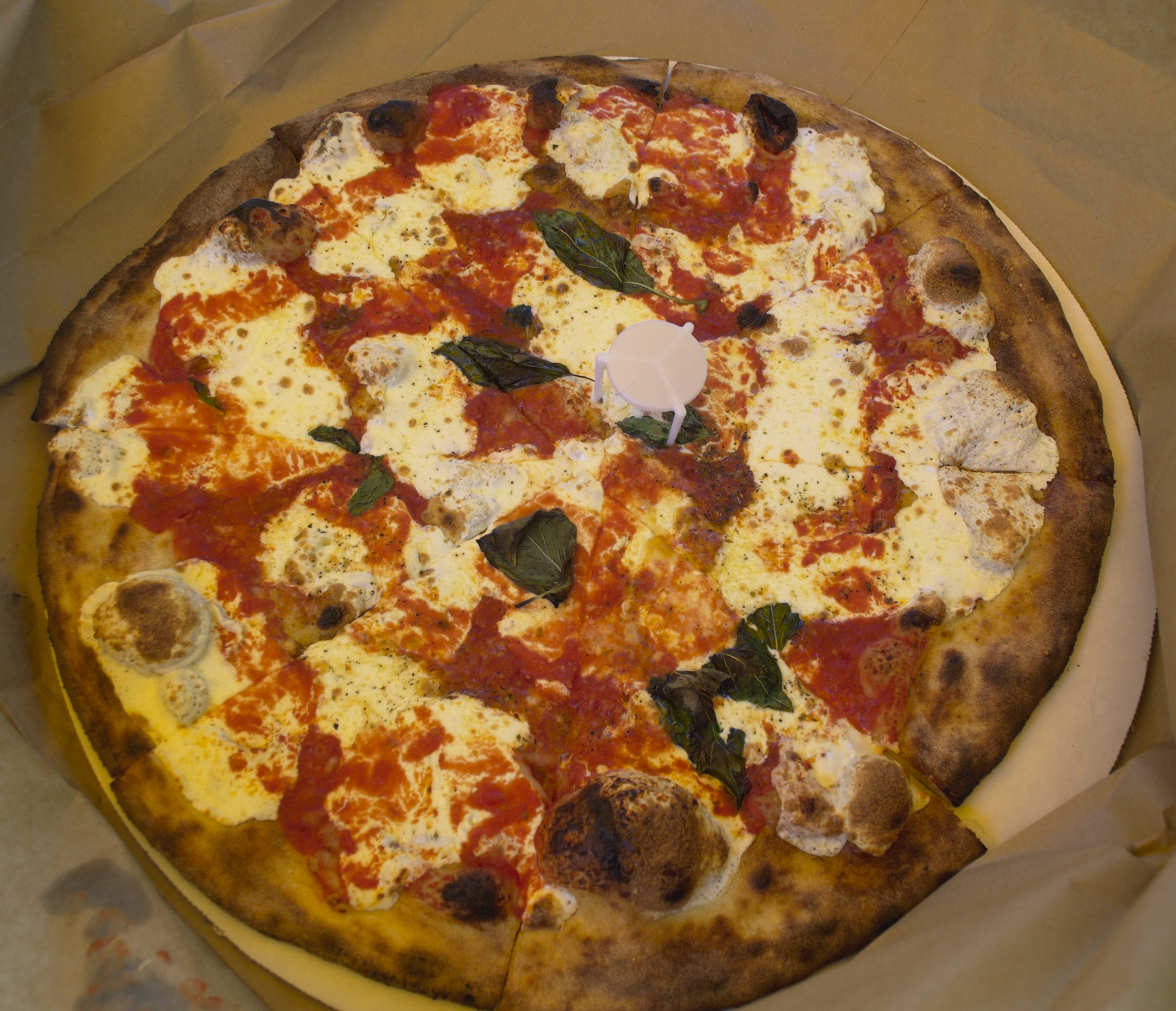
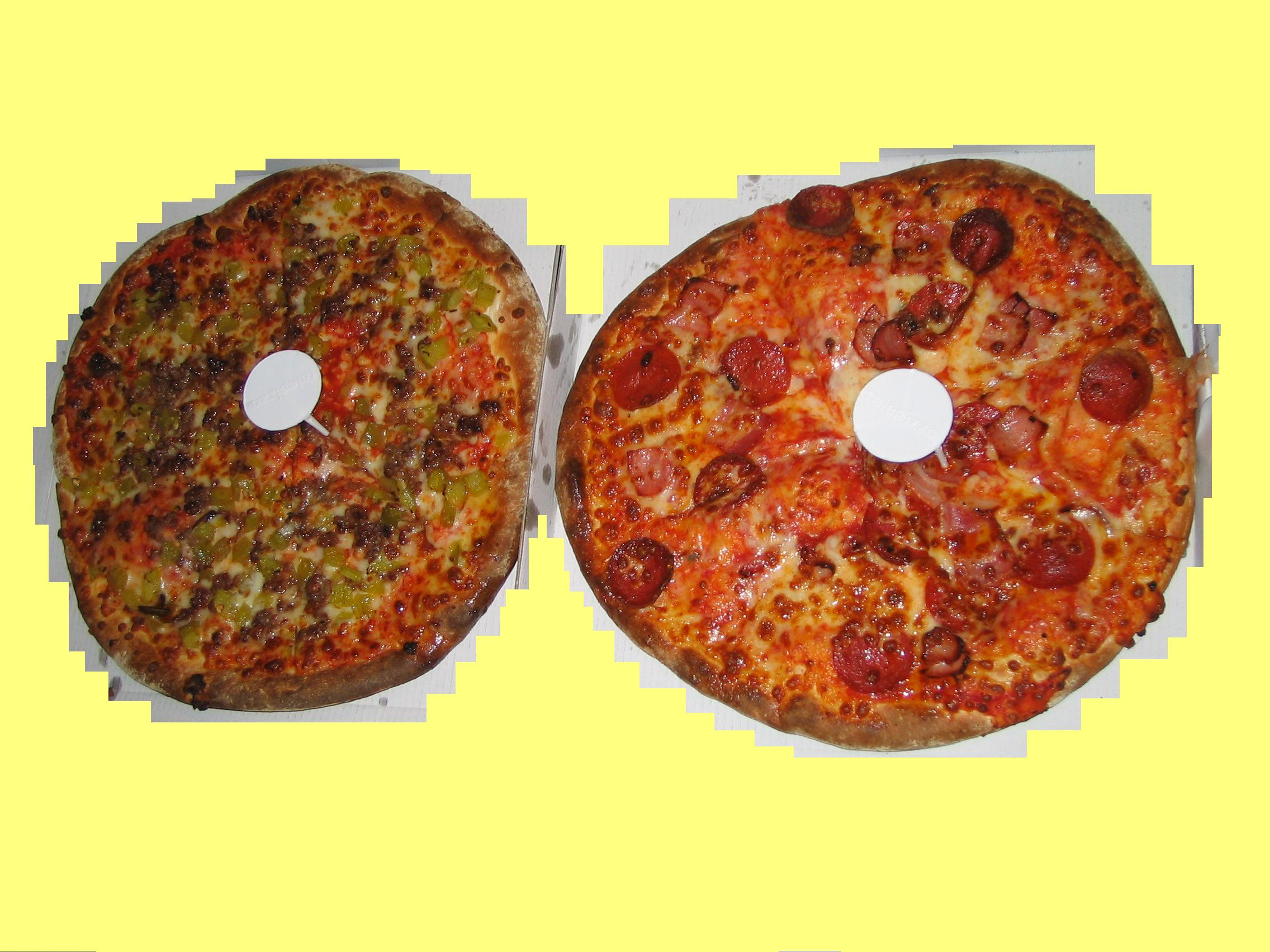
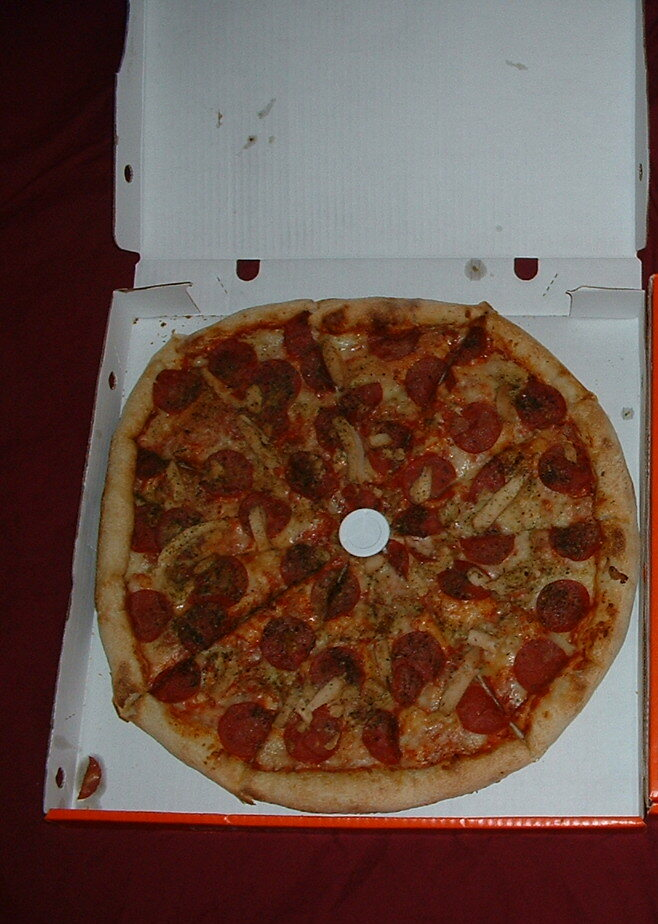
The tripod sits in the centre of the pizza, takes the lid’s weight at the one point where it has no other support, and holds it clear of the surface. Three legs, because three points define a plane and a three-legged object cannot rock on an uneven surface.
Like our content? Follow us for more.
Why the Box Is Square and the Pizza Is Round
This is the other thing everybody asks, and the answer is manufacturing rather than stupidity.
A square or rectangular box is cut and folded from a single flat blank with no waste between the panels, by machinery that cuts in straight lines, and it ships flat. A round box requires curved cutting, produces offcuts, cannot be folded from one piece as simply, does not stack as stably, and does not fit a square shelf or a square delivery bag.
Round boxes exist and are used by a small number of operators. They cost more, and the cost difference is per box on a product sold in enormous volume at thin margins.
There is also a genuine functional argument for the corners. They are where the box is strongest, they give somewhere to grip without touching the lid, and on a square box the pizza can be rotated to reach a slice without the whole box moving. The wasted space in the corners is where the condensation collects rather than sitting under the base.
The Box Has Several Other Fixes Built In
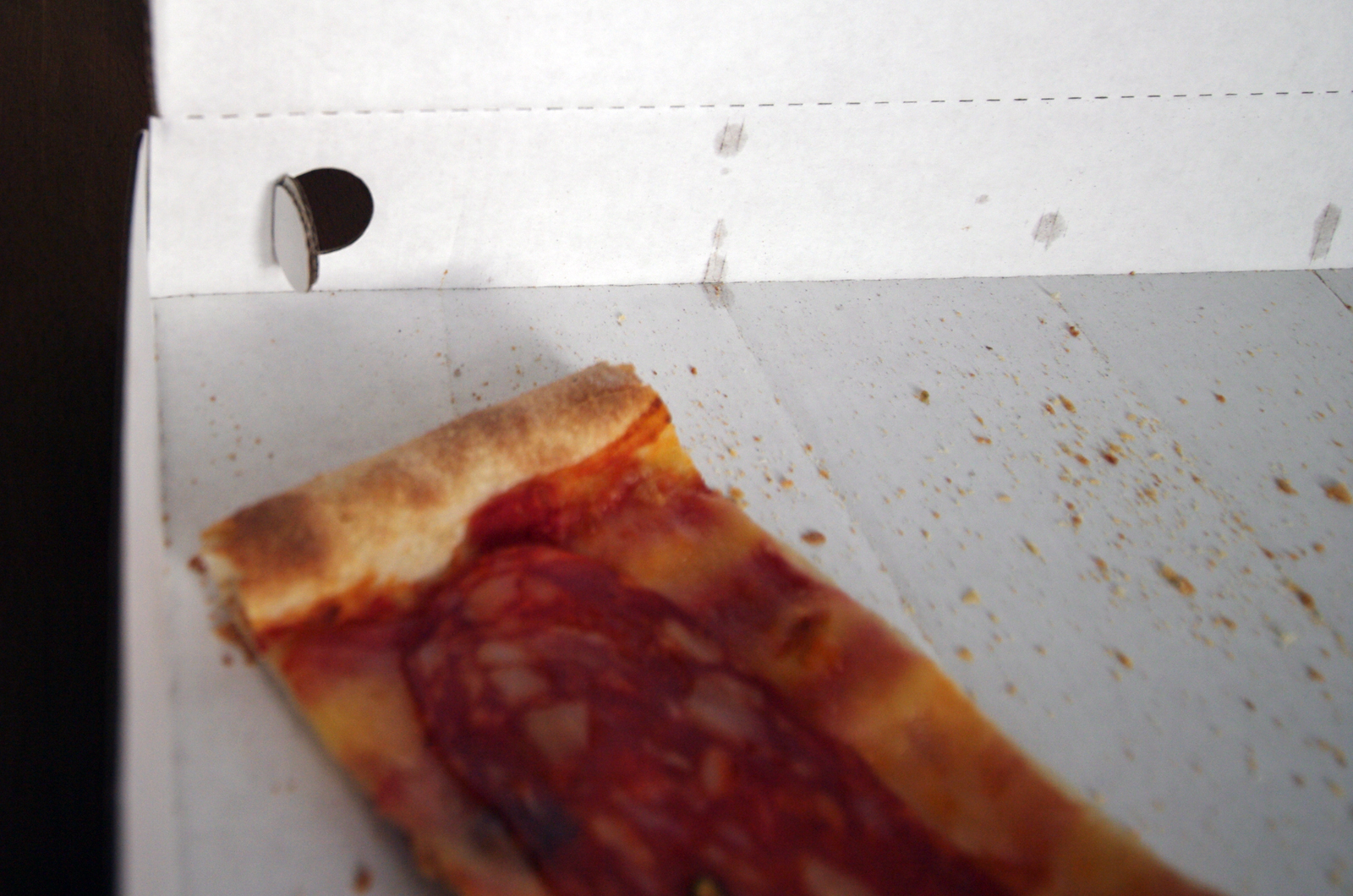
Once you start looking at a pizza box as an engineering problem, the rest of the features become visible.
The small holes punched in the sides or the lid are steam vents. Without them the box becomes a sealed humid container and the base of the pizza steams itself soggy from underneath. Too many vents and the pizza goes cold; too few and it goes limp. The number and position are a compromise that operators argue about.
The corrugation itself is insulation, because the air trapped in the flutes is a poor conductor of heat. This is why a pizza box keeps a pizza hot far better than a flat sheet of the same material would.
The base is frequently a slightly different board grade from the lid, or carries a liner or a corrugated disc, because the base is taking the grease and the moisture and has to stay rigid when it is picked up by one edge.
And the lid tucks in rather than closing flat, which locks the box shut without tape and lets it be opened one-handed.
The Box Was Invented Later Than the Pizza Delivery Business
Pizza was being sold and carried out long before anybody designed a container for it, and what the trade used first was whatever already existed.
Bakery boxes, paperboard cake boxes and flat sheets of card with a paper bag over the top were all pressed into service, and all of them failed in the same two ways: they were not rigid enough to be carried flat, and they trapped steam with nowhere for it to go. A pizza that arrived at a house in the 1950s arrived with a wet base as a matter of routine, and the trade accepted it.
The purpose-made corrugated pizza box, in the form that is now universal, came together over the following decades alongside the growth of delivery as a business rather than a favour. That is the key relationship: the box did not improve because somebody wanted a better box. It improved because delivery scaled up, journeys got longer, volumes got large enough to justify tooling, and the cost of a soggy pizza became a cost somebody was counting.
Almost every feature in the modern box traces back to a complaint that became frequent enough to be worth engineering out, which is why a pizza box has more design decisions in it than most of the furniture in a kitchen.
Why the Patent Made Almost No Money
The usual version of this story online is that the inventor became wealthy from the pizza saver. The reality is the ordinary one for a simple object.
A patent of that period ran for a fixed term and then the design entered the public domain. The item sells for a fraction of a cent, it is manufactured by injection moulders all over the world, and the volume that eventually made it ubiquitous arrived largely after protection had lapsed. Licensing revenue on a part worth a tenth of a cent, during a window when the product was not yet standard, is not a fortune.
It is a recurring pattern with small, good, cheap inventions. The value ends up with the manufacturers who produce them at scale and the restaurants who buy them by the million, rather than with the person who identified the problem – and the thing that makes the object worth patenting at all, its extreme simplicity, is also what makes it impossible to profit from for long.
The Plastic Is the Part That Is Changing
A single-use moulded plastic item weighing a gram or two, used once for twenty minutes, discarded immediately, too small to be sorted by most recycling equipment, and produced in the billions is exactly the category that has come under pressure.
The responses have followed the usual order. Some operators dropped it entirely and accepted the occasional stuck lid. Some moved to moulded pulp, card or bamboo versions, which work but cost more and can soften in steam. Some redesigned the box so the lid is stiffened by a fold or a crease across the centre, removing the need for a separate part – which is the most elegant answer and requires retooling the box supply rather than the kitchen.
And a few have done the thing that always happens when a single-use item is criticised: redesigned it so it has a second use. There are versions moulded as a small container, a cutter guide, or a sauce holder, which solves nothing but makes the object look less disposable than it is.
What the Object Is Actually Teaching
The pizza saver is a good example of a category of design that almost never gets discussed, because the problems it solves are too small to be interesting and too common to be noticed.
The tab that stops a drinks can ring tearing off. The notch in a tape dispenser. The dimple on the F and J keys of a keyboard. The thread on a milk bottle cap that breaks to show it has been opened. The lip on a yoghurt pot that lets a thumb catch the foil. The second, lower, button on a toaster.
Each of those is one person noticing a repeated small failure and designing it out, usually for almost no money, usually without credit, and usually to the point where the failure stops being imaginable. Nobody under forty has ever lost a ring pull into a drink, because that problem was solved before they were born, and so the solution is invisible.
The little plastic table is the rare one that stayed visible, because it does not disappear into the product. It sits in the middle of the pizza, it has to be removed, and so everybody meets it.
Which is why it is the only piece of packaging furniture that most people can describe from memory – and, until now, could not name.
One last thing, for the next time somebody at the table picks one up and asks what it is for.
It is not a table. It was never meant to look like one, and the resemblance is a consequence of the only shape that solves the problem: three legs for stability on a soft uneven surface, a flat top wide enough to spread the lid’s weight without pressing into the cheese, and as little material as possible because the whole object has to cost almost nothing.
Carmela Vitale was not designing a miniature piece of furniture. She was designing the cheapest possible object that could hold a damp sheet of cardboard three centimetres off a hot surface, and the answer came out looking like a table because that is what a cheap, stable, flat-topped support looks like at any scale.
Which is the most satisfying part of the whole thing. Nobody decided it should be charming. It is charming by accident, because good engineering at very small scale usually is.
Like our content? Follow us for more.