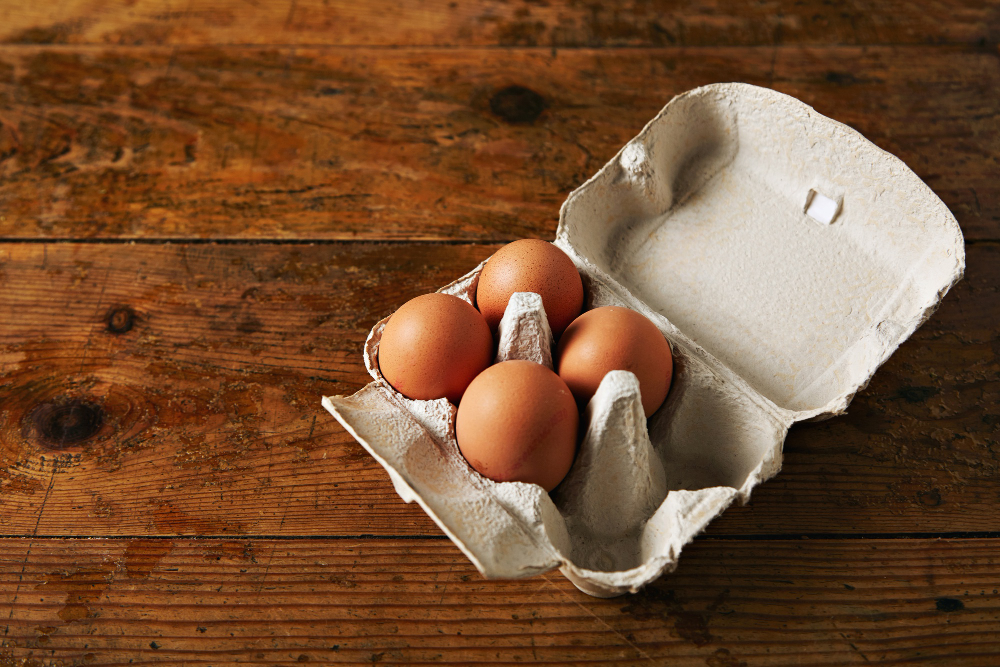
The egg carton is one of the most effective pieces of packaging ever designed, and almost nobody looks at it. It protects something with no structural redundancy whatsoever, costs a few cents, stacks, labels, carries and opens with one hand, and is made of material that was rubbish an hour earlier.
The usual account of its origin is a good story and is told with more confidence than the evidence supports, so it is worth telling carefully.
The Argument in the Hotel Lobby
The story runs like this. In 1911, in British Columbia, a newspaperman named Joseph Coyle was present during a dispute between a hotel owner and a local farmer about eggs arriving broken. The hotel was being charged for eggs it could not use; the farmer said they had left intact.
Coyle, who had a printing press and therefore a way of cutting and folding card at scale, went away and worked out a container that separated each egg from its neighbours and from the box walls, so that no egg could touch anything hard. He built the first versions by hand, then built machinery to make them.
The broad outline is well attested and Coyle is the name attached to the carton in most accounts. The hotel lobby argument is the part that has been retold the most, and like most invention anecdotes it has become smoother with each retelling. What is not in dispute is that a practical folded-card egg container emerged from his work in that period, and that the problem he was solving – eggs arriving broken, with no way of telling whose fault it was – was real and widespread.
Like our content? Follow us for more.
The Thing He Got Right
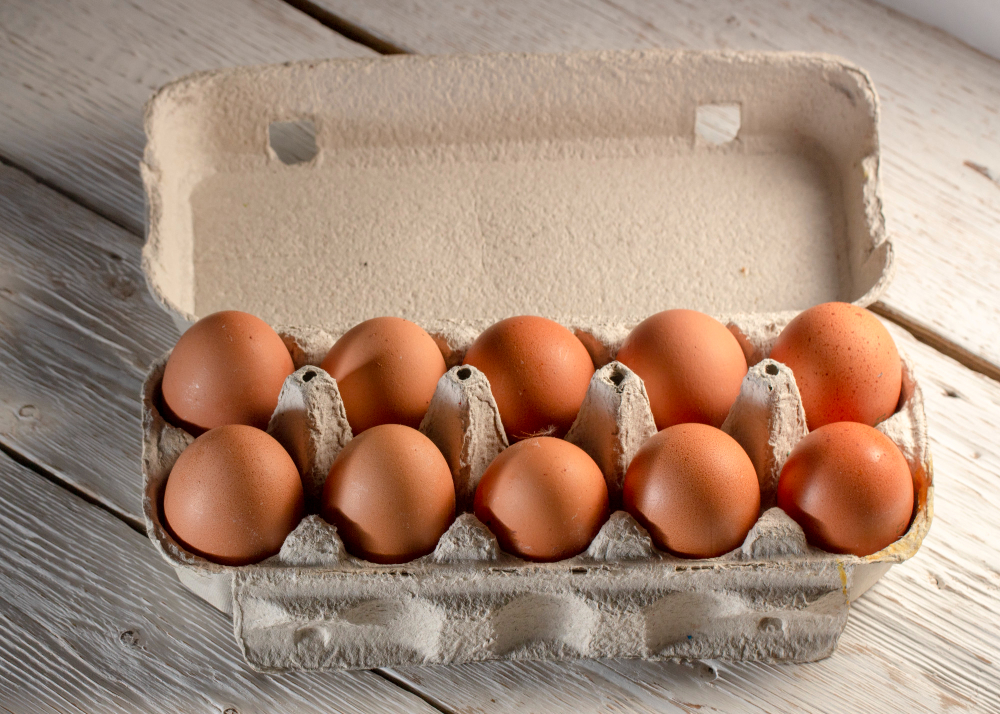
The design solves the problem in a way that is still, over a century later, difficult to improve on.
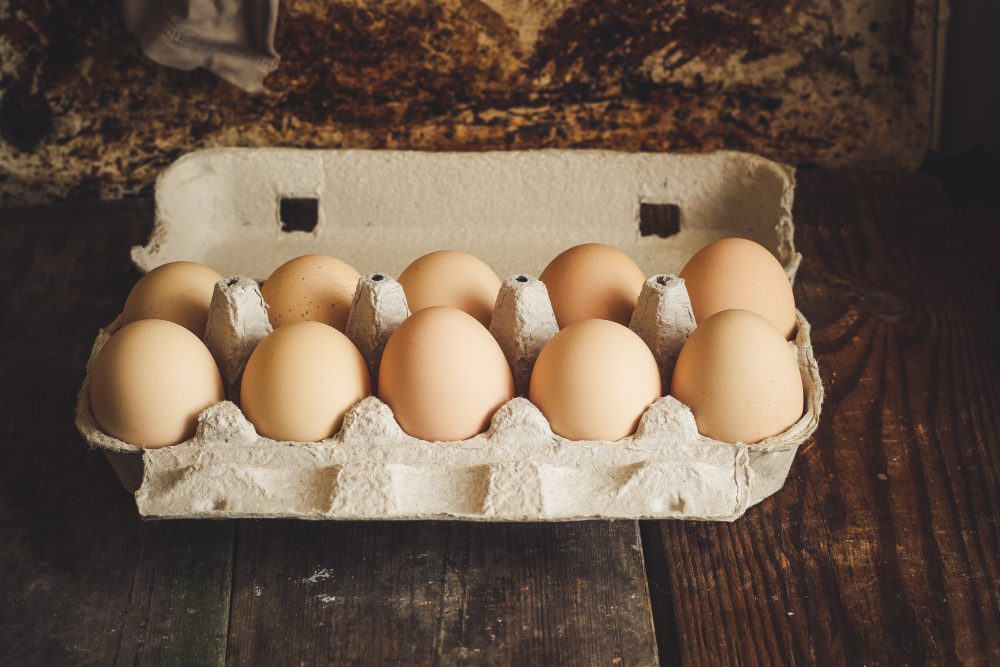
Each egg sits in its own pocket, supported around the circumference rather than at a point, and surrounded on all sides by a wall. That means no egg touches another egg, which is the single most important thing – an egg is extremely strong against even pressure across its shell and extremely weak against a point load, and another egg is a point load.
The pockets between the eggs rise to meet the lid, so that when the carton is closed the eggs are held from above as well. A closed carton can be dropped a modest distance, or have another carton stacked on it, without the eggs taking the load – the structure does.
And the material flexes. A rigid container transmits a shock straight through to its contents; a carton that gives slightly absorbs it. This is the same principle as a crumple zone and it is why a moulded pulp carton frequently outperforms a stiff plastic one in a drop.
The Material Is the Clever Part Now
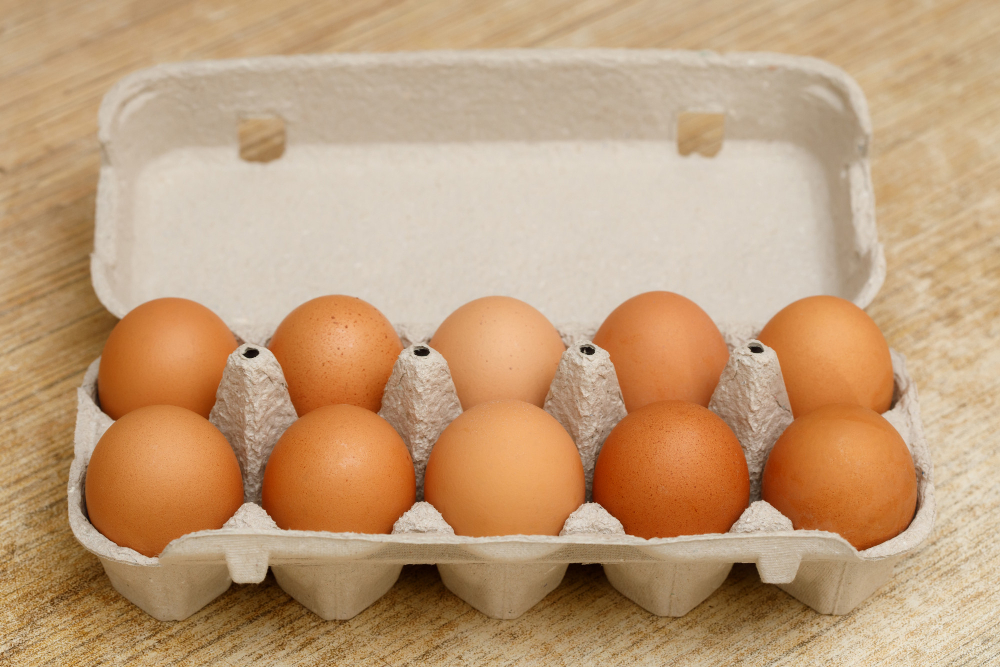
Most cartons today are moulded pulp, and the process is genuinely satisfying.
Waste paper and cardboard are pulped in water into a slurry. A mould in the shape of the carton, perforated and under vacuum, is dipped into the slurry; fibre is drawn onto the mould surface and water is pulled through. The wet shape is lifted off, pressed and dried.
The result is a rigid three-dimensional object made entirely from material that was already waste, using no adhesive, no fasteners and no coating. It is compostable, it is recyclable where facilities accept it, and the fibres can be pulped again.
It also breathes, which matters more than it sounds. Eggs are porous and absorb odours, and a sealed container traps moisture against the shell. A pulp carton lets air move while keeping the eggs apart, which is exactly what the contents need.
Before the Carton, Eggs Travelled Loose
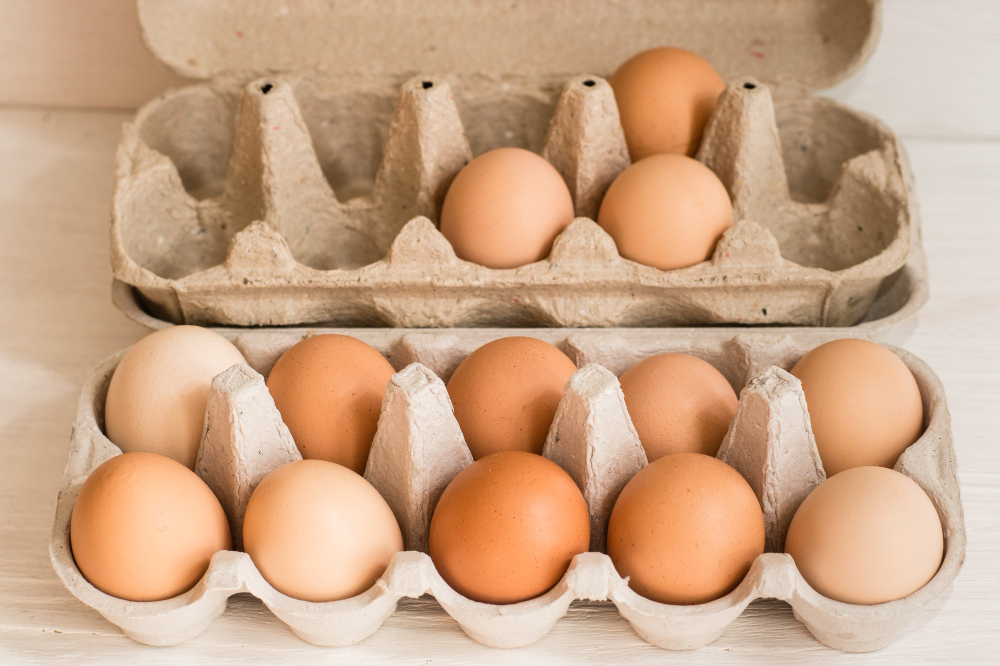
It is worth understanding how eggs actually moved before 1911, because it explains why the breakage argument was so bitter and so unresolvable.
Eggs went to market in baskets, in wooden crates, in barrels, and in boxes packed with straw, sawdust, bran, chaff or excelsior – wood shavings. The packing material went in loose around the eggs, and the person packing used judgement about how much to use and how tightly.
That arrangement fails in three distinct ways. Loose packing settles during transport, so the eggs end up touching each other. The material itself carries dust and odour into the porous shell. And there is no way to inspect the load without unpacking it, so breakage is discovered at the destination, after responsibility has become unprovable.
Larger shippers used wooden crates with card dividers forming a grid, which was a real improvement and is the direct ancestor of the carton. But a flat grid separates eggs sideways and does nothing vertically, so a stacked crate still crushed its lower layers.
The step Coyle took was to make the separator three-dimensional – to have the structure between the eggs also carry the load from above. That is the entire invention, and it is the reason a modern carton can be stacked six high in a chiller with nothing underneath taking any weight at all.
Why the Lid Says So Much
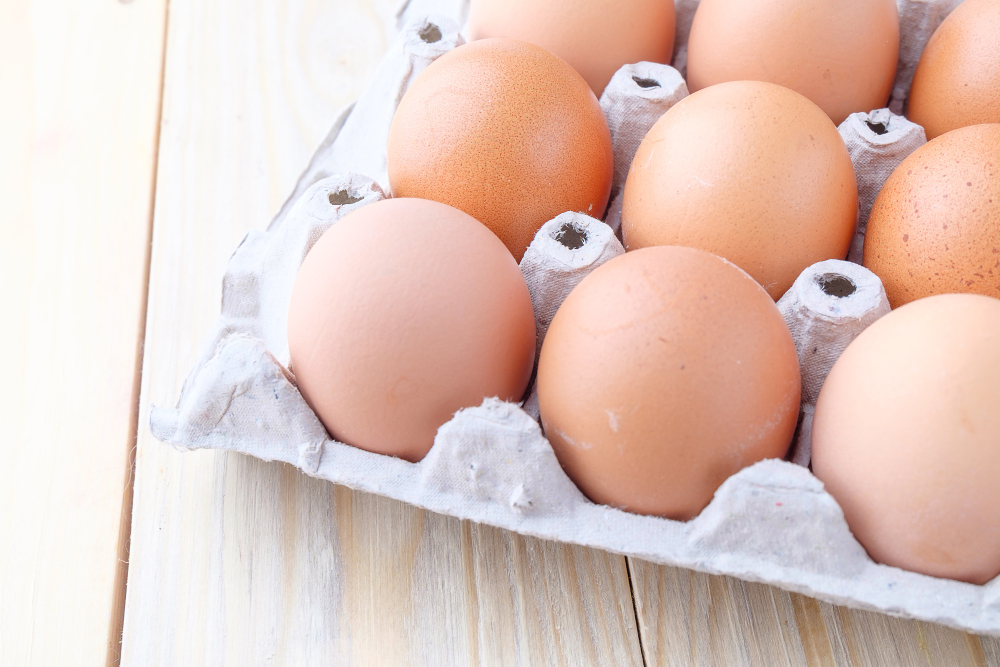
A carton is also a document, and the amount of information printed on it is out of all proportion to its cost.
Depending on the market it may carry the best-before or sell-by date, the farm or packing centre identifier, the grading of the eggs by weight, the production method, a traceability code allowing an individual box to be matched back to a flock, and in some jurisdictions a code printed on the shells themselves.
That traceability is the quiet achievement. An egg is an anonymous object and there is no way to tell by looking where it came from, which made food safety incidents extremely difficult to contain. Printing a code on the shell and matching it to the carton means a problem can be traced to a single producer and a single period rather than to the whole supply.
None of that was in Coyle’s design. It was added because the carton turned out to be the only surface available.
Plastic, Polystyrene and the Argument Between Them
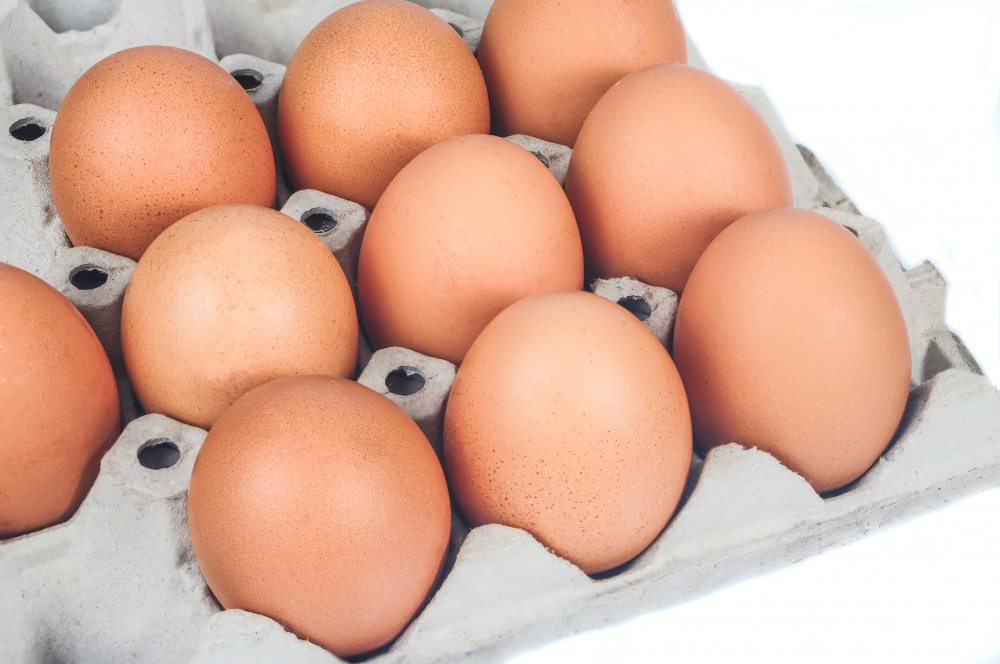
Three materials dominate: moulded pulp, clear plastic, and expanded polystyrene foam.
Pulp is cheapest, compostable and recyclable, and it hides the eggs. Clear plastic lets the customer inspect the eggs without opening the carton, which measurably reduces the number of cartons opened and therefore the number of eggs cracked by handling – a real benefit that gets forgotten in the material argument. Polystyrene foam insulates best and protects well and is the hardest of the three to deal with afterwards.
Several markets have restricted or banned foam food packaging, and pulp has regained ground. A number of producers use clear plastic specifically because of the inspection effect and because it can be made from recycled bottle material.
There is no clean answer, which is why the three have coexisted for decades. The honest summary is that pulp wins on end-of-life, plastic wins on breakage caused by customers opening cartons, and foam wins on nothing that is now considered decisive.
The Shape Has Been Attacked Repeatedly and Survived
Packaging design is an active field and the egg carton has been redesigned more times than almost any other everyday container. Most of the attempts have gone nowhere.
Cylindrical tubes, hexagonal arrays, flat trays with films, resealable rigid boxes, cartons that convert into something else after use – all have been produced, and the standard folded or moulded dozen in two rows of six has absorbed every one of them.
The reasons are the ones that defeat most packaging redesigns. The existing format fits the pallet, the case, the shelf, the refrigerator door and the hand. The machinery that fills and closes it exists everywhere. Retailers plan shelf space around its footprint. And the customer knows how to open it without being told, which is worth more than any improvement a new design could offer.
So the object on the shelf is, in its essentials, a hundred-year-old solution to a dispute about who was responsible for a broken egg – a dispute that the design settled permanently by making the question obsolete. If the eggs arrive intact, nobody has to argue about it, which is the best outcome any piece of packaging can achieve and the reason this one has outlasted almost everything designed since.
There is a postscript that people who keep hens know and most shoppers do not.
The empty carton has a long second life. It is the standard way of starting seedlings, because each pocket is a small pot that can be torn off and planted whole. It is used as a firelighter, stuffed with wax or lint. It is the usual thing for transporting eggs back from somebody’s smallholding. It is used in workshops to sort screws, and in schools for almost everything.
None of that is the designer’s achievement exactly, but it does say something true about the object. A container that is strong enough to protect twelve eggs, light enough to cost nothing, made of a material that holds water and then rots, and divided into twelve identical compartments, turns out to be useful for a surprising number of things that have nothing to do with eggs.
Which is the mark of a design that got the underlying problem right rather than the specific one. Coyle set out to stop a hotel and a farmer arguing. What he actually made was a very good way of keeping twelve fragile things apart, and that turned out to have uses nobody asked him for.
Like our content? Follow us for more.