

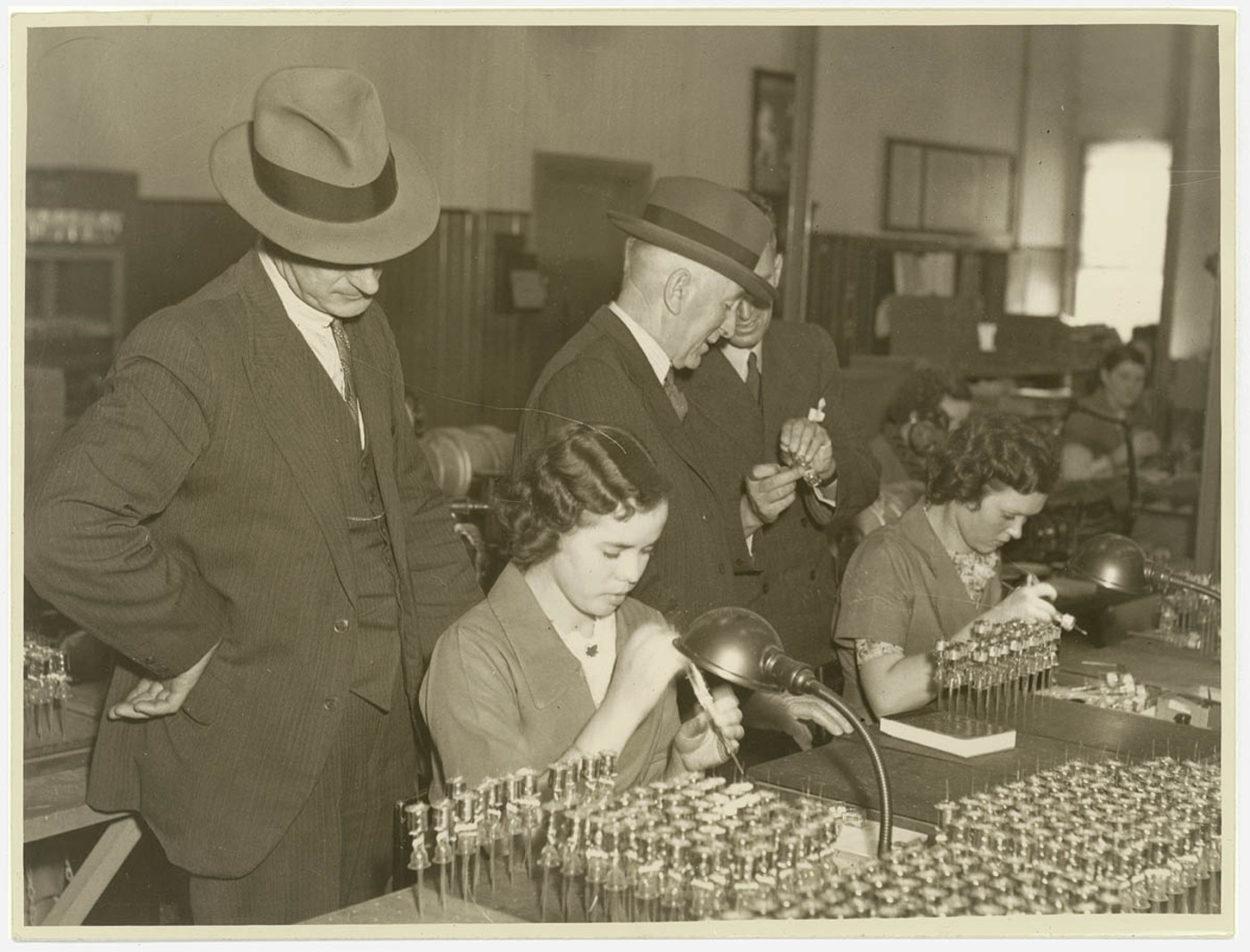
In 1960 every radio valve was a hand-built vacuum chamber. The electrodes were stacked into mica spacers under a magnifier, joined by dozens of individual spot welds, sealed into glass, pumped out and then baked hard to drive the gas out of the metal and the glass itself.
A charge of reactive metal was then flashed to silver the inside of the envelope and absorb gas for the rest of the valve’s life. Every valve was run on a rack for hours before it could be sold. And the cathode coating recipe was the most closely guarded thing in the building.
Here are sixteen things that were normal in a radio valve factory in 1960, and what became of each one.
1. Every Valve Was a Hand-Built Vacuum Chamber Made of Glass
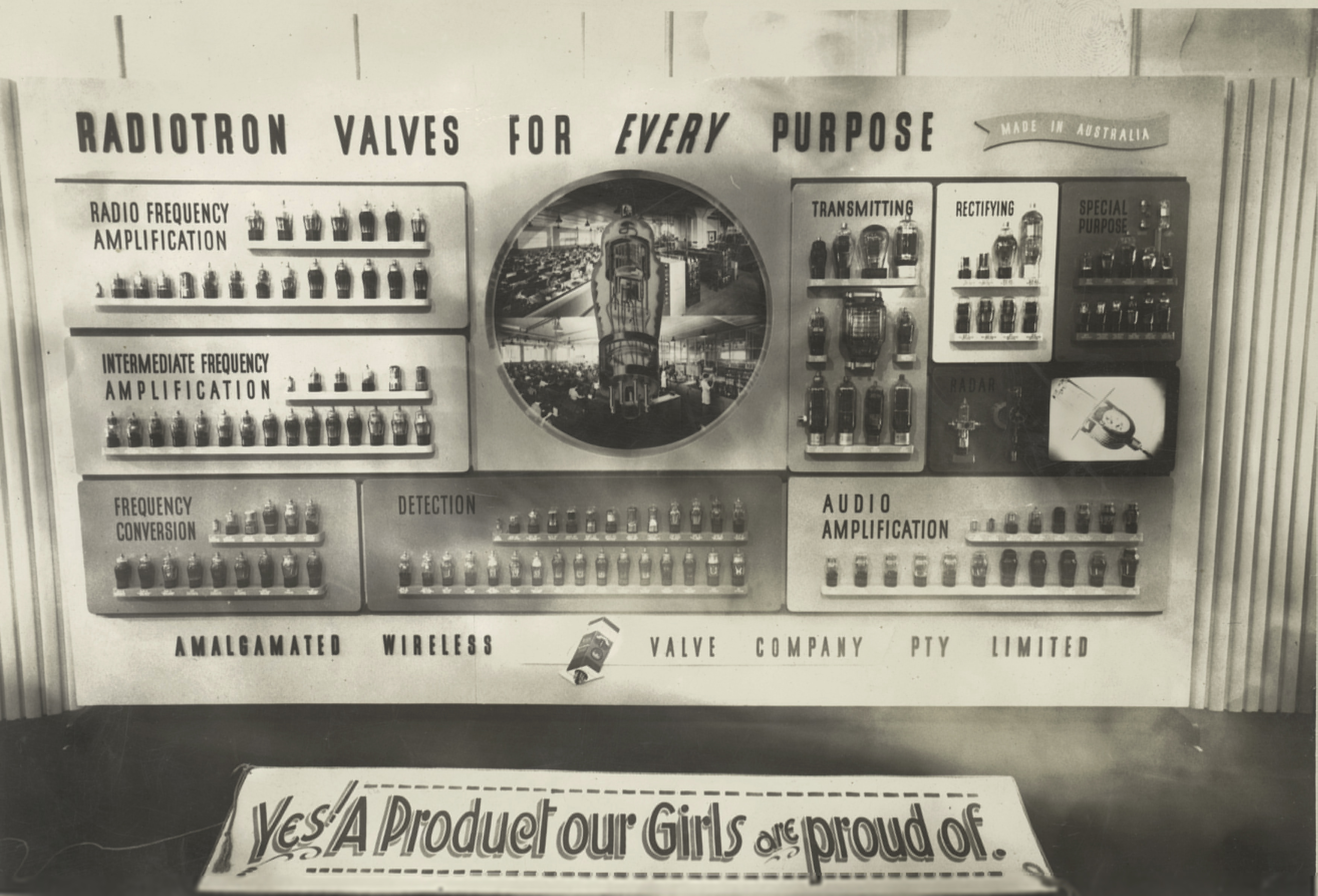
A thermionic valve is a sealed glass envelope with the air taken out of it and a set of electrodes suspended inside. Nothing about it is printed, etched or deposited: the parts were made separately, assembled by hand onto a glass stem, sealed into an envelope and then emptied of air.
Semiconductors are made by processing a wafer chemically in bulk, hundreds or thousands of devices at a time, with no assembly in the old sense at all. The difference in approach is total rather than incremental – one is a hand-built object, the other is a pattern grown in a crystal.
That distinction explains almost every other item in this piece. A hand-built object has a unit labour cost that cannot be reduced below the time it takes somebody to build it, which puts a hard floor under the price. A patterned wafer gets cheaper every time the pattern gets smaller, with no floor in sight – and that is the economic difference that ended the trade, rather than any single performance comparison.
Like our content? Follow us for more.
2. The Cathode Coating Was the Whole Secret and It Was a Paste
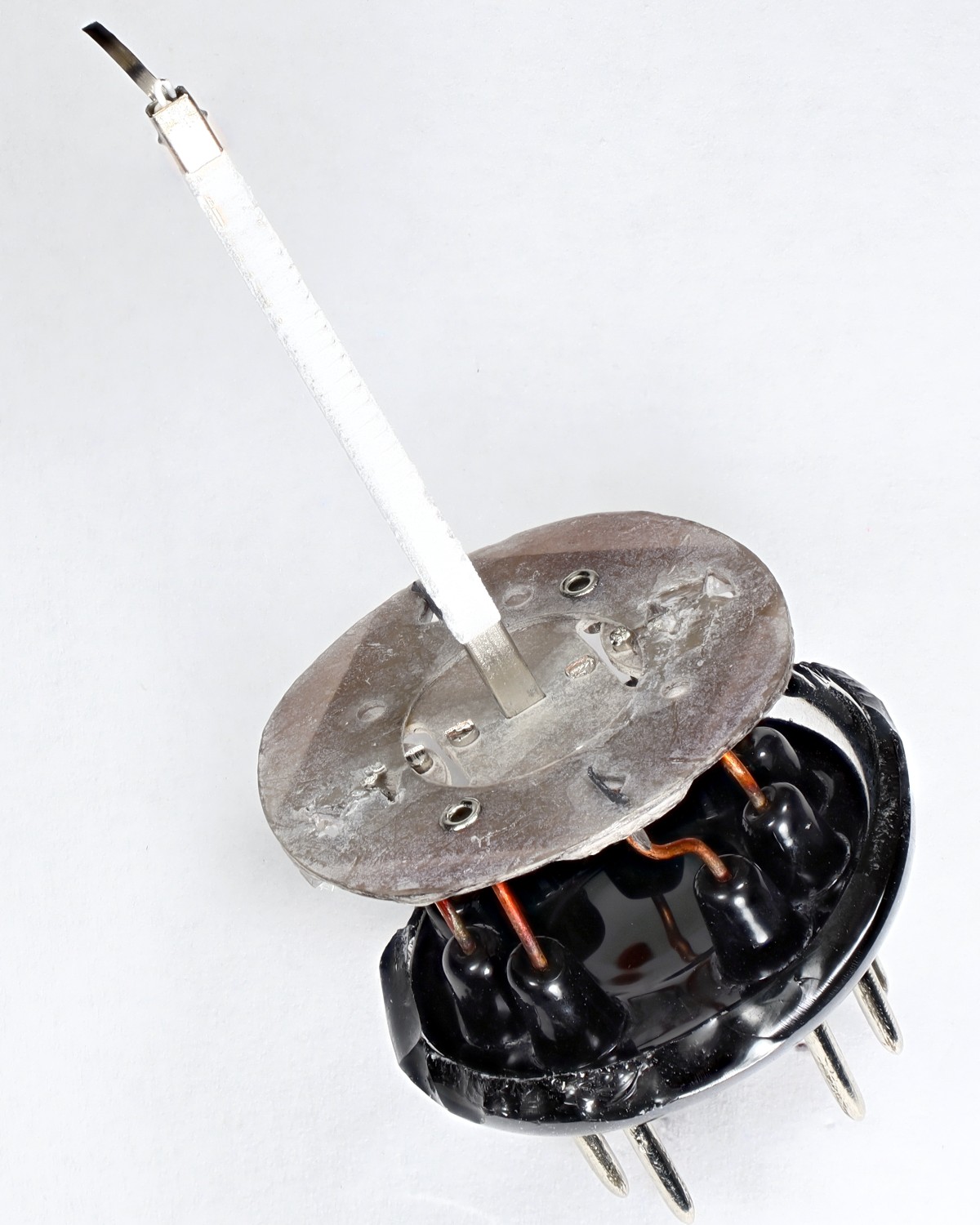
The part of a valve that emits electrons is a cathode coated with a mixture of alkaline earth oxides, applied as a paste or sprayed on, then processed in place. Getting that coating to emit copiously at a workable temperature, and to keep doing it for thousands of hours, was the core intellectual property of the industry.
Semiconductor devices need no emitting surface at all, which removes the problem entirely. The coating chemistry was never fully understood even by the people who made it work – it was refined by systematic experiment rather than derived, and recipes were guarded accordingly.
This is why valve manufacture was so hard to start from scratch and so hard to copy. The drawings told you the geometry and the geometry was the easy part. The difficult knowledge was in exactly how the coating was mixed, how thickly it went on, how it was dried and at what rate it was heated during processing – and none of that was written down anywhere a competitor could find it.
3. The Electrodes Were Assembled Under a Magnifier by Hand
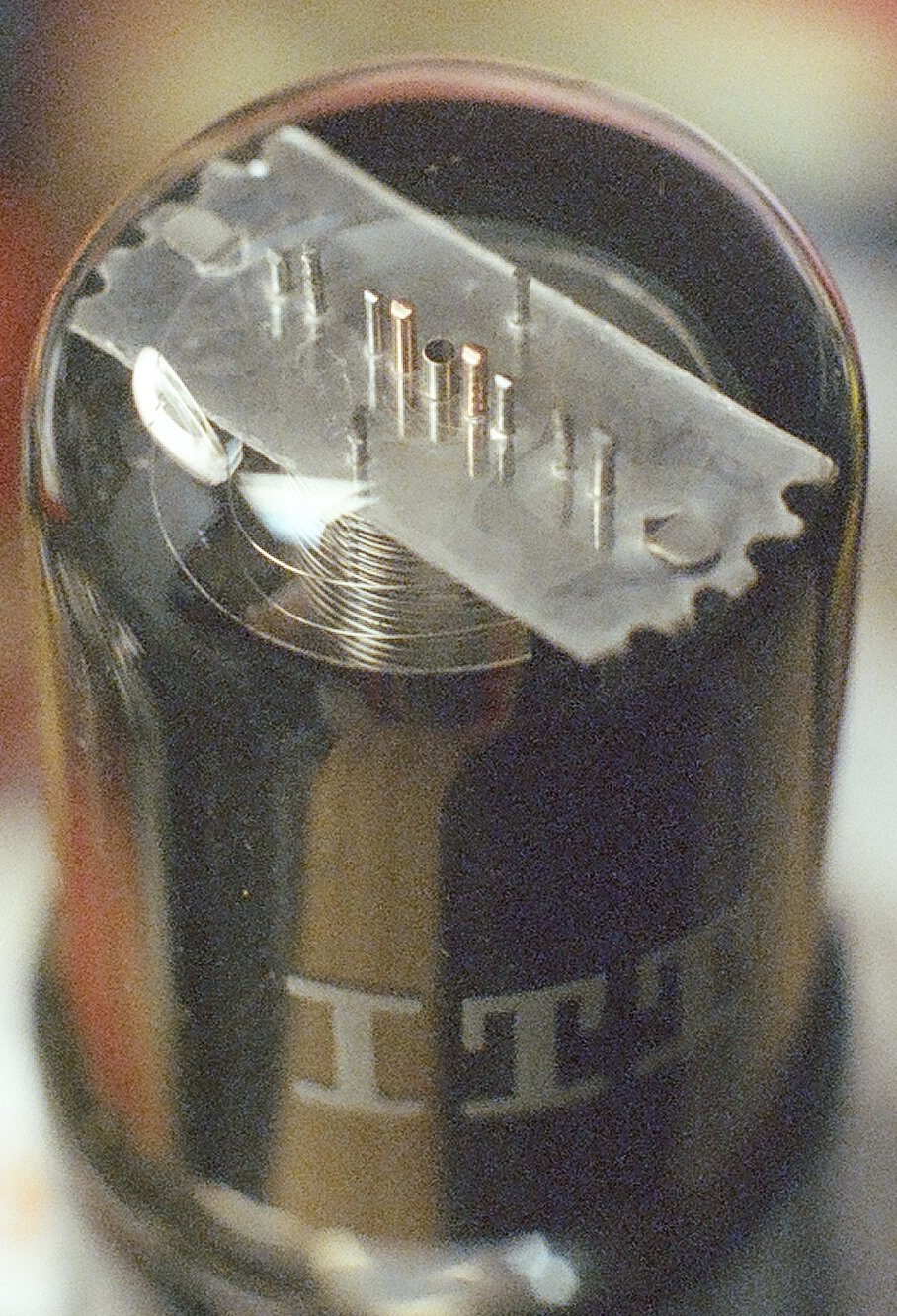
Inside the envelope sat a cathode, a grid or several grids of fine wire wound at precise pitch, and an anode, all held in mica spacers and aligned to tolerances of a fraction of a millimetre. An operator built this stack by hand at a bench, under magnification, part by part.
Assembly of this kind survives only in specialist and small-batch manufacture. The grid was the hardest element: a helix of wire wound onto support rods at a specified spacing, where an error in pitch or a wire out of position changed the electrical characteristics of the finished valve measurably.
The consequence was that no two valves were quite identical, and the industry managed that by testing rather than by preventing it. Variation was expected, measured and sorted, which is the opposite of the modern approach of making the process so repeatable that sorting is unnecessary – and it is the reason a valve data sheet quotes ranges where a transistor data sheet quotes a figure.
4. Everything Inside Was Joined by Thousands of Tiny Welds
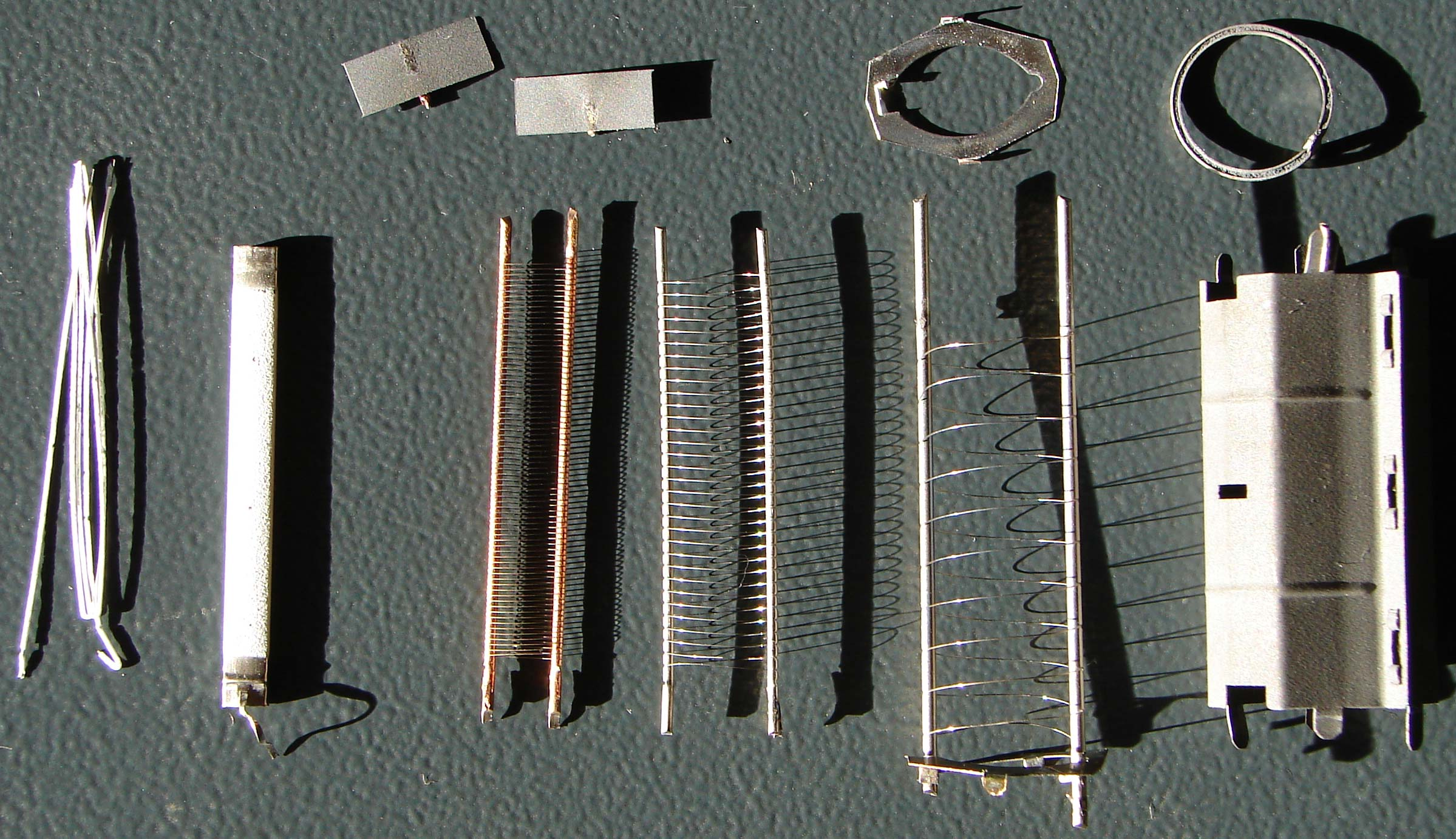
The internal structure was held together by spot welds – a pair of electrodes pinched the parts together and passed a brief current through them, fusing them at a point. A single valve contained dozens of these, each made individually on a foot-operated welder.
Automated and robotic welding handles comparable work now. Soldering was not an option inside a valve, because solder would melt at operating temperature and because any volatile material would release gas into the vacuum for the life of the device.
That last point governed the choice of every material inside the envelope. Anything that could outgas – oil, grease, flux, a fingerprint, moisture in a mica spacer – would slowly poison the vacuum and kill the valve. So the internal parts were cleaned to a standard that had nothing to do with appearance, and the handling rules were about contamination rather than damage.
5. The Air Was Pumped Out and Then the Glass Was Baked
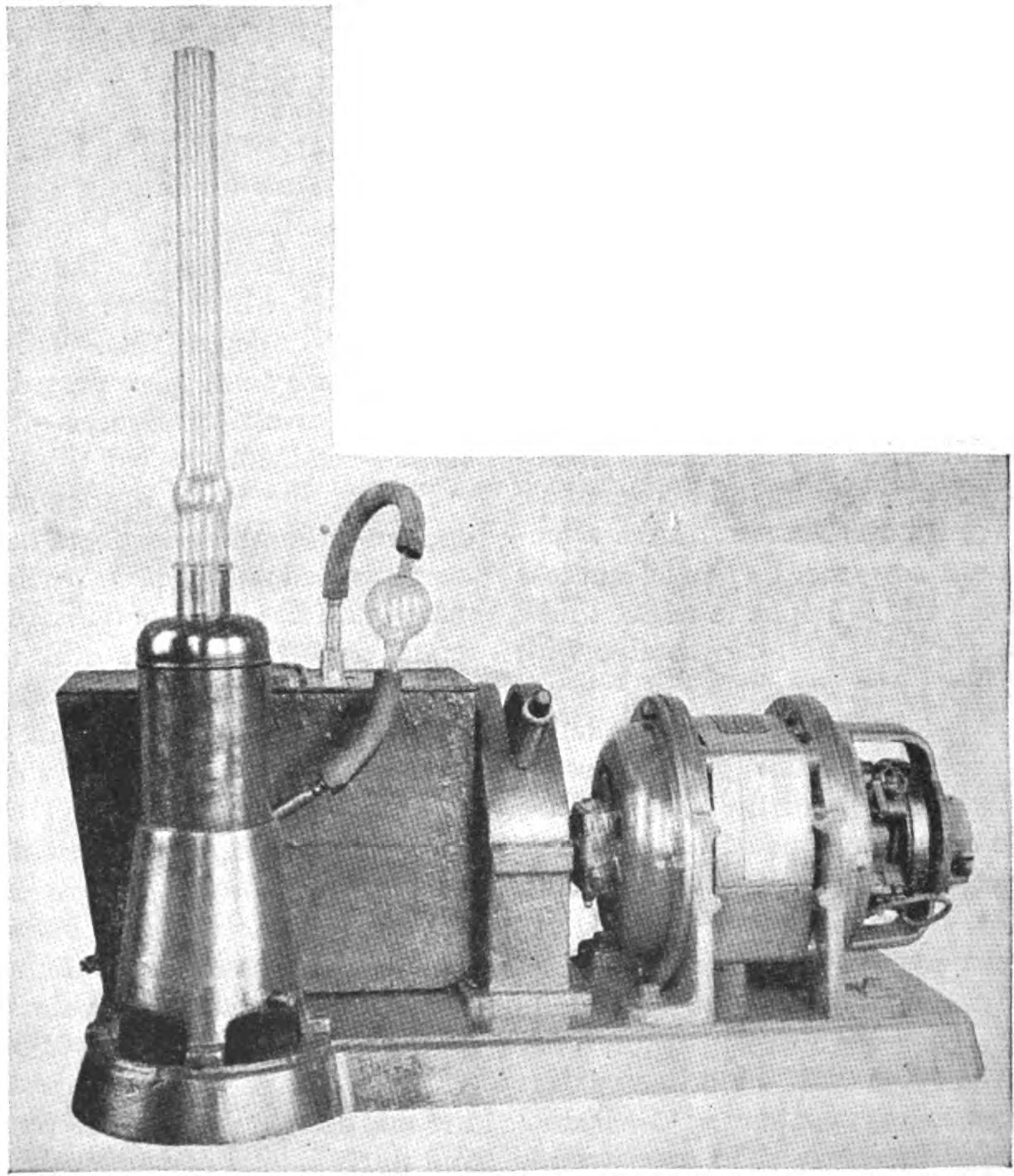
Sealing the envelope and pumping it out was only the start. The whole assembly was then heated hard while still on the pumps, to drive gas out of the metal parts and the glass walls themselves, because gas trapped in solid material would release slowly afterwards.
Vacuum processing with measured pressure monitoring at every stage. The bake-out is the step people do not expect: a vacuum is not achieved by removing the air in the space, but by removing the gas dissolved in everything that bounds the space.
It is also the step that set the production rate. Pumping and baking took time that could not be compressed, which meant a valve factory’s output was limited by how many positions it had on its pumping machines rather than by how fast the assemblers worked. The capital was in the vacuum plant, and the assembly benches were sized to feed it.
6. A Flash of Metal Vapour Silvered the Inside of the Glass
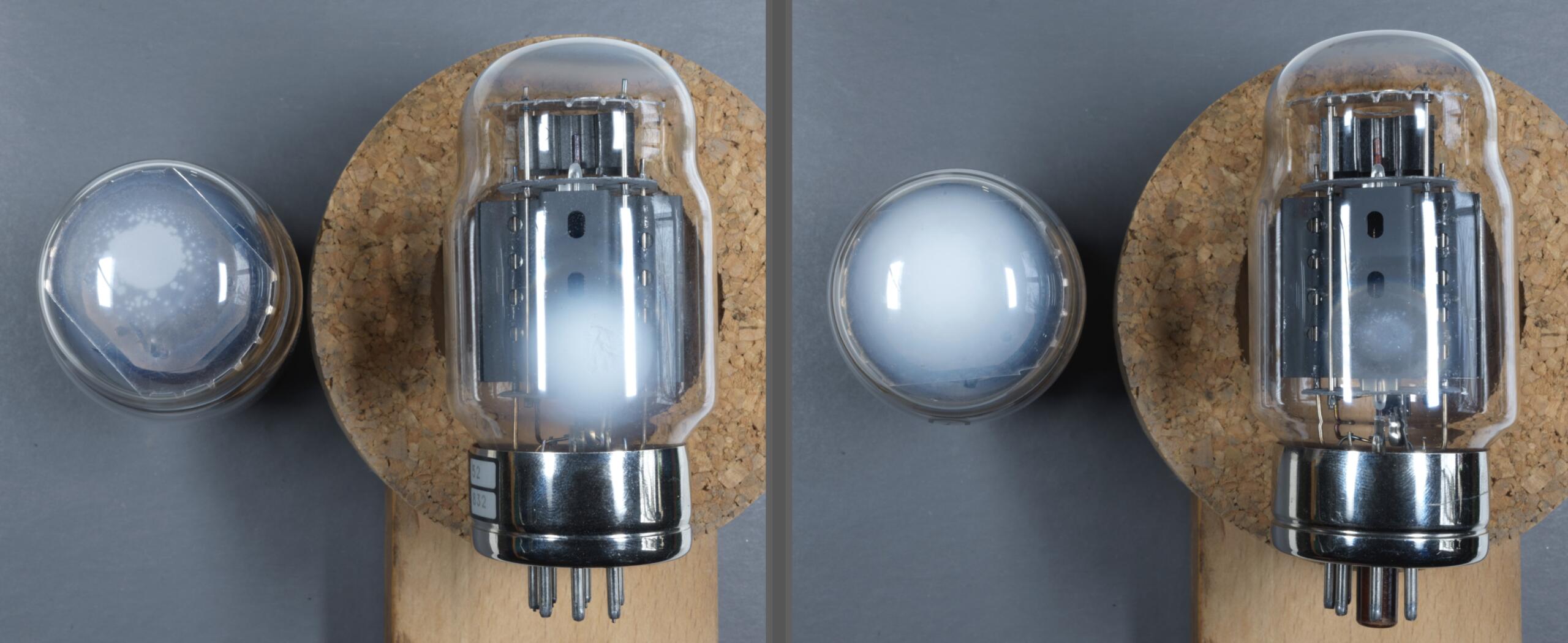
After sealing, a small charge of reactive metal mounted inside the valve was flashed by induction heating, vaporising it so that it condensed onto the inner glass as a mirror-bright film. That film – the getter – chemically absorbed gas released inside the valve for the rest of its working life.
The same principle is used in vacuum insulated products and in some sealed devices. The silvery patch inside the top of an old valve is not decoration and not a fault: it is the component that keeps the vacuum good enough to work after the pumps have been disconnected.
It also doubles as a diagnostic that anybody can read. A getter film that has gone white, milky or patchy has been consumed by gas, which means the valve has lost its vacuum and will not work properly whatever else is right about it. A bright mirror means the vacuum is still good – which is why people who handle old valves look at the top of the glass first.
7. Every Valve Was Run for Hours Before It Could Be Sold
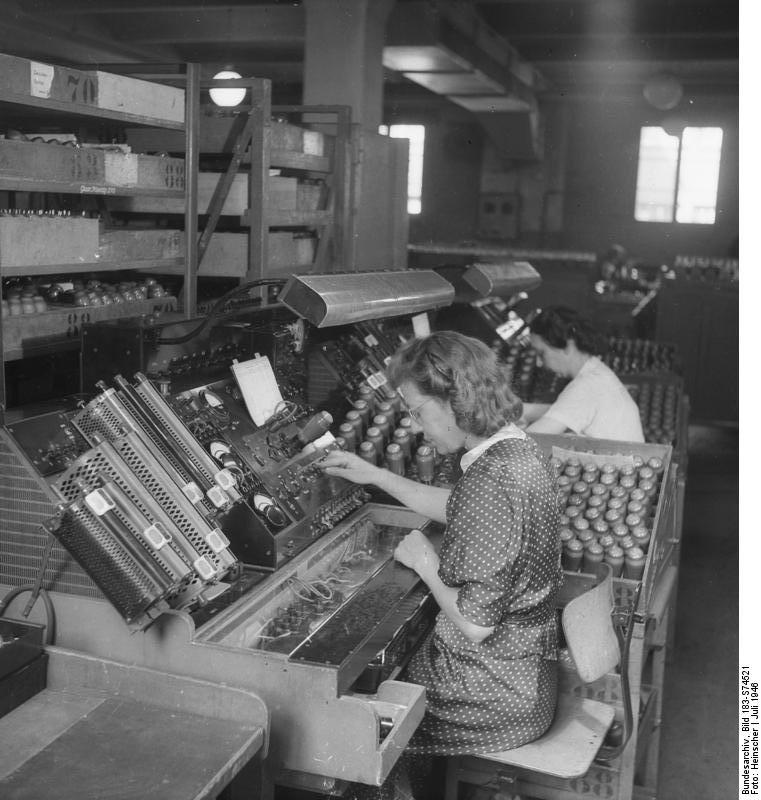
Finished valves went onto ageing racks and were run under power for an extended period, which stabilised the cathode coating, let early failures happen inside the factory rather than in a customer’s equipment, and allowed the electrical characteristics to settle.
Burn-in survives for high-reliability semiconductors and is unnecessary for ordinary ones. Ageing was expensive in floor space, electricity and working capital, because a substantial quantity of finished product was always sitting in racks doing nothing saleable.
It was also the honest acknowledgement of a hand-built product. Early failure was common enough that shipping untested valves would have destroyed a manufacturer’s reputation, so the industry absorbed the cost of finding its own failures first. The grade stamped on the glass afterwards reflected how the individual valve had actually performed, not how its type was supposed to.
8. Matched Pairs Were a Product You Paid Extra For
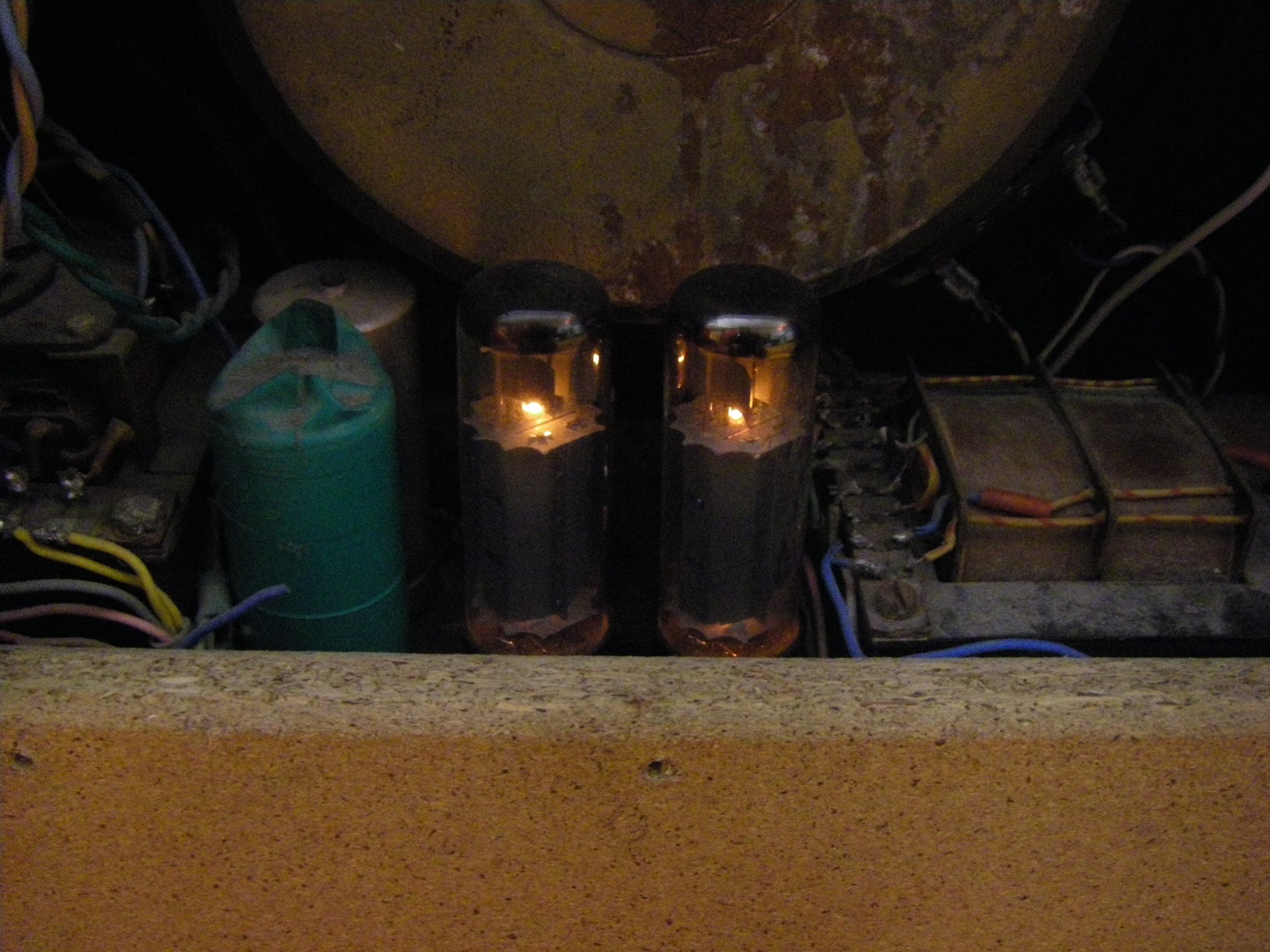
Because characteristics varied between individual valves, applications needing two or more to behave identically were supplied with sets selected by measurement from ordinary production and sold at a premium as matched.
Still exactly how matched valves are sold to the audio and instrument-amplifier trade. The practice tells you how much variation there was: matching was not a refinement for perfectionists but a practical necessity in any circuit where two devices had to share work evenly.
There is a commercial subtlety in it that recurs across manufacturing. Matching produced a premium product out of the same process by sorting rather than by improving, which means the premium grade existed because the ordinary grade was inconsistent. Remove the inconsistency and the premium disappears – so there was never much incentive to remove it.
9. The Precision Assembly Was Done Almost Entirely by Women
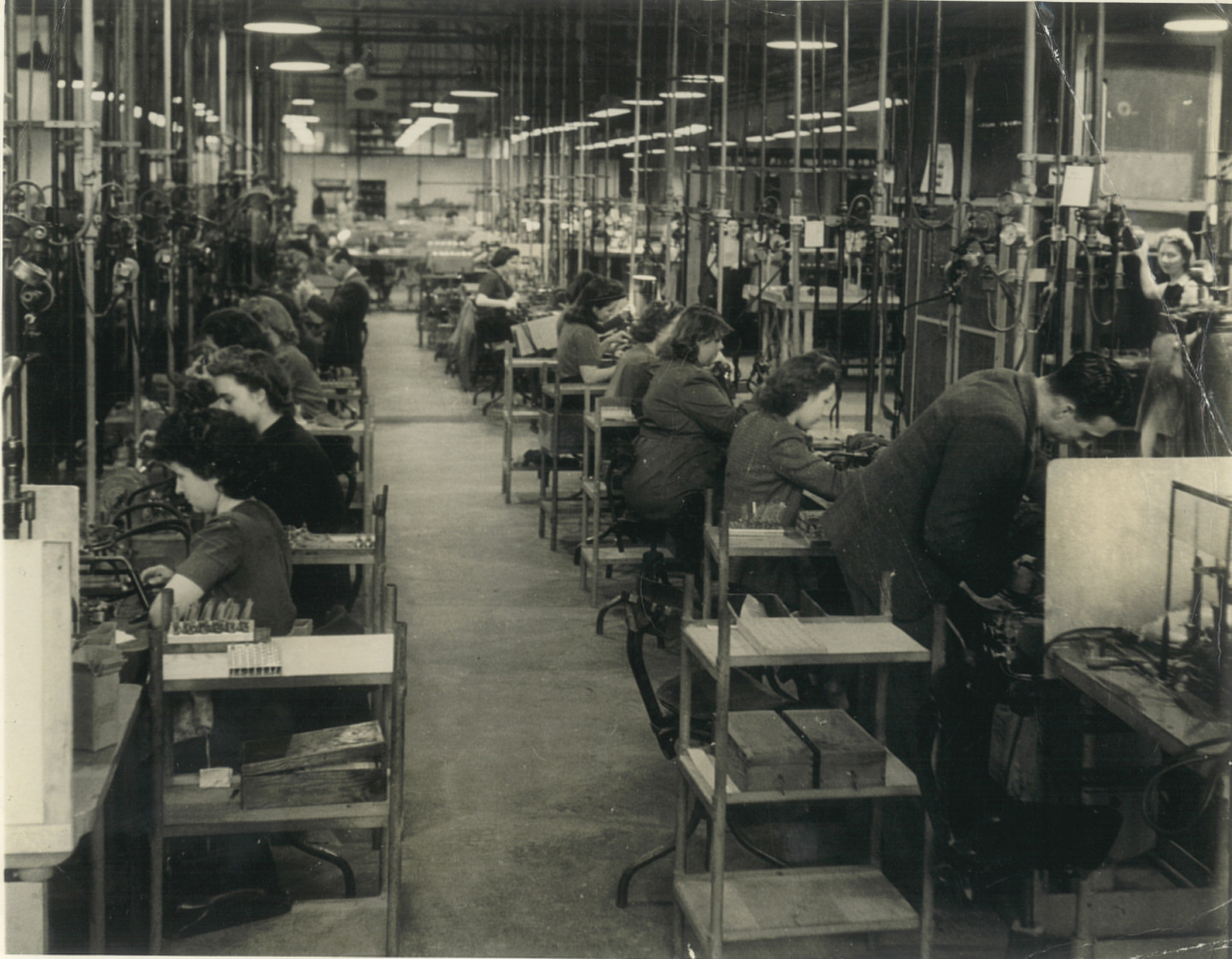
The benches where valves were built – grid winding, mica fitting, electrode stacking, welding, mounting – were staffed overwhelmingly by women, selected and trained for fine manual work at magnification, on rates below those paid to the men who maintained the machinery.
Automated assembly and a transformed employment framework. The skill involved was considerable and was classified as semi-skilled or unskilled in the grading structures of the time, which held the rates down regardless of what the job actually required.
The same pattern appears in the television, optical, dental and hosiery trades covered elsewhere in this series, and the mechanism was consistent: work that was fine, repetitive and done sitting down was classified as unskilled, while work that was heavy, dirty or involved machinery was classified as skilled. The classification described who was doing the job rather than what the job demanded.
10. Microphony and Hum Were the Faults That Mattered
A valve’s internal electrodes are a mechanical structure, and a loose or badly damped one would vibrate in response to sound or shock, turning that movement into an electrical signal – microphony. Heater wiring close to sensitive electrodes could induce mains hum into the signal path.
Semiconductors are not microphonic in any comparable way and the problem has effectively disappeared. Both faults were addressed mechanically: tighter mica fits, damping, careful routing of the heater, and in some types a separate screening structure inside the envelope.
Microphony is the clearest demonstration that a valve is a physical object rather than an abstract component. Tap a working valve in a sensitive position and you can hear it through the speaker. No amount of electrical design removes that, because the cause is a wire that can move – which is also why valves were mounted in sockets with rubber or spring damping in equipment that got knocked about.
11. They Ran Hot, and That Was Not a Flaw
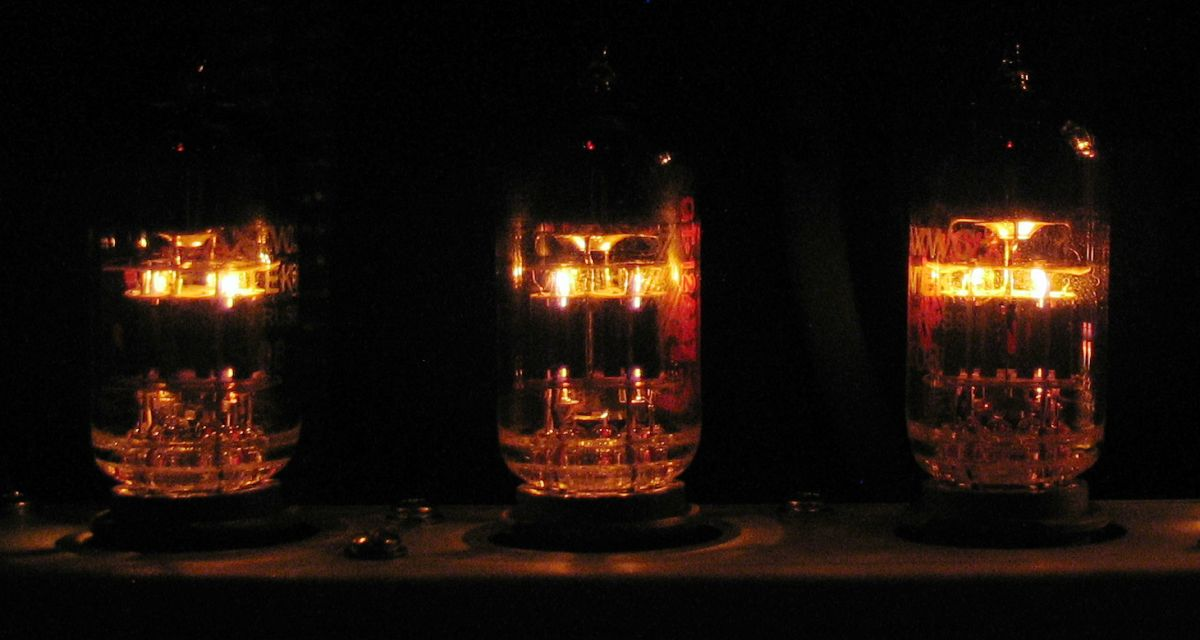
A valve works by boiling electrons off a heated cathode, so it has to get hot to function at all. The heater consumed a substantial share of the power going into the device, and a chassis full of valves ran at a temperature that would be considered a fault in any modern equipment.
Semiconductors need no heating power and the whole thermal design problem inverted. Heat was the fundamental limitation: it set the power consumption, it determined how closely valves could be packed, it aged every other component nearby, and it meant equipment needed ventilation designed around it.
The consequences reached well beyond the electronics. Valve equipment took a noticeable time to warm up before it worked properly, which is why older radios and televisions did not come on instantly. It consumed power whether or not it was doing anything useful. And it quietly destroyed the components around it, which is why the capacitors and resistors in surviving valve equipment are usually in worse condition than the valves.
12. The Pin Layout Was a Published Code and Getting It Wrong Was Expensive
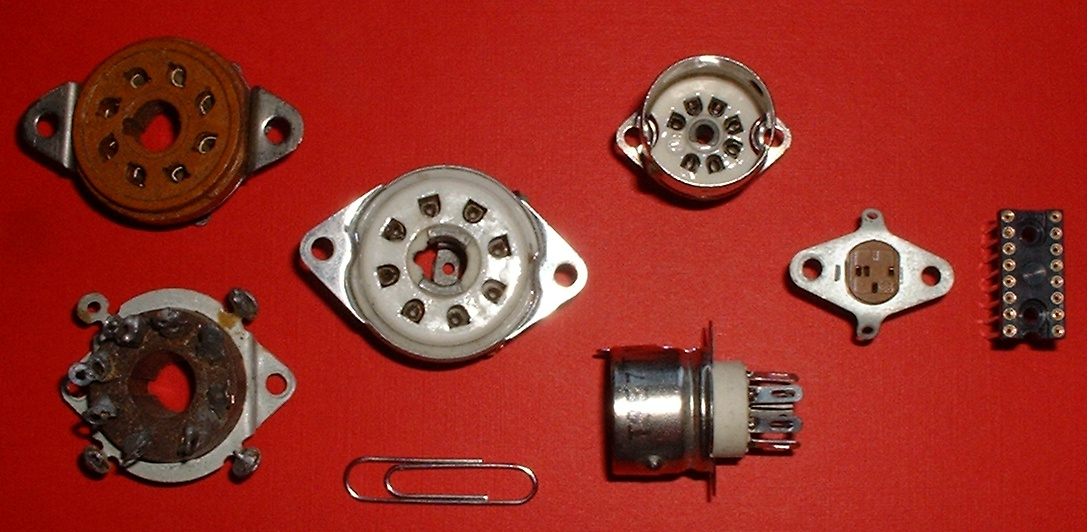
Valves plugged into sockets through pins in a standardised arrangement, with several competing base systems in use, and each type’s pin assignment was published in data tables that anybody designing or repairing equipment had to work from.
Component footprints and pin assignments are still published, now as digital data. The base systems were a genuine compatibility problem: physically similar valves with different internal connections existed, and fitting the wrong one could damage both the valve and the equipment.
This is why the data book was the central object in electronics work of the period. Characteristics, pin connections, operating conditions and equivalents were all in print, and a workshop’s competence depended on having the right books and knowing how to read a curve off a page. A substitution that looked reasonable and was not is one of the commonest causes of damage in surviving equipment.
13. The Factory Made Its Own Glass and Its Own Wire
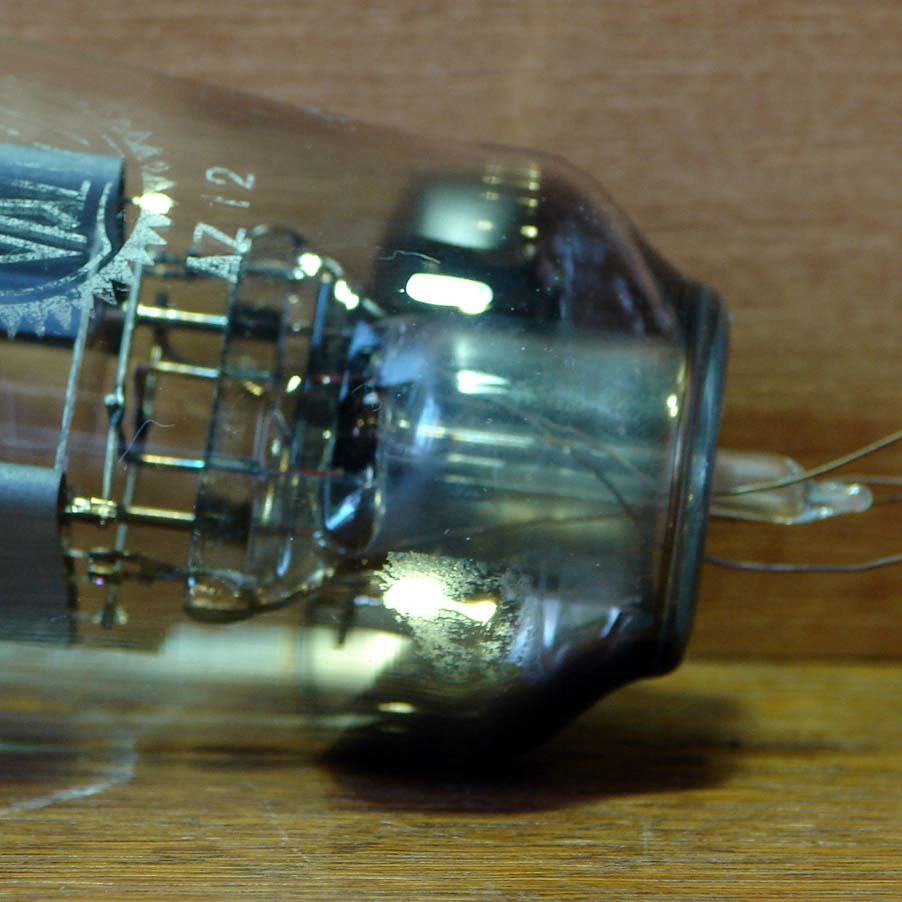
Valve works typically produced their own glass envelopes and stems, drew and wound their own fine wire, pressed their own mica, and made their own tooling, because the tolerances required were not available as bought-in components.
Specialist suppliers serve the surviving small market. Vertical integration was not a strategy so much as a necessity: nobody else was making glass tubing to the dimensional and thermal specification a valve needed, so the factory made it.
The glass itself was a technical problem in its own right. The metal pins passing through the envelope had to be sealed into glass that expanded at the same rate as they did over the full temperature range, or the seal would crack and admit air. That matching of thermal expansion between specific alloys and specific glass formulations was one of the quiet enabling technologies of the whole industry.
14. Working Life Was a Guaranteed Number and the Factory Had to Prove It
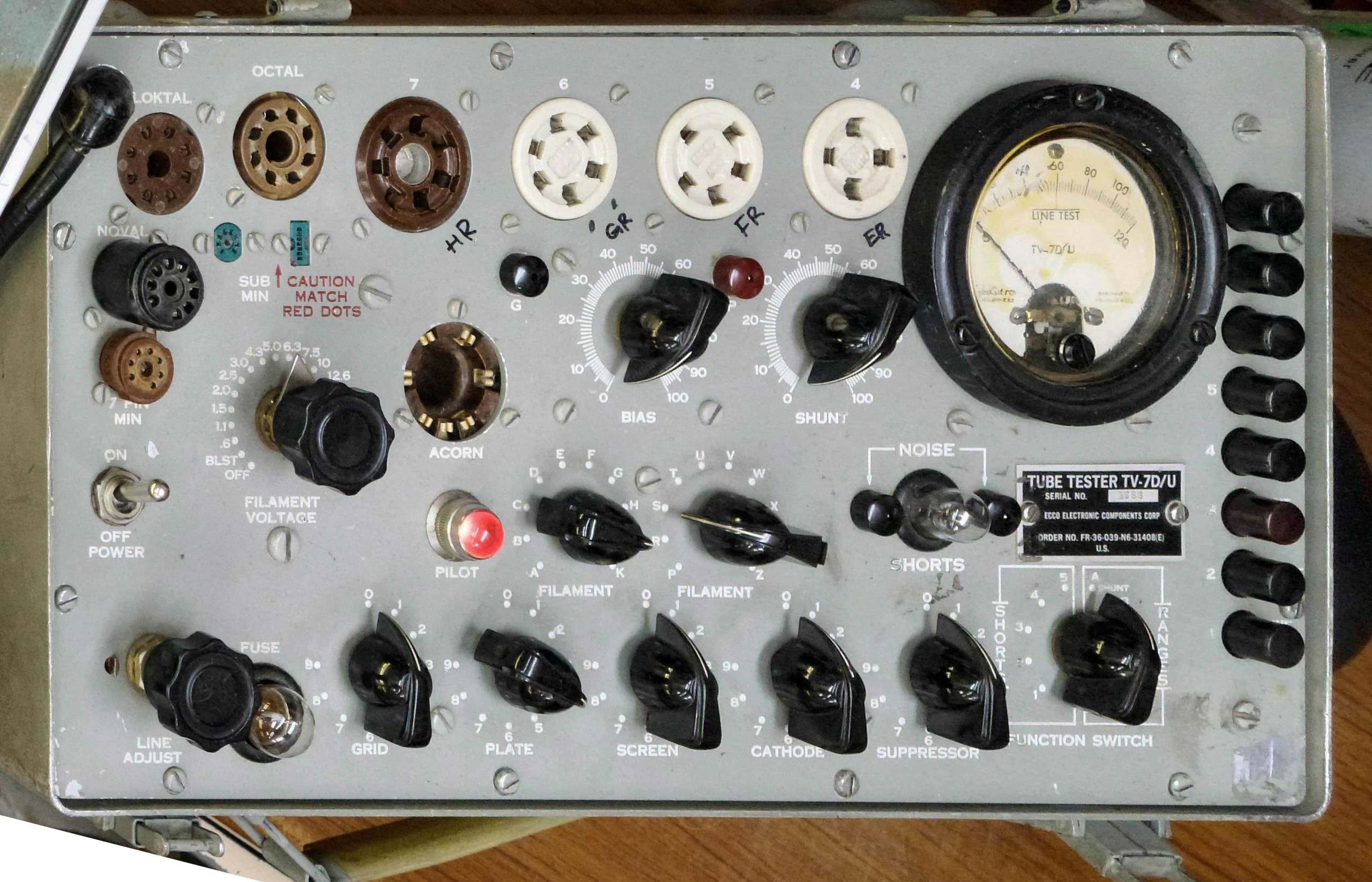
Valve types carried published life figures in thousands of hours, derived from sustained testing of production samples run continuously under specified conditions until they fell outside limits.
Reliability testing and published lifetime data are standard across electronics. Maintaining a life-test programme meant a factory had racks of valves running for months purely to generate the data, with the results feeding back into the cathode processing and the mechanical design.
The number was a commercial commitment rather than a marketing claim, because equipment manufacturers designed maintenance schedules around it and would move their orders if a type underperformed. It also meant a valve factory always knew more about its own product’s weaknesses than its customers did – the life tests were still running on types that had been in the field for years.
15. Nobody in the Building Believed the Transistor Would Do It
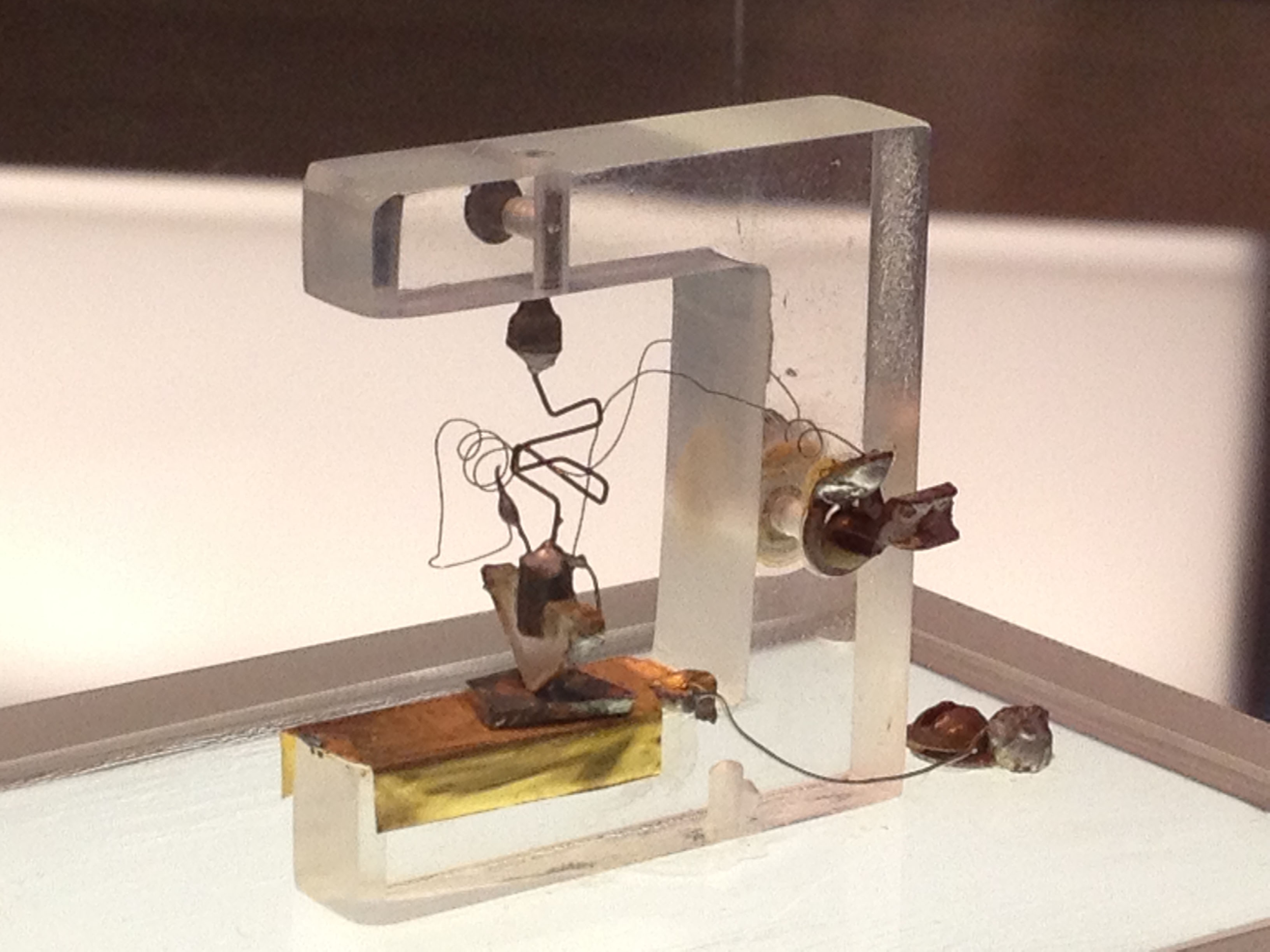
When semiconductor devices appeared they were low-power, limited in frequency, fragile in handling, expensive and inconsistent, and the comparison with a mature valve on performance grounds was not close.
Semiconductors replaced valves in essentially every application within about fifteen years. The engineering judgement was correct at the time and irrelevant, because the thing being compared was not the devices but the trajectories: one was a hand-built object at the end of its development, the other a patterned material at the start of its.
That is the most transferable lesson in this piece. The valve industry evaluated the transistor as a component and concluded, accurately, that it was worse. What it failed to evaluate was the manufacturing method, which had no cost floor and no performance ceiling that anybody had yet found. Judging a new technology on its current specification rather than on the slope it is travelling along is a mistake that has been made in almost every industry in this series.
16. Then They Came Back, for Guitars and for Audio
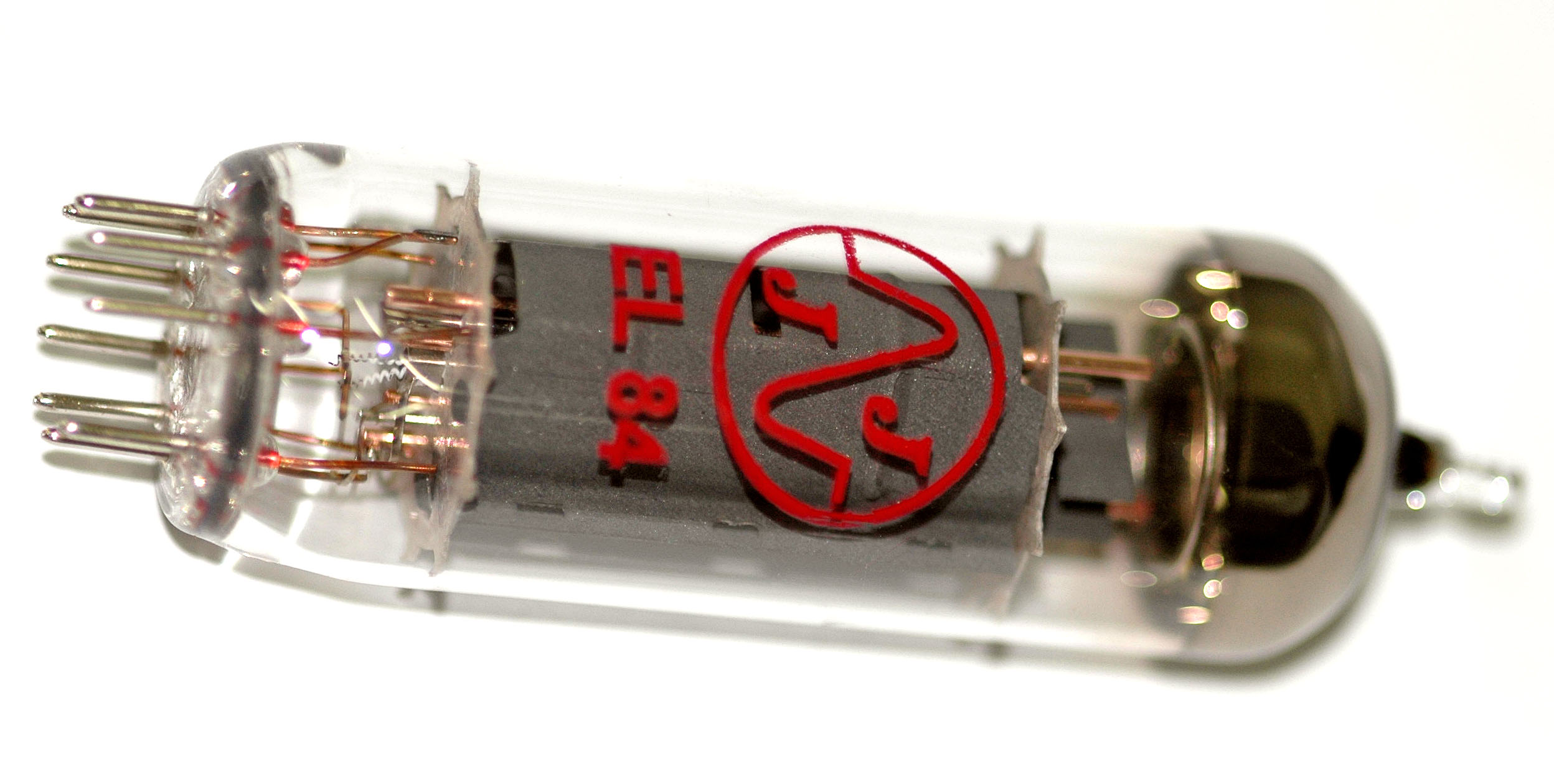
By the later twentieth century valve production had collapsed to a handful of plants, with most factories closed, the equipment scrapped and the cathode-processing knowledge dispersed.
Production continues for musical instrument amplifiers, high-end audio and a few industrial and transmitting applications, and demand has been steady enough to keep several plants running. The reason is that the way a valve distorts when pushed beyond its linear range is musically useful, and players and listeners want that specific behaviour rather than an approximation of it.
It is a genuinely unusual survival. Most obsolete technologies in this series persist as conservation, craft or nostalgia; this one persists because a measurable characteristic of the old device is preferred for a real application, and the people buying it are not sentimentalists but working musicians and recording engineers specifying a tool. The hand assembly, the getter flash, the ageing racks and the matched pairs are all still happening, for that reason.
They Judged the Transistor Correctly and Lost Anyway
The engineers in these factories were not fools and they were not in denial. When they looked at early semiconductor devices and concluded they were worse than valves, they were right.
Early transistors handled little power. They were limited in frequency. They were inconsistent from one unit to the next, easily destroyed by heat or static, and expensive. Against a mature valve – a device refined over four decades, with published characteristics, guaranteed life figures and a supply chain that could deliver millions a week – the comparison was not close.
The mistake was in what they compared.
A valve was a hand-built object. Its cost was the cost of somebody assembling it under a magnifier, plus glass, plus time on a vacuum pump, plus hours on an ageing rack. That cost could be trimmed and it could not be transformed, because you cannot make hand assembly an order of magnitude cheaper. The valve was at the end of its development, and everybody in the industry knew roughly where the limits were.
A transistor was a pattern in a crystal. Its cost fell every time the pattern got smaller, and nobody had found the floor. Its performance improved every time the processing got finer, and nobody had found the ceiling. It was at the beginning.
So the valve industry ran a fair comparison between two devices and missed that it was actually a race between two trajectories. Within fifteen years the thing that was obviously worse was obviously better, and the factories were gone.
That error is the single most repeated mistake across this entire series of pieces. The jute mills judged the shipping container. The linoleum works judged vinyl. The sail lofts judged synthetic cloth. In every case the incumbents assessed the new thing accurately as it stood and failed to ask how fast it was moving.
The lesson is not that experts are wrong about their own field. They are usually right about the specification. They are just answering a question about the present when the question that matters is about the slope.
If there is an old radio or television in your family, somebody assembled every valve in it by hand, under a magnifier, and was paid an unskilled rate for it.
And if the silver patch inside the glass has gone milky, that valve has lost its vacuum.
Like our content? Follow us for more.
