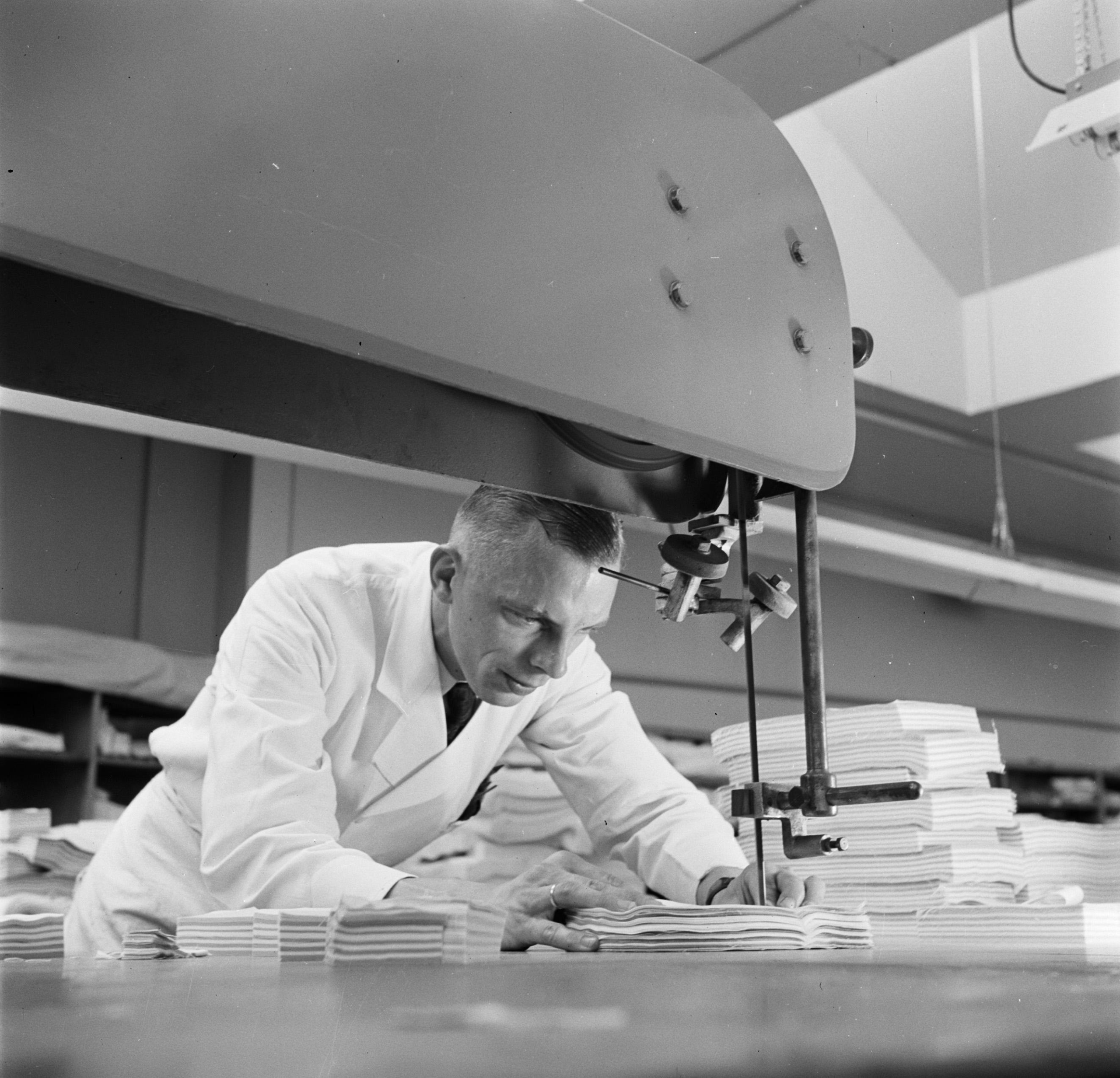
In 1960 shirting was spread on a long table a hundred layers deep and cut through all at once with a blade pushed along by hand, so an error on the top layer was an error in a hundred shirts.
The collar had its own department. The stiffeners came out before washing. Detachable collars were still being made, because the collar is what gets dirty. Sizing was by collar and sleeve, not by letter. And nobody in the building made a whole shirt.
Here are ten things that were normal in a shirt factory in 1960, and what became of each one.
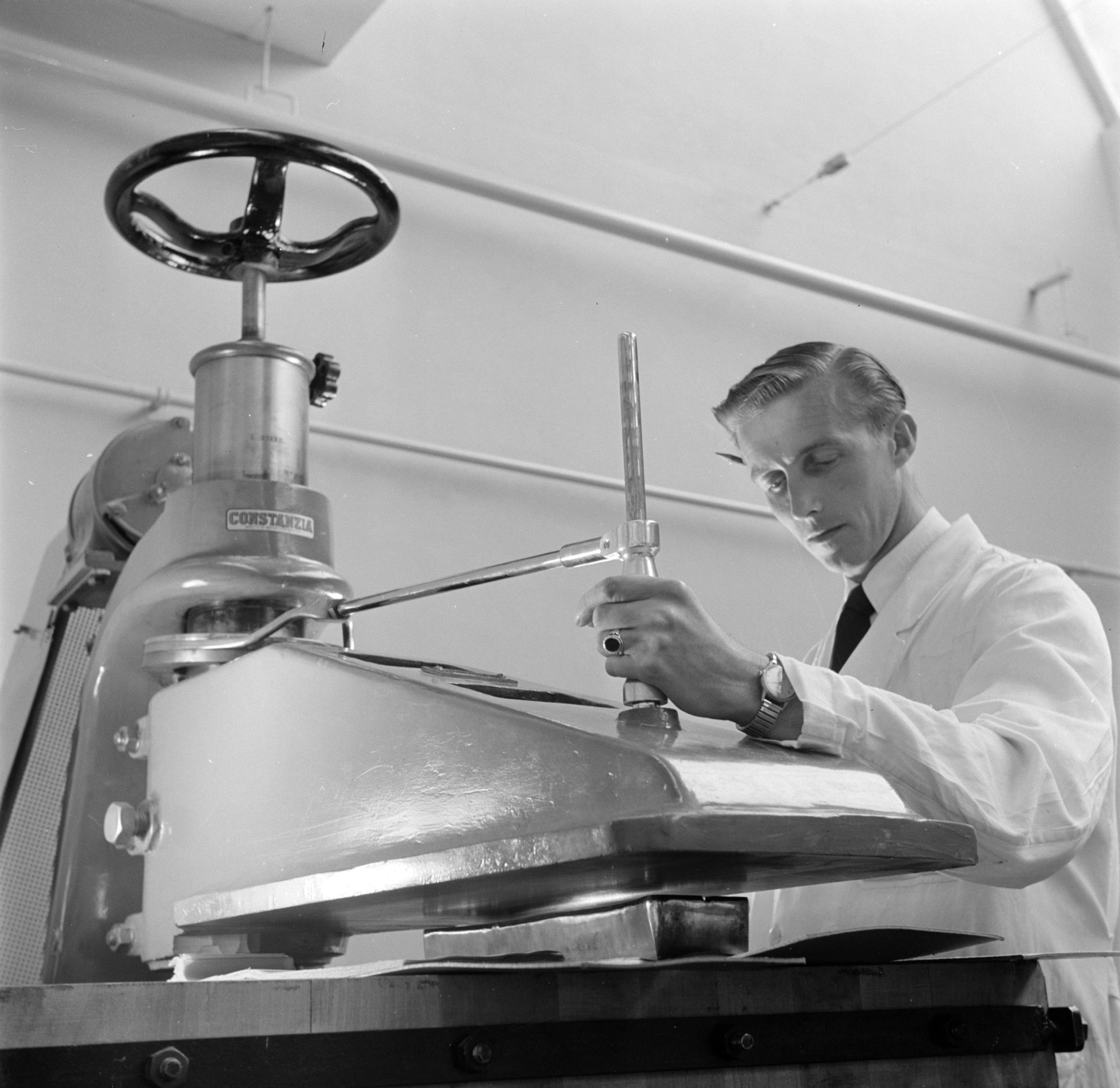
1. The Cloth Was Cut Dozens of Layers at a Time With a Hand-Guided Blade
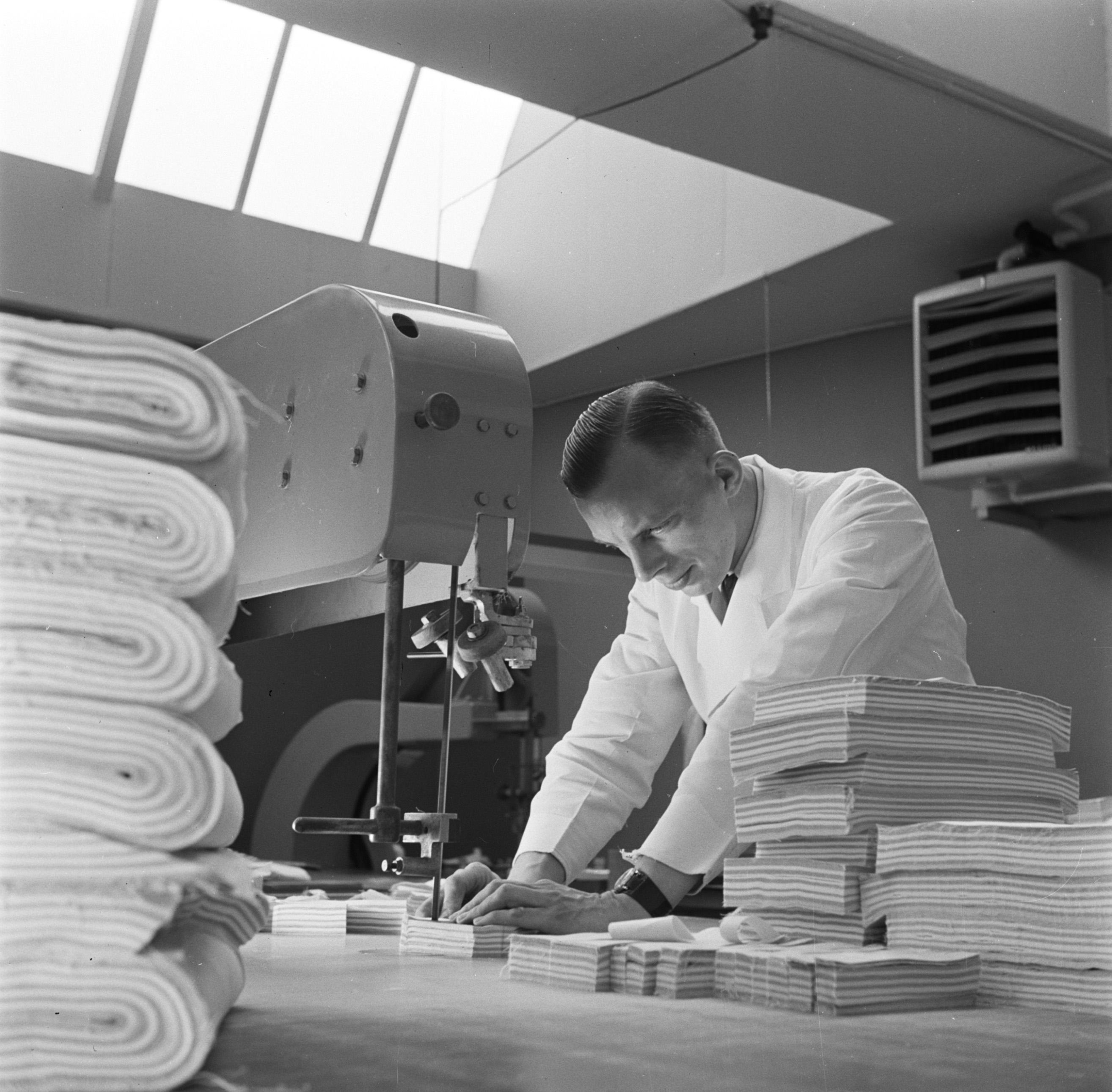
Bolts of shirting were spread onto a long table in a stack perhaps sixty or a hundred plies deep, the pattern pieces marked on the top layer, and the whole stack cut through at once with a vertical reciprocating blade pushed along the lines by hand.
Computer-controlled cutters working to a digital marker, with automated spreading. Cutting a hundred plies at once is efficient and unforgiving: an error on the top layer is an error in a hundred shirts, and the cutter was both the most skilled and the most closely watched person in the building.
Like our content? Follow us for more.
2. The Layout of the Pattern Pieces Was a Puzzle Somebody Solved by Hand
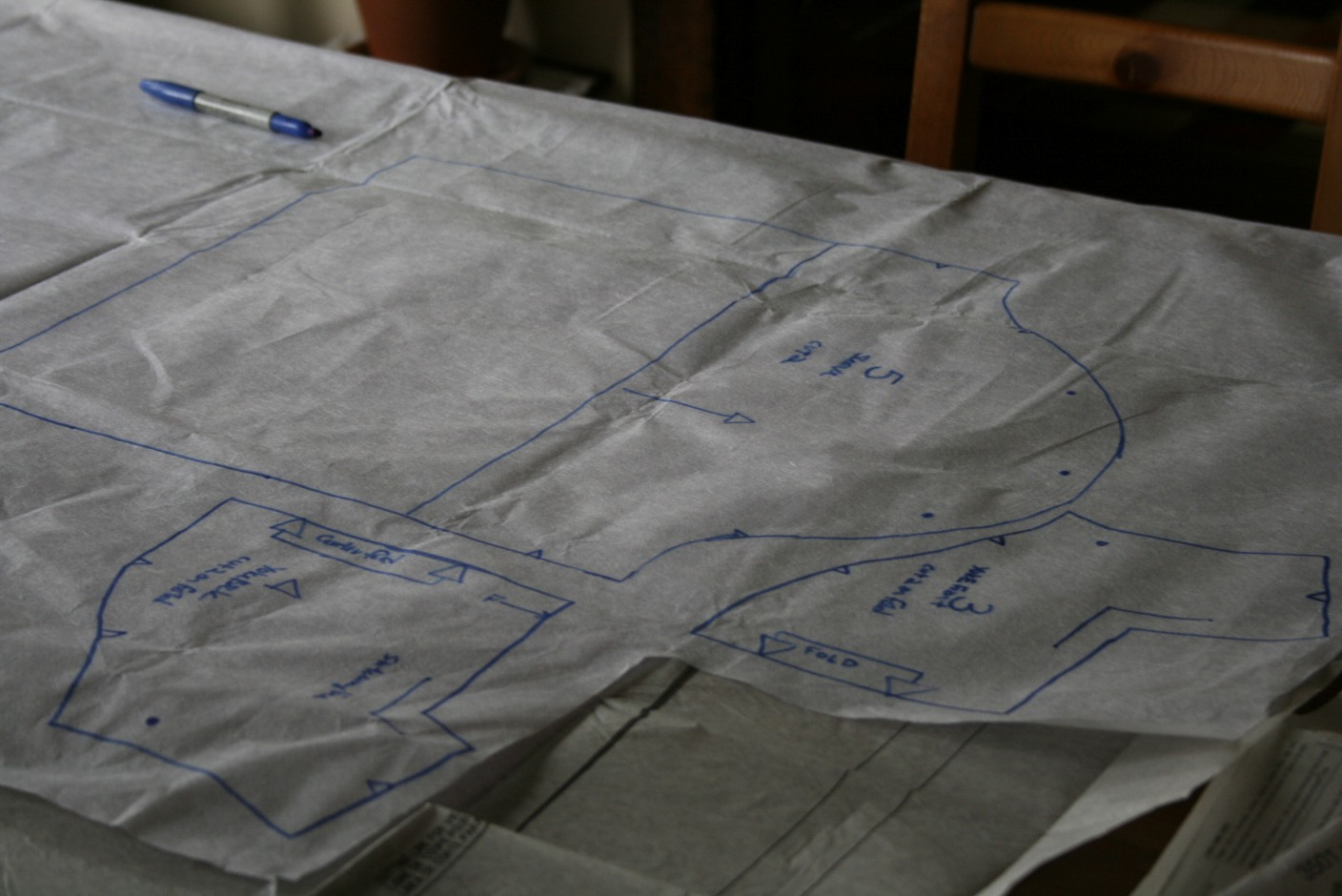
Before cutting, somebody had to arrange every pattern piece of every size in the order onto the width of the cloth so as to waste as little as possible – the marker – and it was done by hand with card templates on paper.
Computed automatically, with software optimising the nesting in seconds. Cloth was the largest single cost in a shirt, so a marker that saved two per cent of the fabric was worth more than any saving available in the sewing room, and a good marker maker was paid accordingly.
3. Collars Were Made in Their Own Department by People Who Did Nothing Else
The collar is the hardest part of a shirt: several layers of cloth and interlining stitched, trimmed, turned, pressed and topstitched to produce a symmetrical shape with crisp points, and it had its own section and its own specialists.
Automated collar-making units perform the turning and pressing. The collar is what a shirt is judged by, because it is at eye level and immediately beside the face, and a collar whose points are a millimetre different in length is visible across a room.
4. The Stiffeners Were Separate Pieces You Took Out Before Washing
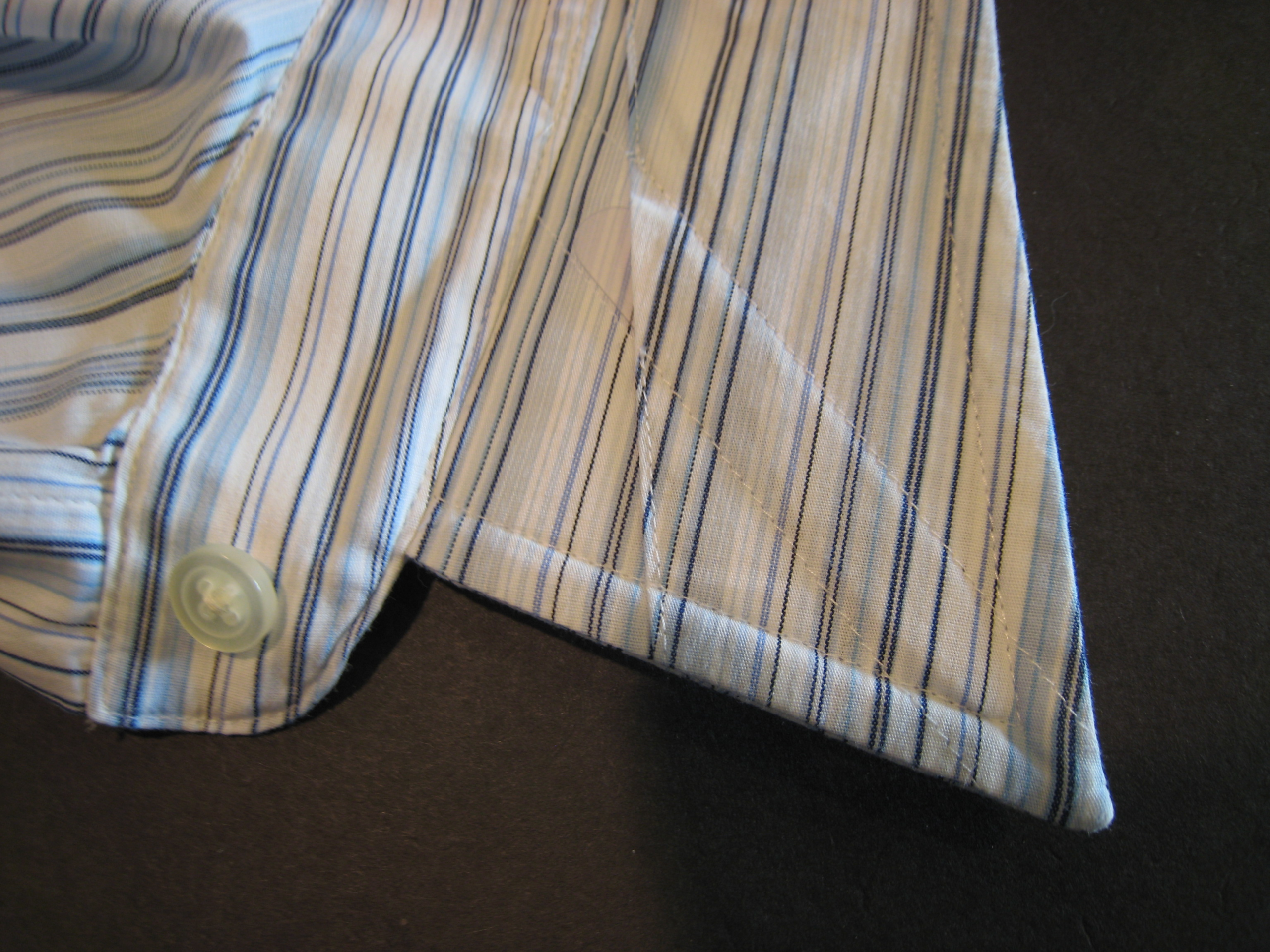
Collar points were held rigid by removable stiffeners – small tapered strips of bone, metal or plastic – slid into channels sewn into the underside of the collar, which the wearer removed before laundering.
Fused interlinings bond stiffness into the collar permanently, and removable stiffeners survive on better shirts. The lost stiffener is one of the small universal domestic frustrations of the period, and the reason better shirts still use them is that a fused collar cannot be replaced when it eventually bubbles or delaminates.
5. Detachable Collars Were Still Being Made in 1960
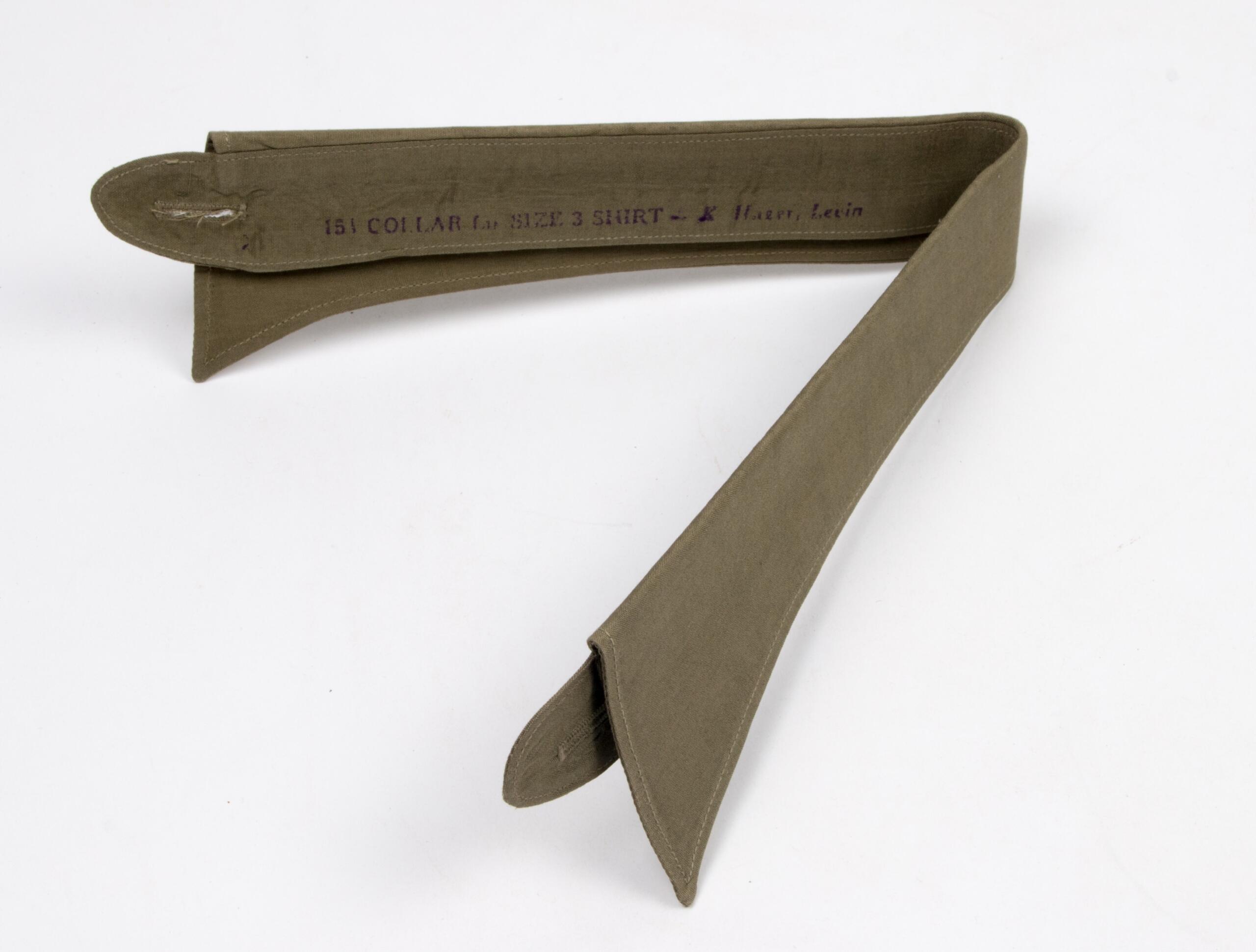
Shirts with no collar at all, worn with a separate stiff collar fixed front and back with studs, were still in production and still worn – because the collar is what gets dirty, and replacing the collar was cheaper than washing the shirt.
Gone except for formal and legal dress and period costume. The whole logic belongs to an era of hard laundering and few shirts: a man might own two shirts and a dozen collars, which is an entirely rational arrangement if the shirt body stays clean and the collar does not.
6. Buttonholes Were Cut and Stitched by a Machine That Did Nothing Else
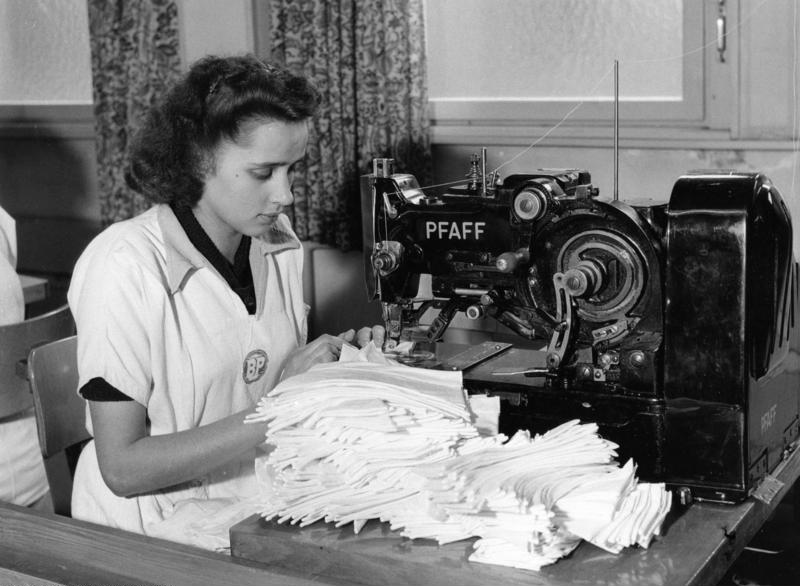
Buttonholing was done on a dedicated machine that cut the slot and overstitched its edges in one cycle, and a shirt factory had a row of them with operators doing that single operation all day.
The same specialised machines, now automated and sequenced. The buttonhole is a structurally awkward thing – a deliberate hole in cloth that must not fray or tear under repeated strain – and it is the part of a cheap shirt that fails first.
7. Shirts Were Sized by Collar and Sleeve, Not by Small, Medium or Large
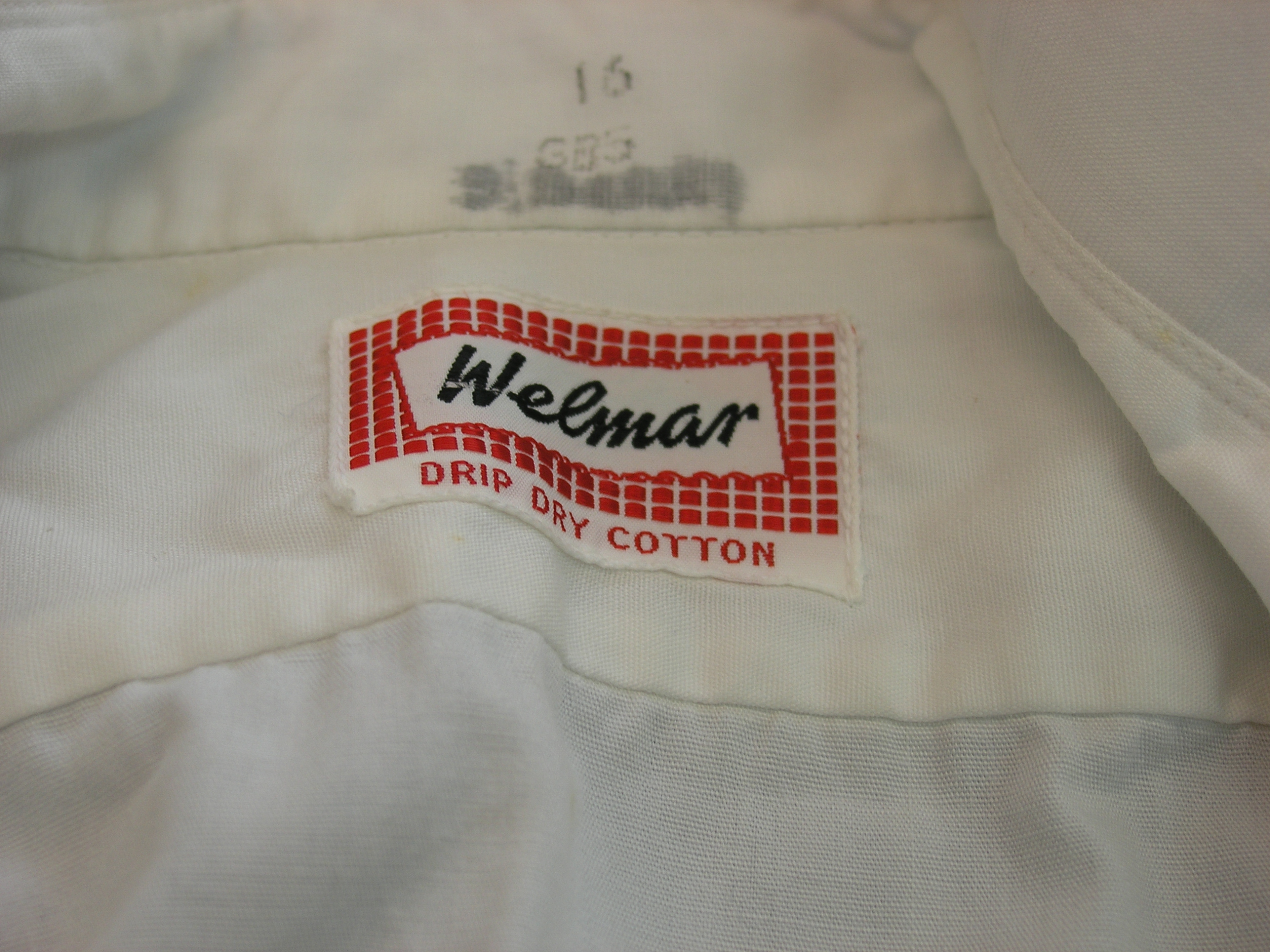
A shirt was specified by collar circumference and sleeve length, in precise increments, which meant a buyer needed two measurements and a shop needed a great deal of stock to cover the combinations.
Broad alpha sizing dominates, with collar-and-sleeve sizing retained for formal and tailored shirts. The old system fitted far better and required enormous inventory, and the shift to three or four letters was driven by what retailers could afford to stock rather than by anything to do with fit.
8. Every Shirt Was Folded Over a Card and Held With Pins
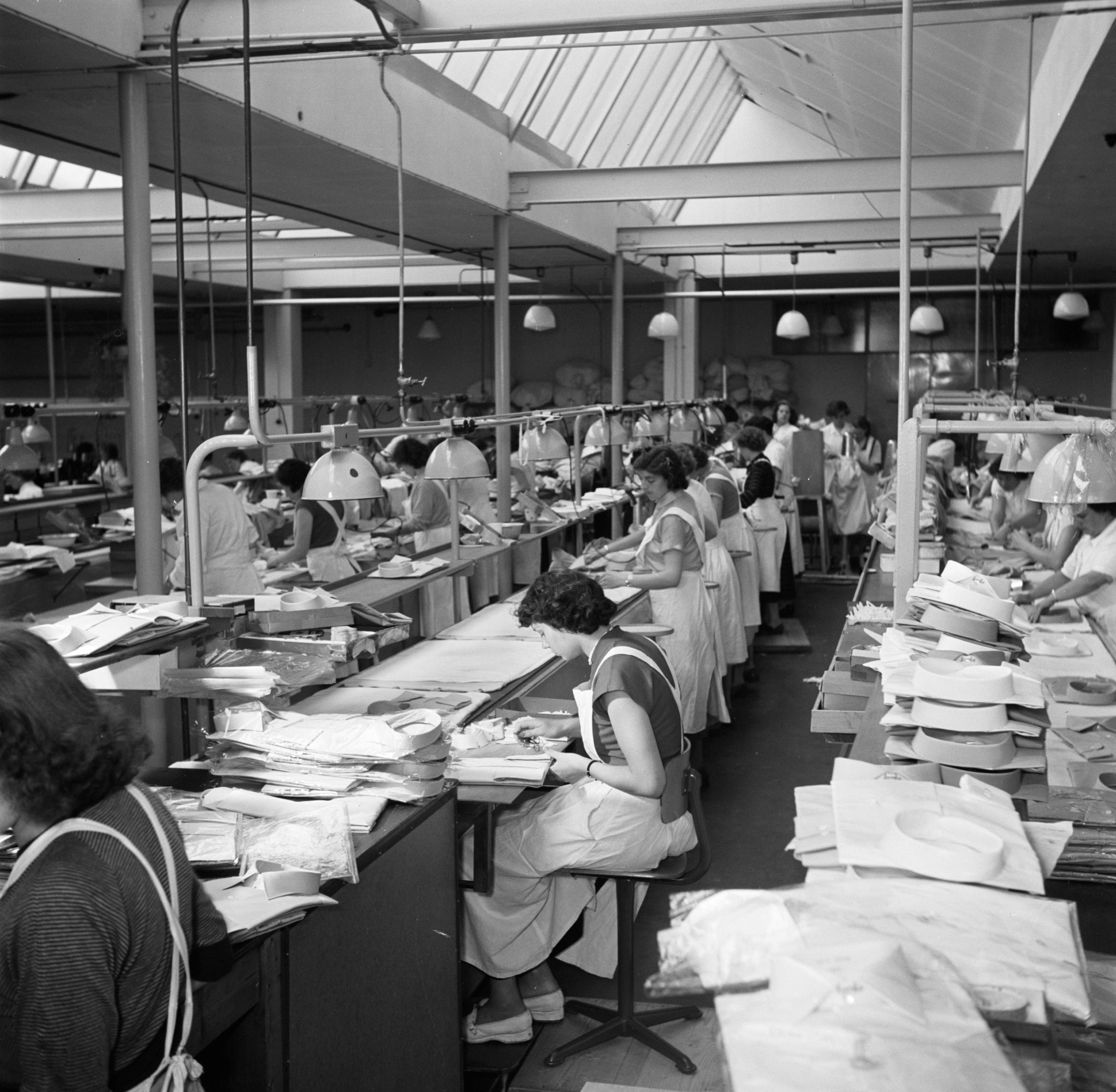
Finished shirts were pressed, folded around a stiff card with the collar supported by a band and a clear plastic or tissue insert, and held in shape with a surprising number of straight pins before boxing.
Automated folding, with fewer pins and more clips and bands. The pins were a genuine hazard to the customer and were used anyway, because a shirt that looks crisp in a box sells and one that looks limp does not – and the presentation was doing more selling than the cloth.
9. The Work Was Piecework and Split Into Single Operations
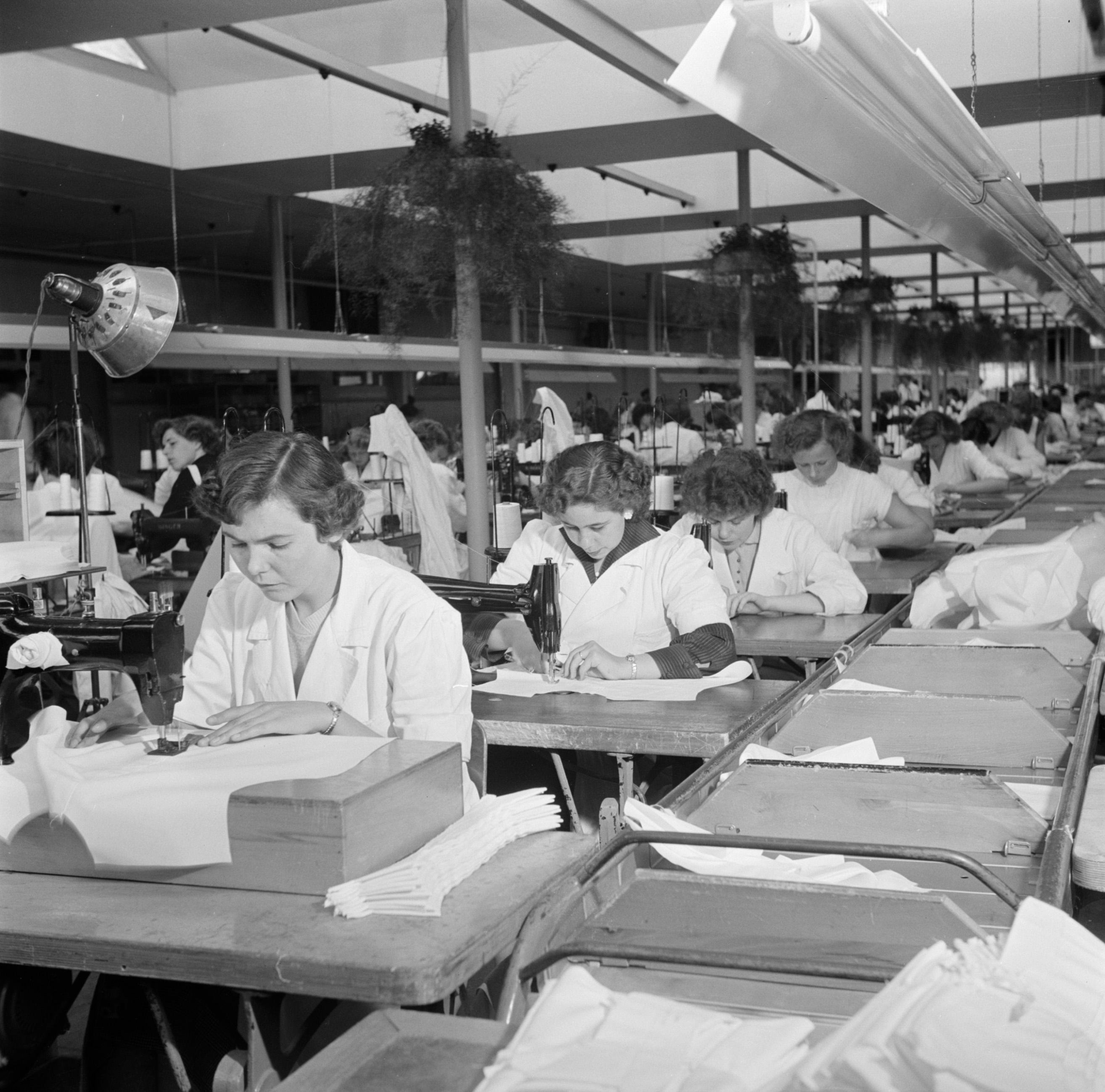
Nobody made a shirt. One person joined shoulders, another set sleeves, another ran side seams, another attached cuffs, each paid per piece completed, with the whole floor arranged as a sequence of single operations.
Sectionalised production continues, with modular teams and balanced lines in some plants. Sectionalisation made volume shirt production possible and made the work monotonous and the pay dependent on the slowest supply of the previous operation – a machinist who ran out of parts earned nothing while waiting.
10. Then Drip-Dry Fabric Arrived and Changed What a Shirt Was For
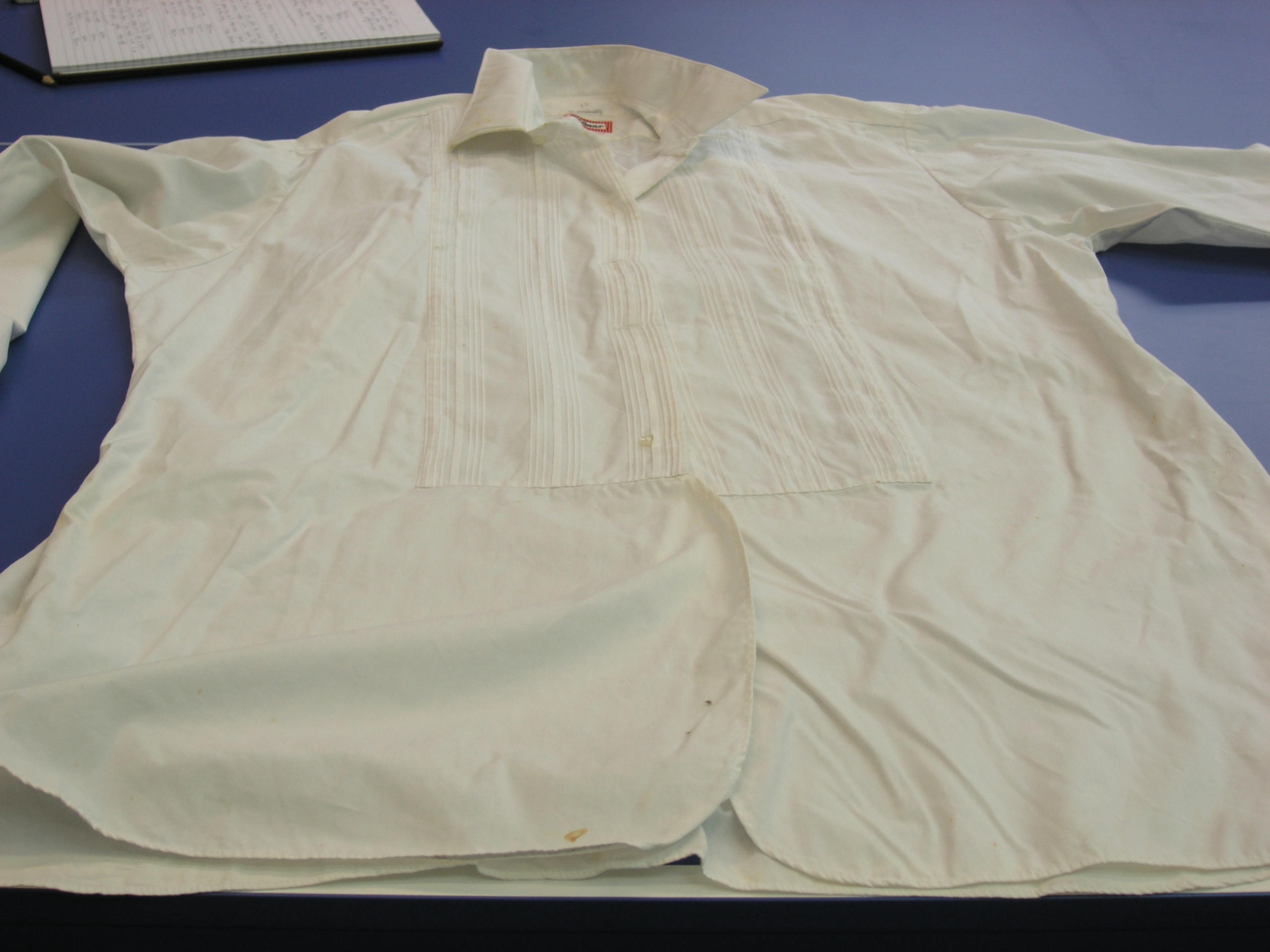
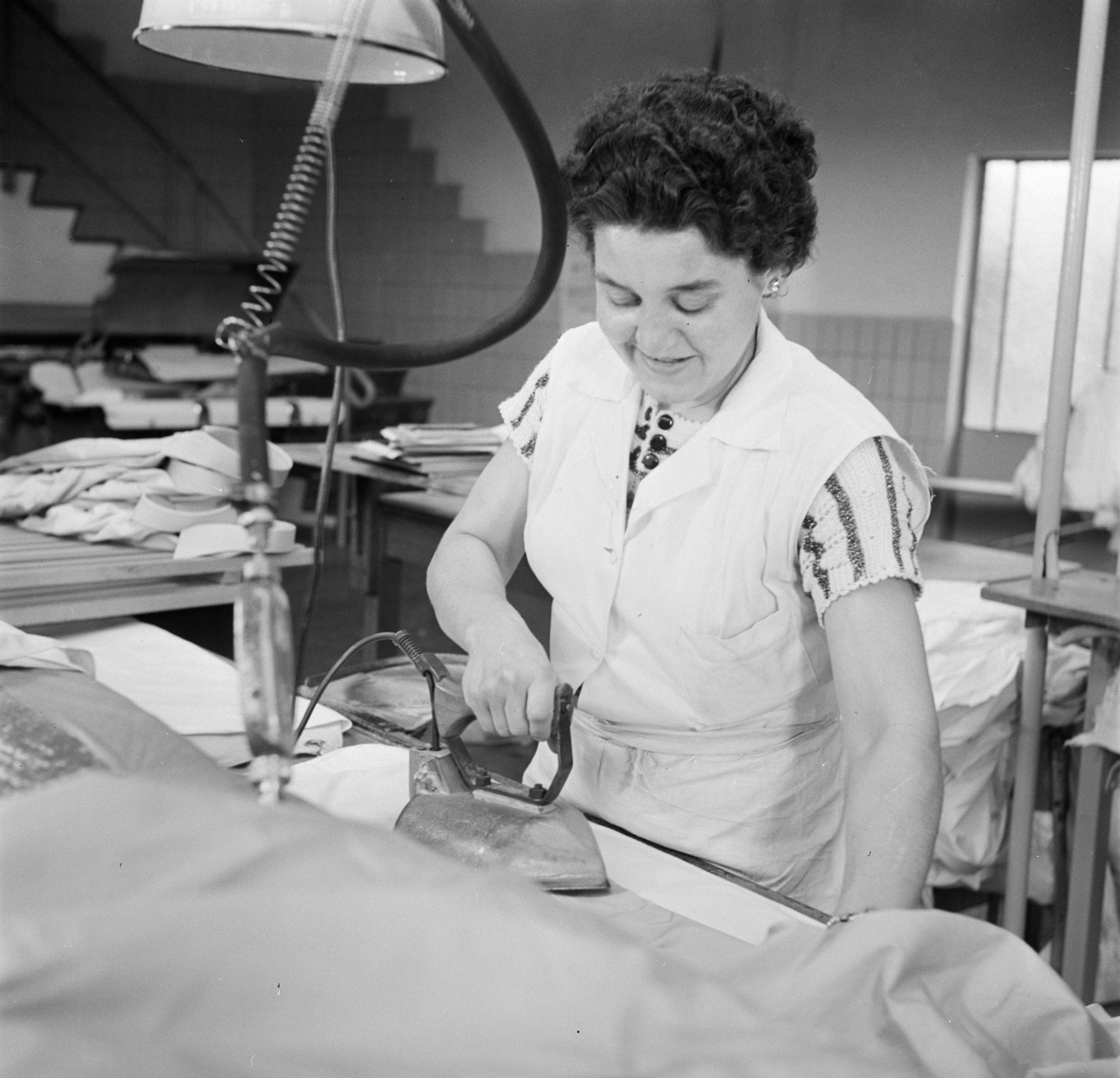
Shirts were cotton, they creased, and they required washing, starching, drying and ironing as a routine domestic task measured in hours per week.
Synthetic blends and durable-press finishes removed most of the ironing, and the shirt became a garment that comes out of a machine ready to wear. That single change altered the product, the purchase pattern and the domestic labour attached to it – and alongside imports at a fraction of the cost, it ended most of the industry that made them. The factory did not lose to a better shirt. It lost to a shirt that did not need looking after.
The Shirt Stopped Being a Thing That Needed Looking After
The end of this industry is usually put down to imports, and imports certainly finished it. But something else happened first, and it changed what the product was.
A cotton shirt in 1960 was an object requiring maintenance. It creased. It had to be washed, and washing it was hard work. The collar and cuffs needed starching if it was to look right. It had to be dried, and then it had to be ironed, and ironing a shirt properly – collar, yoke, sleeves, cuffs, placket, body – takes real time. Multiply that by a household’s worth of shirts and it is hours every week, performed almost entirely by women, as a fixed and unavoidable part of running a house.
Every detail in this piece follows from that. Detachable collars existed because the collar gets dirty and the shirt body does not, so replacing the collar saved washing the shirt. Removable stiffeners existed because they would not survive the laundering. Precise collar-and-sleeve sizing existed because a shirt was a considered purchase that had to last and had to fit. The whole product was designed around the assumption that somebody would be maintaining it intensively for years.
Drip-dry and durable-press finishes removed the maintenance. And once the shirt did not need looking after, it stopped being a considered purchase, which meant it did not need to fit precisely, which meant it could be sized in three letters, which meant a retailer could stock it cheaply, which meant it could be made anywhere and shipped.
So the imports arrived into a market that had already changed shape. The finish came first and the competition came through the gap it opened.
The factory was not beaten by a better shirt. It was beaten by a shirt that asked nothing of anybody – and the hours that bought back were real hours, taken off real people, which is worth saying plainly before anybody gets too nostalgic about the ironing.
If anybody in your family ironed shirts for a household in the 1960s, that was hours a week, every week, and nobody counted it as work.
And the small plastic strips that keep going missing from your collar are the last surviving piece of the old design.
Like our content? Follow us for more.