Why One Corner Is Missing
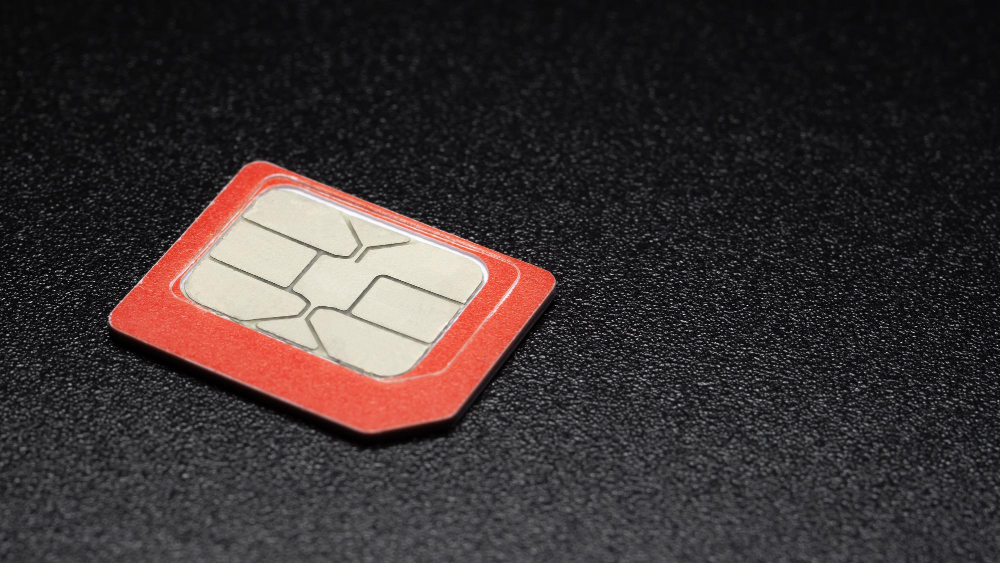
A SIM card is a small rectangle with one corner cut off at an angle. It looks like a detail somebody added for appearance, and it is one of the most quietly effective pieces of design in the device you are reading this on.
A plain rectangle can be put into a rectangular slot in four different orientations, and in a SIM tray only one of them connects the contacts to the right pins. Three out of four attempts would be wrong, and because the card would physically fit in all four, nothing would stop somebody getting it wrong except a diagram they have not looked at.
Cutting one corner breaks the symmetry completely. The tray or socket has a matching cut, so the card drops in flush one way round and sits visibly proud, crooked or refuses to seat in the other three. The error is not prevented by instructions or by care – it is prevented by geometry.
Engineers call this poka-yoke, or mistake-proofing: designing a part so the wrong assembly is physically impossible rather than merely discouraged. It is the same principle as a plug that only goes in one way and a petrol nozzle that will not fit a diesel filler.
Like our content? Follow us for more.
The Cheapest Possible Version of That Idea
What makes the chamfered corner worth talking about is how little it costs.
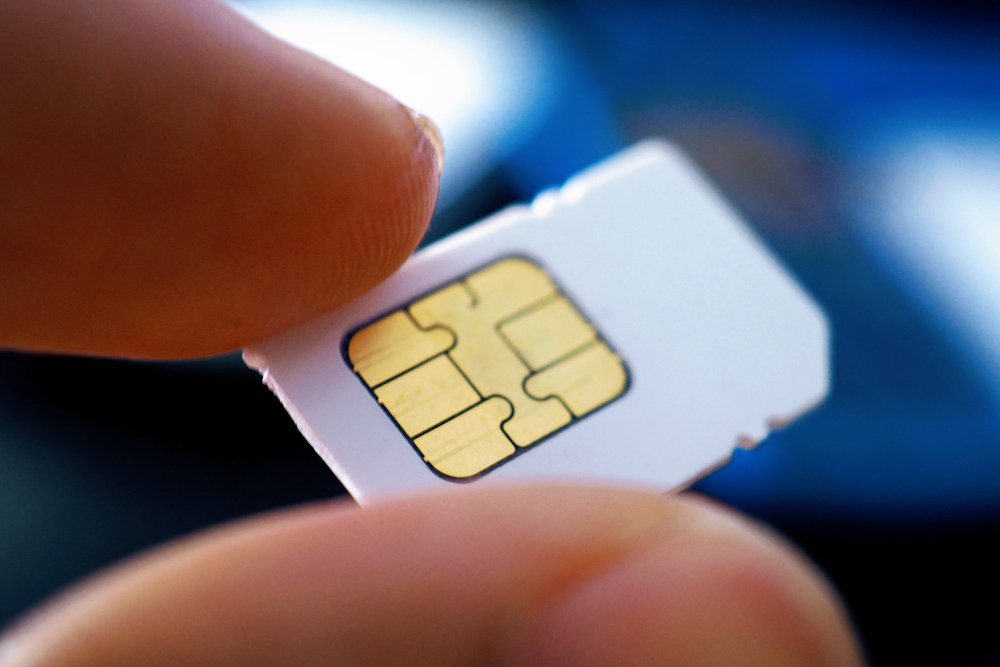
There is no extra component, no additional moulding operation, no keyway, no tab, no notch to break off. The card is punched from a sheet, and the punch simply has one corner at forty-five degrees. The cost of making a card that cannot be inserted wrong is identical to the cost of making one that can.
Alternatives all cost something. A notch in an edge is a stress point and can snap. An asymmetric outline is harder to stack and handle. A keying tab needs clearance and can shear off. An electronic check that detects reversed insertion needs circuitry and a way of telling the user.
The cut corner needs none of that, and it is also self-documenting: anybody looking at the card and the tray together can see which way round it goes, with no symbols, no words and no language involved. That last point matters for an object shipped to every country on earth.
It is a rare case of the correct engineering answer also being the free one.
The Card Has Been Shrunk Three Times and Kept the Corner
The SIM has gone through a sequence of size reductions, and the chamfer survived every one.
The original was the size of a credit card, with the chip in the middle, intended to be carried in a wallet and inserted into a phone the size of a brick. As phones shrank, so did the card: first to a much smaller version that could be snapped out of a credit-card-sized carrier, then smaller again with a narrower border around the chip, then smaller still, with the plastic trimmed back almost to the edge of the contacts.
Each step kept the same contact layout in the same relative positions, which is why adapters work and why a smaller card can be used in an older phone with a tray-shaped shim. Each step also kept the cut corner, because the orientation problem does not get easier as the part gets smaller – it gets harder, since a smaller card is more fiddly to handle and the consequences of forcing it are worse.
The latest step removes the card entirely: an embedded chip soldered into the phone, provisioned over the network, with no slot, no tray and no corner. Which ends the problem by removing the part.
Why It Is in a Tray Now Instead of a Slot
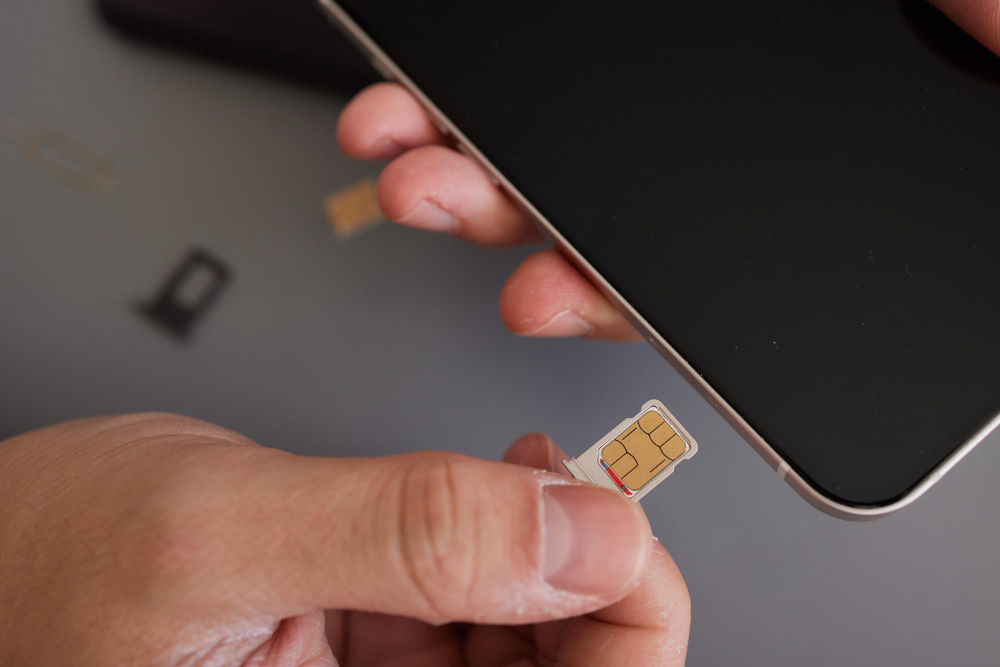
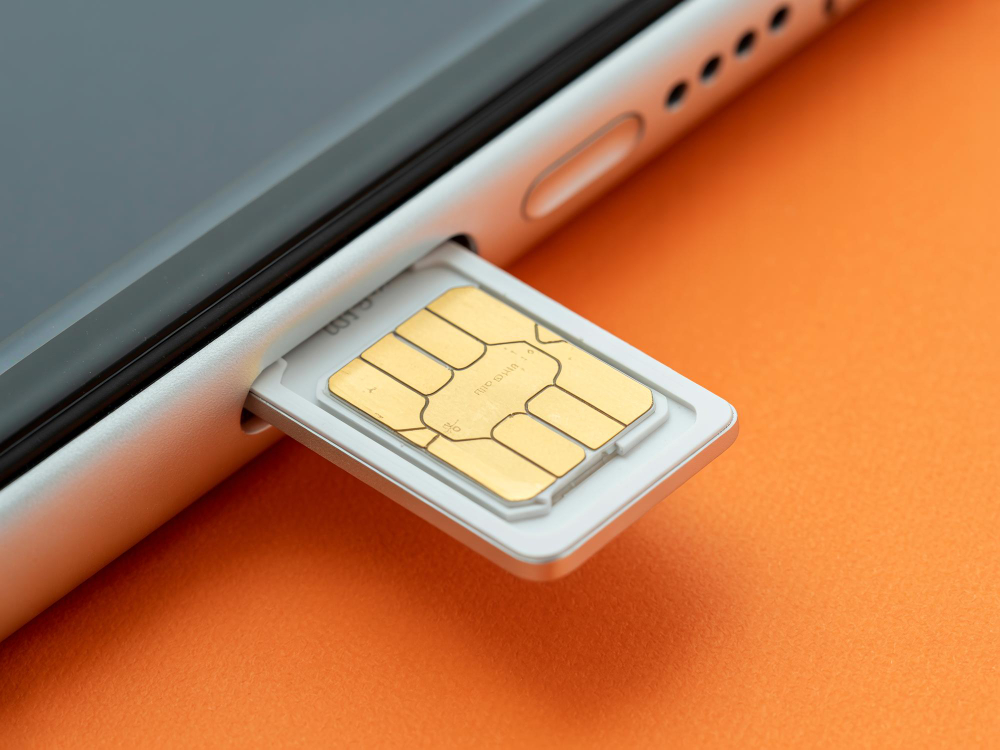
Older phones took the card into a spring-loaded socket under the battery, or a slide-in slot in the side. Both have largely been replaced by a removable tray that you eject with a pin.
The reason is water and dust. A socket that opens to the outside of the phone is a path for both, and sealing a slot that a card slides directly into is difficult. A tray can carry a rubber gasket around its edge and be pulled tight against the case, which seals the opening with one simple part.
The tray also solves a mechanical problem. Pushing a very small, very thin card into a connector by hand risks bending it, missing the guides and damaging the contacts. Laying it flat into a tray and sliding the tray in on rails keeps the card supported and aligned the whole way.
And the tray carries the chamfer too, moulded into its recess, which is why a card dropped into a tray the wrong way round sits visibly wrong before it goes anywhere near the phone. The mistake-proofing has moved out of the connector and onto a part you can see.
The Gold Rectangle Is Not Decoration Either
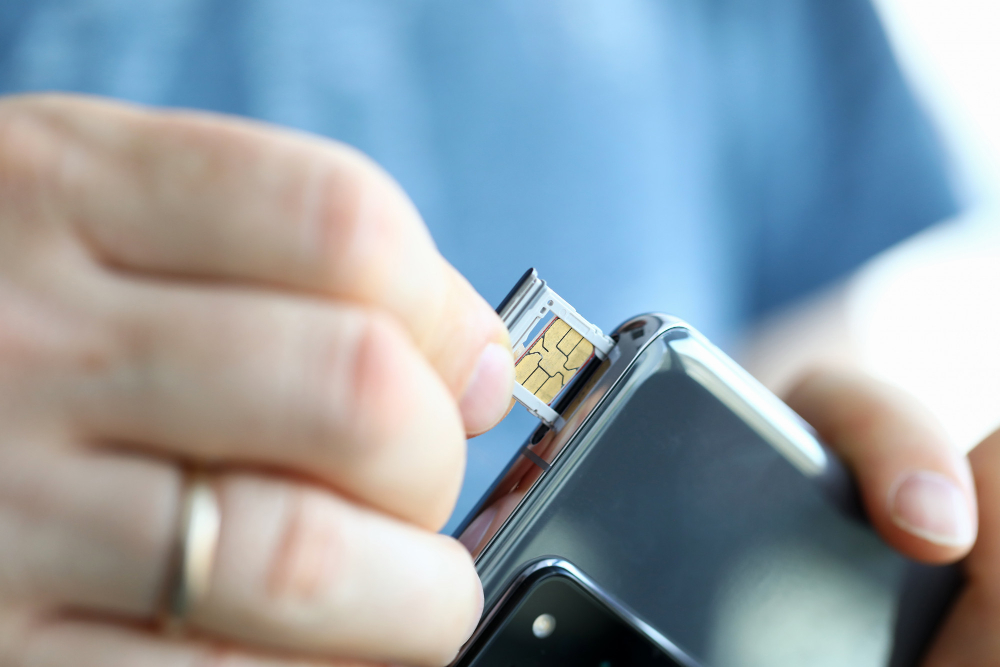
The contact pad on the face of the card is a standardised grid, and its layout has survived every size change.
There are eight contact positions, laid out in two columns, each one assigned a specific function – power, ground, a clock line, a reset line, a data line, and a couple of positions that have been reassigned over the years as the card’s role expanded. The phone’s connector is a set of sprung gold-plated fingers that press onto those pads.
Two consequences follow that people run into. The first is that the contacts are the fragile part. They are a thin plated layer, and scraping them, touching them repeatedly, or wiping them with anything abrasive will eventually take the plating off and cause intermittent faults – which is why the advice is to handle the card by its edges and to leave the contacts alone even when a card is misbehaving.
The second is that a card which has stopped being recognised usually has a contact problem rather than a chip problem. Dust on the pads, a tray not fully seated, or a connector finger that has lost its spring will all produce the same symptom as a dead card. Reseating it in the tray is worth doing before concluding anything is broken, and it works often enough to be the first thing a shop tries.
Why the Corner Had to Be a Corner
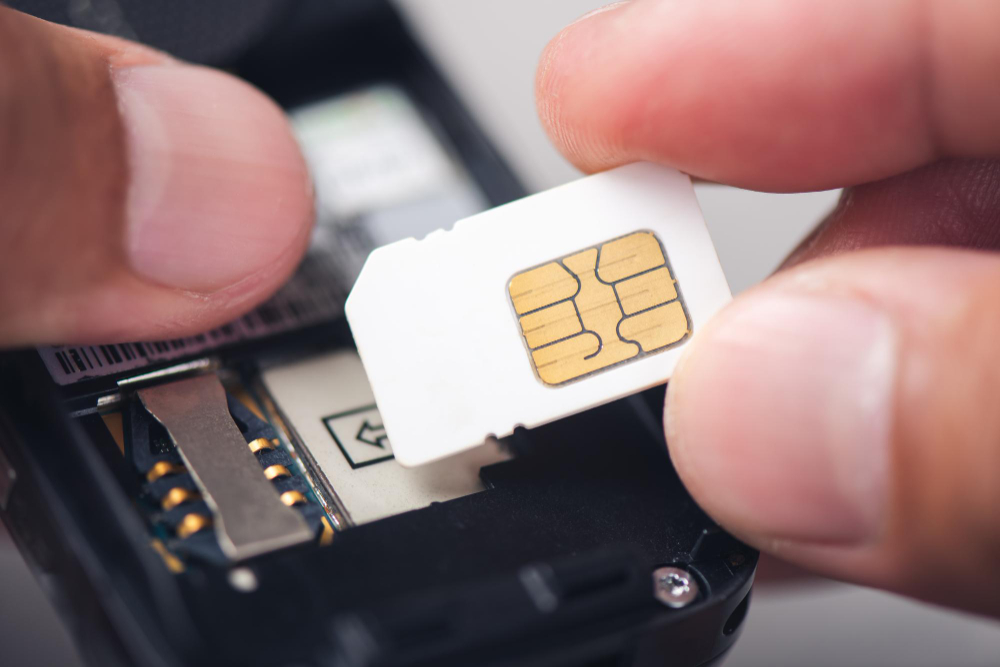
It is worth asking why the asymmetry was put at a corner rather than anywhere else, because the location was not obvious.
The contacts occupy most of the useful area of the card, so there is very little spare material to work with. An edge notch would have had to cut into the border beside the contacts, which is where the card is thinnest in plan and where a crack would run straight into the pads. A hole would have needed clearance on both faces. A step in one edge would have made the card harder to punch cleanly and easier to catch on a tray lip.
A corner is the one place on a small rectangle with material to spare, no function already assigned to it, and no path from a cut to anything important. Removing it weakens nothing, interferes with nothing, and is visible from both faces at once.
That is why the same solution appears on memory cards, on some batteries, and on a long list of small flat components that have to go in one way round. When the part is a thin rectangle and the available real estate is the outline, the corner is the only place left.
What Is Actually On the Card
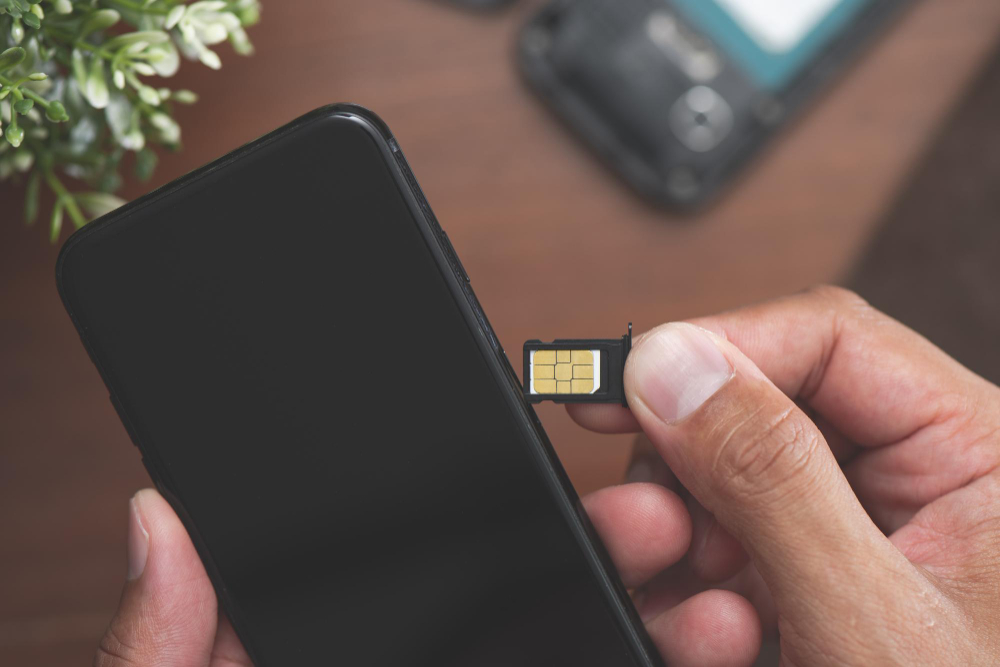
The reason any of this matters is that the card is not storage in the way people assume. It is a small secure computer.
A SIM holds a unique identifier for the subscription and a secret key, and it performs a cryptographic operation with that key to prove to the network that it is the legitimate subscriber. The key is designed never to leave the card – the network sends a challenge, the card computes a response, and the response is what travels. That is what makes the card the account rather than merely a label for it.
It also holds a small amount of other data – contacts and messages in older usage, network preferences, and the information the phone needs to find and authenticate on a network.
Which explains the only genuinely important practical point about SIM cards: the card is the identity. Moving it to another phone moves the subscription, and somebody who obtains it can present as the subscriber, which is why account takeovers that go through a mobile number are a real category of fraud and why networks have tightened the process for issuing replacements.
A piece of plastic with a cut corner is the credential for the number that a great deal of the rest of your account security is routed through.
The Chamfer Is Everywhere Once You Notice It
The cut corner is one instance of a pattern that runs through every connector you use, and it is worth seeing as a family.
Memory cards have an asymmetric outline with a chamfered corner for the same reason. Older computer connectors used a D-shaped shell so the plug could only enter one way. Mains plugs use differently sized or differently shaped pins. Network cables have a clip on one side. Camera batteries have asymmetric contacts and moulded steps. The connector that eventually solved the small-plug problem did it by being symmetrical enough to work either way round, which is the other valid answer: if you cannot key it, make both orientations correct.
What they share is the recognition that an instruction is a weaker safeguard than a shape. People do not read, they are in a hurry, they are doing it in the dark, and they will apply force. A part that cannot be fitted wrong needs no attention from anybody.
So the next time you eject a tray with a paperclip and drop the card in, notice that you did not have to think about which way round it went.
That was deliberate, it cost nothing, and it is the reason you have never once got it wrong.
Like our content? Follow us for more.