For decades, the path from New York to the Carolinas was reserved for retirees seeking “half-back” status, moving halfway back from Florida to find milder summers. But in 2025, the narrative has shifted. Data shows a massive demographic pivot as young professionals, tech giants, and middle-class families flee the staggering costs of the Northeast for the “Piedmont Atlantic” corridor.
New York continues to see some of the highest numeric population losses in the country, while North Carolina has solidified its spot as the 5th most popular destination for interstate movers.
1. The Math of the Move: “Twice the Home, Half the Cost”

The primary driver remains a brutal disparity in purchasing power. As of late 2025, for a New Yorker to maintain their standard of living in Charlotte or Raleigh, they only need to earn roughly 44% of their NYC salary.
- Housing: The average rent in Charlotte is 64% lower than in Manhattan. While a one-bedroom in NYC averages over $4,000, similar units in the Carolinas hover around $1,450.
- Taxation: New York’s progressive income tax (up to 10.9%) is a sharp contrast to North Carolina’s flat tax rate, which has dropped to 4.25% for 2025.
- Property Taxes: The effective property tax rate in the Carolinas (approx. 0.63%) is less than half of New York’s average (1.4%), allowing families to build equity rather than paying for local bureaucracy.
2. The “Silicon Carolinas” Job Boom
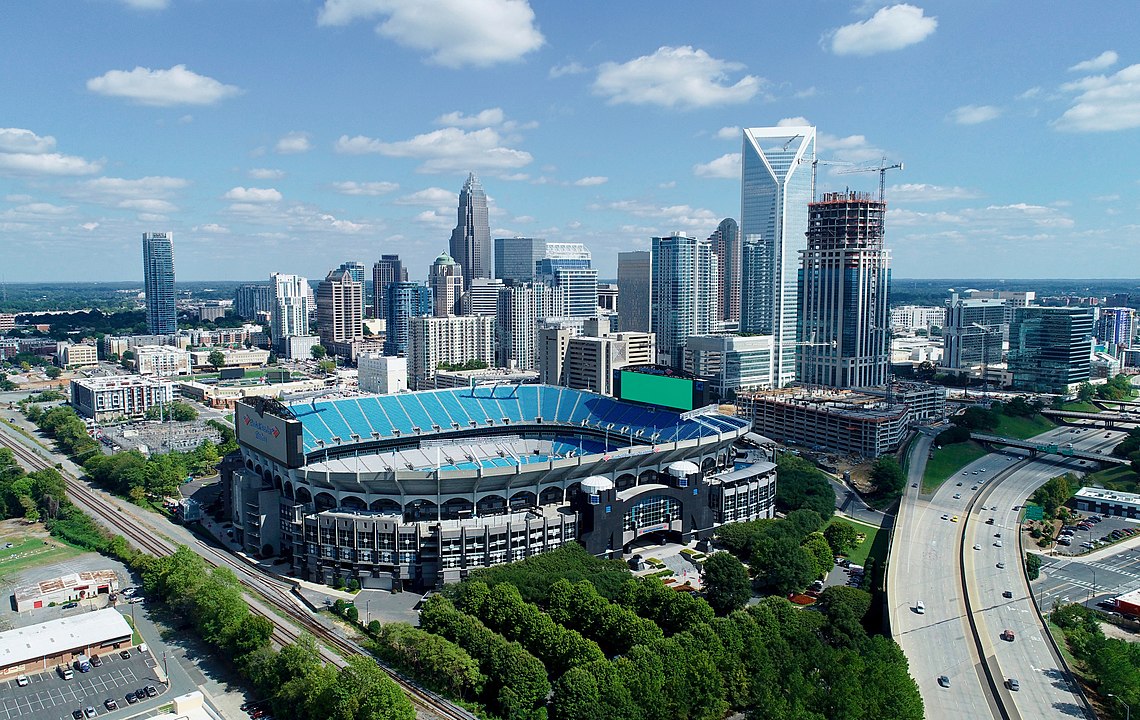
New Yorkers aren’t just bringing their savings; they are following their industries. The Research Triangle (Raleigh-Durham) and Charlotte have become legitimate rivals to Brooklyn and Long Island City for tech and finance.
- Charlotte is now the second-largest banking hub in the U.S., pulling thousands of Wall Street analysts tired of the MTA.
- Raleigh-Durham has seen a 14% surge in inbound moves from high-tech hubs, driven by massive investments in life sciences and Apple’s ongoing East Coast campus development.
- Remote Work: Even as some firms push for office returns, “Hybrid Flexibility” has become the 2025 standard, allowing New York-based employees to live in Asheville or Charleston while keeping their Big Apple paychecks.
3. Infrastructure Stress and the “Honeymoon” Phase

The exodus is so significant that it’s reshaping the Carolinas in New York’s image, for better and worse. In 2025, cities like Fort Mill and Huntersville are grappling with “growth pains”:
- Traffic: Commutes on the I-40 and I-85 corridors are beginning to mirror the congestion of the Long Island Expressway.
- Education: Rapid-growth school districts are struggling to add capacity, with some North Carolina suburbs seeing 3-year waitlists for top-tier childcare.
- The “Yankee” Pricing Effect: While prices are lower than NYC, they are rising locally. Median home prices in the Triangle have stayed elevated despite national cooling, as cash-rich New Yorkers outbid locals.
4. Lifestyle: The “Third Space” Advantage

Beyond the spreadsheets, there is a psychological shift. Post-2020, the “City That Never Sleeps” began to feel more exhausting than exhilarating for many. The Carolinas offer a “Third Space”, proximity to both the Blue Ridge Mountains and the Atlantic coast, without the winter “gray-out” that defines New York from December to April. For Gen X (39% of movers) and Millennials (34%), the trade-off is simple: they are trading the prestige of a Manhattan zip code for the sanity of a backyard and a 15-minute commute.