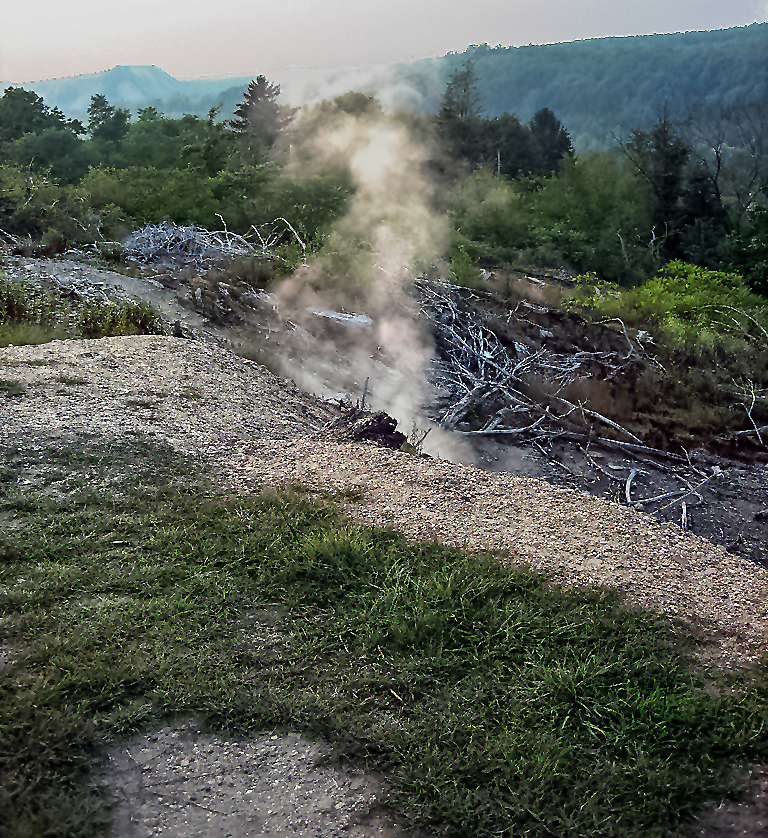
Drive into the hills of eastern Pennsylvania to the spot where Centralia used to be, and you’ll find something that shouldn’t exist: a town-shaped emptiness. Streets laid out in a neat grid, with curbs, sidewalks, and street signs — but almost no buildings, just overgrown lots and the occasional lonely house. And in places, if the conditions are right, thin wisps of smoke rise from cracks in the ground, and the earth is warm to the touch. Beneath your feet, a fire has been burning continuously since 1962, and it is not going out anytime soon.
Centralia is one of the strangest and most haunting places in America — a town killed not by a flood or a factory closing but by a fire that went underground and refused to die, slowly making the community uninhabitable over decades until the government finally gave up and moved almost everyone out. The story of how a small mining town came to sit atop an inextinguishable inferno, and how it dwindled from a thriving community of a thousand people to a near-ghost town of a handful of holdouts, is a real American tragedy with an almost mythic quality — and it has made this empty grid in the Pennsylvania hills a magnet for the curious from around the world.
A Coal Town Like Hundreds of Others
Before the fire, Centralia was an ordinary and reasonably prosperous coal town. Settled in the mid-1800s in the heart of Pennsylvania’s anthracite coal region, it grew up around the mining of hard coal that heated homes across the Northeast, and at its peak it was home to around 1,000 to 2,000 people, with the full complement of small-town American life: homes, churches, schools, shops, bars, and the tight-knit community that coal mining tended to produce. The land beneath and around the town was honeycombed with mines and old mine workings, laced with coal seams and abandoned tunnels — a geology that had made the town’s fortune, and that would, in time, destroy it.
By the mid-twentieth century, Centralia was a settled, unremarkable place, its mines partly played out but its community intact. What happened next was the result of a small decision with catastrophic, unforeseeable consequences — the kind of ordinary act that, in hindsight, marks the exact moment a town’s fate turned.
Like our content? Follow us for more.
The Fire That Started in a Dump
The most widely accepted account of the fire’s origin traces it to the spring of 1962, when the town, as many did, was preparing the local landfill — situated in an old strip-mine pit — for the Memorial Day season. The standard practice for managing the dump involved burning off the accumulated trash, and in May 1962 such a fire was set. But this particular pit connected, through the ground, to the vast network of underground coal seams and abandoned mine tunnels beneath the region — and the burning trash ignited an exposed vein of coal.
Coal, once alight underground and fed by air moving through old mine workings, is extraordinarily difficult to extinguish, and this fire found an essentially unlimited fuel supply: the coal seams running for miles beneath Centralia and the surrounding area. Early efforts to dig out and douse the fire failed to contain it, in part because the underground labyrinth of old tunnels gave the blaze room to spread and breathe in ways that were nearly impossible to seal off. What might have been stopped if attacked aggressively and immediately instead crept outward and downward, and over the following years it became clear that the fire was not going to be put out. It was going to keep burning, following the coal, for as long as the coal lasted.
A Town Slowly Poisoned From Below
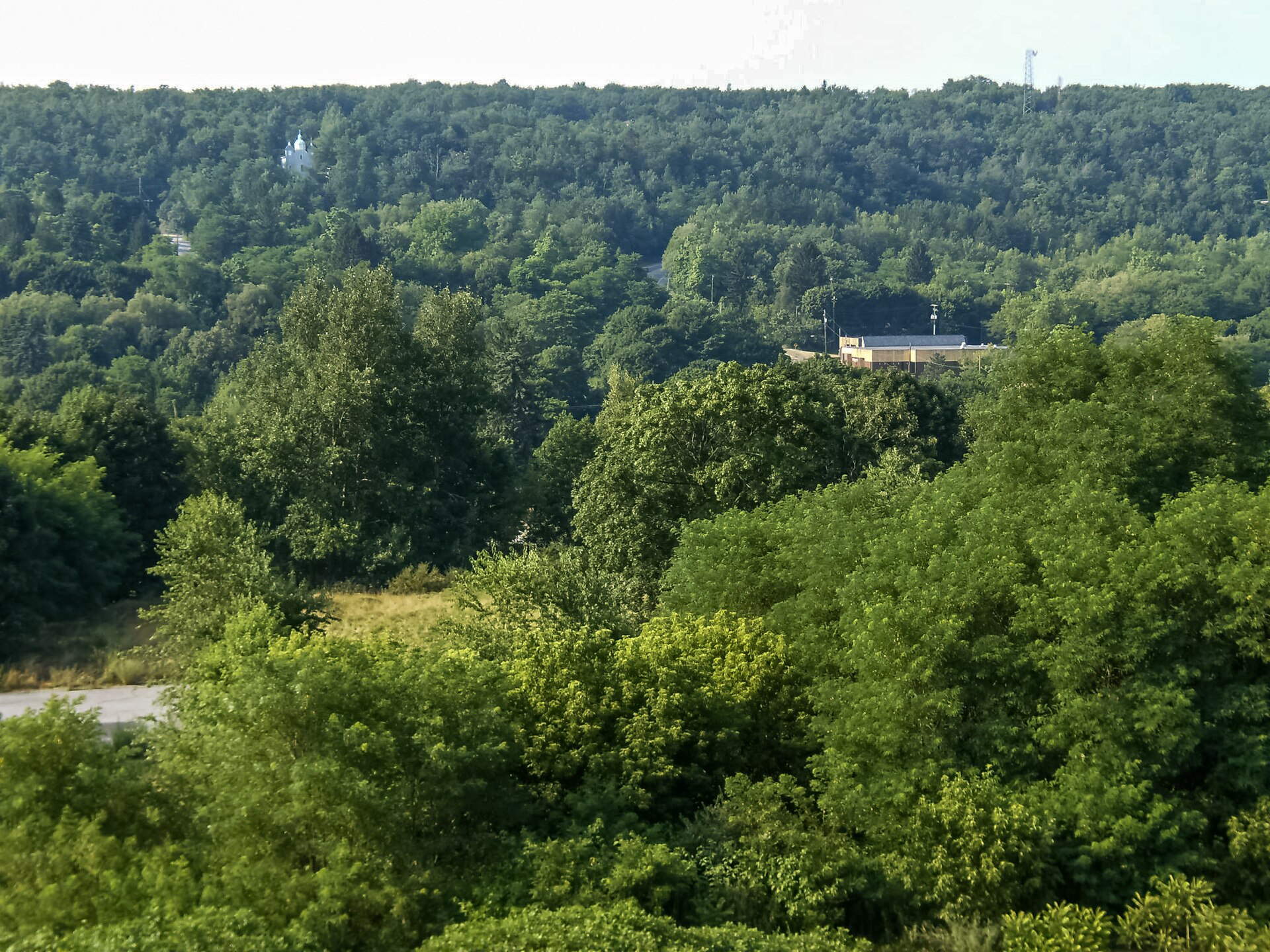
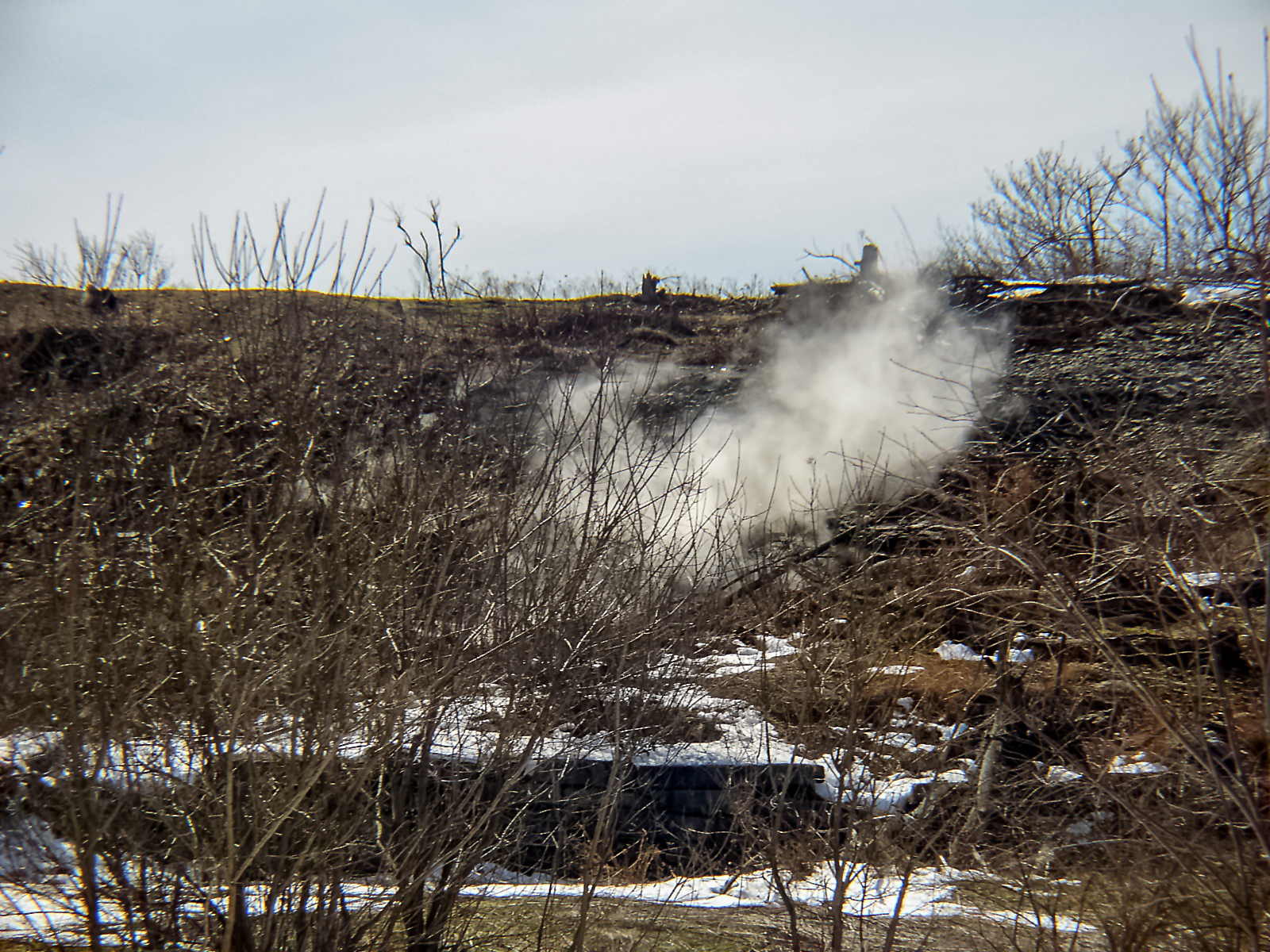
For years, many residents lived with the fire as a background nuisance rather than an emergency — the ground was warm in places, steam rose here and there, but life went on. Over time, though, the danger grew undeniable and truly frightening. The underground fire produced dangerous gases, including carbon monoxide, that could seep into homes, and it heated the ground and destabilized it, opening cracks and sinkholes where the earth had been eaten away by fire below. The threat became national news in 1981, when a young boy playing in a yard was nearly swallowed when a steaming sinkhole suddenly opened beneath him — he was pulled to safety, but the incident crystallized the reality that Centralia was becoming an actively dangerous place to live.
Faced with a fire that could not be extinguished and hazards that were worsening, the government made a fateful decision. Rather than continue fighting an unwinnable battle, officials determined that the safest and most economical course was to relocate the residents and buy out the town. In the 1980s, a major government-funded effort offered to purchase residents’ homes and move them elsewhere, and most of Centralia’s people, weighing the dangers and the offer, took it. House by house, the town emptied; the vacated buildings were demolished, and the population that had numbered in the hundreds dwindled toward single digits over the following years.
The Holdouts and the Empty Grid
Not everyone left. A small number of residents refused the buyouts and fought to stay in the town where they had spent their lives, entering into a long standoff with the government over their right to remain. For years they held on in a nearly empty town, and eventually a handful of the remaining holdouts reached an arrangement allowing them to live out their lives in their homes, after which the properties would pass to the state. Their determination to stay in a town that officially no longer wanted to exist added a poignant human chapter to Centralia’s story — people so bonded to home that they would live atop a fire rather than leave.
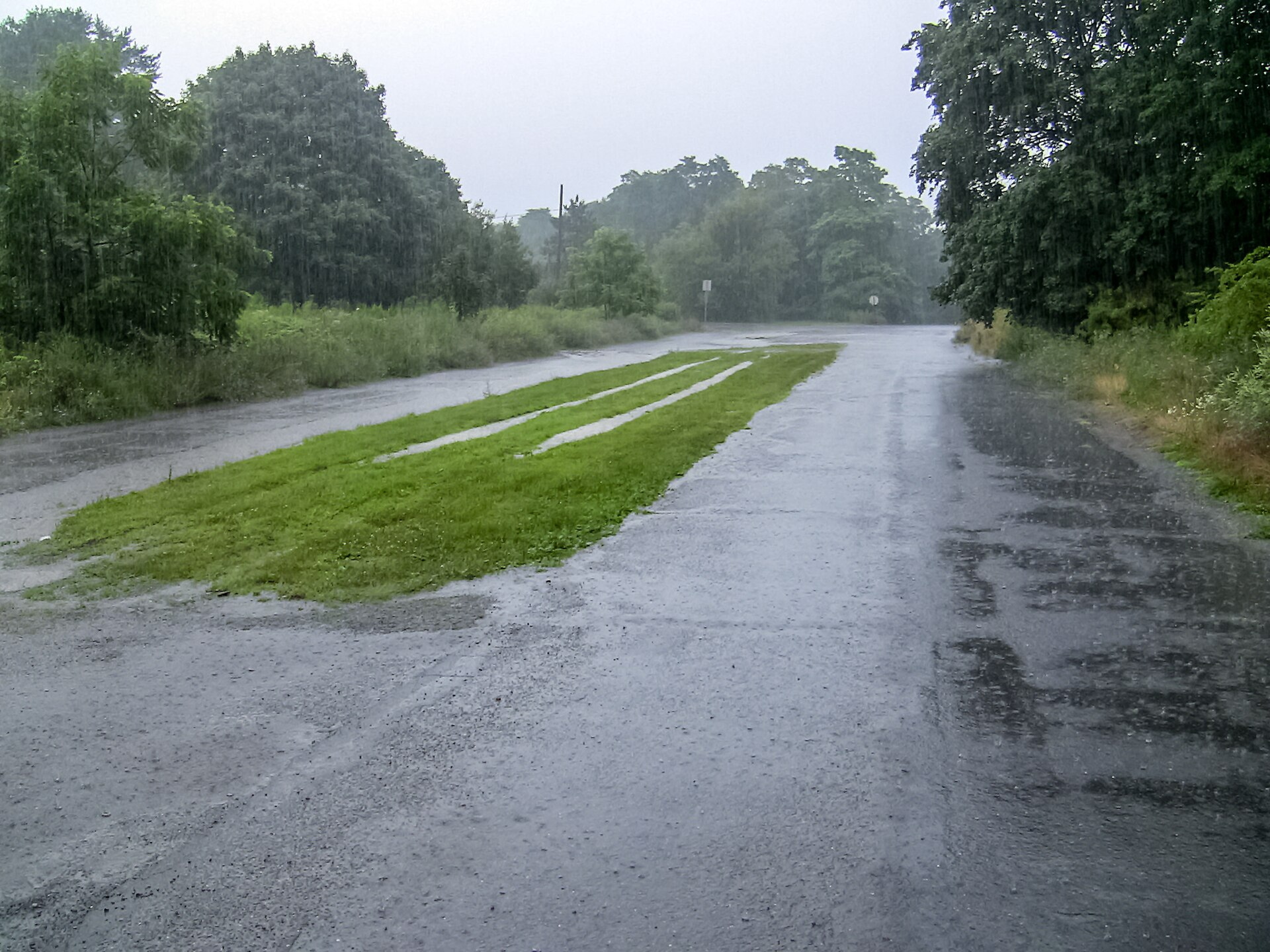
What remains today is deeply strange to witness. The buildings are almost all gone, but the infrastructure of a town persists: a grid of streets, some still named and signed, running past empty lots where houses once stood, the whole layout of a community preserved as negative space. Nature has reclaimed much of it, greenery growing over the foundations. In certain spots, smoke and steam still vent from the ground, and the earth radiates warmth, especially noticeable in cold weather — the visible, breathing evidence of the fire still working away far below. Centralia even lost its ZIP code, formally stripped of the postal identity that marks a place as a place.
The Graffiti Highway and the Pilgrims
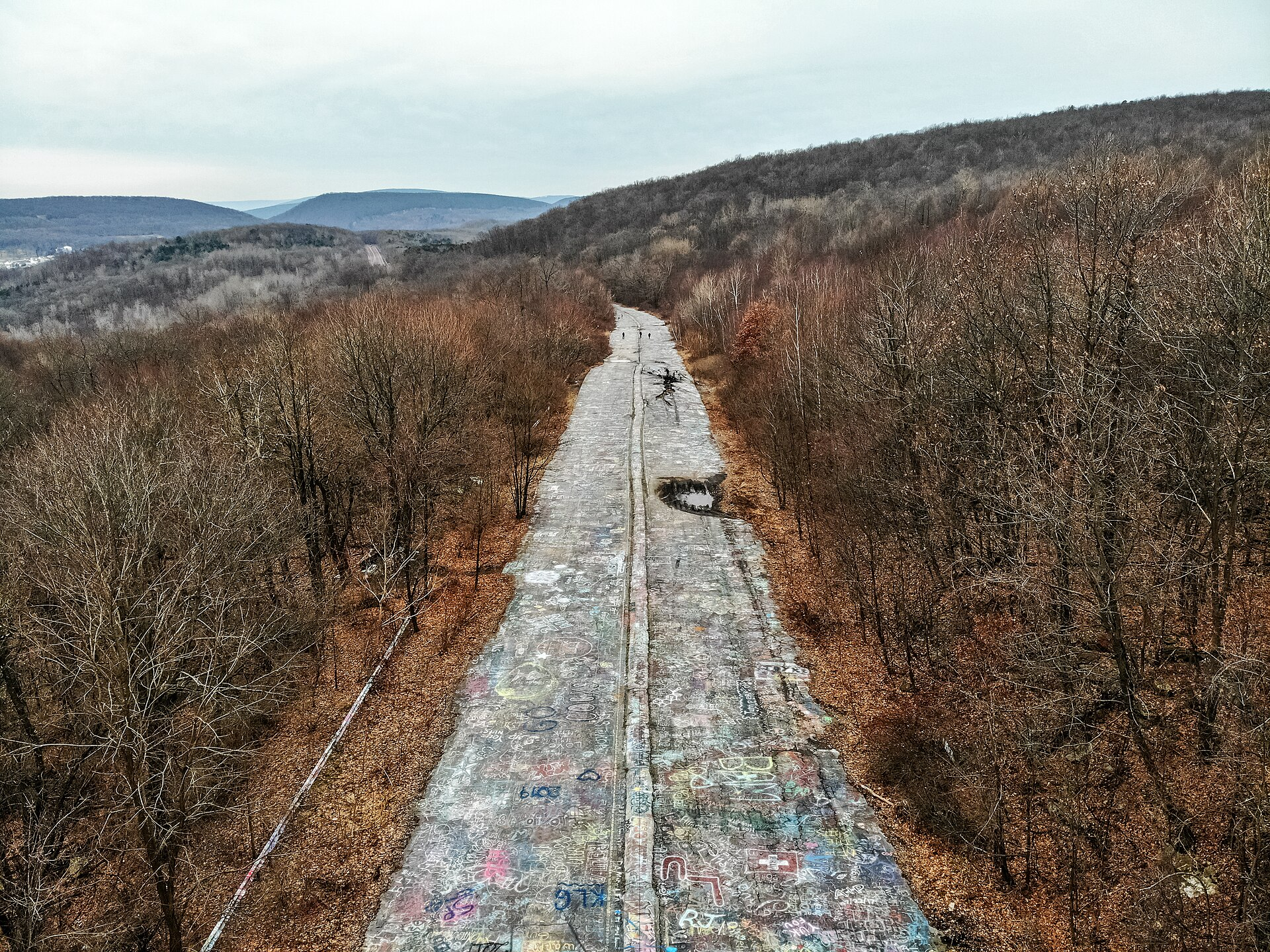
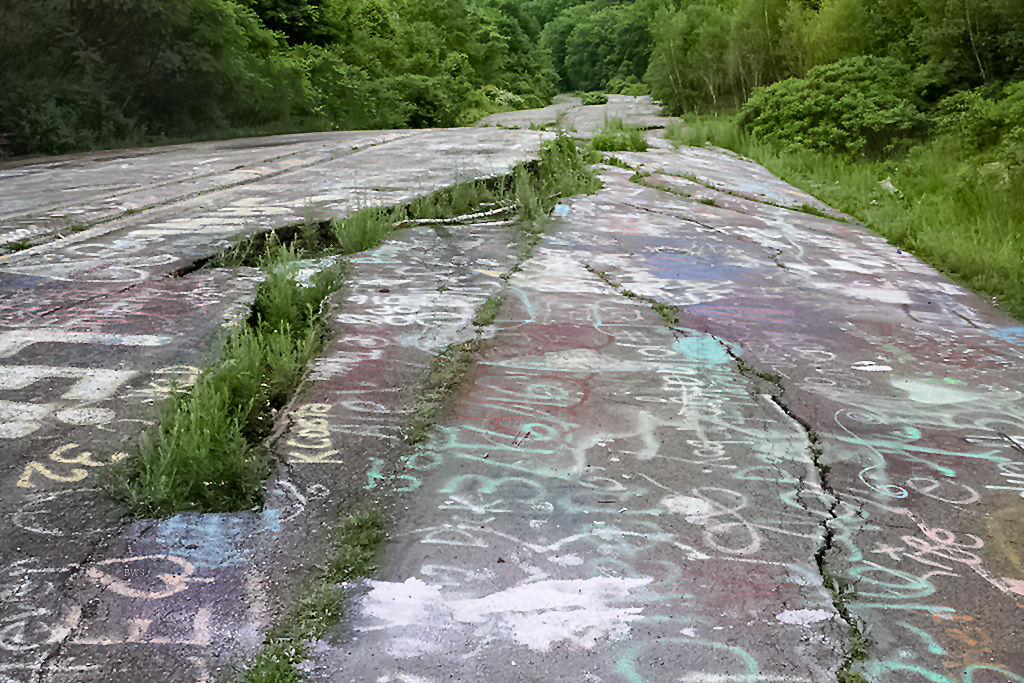
Centralia became, inevitably, a destination for the curious — urban explorers, photographers, and road-trippers drawn by the almost unbelievable premise of a town on permanent fire. For years, one of the biggest draws was a stretch of abandoned, buckled highway — a section of old Route 61 that the fire and ground movement had cracked and heaved, which had been closed and rerouted. Visitors covered it in layers of spray paint, and the so-called “Graffiti Highway” became a strange, colorful pilgrimage site, a canvas of thousands of messages on a road that led into a burning ghost town. (The site was eventually covered over to discourage crowds, a reminder that Centralia remains real property with real hazards, not a theme park.)
Visitors who come are asked to remember what the place actually is: not merely a spooky curiosity but the remains of a real community where real people lost their homes and their town. The ground can be truly dangerous in spots, and the site deserves respect rather than reckless exploration. Centralia’s power comes precisely from its reality — this is not a movie set or a legend but an actual American town that an actual, unstoppable fire actually destroyed, and that continues, steadily and relentlessly, to burn.
A Fire With Centuries Left to Go
The most staggering fact about Centralia is its future. The underground fire is not close to burning out; experts have estimated that the coal seams feeding it hold enough fuel to keep the fire burning for a very long time to come — commonly cited figures suggest it could continue for another 250 years, meaning the blaze that started in 1962 may still be burning in the twenty-third century, long after everyone alive today is gone. A fire that began during the Kennedy administration could conceivably still be smoldering in an era we can barely imagine.
Centralia endures as one of America’s most sobering and fascinating places — a monument to the unintended consequences of a single ordinary act, a reminder of the immense hidden forces sleeping in the earth beneath our settled lives, and a real modern ghost town created not by economic decline or natural disaster but by a fire that simply would not stop. The town is gone, its people scattered, its streets an empty grid in the Pennsylvania hills. But the fire remains, patient and inexhaustible, burning through the coal one year at a time, on a clock measured in centuries. Somewhere under those quiet green hills, Centralia is still, after more than sixty years, on fire.
Like our content? Follow us for more.