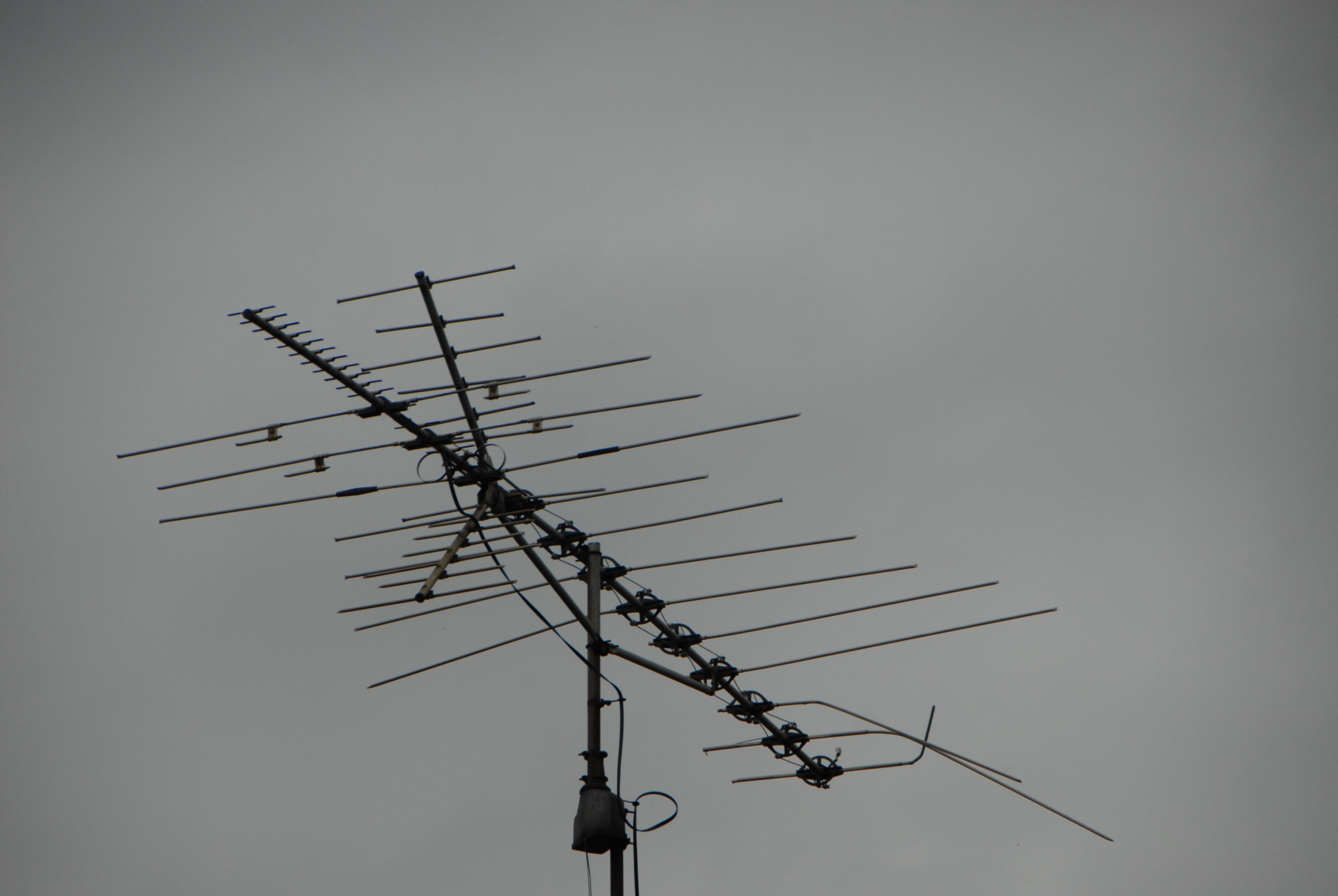
There was a metal frame on the roof. Aluminium tubes of graduated lengths on a crossbar, bolted to a mast, with a cable running down the side of the house and in through a hole somebody had drilled.
And beside the television there was a box with a dial on it, marked with compass points, that turned the thing on the roof. You changed the channel, and then you turned the antenna.
Two People, One Shouting
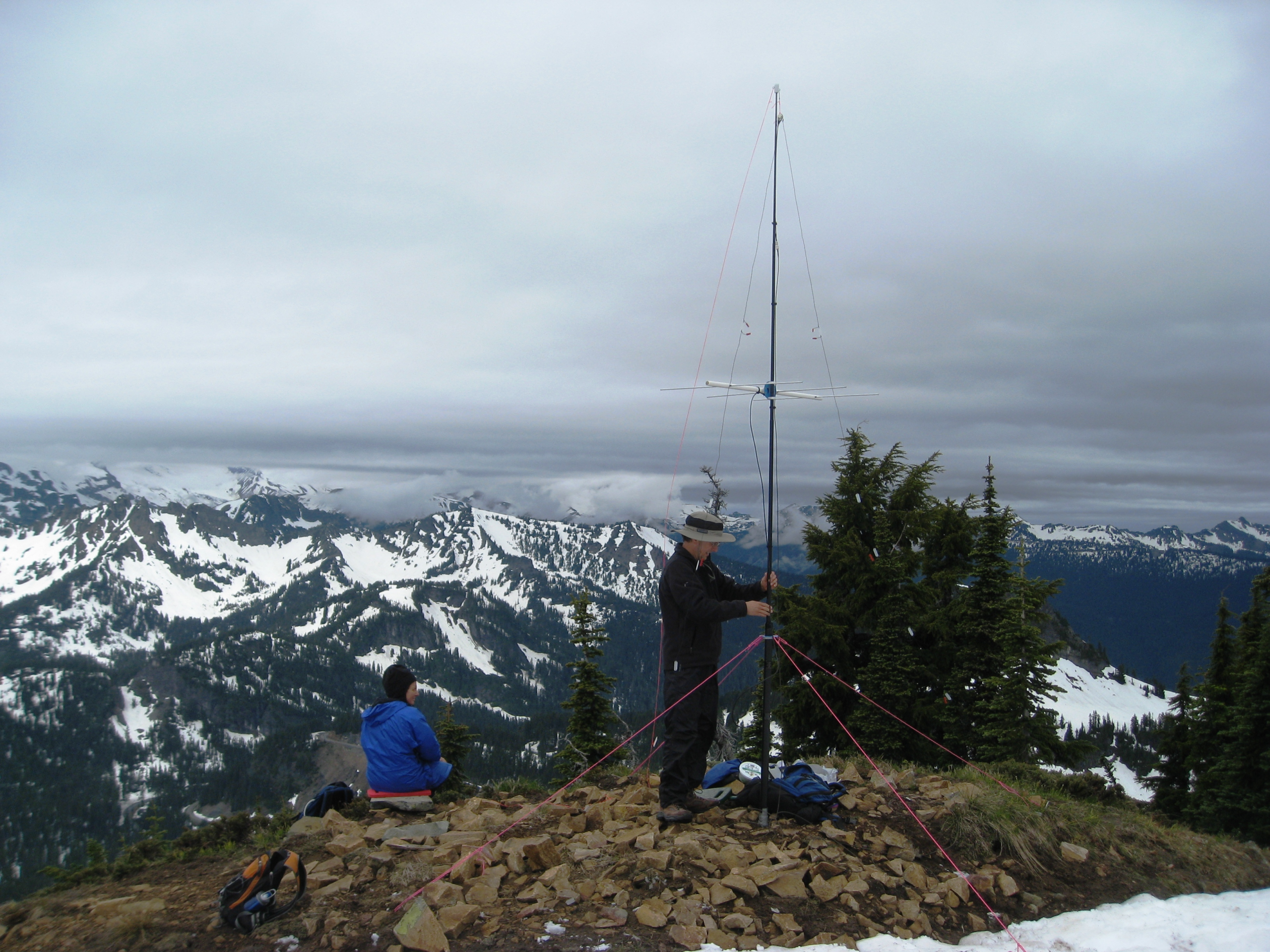
Installing or correcting an antenna was a two-person operation conducted by shouting.
One person was on the roof with a wrench, loosening the clamp and rotating the mast a few degrees at a time. The other was inside watching the picture and calling out through an open window whether it had improved. The feedback was immediate and entirely visual – the snow thinned or thickened, the ghost image moved closer to or further from the real one – and the two of you converged on a position by trial and error over perhaps twenty minutes.
Then you tightened the clamp, came down, and discovered that the position that worked for one station was wrong for another.
Like our content? Follow us for more.
Why Aiming Mattered So Much
The antenna on the roof was directional, and that was the point of it.
A directional antenna is built to be sensitive in one direction and deliberately insensitive in the others. That gives you two things at once: more signal from the station you want, and less interference from everything else – other transmitters, electrical noise, and reflections of the same signal arriving late after bouncing off a hill or a building.
Those reflections were the cause of ghosting. A television picture is drawn line by line, left to right, and a reflected copy of the signal arriving a fraction of a microsecond later draws a second faint copy of the image displaced slightly to the right. Point the antenna properly and the reflection fell outside its sensitive zone and the ghost went away.
Which is why the direction was not a detail. It was most of the installation.
The Stations Were Not in the Same Place

Here is the part that gets forgotten: broadcast transmitters were scattered.
In a city they might cluster on one tall structure, and then one antenna position served everything. But a household in a suburb or a smaller town was receiving from several directions at once – a station from the nearest city, another from a city sixty miles the other way, an independent from somewhere else again. A single fixed position was a compromise that worked badly for at least one of them.
So you either accepted a poor picture on some channels, or you bought a rotator: a motor on the mast, a control box by the set, and a dial you turned until it was right.
Families developed a shared knowledge of the settings. Everybody in the house knew that one channel wanted the dial at roughly north-west and another wanted it nearly south, and the numbers were learned the way a telephone number is learned, by repetition, and never written down anywhere.
The Picture Told You How You Were Doing
The crucial feature of the old system – and the reason the rotator worked at all – is that analogue television failed gradually.
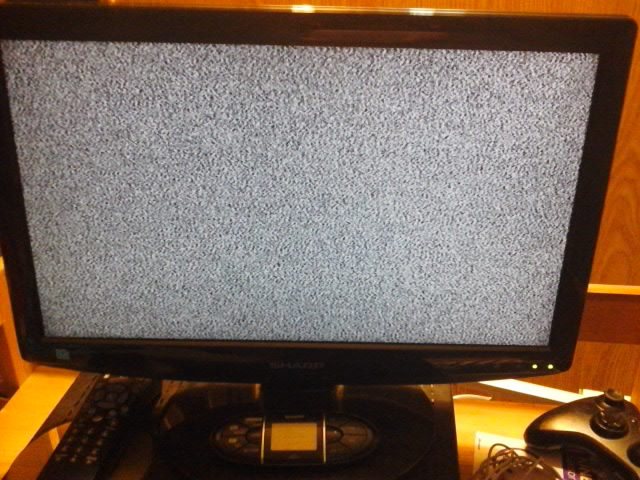
Weak signal produced snow: random speckling over the picture, getting heavier as the signal got weaker. A little snow was watchable. A lot was not. But at every point along the way the picture told you exactly where you stood, and more importantly which direction was improving.
That is what made aiming possible. You could hear a station through the noise before you could see it properly. You could turn the dial slowly and watch the snow thin, overshoot, come back. The medium gave you a continuous measurement of signal quality, free, on the screen, in real time.
Nobody thought of this as a feature. It was simply how television behaved.
Then Cable Arrived and Made the Roof Irrelevant
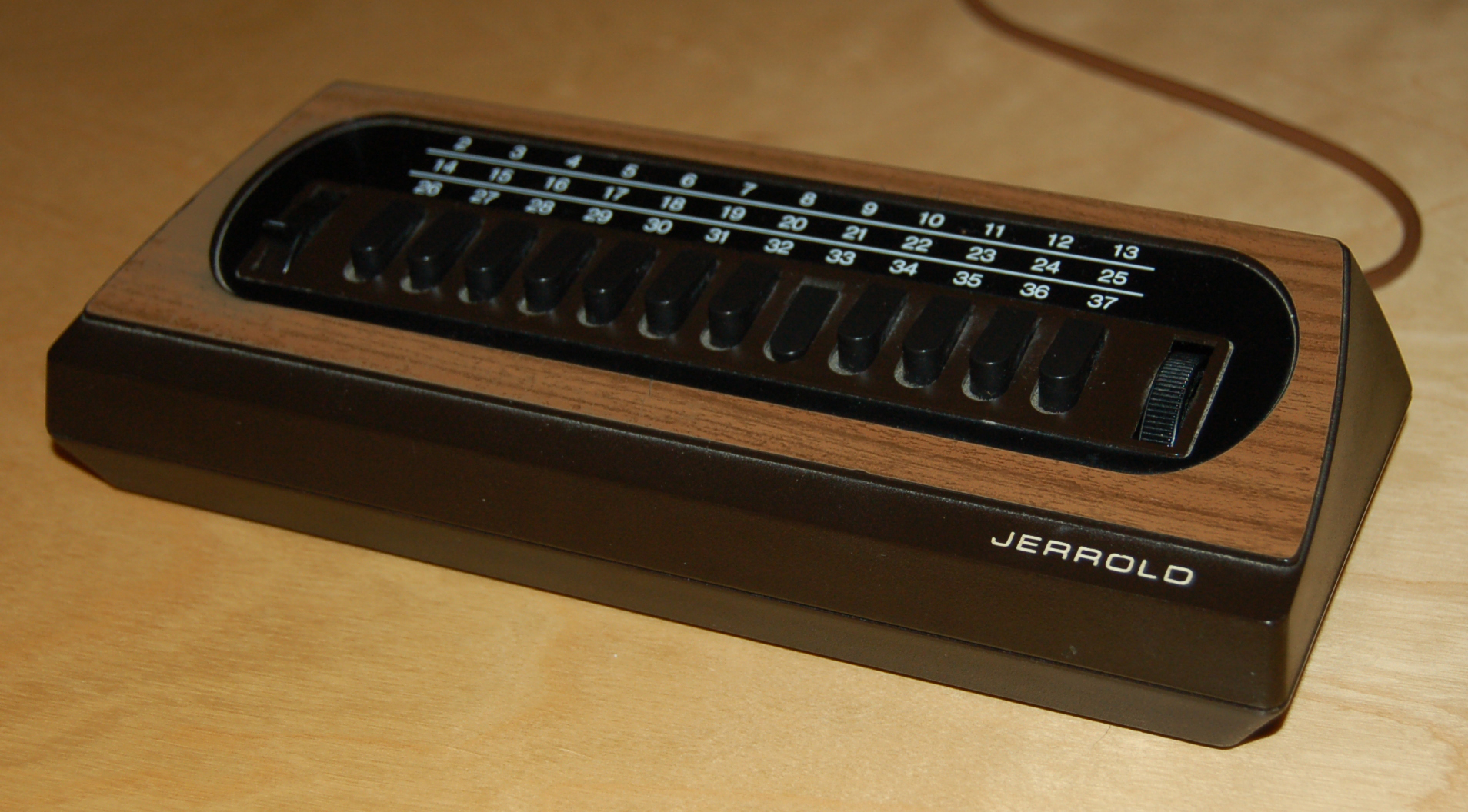
Cable television began as a solution to exactly this problem.
Its early form was a community antenna: one well-sited mast on high ground, feeding signals down a wire to houses in a valley or behind a hill that could not receive anything useful on their own. The households were not buying channels. They were buying somebody else’s antenna.
Through the 1970s it became something else – more channels, then channels that existed only on cable – and the proposition changed from better reception to more television. But the effect on the roof was the same either way. Once a cable came into the house, the antenna had no job, and over about two decades the frames came off American roofs almost completely.
The masts stayed up long after the cables were cut, which is why they were still visible for years, slowly going crooked, attached to houses where nobody had used them since.
The Twist: Aiming Matters More Now, and You Cannot Do It
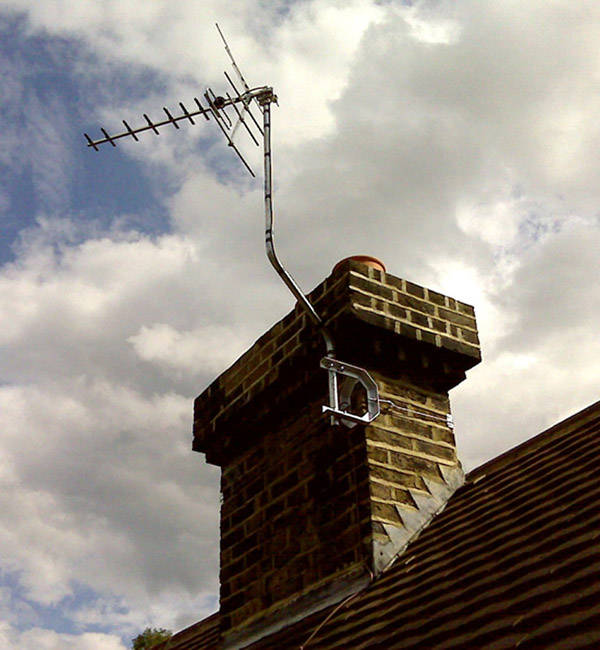
Broadcast television did not disappear. It went digital, and it is free, and antennas are back – sold to people cutting cable subscriptions, who put a flat panel in a window or a loft rather than a frame on a roof.
But the rotator did not come back, and the reason is a genuine reversal.
Digital broadcast does not degrade gradually. The signal carries error correction, which repairs damage invisibly up to a threshold, and then stops being able to. Above that threshold the picture is perfect. Below it, the picture freezes, breaks into blocks, or vanishes entirely. There is no snow, no gradual decline, no middle.
This is usually described as an improvement, and for ordinary viewing it is. But it destroyed the one thing that made aiming an antenna possible: the continuous feedback. You can no longer turn a dial and watch the picture gradually improve, because there is no gradually. You are either over the cliff or under it, and from under it you cannot tell whether you are close.
So aiming became both more important – because the cliff is unforgiving – and much harder to do by eye. The answer was not a better dial. It was signal strength meters built into tuners, and antennas designed to be less directional so that aiming mattered less, and the general assumption that you would move the thing around the room until it worked and then leave it alone.
There Were Two Dials Because There Were Two Kinds of Channel
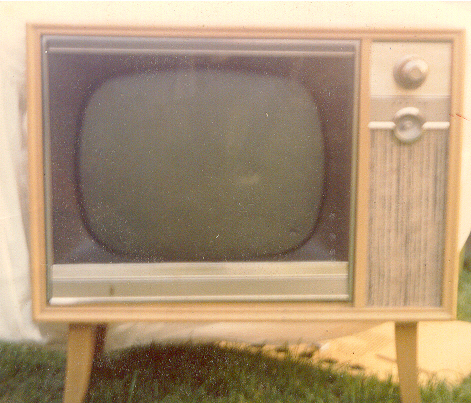
The other thing on the front of the set was a second tuning dial, and it worked nothing like the first.
The low channels sat in one range of frequencies and the high ones in another, much higher range, and the two behaved differently enough that they needed separate treatment. The low-channel dial clicked from one position to the next with a satisfying mechanical detent, and each click was a channel.
The high-channel dial did not click. It turned continuously, like a radio dial, through a long numbered scale, and you had to hunt for a station between the numbers and then creep up on it. The detents were poor or absent, the mechanism drifted, and a knock to the cabinet could lose a station you had spent a minute finding.
The antenna situation was worse. Those higher frequencies are much shorter in wavelength, which means the metal that receives them has to be a different size and shape – a small bowtie or a wire loop rather than the long graduated tubes. So a roof installation that wanted everything carried two different arrays on the same mast, aimed in the same direction whether that suited both or not.
The practical result in a lot of households was that the high channels were simply worse, permanently, and were treated as a lesser class of television. The stations on them knew it. They were the independents, the religious broadcasters, the educational stations and the foreign-language outlets, and a great deal of what they struggled against was not programming or budget but the fact that reaching them required a viewer to turn a vague dial on a badly aimed aerial and then put up with a poorer picture.
What Was Actually Lost
It is tempting to make this a story about a lost skill, and something was genuinely lost, but it is worth being precise about what.
The skill itself was not valuable. Knowing that channel six wanted the dial at north-west was useless information about a specific house in a specific decade, and nobody should mourn the twenty minutes spent shouting between a roof and a window.
What went was the visibility of the mechanism. A household could see, on the screen, the physical relationship between a metal frame on their roof and a transmitter forty miles away. Turn the frame, the picture changes. The connection between the object and the result was direct, observable and understandable by a child.
Every layer added since has worked by hiding that. Cable hid it behind a wire. Digital hid it behind error correction. Streaming hid it behind a network nobody can picture at all. Each step made television more reliable and the explanation of how it reaches you less available to the person watching.
The frame is still on some roofs, grey and crooked and pointing at a transmitter that may well still be broadcasting.
It is pointing the way somebody aimed it, from inside, by watching the snow.
Like our content? Follow us for more.