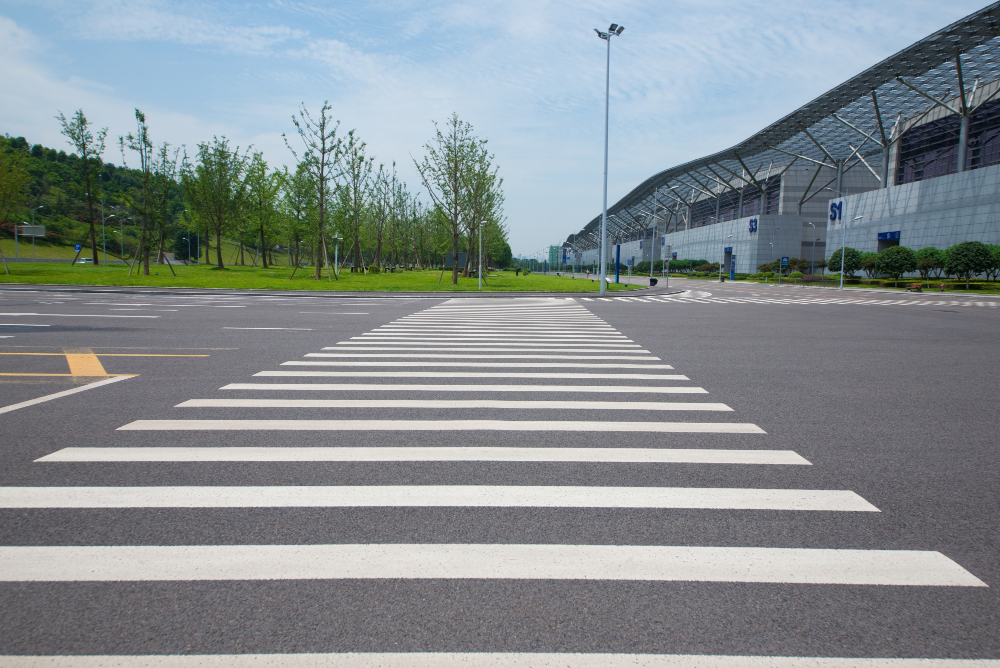
The painted stripes across a pedestrian crossing are so familiar that they look like the obvious solution. They were not the first attempt.
The original crossings were marked by rows of metal studs set into the road surface and a pair of striped poles on the kerb, each topped with a flashing orange globe. The studs were nearly invisible to a driver, particularly at night and in rain, and the crossings were widely ignored – so the carriageway itself was painted, and the stripes turned out to work.
The Problem Was That Nobody Could Agree Who Had Priority
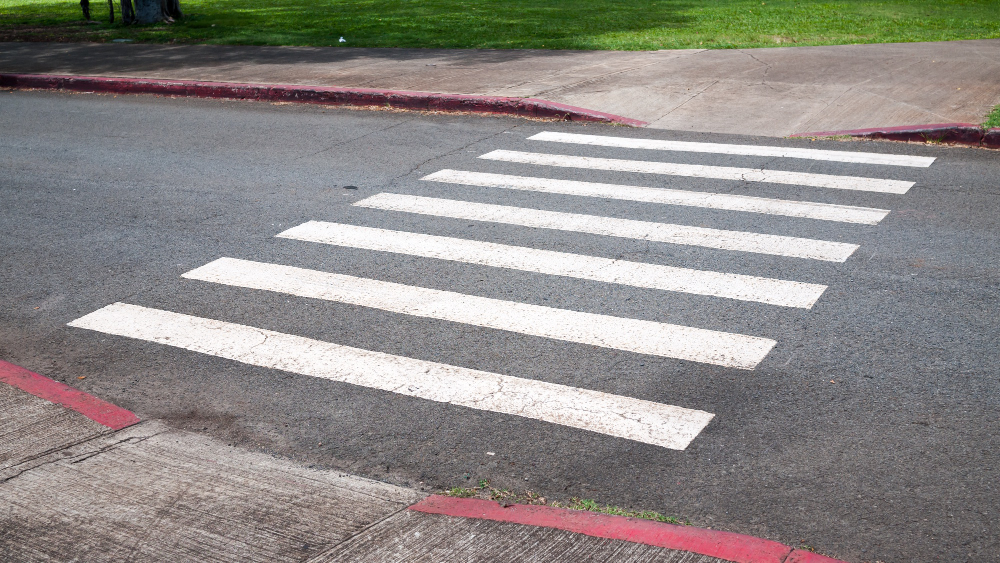
Before marked crossings, a pedestrian crossing a road and a driver approaching had no defined relationship. Both believed they had priority, both were frequently wrong, and the outcome was decided by nerve.
As traffic volumes rose through the 1920s and 1930s, casualty figures rose with them, and the response in several countries was to designate specific places where a pedestrian had the right of way and drivers were required to give it.
Designating the place solved the legal question and created a practical one. A crossing only works if the driver can see it from far enough away to stop, which is a question about visibility rather than about law – and the first generation of markings failed that test completely.
Like our content? Follow us for more.
The Beacon Came First and Was Named After a Minister
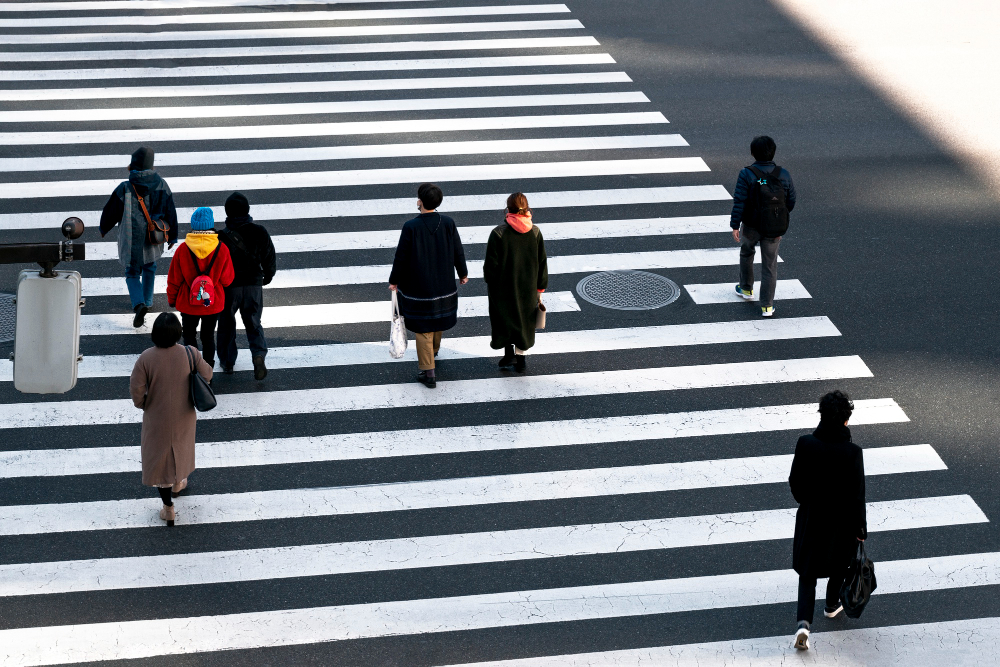
The flashing orange globe on a striped pole is older than the stripes on the road, and in Britain it is named after Leslie Hore-Belisha, the transport minister who introduced it in the 1930s. The belisha beacon is one of very few pieces of street furniture named after the politician responsible.
Its job is to make the crossing visible from a distance and from an angle, at night, without lighting the road. A globe is visible from every direction without being aimed, the flashing draws the eye in peripheral vision, and the orange is a colour that occurs rarely in a street scene.
The striped pole does the daytime work – a vertical black and white pattern against a background of buildings and parked cars is extremely conspicuous, and the same reasoning puts stripes on hazard posts, lighthouses and barriers everywhere.
Then Somebody Painted the Road
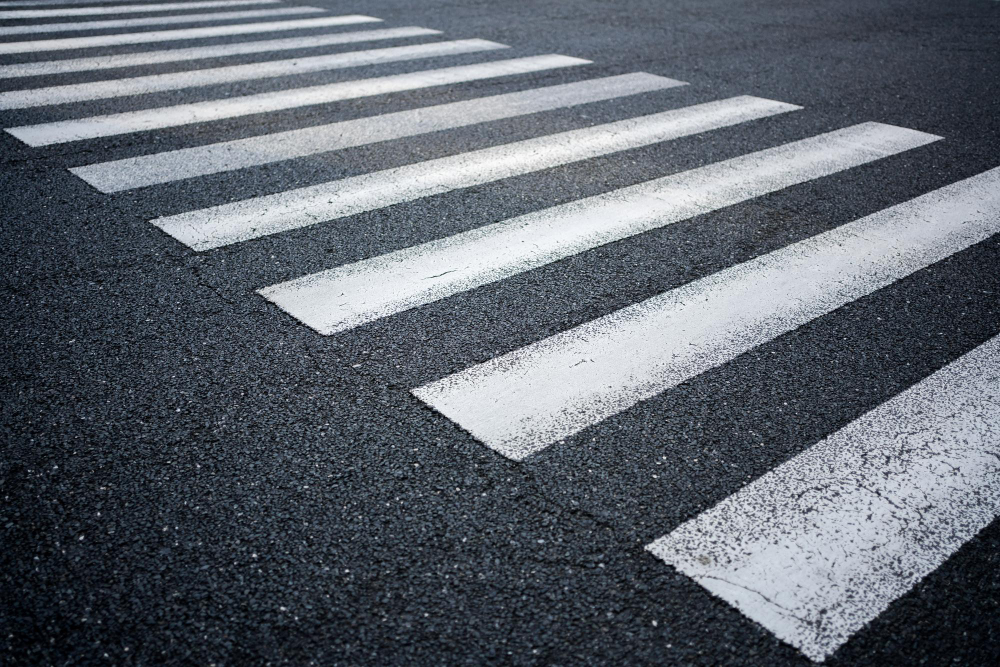
The road markings were trialled after the war and the broad stripes were adopted because they tested better than the alternatives.
Several patterns were tried, including coloured surfacing and different arrangements of lines. The wide alternating bars won for reasons that are worth listing, because they are not obvious.
They are visible from a low angle. A driver sees a road surface at a very shallow angle, which compresses it – thin lines disappear at distance, and broad bars perpendicular to the direction of travel stay distinguishable far longer.
They are visible when wet. A wet road reflects, washing out contrast, and a high-contrast pattern survives that better than a coloured one.
They are visible when partly worn. A faded stripe is still a stripe. A worn coloured surface is just a slightly different colour.
And they read as a pattern rather than as a line. A driver does not have to identify the marking – the rhythm of bars across the carriageway is recognised before anything is consciously read, which is the same mechanism that makes a line of traffic cones work.
The Zigzags Are Doing Something Specific

The zigzag lines on the approach to a crossing in many countries are not decoration and are frequently misunderstood as merely advisory.
They mark a zone where parking and waiting are prohibited, and the reason is sight lines. A vehicle parked next to a crossing hides a pedestrian who is about to step out, particularly a child, and hides the crossing itself from an approaching driver. The length of the zigzag zone is calculated so that a driver at the road’s speed can see both the crossing and anybody waiting at it in time to stop.
Overtaking within the zone is also prohibited in most systems, because the characteristic fatal accident at a crossing is a vehicle stopping for a pedestrian and a second vehicle overtaking it into the crossing – the second driver cannot see why the first has stopped.
Those two rules are not about tidiness. Each one exists because of a specific recurring collision type.
The Crossings Are Named After Animals and Birds for No Good Reason
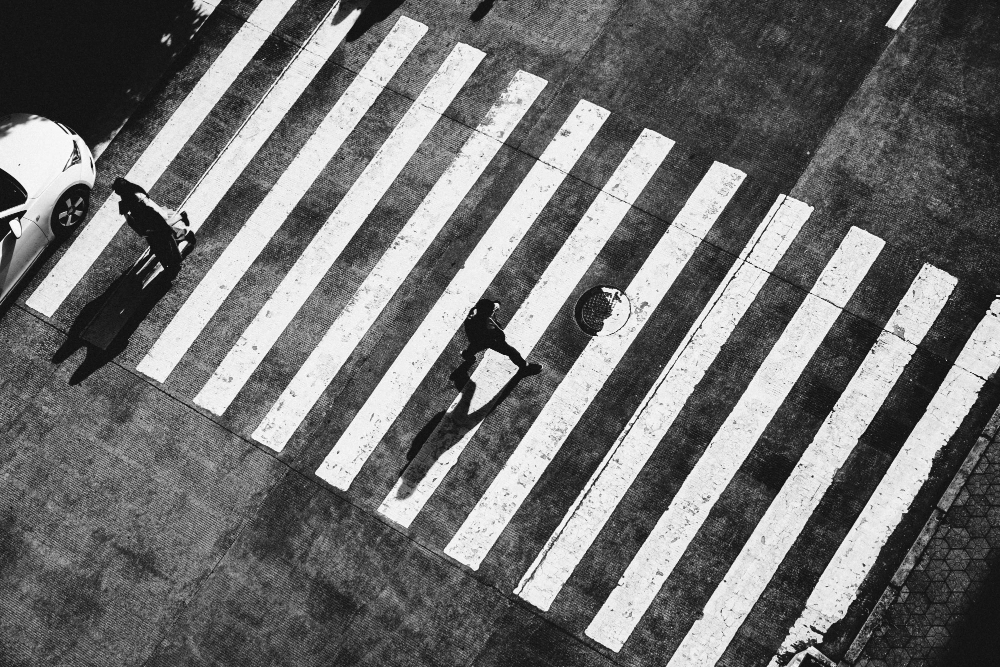
Britain ended up with a menagerie of crossing types, each with an animal name, and the sequence is a small comedy of official naming.
The striped priority crossing was the zebra, which is obvious and was coined informally before being adopted officially. Once that stuck, every subsequent type was named to rhyme or to fit the pattern.
The signal-controlled crossing where the pedestrian presses a button became the pelican, from a strained contraction of pedestrian light controlled. Then came the puffin, from pedestrian user friendly intelligent – a crossing with sensors that detect whether anybody is still waiting or still crossing, and adjust the signal accordingly, so a pedestrian who presses the button and then crosses on a gap does not stop the traffic pointlessly. Then the toucan, which is shared by pedestrians and cyclists, from the fact that two can cross. And the pegasus, which has a second push-button mounted high up for somebody on horseback.
Every one of those acronyms was reverse-engineered to produce an animal, and the puffin in particular required real determination.
The naming is harmless and it does conceal something useful. The puffin is a genuinely better crossing than the pelican, because it holds the green man for somebody who is still crossing slowly and cancels the request from somebody who has already gone – which matters for elderly and disabled pedestrians and for traffic flow at the same time, and is the sort of improvement nobody notices because it works by not doing anything visible.
Not Every Country Gives the Pedestrian Priority
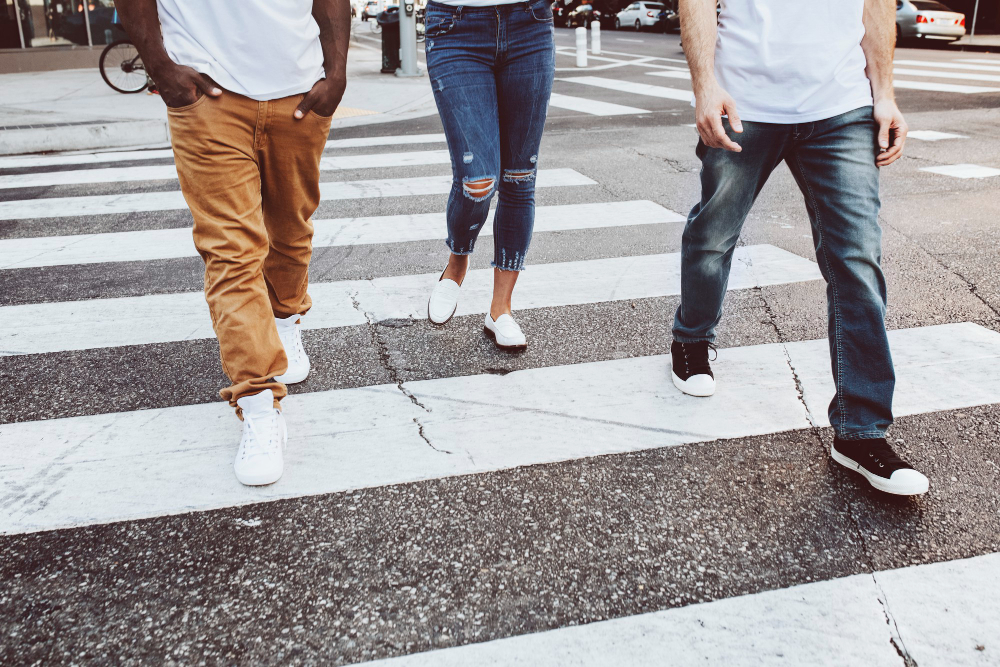
This is the thing that catches travellers, and getting it wrong is dangerous in both directions.
In some countries a marked crossing without signals gives the pedestrian absolute priority once they have stepped onto it, and a driver is required to stop. In others the markings indicate where to cross without conferring priority at all, and a pedestrian who steps out expecting traffic to stop is making an assumption the law does not support.
There are also places where the law gives priority and the practice does not, which is the most dangerous combination because the written rule encourages a confidence local behaviour does not justify.
The only safe approach in an unfamiliar country is to watch what local pedestrians do before copying it, and to make eye contact with a driver rather than relying on a painted line. Anybody who has crossed a road in several countries already knows that a crossing means different things in each.
Signals, Islands and the Rest of the Family
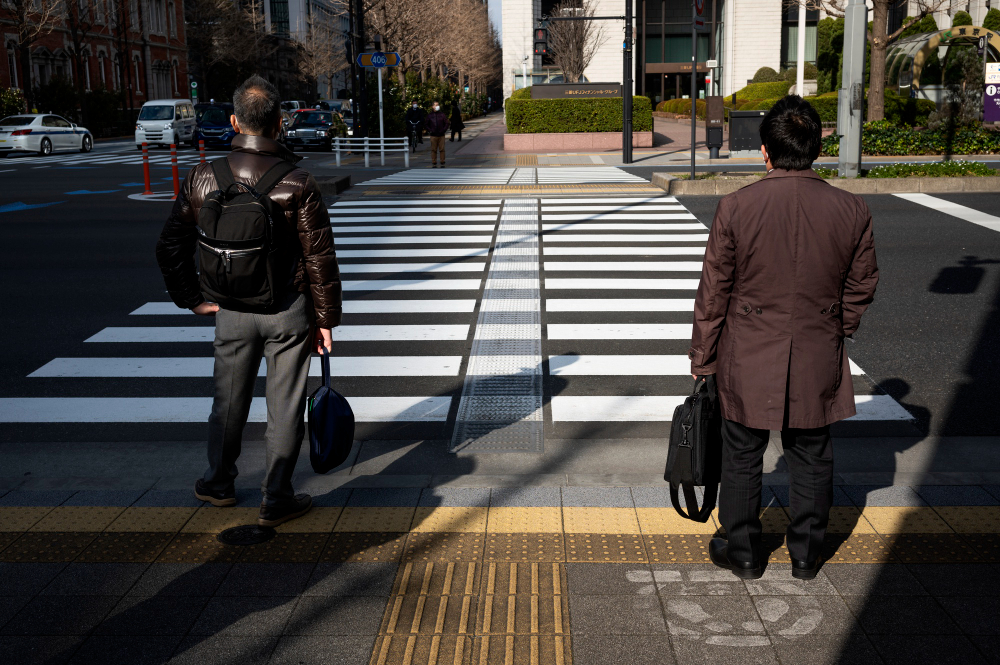
The unsignalled striped crossing is one member of a group, and each variant exists for a different traffic situation.
Signal-controlled crossings give the pedestrian a protected interval at the cost of making them wait, and are used where traffic volumes are high enough that a priority crossing would hold the road up continuously.
Crossings with a central island split a wide road into two separate crossings, so a pedestrian only has to judge one direction of traffic at a time – which is a substantial safety improvement on multi-lane roads and is why islands are added to existing crossings.
Raised crossings put the carriageway at pavement level, which slows vehicles physically and removes the kerb for wheelchairs and pushchairs.
Tactile paving at the kerb, with a defined profile, tells a blind or partially sighted person that they are at a crossing point rather than at an ordinary kerb, and a rotating cone under the push-button on signalled crossings turns when the signal is in the pedestrian’s favour, for people who cannot see the light. That cone is one of the least-known pieces of accessible design in the street and is present on an enormous number of crossings.
The Pattern Is the Point
What the striped crossing demonstrates is a principle that runs through the whole of road design and is almost never stated.
A marking does not have to be read to work. The studs failed because they required a driver to notice and interpret a subtle feature of the road surface. The stripes succeeded because they produce a pattern that is recognised pre-consciously, at distance, at a shallow angle, in rain, half worn, by somebody who is not looking for it.
That is the same reason a stop sign is an octagon, an exit sign is a running figure, and a line of cones is spaced at a regular interval. In each case the designer has given up on the driver paying attention and built something that works on somebody who is not.
Which is a slightly bleak view of human attention and an extremely effective basis for designing anything that has to work at forty miles an hour.
Like our content? Follow us for more.