It Was Enormous and It Lived in the Ceiling
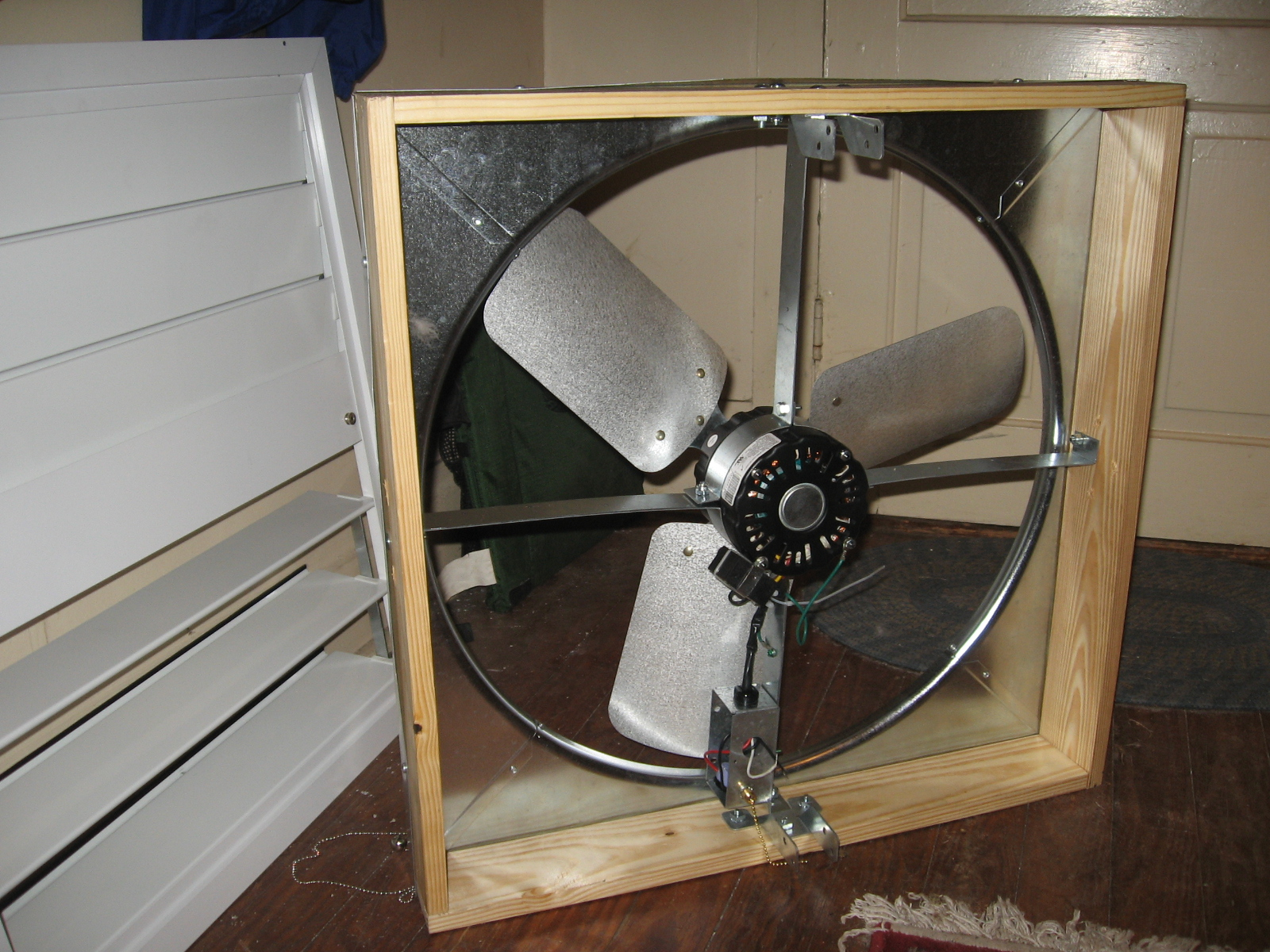
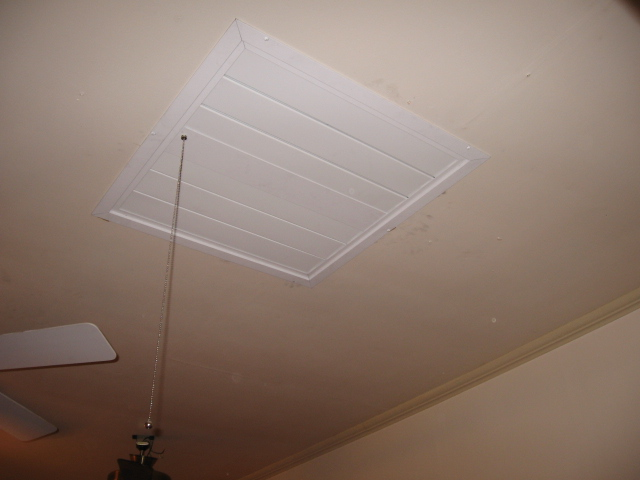
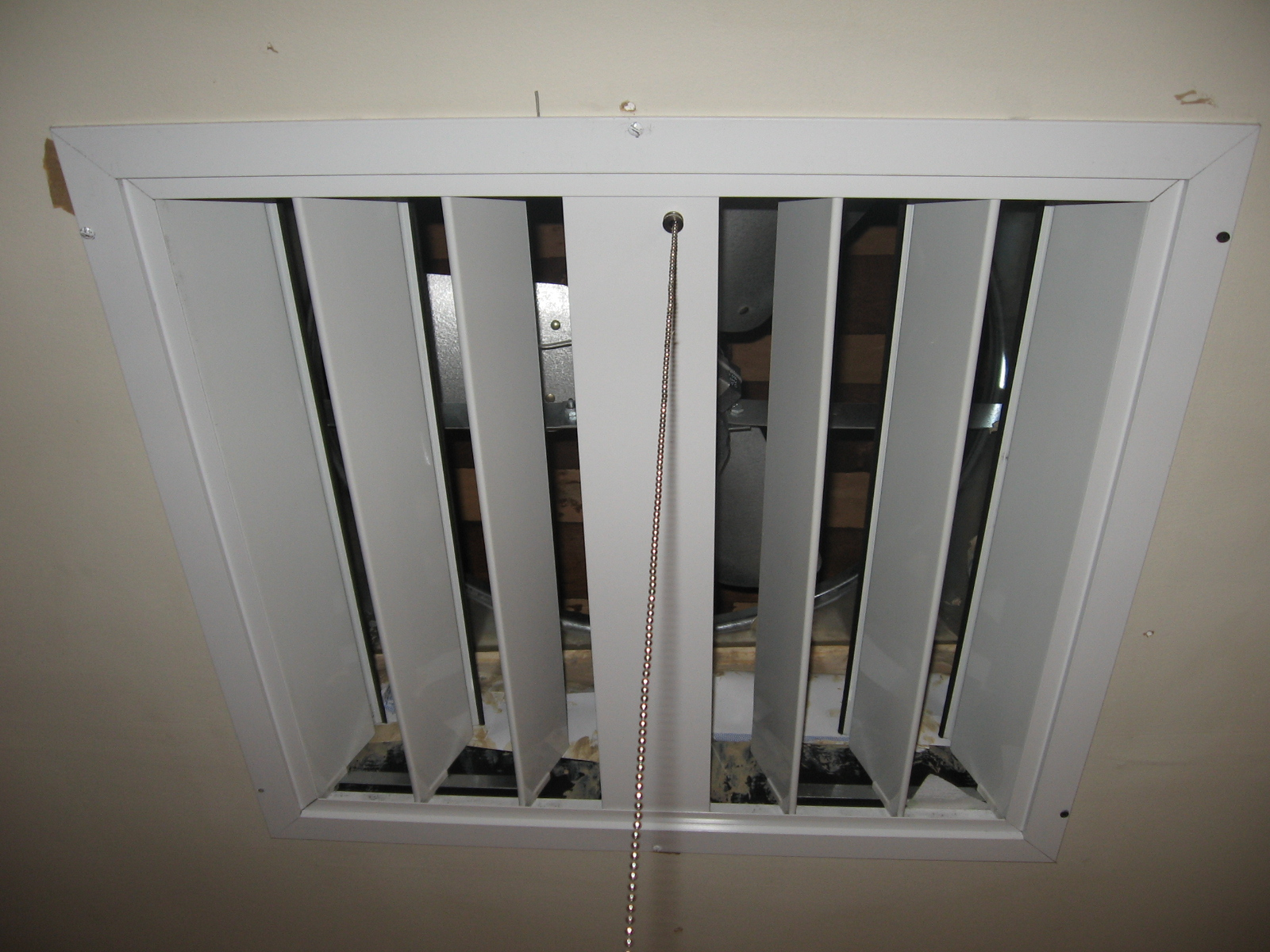
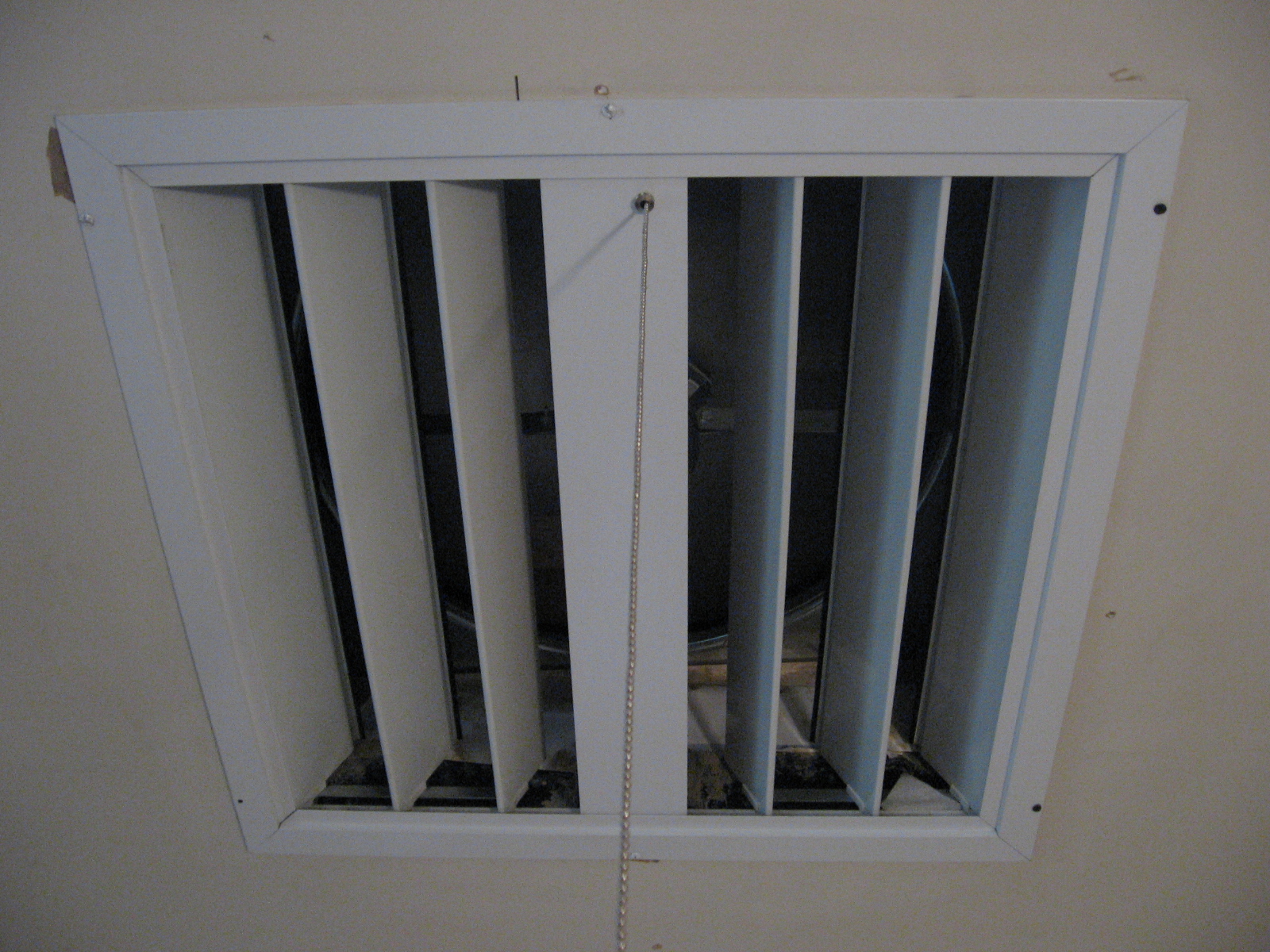
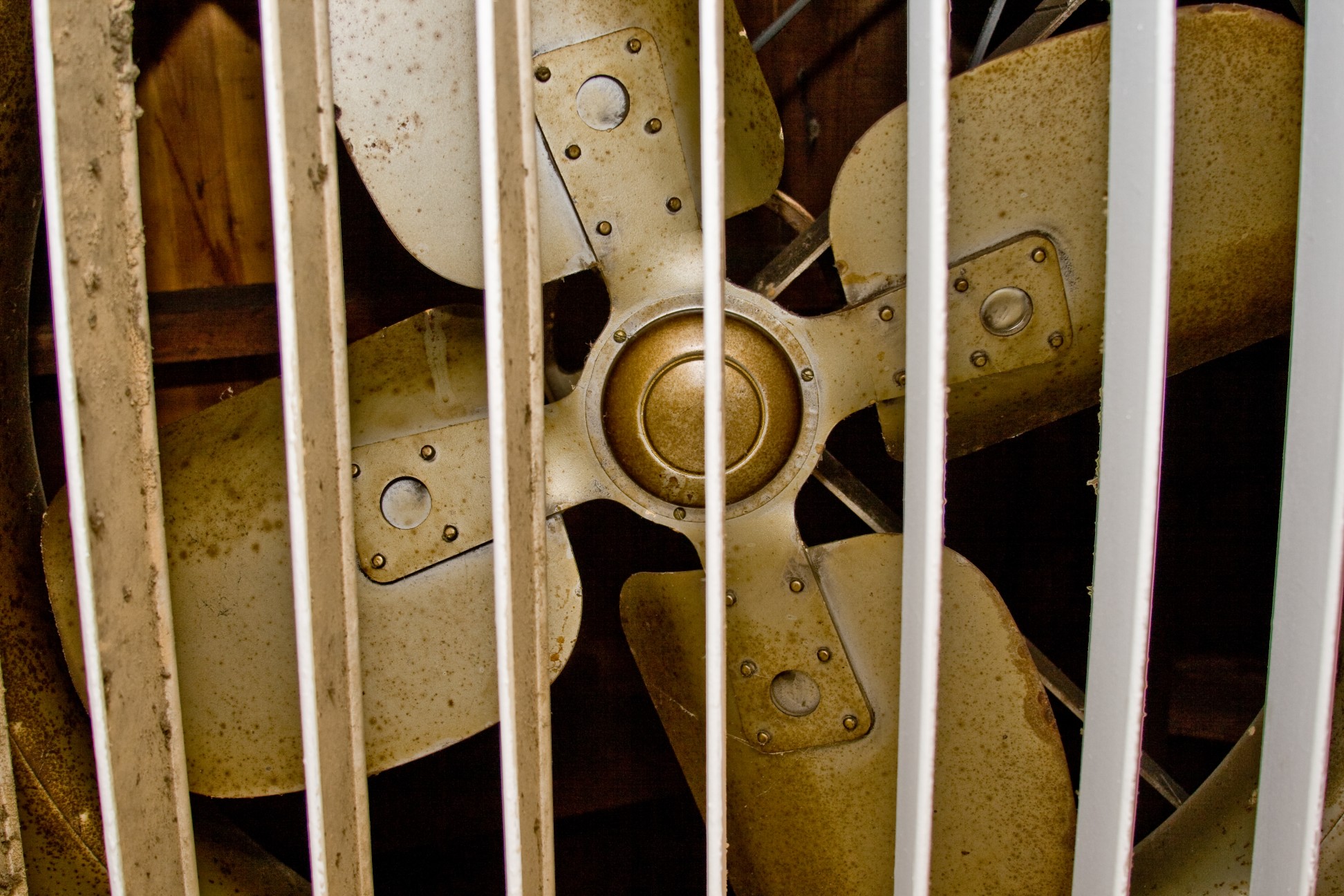
The fan was a propeller two to four feet across, mounted in the ceiling of the upstairs hallway or landing, discharging into the attic, behind a hinged or louvred grille that opened when it ran.
It was switched by a pull chain, a wall switch or in better installations a timer, and it had two or three speeds. On high it was extremely loud – a deep roar you could hear from outside the house – and it moved a quantity of air that a modern room fan does not approach.
The installation was a joist-mounted frame, a shutter and a motor, fitted when the house was built or retrofitted by cutting a hole in a ceiling. It needed attic ventilation to work, which meant gable vents, a ridge vent or a powered attic fan to let the air out again.
And everybody who grew up with one remembers the sound, because it was the sound of the house in summer.
Like our content? Follow us for more.
It Worked by Replacing All the Air in the House, Not by Cooling It
The distinction matters and explains the whole routine around it.
An air conditioner removes heat from air and returns the same air colder. A whole-house fan does not cool anything – it extracts air from inside the house and throws it into the attic, which pulls outside air in through every open window to replace it.
So it only helps when the outside air is cooler than the inside air. Run it at two in the afternoon in August and it will fill the house with hot air at high speed. Run it at nine in the evening and it will flush a day’s accumulated heat out of the building in twenty minutes and replace it with cool night air.
That is why the fan was not a thing you simply switched on. It was a thing you used at specific times, in a specific sequence, and the household knowledge about when was the entire operating skill.
The Routine Was the Same in Every House That Had One

The sequence was taught to children and followed without discussion.
In the evening, once the outside temperature had dropped below the inside temperature, the downstairs windows were opened, the fan went on, and the house was flushed. It ran through the night with upstairs windows open, drawing cool air across the bedrooms.
Early in the morning, before the sun was on the house, the fan went off and every window was closed – along with the curtains, blinds and shades on the sunny side. The house was then sealed for the day, holding the night’s cool inside, with the mass of the building doing the work.
In the late afternoon, when the inside temperature had crept up and the outside was starting to fall, the cycle began again.
That is a thermal strategy rather than an appliance, and it required somebody in the house to be paying attention to the weather, the clock and the orientation of the building – every day, all summer.
Which Windows You Opened Determined Where the Cool Air Went

Because the fan pulls through whatever is open, the choice of windows was the control.
Open only the windows in the bedrooms and the airflow went through the bedrooms. Open the whole downstairs and the cool air spread through the living space. Open one window and the air came through it at considerable speed, which was the trick for getting a draught across a specific bed.
Closing the door of a room with the window shut cut it out of the system completely, which is how a household managed a room that was being used for something else.
So a family operating one of these fans was continuously directing airflow around a building by opening and shutting things, and the people who were good at it could cool the room they were sitting in rather than the whole house.
It is a genuinely sophisticated piece of domestic practice conducted with no instruments and no controls beyond a sash window.
Everybody Slept Somewhere Else in August
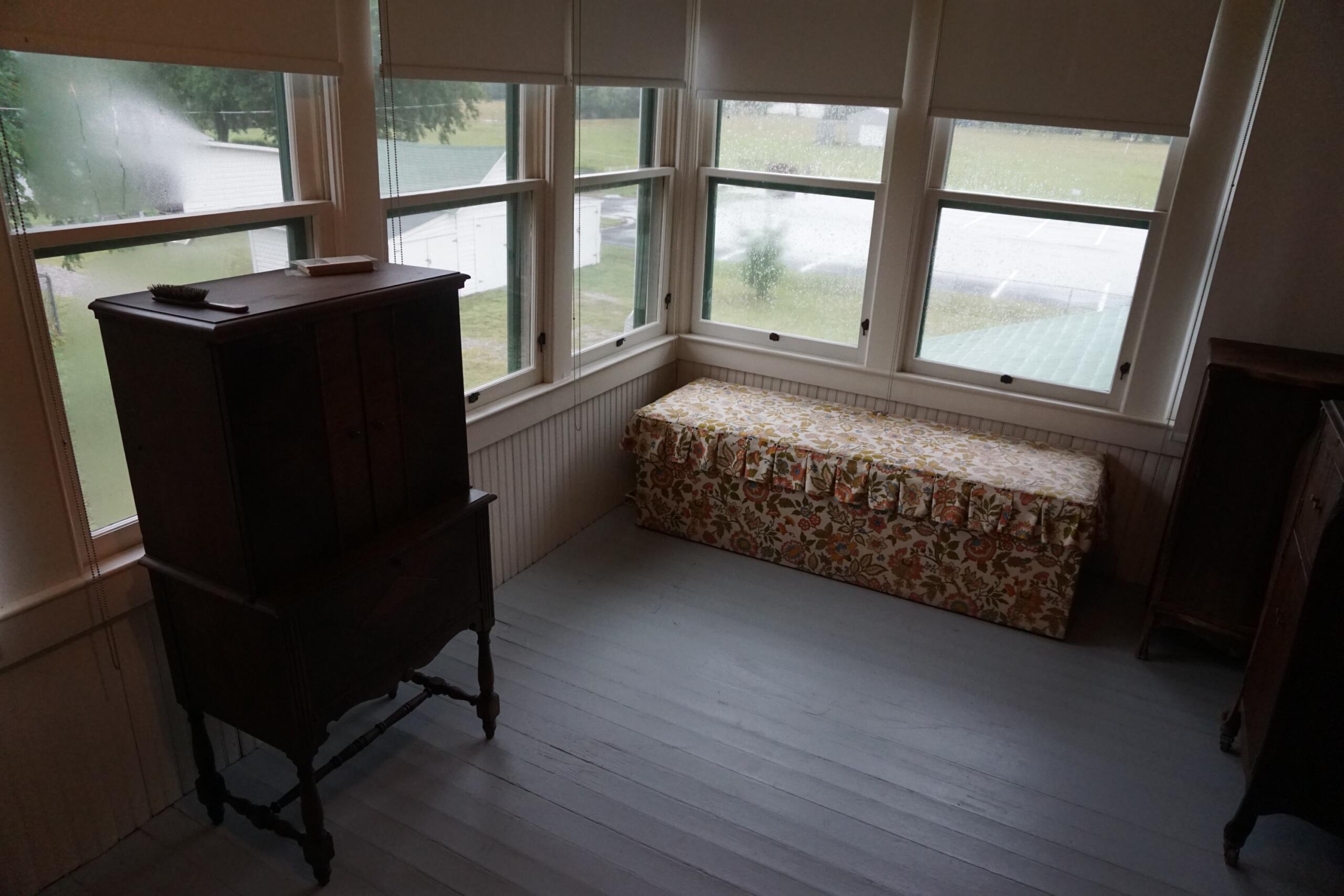
The fan was the main tool but it was not the only one, and households rearranged themselves around the heat.
Children slept on the floor downstairs where it was cooler, on a porch, in a basement, or outside on a hot night. Mattresses were moved onto landings directly under the fan, which is the coolest moving air in the house. Damp sheets, a bowl of ice in front of a fan and wet towels on windowsills all appear in accounts from the period.
Daytime life moved too. The basement was the refuge in the afternoon, the kitchen was avoided, cooking moved outdoors or stopped, and anything requiring an oven was done early or not at all.
That is the part that is genuinely gone. Air conditioning did not merely make houses cooler; it removed an entire seasonal reorganisation of domestic life that every household in a hot climate performed annually, and that children experienced as a different way of living for two months a year.
The Attic Was the Other Half of the System and Nobody Thinks About It
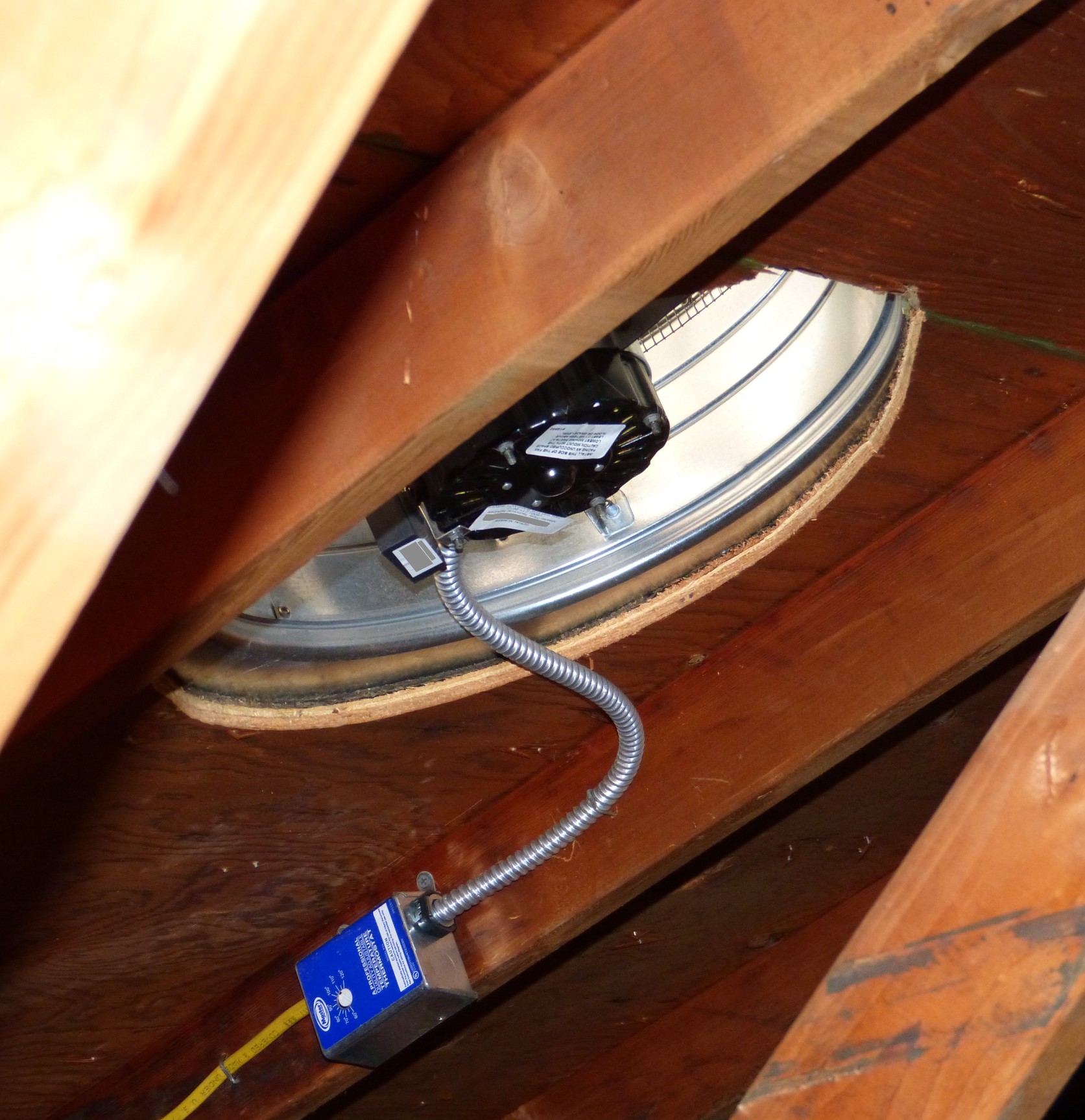
The fan discharges upward, which means everything depends on the attic being able to get rid of what it is given.
An attic in August is the hottest part of a building – sun on the roof, no ventilation to speak of in a lot of older houses, and temperatures well above the outside air. Push a houseful of air into a space like that with nowhere for it to go and the fan stalls against its own backpressure, the shutter chatters, and very little actually moves.
So the installations that worked had an exhaust path sized to match: gable vents at both ends for cross-flow, a continuous ridge vent, soffit vents feeding it, or a separate powered attic fan thermostatically controlled to run through the day.
That attic fan is a different machine doing a different job and the two are regularly confused. A powered attic fan ventilates the roof space to reduce the heat soaking down into the ceilings below. A whole-house fan ventilates the living space. A house could have both, and the ones that did were noticeably more comfortable than the ones that had only the ceiling unit.
Which is the general lesson about ventilation and it applies to every building: an extract with no inlet, and an inlet with no outlet, both achieve nothing. The air has to have somewhere to come from and somewhere to go, and most of the complaints about these fans not working are complaints about an attic rather than about a fan.
It Used Almost No Electricity and That Is Why It Is Coming Back
The comparison is substantial and well established: a whole-house fan consumes a fraction of the power of central air conditioning doing a comparable job of making a house feel bearable overnight.
The reason is that it is not refrigerating anything. Moving air is cheap; removing heat from air is expensive. A fan motor drawing a few hundred watts replaces air throughout an entire house; a compressor doing the same perceived work draws several kilowatts.
So the fans are being installed again, with better engineering: insulated and sealed shutters that close properly in winter, quieter and more efficient motors, and controls that operate them automatically against inside and outside temperature sensors – which removes the one genuine weakness, namely that the old ones depended entirely on somebody remembering.
They are sold now as a supplement to air conditioning rather than a replacement, used in the evening and overnight to reduce run time on the compressor, which is precisely the role they always played in households that had both.
The Old Ones Had Two Real Problems and One Was a Hole in the Ceiling
Two things genuinely wrong with the original installations are worth noting.
The first is winter. An uninsulated, unsealed shutter in a ceiling is a large hole between the heated house and a cold attic, and a great many of them leaked heat all winter. Households stuffed them with fibreglass batts, taped plastic over the grille or built an insulated box to sit over the opening in the attic – which worked and was a nuisance.
The second is that the fan pulls air from wherever it can get it. In a house with a fuel-burning appliance, a fan creating negative pressure indoors can in principle draw combustion products back down a flue instead of letting them go up it, which is a hazard that properly designed modern installations and interlocks address explicitly.
That is not a reason to be frightened of a ceiling fan; it is the reason these systems are now installed to a standard rather than cut into a ceiling by a householder. Anybody with an old one still in place and a gas or oil appliance in the house should have the combination looked at by somebody qualified rather than reasoning about it from a magazine article.
What Went With It Was Knowing How Your Own House Behaved
The fan required its operator to understand their building.
Which side the sun was on in the afternoon. Which rooms held heat. How long it took the brick to cool. When the outside temperature crossed the inside temperature. Which windows to open to get air across a particular bed. How much of the day the house could coast on last night’s cool before it gave up.
None of that is needed when a thermostat holds a number. You set a temperature and the equipment deals with the building, and the building becomes something you occupy rather than something you operate.
That is an enormous gain in comfort and a straightforward loss in competence, and it is the same trade that appears with the fuse box, the storm window and most of the rest of mid-century domestic maintenance.
The difference with the fan is that the knowledge is becoming useful again. Anybody now trying to run a house on less energy ends up rediscovering, from first principles, the thing a 1972 household did every evening without calling it anything: flush the heat out at night, shut the place up in the morning, and let the building do the work.
Like our content? Follow us for more.