

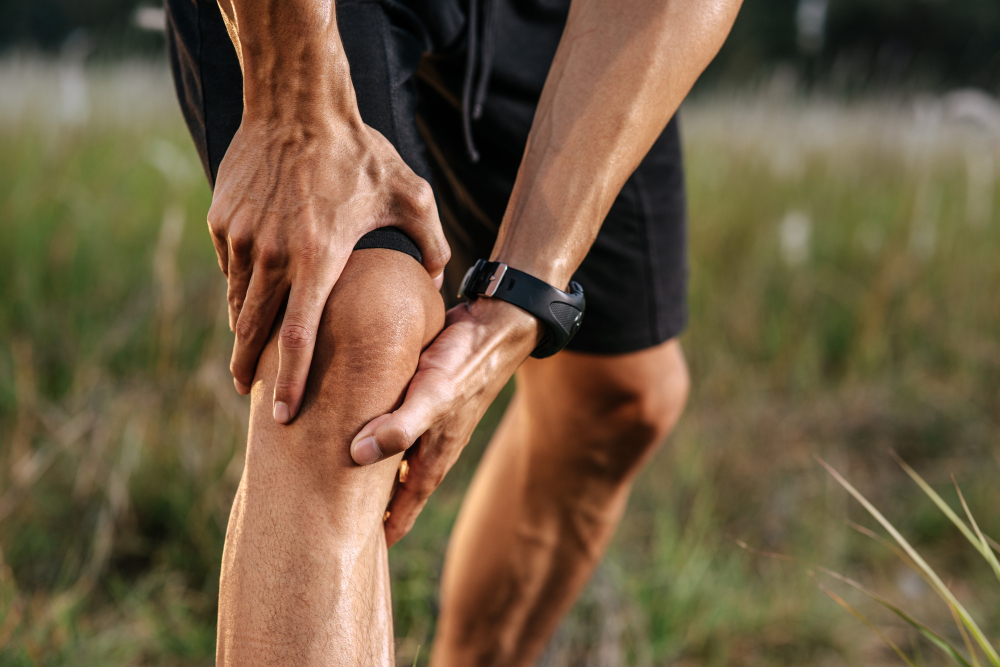
Almost every bone in the body is connected to other bones. It meets them at joints, it is held by ligaments running bone to bone, and its position is fixed by that framework.
The kneecap is not like that. It is a sesamoid bone, which means a bone that forms inside a tendon, and the tendon is what holds it. The great tendon coming down from the thigh muscles runs through it – not past it, through it – and continues below it to attach to the shin. The kneecap is a solid lump embedded in the middle of that strap.
It does bear against the thigh bone, resting in a shallow groove on the front of it and sliding up and down as the knee bends and straightens. But it is not jointed to the thigh bone in the sense of being held there. If you cut the tendon above and below, the kneecap would come away in your hand. Nothing else is holding it.
This is why you can move your own, and why it is worth doing once: with the leg straight and the muscle relaxed it will slide an inch or so in each direction under a fingertip. Tighten the thigh and it locks immediately, because the thing that holds it is the muscle, and the muscle has just pulled it taut.
Like our content? Follow us for more.
Which Is Why the Same Strap Has Two Different Names
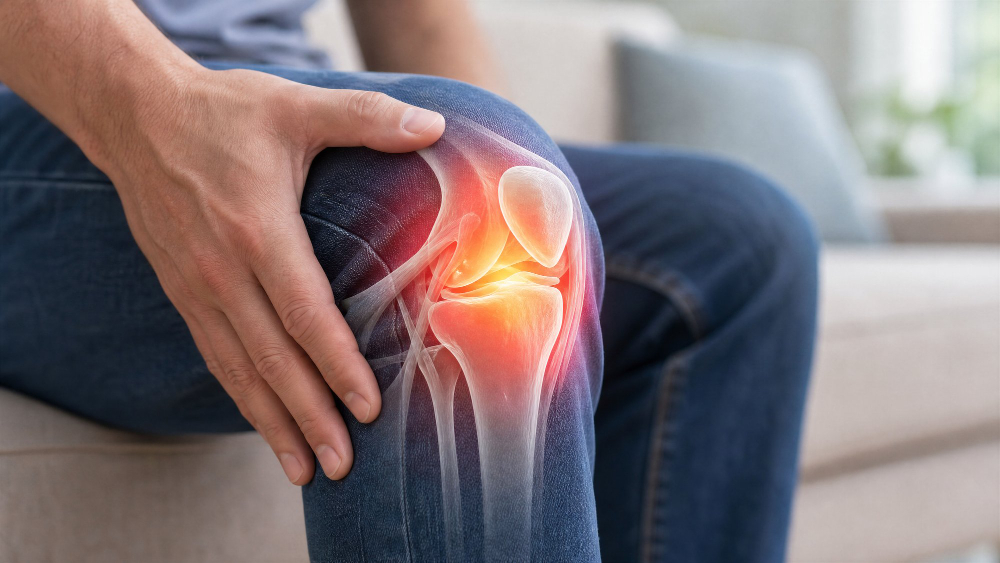
There is a small piece of anatomical nomenclature here that gives the game away, and it confuses people for years.
The tissue above the kneecap is called a tendon, because it connects muscle to bone. The tissue below the kneecap – running from the bottom of the kneecap to the top of the shin – is called a ligament, because it connects bone to bone.
But these are not two structures. It is one continuous band of the same material, running from the thigh muscle to the shin, which happens to have a bone sitting in the middle of it. The name changes halfway down purely because the definitions are about what is at each end, and the arrival of the kneecap changes what is at the end.
It is a reminder that anatomical categories were written to describe what was found rather than to explain it, and that a structure can fall into two categories at once simply by being long enough.
What It Is Actually For

The protective story is intuitive and almost everybody has it. The kneecap is the most exposed bone on the front of the body, it is hard, it sits over a joint, and it takes the impact when you fall. It must be armour.
It does take that impact, and it does spread it. But that is a side effect of where it is, not the reason it exists, and the actual function is purely mechanical leverage.
Think about what the thigh muscle has to do to straighten the knee. It pulls on a strap that crosses the front of the joint. If that strap lay flat against the bones, its line of pull would pass very close to the point the joint rotates about, and a force pulling close to a pivot produces very little turning effect. This is the same reason a door handle is at the edge of the door and not next to the hinge.
The kneecap solves that by being thick. It holds the strap away from the joint, pushing the line of pull forward, which increases the distance between the pull and the pivot. The same muscle, contracting with the same force, now produces considerably more turning effect at the knee. It is a spacer whose entire purpose is to move a cable off a pivot, which is to say it is functioning as a pulley.
Which Is Why Removing One Does Not Stop Anybody Walking

The test of the pulley explanation rather than the shield explanation is what happens when there is no kneecap, and this is known, because the bone used to be removed surgically more often than it is now.
People without a kneecap walk. They walk well. They are not noticeably impaired on the level, they are not at some dramatic risk of the joint falling apart, and nothing underneath has been left unprotected in a way that matters day to day.
What they lose is strength in straightening the leg, by a substantial margin – the kind of margin that shows up most on stairs, on hills, and getting out of a low chair, which are exactly the tasks that demand the most from a straightening knee. That is precisely the deficit the leverage explanation predicts, and it is not the deficit the armour explanation predicts. Lose a shield and you expect vulnerability. Lose a pulley and you expect weakness.
The bone is not essential. It is an amplifier, and the body works without the amplifier at a measurable cost in force.
It Carries More Load Than Almost Anything Else in the Body
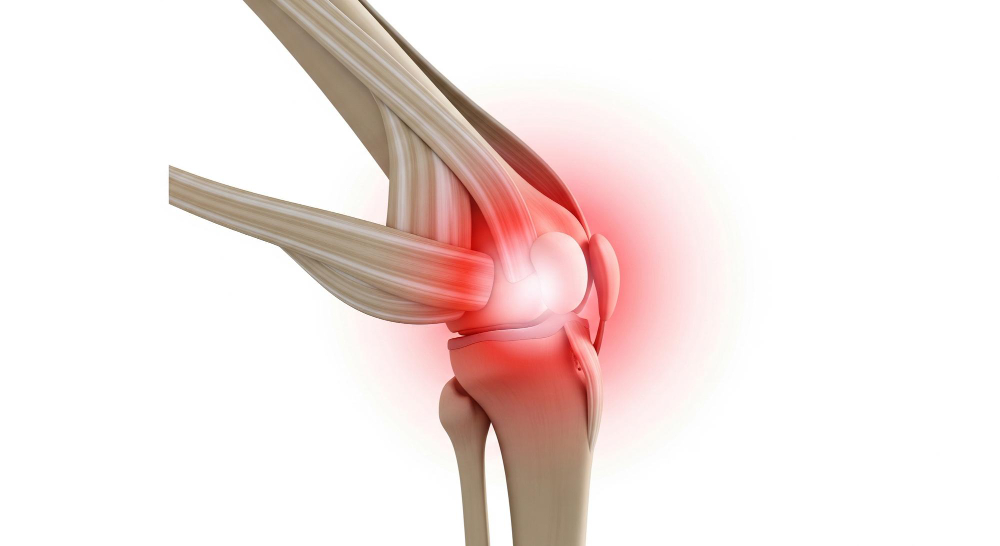
Being a pulley has a price, and the kneecap pays it. A pulley is squeezed by the cable running over it, and the harder the cable pulls, the harder the pulley is pressed against whatever it bears on.
Walking on the flat, the force pressing the kneecap against the thigh bone is already around half body weight. Going up and down stairs it rises to several times body weight. In a deep squat, with the knee fully bent and the muscle working hard, the figures climb higher still, to multiples that are hard to believe for a joint nobody thinks about.
The reason the numbers get so large is the geometry. As the knee bends, the angle between the pull from above and the pull from below becomes sharper, and a cable bent more sharply around a pulley presses on it harder. So the load is not constant through the movement – it is low with the leg straight and climbs steeply as the knee flexes, which is why the deepest part of a movement is where the most is being asked.
This is also why the back of the kneecap is one of the commonest sites of discomfort in the whole body, particularly in people who are very active and in people who have recently become more active than they were. It is the most heavily loaded sliding surface in the leg.
So It Has the Thickest Cartilage Anywhere in the Body
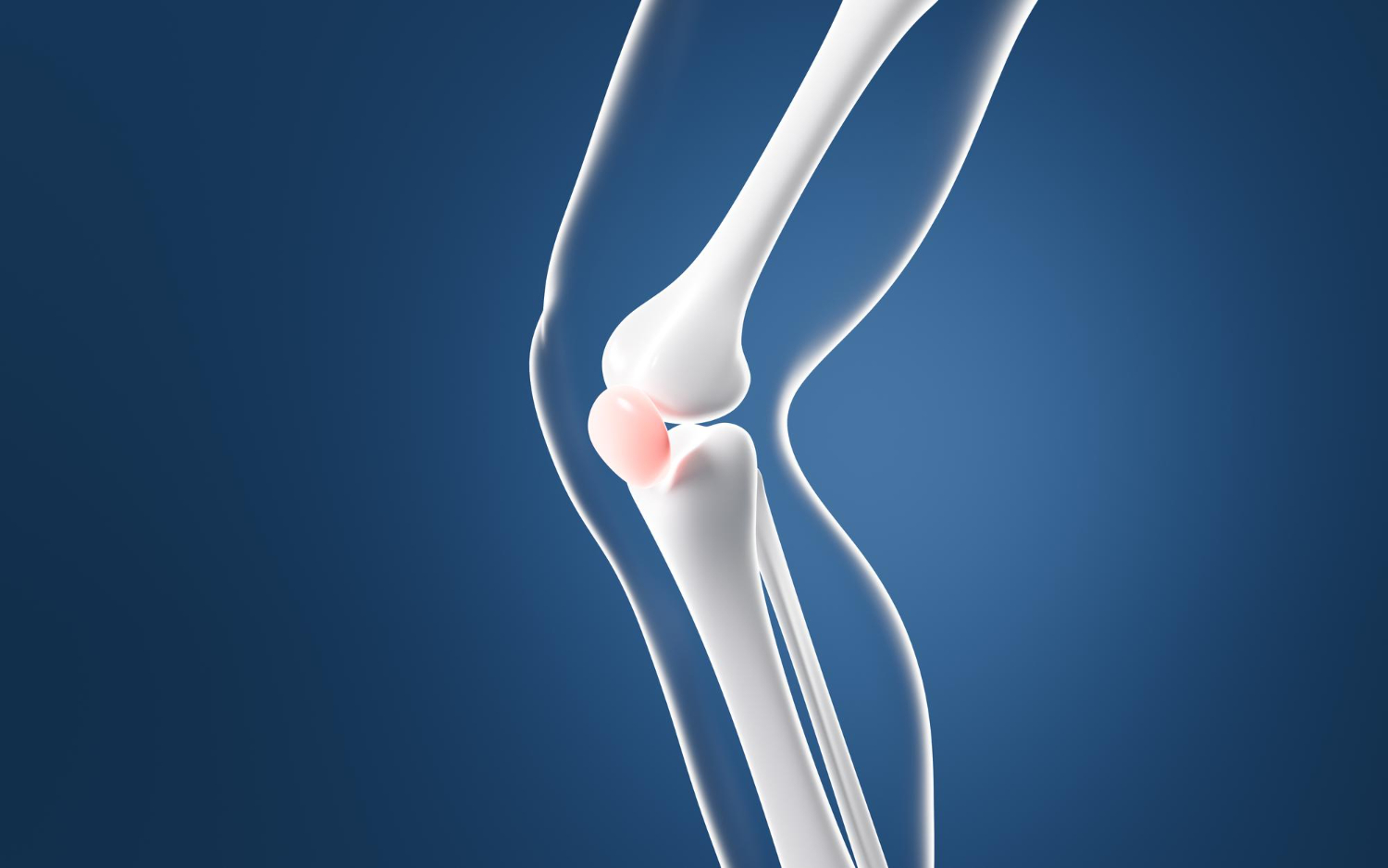
The body’s response to that loading is visible in the tissue. The layer of cartilage on the back of the kneecap, where it bears against the thigh bone, is the thickest layer of joint cartilage in the human body – noticeably thicker than the cartilage in the hip or in the main part of the knee joint itself.
Cartilage thickness is not arbitrary. It tracks load, because the layer is doing two jobs: spreading pressure over a wider area so no point is crushed, and providing a surface slippery enough that the sliding costs almost nothing. The higher the pressure, the more material is needed to do both.
So the kneecap carries a kind of signature of its own function. You could work out that something unusual was happening at that surface purely from the thickness of the lining, without knowing anything about what the bone was for.
The groove it runs in is part of the same system. It is shaped, with a raised lip on the outer side, and the kneecap is correspondingly shaped to sit in it. That pairing is what keeps the bone tracking straight through its travel, and the travel is longer than most people would guess – the kneecap moves several centimetres from a fully straight leg to a fully bent one, which is a long way for a bone to go while remaining, technically, in the same place.
It Arrives Late, and Sometimes in Two Pieces
Two further oddities follow from its being a bone that forms inside a tendon rather than as part of the original skeletal plan.
The first is that it is not there at birth, at least not as bone. A newborn has a kneecap made of cartilage, which hardens into bone over the first few years of childhood. This has a practical consequence that surprises people: a very young child’s kneecap does not show on an X-ray, because X-rays record dense mineral and there is not yet any there. The bone appears on film some years after the child was born, which looks alarming if you do not know to expect it.
The second is that the hardening does not always finish as a single piece. In a small proportion of people – a couple in every hundred – the kneecap sets as two or occasionally three separate fragments joined by cartilage rather than one bone. It usually causes no trouble whatsoever, and the great majority of people who have one never find out.
When they do find out, it is often because the fragments have been mistaken for a fracture on an X-ray taken after an unrelated knock. The giveaway is that a divided kneecap has smooth, rounded edges where the pieces meet, and a broken one has sharp irregular ones – and, frequently, that the same pattern is sitting there on the other leg as well.
A Spacer That Bought Leverage
Taken together it is a strange item. A bone that is not jointed to the skeleton, held in place by a muscle, interrupting a single strap so thoroughly that the halves get different names. A function that is not the obvious one, confirmed by what is lost when it is taken away. Loads that run to several times body weight because being a pulley means being squeezed. The thickest cartilage in the body as a direct consequence. And an arrival several years after birth, occasionally in more than one piece.
The next time you are sitting with your leg out straight, push it around with a finger. Almost nothing else in your skeleton will let you do that.
Like our content? Follow us for more.
