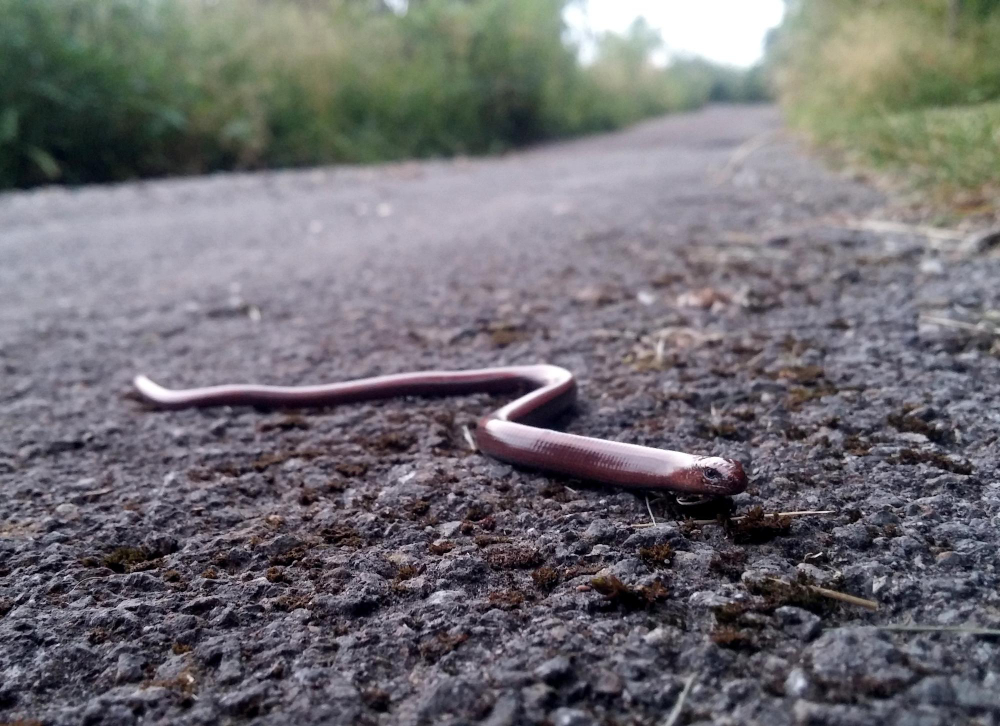
Not a worm, not a snake, but a lizard that gave up its legs. Here are eleven.
1. It Is a Lizard That Gave Up Its Legs
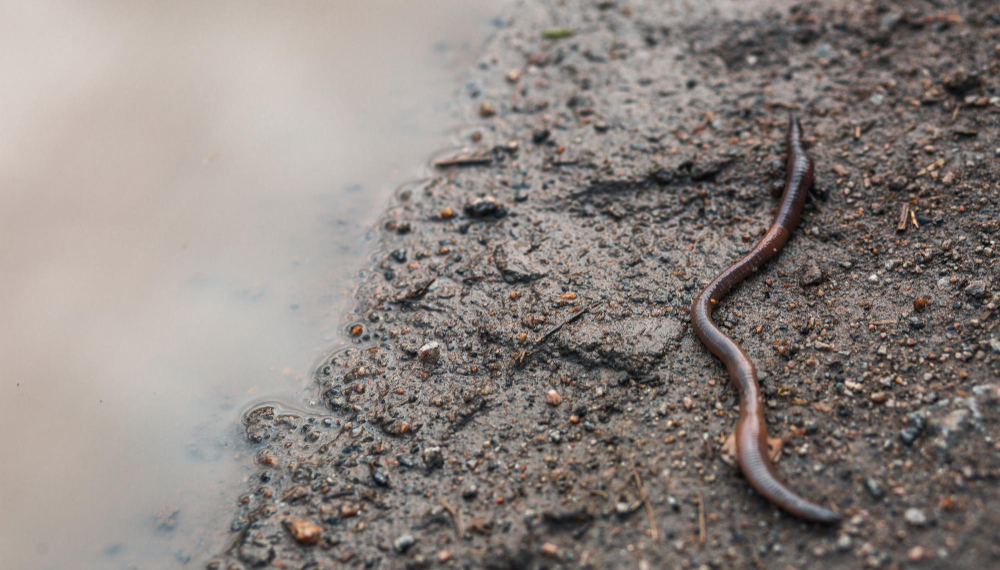
Both halves of the name are wrong. It is not a worm, which is obvious once you look at it, and it is not a snake, which is less obvious and is what almost everybody assumes.
It belongs to a family of lizards, and legs have been lost within that group independently of the way snakes lost theirs. Which makes it a case of two separate lineages arriving at the same shape for the same reason – a long body is efficient for moving through dense cover, loose soil and leaf litter, and legs are no help at all in any of those places. The resemblance to a snake is convergence rather than relationship.
Like our content? Follow us for more.
2. You Can Settle It by Watching It Blink
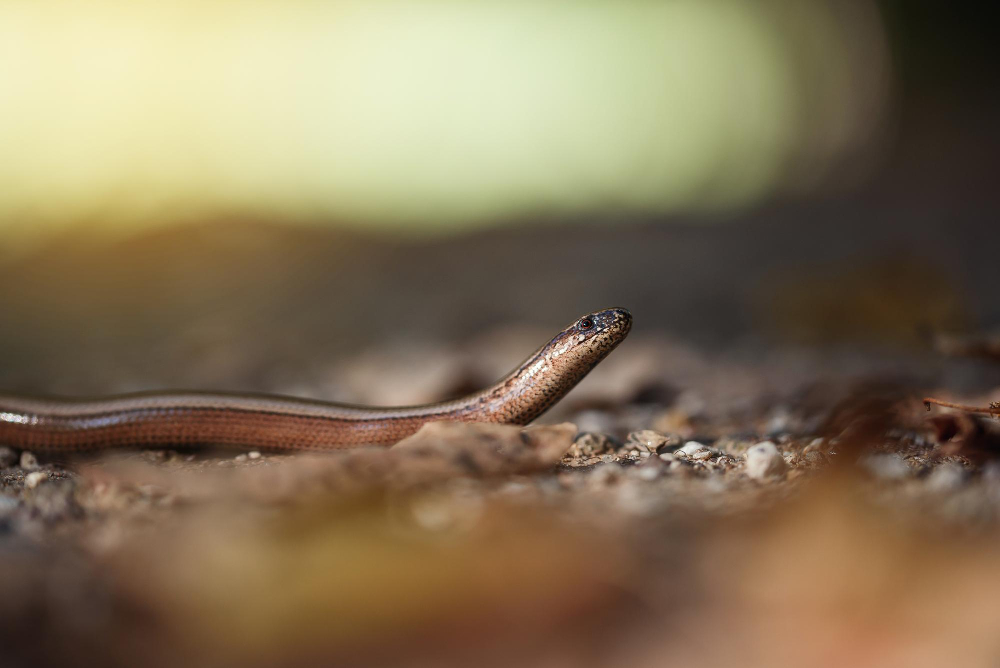
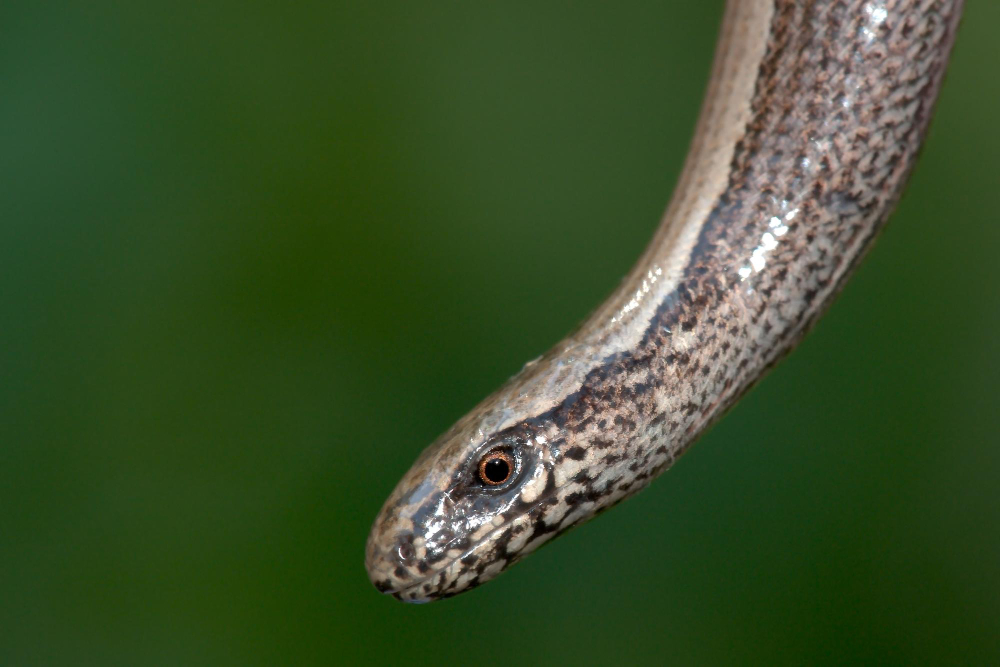
This is the test, and it is immediate. Snakes have no movable eyelids – the eye is covered by a fixed transparent scale, which is why a snake’s stare is unbroken and slightly unsettling, and why a snake cannot close its eyes.
A slow worm has ordinary lizard eyelids and blinks like any other lizard. Watch one for a few seconds and it will. There is no ambiguity, no expertise required and nothing else to check: an animal that looks like a snake and blinks is not a snake.
3. It Can Throw Off Its Own Tail, Which a Snake Cannot
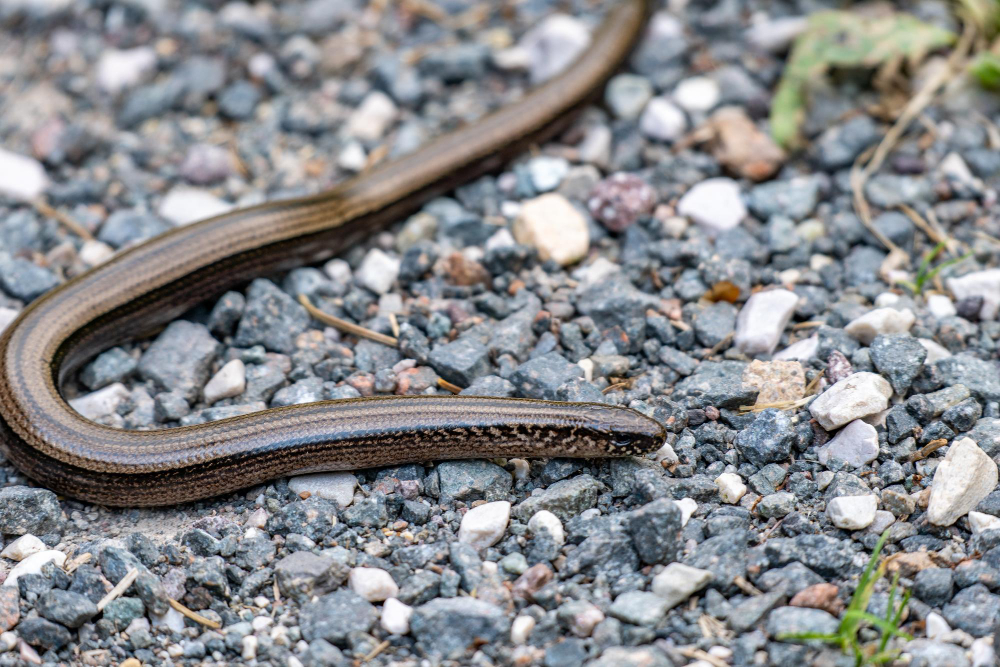
Grabbed or alarmed, a slow worm can detach its tail deliberately, at a weak point built into the vertebrae for exactly that purpose. The shed portion then thrashes vigorously for some time on its own.
The point is distraction. A predator is left holding or watching a piece that is still moving while the animal itself goes. It is a standard lizard capability and snakes do not have it, which makes it a second and equally decisive identification, and it is the origin of the species’ formal name – the second half of which means fragile.
4. And the Tail Never Properly Grows Back
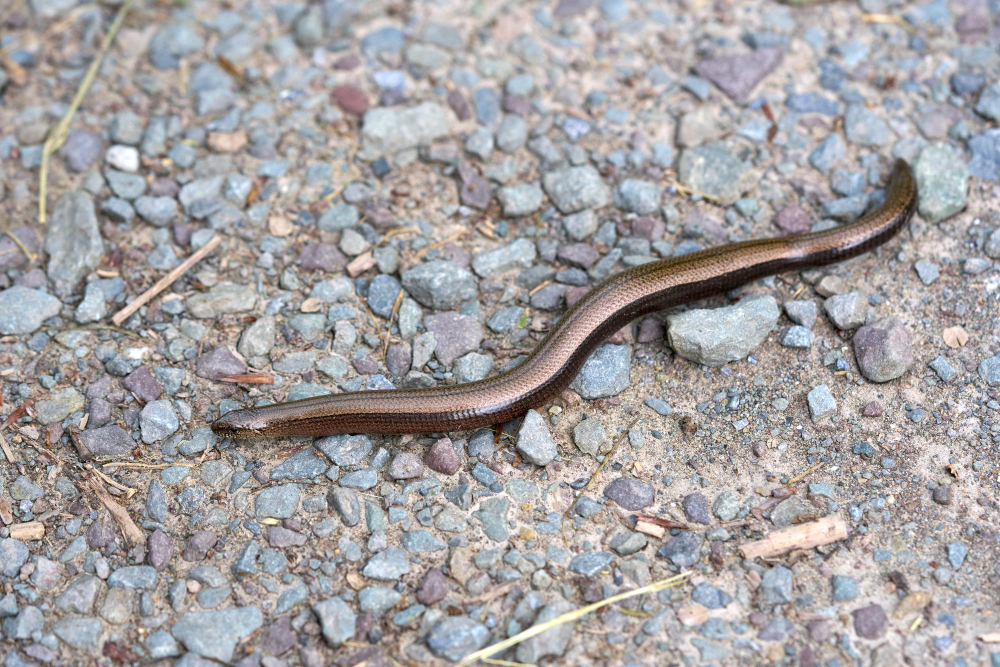
The regrown tail is not a replacement. It is shorter, blunter, a slightly different colour and supported by a rod of cartilage rather than by vertebrae, and it can never be shed again.
Which means the trick works once at each point and the animal pays a permanent price for using it. A large proportion of adult slow worms have the stubby blunt-ended tail that shows it has been done, and in practice a long elegant tapering tail is the mark of a young or a lucky individual rather than a normal one.
5. There Is a Small Bone Under Every Scale
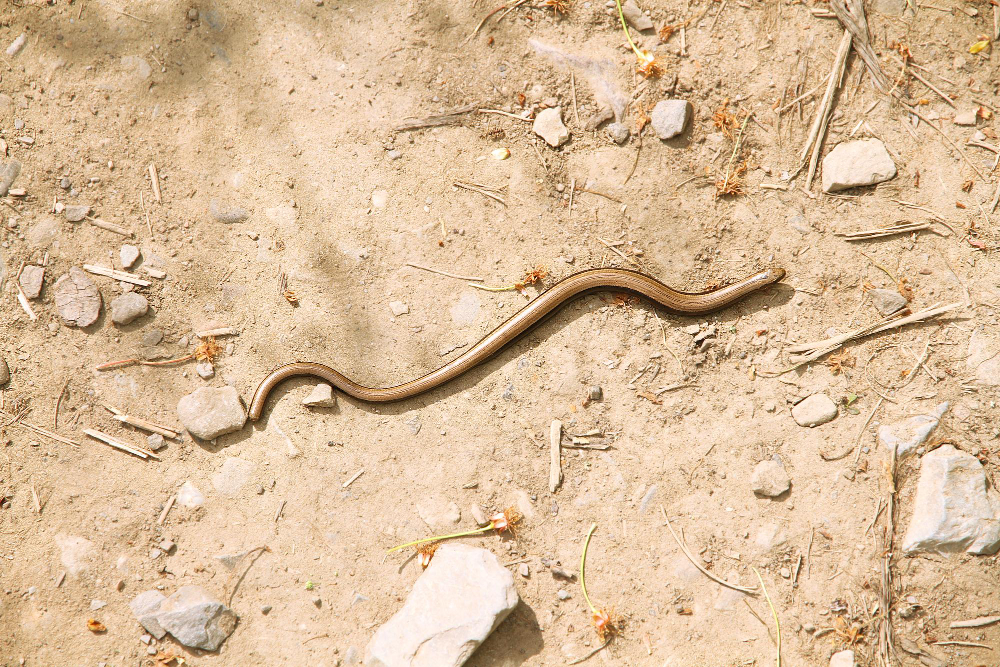
A slow worm does not feel like a snake to anybody who has held one, and the reason is structural rather than muscular. Beneath the skin, under each scale, sits a small plate of bone.
The effect is a flexible chain mail: the animal is stiffer and less fluid than a snake of similar size, bends in a slightly jointed way rather than pouring itself along, and has a hard, smooth, almost metallic surface. It is also why they are so often described as feeling like a polished object rather than like an animal.
6. It Gives Birth to Live Young
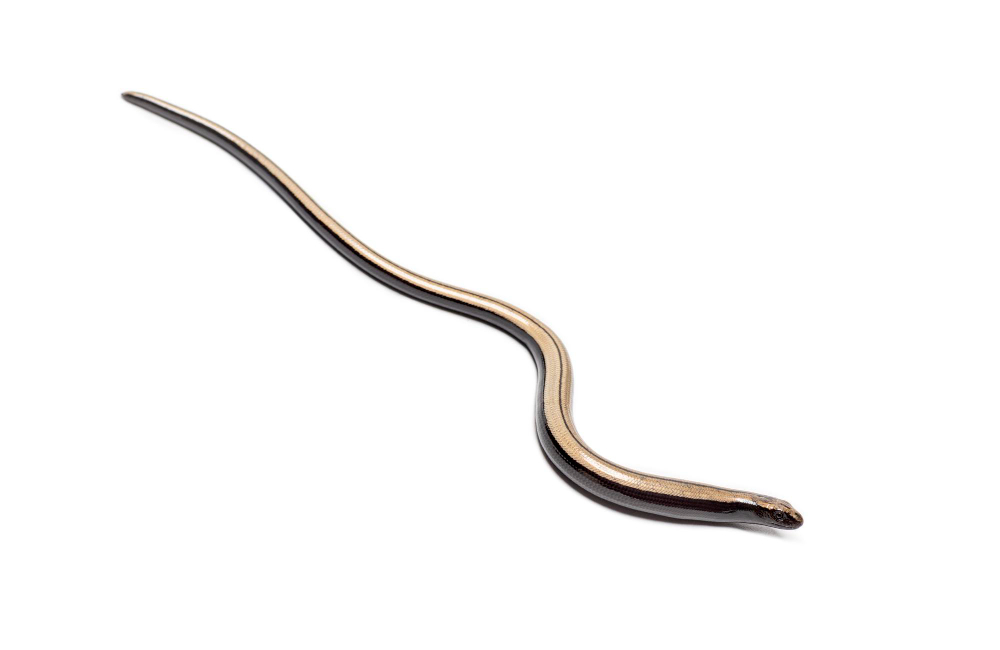
No eggs are laid. The young develop inside the female and are born in a thin membrane which breaks within seconds, so what emerges is a complete miniature slow worm, active immediately, a few centimetres long and distinctly gold with a dark line down it.
Retaining the young internally allows the female to keep them warm by choosing where she sits, which matters a great deal at the cool northern edge of the species’ range, where eggs left in the ground would frequently not get enough heat to develop at all.
7. It Eats Slugs, Almost to the Exclusion of Everything Else
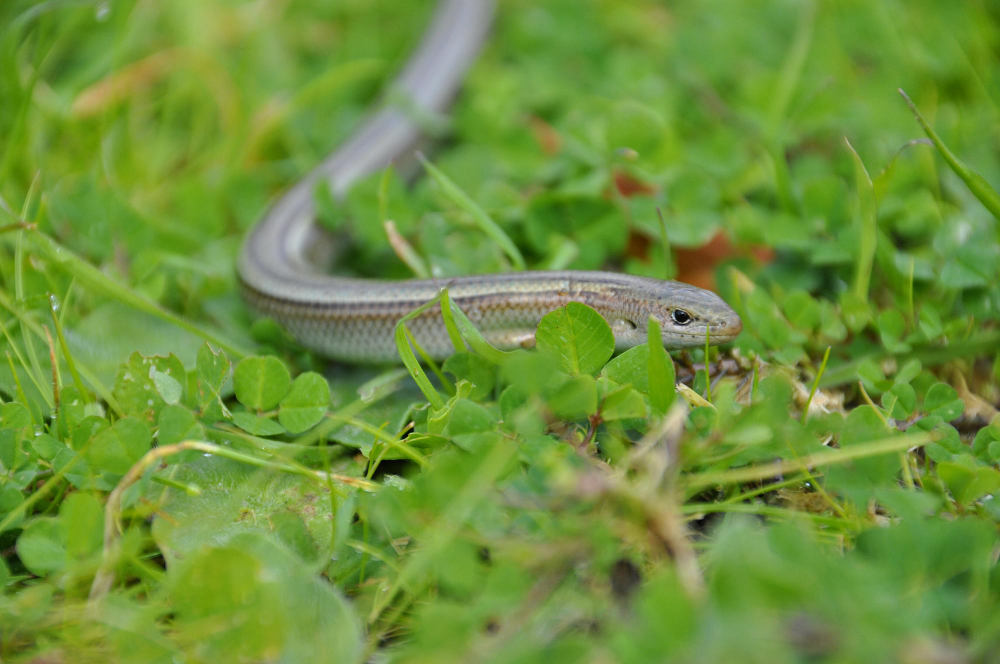
The diet is soft-bodied invertebrates and it is dominated by slugs – small ones, taken whole, in large numbers, swallowed slowly because of the mucus.
Which is also the explanation for the jaw and teeth: small, backward-curving and designed to hold something slippery that is actively trying not to be held. A slow worm is a specialist in a food that most predators avoid because of the slime, and it has the equipment to deal with it.
8. Which Is Why It Turns Up in the Compost Heap
Put the previous item together with a need for warmth and the habitat preference becomes obvious. A heap is warm, damp, full of slugs and worms, and provides cover at every level.
It is close to an ideal site, which is why slow worms are found in heaps, under old carpet, beneath corrugated sheets and along the edges of allotments far more often than in anything resembling wilderness. The animal is not visiting from somewhere wilder; for a great many slow worms the heap and its surroundings are the entire territory.
9. It Basks Underneath Things Rather Than on Top of Them
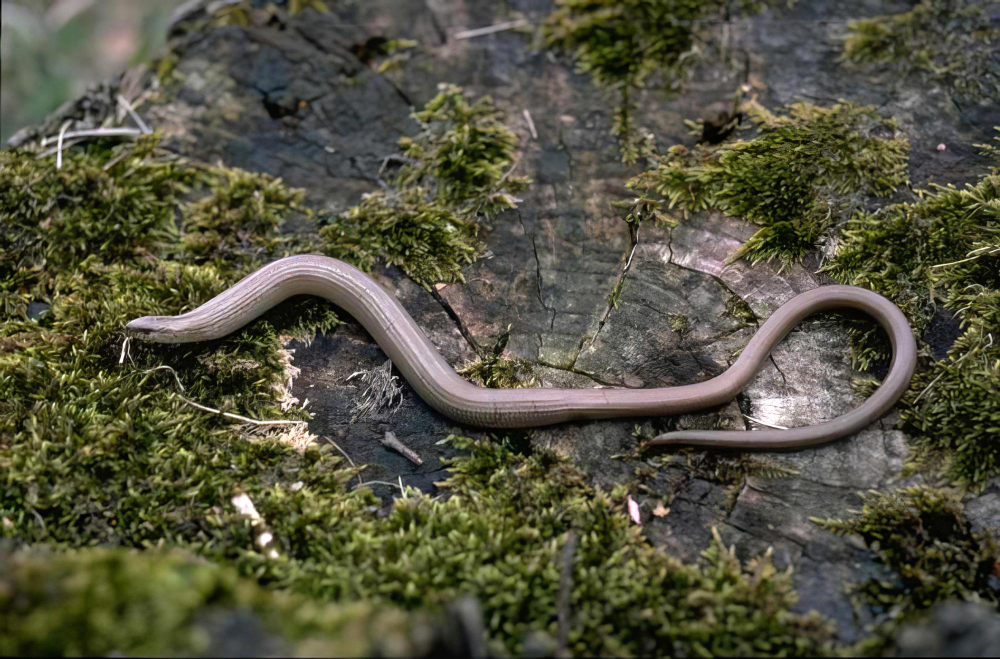
Most reptiles that need warmth lie in the open sun. Slow worms almost never do, which is the main reason they are so rarely seen.
Instead they lie pressed against the underside of something flat that the sun has been heating – a slab, a sheet of metal, a board, a piece of lino – and take the warmth by contact. They get the heat without ever being visible or exposed, which is a considerably safer arrangement for a slow-moving legless animal, and it means the way people encounter them is almost always by lifting something rather than by spotting one.
10. It May Be the Longest-Lived Lizard on Earth
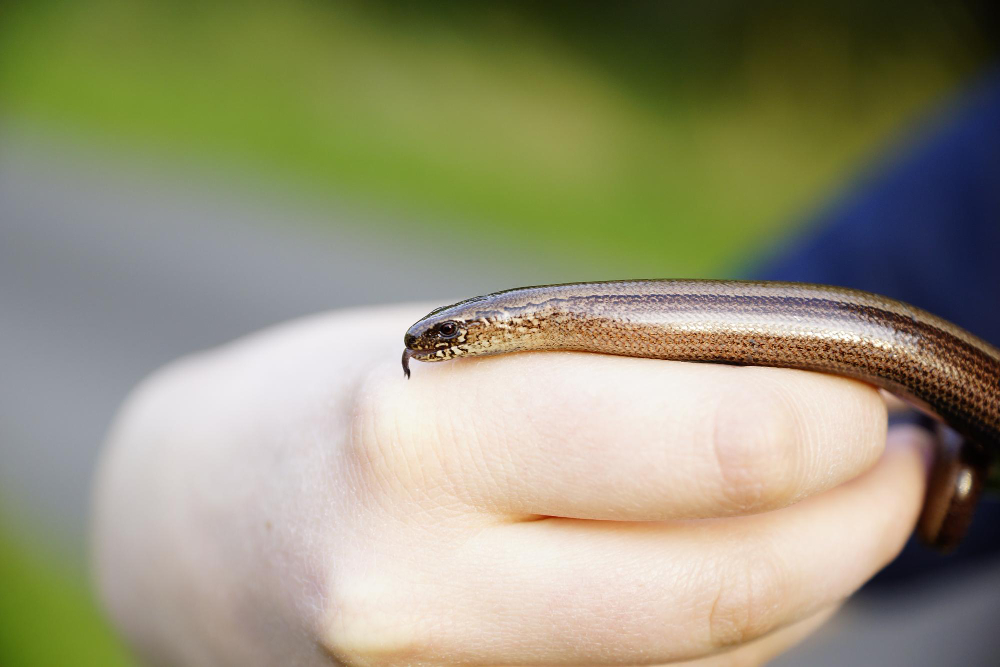
Wild slow worms regularly reach twenty years and may considerably exceed it, which is remarkable for an animal of that size, and one long-kept individual is reported to have lived more than fifty.
That is an extraordinary figure for a small reptile and it is out of all proportion to anything about its appearance. It also has a quiet implication for anybody who has one in the garden: the animal under the slab may have been there longer than the people who keep finding it, and the slow worms in a given place are frequently a very small number of very old individuals rather than a population turning over quickly.
11. The Males and Females Look Like Two Different Animals
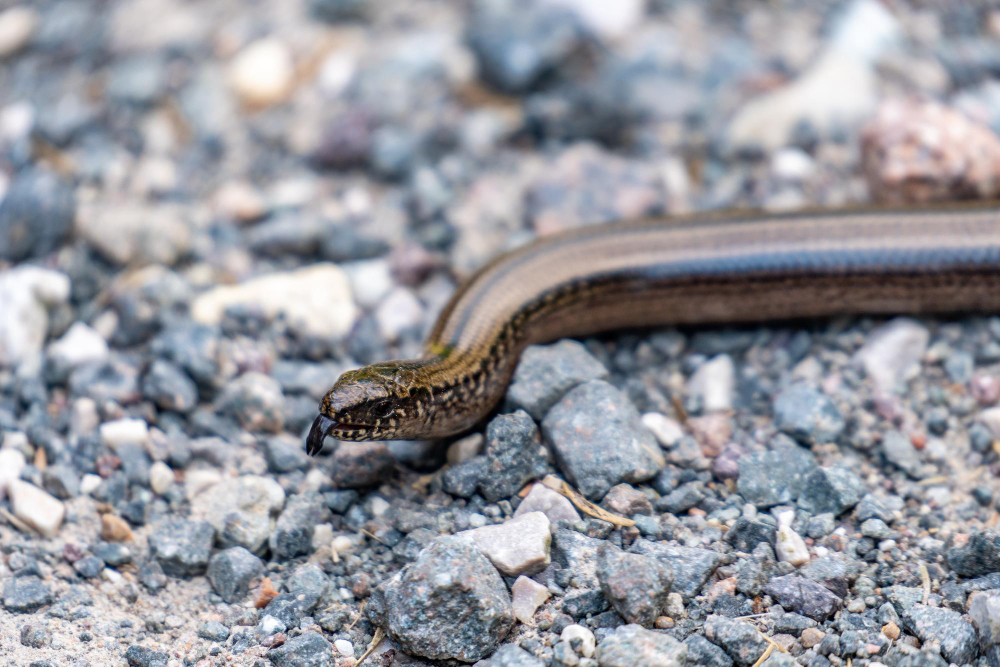
Once pointed out it is unmistakable. Females are brown, with a dark line running down the centre of the back and dark brown or near-black flanks, so the body is sharply divided light above and dark below.
Males have none of that: they are a uniform plain grey or bronze, with no stripe and no dark sides, and older males frequently develop scattered pale blue spots along the back, which can be numerous and conspicuous. So a plain one with blue flecks and a striped one with dark sides, found under the same board, are not two species and are not an adult and a juvenile. They are a pair.
A Lizard Pretending to Be Something Simpler
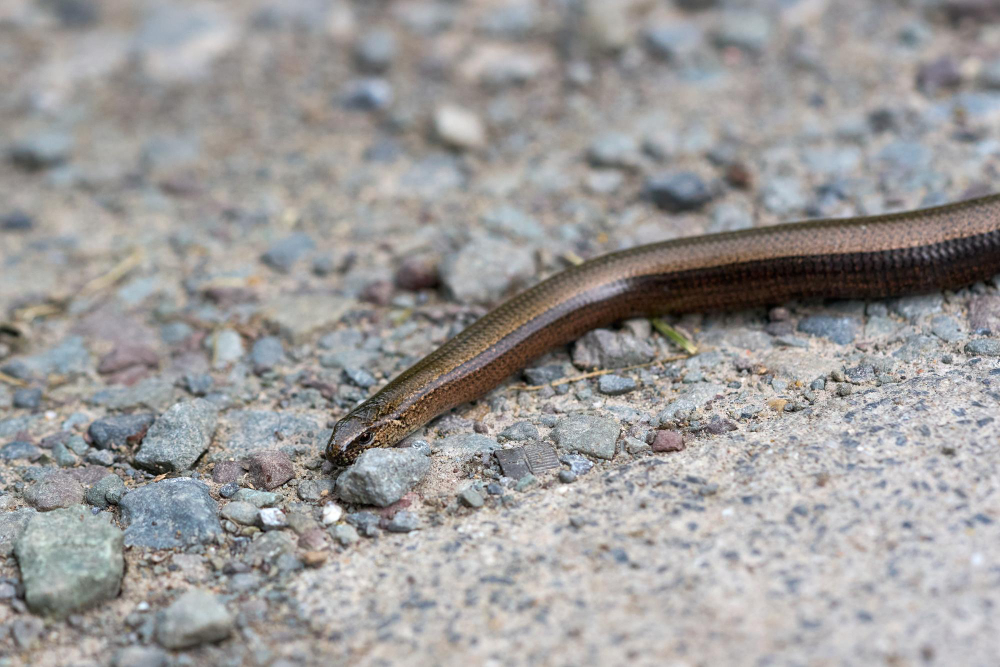
Legs lost independently of snakes, eyelids that settle the question in seconds, a tail shed deliberately and never properly replaced, a bone beneath every scale, live birth rather than eggs, a diet of slugs taken whole, and warmth taken from the underside of a slab rather than from open sun.
The second item is the one to carry away, because it ends the argument permanently and needs no expertise at all. Snakes have no movable eyelids – the eye sits behind a fixed clear scale, which is why a snake never closes its eyes. A slow worm has ordinary eyelids and blinks like any other lizard. So if the legless animal in front of you blinks, it is not a snake, and that is the whole test.
Like our content? Follow us for more.