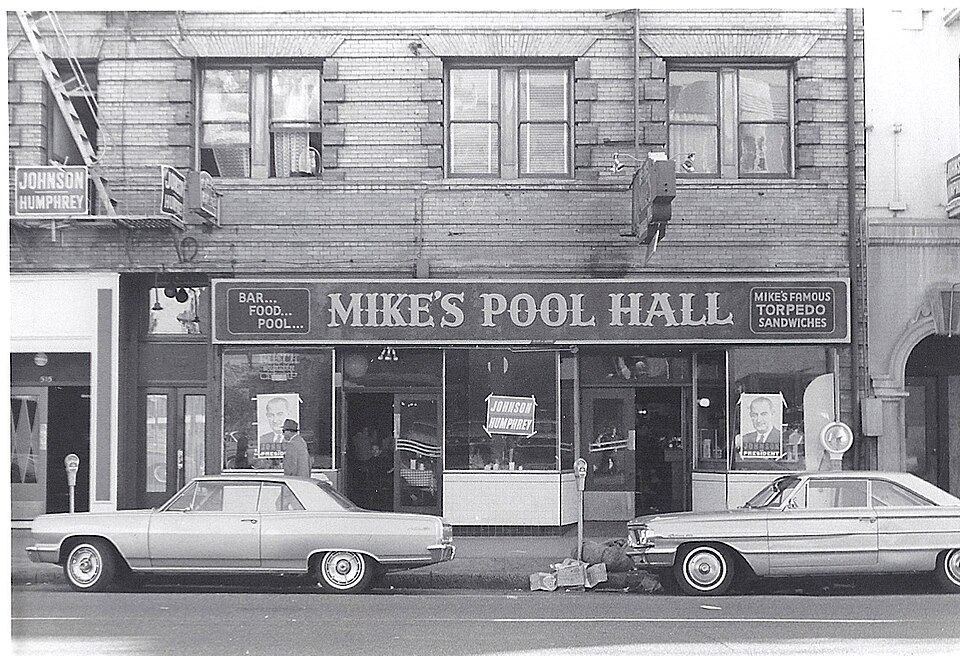
The lamp was the meter, and the cloth was ironed. Here are twelve.
1. The Tables Cost Money by the Hour and the Clock Was Over the Light
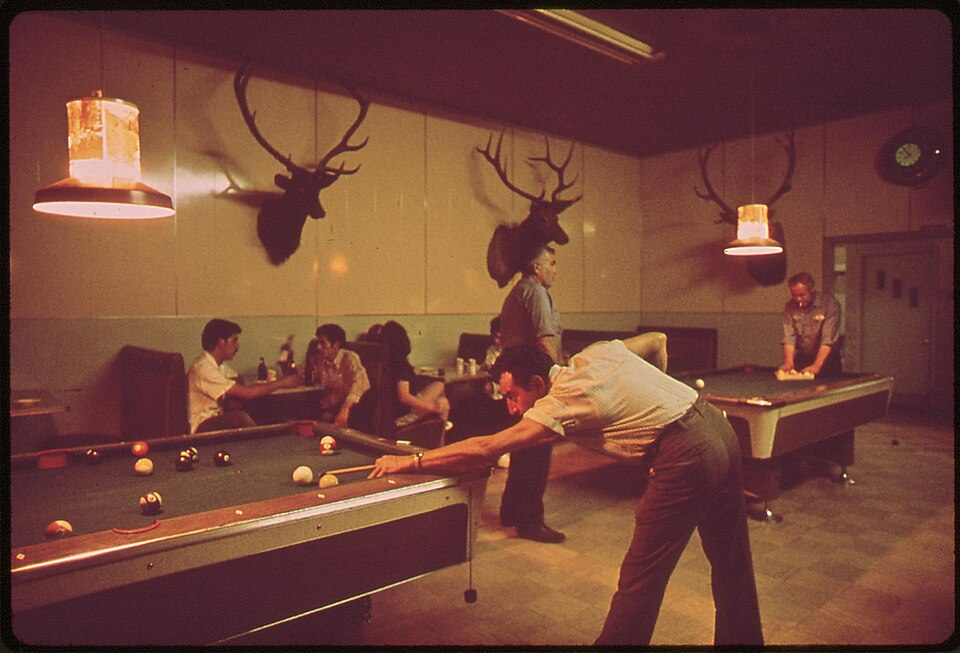
Time was bought rather than games, a light above each table was switched on at the counter when you started, and a clock or a meter recorded it.
The light is the mechanism. Turning on the lamp above a table both started the charge and told the room which tables were in use, which means the house never needed a ticket, a token or anybody watching – the lighting was the billing system.
Like our content? Follow us for more.
2. The Cloth Was Wool and Was Brushed and Ironed
The playing surface was a napped woollen cloth stretched over slate, maintained by brushing in one direction and pressing with a heated iron to keep the nap lying flat.
Cloth maintenance is the whole difference between a good table and a bad one, and it was skilled work done by the house. A brushed and ironed cloth plays faster and truer, and a regular could tell within two shots how recently it had been done.
3. The Bed Was Slate and Weighed More Than a Car
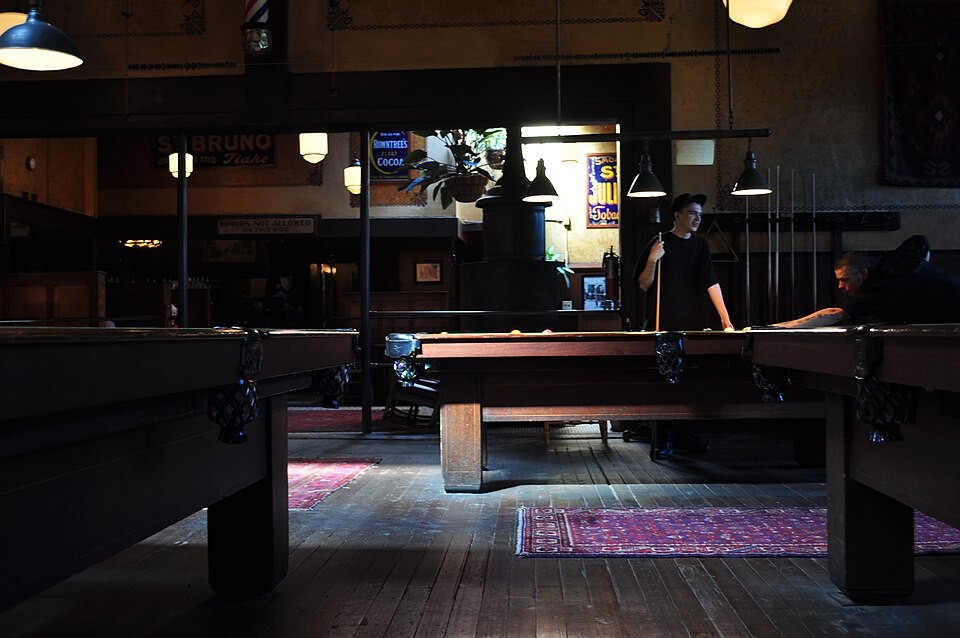
Under the cloth were thick slabs of machined slate, in sections, supported on a heavy frame, because nothing else stays flat enough.
The weight is why these buildings were almost always on a ground floor with a solid slab beneath them, and it is why a pool hall closing meant a serious logistical problem rather than a van. Slate is also why the tables outlived the halls – the beds are still in circulation.
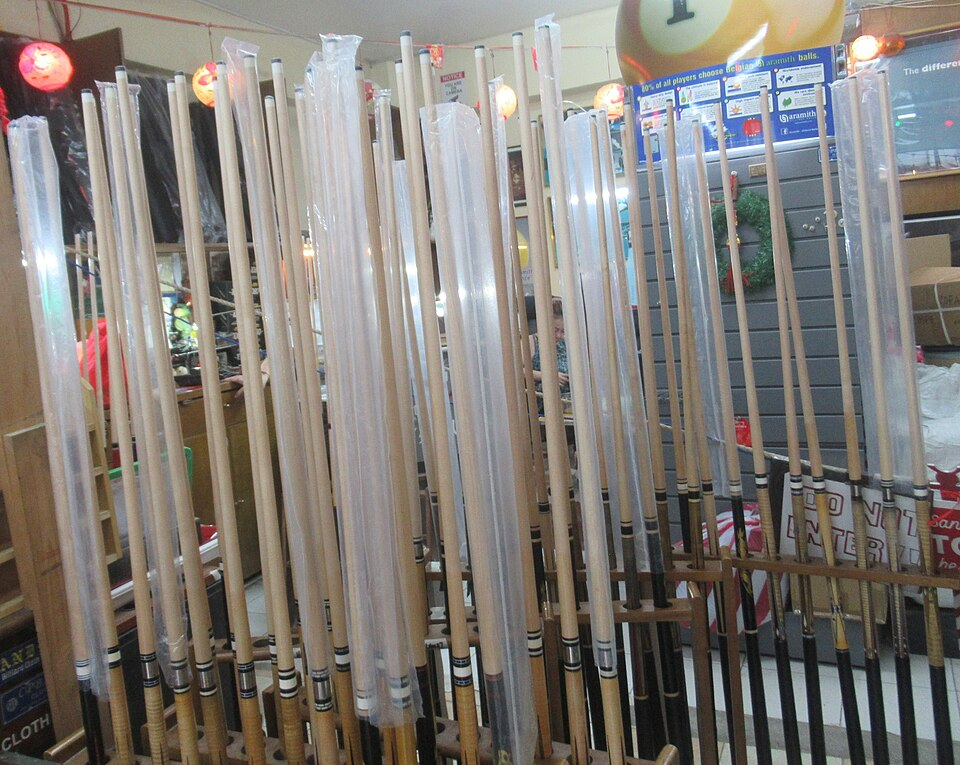
4. There Was a Rack of House Cues and They Were All Slightly Wrong
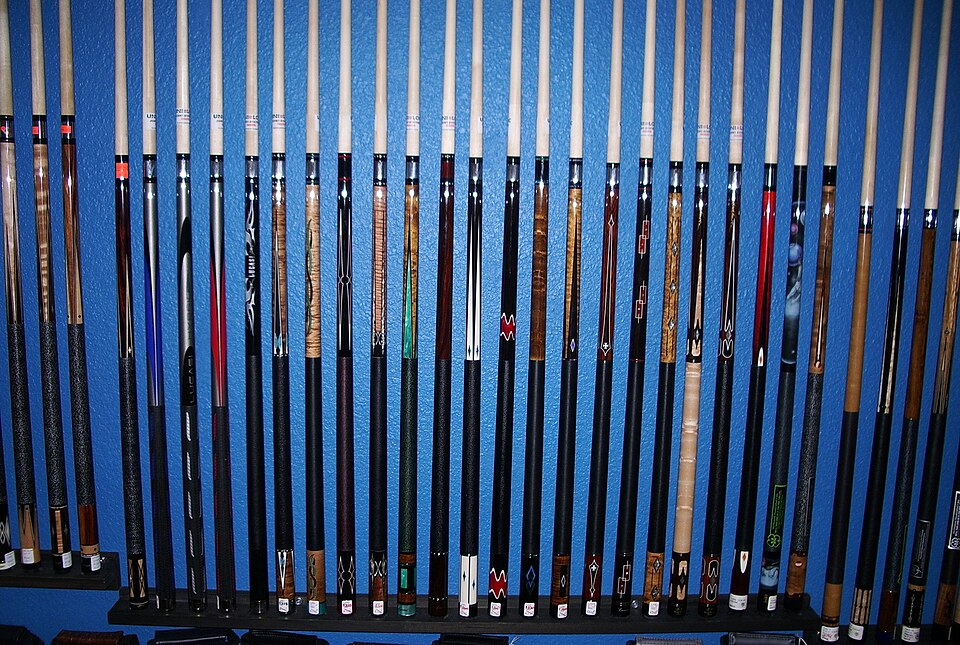
Cues stood in a wall rack, were shared, were warped to various degrees, and finding a straight one was the first ritual of arriving.
Rolling a cue on the cloth to check it for straightness is a gesture that identifies anybody who spent time in one of these rooms, and it existed because a shared wooden object in a humid building does not stay straight. Personal cues in cases were for people who were serious, and everybody knew who they were.
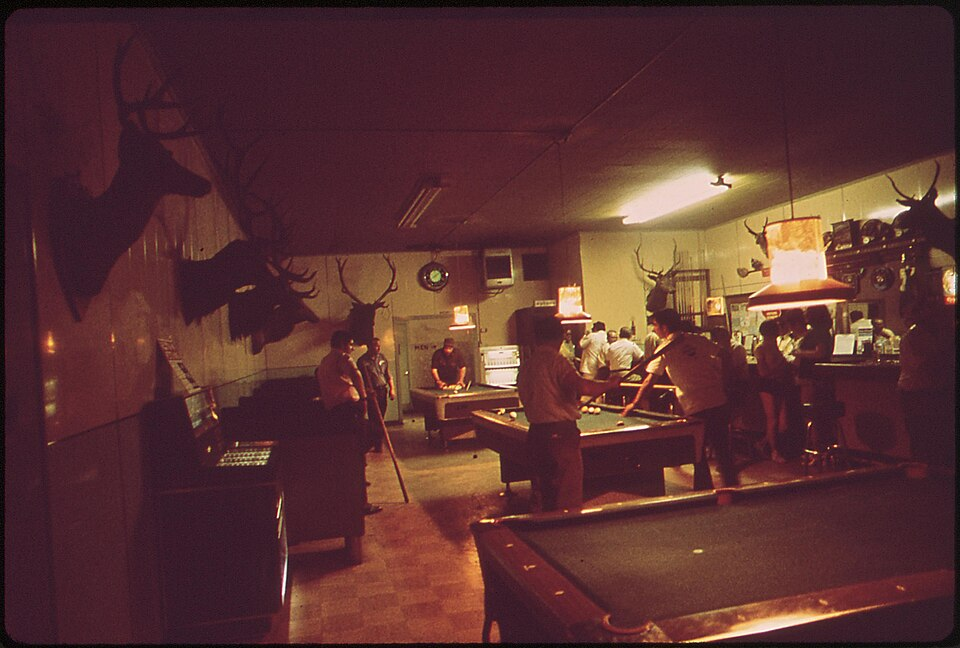
5. The Lighting Was Low Everywhere Except Directly Over the Tables
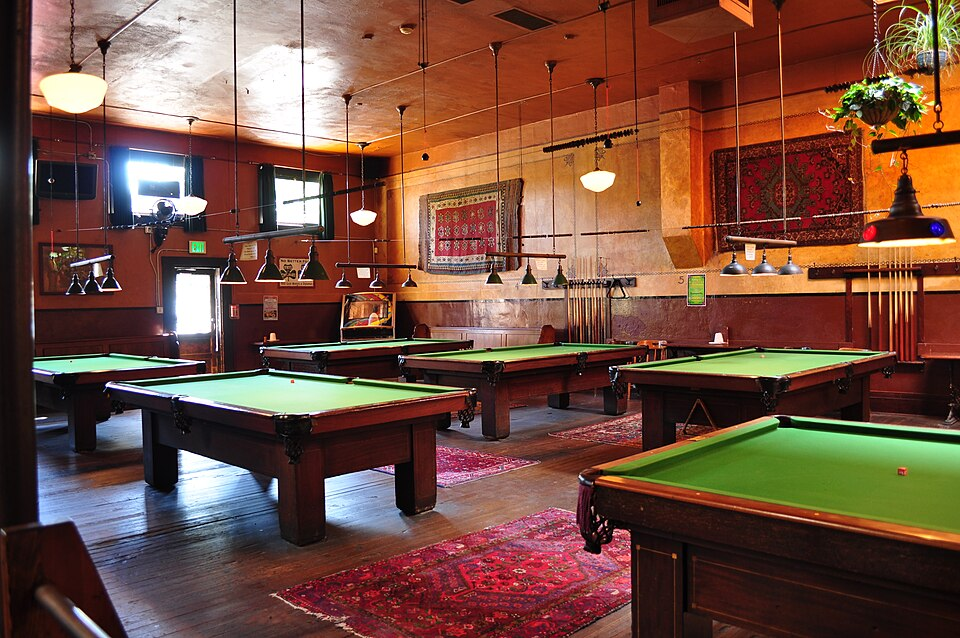
Shaded lamps hung low over each table, throwing light down onto the cloth, with the rest of the room deliberately dim.
The scheme is functional before it is atmospheric. A player needs even light on the surface with no glare in the eyes and no shadow from their own body, which a low shade directly above achieves and a ceiling light does not. The darkness of the rest of the room is a by-product that the format then became famous for.
6. The Place Had a Reputation and Some Towns Legislated Against It
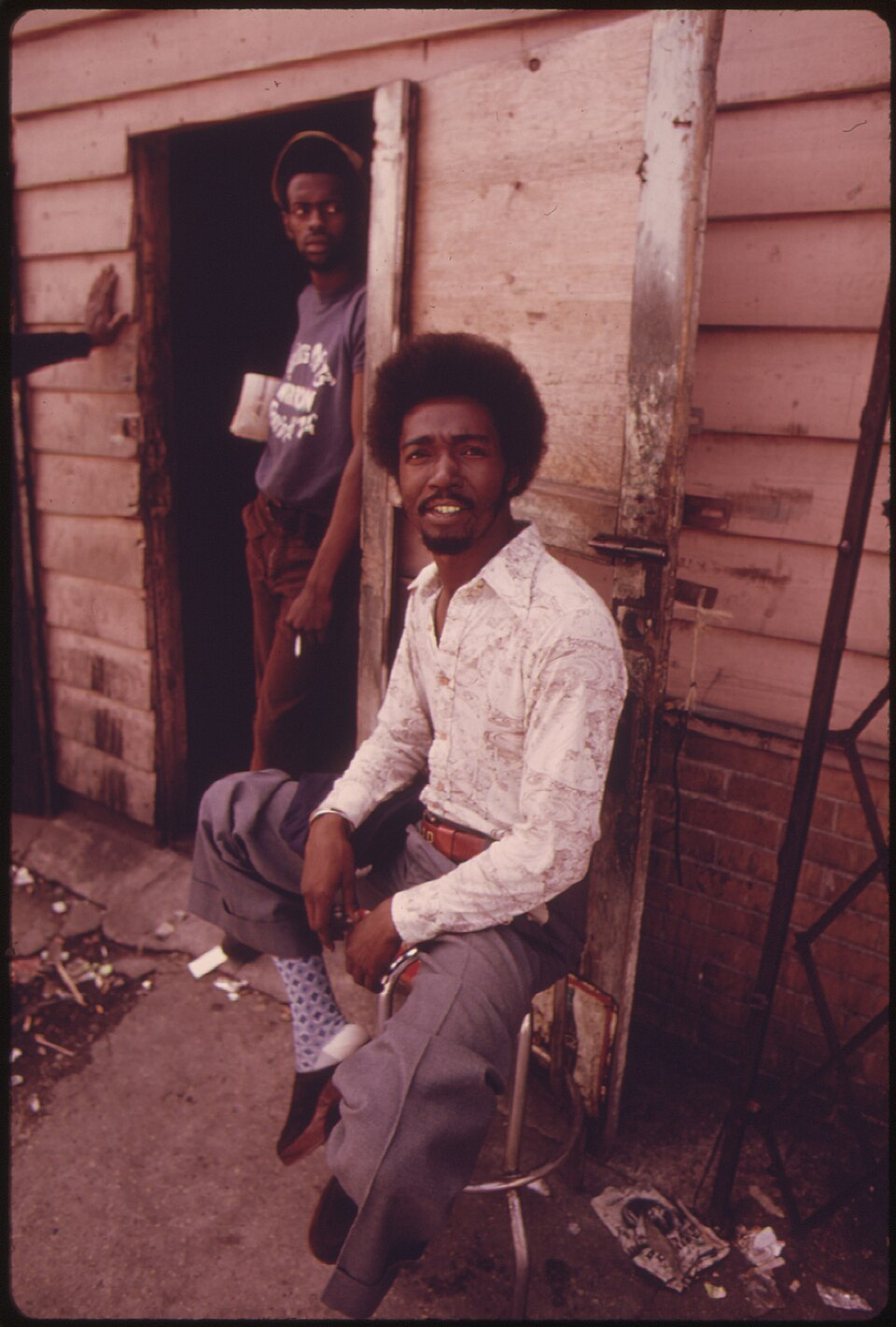
Pool halls were widely regarded as disreputable, were subject to local licensing, age restrictions and in some American towns outright prohibition or severe limits on hours and location.
The reputation was partly earned and substantially inherited, and the specific anxieties were gambling, truancy and young men congregating without supervision. It is one of the few leisure formats in America to have been legislated against directly rather than regulated incidentally.
7. Money Changed Hands on Games and Everybody Was Careful About It
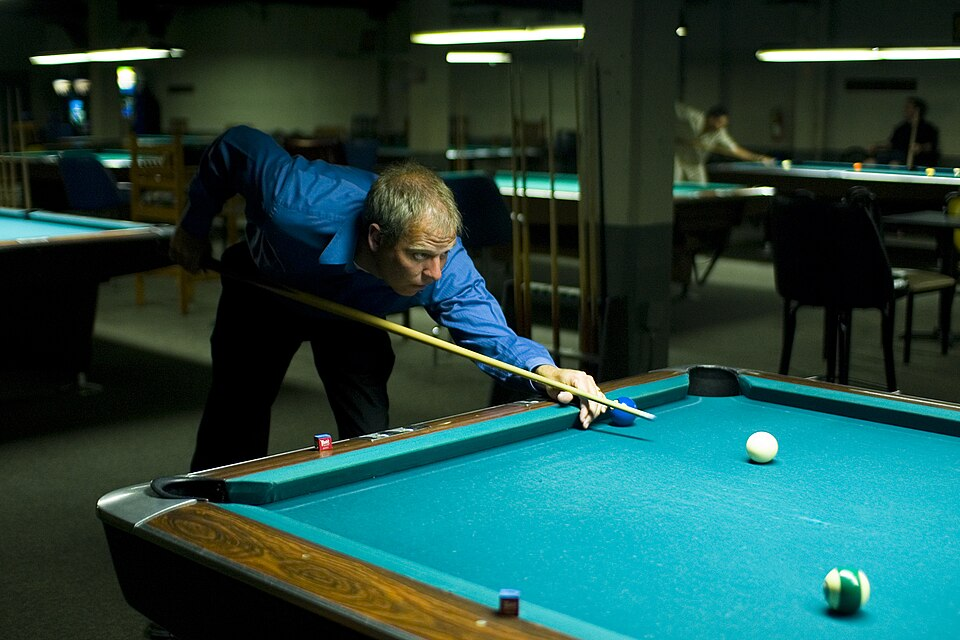
Playing for money was common, was frequently against the house rules and the local ordinance, and was conducted discreetly between players rather than through the establishment.
The house generally wanted no part of it, because a licence was at stake. That separation – the room selling time while the players settled between themselves – is why the practice was so durable and so hard to police.
8. Somebody in the Room Was Better Than They Were Letting On
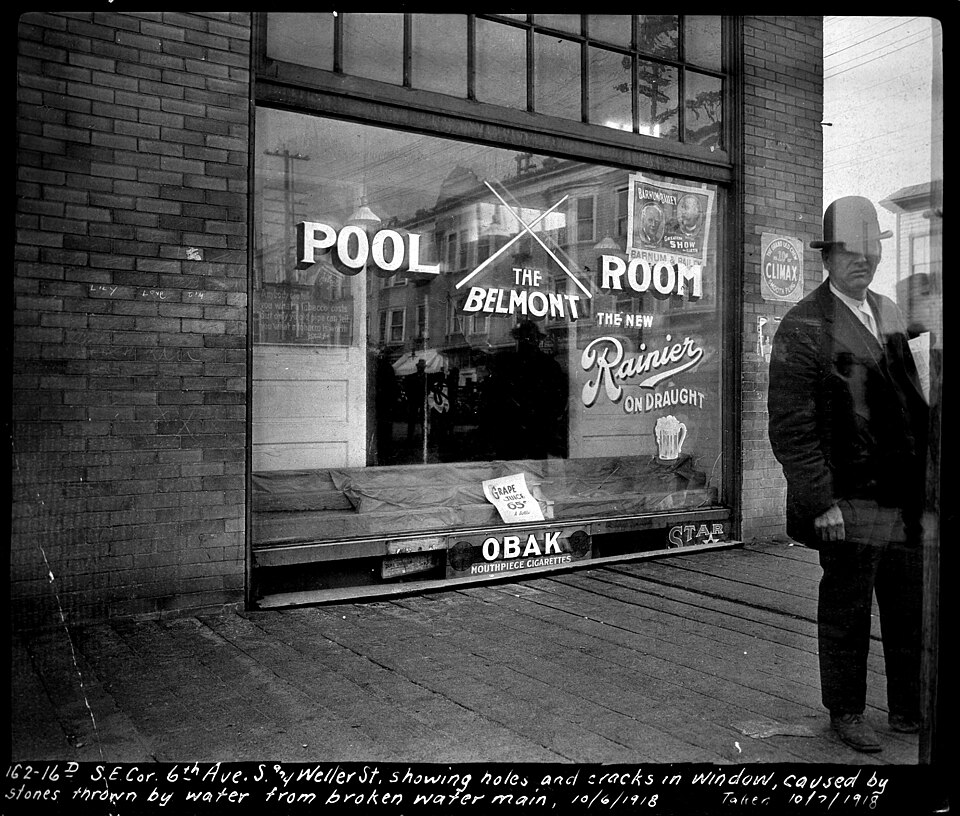
The social structure of a pool hall included the understood possibility that a stranger’s apparent standard was not their real one, and regulars watched new arrivals accordingly.
It is the single most mythologised feature of the format and it was a real social dynamic rather than an invention. A room where strangers play for money and skill is not visible until demonstrated will always produce that caution, and the regulars’ habit of watching the first few shots is exactly the information-gathering the situation requires.
9. There Was a Counter Selling Soft Drinks, Cigarettes and Very Little Else
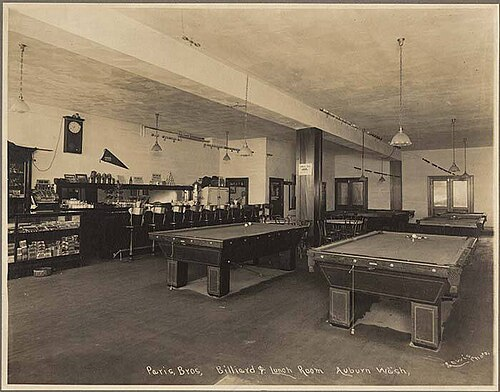
A small counter took the table money and sold tobacco, bottled drinks, chalk and occasionally a sandwich, with no kitchen and frequently no licence.
The absence of a kitchen and in many cases of alcohol is the commercial reality that distinguishes the pool hall from the bar. A room selling only time and cigarettes has very low overheads and very low revenue per customer-hour, which is precisely why so few survived.
10. The Walls Held a Scoring Wire and Nobody Used Paper
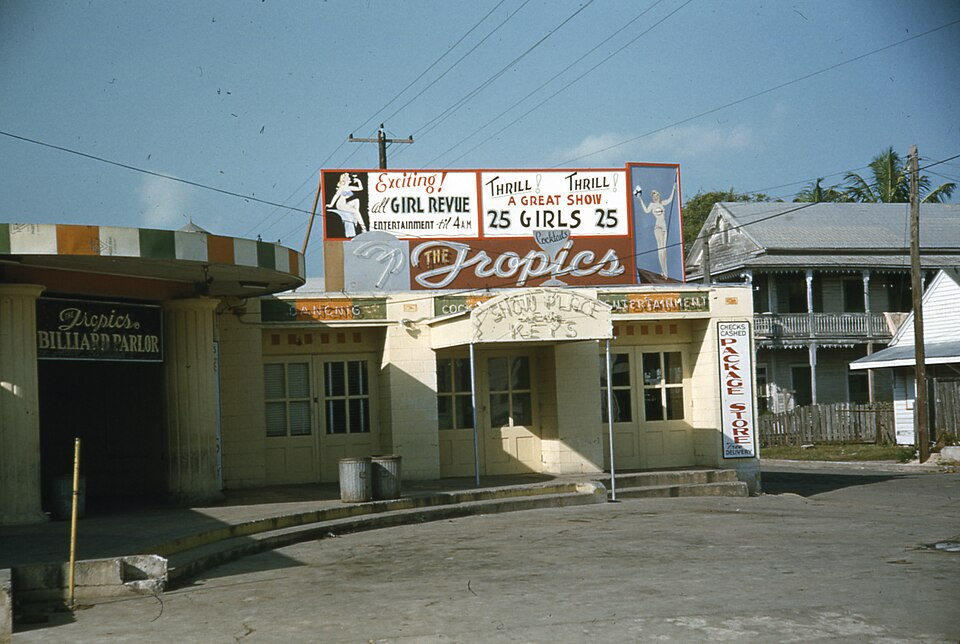
Scores were kept on an overhead wire with beads or a sliding marker, pushed along by the players as the game went.
The bead wire is a beautifully economical device: visible to everybody, operated without leaving the table, requiring no literacy and impossible to lose. It survives in snooker and billiards and vanished from American pool rooms with the arrival of games that do not need running scores.
11. It Was One of Very Few Places a Young Man Could Be All Afternoon for Almost Nothing
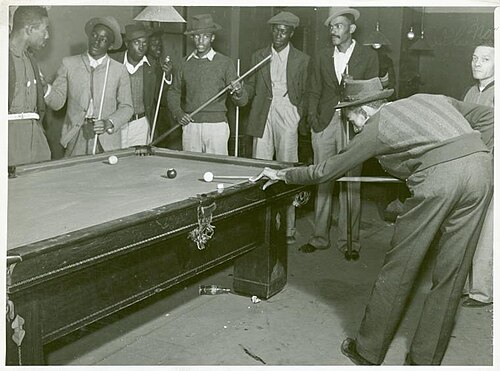
The cost of an hour was small, there was no requirement to buy anything else, nobody was asked to leave for lingering, and the room was warm.
That is the social function underneath the reputation, and the two are the same fact seen from different sides. A cheap warm room with no obligation to spend is exactly what a young man without money needs and exactly what a town council worries about, and both were correct.
12. Almost Every Pool Hall Closed and the Tables Did Not
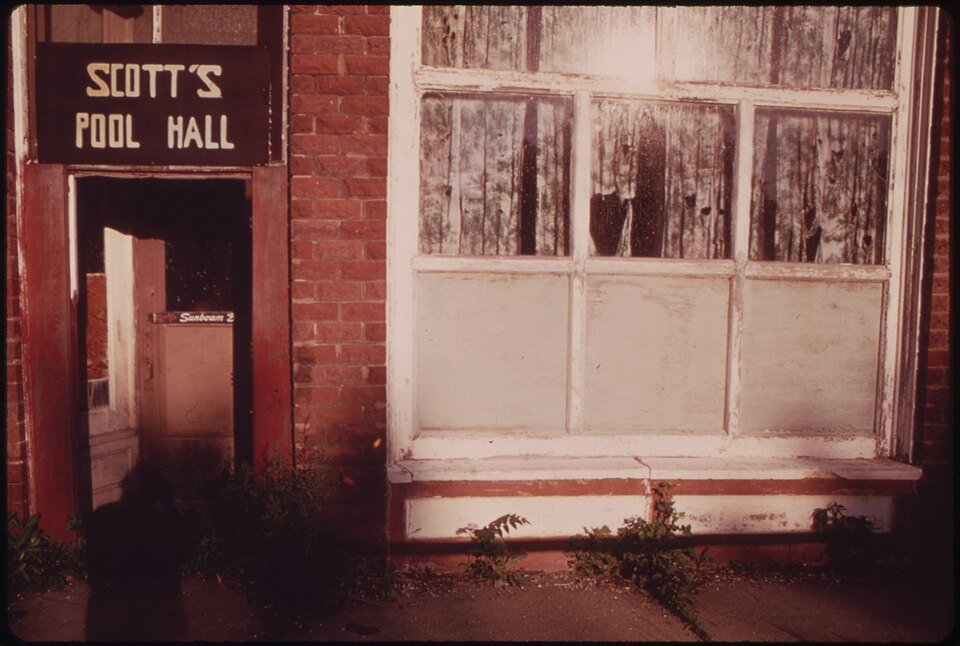
Read the list again. The hourly charge, the low overheads, the single revenue stream, the absence of food and in many cases of alcohol, and the reputation that kept respectable custom away.
A business selling only table time at a low rate cannot carry a building, which is why the dedicated American pool hall is largely gone while the game is not. The tables moved into bars, which had the licence, the kitchen and the footfall to carry them – and the room with low lamps, a brushed cloth and somebody watching the door went with the building rather than with the sport.
One Revenue Stream Cannot Carry a Building
The dedicated American pool hall closed for a reason that has nothing to do with the game’s popularity, and the list makes it visible.
The business sold one thing: table time, by the hour, at a low rate, to customers who occupied a large amount of floor space for a long period. There was no kitchen in most of them and in a great many no alcohol licence, which means the two highest-margin revenue lines available to any leisure venue were both absent. The counter sold cigarettes and bottled drinks, which is not a business.
Against that sat real costs: a ground-floor building with a solid slab because the tables are slate, skilled cloth maintenance, lighting over every table, and floor area that cannot be used for anything else while a game is in progress.
And on top of the arithmetic sat the reputation, which kept away exactly the custom that would have paid more – and which in some towns came with licensing restrictions, age limits and hour and location controls aimed directly at the format.
So the tables went where the money was. A bar already has the licence, the kitchen, the footfall and the margin, and a table in the corner of one is a profitable use of otherwise idle floor. The game migrated into premises that could carry it, and what was lost was not the sport but the room: low lamps, an ironed cloth, a rack of warped cues and an afternoon that cost almost nothing.
Anybody who spent time in one still rolls a cue on the cloth before using it. That gesture is the last surviving piece of a building that mostly is not there.
Like our content? Follow us for more.