

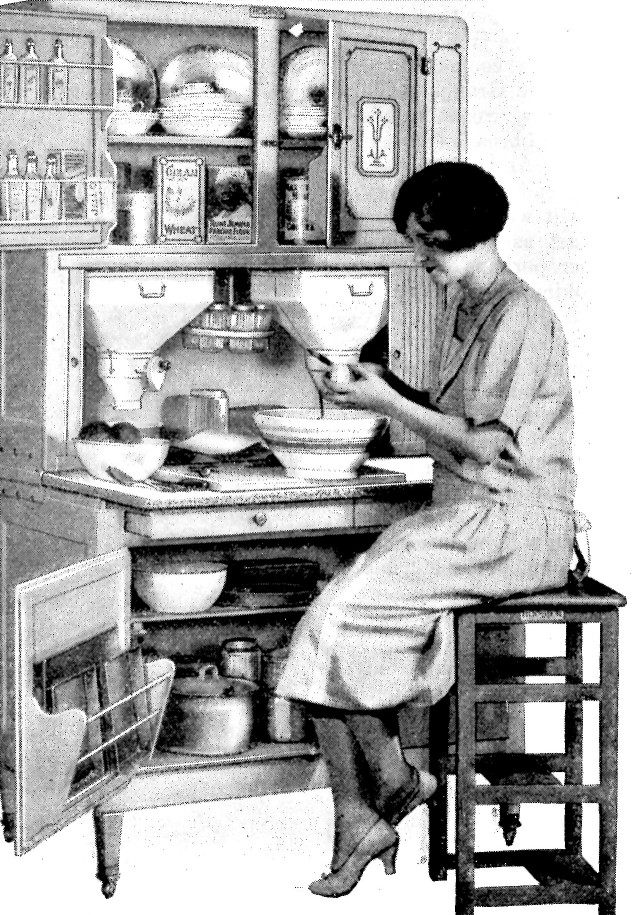
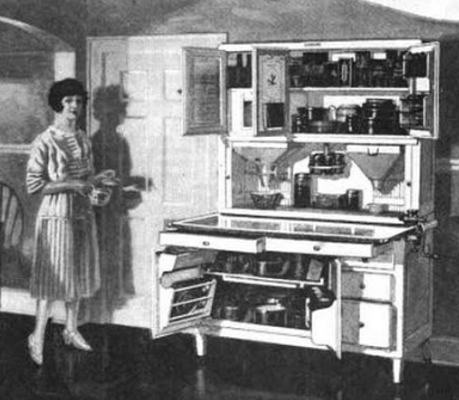
In 1964 an American kitchen cabinet had a sheet-metal bin built into it holding twenty-five or fifty pounds of flour, and underneath the bin there was a sifter.
You cranked it and the flour came out of the cupboard already screened into a bowl. The screen caught lumps, bits of sack and anything that had got into fifty pounds of flour over a warm summer. A recipe calling for one cup of sifted flour meant something different from one calling for a cup of flour, sifted – and cooks knew which was which.
And none of it was about making cakes lighter. Here are twelve things every kitchen did.
1. Flour Was Bought in Quantity and Stored in the Cabinet
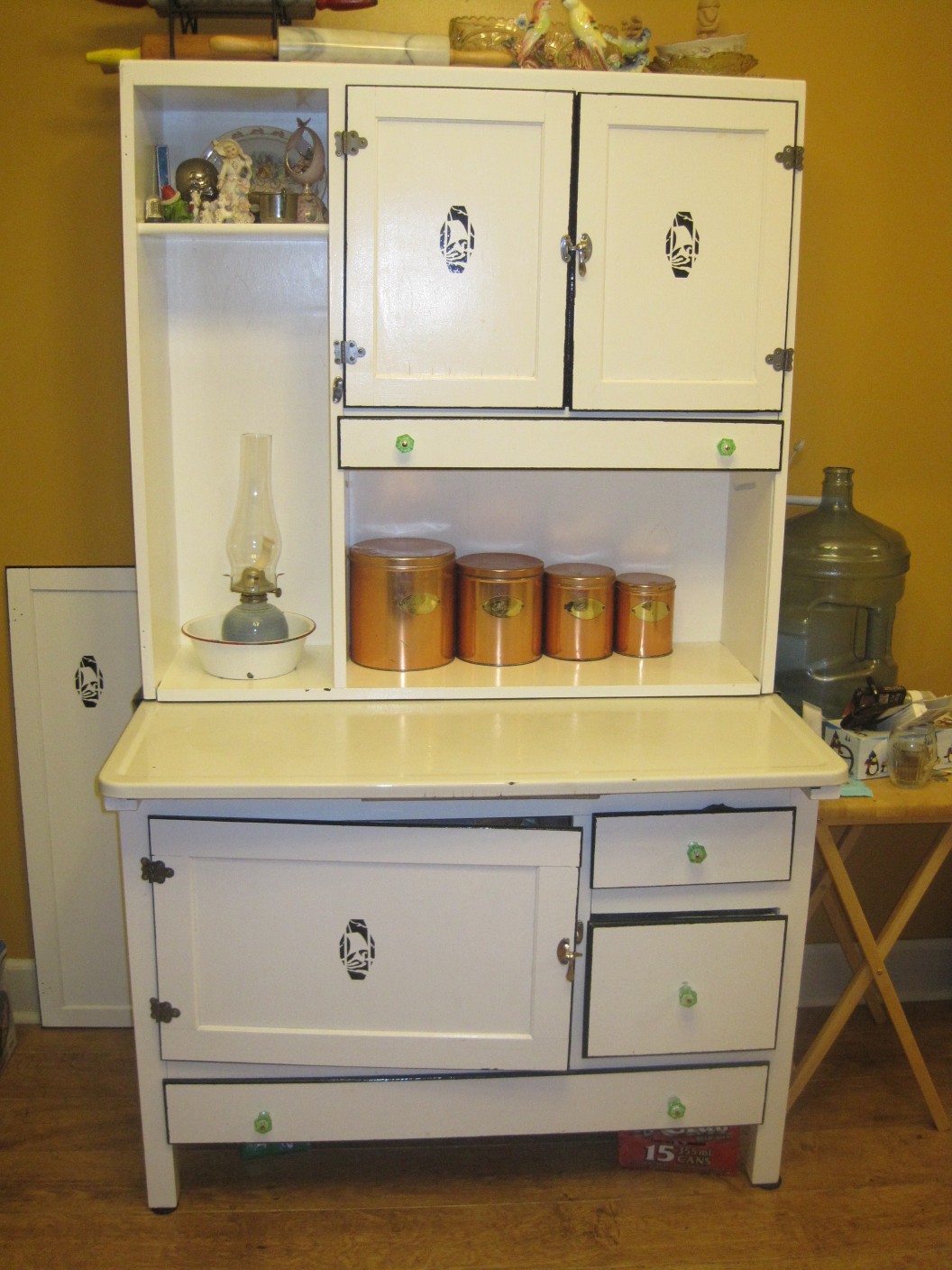
Households bought flour in large sacks rather than small bags and emptied them into a dedicated container – frequently a sheet-metal bin built into the kitchen cabinetry, holding twenty-five or fifty pounds.
Paper bags of five pounds or less, stored in a cupboard or a canister, bought as needed and finished in a few weeks.
The quantity tells you how much baking was happening. A household getting through fifty pounds of flour buys it the way it buys coal – in bulk, with somewhere to put it – and the built-in bin in the cabinet was a standard American kitchen fitting precisely because every kitchen needed one.
Like our content? Follow us for more.
2. The Bin Had a Sifter Built Into the Bottom

Many of these fittings were designed as a combined unit: the bin above, and beneath it a hinged sifter with a crank or a sliding screen, so that flour came out of the cabinet already sifted into a bowl held underneath.
Nothing comparable. Modern cabinetry contains no flour fitting of any kind and no processing of any ingredient happens inside a cupboard.
Building the sifter into the storage is a small piece of design thinking that deserves notice. If flour has to be sifted every time it is used, then the sensible place to sift it is on the way out of the container – which eliminates a separate utensil, a separate step and a second thing to wash.
3. You Sifted Because Flour Compacts in Storage
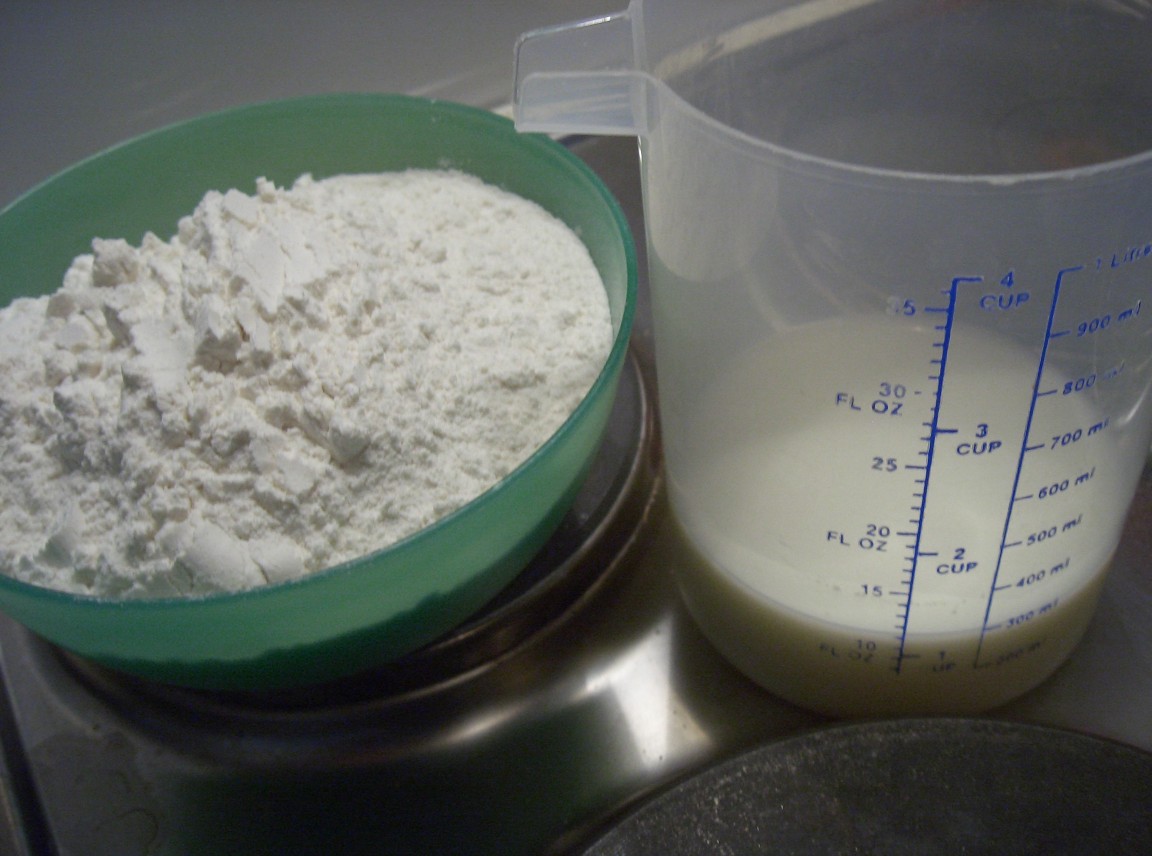
Flour that has sat in a sack or a bin settles under its own weight, and the particles pack together – so a quantity of stored flour occupies noticeably less space than the same quantity freshly milled or freshly sifted.
Milling and packing that produce a more consistent product, and recipe instructions written on the assumption that nobody will sift.
The compaction is the entire technical reason for the practice and it is substantial rather than marginal. Settled flour is denser than aerated flour by a meaningful proportion, which means the two behave as different ingredients even though they are the same material – and that difference is what sifting existed to remove.
4. It Was Also Screening for Lumps and for Insects
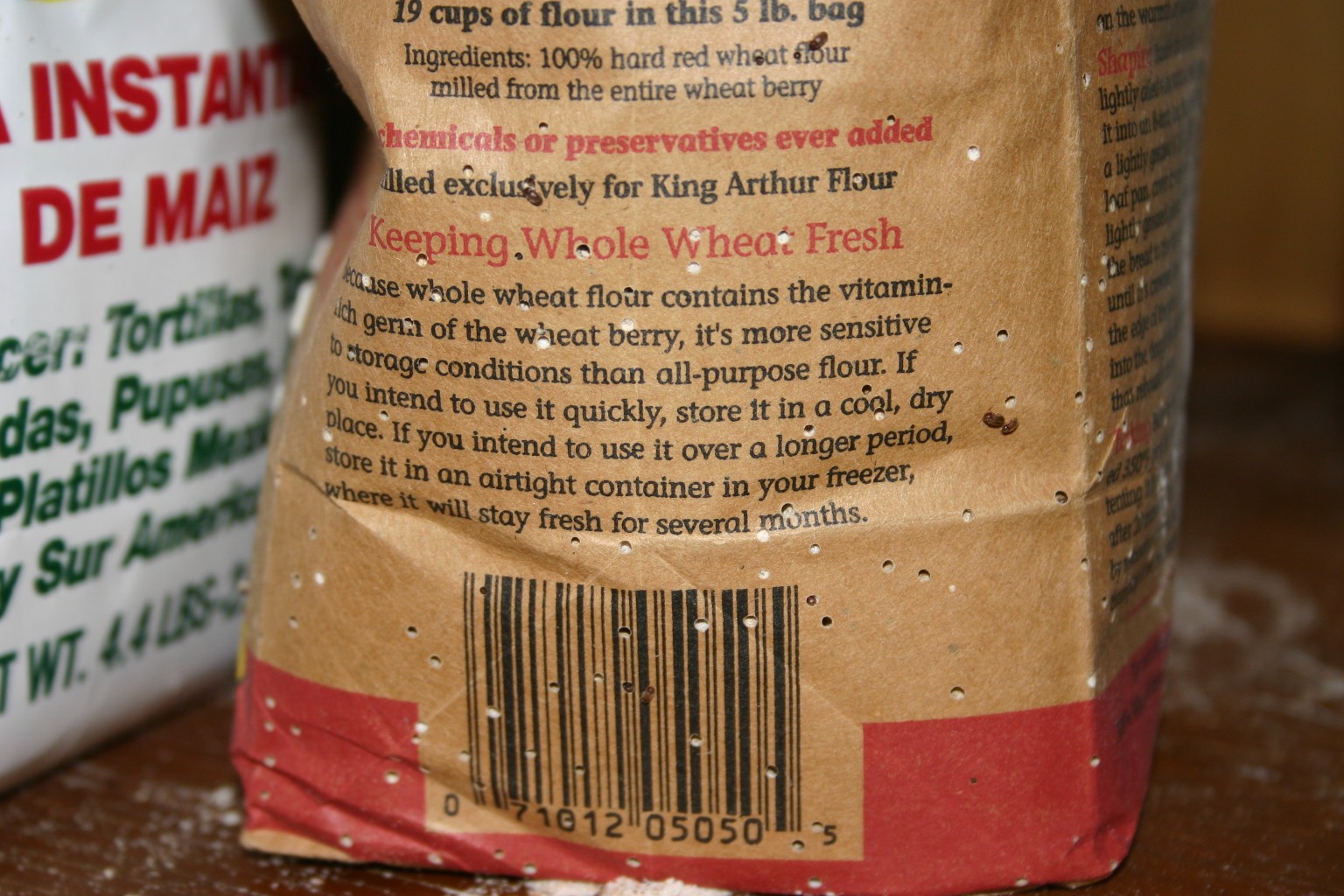
The screen caught what should not be in the flour: compacted lumps, bits of sack, and – in a household storing fifty pounds through a warm summer – insects and the webbing they produce.
Flour bought in small quantities and used quickly, with insect problems far less common and no routine screening by anybody.
This is stated as the documented reason households screened and not as anything a reader should act on. A large quantity of flour stored for months in a warm kitchen was a realistic candidate for infestation, the sifter was the household’s check, and the practice was taught for that reason as much as for any effect on baking.
5. The Measurement Was by Volume, Which Is Why It Mattered
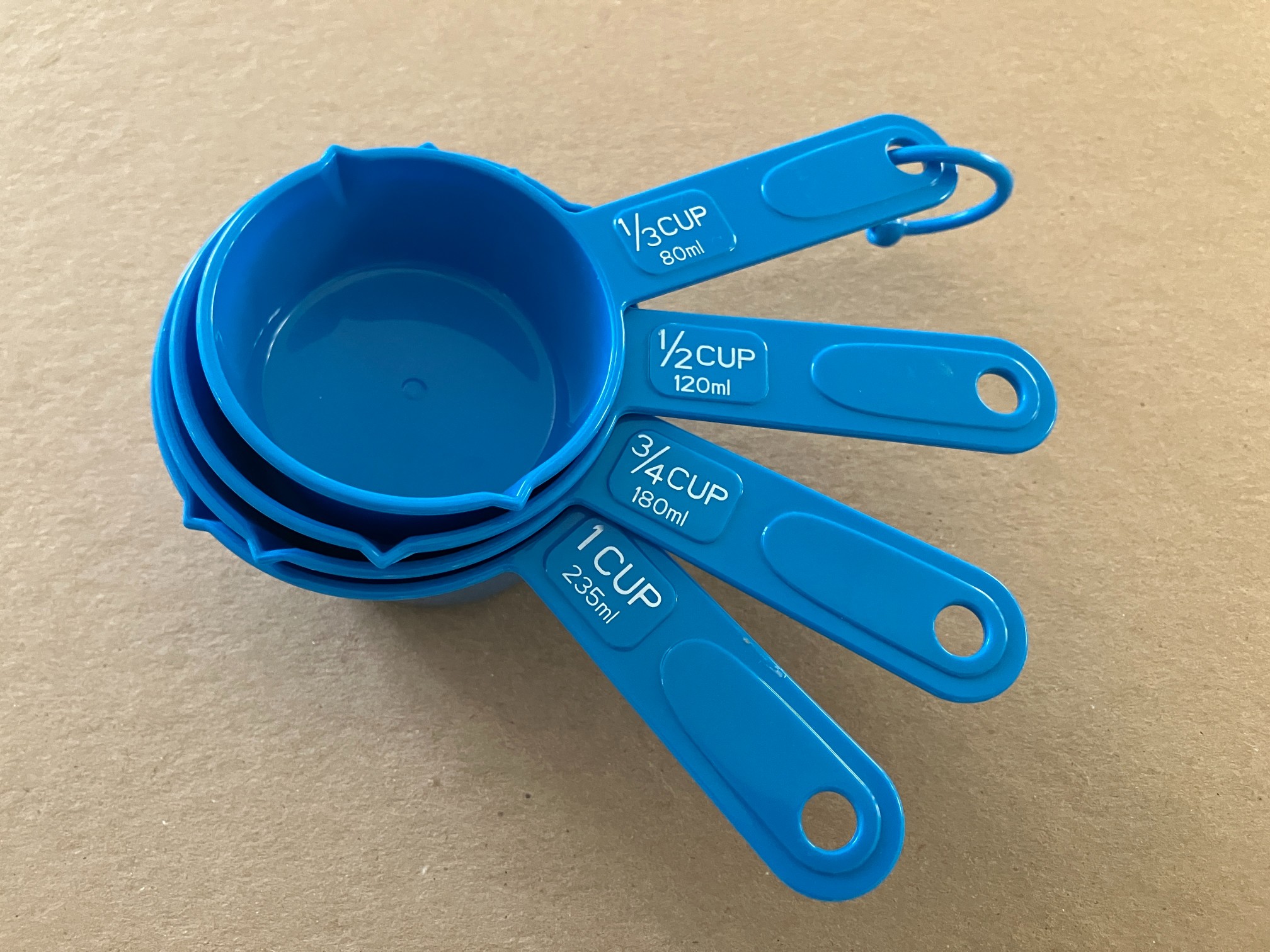
American recipes specified flour in cups rather than by weight, which means the quantity actually used depended on the density of the flour at the moment it was measured.
Exactly the same volume measurement, still dominant in American home baking, with the same underlying problem and a different set of workarounds.
Put the two facts together and the whole thing becomes clear. If flour compacts in storage and recipes measure it by volume, then a cup of flour is not a fixed quantity – it is a fixed space filled with a material of variable density. Sifting standardised the density so that a cup meant the same thing twice.
6. Recipes Distinguished Sifted Flour From Flour, Sifted
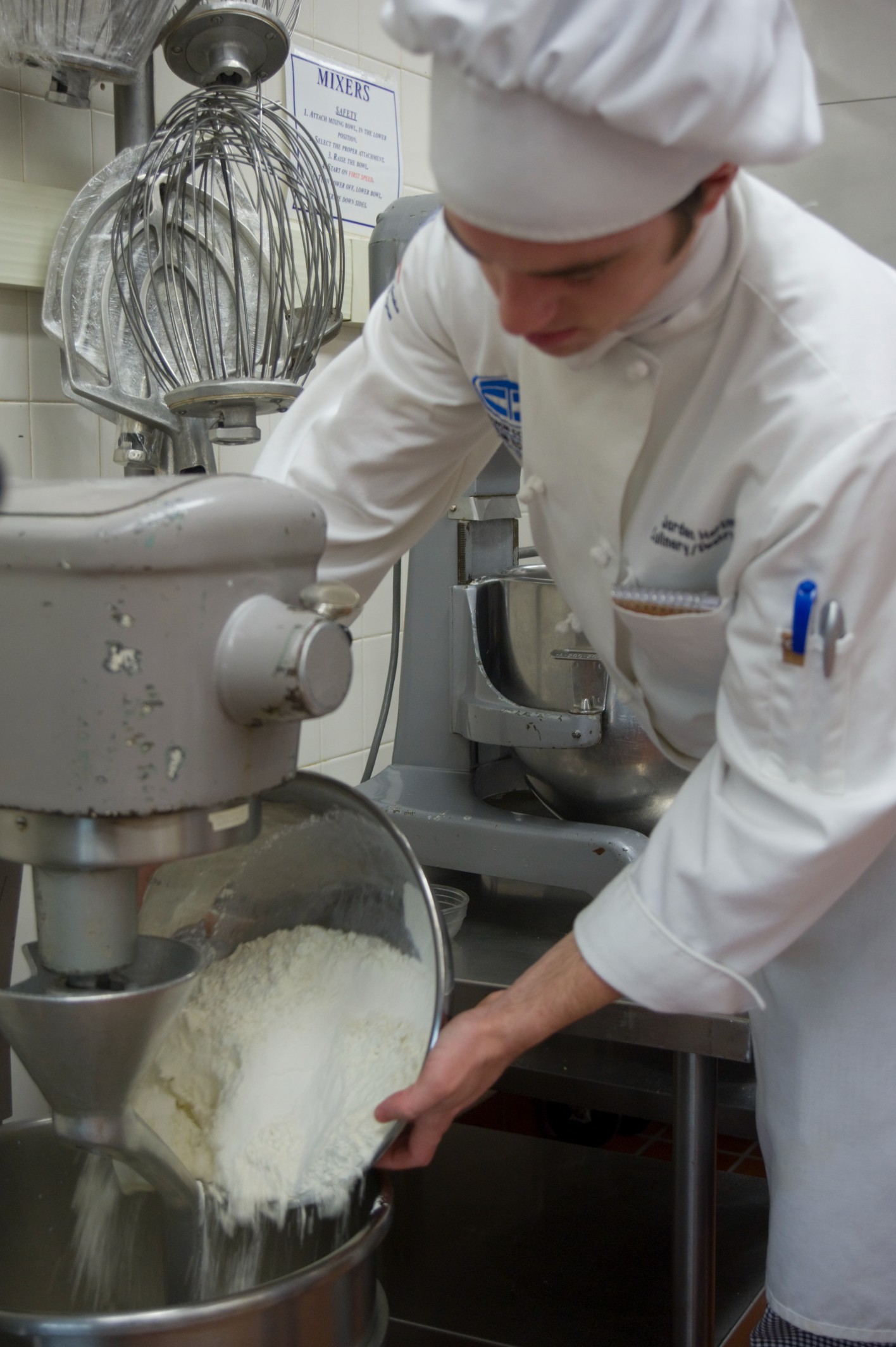
The order of words in a recipe was not casual. One cup of sifted flour means sift first and then measure; one cup of flour, sifted means measure first and then sift – and the two produce measurably different amounts.
Instructions that mostly assume unsifted flour and specify a filling method instead, with the old distinction largely forgotten and occasionally a source of failure in old recipes.
The distinction is the clearest possible evidence that cooks understood the problem precisely. A recipe writer who specifies the order of sifting and measuring knows that the sequence changes the answer, which means the whole convention was built by people thinking carefully about the density of a powder.
7. The Hand Sifter Was a Crank or a Squeeze
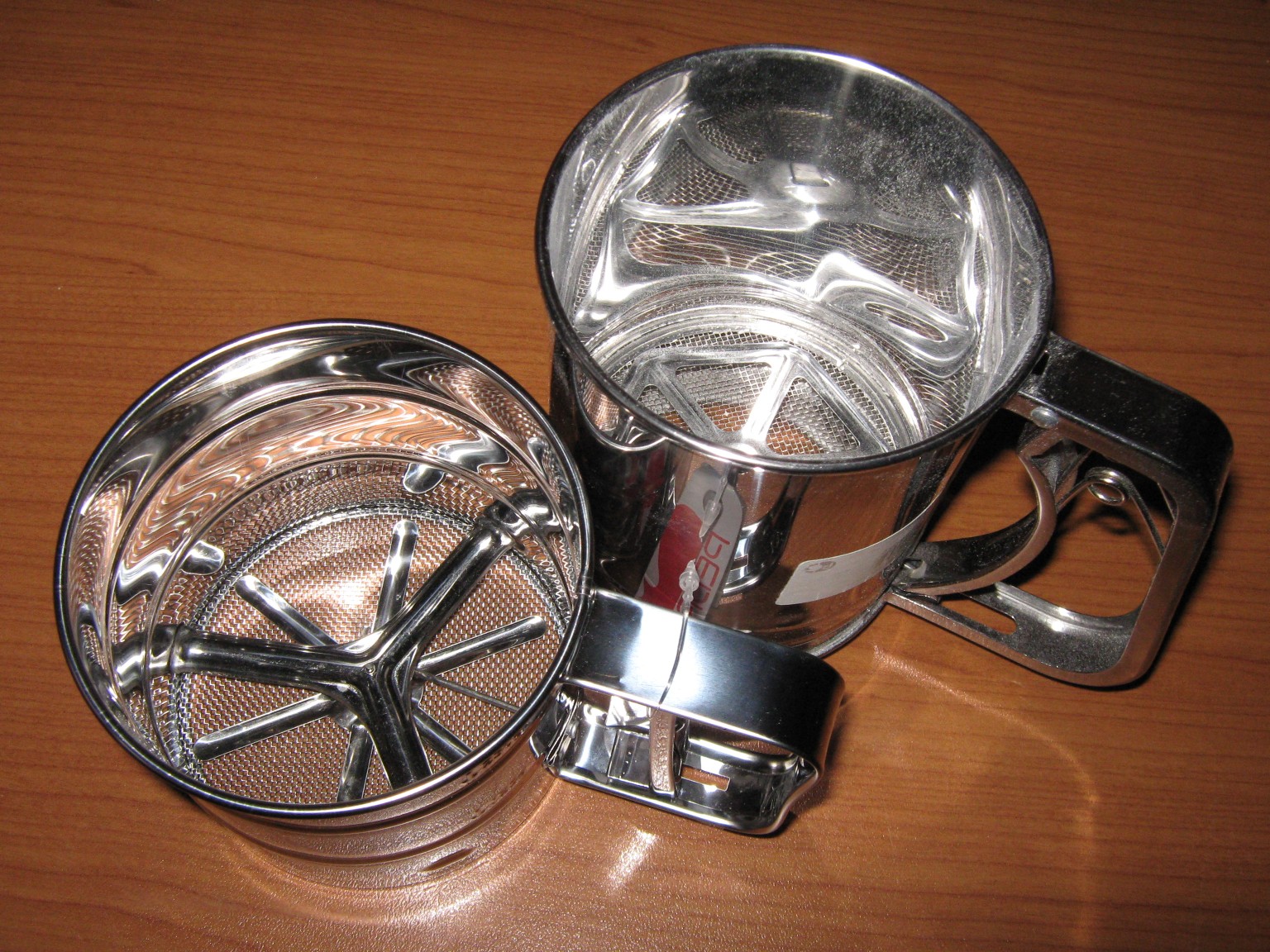
Alongside the cabinet fitting was the handheld version: a tinned steel cylinder with a fine mesh across the bottom and either a side crank turning a wire agitator or a squeeze lever working a sprung mechanism.
The same tools still sold, used by a small minority of bakers, with fine-mesh sieves and whisks having largely replaced the mechanical versions.
The mechanisms are worth a word because they are genuinely clever for the price. A crank turning a curved wire sweeping the inside of a screen, or a sprung lever doing the same thing in short strokes, moves powder through a mesh far faster than tapping a sieve – and both were made in enormous numbers for very little money.
8. Flour Went Off and Households Knew the Signs
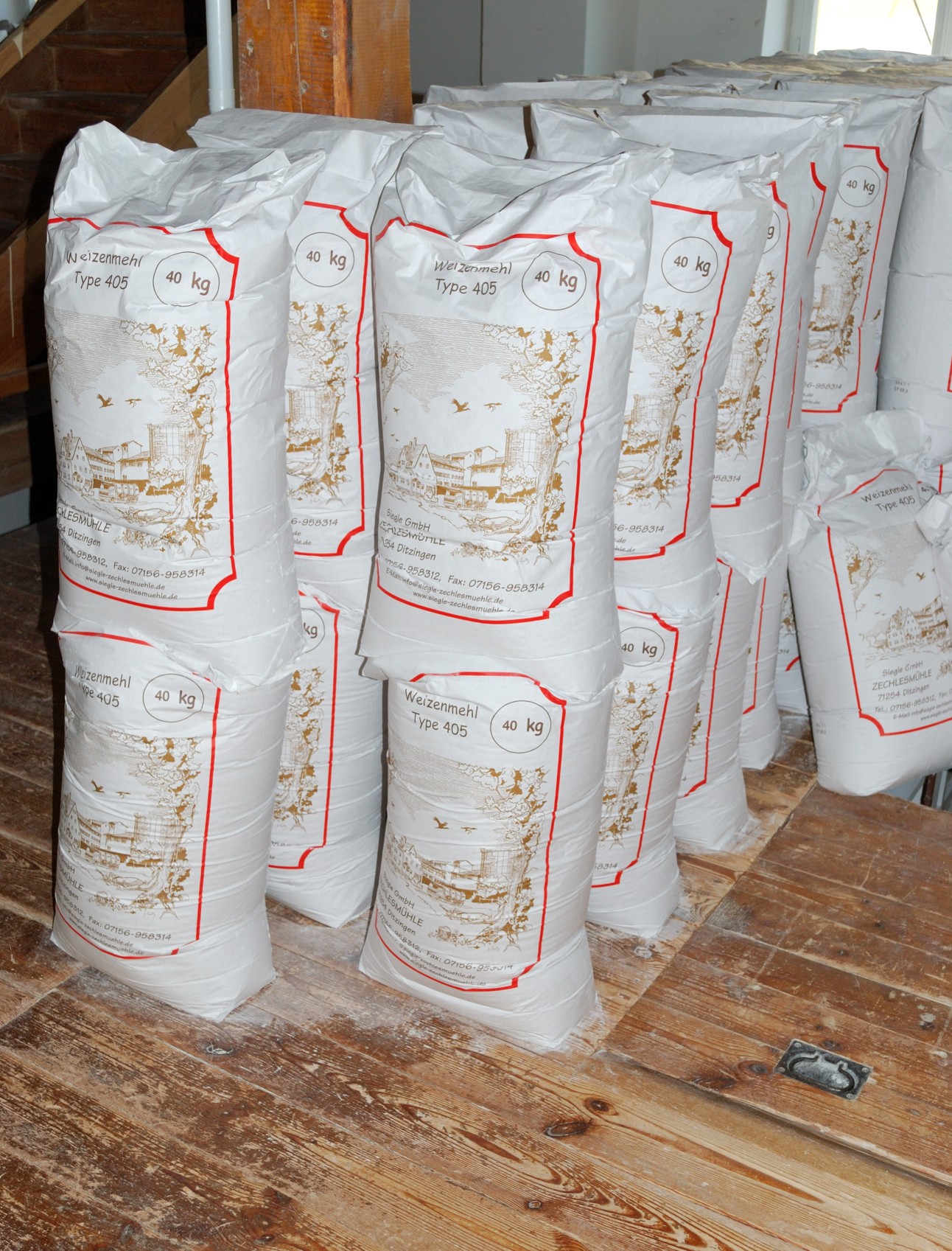
Flour does not keep indefinitely. The oils in it oxidise over months, producing a stale or faintly bitter character, and whole-grain flours go off considerably faster than white because they retain more of the oil-bearing germ.
Smaller quantities turned over quickly, refrigeration and freezing available for anything stored longer, and far less household knowledge about it because the problem rarely arises.
Which is why the bulk purchase had a limit even in a baking household. Fifty pounds is a lot of flour, and a family buying it had to get through it before the weather and time did – so the size of the bin was matched to the rate of use rather than to the best price available.
9. Self-Rising Flour Was a Regional Fact

Flour with leavening and salt already blended into it was a staple in the American South and uncommon elsewhere, which means a recipe’s assumptions about flour varied by region in a way that caused real confusion.
The same regional pattern, substantially intact, and still a recurring source of difficulty when recipes cross regions.
The reason is the wheat. Southern flour was traditionally milled from softer wheat with less protein, which suits biscuits and quick breads rather than yeast bread, and self-rising was sold into exactly that baking tradition – so the regional difference in the bag reflects a regional difference in what people were making.
10. Sifting Was Also Mixing
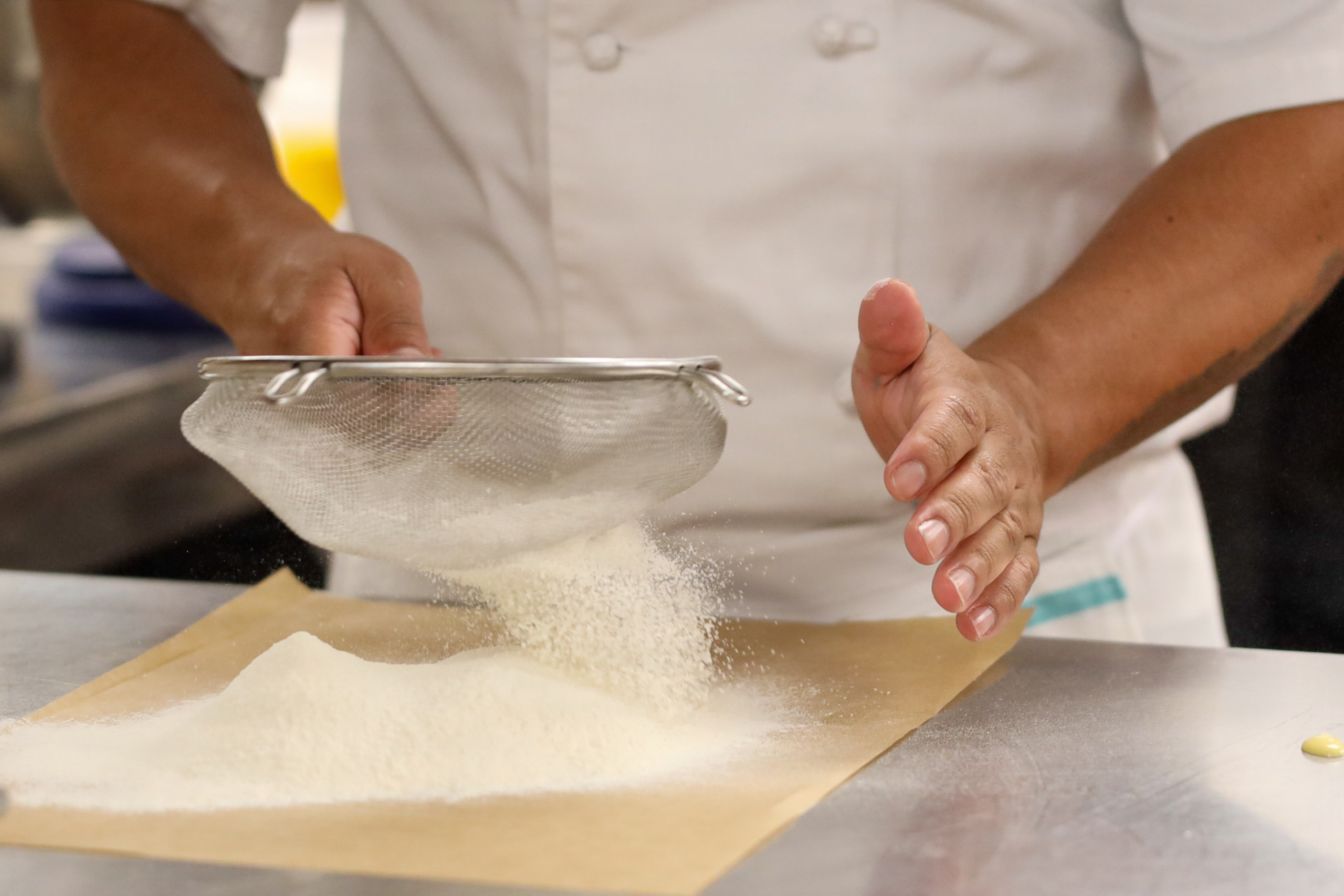
Dry ingredients were frequently sifted together – flour with leavening, salt and spices – because passing them through a screen distributes small quantities of powder through a large one far more evenly than stirring does.
Whisking dry ingredients together in a bowl, which achieves the same distribution and is what most recipes now specify.
This is the function of sifting that genuinely still matters and the one modern baking has kept under another name. A teaspoon of leavening has to be spread evenly through several cups of flour or the result rises unevenly, and a screen does that reliably where a spoon does not.
11. It Was a Job Given to Children
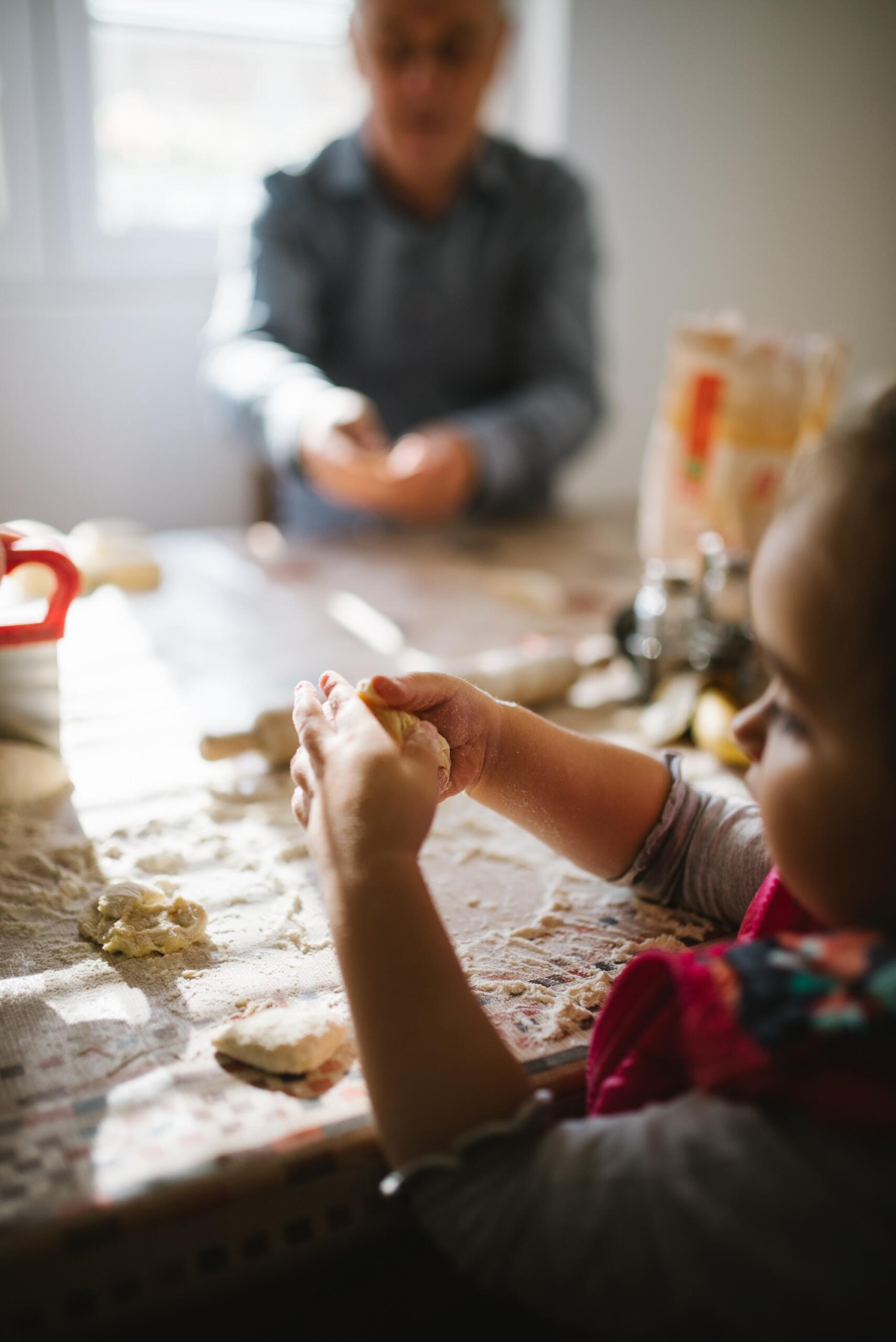
Sifting is repetitive, requires no judgement, cannot easily be done wrong and takes a while – which made it the standard task handed to a child who wanted to help in the kitchen.
Few equivalent tasks, since the step has been eliminated and most of what remains in a kitchen requires either judgement or heat.
Almost everybody who baked with a parent or grandparent in this period was given the sifter, and the memory is consistent: a cloud of flour, a crank that was harder to turn than expected, and a visible result in the bowl – which is a good first job for anybody.
12. Then the Problem Was Renamed Instead of Solved
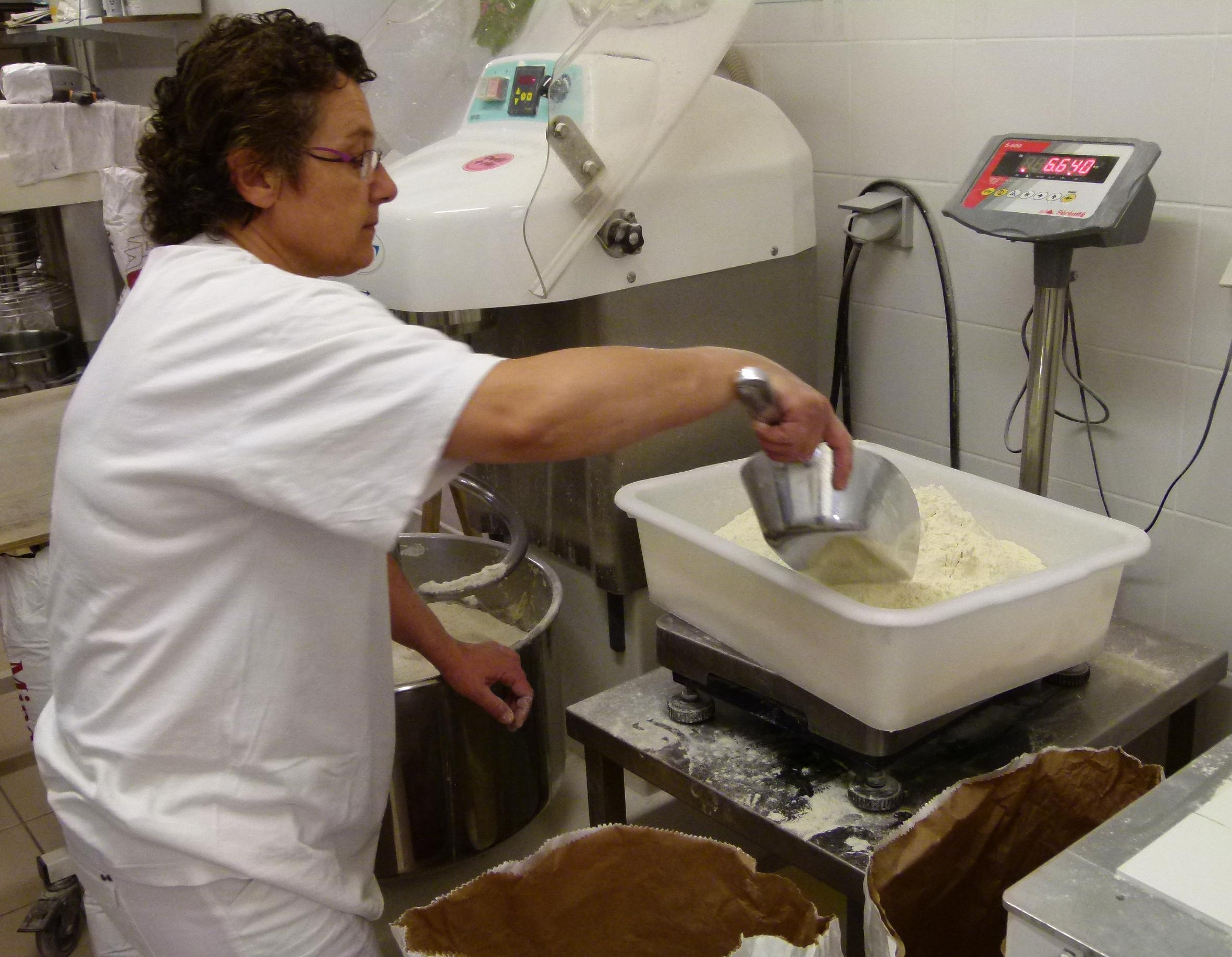
Sifting was a workaround for a specific measurement problem: flour compacts in storage, American recipes measure it by volume, and therefore the same cup can contain substantially different quantities depending on how the flour has been handled.
Recipes that tell you to stir the flour, spoon it into the cup and level it off without packing – which is a different workaround for the identical problem, applied by people who have never heard of sifting.
And the thing worth noticing is that nobody solved it, because the solution was available the whole time and America declined it. Weigh the flour and the problem disappears completely: a quantity by weight is the same quantity whether it is packed, aerated, fresh or six months old, and the entire question of density becomes irrelevant. That is why European baking traditions have no equivalent sifting convention and no spoon-and-level instructions – they weigh, so there is nothing to correct for. American home baking kept volume measurement, which means it has had to keep inventing procedures to compensate: first sifting, then stirring and spooning, now the increasingly common practice of printing gram weights alongside the cups. The sifter has gone from the cabinet and the step has gone from the recipe. The problem it was built for is still sitting in every American cookbook, being managed by a different instruction.
America Chose Cups and Has Been Paying for It Ever Since
Sifting is almost always explained as a way of getting air into flour to make a cake lighter. That is not what it was for, and the real reason is both simpler and more interesting.
It was a measurement correction.
Here is the problem in full. Flour is a fine powder, and fine powders compact under their own weight. Flour that has sat in a fifty-pound bin for two months is packed considerably denser than the same flour freshly screened – which means a given volume of it contains noticeably more material. And American recipes specify flour by volume, in cups.
So a cup of flour is not a quantity. It is a fixed space filled with a substance of variable density, and the amount of flour it holds depends on the history of that particular flour: how long it has been stored, how deep in the container it was, whether it has been moved, whether it was scooped or poured.
Which makes a recipe unrepeatable, and bakers noticed. The response was to standardise the density before measuring – pass the flour through a screen, breaking up the packing and aerating it to a consistent state, and then measure. Sift and the cup means the same thing twice.
That is why recipe writers were careful about word order. A cup of sifted flour tells you to sift and then measure. A cup of flour, sifted tells you to measure and then sift, which gives a different amount of flour entirely. Nobody writes an instruction that precise about a step that does not change the result.
Now, the solution to all of this has existed for as long as the problem. Weigh the flour. A quantity by weight is identical whether the material is packed, aerated, fresh or stale, and the whole question of density simply ceases to exist. This is why baking traditions that weigh have no sifting convention for measurement purposes and no instructions about how to fill a cup: there is nothing to correct for.
American home baking kept the cup, and has therefore had to keep generating workarounds for the same underlying issue.
Sifting was the first. Then, as milling and packing got more consistent and sifting fell out of practice, recipes began specifying a filling method instead: stir the flour in its container to loosen it, spoon it lightly into the cup, and level it off with a straight edge without tapping or packing. That is the identical problem being managed by a different procedure, written for cooks who have never sifted anything in their lives and do not know why they are being told to spoon it.
And the third wave is arriving now, in the increasingly common practice of printing gram weights alongside the cup measures – which is the actual solution, adopted late, in parentheses.
So the sifter is gone from the cabinet and the step is gone from the recipe. The sheet-metal bin has been taken out of a million American kitchens and thrown away.
The problem the whole arrangement existed to solve is still in every American cookbook, on every page, being handled by a sentence about spoons.
If you did this as a child, you remember that the crank was stiffer than you expected and that flour got everywhere.
And if you bake from your grandmother’s recipes, the word order on the flour line is not a typographical accident.
Like our content? Follow us for more.
