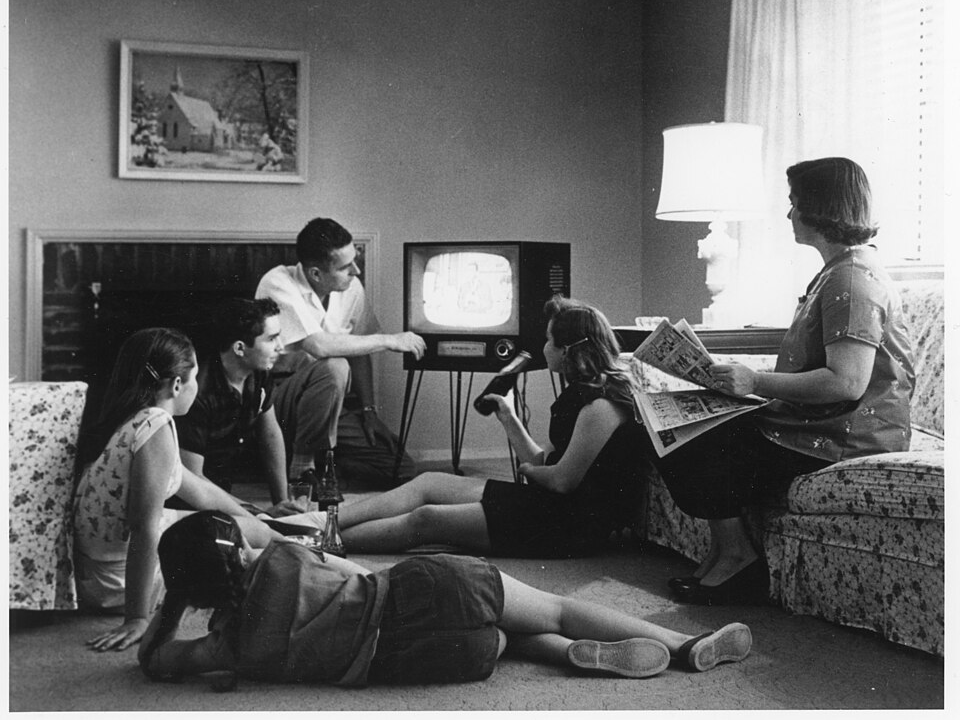
Eyesight was the subject of more confident household folklore than almost any other part of American family health, and nearly all of it ran the same way: something uncomfortable was assumed to be something damaging. Reading in dim light, sitting close to the screen, crossing your eyes and reading small print were all treated as injuries in progress, and none of them are.
This is an account of how the advice changed and is not medical advice; anything about a particular person’s eyes belongs with an optometrist or ophthalmologist. One warning on this list had a real but much narrower basis than anybody stated, one was a correct fact about deficiency misapplied to a population that did not have one, and the last item is the thing that generation did right without ever claiming credit for it. Here are twelve warnings that did not hold up.
1. Reading in dim light will ruin your eyes
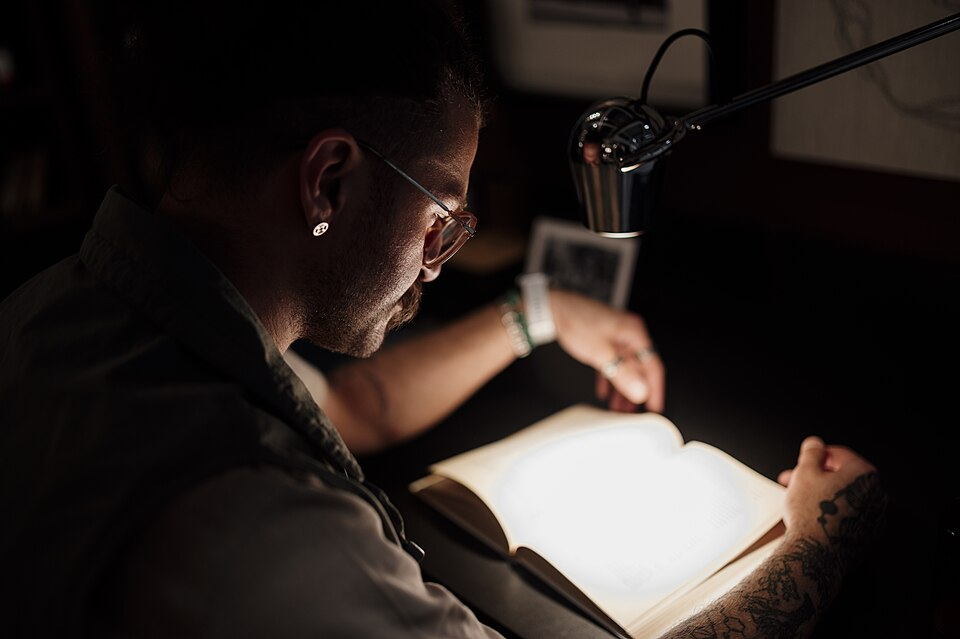
This was the most universal of all of them. A child reading by a bedside lamp, by torchlight under the covers or by the last of the daylight was told, firmly and repeatedly, that they were doing permanent damage, and the instruction carried the weight of obvious fact.
It is not supported. Reading in poor light makes the eyes work harder, which produces fatigue, aching and headache, and all of that resolves once the light improves or the reader stops. There is no mechanism by which temporary accommodative strain produces lasting structural change, and no evidence that a generation of people who read in bad light ended up with worse vision than one that did not.
The confusion is between discomfort and damage, which is the single error running underneath most of the items on this list. Something that hurts is not necessarily doing harm, and a child who finds reading in dim light unpleasant will generally turn a light on without being warned about blindness.
Like our content? Follow us for more.
2. Sitting too close to the television will damage your eyes
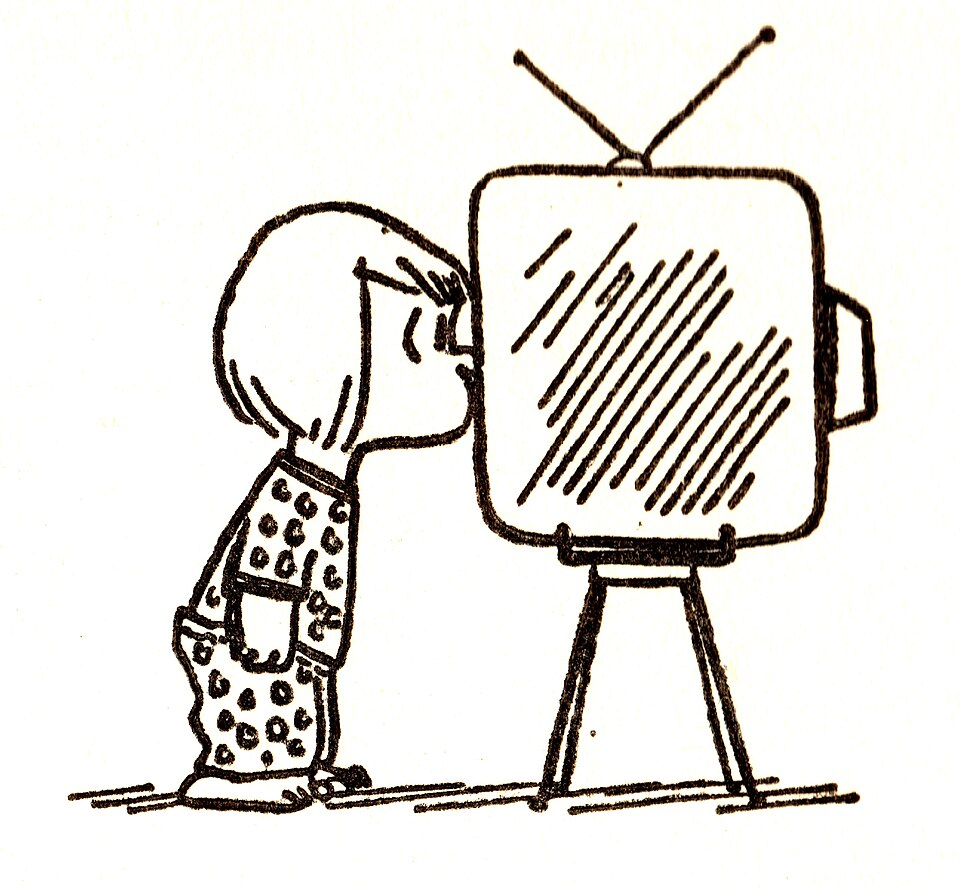
Children were pulled back from the set by the arm. The acceptable distance was stated in feet, it was enforced, and the belief was strong enough that furniture was arranged around it in a great many American living rooms.
Sitting close does not damage the eyes. It can cause the same temporary fatigue as any sustained near focus, and that is the whole of it. The one real hazard from this era was narrower and almost nobody was warned about it correctly: certain 1960s colour sets were found to emit low levels of X-radiation from faulty high-voltage components, which prompted a federal standard, and the problem was a manufacturing defect rather than proximity as such.
The interesting part of the reversal is that the habit often indicated something rather than caused it. A child who sits very close to the screen is frequently a short-sighted child who has not been tested, which means the behaviour parents were correcting was in fact the symptom they should have been investigating.
3. If you cross your eyes they might stick that way
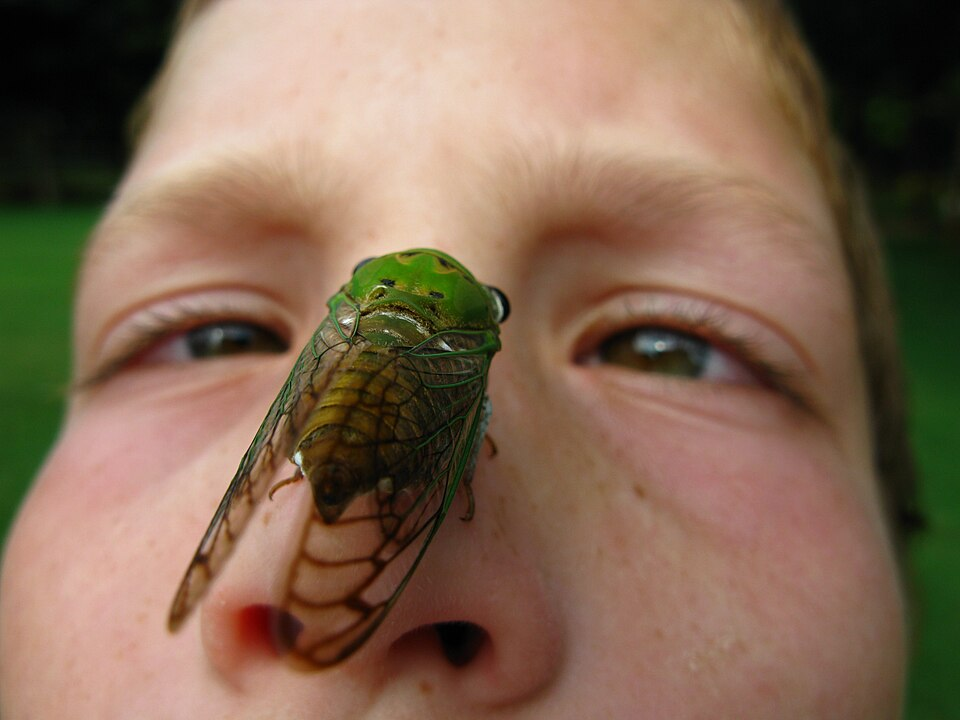
Said to every child who did it for a laugh, and generally believed, with the implied threat that the muscles could lock and leave the face permanently altered. It was one of the more effective pieces of parental deterrence because it was specific and visible.
The eye muscles do not lock. Voluntary convergence is a normal movement and releasing it is equally normal, and there is no mechanism by which holding it briefly produces a fixed deviation. A child can do it all afternoon without consequence.
What makes this one worth including is that a genuine condition sits next to it, which is that a persistent or newly appearing eye turn in a child is a real finding and does need examination. The folk warning attached the alarm to the harmless voluntary version and gave parents no language at all for the one that matters.
4. Eat your carrots and you will see better

Carrots were pressed on American children specifically as an eyesight measure, often with the claim that they allowed pilots to see at night, which was a piece of wartime propaganda that had entered general belief and stayed there.
Vitamin A is genuinely essential to vision and a deficiency causes night blindness and, in severe cases, permanent damage, which is why the claim has a real foundation. The reversal is that supplying more than enough does nothing. A child who is not deficient gains no visual advantage from additional vitamin A, and carrots do not improve normal eyesight at all.
This is the item most worth stating carefully, because vitamin A deficiency remains a leading cause of preventable childhood blindness in parts of the world where diets are limited. The 1965 claim was not nonsense; it was a correct fact about deficiency applied to a population that did not have one.
5. Wearing glasses will make your eyes lazy and dependent on them
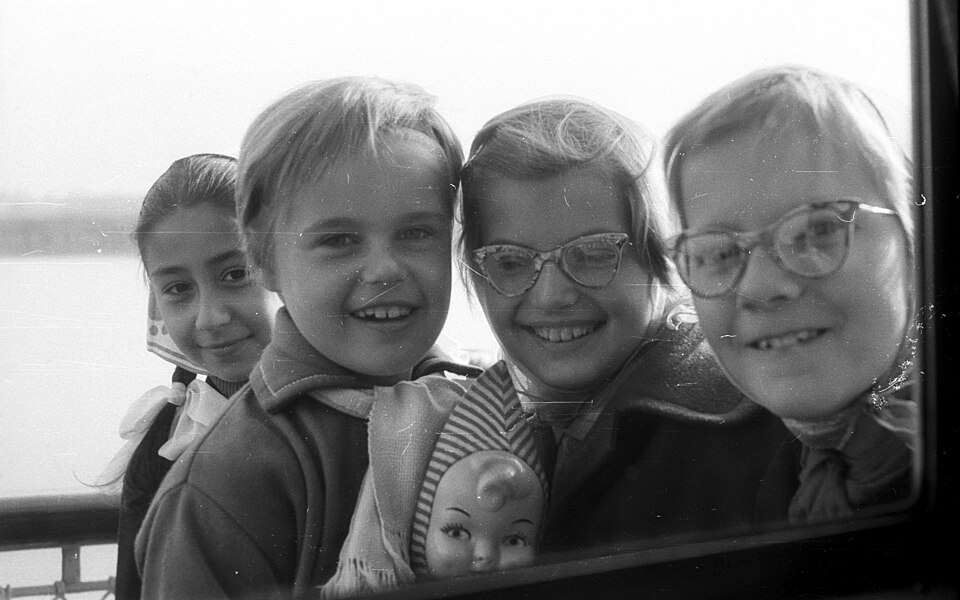
Parents resisted spectacles for children on this reasoning, delayed them, and sometimes had a child wear them only for the blackboard on the theory that constant use would weaken the eye and make the prescription worse.
The eye does not become dependent in the way the belief supposes. Wearing an appropriate correction does not weaken the eye or accelerate the underlying refractive change, and the apparent strengthening of prescriptions through childhood is the eye’s natural growth, which happens whether or not glasses are worn. Undercorrecting a child has been studied as a way of slowing short-sightedness and did not work.
The consequence of this belief was real. A child who cannot see the board does not learn well, a child with a significant uncorrected difference between the two eyes can develop a lasting reduction in vision in the weaker one, and the window in which that is treatable closes. Withholding glasses was the harm.
6. Eye exercises can cure short-sightedness
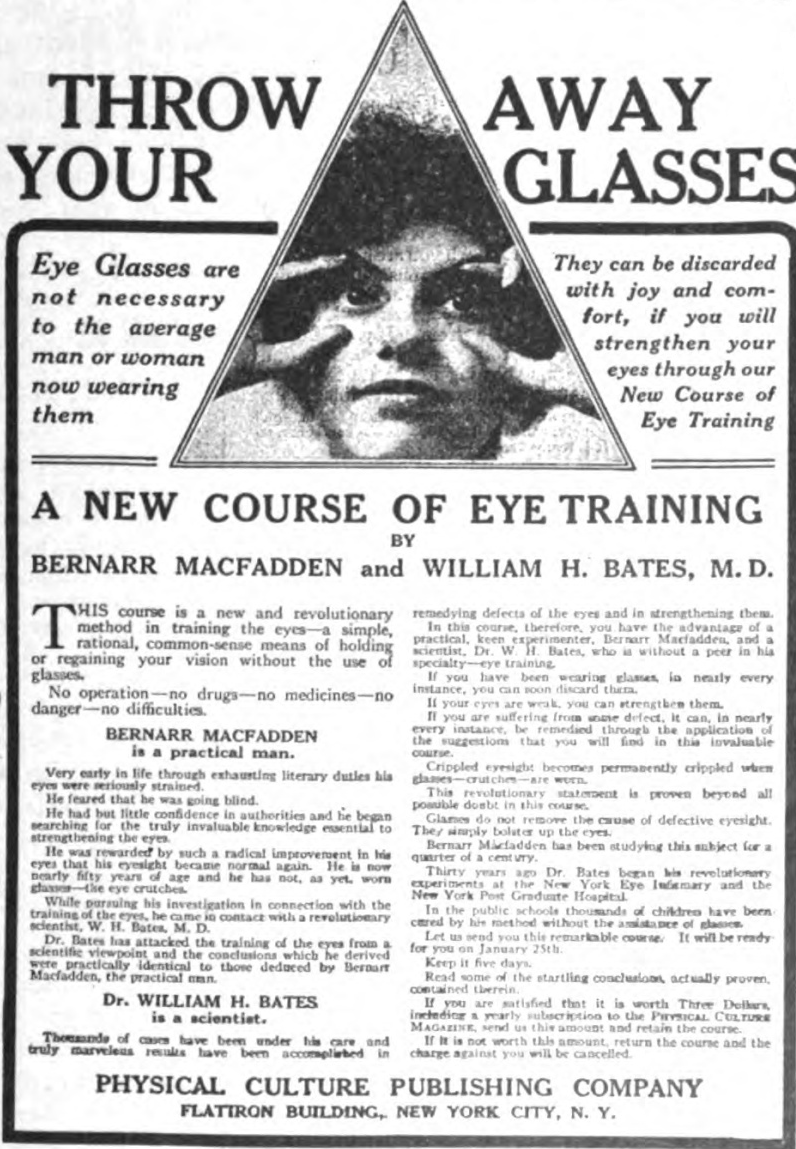
Systems of eye exercises promising to eliminate the need for glasses circulated widely in the American 1960s in books, courses and magazine advertising, and were taken seriously by a lot of parents who wanted an alternative to spectacles.
They do not correct refractive error. Short-sightedness is a mismatch between the length of the eye and its focusing power, it is an anatomical property, and no amount of muscular exercise changes the axial length of an eyeball. The reported improvements are accounted for by practice effects on the test chart rather than by any change in the eye.
Vision therapy does have a legitimate and evidence-supported use for specific binocular problems, convergence insufficiency being the clearest, and conflating that with the claim to cure myopia is unfair to the former. What was being sold in 1965 was the latter.
7. He will grow out of a lazy eye
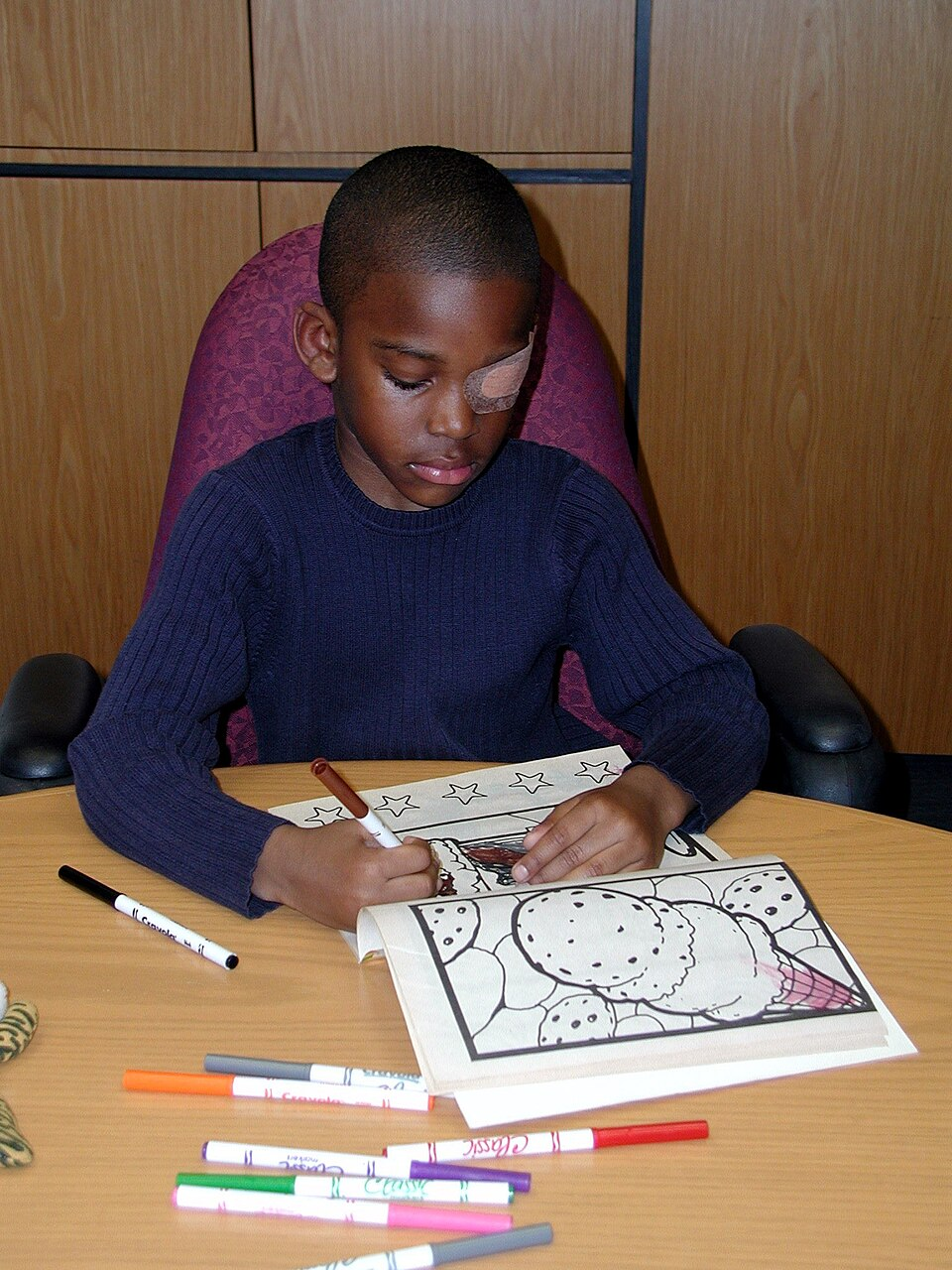
Reduced vision in one eye, with or without a visible turn, was commonly treated as something a child would outgrow. Patching and orthoptic treatment existed, but the first response in many households was to wait and see, and the wait was often years.
Amblyopia does not resolve on its own. It is a developmental condition in which the visual pathway for one eye fails to develop normally, treatment works best in early childhood, outcomes decline substantially as a child gets older, and after the end of the developmental period the loss is largely fixed. This is the reason for population vision screening in young children.
Of everything on this list this is the item with the highest cost, and it is the reason the modern recommendation is a vision check in preschool rather than at school entry. Anything about a particular child belongs with an optometrist or ophthalmologist and not with a list like this one.
8. You only need your eyes tested if you cannot see properly
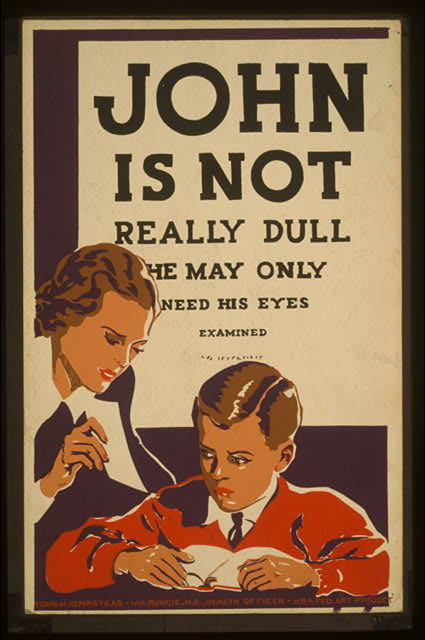
Eye examination in 1965 was symptom-driven in the same way dental attendance was. People went because they had noticed something, children went because a teacher had noticed something, and the idea of an examination in the absence of a complaint was unusual outside of a school screening.
Several conditions produce no symptoms until damage has been done. Glaucoma characteristically takes peripheral vision first and is not noticed until the loss is substantial and irreversible, and diabetic changes in the retina can be well advanced before vision is affected, which is the basis of modern screening at intervals determined by age and risk.
A child’s position is different again. A child who has never seen clearly has no basis for comparison and will not report a problem, because the blurred world is the only world they know, which is exactly why the complaint-led system of 1965 missed so many of them.
9. Reading small print will wear your eyes out
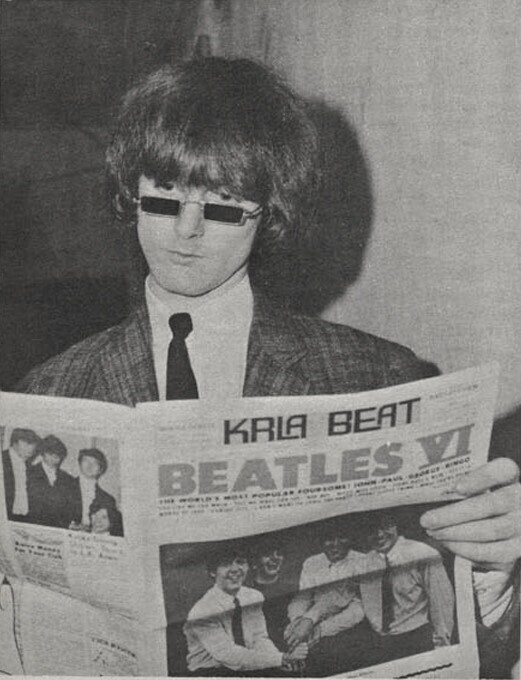
Small print was treated as a hazard in itself. Children were warned off dense books, and the gradual difficulty with small print that arrives in middle age was understood as the accumulated cost of a lifetime of reading it.
The middle-age change is presbyopia, the progressive loss of the lens’s ability to change shape, and it is a property of the ageing lens that arrives on schedule regardless of how much reading a person has done. A lifelong reader and a non-reader reach it at the same point.
The eyes are not a finite resource that is spent by use, and that metaphor underlies a surprising number of the 1965 warnings. It is also the hardest to dislodge, because the timing of presbyopia happens to coincide with a long reading life and the correlation looks convincing.
10. Sunglasses are vanity rather than protection
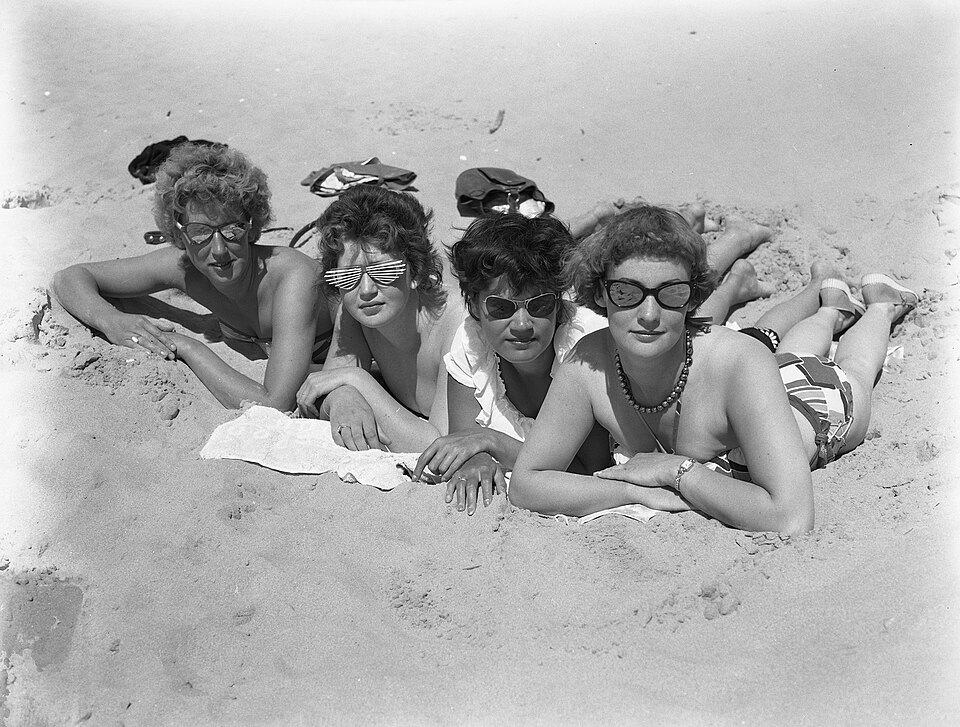
In 1965 sunglasses were understood largely as fashion or as something for glare on the water, they were not thought of as protective equipment, and children very rarely wore them. Nobody checked what a cheap pair actually filtered.
Cumulative ultraviolet exposure is now an established contributor to cataract and to several other ocular conditions, including growths on the surface of the eye, and American guidance is for eyewear blocking essentially all UVA and UVB, with children included because the lens of a young eye transmits more of it. Tint darkness is not the same thing as UV protection.
This is the clearest case on the list of a protective measure that was available, cheap and simply not understood. The generation warned at length about reading in bad light was not warned at all about sun exposure, which was the exposure that actually mattered.
11. The television set itself was giving off something harmful
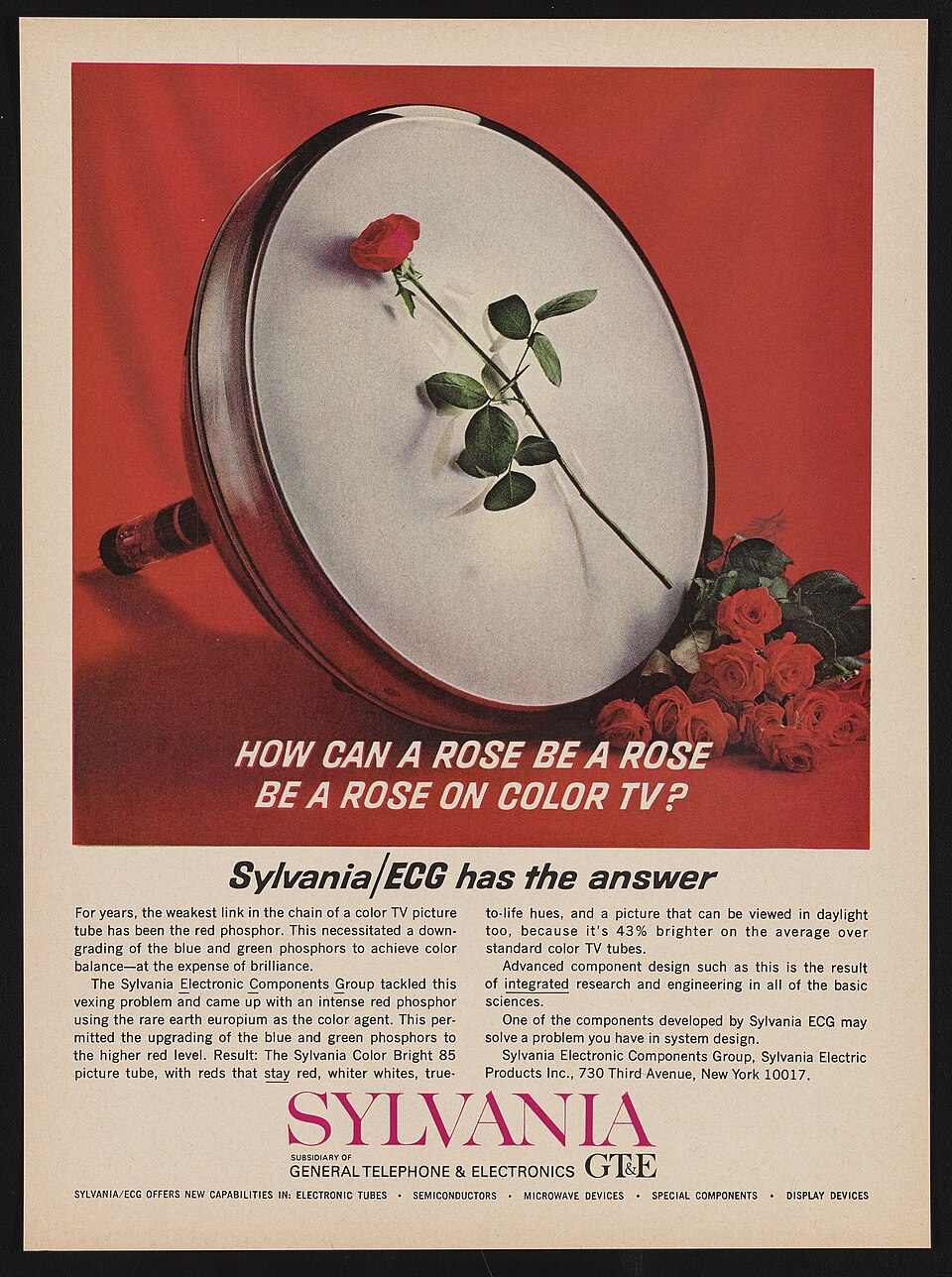
A persistent worry of the period held that the set emitted something dangerous, which parents attached to the nearest available instruction, which was to sit further back. The warning was vague and the reasoning was never explained.
There was a real event underneath it. In the late 1960s certain colour receivers were found to emit low levels of X-radiation because of faults in high-voltage regulation, which led to a federal performance standard for television receivers, and the problem was corrected in manufacture. Distance from the screen was never the remedy and modern flat panels emit nothing of the kind.
It belongs on a list of overturned warnings because of the shape of it rather than the content. A real but narrow manufacturing defect became a vague household rule about sitting too close, the rule outlived the defect by decades, and almost nobody who enforced it could have said what it was for.
12. And the thing 1965 got right entirely by accident
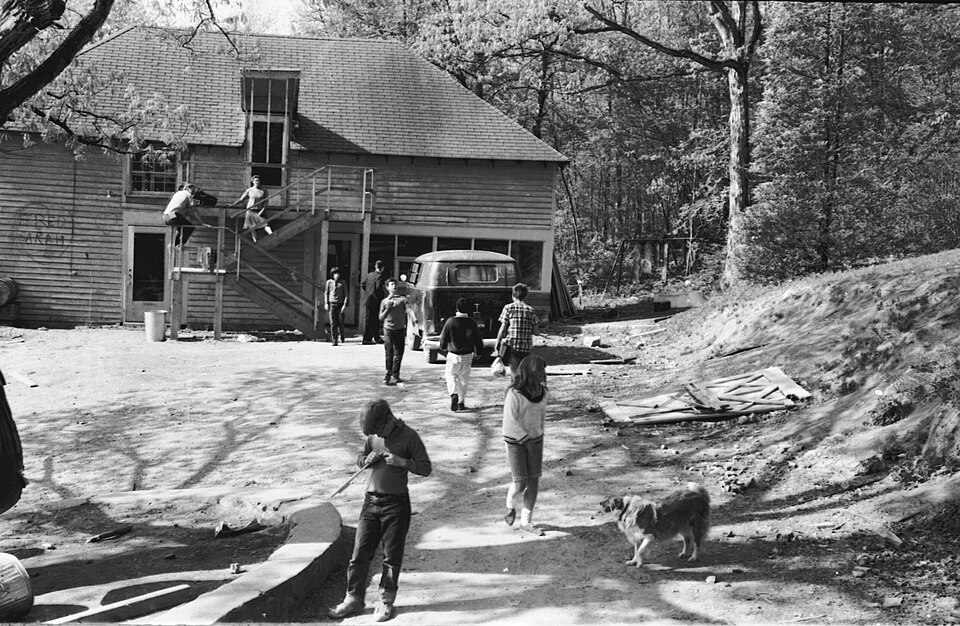
Children in 1965 were sent outside. It was not done for their eyesight and nobody claimed it was; it was done because the house was small, the parents wanted quiet and outdoor play was the default state of childhood rather than a scheduled activity.
Time spent outdoors in childhood is now associated with a reduced incidence of short-sightedness, the effect has held up across multiple populations, and school-based trials that increased outdoor time have reported lower rates of onset. The mechanism is not settled, with outdoor light levels the leading candidate rather than distance viewing, but the association is among the more robustly replicated findings in the field.
So the eleven things parents said were wrong and the thing they did without comment was right. That is a reasonable note to end on, because the pattern in this list is not that 1965 was credulous but that it reasoned confidently from discomfort to damage, and missed the two exposures — sunlight and the lack of it — that turned out to matter.
Discomfort is not damage

The single error underneath nearly every item here is the assumption that the eyes are a finite resource spent by use, and that anything which makes them ache is therefore wearing them out. It is an intuitive model and it is wrong in both directions. Sustained near focus produces real fatigue that resolves completely, while the exposures that cause lasting change — ultraviolet light over decades, an uncorrected refractive difference during a child’s development, pressure in the eye that produces no sensation at all — announce themselves either very late or not at all.
That explains the strange shape of 1965 advice. The warnings were loud about everything harmless and silent about everything that mattered, because the household could feel the first category and had no way of detecting the second. Screening programmes exist precisely because the serious conditions do not hurt.
Two things from this list are worth acting on. A young child’s eyes should be checked before school rather than when a problem is noticed, because a child who has never seen clearly has nothing to compare and will not complain, and because reduced vision in one eye is treatable early and largely fixed later.
The other is sunglasses, for children as well as adults, chosen for UV blocking rather than how dark the lenses look. It is cheap, it is uncontroversial, and it is the one protection that generation was never offered.
Like our content? Follow us for more.