

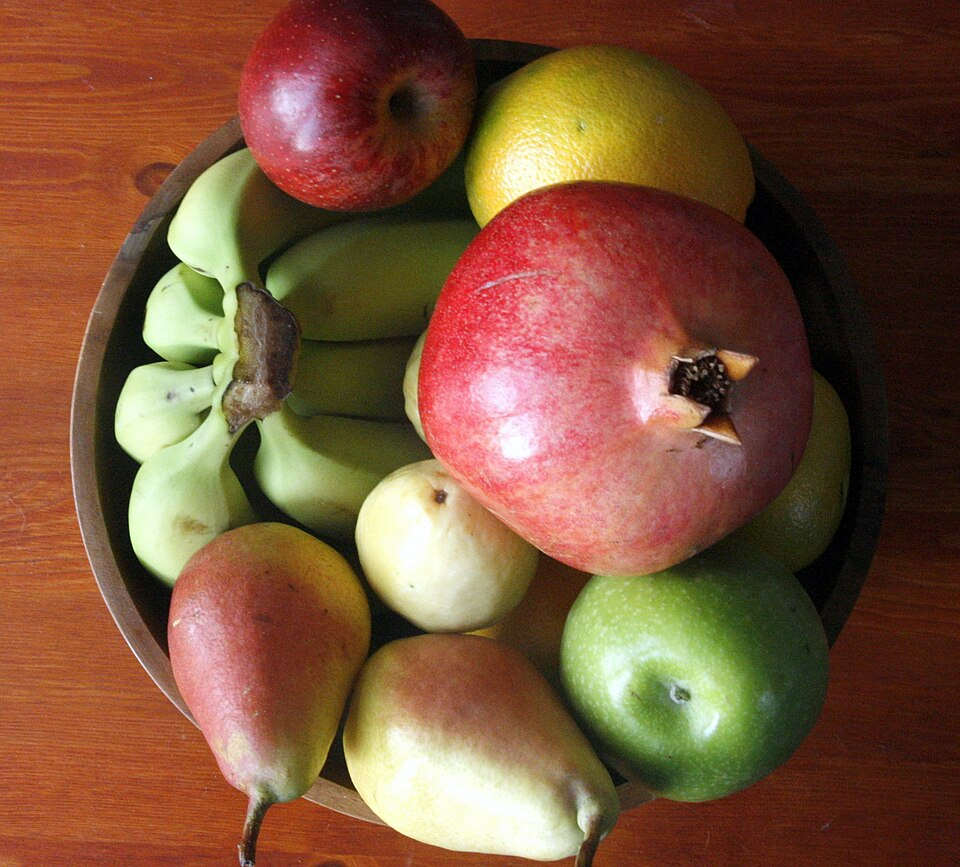
The American winter fruit bowl of 1962 was not a smaller version of a modern one. It was a different set of objects, assembled according to what could be stored, dried, canned or kept cold through a winter, and several of the things in it no longer exist in the form they took then. Several things in a modern bowl were not available in the country at all.
What dissolved the difference was not farming but freight: southern hemisphere growing seasons, container shipping, an unbroken cold chain and air freight for anything valuable enough to justify it. Here are twelve things that were in that bowl, or conspicuously were not.
1. Apples, in varieties that no longer exist commercially
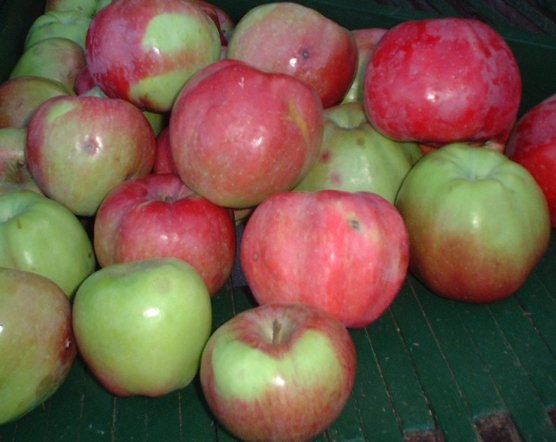
The winter apple was the backbone of the bowl, and it came out of cold storage rather than off a tree. A 1962 American market carried names that have largely disappeared from the trade: Winesap, Northern Spy, Baldwin, Gravenstein, Rhode Island Greening, Ben Davis. Each had a season, a use and a reputation, and a household knew which one it wanted for eating and which for pie.
What replaced them was a much smaller set bred for shipping, uniformity and shelf life, and for most of the following decades the American apple aisle narrowed to a handful of names. The change was not driven by taste. A variety that bruises in transit or loses condition in a warehouse costs money at every stage, and the ones that survived were the ones that travelled.
There is a genuine reversal in progress here, which is that the named old varieties are coming back through farmers markets, cider makers and nurseries selling heritage trees. The ones a 1962 shopper took for granted are now the ones sold as a specialty, at a price that would have astonished them.
Like our content? Follow us for more.
2. Oranges, which were still a treat rather than a staple
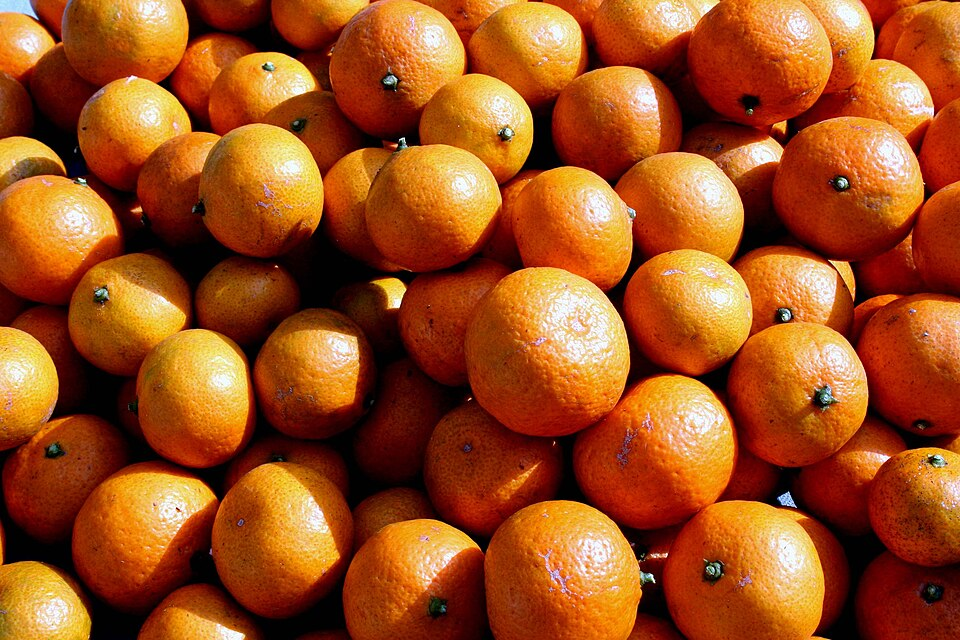
The orange in a Christmas stocking was not a joke or a piece of thrift mythology. Within living memory of 1962 it had been genuinely seasonal and genuinely special, and the custom survived into a period when oranges were available because the meaning had outlasted the scarcity.
What changed was not the fruit but the processing. Frozen concentrated orange juice, developed in the 1940s, turned the Florida crop into a year-round commodity and reorganised the entire industry around juice rather than fresh fruit. By the 1960s a great deal of the American orange crop was never seen whole by anybody.
The fresh orange in the bowl was therefore a declining proposition even as it became more available, and the modern version of the same fruit arrives already squeezed, pasteurised and in a carton. The stocking orange persists as a custom in families who could not now say what it was for.
3. Bananas, of a variety that was about to be wiped out
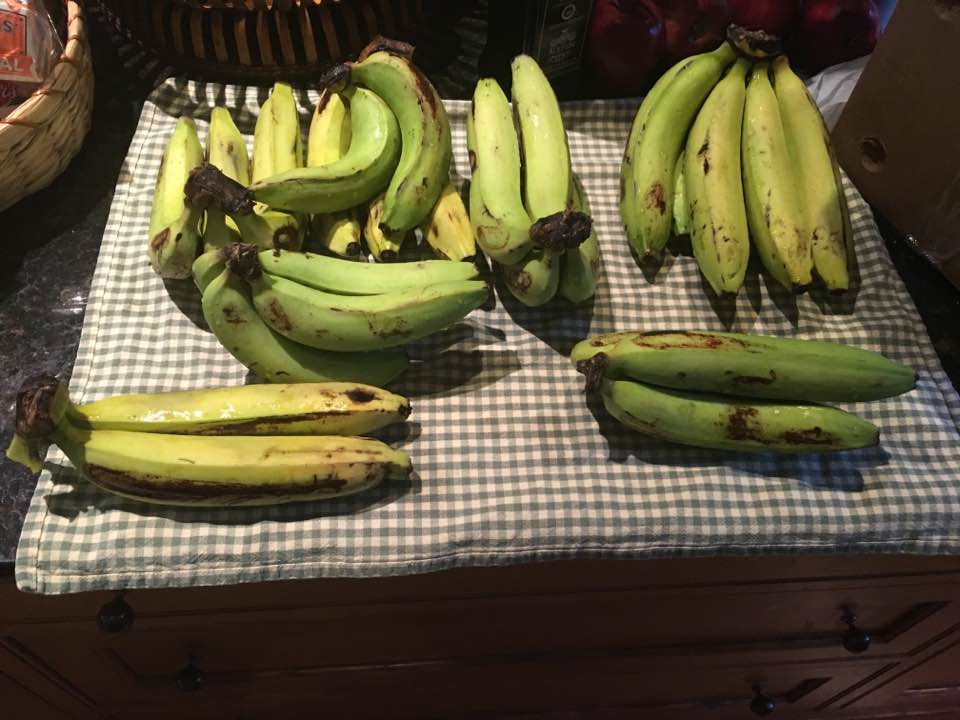
The banana in a 1962 American bowl was almost certainly a Gros Michel, the variety that had built the entire trade. It was larger, thicker-skinned and by all accounts better flavoured than what followed, and it shipped well because the skin was tough enough to survive handling.
Panama disease, a soil-borne fungal wilt, destroyed it. The fungus spread through Central American plantations through the 1950s, it could not be treated and infected ground could not be replanted, and by the early 1960s the industry had switched to the Cavendish, which was resistant, smaller and less flavoursome, and which required new packing and shipping methods because it bruised.
The switch was effectively complete during the decade, which means a bowl in 1962 was at the hinge point. Anybody who says bananas used to taste better is describing a real difference and not nostalgia, and the Cavendish is now under pressure from a new strain of the same disease.
4. Grapefruit, which was eaten with a spoon and a serrated knife
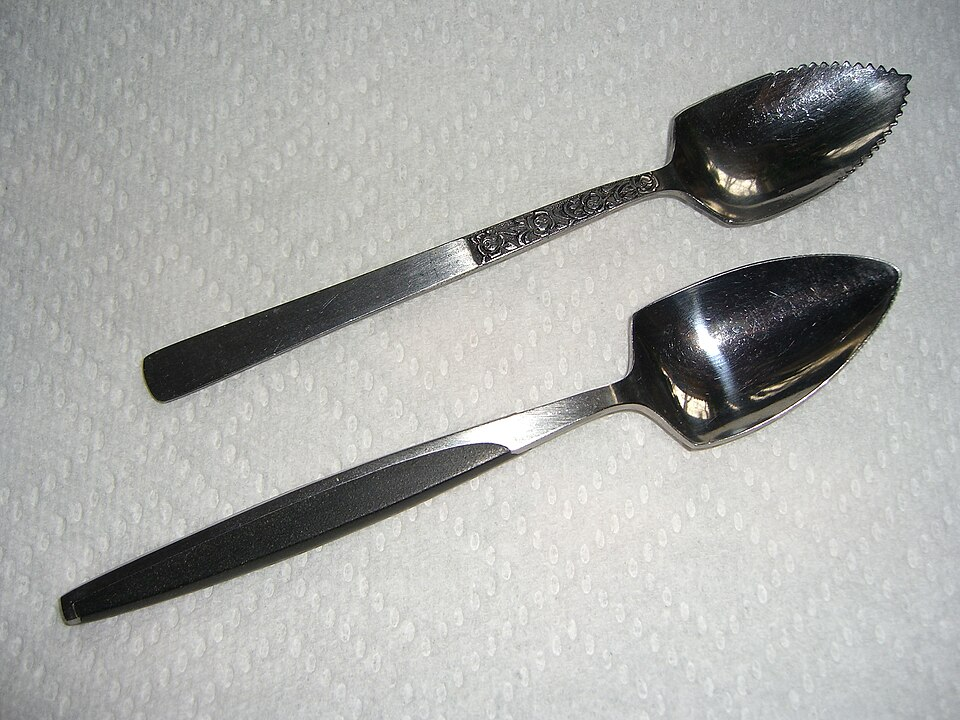
Grapefruit occupied a strange position in the 1962 household: half of one, scored into segments, sprinkled with sugar and eaten from a dish with a pointed spoon, usually at breakfast and usually by adults. Specialised grapefruit spoons and curved knives were standard wedding-present material.
The fruit itself was mostly white-fleshed and sharply sour, which is why the sugar was not optional. The pink and ruby varieties that dominate now were bred and promoted later, and the shift toward sweeter, less bitter flesh is one of the clearest examples of a fruit being reshaped to suit the market rather than the reverse.
What changed the grapefruit’s position most, though, was pharmacological rather than agricultural. It is now known to interfere with the metabolism of a long list of common medications, which is why a modern patient may be told to avoid it entirely, and that warning has quietly removed it from a great many breakfast tables.
5. Pears, which had to be bought hard and ripened at home
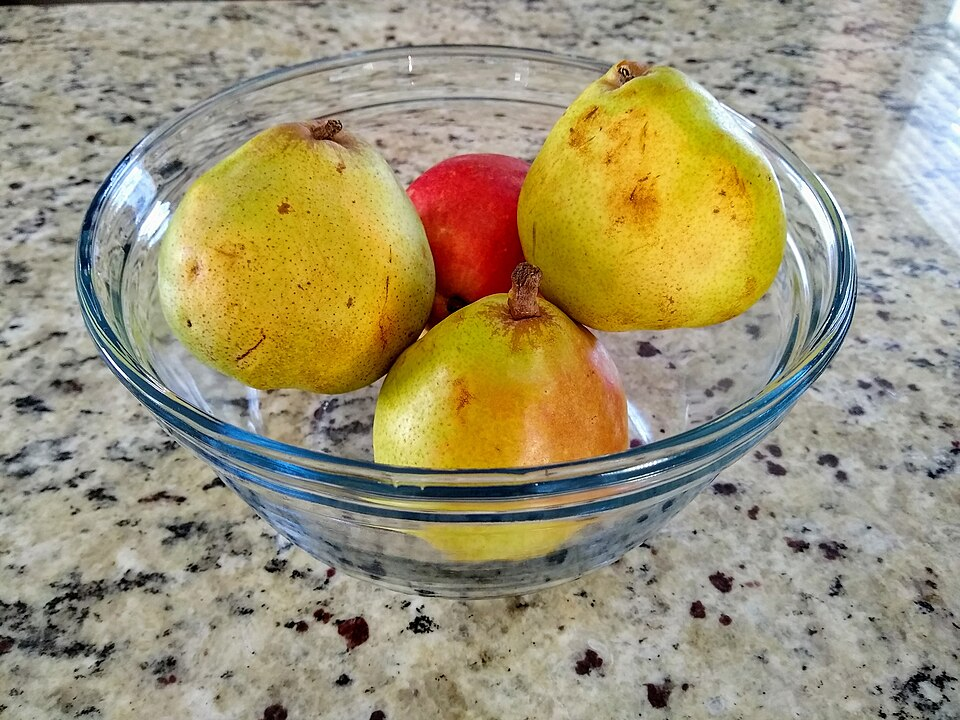
A 1962 pear came out of cold storage rock hard, because a pear picked ripe will not survive transport. The household instruction was to buy them firm and leave them in a bowl or a paper bag for a few days, pressing the neck near the stem to judge when they were ready.
That is still the correct method, and it is one of the few pieces of 1962 fruit knowledge that has survived unaltered, mainly because there is no way around it. A pear ripens properly only off the tree, and the window between hard and overripe is narrow enough that supermarkets still cannot solve it.
What has gone is the knowledge itself. The neck test was general household competence in 1962 and is now the sort of thing people look up, which is why so many pears are eaten hard or thrown away soft and so few are eaten at the two-day point where they are worth having.
6. Dates, sold as a pressed block rather than loose
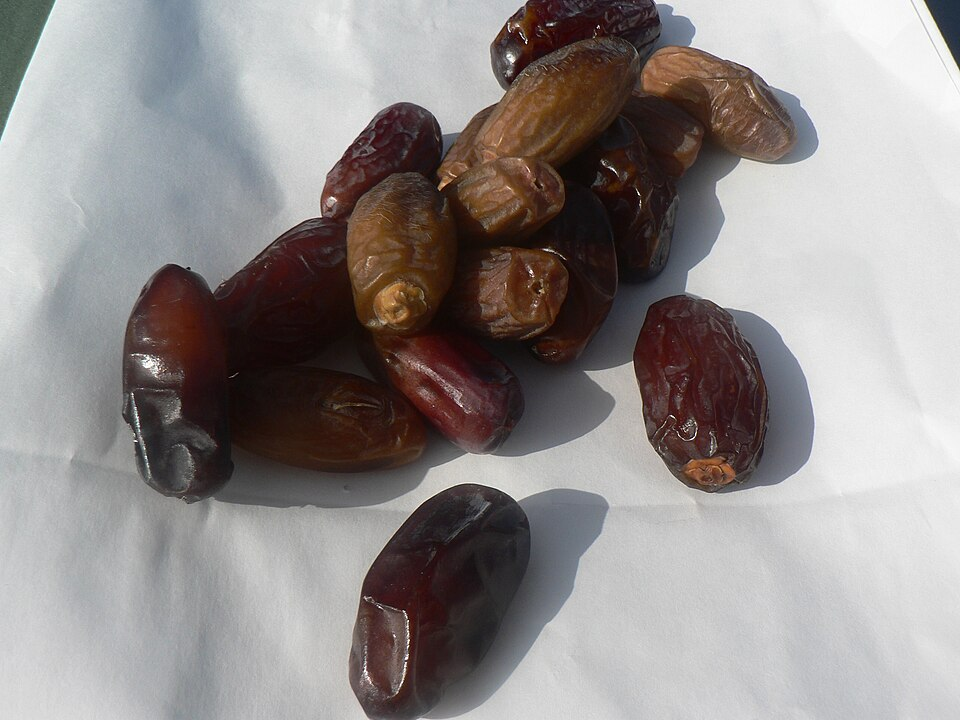
Dates arrived in a solid pressed slab, often in a wooden box or a long cardboard package, and were cut from it with a knife. They were sticky, intensely sweet, extremely cheap for the sugar they delivered, and they appeared in the bowl mainly between November and January.
The American date industry was concentrated in the Coachella Valley in California, built from imported offshoots in the early part of the century, and by 1962 it supplied most of what the domestic market ate. The pressed block was simply the cheapest way to move a fruit that is already most of the way to preserved.
Loose whole dates in a tub are now the normal form and the pressed block has nearly vanished from general grocery, surviving mostly as a baking ingredient. The fruit went slightly upmarket on the way, which is an unusual direction of travel for anything in this list.
7. Figs, dried and threaded on a string
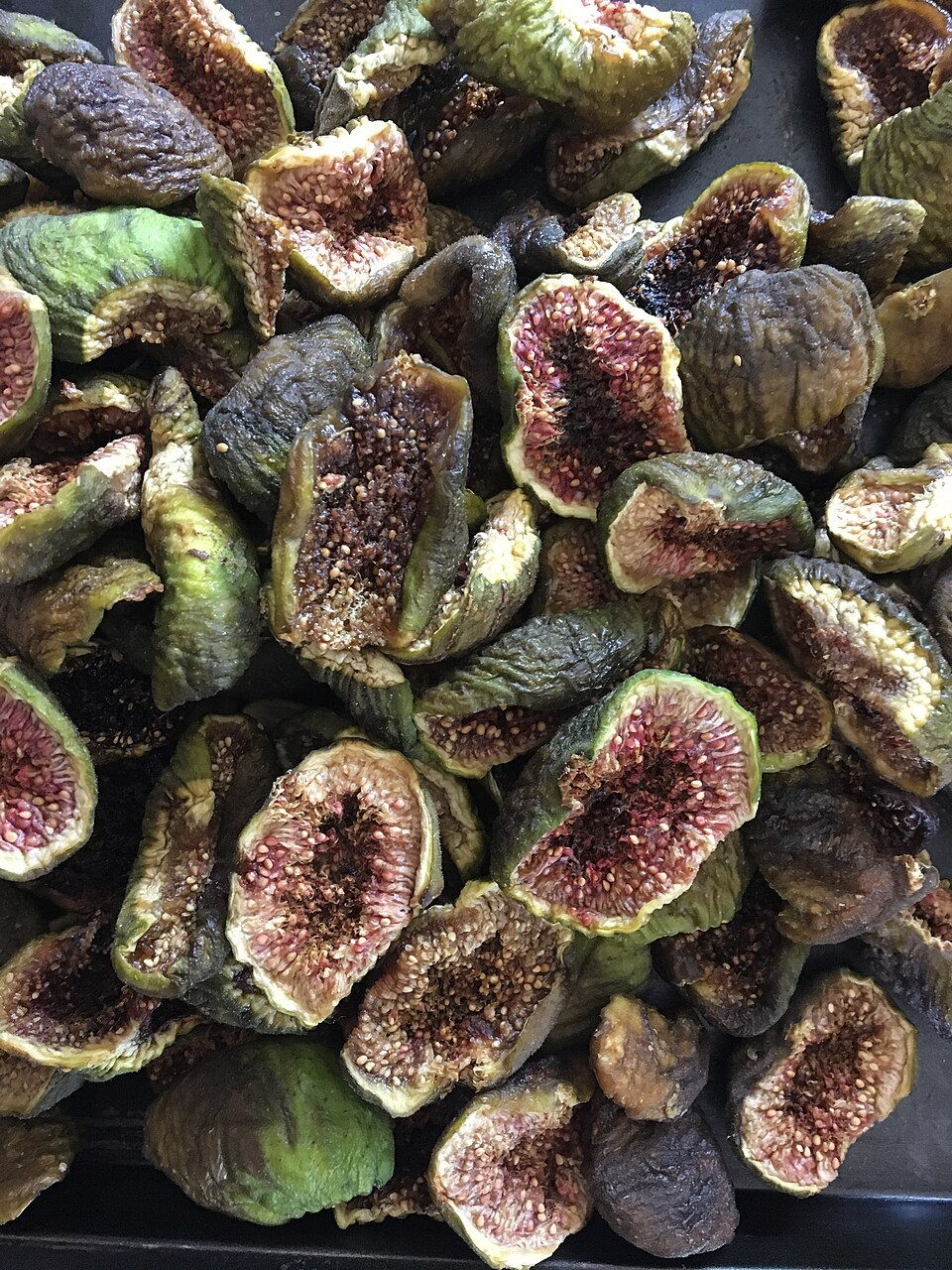
Dried figs came pressed into a ring or threaded on raffia, and they were a winter item in the same category as the dates: sweet, keeping indefinitely, requiring no refrigeration and bought in the weeks before Christmas as a matter of habit rather than decision.
Fresh figs barely existed in the American winter market and were not really expected to. The fruit does not travel well, the domestic season is short, and a 1962 shopper outside a growing region would have had no reasonable expectation of seeing one in January.
The strung ring has gone almost entirely. What is interesting is that the fresh fig is now the more available of the two in a good winter supermarket, flown in from the southern hemisphere, which exactly inverts the 1962 position.
8. Nuts in their shells, with a nutcracker in the bowl
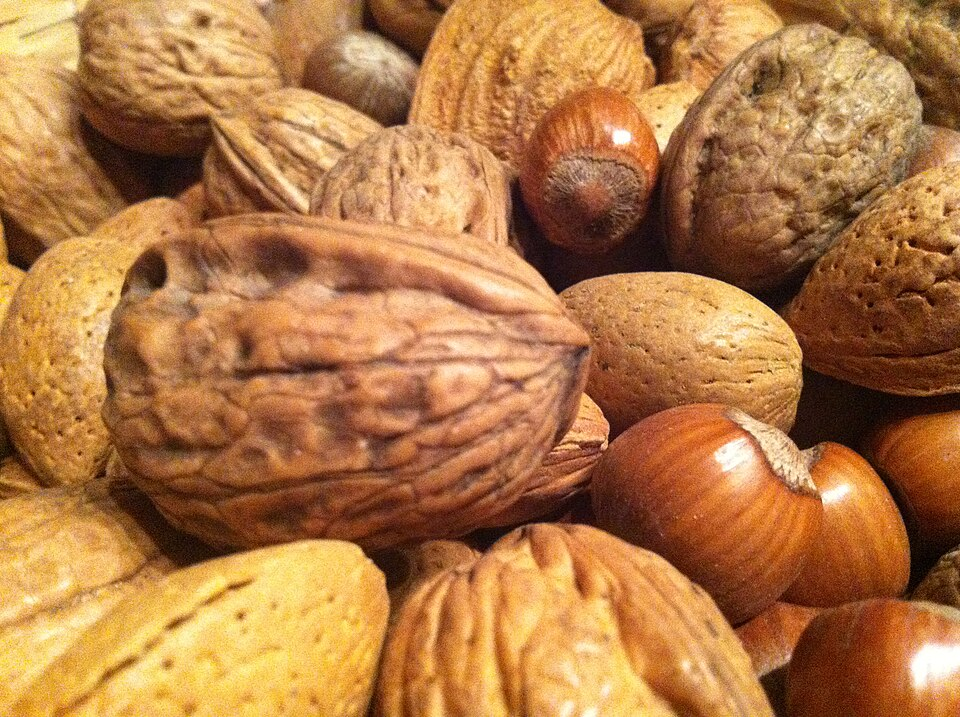
The winter bowl was as much nuts as fruit: walnuts, pecans, Brazil nuts, almonds, filberts, all in shell, with a metal nutcracker and a pick sitting among them. Shelling them was an activity rather than a chore, and it occupied children for a useful length of time.
The in-shell trade was a function of storage rather than preference. A nut in its shell keeps for months without refrigeration while a shelled nut goes rancid, and in a period with limited home refrigeration the shell did the work that a sealed vacuum pack and a cold aisle do now.
Shelled nuts in sealed bags are now the default and the bowl-and-nutcracker has retreated to Christmas as a piece of deliberate staging. The Brazil nut in particular has become expensive enough that its position as the one nobody could crack reads oddly now.
9. Pineapple, which came out of a can
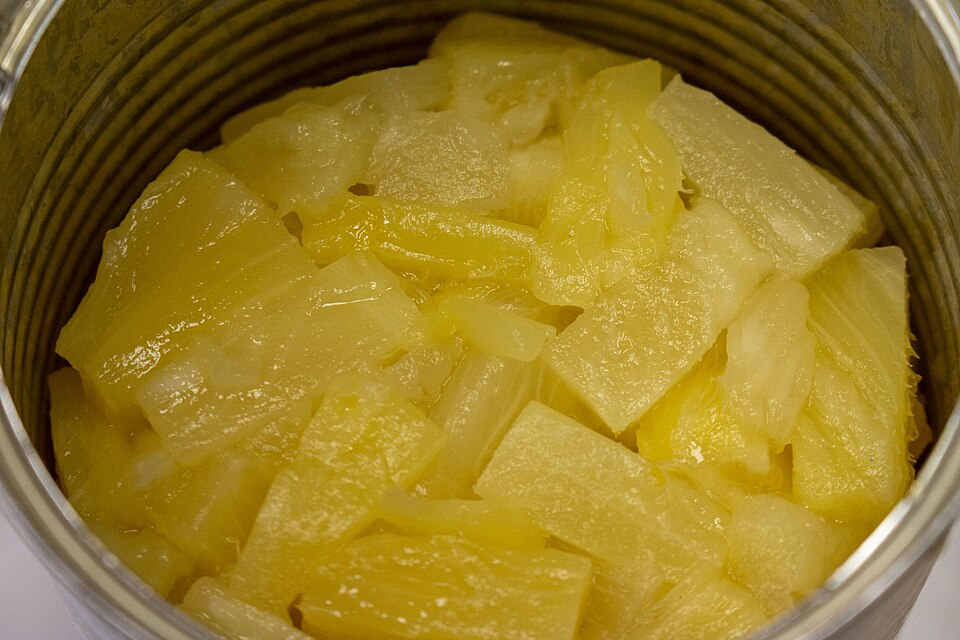
Pineapple in a 1962 American household meant rings or chunks in syrup, from a can, almost certainly from Hawaii. Canned pineapple was one of the great successes of the American food industry and it was so completely normal that the canned form was simply what the fruit was.
Fresh pineapple existed in the market but was a rarity outside the west coast and major cities, because it is heavy, perishable and awkward to ship, and because nobody had worked out the air freight economics that now make it ordinary. The Hawaiian industry itself was built around canning, not fresh shipping.
The reversal is complete and it went the other way from almost everything else here. Fresh pineapple is now cheap and general, usually from Central America, while the Hawaiian canning industry has largely closed, and the syrup-packed ring has become a period detail.
10. Grapes, which were a hothouse luxury in winter
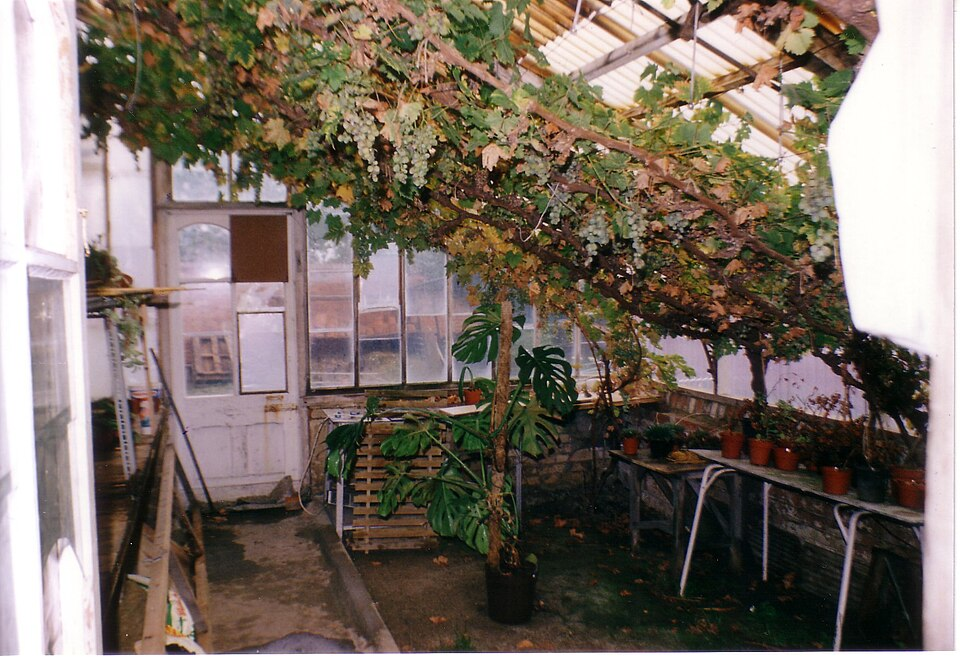
Winter grapes in 1962 were either hothouse-grown at genuine expense or simply absent. They were the classic thing taken to somebody in hospital because they were understood to be costly, and a bunch in January was a notable purchase rather than a weekly one.
What changed this was the Chilean table grape industry, which built itself through the 1970s and reached real scale in American markets during the 1980s, exploiting the southern hemisphere’s opposite season. The same infrastructure brought summer stone fruit into the American winter.
This is probably the single biggest change in the American winter fruit bowl and it happened too late for anybody in 1962 to anticipate. A seedless grape in February costs a few dollars now and would have been close to unobtainable then, at any price, in most of the country.
11. The avocado and the kiwi, which were not in the store at all
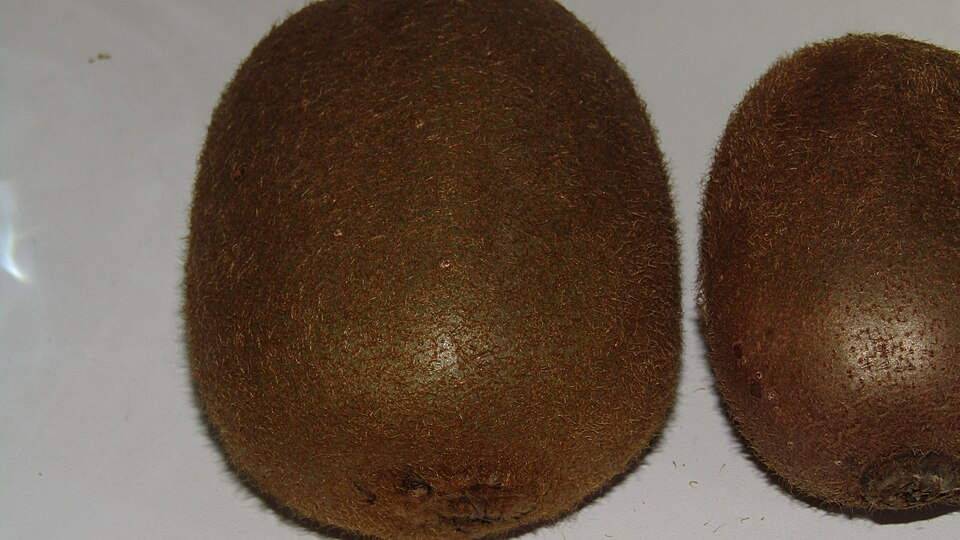
Neither fruit was part of American general grocery in 1962. Avocados were grown in California and eaten there, and were an oddity elsewhere. The kiwi was still being sold under its original name as a Chinese gooseberry and was effectively unknown in the United States.
Both arrived through deliberate marketing rather than gradual drift. The kiwi was renamed by New Zealand exporters in the late 1950s and pushed into American markets through the following two decades, and the avocado’s national position was built later still, through sustained promotion and a change in how Americans ate.
They are worth including in a list of a 1962 bowl precisely because they were not in it. A shopper of that year would not have recognised either fruit by sight, and both are now so ordinary that their absence is the thing that needs explaining.
12. And the fruit that simply was not there in January
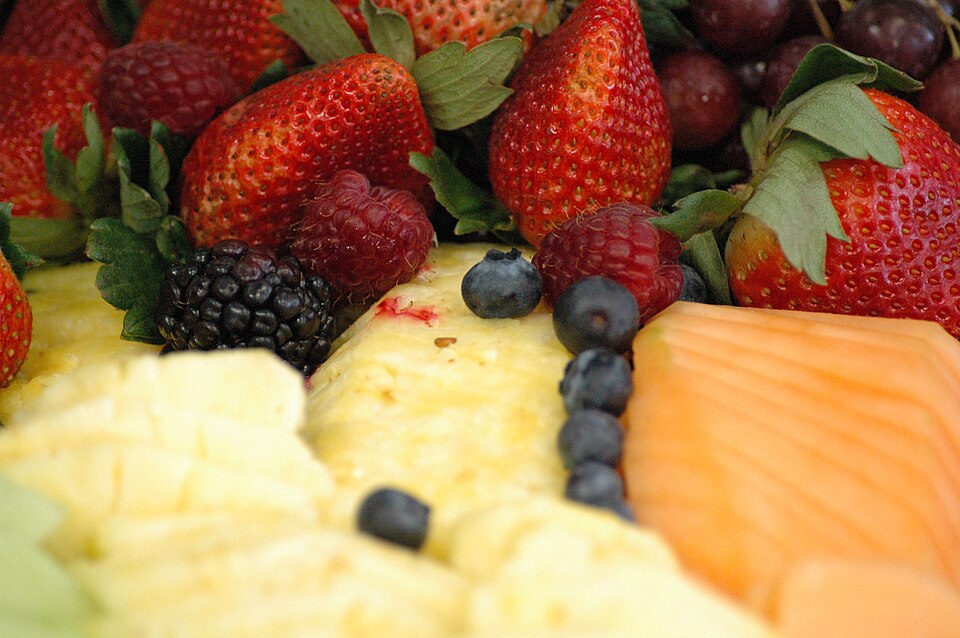
The honest summary of a 1962 American winter fruit bowl is that it contained what kept. Berries, cherries, peaches, plums, apricots, melons and nectarines were summer, they were preserved or canned or they were not eaten, and no amount of money reliably produced a fresh raspberry in February outside a hothouse.
The structural change was not agricultural but logistical: southern hemisphere production, container shipping, air freight for high-value items and a continuous cold chain from field to shelf. Together these dissolved the fruit season as a concept, and did so within about twenty-five years.
Whether that is a straightforward gain is a reasonable question. A February strawberry picked firm and shipped eight thousand miles is not the same object as a June one, and the 1962 bowl’s narrowness was also what made the first local fruit of the year an event. The apples, dates and nuts in that bowl, though, were genuinely good, and most of what was in it kept better than anything on a modern shelf.
What the bowl was actually for
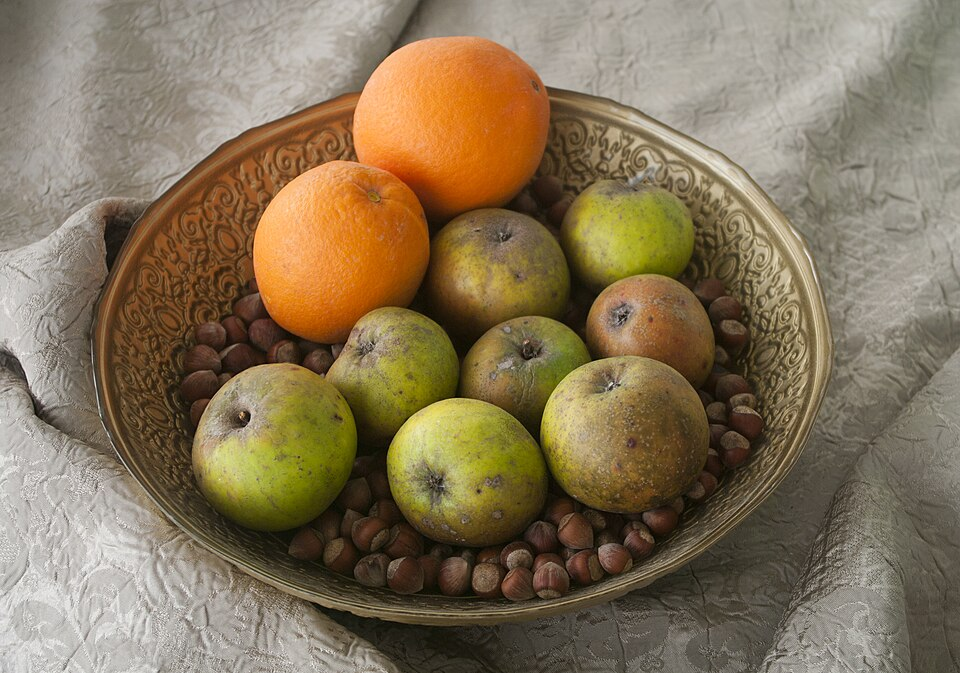
The bowl on a 1962 sideboard was not decoration and it was not a fruit course. It was storage. Everything in it was chosen because it would sit at room temperature for a week or more without spoiling, which is why it held apples out of cold store, hard pears, dates, dried figs and nuts still in their shells, and why it did not hold anything soft.
That single constraint explains almost every item on this list. Home refrigeration existed but was small, the shops restocked on a schedule rather than continuously, and the household bought fruit that could wait. A modern bowl holds whatever was bought three days ago and will be eaten before it turns, because the cold aisle and the delivery van have taken over the job the bowl used to do.
If any of this is worth acting on, it is the two items where the old knowledge still applies. Pears genuinely have to be bought hard and ripened in the bowl, with the neck tested near the stem, and there is no supermarket workaround for it.
The other is the apples. The named old varieties that a 1962 shopper took for granted are back in farmers markets and heritage nurseries, and they are worth seeking out in the autumn, when a Northern Spy or a Gravenstein tastes like the reason anybody bothered to name them.
Like our content? Follow us for more.
